

Testosterone Replacement Therapy Market Size Analysis- 2026 To 2033
The Testosterone Replacement Therapy Market size is anticipated to grow at a CAGR of 3.8%, with USD 2.13 Bn in 2026, and is expected to reach approximately USD 2.78 Bn in 2033. The primary growth drivers are largely defined by the rising prevalence of testosterone deficiency and hypogonadism, increasing awareness and diagnosis of low testosterone levels, growing adoption of testosterone gels, injections, patches, and other replacement therapies, and expanding treatment uptake among aging male populations. The Endocrine Society cited the results of the TRAVERSE trial, which included more than 5,200 men on testosterone replacement therapy or placebo, in 2026 as evidence of the size of the clinical population being considered for testosterone treatment and the ongoing importance of testosterone therapy for men with verified hypogonadism.
Key Takeaways
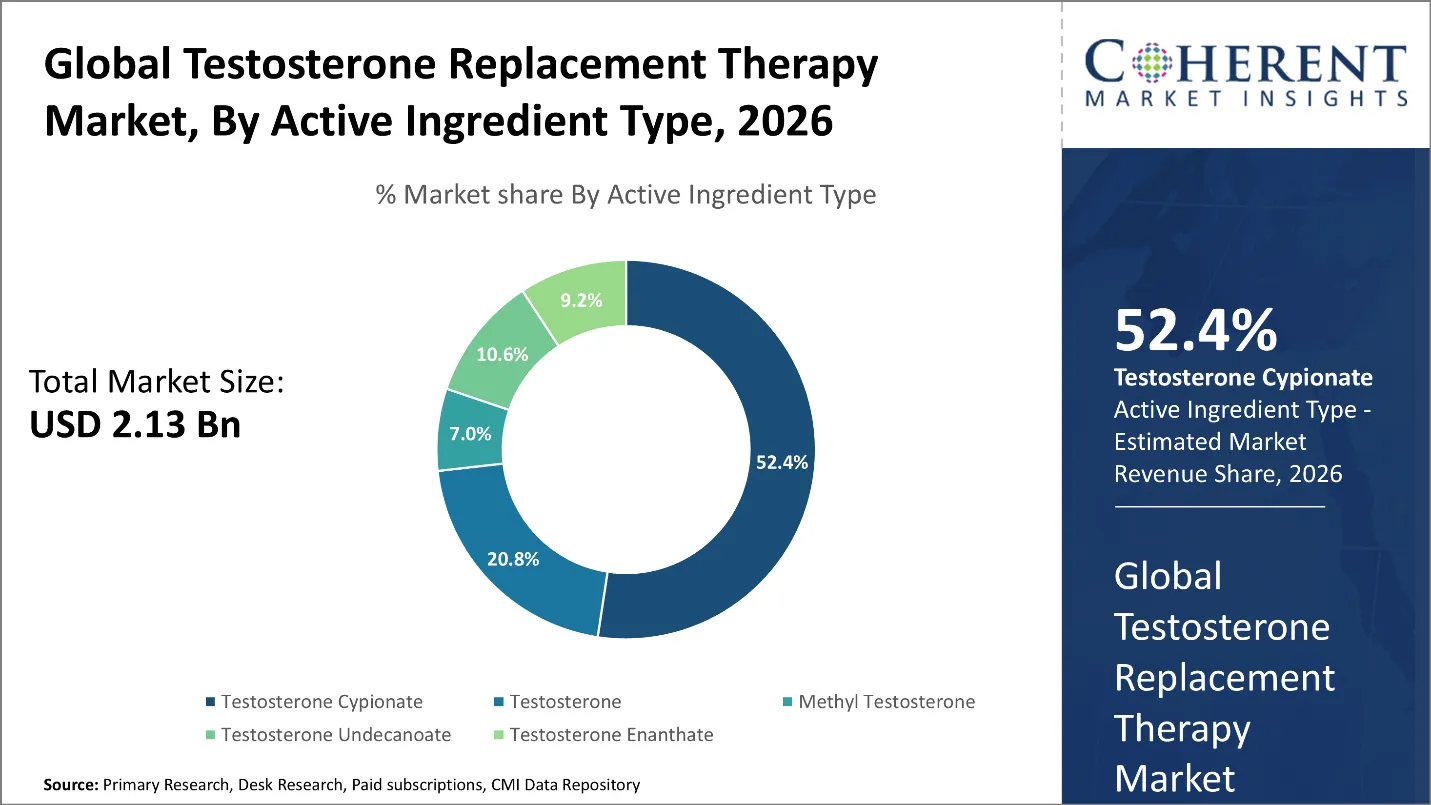
- The testosterone cypionate segment is estimated to account for the maximum market share of 52.4% in 2026, owing to its established use in testosterone replacement therapy, comparatively long dosing interval, availability of generic formulations, and widespread use in injectable testosterone treatment. Testosterone cypionate was the most commonly used injectable testosterone in a large real-world analysis of testosterone users, accounting for 83.3% of injections compared to 9.2% for testosterone enanthate, suggesting its strong use in injectable therapy.
- The injectables segment is projected to account for the largest market share of 51.8% in 2026. This is because of the demonstrated efficacy of injectables, flexible dosing options, availability of short-acting and long-acting formulations, and preference among patients who want to self-administer or infrequent treatment. In a patient survey published in International Journal of Impotence Research, 67.5% of men receiving testosterone intramuscular injections reported satisfaction with their treatment. The majority of respondents indicated a preference for injections when they could be administered at home.
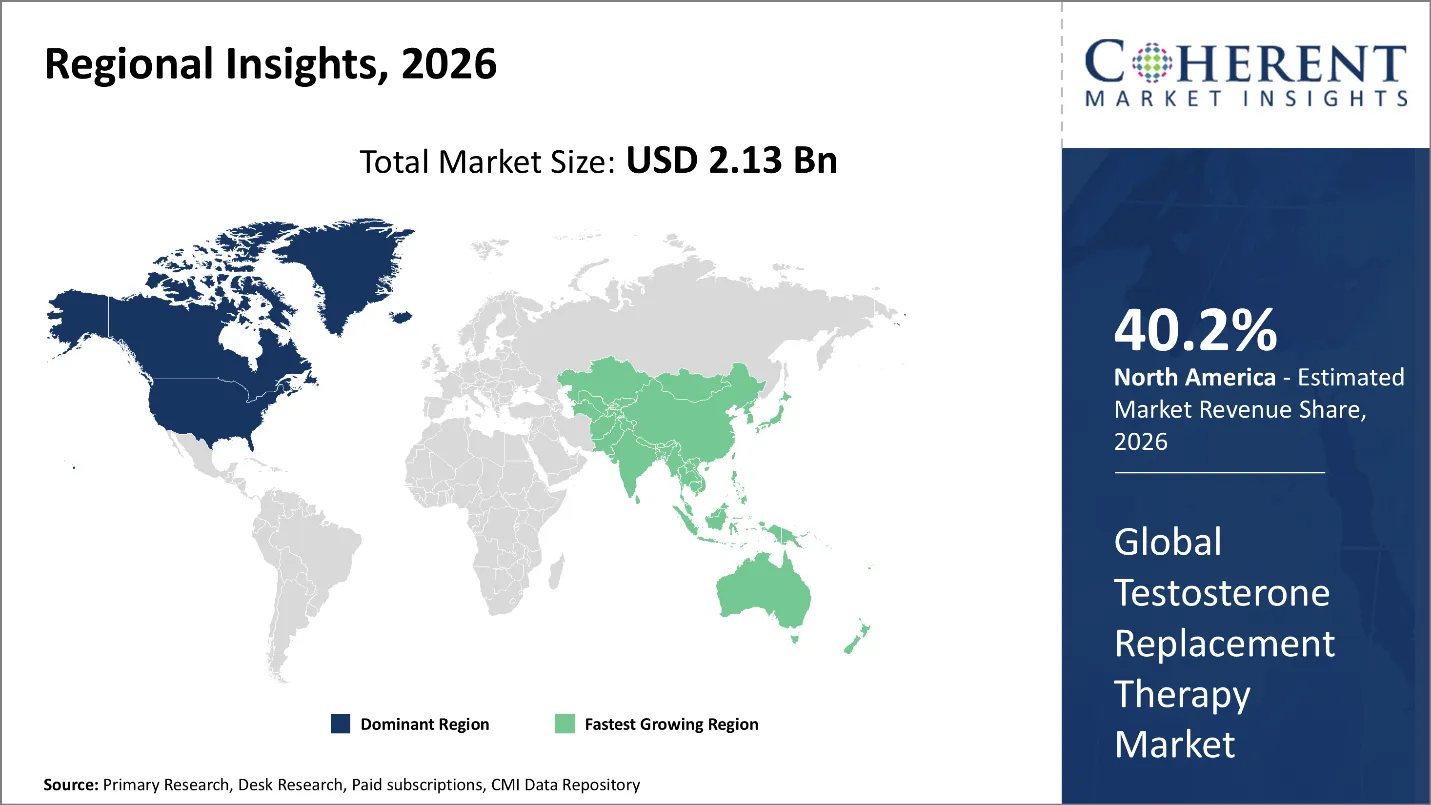
- North America is expected to acquire the prominent market share 40.2% in 2026. The region’s dominance is supported by widespread testosterone testing, established use of multiple testosterone formulations, strong endocrinology and urology infrastructure, and continued regulatory attention to testosterone therapy. In April 2026, the U.S. FDA encouraged manufacturers of approved testosterone replacement therapy products to discuss development programs for a potential new indication for low libido in men with idiopathic hypogonadism.
Market Drivers
Rising Testosterone Therapy Utilization is Driving the Testosterone Replacement Therapy Market
The Testosterone Replacement Therapy Market is gaining momentum owing to increasing treatment uptake among men with clinically diagnosed testosterone deficiency. Increased awareness among physicians, improved hormone testing and the availability of injectable, topical and oral testosterone formulations are all helping to drive treatment adoption, particularly in the U.S.
The New England Journal of Medicine noted in November 2025 that the vast majority of men taking testosterone preparations are middle-aged or older and frequently have chronic conditions that can affect testosterone levels, highlighting the increasing need for a structured clinical assessment before beginning testosterone replacement therapy.
Growing Clinical Burden of Testosterone Deficiency and Metabolic Disorders is Expanding the Treatment Population
The rising clinical burden of testosterone deficiency, particularly in combination with obesity, metabolic disorders and other comorbidities is another major driver of the Testosterone Replacement Therapy Market. Low testosterone can be associated with reduced libido, loss of muscle mass and strength, fatigue, impaired bone health, and other symptoms that encourage clinical evaluation and, where appropriately diagnosed, testosterone replacement therapy.
A recent study examining 3,489 men found that low testosterone prevalence increased sharply with obesity. Only 8% of men with a waist circumference of 93 cm or less had low testosterone, compared with 44% of men with a waist circumference of 110 cm or more. The study revealed a robust association between obesity and low testosterone, highlighting the significance of metabolic health as a determinant of testosterone deficiency.
Current Events and Their Impact on the Testosterone Replacement Therapy Market
Current Event | Description and its Impact |
FDA Revises Class-Wide Testosterone Product Labeling Following New Safety Evidence (2025–2026) |
|
FDA Opens Pathway for Potential Expansion of TRT Indication to Idiopathic Hypogonadism (2026) |
|
- Current Industry Events of 2026
- Market Size Estimation
- Regional Breakdown
- Competitive Landscape
- Customer Intelligence
- Segmental Analysis
- Pricing Analysis
- Key Market Drivers, Challenges & Future Trends
- Customized Insights Section
Segmental Insights
Why is Testosterone Cypionate Acquiring the Largest Share?
On the basis of active ingredient, the testosterone cypionate segment is projected to account for the largest Testosterone Replacement Therapy Market share of 52.4% in 2026. Growth in this segment is driven by its established use in testosterone replacement therapy, wide generic availability, flexible intramuscular or subcutaneous dosing, and familiarity among clinicians treating male hypogonadism.
As of July 2025, the U.S. FDA label database included at least 7 separate approved injectable testosterone cypionate products/marketing applications, including Depo-Testosterone, Azmiro, and several generic testosterone cypionate injections. Such wide availability of approved branded and generic supply underlies the robust commercial availability of testosterone cypionate and helps explain its number one ranking within the active-ingredient segment.
In September 2026, BPI Labs LLC received U.S. FDA approval for a 200 mg/mL testosterone cypionate injectable product under ANDA 219478. The approval adds another generic testosterone cypionate option to the U.S. market and supports continued competition and product availability within the injectable TRT segment.
Injectables Hold the Largest Market Share
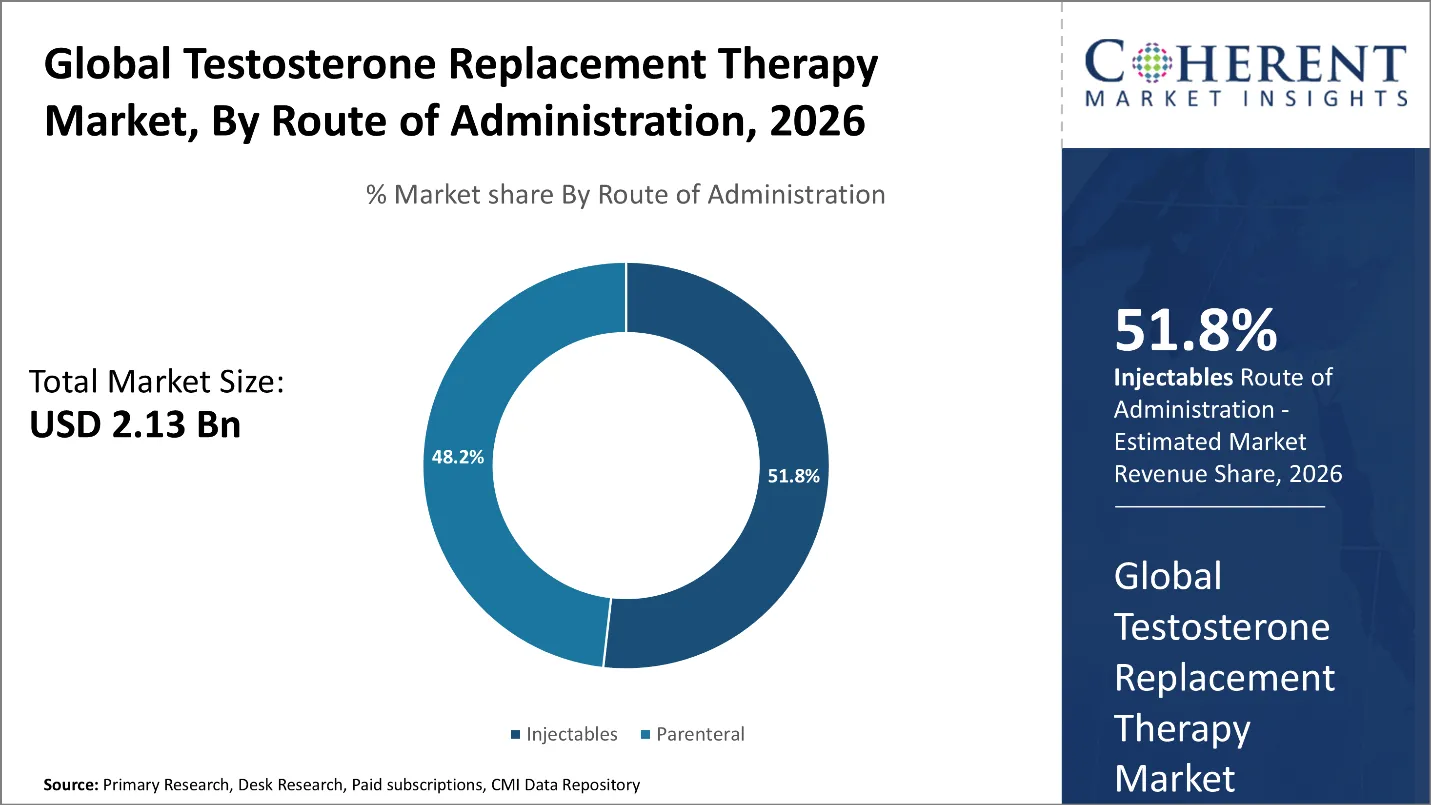
On the basis of route of administration, the injectables segment is expected to lead the Testosterone Replacement Therapy Market with a 51.8% share in 2026. The segment’s growth is supported by established efficacy, flexible dosing schedules, availability of short- and long-acting testosterone preparations, and increasing feasibility of self-administration outside traditional clinical settings.
Moreover, a study in 2025 of 278 patients who started testosterone injections showed telehealth instruction on injections achieved similar testosterone levels at 3 and 6 months compared with in-person instruction. Treatment start times were also similar, suggesting the feasibility of remote training and home-based testosterone injection workflows.
In June 2026, LifeMD announced an exclusive partnership to launch a direct-to-patient self-pay program for XYOSTED®, a once-weekly subcutaneous testosterone enanthate auto-injector approved by the FDA. Beginning in July 2026, the program will be available in 37 states across the United States and will integrate telehealth access with direct patient support.
Testosterone Replacement Therapy Market Trends
- Rising trend of telehealth-enabled TRT care is making diagnosis, laboratory testing, clinician consultation, and access to treatment easy. Prometheuz launched an online TRT platform in the U.S. in June 2026 that includes remote assessment, certified lab testing and physician review before treatment starts.
- Testosterone deficiency linked to metabolic health is becoming a more discussed topic with the increasing clinical focus on obesity-related functional hypogonadism. A systematic review and network meta-analysis was published in 2026 on TRT combined with lifestyle therapy, restoration of endogenous testosterone, and GLP-1 based therapy for adult men with obesity-related functional hypogonadism which indicates a larger movement toward combined metabolic and hormonal treatment.
- Growing presence of oral testosterone products is driving the market growth beyond the conventional injections and topical therapies. The FDA issued product-specific draft guidance for testosterone undecanoate 112.5 mg oral capsules in December 2025, which provides bioequivalence requirements for generic development and could promote future competition in the oral TRT space.
Regional Insights
North America Dominates Owing to Established TRT Access and Evolving U.S. Regulatory Support
North America region is projected to account for an estimated 40.2% of the Testosterone Replacement Therapy Market in 2026. The region’s dominance is supported by an existing endocrinology and urology care infrastructure, extensive availability of injectable, topical, transdermal and oral testosterone products, higher diagnosis and treatment rates, and ongoing regulatory attention to testosterone therapy.
In April 2026, the U.S. Food and Drug Administration (FDA) asked sponsors of approved testosterone replacement therapy products to discuss supplemental applications for a potential new indication for low libido in men with idiopathic hypogonadism. The agency said new clinical evidence could support the use of TRT in some men with low testosterone without an identifiable structural or genetic cause.
In February 2026, Apotex Inc. entered into an exclusive licensing agreement with Grünenthal for the Canadian rights to Nebido® (testosterone undecanoate), a long-acting injectable testosterone replacement therapy for male hypogonadism.
Asia Pacific Testosterone Replacement Therapy Market Trends
Asia Pacific is expected to be the fastest-growing regional Testosterone Replacement Therapy Market, with one 2026 market assessment estimating a regional CAGR of approximately 5.12%, compared with the overall global market CAGR of 3.88%. Expansion is being supported by rising recognition of male hypogonadism, increasing healthcare expenditure, expanding specialist care, improving testosterone testing, and growing treatment access across India, China, Japan, Australia, and other regional markets.
Clinical evidence from India highlights the underlying addressable population. In a study of 598 Indian men with type 2 diabetes, 18.4% were found to have a baseline total testosterone level of less than 300 ng/dL and 8.6% were confirmed to have hypogonadism on repeat testing for testosterone. In patients with obesity, prevalence of confirmed hypogonadism was 11.1%.
Established Clinical Infrastructure and Evolving Treatment Options are Supporting the Testosterone Replacement Therapy Market in the United States
The U.S. Testosterone Replacement Therapy Market is driven by a well-established network of endocrinology and urology care, wide availability of testing for testosterone, a range of approved delivery formats, and the continuing uptake of newer oral and injectable formulations.
Recent clinical evidence also supports diversification beyond traditional injections and gels. In a Phase 3 study of 315 men with documented hypogonadism, 87.4% of patients treated with oral testosterone undecanoate achieved average testosterone concentrations within the eugonadal reference range after titration in 2025.
China Testosterone Replacement Therapy Market Trends
The China Testosterone Replacement Therapy Market is projected to witness increasing clinical adoption, attributed to an aging male population, growing awareness regarding late-onset hypogonadism, rising utilization of biochemical testosterone assessment, and increasing standardization of diagnosis and treatment across endocrinology, urology and andrology practices.
In March 2025, the Growth and Development and Gonadal Diseases Committee of the Chinese Aging Well Association released the latest guidelines for diagnosis and treatment of late-onset hypogonadism. The guideline was developed by 52 specialists across multiple medical disciplines and included 17 formal recommendations covering diagnosis and the risks and benefits of testosterone supplementation, indicating increasing standardization of TRT-related clinical practice in China.
China also has a sizeable underlying addressable population. A nationwide study involving 5,078 Chinese men aged 40–79 years estimated the prevalence of late-onset hypogonadism at 7.8% when reduced calculated free testosterone was combined with at least three sexual symptoms. Among affected men, 73.9% had secondary hypogonadism, while 26.1% had primary hypogonadism, demonstrating a meaningful clinical population potentially requiring further evaluation and treatment.
Who are the Major Companies in Testosterone Replacement Therapy Industry
Some of the major key players in Testosterone Replacement Therapy Market are AbbVie, Inc., Bayer AG, Endo Pharmaceuticals, Inc., Eli Lilly and Company, Kyowa Kirin International plc, Pfizer, Inc., Acerus Pharmaceuticals Corporation, Perrigo Company plc.
Key News
- In July 2025, Acerus Pharmaceuticals Corporation updated the U.S. prescribing information for Natesto (testosterone) nasal gel. The changes added warnings related to venous thromboembolism and blood-pressure increases and removed the previous cardiovascular-risk warning section, reflecting evolving safety evidence for testosterone therapy products.
- In May 2025, Endo reported that AVEED (testosterone undecanoate) remained part of its active specialty pharmaceutical portfolio in the U.S. AVEED is a long-acting injectable testosterone replacement therapy for adult men with testosterone deficiency due to certain medical conditions, supporting Endo’s continued commercial presence in the injectable TRT segment.
Market Report Scope
Testosterone Replacement Therapy Market Report Coverage
Report Coverage | Details | ||
Base Year: | 2025 | Market Size in 2026: | USD 2.13 Bn |
Historical Data for: | 2020 to 2024 | Forecast Period: | 2026 to 2033 |
CAGR: | 3.8% | 2033 Value Projection: | USD 2.78 Bn |
Geographies covered: |
| ||
Segments covered: |
| ||
Companies covered: | AbbVie, Inc., Bayer AG, Endo Pharmaceuticals, Inc., Eli Lilly and Company, Kyowa Kirin International plc, Pfizer, Inc., Acerus Pharmaceuticals Corporation, Perrigo Company plc. | ||
Growth Drivers: |
| ||
Restraints & Challenges: |
| ||
Analyst Opinion
- The Testosterone Replacement Therapy Market is increasingly shifting toward evidence-based, individualized treatment, with greater emphasis on confirmed biochemical diagnosis, symptom assessment, and structured follow-up. A 2026 quality-improvement study involving 54 men found that medication-adherence scores improved from 5.26 at baseline to 7.19 at 12 weeks when patient-reported outcome measures were integrated into routine TRT follow-up, while psychological, somatic, and sexual symptom scores also improved.
- The market is also supported by increasing clinical awareness of late onset hypogonadism and cardiometabolic risk factors. The updated 2025 European Association of Urology guidance states that late-onset hypogonadism affects about 2%–8% of European men aged 40–79 years, with prevalence rising with age, obesity and cardiometabolic comorbidities.
- Safety monitoring will remain a key determinant of long-term market adoption. A large evidence synthesis covering 35 randomized trials and 5,601 participants found cardiovascular and cerebrovascular events in 7.5% of testosterone-treated participants versus 7.2% of placebo recipients, with no statistically significant difference between groups. This strengthens the evidence base supporting appropriately monitored TRT while keeping cardiovascular, hematocrit, blood-pressure, and prostate surveillance central to clinical practice.
Speak to the analyst
Want personalized insights?
Take the findings above to one of our principal consultants, or have the report rebuilt around the segments, geographies and competitors you actually track.
Market Segmentation
- By Active Ingredient Type (Revenue, USD Bn, 2021-2033)
- Testosterone
- Methyl Testosterone
- Testosterone Undecanoate
- Testosterone Enanthate
- Testosterone Cypionate
- By Route of Administration (Revenue, USD Bn, 2021-2033)
- Injectables
- Parenteral
- By Region (Revenue, USD Bn, 2021-2033)
- North America
- U.S.
- Canada
- Latin America
- Brazil
- Mexico
- Argentina
- Rest of Latin America
- Europe
- Germany
- U.K.
- France
- Italy
- Spain
- Russia
- Rest of Europe
- Asia Pacific
- China
- India
- Japan
- Australia
- South Korea
- ASEAN
- Rest of Asia Pacific
- Middle East
- GCC
- Israel
- Rest of Middle East
- Africa
- South Africa
- Central Africa
- North Africa
- North America
Sources
Primary Research Interviews
- Endocrinologists and andrologists
- Urologists involved in testosterone deficiency management
- Primary care physicians prescribing testosterone replacement therapy
- Hospital and specialty-clinic pharmacists
- TRT product manufacturers and formulation-development teams
- Medical affairs and regulatory professionals from testosterone therapy companies
- Key opinion leaders (KOLs) in hypogonadism, men’s health, and hormone therapy
Databases
- U.S. Food and Drug Administration (FDA)
- ClinicalTrials.gov
- PubMed / National Library of Medicine
- Centers for Medicare & Medicaid Services (CMS)
- World Health Organization (WHO)
- Organisation for Economic Co-operation and Development (OECD)
- World Bank
Magazines
- Urology Times
- Endocrine News
- Pharmaceutical Technology
- Drug Topics
- Managed Healthcare Executive
- Medical Economics
Journals
- The Journal of Clinical Endocrinology & Metabolism
- Journal of Urology
- European Urology
- International Journal of Impotence Research
- Andrology
- The Journal of Sexual Medicine
- New England Journal of Medicine
Newspapers
- The Wall Street Journal
- Financial Times
- The New York Times
- Reuters
- The Economic Times
Associations
- Endocrine Society
- American Urological Association (AUA)
- European Association of Urology (EAU)
- International Society for Sexual Medicine (ISSM)
- American Association of Clinical Endocrinology (AACE)
- Society for Endocrinology
- European Academy of Andrology
Public Domain Sources
- Company Annual Reports and Investor Presentations
- FDA Drug Labels and Drug Approval Databases
- Clinical Trial Registries
- Government Healthcare and Reimbursement Publications
- Peer-reviewed Clinical Research Publications
- Product Prescribing Information and Regulatory Safety Communications
- National and Regional Treatment Guidelines for Hypogonadism and Testosterone Deficiency
Proprietary Elements
- CMI Data Analytics Tool
- Proprietary CMI Existing Repository of Information for the Last 10 Years
Get access to 250+ pages report
Every segment, forecast, competitor profile and data table behind the analysis above — available for instant download.
- ESOMAR Member
- ISO 9001:2015 Certified
- D-U-N-S Registered
- GDPR & CCPA Compliant
Missing comfort of reading report in your local language? Find your preferred language:
Transform your Strategy with Exclusive Trending Reports
Frequently Asked Questions
The Testosterone Replacement Therapy Market is expected to reach approximately USD 2.78 Bn in 2033, up from USD 2.13 Bn in 2026.
Major players operating in the Testosterone Replacement Therapy Market include AbbVie, Inc., Bayer AG, Endo Pharmaceuticals, Inc., Eli Lilly and Company, Kyowa Kirin International plc, Pfizer, Inc., Acerus Pharmaceuticals Corporation, and Perrigo Company plc.
The key factors hampering market growth include safety concerns associated with long-term testosterone therapy, stringent regulatory requirements, and the need for ongoing patient safety monitoring.
The market is driven by the rising prevalence and diagnosis of testosterone deficiency and hypogonadism, along with the increasing adoption of injectable, topical, and oral testosterone replacement therapies.
The Testosterone Replacement Therapy Market is anticipated to grow at a CAGR of approximately 3.8% between 2026 and 2033.
Among regions, North America is expected to hold the largest share of the global Testosterone Replacement Therapy Market, accounting for an estimated 40.2% in 2026.
Asia Pacific is expected to be the fastest-growing regional market, with an estimated CAGR of approximately 5.12%, supported by increasing recognition of hypogonadism, expanding specialist care, improving testosterone testing, and rising treatment access.