

Global Codeine Market Size and Forecast – 2026 To 2033
The global codeine market is expected to grow from USD 2,570.5 Mn in 2026 to USD 3,420.0 Mn by 2033, registering a compound annual growth rate (CAGR) of 4.2% from 2026 to 2033. The market for codeine is poised for significant expansion, fueled by the increasing prevalence of chronic pain and the surging demand for effective opioid analgesics.
According to the U.S. Centers for Disease Control and Prevention (CDC), 24.3% of U.S. adults experienced chronic pain in 2023, while 8.5% suffered from high-impact chronic pain, highlighting the sustained need for prescription pain management therapies, including codeine-based medications.
Key Takeaways of the Global Codeine Market
- Tablets are projected to hold 66.2 % of the global codeine market share in 2026, making it the dominant dosage form segment across Europe due to the strong preference for oral opioid formulations in prescription pain management. For instance, in October 2024, the European Medicines Agency (EMA) recommended granting marketing authorization for Riolzduo (tramadol hydrochloride/codeine phosphate tablets) for moderate-to-severe pain, highlighting the continued regulatory support for tablet-based opioid therapies across the region.
- Single is projected to hold 85.7 % of the global codeine market share in 2026, making it the dominant product type segment across Asia Pacific due to stringent controls favoring prescription-only opioid medicines with standardized dosing. For instance, Singapore's Health Sciences Authority (HSA) classifies single-ingredient codeine preparations as prescription-only medicines under the Poisons Act, ensuring controlled prescribing and reinforcing their clinical use.
- 30 mg is projected to hold 57.7 % of the global codeine market share in 2026, making it the dominant strength segment, across Europe owing to regulatory-approved labeling supporting its use in adult pain management. For instance, the European Commission's marketing authorization for Codeine Phosphate 30 mg Tablets specifies the 30 mg strength for adult patients, supporting its widespread adoption across European healthcare systems.
- North America maintains dominance with an estomated share of 37.8 % in 2026, bolstered by well-established regulatory framework for prescription opioid therapies and the availability of approved codeine products. For instance, in October 2024, the U.S. FDA approved modifications to the Opioid Analgesic Risk Evaluation and Mitigation Strategy (OA REMS), requiring manufacturers of outpatient opioid analgesics, including codeine products, to implement enhanced safe-disposal measures through prepaid mail-back envelopes, reinforcing the regulated use of prescription opioids across the region.
- Asia Pacific is expected to exhibit the fastest growth with an estimated contribution of 23.0 % share in 2026, propelled by expanding access to pain management therapies and increasing domestic production of opioid medicines. For instance, India's Central Drugs Standard Control Organization (CDSCO) has expanded approvals for multiple generic codeine phosphate formulations manufactured by domestic pharmaceutical companies under the Drugs and Cosmetics Act, improving the availability of prescription codeine products and supporting regional market growth.
Segmental Insights
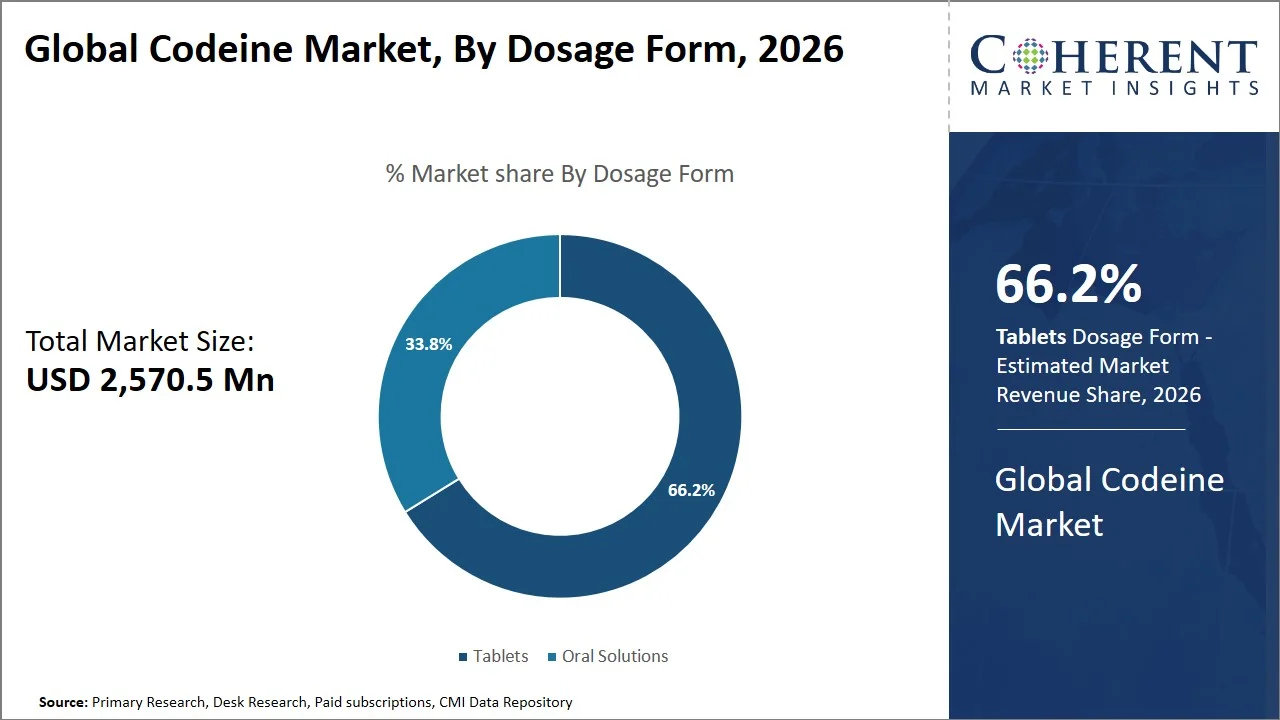
Why Do Tablets Dominate the Global Codeine Market?
Tablets are projected to hold a market share of 66.2% in 2026 due to the accurate dosing, improved stability, extended shelf life and convenient storage and transportation, which are ideal dosage form for outpatient pain management. The availability of tablets in multiple strengths also facilitates the dose titration and improves the treatment adherence across various patient populations. For instance, the European Pharmacopoeia (Ph. Eur.) and United States Pharmacopeia (USP) have adopted uniform and rigorous specifications of Codeine Phosphate Tablets on content uniformity, dissolution, supporting their widespread manufacturing and regulatory acceptance in global pharmaceutical markets.
- Current Industry Events of 2026
- Market Size Estimation
- Regional Breakdown
- Competitive Landscape
- Customer Intelligence
- Segmental Analysis
- Pricing Analysis
- Key Market Drivers, Challenges & Future Trends
- Customized Insights Section
Why Does Single Represent the Largest Product Type Segment in the Codeine Market?
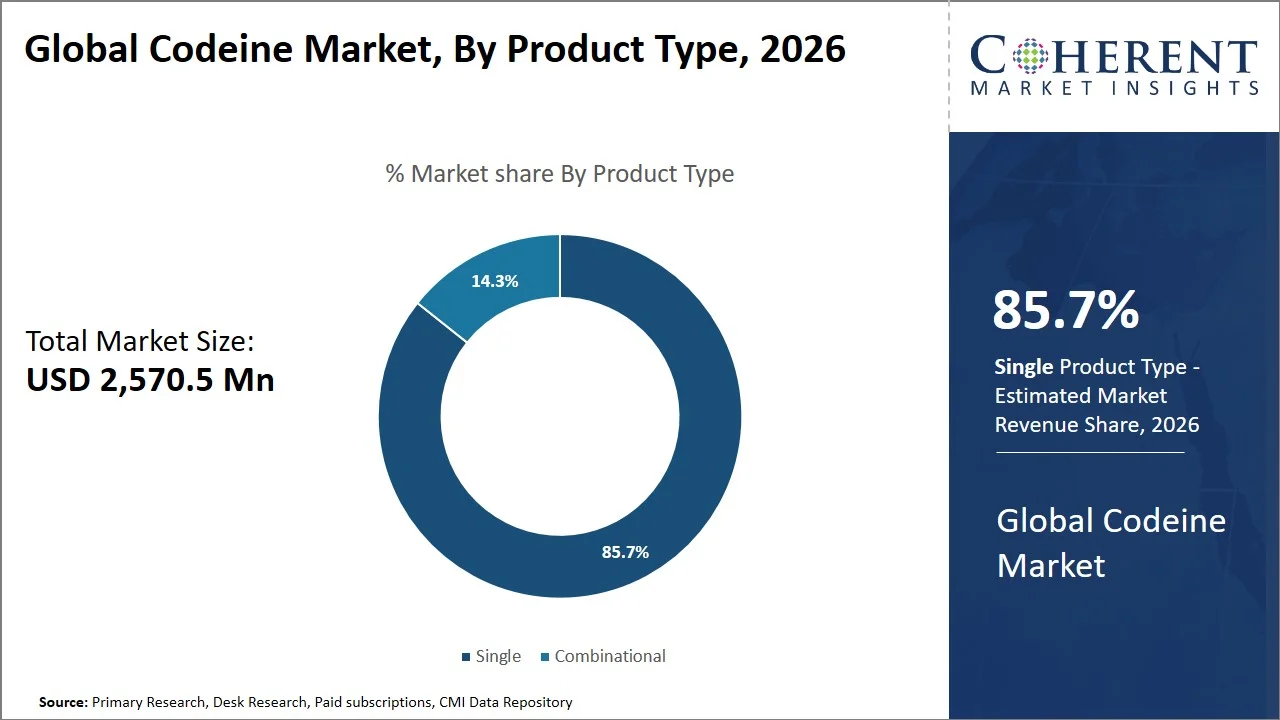
Single is projected to hold a market share of 85.7% in 2026, because of their well-defined therapeutic effect, basic pharmacological characteristics, and suitability for individualized treatment. Since single dose medications possess a lower potential for drug-drug interaction and allow greater titratability the use for these drugs would represent an improved and safe option, especially when a monotherapy is a valid and the best option. For instance, Health Canada has authorized TEVA-CODEINE (Codeine Phosphate 30 mg Tablets) as a marketable, single-ingredient, narcotic drug, under the Controlled Drugs and Substances Act (Schedule I), with a Canadian-Specific Opioid-targeted Risk Management Plan (CSO-tRMP), solidifying existing regulation on standalone codeine formulations.
30 mg Segment Dominates the Global Codeine Market
The 30 mg segment is projected to hold a market share of 57.7% in 2026, due to its well documented clinical history as a conventional adult dose for the treatment of moderate pain providing the best efficacy/safety profile. Its acceptability in clinical practice, availability as branded and generic formulations and suitability for titration have reinforced its preference among prescribers. For instance, the Australia's Therapeutic Goods Administration (TGA) has approved several Codeine Phosphate 30mg Tablets for prescription in the Australian Register of Therapeutic Goods (ARTG) indicating the long-standing acceptance and use of the 30mg strength in Australian clinical practice.
Current Events and their Impact
Current Events | Description and its Impact |
European Medicines Agency (EMA) Completes 2025 Periodic Safety Review for Codeine (November 2025) |
|
U.S. FDA Strengthens Enforcement Against Unauthorized Codeine Products (May 2025) |
|
Global Codeine Market Dynamics
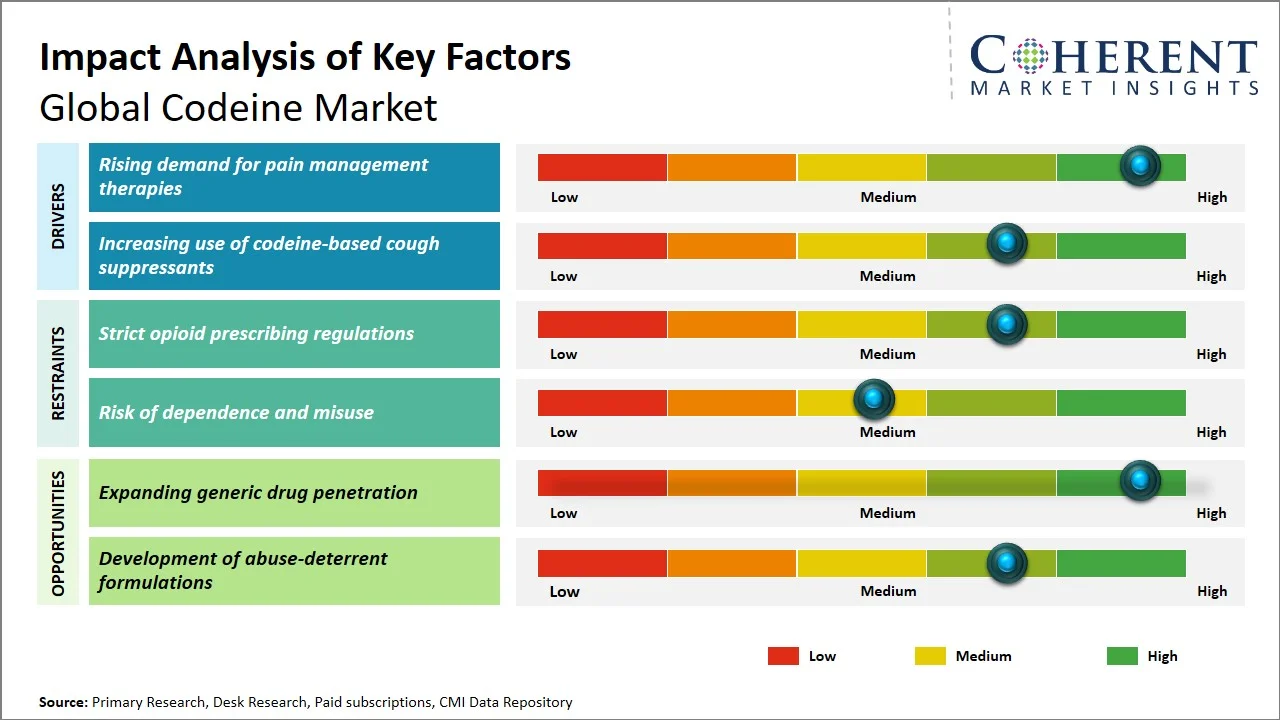
Market Drivers
- Rising demand for pain management therapies: The global codeine market is driven by the growing demand for effective pain management amid the rising prevalence of chronic diseases, cancer, orthopedic disorders, and surgical interventions worldwide. Codeine remains a widely prescribed weak opioid for managing moderate pain, particularly when non-opioid therapies provide inadequate relief. For instance, in June 2025, the World Health Organization (WHO) retained codeine in multiple formulations in its Model List of Essential Medicines (EML), reaffirming its importance as an essential analgesic for healthcare systems globally.
- Increasing use of codeine-based cough suppressants: The increasing burden of respiratory diseases and seasonal respiratory infections continues to sustain the demand for prescription codeine-based cough suppressants for managing persistent non-productive cough in adults. Codeine-containing antitussive formulations remain an important therapeutic option in cases where cough symptoms are not adequately controlled by non-opioid treatments. For instance, the U.S. Food and Drug Administration (FDA) recognizes codeine-containing prescription cough medicines as approved antitussive therapies for adults and requires their use under strict labeling and safety controls to ensure appropriate clinical use.
- Growing Utilization of Combination Analgesics: The increasing preference for combination analgesic therapies is supporting the demand for codeine, as its synergistic effect with non-opioid analgesics provides enhanced pain relief while enabling lower opioid doses. Such formulations are widely prescribed for acute pain, dental pain, and post-operative recovery. For instance, in January 2025, the UK's National Institute for Health and Care Excellence (NICE) updated its guideline on acute pain management, recommending oral combination analgesics, including codeine-containing products where clinically appropriate, as part of multimodal pain management strategies.
Emerging Trends
- Rising Adoption of Abuse-Deterrent and Extended-Release Codeine Formulations: Pharmaceutical manufacturers are increasingly investing in abuse-deterrent technologies and extended-release codeine formulations to improve patient safety while maintaining therapeutic efficacy. These innovations aim to reduce misuse potential and align with evolving opioid stewardship initiatives.
- Expansion of Digital Prescription Monitoring for Controlled Opioids: Healthcare systems are increasingly integrating electronic prescribing (e-prescribing) and prescription drug monitoring programs (PDMPs) to strengthen oversight of codeine prescribing. The growing use of digital monitoring tools is improving traceability, reducing inappropriate dispensing, and supporting responsible opioid use.
- Growing Shift Toward Personalized Opioid Therapy Through Pharmacogenomics: The increasing adoption of pharmacogenomic testing, particularly CYP2D6 genotype-guided prescribing, is enabling clinicians to better identify patients who are likely to respond safely and effectively to codeine therapy. This trend is expected to support more individualized treatment decisions and optimize clinical outcomes while minimizing adverse drug reactions.
Regional Insights
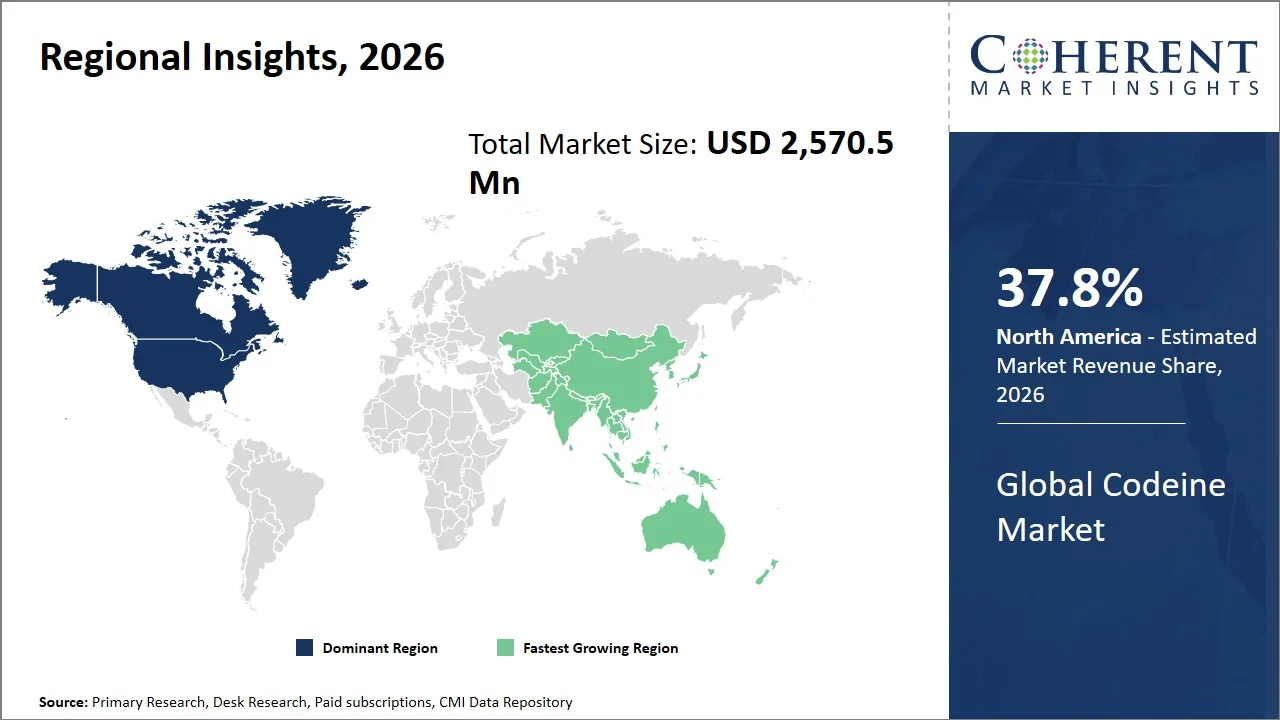
Why is North America a Strong Market for Codeine?
North America leads the global codeine market, accounting for an estimated 37.8% of the market share in 2026, due to advanced healthcare infrastructure, mature pharmaceutical industry and thorough controlled-substance regulatory scheme. The favorable government policy favoring safe opioid prescription, administration, prescription monitoring and regulation over controlled substances contribute to ensure proper clinical use of medicine containing codeine. For instance, in January 2026, the U.S. Drug Enforcement Administration (DEA) issued the 2026 Aggregate Production Quotas (APQs) for Schedule I and II controlled substances and the Annual Needs Assessment (AAN) to help ensure a supply of controlled substances that meets medical, scientific, and industrial needs, while deterring illicit diversion and abuse. Moreover, enormous prescription demand for pain management remedies, well-established drug manufacturing facility and the efficient drug distribution channel secure region's leadership in the global codeine market.
Why Does the Asia Pacific Codeine Market Exhibit High Growth?
The Asia Pacific codeine market is expected to exhibit the fastest growth with an estimated contribution of 23.0% share to the global market in 2026, due to the growing pharmaceutical production infrastructure, developing medical infrastructure and the increased use of prescription therapies for management of pain and cough. The ongoing efforts by governments to improve access of services and systems for better healthcare and regulation are responsible for the availability and standards of essential medicines throughout the market. For instance, the Government of India expanded the network of Jan Aushadhi Kendras in 2025 under the Pradhan Mantri Bhartiya Janaushadhi Pariyojana (PMBJP) initiative to improve access to affordable quality generic medicines across the country through dedicated retail outlets. Additionally, the rapid rise in generic drug production and expanded distribution channels enhance patient availability to legitimate codeine-containing products, contributing to regional market growth.
Global Codeine Market Outlook for Key Countries
Why is the U.S. Leading Innovation and Adoption in the Codeine Market?
The U.S. holds the largest market share for innovation and adoption in codeine market due to well-developed supply chain ecosystem for the discovery, commercialization and end-to-end product life cycle for generic and branded prescription opioid medicines. Significant availability of globally leading pharmaceutical brands, adequate regulated controlled drug substance distribution network and sophisticated pharmacovigilance infrastructure helps to ensure market utilization in long term. Furthermore, the country's focus on product innovation helps in addressing diverse customer preferences while maintaining regulatory compliance.
Is the U.K. a Favorable Market for Codeine Market?
The U.K. codeine market presents an opportunity due to its advanced prescription healthcare market, mature generic pharmaceutical industry and its well-defined regulatory framework for controlled medicines. The significance of codeine as a valuable adjunct to conventional opioid treatment of pain at supervised clinical centers ensures consistent clinical demand. Additionally, large pharmacy networks coupled with strong post-marketing safety surveillance systems contribute to the continuous availability and responsible use of codeine containing products in UK market.
Is China Emerging as a Key Growth Hub for the Codeine Market?
China codeine market is set to observe a rapid expansion due to its capabilities as a burgeoning codeine production hub and its rising need for prescription pain management drugs. Increased prescription-pain treatment options driven by robust codeine manufacturing infrastructure, development of generic medication, and reforming healthcare infrastructure. In addition, country’s increasing investment into developing innovation and manufacturing capabilities for pharmaceuticals are further bolstering China's share in the global codeine market.
Why Does Germany Top the European Codeine Market?
Germany leads the European codeine market attributed to the presence of strong manufacturing capabilities, a widespread availability of prescription and generic drugs, and a solid healthcare reimbursement system. The country’s abundant availability of pain management outpatient services and its well-established hospital and retail pharmacy infrastructure contribute to its sustained use of codeine-based prescription medications.
Is Codeine Market Developing in Japan?
The codeine market in Japan is gradually expanding due to well established pharmaceutical manufacturing base, as well as a consistent demand for licensed prescription products. The rigorous controlled-substance regulatory system in Japan ensures that codeine is used clinically in a suitable fashion, and follows high standards of safety and quality. In addition, growing health care needs due to an aging population and modern infrastructure are likely to stimulate the demand for prescription therapies containing codeine.
Evolution of the Global Codeine Market Landscape
Market Aspect | Historical Landscape | Current Landscape | Future Outlook |
Clinical Use | Broad use for pain and cough | Restricted use under opioid stewardship | Precision prescribing with pharmacogenomics |
Product Portfolio | Standalone codeine products | Combination analgesics and prescription antitussives | Abuse-deterrent and optimized formulations |
Regulatory Framework | Limited opioid monitoring | Prescription controls and enhanced pharmacovigilance | AI-enabled safety surveillance and harmonized global regulations |
Patient Access | Conventional prescribing | E-prescriptions and prescription monitoring programs | Digital opioid stewardship and personalized therapy |
How is the expanding generic drug penetration creating new growth opportunities in the codeine market?
The increasing generic drug penetration represents a promising opportunity for the global codeine market as it makes prescription opioid treatments more economical and accessible, especially for the price-conscious and developing healthcare markets. There has been growing impetus from cost-containment measures in the healthcare system as well as enabling regulatory frameworks, driving pharmaceutical companies to broaden their existing generic portfolios, thus increasing patient access to essential medicines. For instance, U.S. Food and Drug Administration (FDA) generic drug user fee amendments (GDUFA III), effective through September 2027, pursuant to the FDA user fee reauthorization act of 2022 (FDA UFRA), promote and increase predictability and timeliness of the review of generic drug applications, helping quality generic medicines enter the U.S. marketplace.
Market Players, Key Development, and Competitive Landscape
Key Developments
- In October 2024, Elite Pharmaceuticals, Inc. announced the commercial launch of its generic Acetaminophen and Codeine Phosphate Tablets in 300 mg/15 mg, 300 mg/30 mg, and 300 mg/60 mg strengths. The product, a generic version of Tylenol with Codeine, is indicated for the management of mild to moderate pain where opioid therapy is appropriate, expanding the company's portfolio of prescription analgesics and strengthening the availability of regulated codeine-based treatments.
- In February 2024, the UK Medicines and Healthcare products Regulatory Agency (MHRA) announced that codeine linctus would be reclassified from a pharmacy medicine to a prescription-only medicine (POM) due to increasing concerns over abuse, dependence, and overdose. The regulatory change strengthens oversight of codeine-containing cough medicines while ensuring access remains available under healthcare professional supervision.
Competitive Landscape
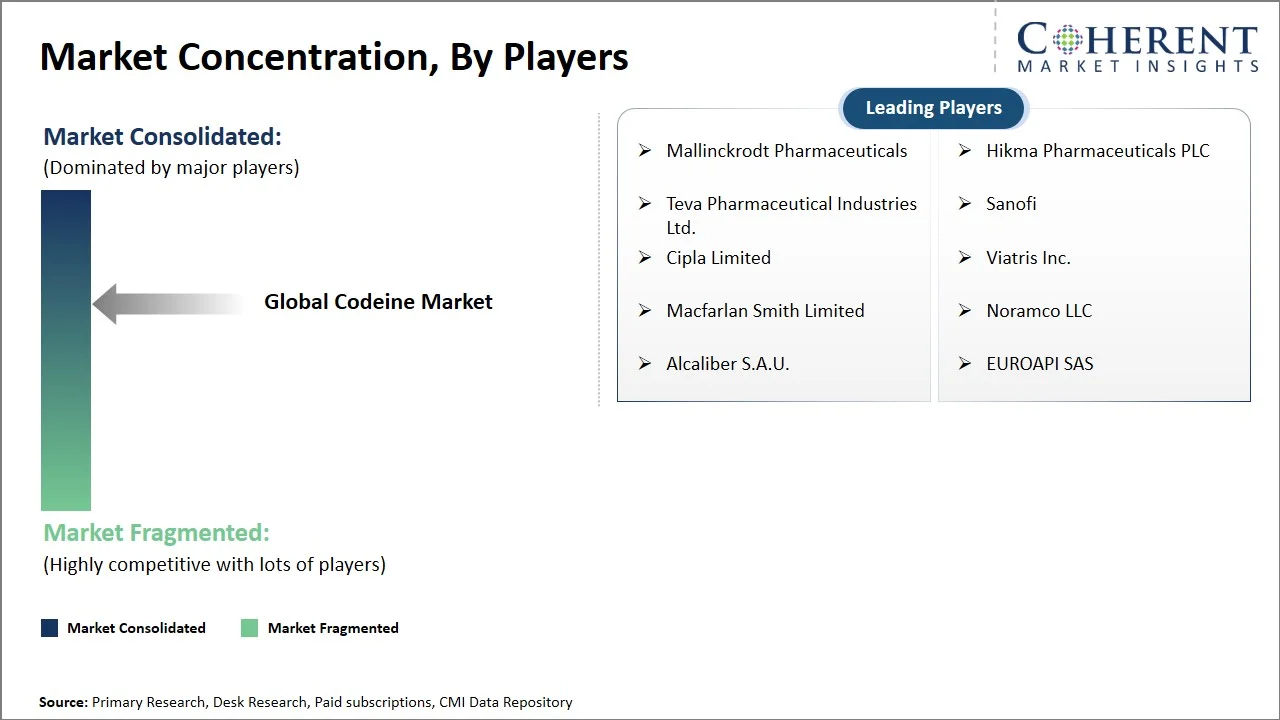
The global codeine market is moderately consolidated, with competition driven by regulatory compliance, product portfolio expansion, and the commercialization of branded and generic codeine formulations. Market participants are focused on strengthening their presence through lifecycle management, geographic expansion, manufacturing capacity enhancements, and strategic collaborations to address the growing demand for prescription analgesic and antitussive therapies. Key focus areas include:
- Expansion of Generic Codeine and Combination Product Portfolios
- Regulatory Compliance and Controlled Substance Stewardship
- Product Commercialization and Geographic Market Expansion
- Manufacturing Capacity Enhancement and Supply Chain Optimization
- Strategic Partnerships, Licensing Agreements, and Portfolio Acquisitions
Market Report Scope
Codeine Market Report Coverage
| Report Coverage | Details | ||
|---|---|---|---|
| Base Year: | 2025 | Market Size in 2026: | USD 2,570.5 Mn |
| Historical Data for: | 2020 To 2024 | Forecast Period: | 2026 To 2033 |
| Forecast Period 2026 to 2033 CAGR: | 4.2% | 2033 Value Projection: | USD 3,420.0 Mn |
| Geographies covered: |
| ||
| Segments covered: |
| ||
| Companies covered: | Mallinckrodt Pharmaceuticals, Hikma Pharmaceuticals PLC, Teva Pharmaceutical Industries Ltd., Sanofi, Cipla Limited, Viatris Inc., Macfarlan Smith Limited, Noramco LLC, Alcaliber S.A.U., and EUROAPI SAS | ||
| Growth Drivers: |
| ||
| Restraints & Challenges: |
| ||
Analyst Opinion (Expert Opinion)
- In the coming years, the global codeine market will be shaped by the balance between sustained clinical demand and increasingly stringent opioid regulations. While prescription oversight will remain rigorous, codeine is expected to retain an important role in the management of moderate pain and selected cough conditions, supported by the growing demand for affordable generic formulations and improved pharmacovigilance practices.
- The maximum opportunities are foreseen within generic combination analgesics for pain management in Asia Pacific, particularly India and China, where expanding healthcare access, increasing surgical volumes, and rising investments in domestic pharmaceutical manufacturing are driving the demand for cost-effective prescription medicines. These markets offer significant potential for manufacturers with strong regulatory and distribution capabilities.
- In order to gain a competitive advantage market players should focus on expanding high-quality generic and combination codeine portfolios, strengthening compliance with evolving controlled-substance regulations, investing in robust pharmacovigilance and supply chain traceability, and pursuing strategic partnerships to expand geographic reach and improve market access. Such strategies will enable companies to address regulatory expectations while capturing growth in emerging markets.
Speak to the analyst
Want personalized insights?
Take the findings above to one of our principal consultants, or have the report rebuilt around the segments, geographies and competitors you actually track.
Market Segmentation
- Dosage Form Insights (Revenue, USD Mn, 2021 - 2033)
- Tablets
- Oral Solutions
- Product Type Insights (Revenue, USD Mn, 2021 - 2033)
- Single
- Combinational
- Strength Insights (Revenue, USD Mn, 2021 - 2033)
- 15 mg
- 30 mg
- 60 mg
- Age Group Insights (Revenue, USD Mn, 2021 - 2033)
- Adult
- Pediatric
- Indication Insights (Revenue, USD Mn, 2021 - 2033)
- Pain Management
- Cough Management
- Distribution Channel Insights (Revenue, USD Mn, 2021 - 2033)
- Hospital Pharmacies
- Retail Pharmacies
- Online Pharmacies
- Regional Insights (Revenue, USD Mn, 2021 - 2033)
- North America
- U.S.
- Canada
- Latin America
- Brazil
- Argentina
- Mexico
- Rest of Latin America
- Europe
- Germany
- U.K.
- Spain
- France
- Italy
- Russia
- Rest of Europe
- Asia Pacific
- China
- India
- Japan
- Australia
- South Korea
- ASEAN
- Rest of Asia Pacific
- Middle East
- GCC Countries
- Israel
- Rest of Middle East
- Africa
- South Africa
- North Africa
- Central Africa
- North America
- Key Players Insights
- Mallinckrodt Pharmaceuticals
- Hikma Pharmaceuticals PLC
- Teva Pharmaceutical Industries Ltd.
- Sanofi
- Cipla Limited
- Viatris Inc.
- Macfarlan Smith Limited
- Noramco LLC
- Alcaliber S.A.U.
- EUROAPI SAS
Sources
Primary Research Interviews
- Executives from codeine API manufacturers and finished dosage pharmaceutical companies
- Directors of Regulatory Affairs, Quality Assurance, and Pharmacovigilance departments
- Hospital pharmacists, pain management specialists, anesthesiologists, and pulmonologists
- Procurement managers from hospital and retail pharmacy chains
- Experts in opioid stewardship, controlled substances, and pain management
- Executives from pharmaceutical distributors and contract manufacturing organizations (CMOs)
Stakeholders
- Codeine API manufacturers
- Pharmaceutical formulation manufacturers
- Generic drug manufacturers
- Hospital pharmacies
- Retail pharmacy chains
- Online pharmacy providers
- Healthcare providers and pain management clinics
- Government regulatory agencies and controlled substance authorities
- End-use Sectors
- Hospitals
- Specialty Pain Clinics
- Ambulatory Surgical Centers (ASCs)
- Retail Pharmacies
- Long-term Care Facilities
- Regulatory & Health Bodies
- U.S. Food and Drug Administration (FDA)
- U.S. Drug Enforcement Administration (DEA)
- European Medicines Agency (EMA)
- Medicines and Healthcare products Regulatory Agency (MHRA), UK
- Health Canada
- Therapeutic Goods Administration (TGA), Australia
- Central Drugs Standard Control Organization (CDSCO), India
- World Health Organization (WHO)
- International Narcotics Control Board (INCB)
Databases
- FDA Orange Book
- FDA Drugs Database
- DEA Controlled Substances Database
- EMA Medicines Database
- WHO Global Health Observatory (GHO)
- Health Canada Drug Product Database (DPD)
- OECD Health Statistics
- World Bank Open Data
Magazines
- Pharmaceutical Technology
- Pharma Manufacturing
- Pharmaceutical Executive
- Drug Discovery & Development
Journals
- The Journal of Pain
- European Journal of Pain
- Clinical Journal of Pain
- Journal of Opioid Management
Associations
- International Association for the Study of Pain (IASP)
- American Pain Society (APS)
- American Society of Health-System Pharmacists (ASHP)
- International Pharmaceutical Federation (FIP)
- Medicines for Europe
Public Domain Sources
- U.S. Food and Drug Administration (FDA)
- U.S. Drug Enforcement Administration (DEA)
- European Medicines Agency (EMA)
- Medicines and Healthcare products Regulatory Agency (MHRA)
- World Health Organization (WHO)
- International Narcotics Control Board (INCB)
- Health Canada
- Therapeutic Goods Administration (TGA)
- Central Drugs Standard Control Organization (CDSCO)
Proprietary Elements
- CMI Data Analytics Tool, Proprietary CMI Existing Repository of information for last 10 years.
Get access to 250+ pages report
Every segment, forecast, competitor profile and data table behind the analysis above — available for instant download.
- ESOMAR Member
- ISO 9001:2015 Certified
- D-U-N-S Registered
- GDPR & CCPA Compliant
Missing comfort of reading report in your local language? Find your preferred language:
Transform your Strategy with Exclusive Trending Reports
Frequently Asked Questions
The global codeine market is estimated to be valued at USD 2,570.5 Mn in 2026 and is expected to reach USD 3,420.0 Mn by 2033.
Tablets dominate due to their ease of administration, accurate dosing, longer shelf life, and widespread use in prescription pain management.
Codeine is a naturally occurring opioid analgesic and antitussive used to treat moderate pain and suppress persistent cough under medical supervision.
The CAGR of the global codeine market is projected to be 4.2% from 2026 to 2033.
Rising demand for pain management therapies, and increasing use of codeine-based cough suppressants are the major factors driving the growth of the global codeine market.
Codeine is regulated because of its potential for misuse, dependence, and respiratory depression, requiring controlled prescribing and dispensing in many countries.
Codeine is converted into morphine by the CYP2D6 enzyme, making genetic variations in CYP2D6 a key determinant of its efficacy and safety.