

Periodontal Disease Therapeutics Market Size and Share Analysis- 2026 To 2033
The Periodontal Disease Therapeutics Market size is anticipated to grow at a CAGR of 7.3%, with USD 1,099 Mn in 2026 and is expected to reach approximately USD 1,802 Mn in 2033. The primary drivers are largely defined by the high prevalence of periodontal disease, growing awareness regarding oral health management, increasing adoption of advanced antimicrobial and localized drug-delivery therapies, and the development of minimally invasive periodontal treatment approaches. According to the World Health Organization (WHO), severe periodontal disease affects more than 1 billion people worldwide, while poor oral hygiene and tobacco use are among its major risk factors, supporting sustained demand for periodontal disease therapeutics.
Key Takeaways
- The doxycycline segment is likely to dominate the market with approximately 28.4% in 2026. The segment’s growth is owing to the established use of doxycycline as an adjunct to scaling and root planing, its antibacterial and host-modulating properties, and availability across systemic and localized periodontal therapies. A 2025 U.S. FDA prescribing label reports a multicenter Phase III study involving 190 adults with periodontal disease, in which doxycycline hyclate was evaluated alongside scaling and root planing over nine months, supporting its established clinical role in periodontal disease management.
- The hospital pharmacies segment is expected to hold a prominent share of approximately 43.0% in 2026. The segment’s growth is owing to the prescription-based nature of periodontal therapeutics, access to specialized dental and maxillofacial care, and greater availability of adjunctive antimicrobial therapies through institutional settings. The U.S. Centers for Disease Control and Prevention reported in June 2025 that tooth disorders resulted in an average of approximately 1.9 Mn emergency department visits.
- North America is expected to acquire the prominent share of approximately 38.0% in 2026. The region’s growth is owing to the high periodontal disease burden, well-established dental care infrastructure, widespread access to periodontal specialists, and strong adoption of prescription and localized periodontal therapies. According to the U.S. Centers for Disease Control and Prevention, nearly 42% of U.S. adults aged 30 years and older have periodontitis, while about 8% have severe periodontitis.
Market Drivers
Rising Global Burden of Periodontal Disease is Increasing the Need for Therapeutic Management
The Periodontal Disease Therapeutics Market is being driven by the substantial and persistent burden of periodontitis worldwide. Periodontal disease is a chronic inflammatory disease that can damage the supporting tissues and bone around the teeth. If not treated properly it can cause the teeth to become loose and eventually fall out. This leads to a persistent demand for antibiotics, locally delivered antimicrobials, host-modulation therapies, and other adjunctive periodontal therapeutics in conjunction with mechanical periodontal therapy.
According to the World Health Organization (WHO), in March 2025, severe periodontal diseases affected more than 1 billion people worldwide in March 2025. WHO also states that the overall number of people suffering from oral diseases is close to 3.7 billion globally, which shows the wide patient pool that needs preventive and therapeutic oral healthcare interventions.
Expansion of Oral Healthcare Access and Adjunctive Periodontal Treatment is Supporting Market Growth
The integration of oral healthcare into wider healthcare systems is increasing access to periodontal diagnosis and treatment, and is expected to increase the population of treated patients. Governments and international health organizations are placing more and more emphasis on early diagnosis, comprehensive oral care, primary-care integration and improved access to essential oral health services, and therefore support the use of pharmacological therapies in patients requiring adjunctive periodontal treatment.
In 2025, WHO developed a global monitoring framework that included 11 oral-health targets for 2030, indicating a greater international focus on increasing oral healthcare coverage and monitoring access to treatment. Furthermore, WHO’s 2025 Bangkok Declaration highlights the need for greater priority to be given to oral diseases in universal health coverage and primary healthcare systems.
Current Events and Their Impact on the Periodontal Disease Therapeutics Market
Current Event | Description and its Impact |
WHO Advances Universal Oral Health Coverage Through the Bangkok Declaration and Global Oral Health Action Plan (2025) |
|
WHO Introduces Global Monitoring Framework for Oral Health Targets (2025) |
|
- Current Industry Events of 2026
- Market Size Estimation
- Regional Breakdown
- Competitive Landscape
- Customer Intelligence
- Segmental Analysis
- Pricing Analysis
- Key Market Drivers, Challenges & Future Trends
- Customized Insights Section
Segmental Insights
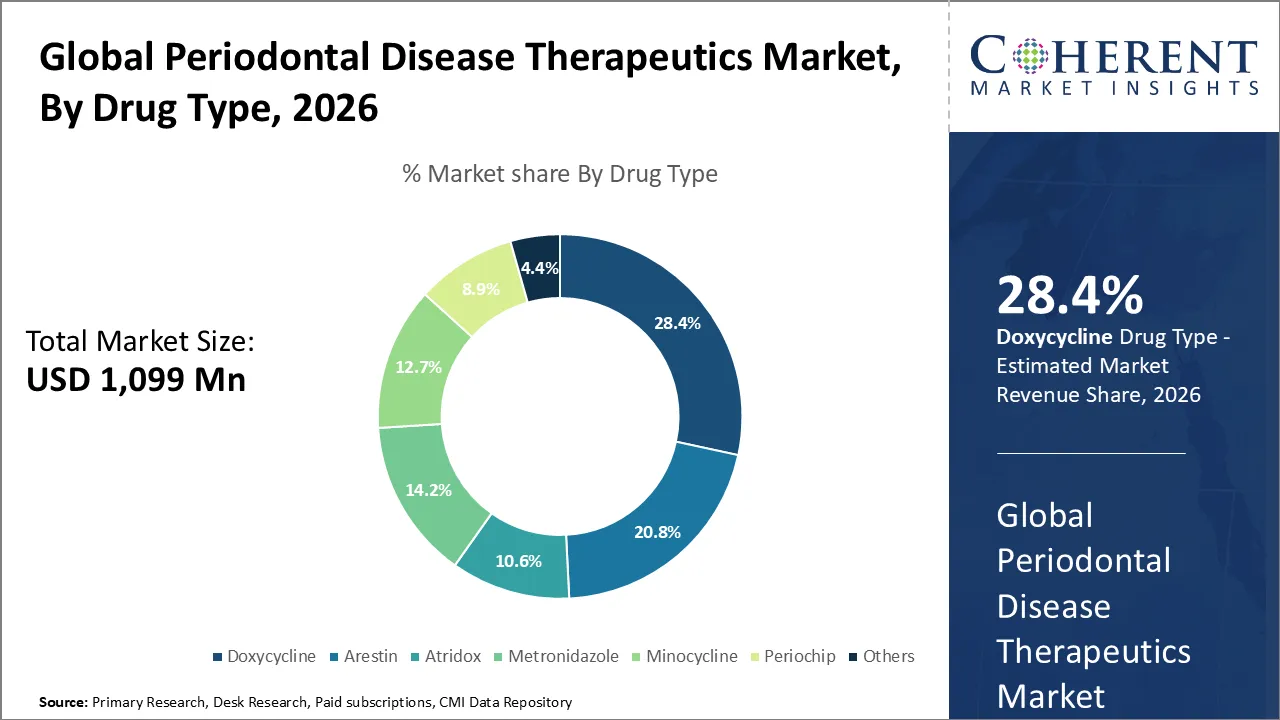
Why is Doxycycline Acquiring the Largest Share?
On the basis of drug type, the doxycycline segment is projected to account for the largest Periodontal Disease Therapeutics Market share of approximately 28.4% in 2026. The segment’s growth is owing to doxycycline’s established use in periodontal therapy, combined antimicrobial and host-modulating activity, availability in systemic and locally delivered formulations, and clinical use as an adjunct to scaling and root planing.
Patients receiving doxycycline 20 mg twice daily with scaling and root planing achieved a mean periodontal pocket-depth reduction of 1.68 mm at sites with baseline pocket depths of ≥7 mm, compared with 1.20 mm for scaling and root planing plus placebo at nine months.
In July 2025, Larken Laboratories updated its U.S. prescribing information for doxycycline hyclate 20 mg tablets, which are indicated as an adjunct to scaling and root planing to promote clinical attachment-level gain and reduce periodontal pocket depth in adults with periodontitis.
Why are Hospital Pharmacies Holding a Prominent Market Share?
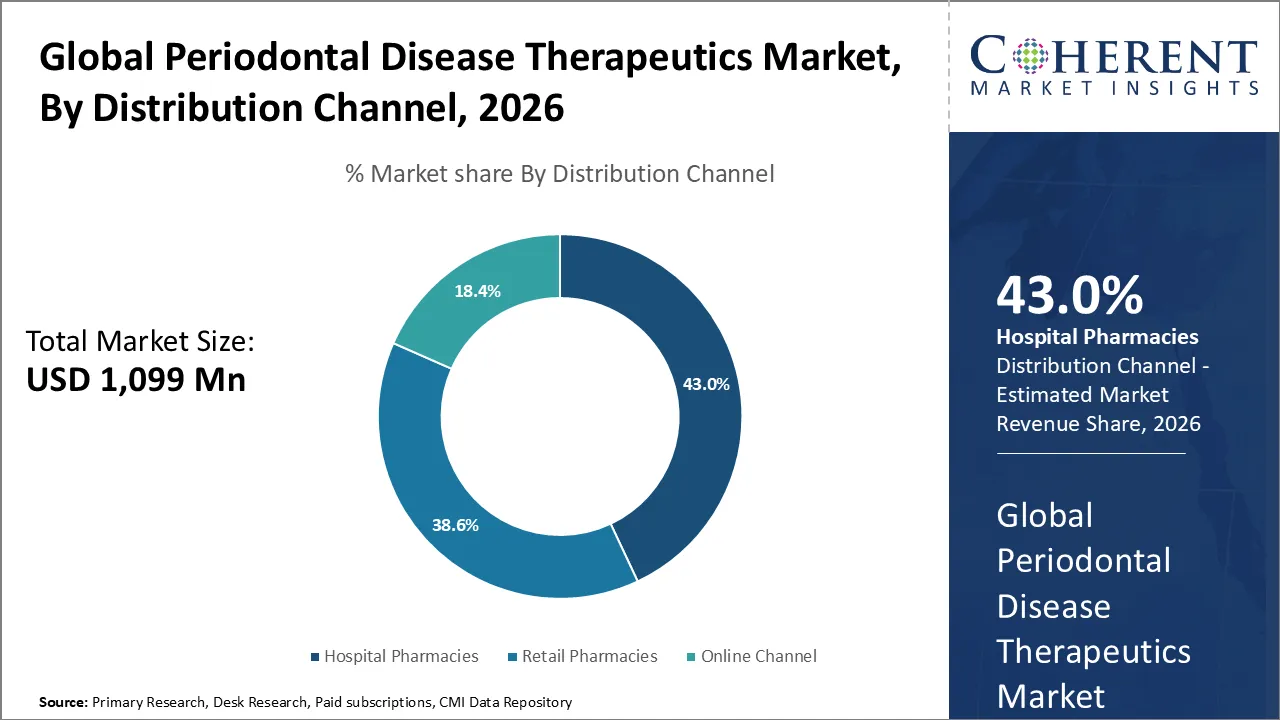
On the basis of distribution channel, the hospital pharmacies segment is expected to hold a prominent Periodontal Disease Therapeutics Market share of approximately 43.0% in 2026. The segment’s strong position is owing to the prescription-based nature of several periodontal therapeutics, availability of specialist periodontal and dental services within hospital systems, centralized access to antimicrobial therapies, and the ability to coordinate pharmaceutical treatment with clinical periodontal procedures.
A multicenter study conducted in 2025 across eight tertiary care hospitals in India, involving 3,974 hospitalized patients, revealed the substantial importance of hospital systems in the management and dispensing of systemic antimicrobial therapy.
In July 2026, BGS Medical College and Hospital inaugurated the upgraded Dental Out Patient Department along with a new digital OPG X-ray unit. The expansion will improve the ability of hospitals to diagnose and treat dental problems and could lead to greater use of prescription periodontal therapies distributed through institutional pharmacy channels.
Periodontal Disease Therapeutics Market Trends
- The adoption of localized and sustained-release drug delivery methods is increasing and there is a growing trend toward site-specific therapy for periodontal treatment. Recent studies emphasize the growing use of fibers, films, chips, microparticles, and gels to maintain therapeutic drug levels in periodontal pockets with minimal systemic drug exposure. A 2025 review from Niigata University said local drug-delivery development is increasingly moving beyond infection control into periodontal tissue and bone regeneration.
- Increasing incorporation of nanoparticle-based therapeutics is strengthening targeted periodontal treatment. Lipid, polymeric, metallic, ceramic and carbon based nanoparticles are being studied in a 2025 review for their ability to better disrupt biofilms, reduce inflammation, release drugs over time and regenerate periodontal tissue. Controlled release of known therapeutics such as doxycycline and metronidazole is also being explored using polymeric systems such as PLGA.
- The periodontal therapeutic pipeline is expanding with growing interest in non-antibiotic adjunctive therapies, amidst growing concern about antimicrobial resistance and repeated systemic antibiotic exposure. A 2025 review covering 31 recent clinical studies found emerging evidence for approaches including antimicrobial photodynamic therapy, melatonin, sodium hypochlorite gels, tea tree oil, Aloe vera, and liposome-based local delivery systems as adjuncts to conventional periodontal treatment.
Regional Insights
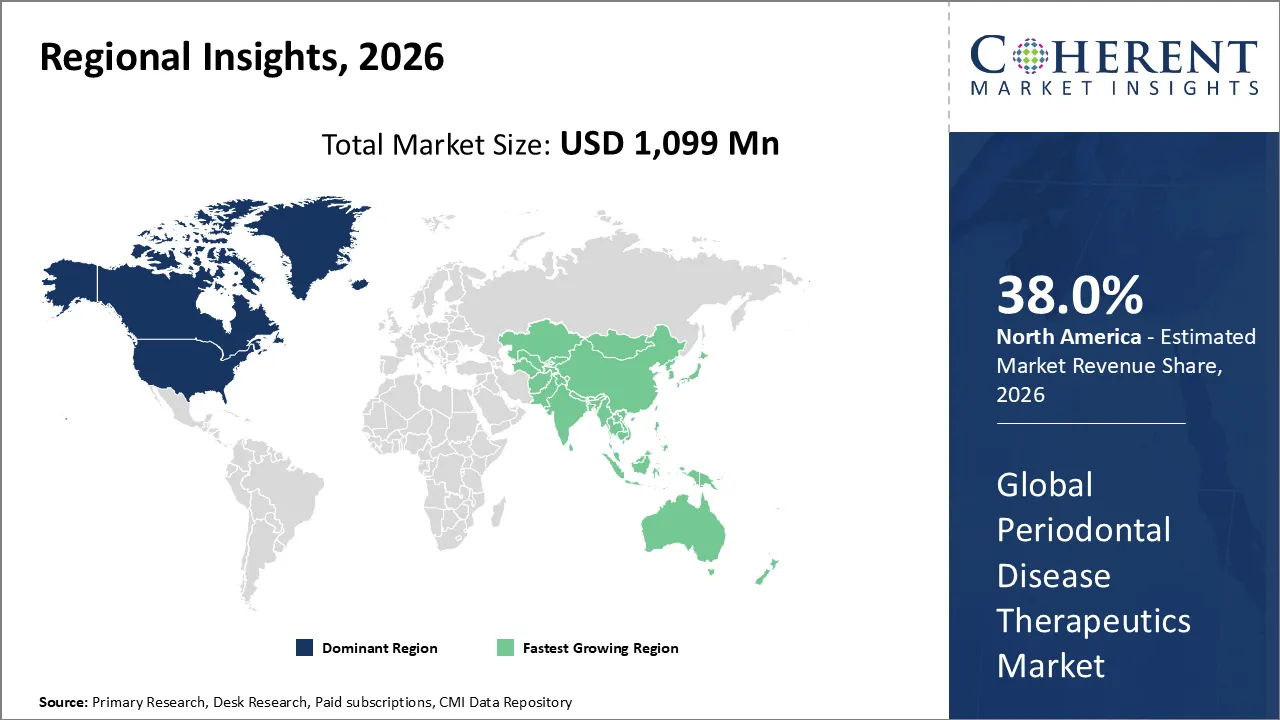
North America Dominates Owing to Advanced Dental Care Infrastructure and High Adoption of Periodontal Therapies
The North America region is expected to account for approximately 38.0% of the Periodontal Disease Therapeutics Market in 2026. The region’s growth is owing to its well-developed dental care infrastructure, high utilization of periodontal services, strong access to prescription therapeutics, and early adoption of localized antimicrobial and regenerative periodontal treatments.
In April 2026, Health Canada reported that more than 6.5 million Canadians were covered under the Canadian Dental Care Plan and more than 4 million had already received care. This widening access to dental services is particularly relevant for periodontal therapeutics because improved affordability and routine dental utilization can increase diagnosis, periodontal treatment initiation, and use of prescription adjunctive therapies.
Asia Pacific Periodontal Disease Therapeutics Market Trends
Asia Pacific is expected to be the fastest-growing region in the Periodontal Disease Therapeutics Market over the forecast period. The region’s growth is owing to its large untreated periodontal disease population, expanding dental-care infrastructure, increasing private dental networks, improving oral-health awareness, and policy initiatives aimed at integrating oral healthcare into universal health coverage.
According to the World Health Organization, the South-East Asia Region alone has an estimated 1.03 billion cases of major oral diseases and conditions, with an age-standardized prevalence of approximately 49.97%.
In October 2025, WHO also convened a regional workshop to accelerate implementation of national oral-health roadmaps and commitments under the Bangkok Declaration across South-East Asia. Such policy initiatives are expected to improve diagnosis, treatment access, and integration of oral health into primary care, creating a stronger demand base for periodontal therapeutics across Asia Pacific.
Strong Specialist Dental Workforce and Established Periodontal Care Infrastructure are Supporting the Periodontal Disease Therapeutics Market in the United States
The U.S. Periodontal Disease Therapeutics Market is expected to remain a major country-level market owing to the large professional dental workforce, established periodontal specialist network, high access to prescription therapies, and widespread use of adjunctive antimicrobial treatment alongside scaling and root planing.
According to the American Dental Association’s 2025 workforce update, the U.S. had 205,088 professionally active dentists in 2025, equivalent to about 60 dentists per 100,000 population. Around 21.2% of active dentists practiced in an ADA-recognized specialty, supporting access to more complex periodontal diagnosis and treatment.
Oral Healthcare Reform and Expanding Treatment Access are Supporting the Periodontal Disease Therapeutics Market in China
The China Periodontal Disease Therapeutics Market is expected to witness strong growth over the forecast period, supported by expanding oral healthcare infrastructure, increasing utilization of dental services, regulatory standardization, and government efforts to improve access and affordability of oral treatment.
China is also experiencing broader expansion of healthcare utilization. According to the National Health Commission, healthcare institutions recorded 5.75 billion patient visits during January–September 2025, representing 2.5% year-on-year growth, while visits to community health service centers and stations increased 5.1%.
Who are the Major Companies in Periodontal Disease Therapeutics Industry
Some of the major key players in Periodontal Disease Therapeutics Market are DenMat Holdings LLC., 3M, Valeant Pharmaceuticals International, Inc., Galderma S.A., Dexcel Pharma Ltd., Kaken Pharmaceutical Co., Ltd., and OraPharma Inc.
Key News
- In November 2025, OraPharma announced its commercial expansion into Canada and Puerto Rico, specifically to improve access to periodontal disease treatment options and strengthen relationships with dental professionals and distributors.
Market Report Scope
Periodontal Disease Therapeutics Market Report Coverage
Report Coverage | Details | ||
Base Year: | 2025 | Market Size in 2026: | USD 1,099 Mn |
Historical Data for: | 2020 to 2024 | Forecast Period: | 2026 to 2033 |
CAGR: | 7.3% | 2033 Value Projection: | USD 1,802 Mn |
Geographies covered: |
| ||
Segments covered: |
| ||
Companies covered: | DenMat Holdings LLC., 3M, Valeant Pharmaceuticals International, Inc., Galderma S.A., Dexcel Pharma Ltd., Kaken Pharmaceutical Co., Ltd., and OraPharma Inc. | ||
Growth Drivers: |
| ||
Restraints & Challenges: |
| ||
Analyst Opinion
- The Periodontal Disease Therapeutics Market is supported by a large and persistent treatment pool, with periodontal disease remaining one of the most common chronic oral conditions worldwide. The World Health Organization reported in March 2025 that severe periodontal diseases affect more than 1 billion people globally, creating sustained demand for antimicrobial, anti-inflammatory, and adjunctive periodontal therapies.
- The market is shifting toward localized and controlled drug-delivery systems, rather than relying only on systemic therapy. A review from Niigata University in 2025 highlighted fibers, films, chips, microparticles, and gels as major local delivery formats, and a more recent review also identified growing use of nanoparticles and vesicle systems to provide sustained antibacterial effects directly inside periodontal pockets.
- Future growth will likely be driven by smart and stimulus-responsive periodontal therapeutics. A review on pH-responsive drug delivery in 2025 reported that nanoparticles, nanofibers and hydrogels can be engineered to release therapeutic agents in the acidic microenvironment associated with periodontitis. This indicates a longer-term shift toward programmable, site-specific therapies that may improve efficacy while reducing systemic exposure.
Speak to the analyst
Want personalized insights?
Take the findings above to one of our principal consultants, or have the report rebuilt around the segments, geographies and competitors you actually track.
Market Segmentation
- By Drug Type (Revenue, USD Mn, 2021-2033)
- Arestin
- Atridox
- Doxycycline
- Metronidazole
- Minocycline
- Periochip
- Others
- By Distribution Channel (Revenue, USD Mn, 2021-2033)
- Hospital Pharmacies
- Retail Pharmacies
- Online Channel
- By Region (Revenue, USD Mn, 2021-2033)
- North America
- U.S.
- Canada
- Latin America
- Brazil
- Mexico
- Argentina
- Rest of Latin America
- Europe
- Germany
- U.K.
- France
- Italy
- Spain
- Russia
- Rest of Europe
- Asia Pacific
- China
- India
- Japan
- Australia
- South Korea
- ASEAN
- Rest of Asia Pacific
- Middle East
- GCC
- Israel
- Rest of Middle East
- Africa
- South Africa
- Central Africa
- North Africa
- North America
Sources
Primary Research Interviews
- Periodontists and dental specialists
- General dentists and oral healthcare practitioners
- Dental pharmacists and hospital pharmacy professionals
- Dental drug manufacturers and product managers
- Clinical researchers in periodontology and oral medicine
- Dental clinic and hospital procurement managers
- Key opinion leaders (KOLs) in periodontics and dental therapeutics
Databases
- World Health Organization (WHO)
- U.S. Food and Drug Administration (FDA)
- U.S. Centers for Disease Control and Prevention (CDC)
- National Institutes of Health (NIH) / PubMed
- European Medicines Agency (EMA)
- World Bank
- Organisation for Economic Co-operation and Development (OECD)
Magazines
- Dental Tribune International
- Dentistry Today
- Dental Economics
- Inside Dentistry
- Dentistry IQ
Journals
- Journal of Clinical Periodontology
- Journal of Periodontology
- Journal of Periodontal Research
- Clinical Oral Investigations
- International Journal of Periodontics & Restorative Dentistry
- Journal of Dentistry
Newspapers
- The New York Times
- The Guardian
- The Wall Street Journal
- Financial Times
- The Economic Times
Associations
- American Academy of Periodontology (AAP)
- European Federation of Periodontology (EFP)
- American Dental Association (ADA)
- International Association for Dental, Oral, and Craniofacial Research (IADR)
- FDI World Dental Federation
- British Society of Periodontology and Implant Dentistry (BSP)
Public Domain Sources
- Company Annual Reports and Investor Presentations
- U.S. FDA Drug Labels and Approval Documents
- WHO Oral Health Publications and Action Plans
- CDC Oral Health Statistics and Surveillance Reports
- Clinical Trial Registries such as ClinicalTrials.gov
- University and Hospital Research Publications
- Patent Databases such as WIPO, USPTO, and Google Patents
- Publicly Available Product Labels, Prescribing Information, and Regulatory Documents
Proprietary Elements
- CMI Data Analytics Tool
- Proprietary CMI Existing Repository of Information for the Last 10 Years
Get access to 250+ pages report
Every segment, forecast, competitor profile and data table behind the analysis above — available for instant download.
- ESOMAR Member
- ISO 9001:2015 Certified
- D-U-N-S Registered
- GDPR & CCPA Compliant
Missing comfort of reading report in your local language? Find your preferred language:
Transform your Strategy with Exclusive Trending Reports
Frequently Asked Questions
The Periodontal Disease Therapeutics Market is expected to reach approximately USD 1,802 Mn in 2033, from USD 1,099 Mn in 2026.
Major players operating in the global Periodontal Disease Therapeutics Market include DenMat Holdings LLC., 3M, Valeant Pharmaceuticals International, Inc., Galderma S.A., Dexcel Pharma Ltd., Kaken Pharmaceutical Co., Ltd., and OraPharma Inc.
The high treatment cost and limited access to periodontal specialists are among the key factors hampering growth of the market.
The rising prevalence of periodontal disease globally and the growing adoption of adjunctive antimicrobial therapies are key factors driving market growth. The increasing adoption of localized and sustained-release drug-delivery systems is also supporting demand for advanced periodontal therapeutics.
The Periodontal Disease Therapeutics Market is anticipated to grow at a CAGR of 7.3% between 2026 and 2033.
Among regions, North America is expected to hold a prominent position, accounting for approximately 38.0% of the market in 2026, supported by well-developed dental care infrastructure, strong access to periodontal specialists, and high adoption of prescription and localized periodontal therapies.
Asia Pacific is expected to be the fastest-growing region over the forecast period, supported by its large periodontal disease burden, expanding dental-care infrastructure, improving oral-health awareness, and policy initiatives aimed at strengthening oral healthcare access.