

Schizophrenia Therapeutic Market Size and Forecast — 2026-2033
The Global Schizophrenia Therapeutic Market size is estimated to be valued at USD 7.80 billion in 2026 and is expected to reach USD 12.4 billion by 2033, exhibiting a compound annual growth rate (CAGR) of 8.3% from 2026 to 2033.
Overview
Schizophrenia therapeutic products encompass a range of antipsychotic medications, long-acting injectables, and adjunctive therapies designed to manage psychotic symptoms and improve patient outcomes. These include first-generation (typical) and second-generation (atypical) antipsychotics such as risperidone, aripiprazole, and clozapine, which target dopamine and serotonin receptors to balance neurotransmission. The market has shifted toward long-acting injectable (LAI) formulations, improving adherence and reducing relapse rates. Adjunct therapies, including cognitive enhancers and digital therapeutics, are increasingly integrated into treatment regimens.
Key Takeaways
Atypical antipsychotics dominate the therapy type segment with 46% market share due to superior efficacy and safety profiles compared to typical counterparts.
The oral tablets segment leads in administration route, accounting for the largest share as of 2026, but LAIs are the fastest growing, driven by innovation in sustained-release formulations and patient preference.
North America sustains market dominance, holding over 38% industry share by 2026, underpinned by strong healthcare infrastructure and favorable reimbursement policies.
Asia Pacific emerges as the fastest-growing region with a CAGR of approximately 10.2%, primarily driven by expanding healthcare access, increasing schizophrenia diagnosis rates, and rising mental health awareness.
Schizophrenia Therapeutic Market Segmentation Analysis
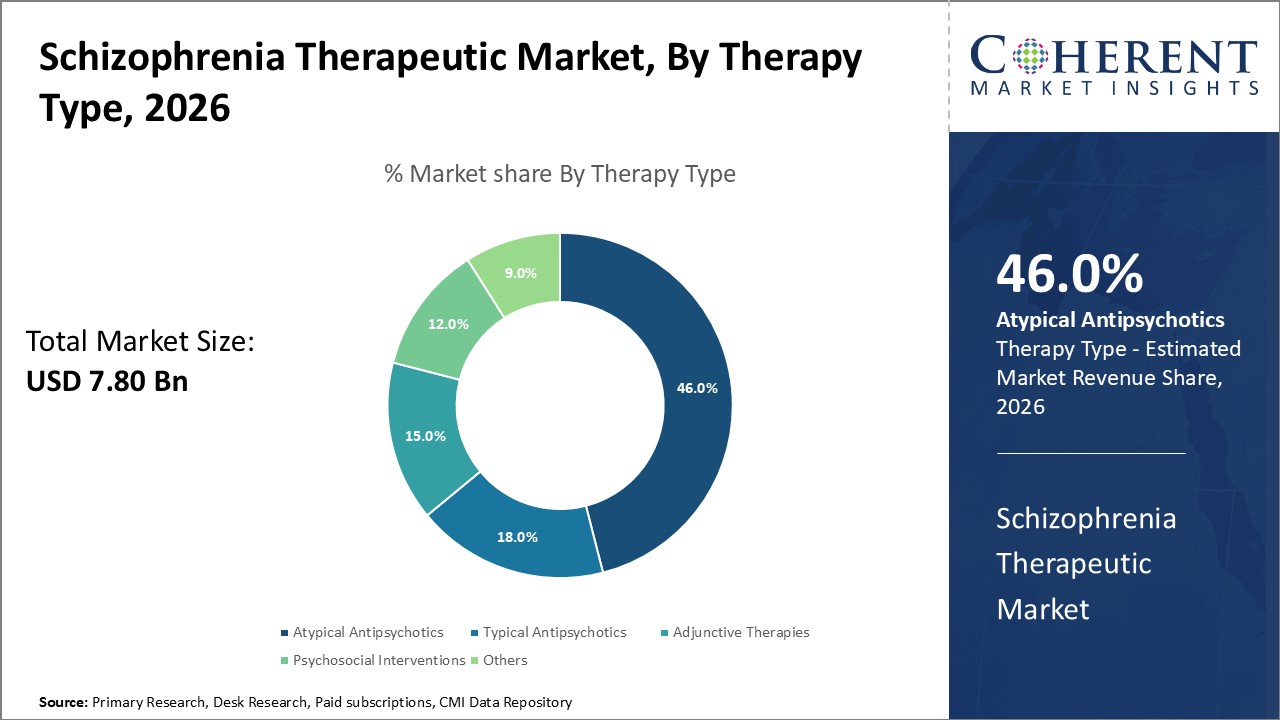
Schizophrenia Therapeutic Market Insights, By Therapy Type
Atypical Antipsychotics dominate the market share with 46%. Their broad efficacy in treating both positive and negative symptoms of schizophrenia, coupled with optimized side effect profiles, has solidified their leadership. The fastest-growing subsegment is Adjunctive Therapies, spurred by their application in treatment-resistant cases and integration with novel mechanisms like NMDA receptor modulation. Typical Antipsychotics remain relevant primarily in cost-sensitive markets but are gradually being supplanted due to higher side effect incidence. Psychosocial Interventions are gaining recognition but contribute modestly to market revenue.
Schizophrenia Therapeutic Market Insights, By Administration Route
Oral Tablets are currently dominating the market share, given their convenience and established acceptance. However, Long-Acting Injectables are the fastest growing segment, driven by their proven ability to significantly reduce relapse rates by improving adherence—a critical market challenge. Advances in LAI formulations, such as monthly or quarterly dosing schedules, have enhanced patient compliance and acceptance, influencing market revenue positively. Transdermal delivery remains niche, focusing on experimental delivery mechanisms.
Schizophrenia Therapeutic Market Insights, By Patient Demographics
The adult demographic is dominating due to the highest prevalence of schizophrenia and the largest share of treatment uptake. The Adolescent group exhibits the fastest growth, driven by improved early diagnosis and intervention strategies supported by school and community mental health programs. The Geriatric segment is increasingly recognized due to extended life expectancy and comorbidities requiring specialized management approaches.
Schizophrenia Therapeutic Market Trends
The Schizophrenia Therapeutic Market exhibits a clear shift towards enhanced treatment adherence through long-acting injectable formulations, with recent global clinical data confirming up to a 31% reduction in relapse rates among patients using LAIs compared to oral therapies.
The adoption of digital health solutions, including AI-powered symptom monitoring and telepsychiatry, rose sharply in 2025 and 2026, indicating a market trend towards hybrid care models that optimize patient management.
Furthermore, emerging economies are witnessing increased healthcare investment and schizophrenia diagnosis due to evolving regulatory focus and public health campaigns, driving market expansion.
Schizophrenia Therapeutic Market Insights, By Geography
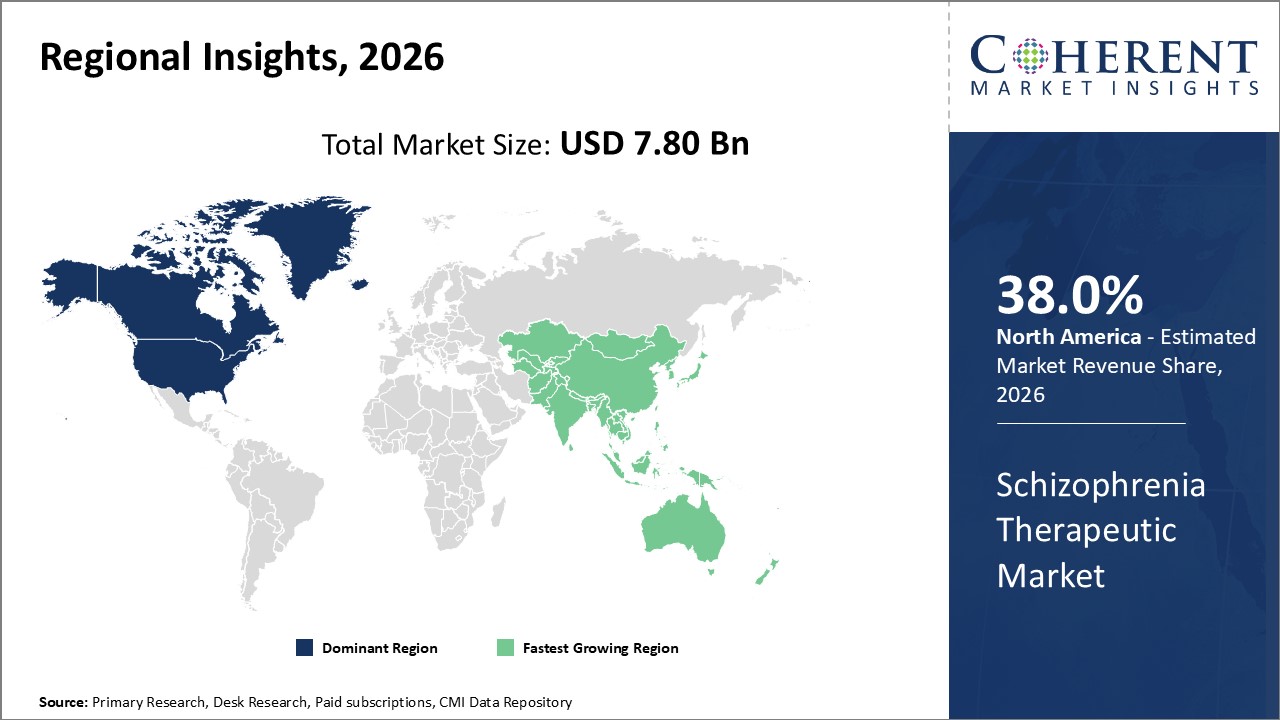
North America Schizophrenia Therapeutic Market Analysis and Trends
In North America, dominance in the Schizophrenia Therapeutic Market is fortified by comprehensive healthcare coverage, advanced R&D infrastructure, and favorable reimbursement frameworks, holding over 38% of the market share in 2026. Major companies like Johnson & Johnson and Otsuka Pharmaceutical lead localized innovation, enhancing treatment accessibility and expanding therapeutic options.
Asia Pacific Schizophrenia Therapeutic Market Analysis and Trends
Meanwhile, Asia Pacific exhibits the fastest growth with a CAGR of approximately 10.2%, propelled by a rising schizophrenia burden, increased mental health awareness, and governmental initiatives in countries such as China and India to improve psychiatric care infrastructure. Companies such as Sunovion Pharmaceuticals and Cipla Limited have capitalized on this growth by expanding production capacities and localized marketing strategies.
Schizophrenia Therapeutic Market Outlook for Key Countries
USA Schizophrenia Therapeutic Market Analysis and Trends
The U.S. market remains a pivotal contributor, backed by sophisticated healthcare systems and high R&D investments concentrated in bio-pharma hubs like Boston and San Francisco. The launch of advanced long-acting injectables by Alkermes and enhanced regulatory approvals for digital medicine platforms have driven a 9% increase in market revenue in 2026. Federal support through mental health legislation has also accelerated patient access to innovative therapies.
India Schizophrenia Therapeutic Market Analysis and Trends
India's market is expanding rapidly due to improved diagnostic rates and growing acceptance of psychiatric treatments. Government initiatives focusing on mental health awareness and affordability, combined with significant contributions from companies like Cipla and Zydus Cadila, have facilitated access to both branded and generic antipsychotics. This region accounts for a notable share in Asia Pacific’s growth, supported by an expanding patient base and domestic manufacturing capacity enhancements.
Analyst Opinion
The increasing prevalence of schizophrenia and related psychotic disorders underscores a robust demand for efficacious therapies, with recent epidemiological data indicating nearly 20 million people affected globally as of 2025. Treatment adherence remains a critical challenge, as evidenced by a 2026 clinical study highlighting a 46% non-compliance rate, emphasizing the need for extended-release formulations and long-acting injectables that dominated 39% of new prescriptions in 2025.
Pricing strategies continue to evolve, especially in regions with stringent healthcare budgets. In 2026, biosimilar antipsychotics captured approximately 12% market share in Europe, reducing therapy costs by an average of 20%, which has directly influenced market revenue growth and accessibility in high-demand countries.
On the production front, recent expansions in active pharmaceutical ingredient (API) manufacturing in the Asia Pacific, increasing by 15% in capacity during 2025, have created efficient supply chains and reduced lead times. This supply-side dynamic facilitated a 10% increase in schizophrenia therapeutic deliveries across emerging markets.
Import statistics reveal that North America remains a major importer of unconventional therapies, witnessing a 7% rise year-over-year in 2026, driven by advancements in personalized medicine and the integration of digital therapeutics. This reflects evolving market dynamics favoring innovative treatment combinations.
- Current Industry Events of 2026
- Market Size Estimation
- Regional Breakdown
- Competitive Landscape
- Customer Intelligence
- Segmental Analysis
- Pricing Analysis
- Key Market Drivers, Challenges & Future Trends
- Customized Insights Section
Market Scope
| Report Coverage | Details | ||
|---|---|---|---|
| Base Year: | 2025 | Market Size in 2026: | USD 7.80 billion |
| Historical Data for: | 2020 To 2024 | Forecast Period: | 2026 To 2033 |
| Forecast Period 2026 to 2033 CAGR: | 8.3% | 2033 Value Projection: | USD 12.4 billion |
| Geographies covered: |
| ||
| Segments covered: |
| ||
| Companies covered: | Pfizer Inc., Johnson & Johnson, Otsuka Pharmaceutical Co., Ltd., Novartis AG, Sunovion Pharmaceuticals Inc., H. Lundbeck A/S, Recordati S.p.A., Mylan N.V., Alkermes plc, Takeda Pharmaceutical Company Limited, Acadia Pharmaceuticals Inc. | ||
| Growth Drivers: |
| ||
Schizophrenia Therapeutic Market Growth Factors
The increasing global prevalence of schizophrenia, coupled with better diagnostic tools, continues to enlarge patient pools, driving demand. Government initiatives and reimbursement policies in developed regions have eased access to advanced therapeutics, bolstering market revenue growth. The shift towards long-acting injectables addressing compliance issues is a significant contributor, with LAIs projected to grow at an accelerated pace due to improved formulations reducing relapse rates by up to 30%, as reinforced by 2026 clinical trials. Advances in pharmacogenomics are paving the way for precision medicine, enabling tailored treatment regimens that enhance efficacy, thereby expanding market scope. Intensifying R&D investment to develop novel mechanisms of action and minimize side effects is further reinforcing market dynamics and fueling business growth.
Schizophrenia Therapeutic Market Development
In September 2025, Cobenfy received FDA approval as a novel schizophrenia therapy utilizing a non-dopaminergic mechanism, marking a major advancement for patients who do not respond well to conventional antipsychotics. The product was made available in the U.S. market by late October 2025, providing clinicians with a new option designed to improve symptom control while reducing metabolic and extrapyramidal side-effect risks.
In April 2025, CMG Pharmaceutical secured FDA approval for its schizophrenia treatment, Mezofy, an orally disintegrating aripiprazole film developed to enhance ease of administration and patient adherence. The approval enables the company to introduce a convenient alternative for patients requiring rapid-dissolving antipsychotic formulations, reinforcing the shift toward patient-centric drug delivery innovations within the psychiatric therapeutics segment.
Key Players
Leading Companies of the Market
Pfizer Inc.
Johnson & Johnson
Novartis AG
Sunovion Pharmaceuticals Inc.
H. Lundbeck A/S
Recordati S.p.A.
Mylan N.V.
Alkermes plc
Takeda Pharmaceutical Company Limited
Acadia Pharmaceuticals Inc.
Several leading companies have aggressively adopted market growth strategies such as targeted acquisitions, extended clinical pipelines, and partnerships focusing on digital therapeutics integration. For example, Otsuka Pharmaceutical’s collaboration with Proteus Digital Health resulted in the commercial launch of a digital medicine system in 2025, improving adherence rates by 25% among patients with schizophrenia. Similarly, Alkermes introduced a novel long-acting injectable formulation in early 2026, optimizing dosing intervals and enhancing patient convenience, contributing to a 15% revenue uptick within six months post-launch.
Schizophrenia Therapeutic Market Future Outlook
The next phase of schizophrenia therapeutics is likely to be defined by mechanistic diversification, combination regimens, and greater personalization. If emerging agents targeting glutamate systems, neuroinflammation, or neural plasticity demonstrate reproducible benefit, they may address currently unserved symptom domains (negative and cognitive). Long-acting biologics and depot formulations will continue expanding, especially where adherence and relapse drive high healthcare costs. Precision psychiatry—using biomarkers and digital phenotyping—could enable stratified treatment selection, improving outcomes and cost-effectiveness.
Reimbursement models and health economics evidence will be critical to adoption; payer acceptance will hinge on demonstration of reduced relapse, hospitalization, and longer-term functional gains. Additionally, integrated care pathways combining pharmacology with digital adherence tools, psychosocial interventions, and community support may reshape real-world effectiveness.
Schizophrenia Therapeutic Market Historical Analysis
Treatment of schizophrenia has undergone several paradigm shifts since chlorpromazine and early dopamine-blocking antipsychotics in the mid-20th century. While first-generation agents reduced positive psychotic symptoms, their side-effect profiles (extrapyramidal symptoms) limited acceptability. Second-generation antipsychotics improved tolerability but left substantial unmet needs—particularly for negative symptoms, cognitive deficits, and treatment-resistant cases. Over the last two decades, trends have included the development of long-acting injectable formulations to address adherence, greater attention to metabolic safety and cardiovascular risk mitigation, and attempts to expand mechanism targets beyond dopamine (e.g., glutamatergic modulators, muscarinic agonists). Investment patterns reflected cautious industry engagement due to clinical trial complexity and uncertain commercial models; however, renewed interest—driven by novel mechanisms and long-acting biologics—has revitalized the pipeline.
Sources
Primary Research Interviews:
Psychiatrists
Neurologists
Clinical Researchers,
Pharmacologists
Databases:
WHO Mental Health Atlas
ClinicalTrials.gov
PubMed
NIH Drug Database
Magazines:
Psychiatry Advisor
Mental Health Weekly
Pharmaceutical Technology
Drug Discovery Today
Journals:
Schizophrenia Bulletin
The Lancet Psychiatry
CNS Drugs
Journal of Clinical Psychiatry
Associations:
American Psychiatric Association (APA)
National Institute of Mental Health (NIMH)
WHO
European Psychiatric Association (EPA)
Get access to 250+ pages report
Every segment, forecast, competitor profile and data table behind the analysis above — available for instant download.
- ESOMAR Member
- ISO 9001:2015 Certified
- D-U-N-S Registered
- GDPR & CCPA Compliant
Missing comfort of reading report in your local language? Find your preferred language:
Transform your Strategy with Exclusive Trending Reports
Frequently Asked Questions
Leading companies include Pfizer Inc., Johnson & Johnson, Otsuka Pharmaceutical, Novartis AG, and Sunovion Pharmaceuticals, mainly driving product innovation and market expansion.
The market size is projected to increase from USD 7.80 billion in 2026 to USD 12.4 billion by 2033, reflecting a CAGR of 8.3% during this period.
The adult patient demographic represents the largest growth opportunity, supported by higher schizophrenia prevalence and increased diagnosis rates globally.
Integration of digital therapeutics and personalized medicine will accelerate market growth, with the adoption of long-acting injectable formulations that reduce relapse and improve compliance.
The landscape is competitive with emphasis on R&D-driven innovation and biosimilar entries; challenges include patient adherence, high treatment costs, and regulatory complexities in emerging regions.
Strategies include alliances for digital healthcare integration, product portfolio diversification, targeted marketing for adherence-improving formulations, and expansion into emerging markets through tailored pricing models.