

Global Adult Vaccines Market Size and Forecast – 2026-2033
The global adult vaccines market is estimated to be valued at USD 32.80 Bn in 2026 and is expected to reach USD 51.60 Bn by 2033, exhibiting a compound annual growth rate (CAGR) of 6.6% from 2026 to 2033. This growth can be attributed to the rise in awareness regarding adult immunization, increasing incidence rate of chronic diseases, and the increase in government initiatives to encourage adult vaccination programs worldwide. Furthermore, developments in vaccine technologies are also likely to propel the market growth in the future.
Key Takeaways of the Global Adult Vaccines Market
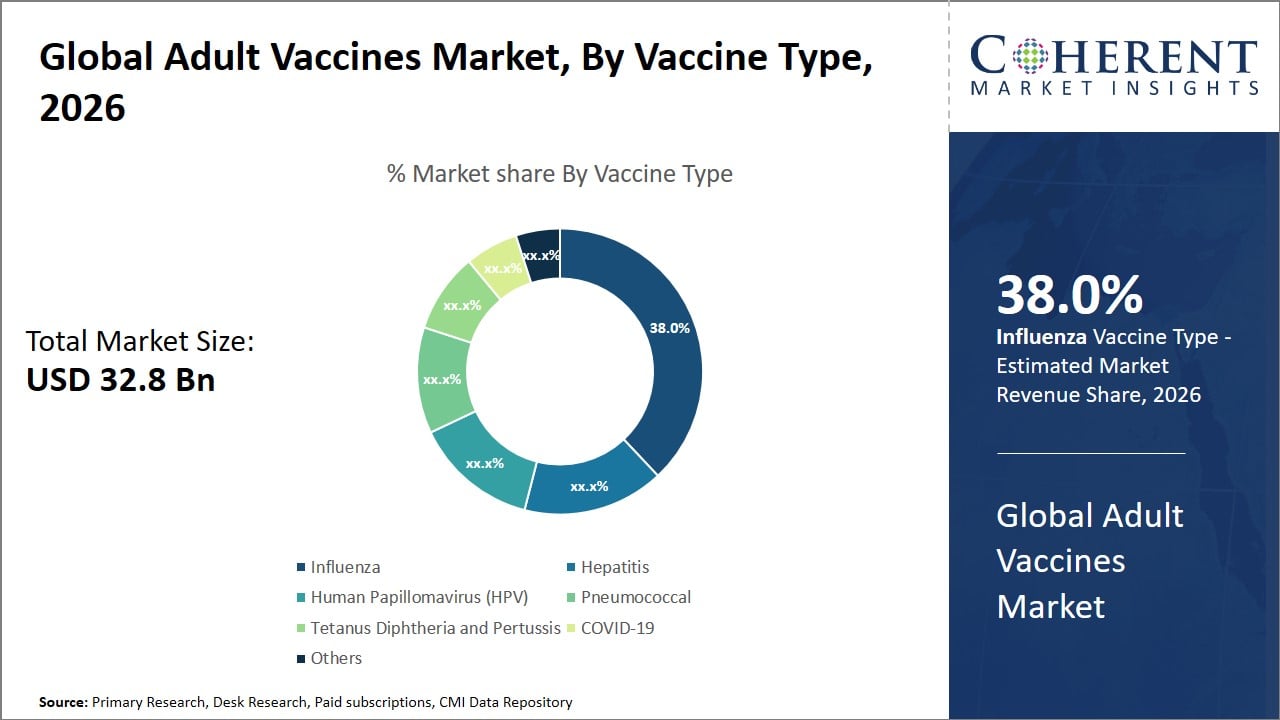
- The influenza segment is expected to dominate the global adult vaccines market by vaccine type, accounting for approximately 38.0% of the total market share in 2026.
- The inactivated and subunit vaccines segment is expected to dominate the global adult vaccines market by technology, accounting for approximately 55.0% of the total market share in 2026.
- The preventive segment is expected to dominate the global adult vaccines market by application, accounting for approximately 92.0% of the total market share in 2026.
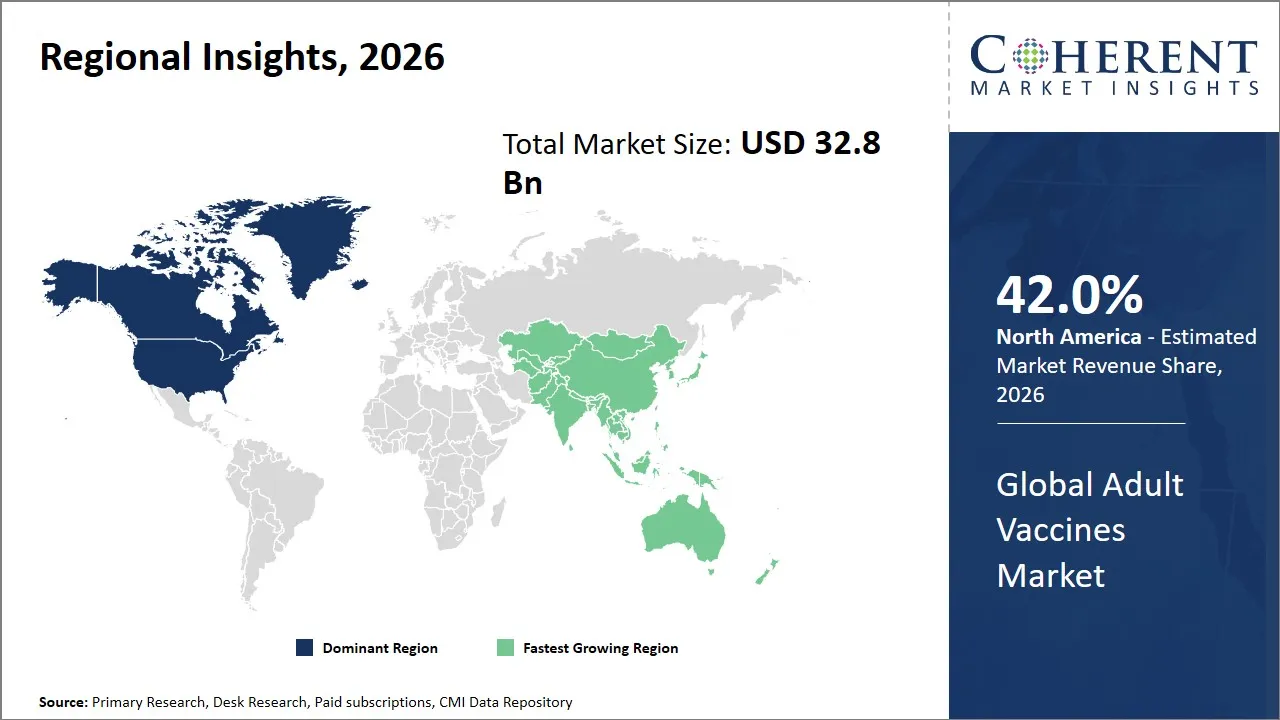
- North America is expected to dominate the global adult vaccines market in 2026, accounting for approximately 42.0% of the total market share.
- Asia Pacific is anticipated to witness the fastest growth, holding a market share of 25.0% in 2026.
Market Overview
- Adult vaccines refer to immunizations meant for protecting adults from various infectious diseases such as influenza, pneumococcal disease, hepatitis, shingles, and COVID-19. These vaccines have an essential role in preventive healthcare by reducing disease incidence, rates of hospitalization, and mortality rates in adults and older adults.
- The adult vaccines market is growing steadily at the global level. The growth is attributed to an increasing incidence of infectious diseases, an increasing geriatric population, and an increasing awareness level regarding preventive immunization. Adults are more likely to be infected by various infectious diseases due to declining immunity with increasing age. Thus, they require immunization against infectious diseases.
- Additionally, technological advancements in vaccine types such as mRNA, recombinant, and combination vaccines, along with an increasing focus on immunization by governments, is driving the growth of the adult vaccines market. The adult vaccines market is likely to grow in the future due to ongoing innovations in vaccine technology and increasing investments in healthcare.
Currents Events and their Impact
Current Events | Description and its Impact |
Strengthening Regulatory Frameworks for Adult Immunization |
|
Expansion of Adult Vaccination Programs and New Vaccine Approvals |
|
Segmental Insights
- Current Industry Events of 2026
- Market Size Estimation
- Regional Breakdown
- Competitive Landscape
- Customer Intelligence
- Segmental Analysis
- Pricing Analysis
- Key Market Drivers, Challenges & Future Trends
- Customized Insights Section
Why Does the Influenza Segment Dominate the Global Adult Vaccines Market in 2026?
The influenza segment is anticipated to hold a market share of 38.0% in 2026, primarily due to the recurring impact of seasonal flu outbreaks. Influenza is a very contagious respiratory infection that results in high morbidity and mortality rates. As a result, the impact of this disease is felt throughout the year. Moreover, the fact that the virus is changing every year, requiring the formulation of the vaccine to change as well, ensures the steady market share of this segment in the adult vaccines market.
The influenza vaccine is further expected to gain from the increasing awareness of the importance of the flu vaccine, which is being promoted by various campaigns. In addition, the workplace wellness programs are also playing their role in promoting the use of the flu vaccine. As a result, the segment for the influenza vaccine is expected to hold a dominant position in the market for adult vaccines.
For instance, in September 2024, Centers for Disease Control and Prevention (CDC) launched its influenza vaccination campaign for the 2024-2025 season, emphasizing the need for annual vaccination in all adults, especially in high-risk groups. The campaign aids in the allocation of 148 million doses of influenza vaccines in the U.S., based on surveillance results for strain selection to increase the immunogenicity of the quadrivalent influenza vaccine.
Why Does the Inactivated and Subunit Vaccines Segment Dominate the Global Adult Vaccines Market in 2026?
The inactivated and subunit vaccines segment is projected to hold a market share of 55.0% in the global adult vaccines market, attributed to well-proven safety and efficacy profiles of the vaccine types. Inactivated and subunit vaccines are effective in inducing the immune response without causing the disease in the body, making them the most suitable option for adults suffering from weak immune conditions or chronic diseases.
In addition, the well-proven safety and efficacy profiles of the vaccine types have resulted in a high level of validation, making them the most accepted option in the development of vaccines against diseases such as influenza, hepatitis, and pneumococcal infections.
Furthermore, the vaccine types also provide a high level of tolerability, with mild side effects, making them the most suitable option for the adult population, including elderly patients suffering from weak immune conditions or chronic diseases.
The Preventive Segment Dominates the Global Adult Vaccines Market
The preventive segment is projected to hold a market share of 92.0% in 2026, attributed to the global focus on preventive healthcare and disease prevention. Vaccination is one of the most critical tools in public health practice for disease prevention and control by reducing the incidence and severity of infectious diseases. The importance of vaccination has increased in recent times because of the increasing aged population and chronic conditions, which enhance the severity of infectious diseases. Routine vaccination in adults for infectious diseases such as influenza, pneumonias, and hepatitis is one of the critical tools in healthcare practice.
The increasing vaccine-preventable diseases and strong support from governments and healthcare organizations have also fueled the growth of preventive vaccines. The increasing vaccine-preventable diseases in recent times have positively impacted preventive vaccines. The strong support from governments and healthcare organizations has also fueled the growth of preventive vaccines. The COVID-19 pandemic has positively impacted preventive vaccines in recent times by increasing vaccine acceptance and proving that vaccination is one of the critical tools in disease prevention.
Comprehensive Regulatory Frameworks Governing the Global Adult Vaccines Market
Regulatory Authority / Framework | Regulatory Focus | Impact on Adult Vaccines Market |
U.S. Food and Drug Administration (FDA) | Biologics License Application (BLA), clinical trials, safety & efficacy standards for vaccines | Ensures high safety and accelerates approval of innovative vaccines (e.g., mRNA, RSV) |
European Medicines Agency (EMA) | Centralized approval process, pharmacovigilance, and quality standards | Promotes harmonized approvals across Europe and strengthens vaccine safety monitoring |
World Health Organization (WHO) | Prequalification (PQ) program and global immunization guidelines | Facilitates global vaccine access, especially in low- and middle-income countries |
Centers for Disease Control and Prevention (CDC) / ACIP | Adult immunization schedules and vaccination recommendations | Drives vaccine adoption through evidence-based guidelines and public health policies |
European Commission | Vaccine procurement, public health policies, and regulatory directives | Supports large-scale immunization programs and cross-country vaccine distribution |
National Medical Products Administration (NMPA) | Vaccine approval, clinical evaluation, and post-market surveillance | Expands market access in China and strengthens regulatory transparency |
Central Drugs Standard Control Organization (CDSCO) | Vaccine approval and regulation under New Drugs & Clinical Trials Rules | Encourages vaccine availability and growth in emerging markets |
Regional Insights
North America Adult Vaccines Market Analysis and Trends
The North America region is projected to lead the market with a 42.0% share in 2026, attributed to a well-established healthcare infrastructure, high research standards, and government initiatives for adult immunization programs. Organizations like the Centers for Disease Control and Prevention, a U.S. government agency, and similar organizations actively support adult vaccination awareness and policy initiatives, resulting in high vaccination rates.
Furthermore, the presence of pharmaceutical and biotechnological companies like Pfizer, Merck & Co., and Moderna facilitates the rapid development and distribution of adult vaccines, including influenza, pneumococcal, HPV, and COVID-19 vaccines. Established healthcare infrastructure in terms of reimbursement policies and high supply chain standards is a significant contributor to market dominance. Trade agreements and high investment in vaccine research and development by both public and private entities are factors that contribute to North America's dominance in the market.
For instance, on March 27, 2026, a report published by the University of Minnesota emphasized the fact that after the pandemic, the Americas saw a surge in pertussis infections, which reflected the deficiency in routine immunization. The rise in vaccine-preventable diseases emphasizes the need for adult booster vaccinations, thereby increasing the demand for adult vaccines.
(Source: University of Minnesota)
Asia Pacific Adult Vaccines Market Analysis and Trends
Asia Pacific is anticipated to witness the fastest growth, holding a market share of 25.0% in 2026, attributed to the expansion of healthcare infrastructure, increasing awareness of adult vaccines, and the government's increasing focus on preventive healthcare. Countries such as China, India, and South Korea are increasing their immunization policies to include adult vaccines in addition to the existing childhood vaccines. This is due to the increasing elderly population and the prevalence of chronic diseases in the region.
Improvements in logistics, increasing disposable incomes, and the expansion of pharmaceutical manufacturing bases also contribute to the growth of the adult vaccines market in the region. Increasing participation by multinational companies in the vaccine market, such as GlaxoSmithKline (GSK) and Sanofi, along with local players such as the Serum Institute of India, also contributes to the growth of the adult vaccines market by increasing competition in the region.
Adult Vaccines Market Outlook for Key Countries
How is the U.S. Helping in the Growth of the Adult Vaccines Market?
The adult vaccines market in the U.S. is characterized by strong government support through several schemes, including the Adult Immunization Action Plan and strong funding for research. Pfizer and Moderna are examples of companies that have changed the adult vaccines market through innovative mRNA vaccines, such as those used in dealing with the COVID-19 pandemic. There is a strong network of healthcare facilities and insurance schemes, resulting in high vaccination rates. Also, the country has a strong portfolio in conducting research, including trials, and in promoting public health through preventive care.
For instance, in August 2024, recommendations published by U.S. Centers For Disease Control and Prevention in Advisory Committee on Immunization Practices on the administration of the RSV vaccine in adults aged ≥60 years have emphasized the importance of the risk-based approach in the administration of the RSV vaccine in the adult population. In particular, the recommendations have emphasized the importance of vaccinating the high-risk populations who are suffering from chronic conditions and immunocompromising conditions.
(Source: U.S. Centers For Disease Control and Prevention)
How is Germany Helping in the Growth of the Adult Vaccines Market?
Germany holds the top position in the adoption rate of adult vaccination in the European region due to the well-established healthcare system in the country and the high rate of public trust in the procedure. The German Standing Committee on Vaccination, also known as STIKO, has issued comprehensive recommendations on adult vaccination. Some of the prominent companies in this sector are BioNTech, which developed a COVID-19 vaccine in collaboration with Pfizer, and Bavarian Nordic, which has driven the development in vaccine technology. The government's reimbursement policies provide incentives for adult vaccination, and the well-established healthcare system in the country ensures accessibility to adult vaccines thus, driving the market growth.
Key Drivers for the Growth of the China Adult Vaccines Market
The adult vaccines market in China has seen a tremendous growth rate, where the government has framed several policies that encourage adult vaccination in the country. This is mainly due to the rise in the elderly population and non-communicable diseases. The Chinese Center for Disease Control and Prevention has been actively promoting adult vaccination in China, aiming to increase vaccination rates in the country.
The local vaccine manufacturers in China, such as Sinovac and CanSino Biologics, hold a major share of the adult vaccines market in China, where multinationals are entering the market through joint ventures in China. There has been a significant rise in healthcare infrastructure and technology, resulting in a higher availability of vaccines in China.
The strategies adopted by the Chinese government in terms of easing the vaccine approval process in China and enhancing research and development in China have significantly contributed to the growth of the adult vaccines market in China.
India Adult Vaccines Market Trends
The adult vaccines market in India is gaining momentum due to an increase in government initiatives aimed at adult immunization in addition to childhood immunization. Various organizations, like the Ministry of Health and Family Welfare, are working to spread more awareness regarding vaccines in the adult population to prevent preventable diseases.
The Serum Institute of India, which is the largest vaccine manufacturer in the world in terms of volume, plays an important role in providing vaccines at affordable prices both in the country and worldwide. An increase in healthcare spending, urbanization, and better cold chain infrastructure is also adding to the momentum driving the market growth in the country.
Regional Reimbursement Landscape for Adult Vaccines Market
Region | Reimbursement Scenario | Key Programs / Systems | Impact on Adult Vaccines Market |
North America | Strong reimbursement coverage through public and private insurance for key adult vaccines (influenza, pneumococcal, COVID-19) | Centers for Medicare & Medicaid Services (CMS), Private Insurers | High vaccination rates and strong market dominance |
Europe | Strong reimbursement: Universal healthcare systems provide broad reimbursement for recommended adult vaccines | National Health Service (NHS), EU National Health Programs | Ensures wide accessibility and stable market growth |
Asia Pacific | Mixed reimbursement; strong in Japan and Australia, limited but improving in China and India | National Immunization Programs, Government Subsidies | Moderate adoption with high growth potential |
Latin America | Partial reimbursement through public health programs; reliance on government-funded vaccination drives | National Immunization Programs | Moderate uptake with cost constraints |
Middle East & Africa | Limited reimbursement; largely dependent on government initiatives and international support programs | Gavi, the Vaccine Alliance, Public Health Systems | Lower adoption but improving access in select countries |
Market Players, Key Developments, and Competitive Intelligence
Key Developments
- In January 2026, Vaxcyte announced a development in the VAX-31 pneumococcal conjugate vaccine program for adult and infant populations. This development demonstrates the promise of new-generation vaccines in boosting the adult vaccines market.
- In December 2025, Sanofi announced the acquisition of Dynavax Technologies. This acquisition has enabled the company to own a marketed adult hepatitis B vaccine and a shingles vaccine candidate. This move has strengthened the position of the company in the market for adult vaccines.
- In March 2024, Dr. Reddy’s Laboratories forged an exclusive distribution agreement with Sanofi Healthcare India Private Limited. This partnership is aimed at promoting and distributing sanofi’s vaccine offerings throughout India. The deal was designed to improve access to vaccines and, at the same time, bolster Dr. Reddy’s position in the adult and pediatric vaccine sectors.
Top Strategies Followed by Global Adult Vaccines Market Players
Player Type | Strategic Focus | Examples |
Established Market Leaders | Established market leaders emphasize research and development investments in next-generation vaccines that are more potent, safe, and offer a wider range of virus strains. They emphasize innovation in vaccine platforms, regulations, and large-scale commercialization by leveraging global distribution channels and collaborating strategically with governments and healthcare organizations. | In May 2023, GlaxoSmithKline plc announced obtained U.S. FDA approval for its RSV vaccine (arexvy), which is the first RSV vaccine for adults and further establishes GlaxoSmithKline as a leader in adult respiratory vaccines and expands the Company’s portfolio of innovative vaccines. |
Mid-Level Players | Mid-level market players emphasize cost-effective vaccine solutions by optimizing production processes and developing strategic partnerships. They emphasize regional market development, flexible production, and partnerships that improve supply chain efficiency and cater to regional, price-sensitive, and emerging market demands. | In August 2023, Biological E Limited expanded its vaccine portfolio by forging strategic partnerships that would enhance the availability of vaccines at an affordable price in emerging markets and increase the availability of adult vaccines. |
Small-Scale Players | Small-scale market players concentrate on the development of innovative specialized vaccines, targeting specific diseases, where advanced technology and associations with research institutions are used to develop and enter the markets. | In June 2023, Valneva SE obtained U.S. FDA approval for its vaccine for adults to protect against chikungunya infection (IXCHIQ). |
Market Report Scope
Adult Vaccines Market Report Coverage
| Report Coverage | Details | ||
|---|---|---|---|
| Base Year: | 2025 | Market Size in 2026: | USD 32.8 Bn |
| Historical Data for: | 2020 To 2024 | Forecast Period: | 2026 To 2033 |
| Forecast Period 2026 to 2033 CAGR: | 6.69% | 2033 Value Projection: | USD 51.6 Bn |
| Geographies covered: |
| ||
| Segments covered: |
| ||
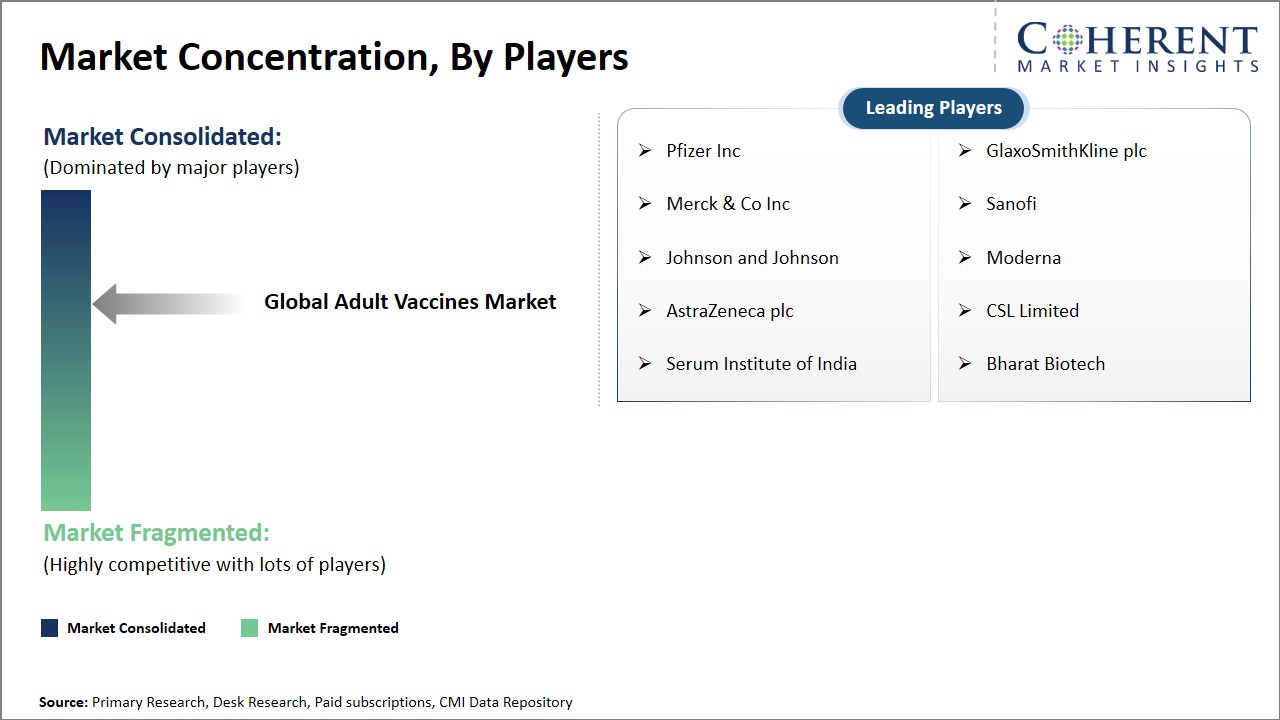
| Companies covered: | Pfizer Inc, GlaxoSmithKline plc, Merck & Co Inc, Sanofi, Johnson and Johnson, Moderna, AstraZeneca plc, CSL Limited, Serum Institute of India, and Bharat Biotech | ||
| Growth Drivers: |
| ||
| Restraints & Challenges: |
| ||
Global Adult Vaccines Market Dynamics
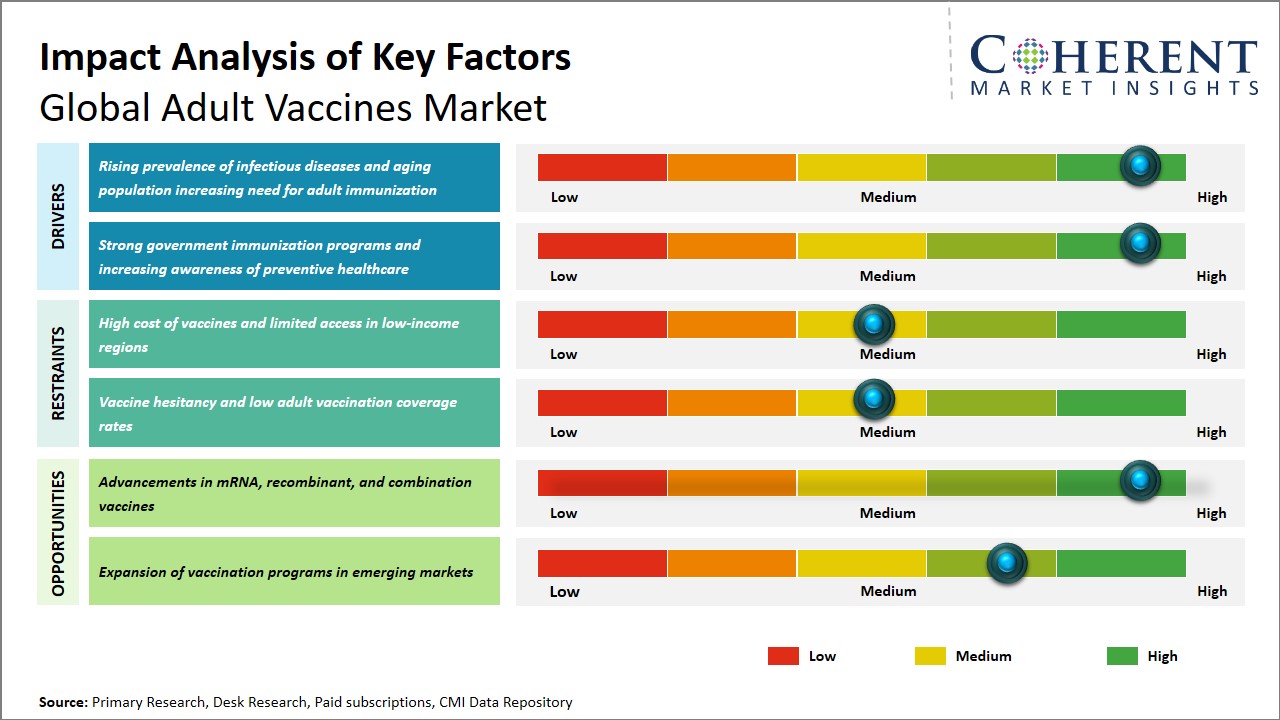
Global Adult Vaccines Market Driver – Rising Prevalence of Infectious Diseases and Aging Population Driving Demand for Adult Immunization
The rising rates of infectious diseases across the world have further increased the importance of adult vaccination programs. Adults are prone to various infectious diseases. On the other hand, the demographic shift in the world population towards an increasing number of elderly citizens has also increased the need for booster shots and adult vaccines. This segment of the population is usually prone to various infectious diseases like flu, pneumonia, and herpes zoster. Therefore, adult vaccines are extremely important in reducing morbidity and mortality rates.
Additionally, the rising rates of various infectious diseases that were previously eradicated due to weakening immunity and genetic changes in pathogens have also increased the importance of adult vaccines. Healthcare facilities across the world are increasingly recognizing the importance of adult vaccines. This is because adult vaccines can help reduce morbidity and mortality rates among this segment of the population.
For instance, according to the World Health Organization (WHO), immunization results in the prevention of approximately 4.4 million deaths globally. Furthermore, statistics provided by UNICEF and WHO (WUENIC estimates) reveal that an estimated 14.3 million children remained unimmunized in 2024, emphasizing the gap in immunization and consequently the spread of infectious diseases.
(Source: UNICEF, World Health Organization (WHO))
Global Adult Vaccines Market Opportunity - Advancements in mRNA, Recombinant, and Combination Vaccines
The global adult vaccines market is expected to gain significantly from recent developments in vaccine technology, especially in relation to mRNA, recombinant, and combination vaccines. For example, mRNA vaccines, which have entered the arena in recent times with much popularity owing to COVID-19, have one unique advantage in that they can be adapted quickly to counter new infectious diseases. This has opened a vast window of opportunity in targeting new diseases in adults, such as influenza, respiratory syncytial virus, and cytomegalovirus, thus expanding the vaccine portfolio for adults.
In addition, recombinant vaccine technology, which employs genetically engineered proteins, ensures a greater degree of safety and efficiency in vaccine development by targeting one particular antigen, thus eliminating side effects. This is especially true in adults, who might be suffering from various co-morbid conditions, such as compromised immunity.
Furthermore, combination vaccines, which ensure immunity against various infectious agents in one dose, ensure greater compliance in patients, thus reducing healthcare costs by limiting the number of clinic visits. These combination vaccines ensure greater efficiency in vaccination, thus ensuring greater vaccination rates, especially in adults.
For instance, in June 2024, Moderna, Inc. reported encouraging Phase 3 findings for its mRNA-1083 combination vaccine, designed to combat both influenza and COVID-19. The results showed that this new approach generated stronger immune responses than current vaccines given separately. This development underscores the increasing importance of mRNA-based combination vaccines in boosting immune system activity and streamlining vaccination plans for adults.
(Source: Moderna, Inc.)
Analyst Opinion (Expert Opinion)
- The adult vaccines market is likely to follow its growth trajectory in the future. The adult vaccines market is fueled by the long-term trend of preventive healthcare and the rise in adult infectious diseases. In addition to this, an increase in adult vaccination schedules, particularly in influenza, pneumococcal, RSV, and shingles vaccines, is further strengthening the long-term stability of the adult vaccines market.
- In terms of regulations, strengthening national immunization schedules and adding adult vaccines to national reimbursement lists are further enhancing access to adult vaccines. This is more evident in developed regions than in developing regions.
- In terms of technology, the adult vaccines market can be termed a transition market. Newer technologies like mRNA, recombinant, and adjuvant-based vaccines are further enhancing vaccine development cycles and immunogenicity. In addition to this, newer technologies are also changing the market dynamics in the future, particularly in terms of vaccine targets.
- In terms of strategies, market players are increasingly focusing on lifecycle management, combination vaccines, and emerging markets to tap potential opportunities. In addition to this, the convergence of digital technologies like vaccination reminder systems is also enhancing vaccination rates globally.
Speak to the analyst
Want personalized insights?
Take the findings above to one of our principal consultants, or have the report rebuilt around the segments, geographies and competitors you actually track.
Market Segmentation
- Vaccine Type Insights (Revenue, USD Bn, 2021 - 2033)
- Influenza
- Hepatitis
- Human Papillomavirus (HPV)
- Pneumococcal
- Tetanus Diphtheria and Pertussis
- COVID-19
- Others
- Technology Insights (Revenue, USD Bn, 2021 - 2033)
- Inactivated and Subunit Vaccines
- Live Attenuated Vaccines
- Conjugate Vaccines
- Recombinant Vaccines
- mRNA Vaccines
- Toxoid Vaccines
- Application Insights (Revenue, USD Bn, 2021 - 2033)
- Preventive
- Therapeutic
- Distribution Channel Insights (Revenue, USD Bn, 2021 - 2033)
- Hospitals
- Clinics
- Retail Pharmacies
- Government and Public Health Programs
- Others
- Regional Insights (Revenue, USD Bn, 2021 - 2033)
- North America
- U.S.
- Canada
- Latin America
- Brazil
- Argentina
- Mexico
- Rest of Latin America
- Europe
- Germany
- U.K.
- Spain
- France
- Italy
- Russia
- Rest of Europe
- Asia Pacific
- China
- India
- Japan
- Australia
- South Korea
- ASEAN
- Rest of Asia Pacific
- Middle East
- GCC Countries
- Israel
- Rest of Middle East
- Africa
- South Africa
- North Africa
- Central Africa
- North America
- Key Players Insights
- Pfizer Inc
- GlaxoSmithKline plc
- Merck & Co Inc
- Sanofi
- Johnson and Johnson
- Moderna
- AstraZeneca plc
- CSL Limited
- Serum Institute of India
- Bharat Biotech
Sources
Primary Research Interviews
Industry Stakeholders
- Adult Vaccine Manufacturers
- Pharmaceutical & Biotechnology Companies
- Vaccine Distributors and Supply Chain Providers
- Contract Research Organizations (CROs)
- Regulatory and Public Health Experts
End Users
- Hospitals and Clinics
- Public Health Agencies
- Vaccination Centers
- Pharmacies and Retail Healthcare Providers
Government and International Databases
- U.S. Food and Drug Administration (FDA) – Vaccine approvals and regulatory guidelines
- World Health Organization (WHO) – Global immunization data and policies
- Centers for Disease Control and Prevention (CDC) – Adult immunization schedules and disease data
- European Medicines Agency (EMA) – Vaccine approvals and clinical regulations
Trade Publications
- Vaccine (Elsevier)
- Fierce Pharma (Vaccines Section)
- BioPharma Dive
- Pharmaceutical Technology
Academic Journals
- Vaccine Journala
- The Lancet Infectious Diseases
- Nature Reviews Immunology
- Human Vaccines & Immunotherapeutics
Reputable Newspapers
- Financial Times – Global healthcare and vaccine trends
- The Wall Street Journal – Biopharma investments and innovations
Industry Associations
- International Federation of Pharmaceutical Manufacturers & Associations (IFPMA)
- Biotechnology Innovation Organization (BIO)
- Gavi, the Vaccine Alliance
Public Domain Resources
- World Health Organization (WHO) Immunization Reports
- Centers for Disease Control and Prevention (CDC) Surveillance Reports
- UNICEF Immunization Coverage Data
- National Immunization Program Reports
Proprietary Elements
- CMI Data Analytics Tool: Proprietary analytics tool to analyze real-time market trends, consumer behavior, and technology adoption in market
- Proprietary CMI Existing Repository of Information for Last 10 Years
Get access to 250+ pages report
Every segment, forecast, competitor profile and data table behind the analysis above — available for instant download.
- ESOMAR Member
- ISO 9001:2015 Certified
- D-U-N-S Registered
- GDPR & CCPA Compliant
Missing comfort of reading report in your local language? Find your preferred language:
Transform your Strategy with Exclusive Trending Reports
Frequently Asked Questions
The Adult Vaccines Market is estimated to be valued at USD 32.8 Bn in 2026, and is expected to reach USD 51.6 Bn by 2033.
The CAGR of the Adult Vaccines Market is projected to be 6.6% from 2026 to 2033.
Increasing prevalence of adult diseases and lifestyle changes are the major factors driving the growth of global adult vaccines market.
High development cost of adult vaccines and stringent regulatory guidelines for adult vaccine approval are the major factors hampering the growth of global adult vaccines market.
In terms of vaccine type, multivalent segment is estimated to dominate the market in 2026.
GlaxoSmithKline plc, Merck & Co., Inc., Pfizer Inc., Sanofi Pasteur, AstraZeneca, Johnson & Johnson, Novavax, Inc., Moderna, Inc., Inovio Pharmaceuticals, Inc., Bavarian Nordic, Dynavax Technologies Corporation, BioNTech S, Emergent BioSolutions Inc., Serum Institute of India Pvt. Ltd., Bharat Biotech, Sinovac Biotech Ltd. are the major players.
North America is expected to lead the global adult vaccines market.