

Secondary Hyperparathyroidism Treatment Market Size and Share Analysis - 2026 To 2033
The Secondary Hyperparathyroidism Treatment Market is expected to register a CAGR of 6.8% in terms of revenue, from USD 5.13 Bn in 2026 to around USD 8.14 Bn during 2033. The market expansion is mainly attributed to the growing prevalence of chronic kidney disease, growing patient pool of dialysis, growing detection of mineral bone disorder, and growing adoption of calcimimetics, vitamin D analogs, phosphate binders, and parathyroidectomy. As per WHO estimates, in 2026 around 674 million individuals are suffering from chronic kidney disease with severe kidney damage requiring dialysis or kidney transplantation.
Key Takeaways
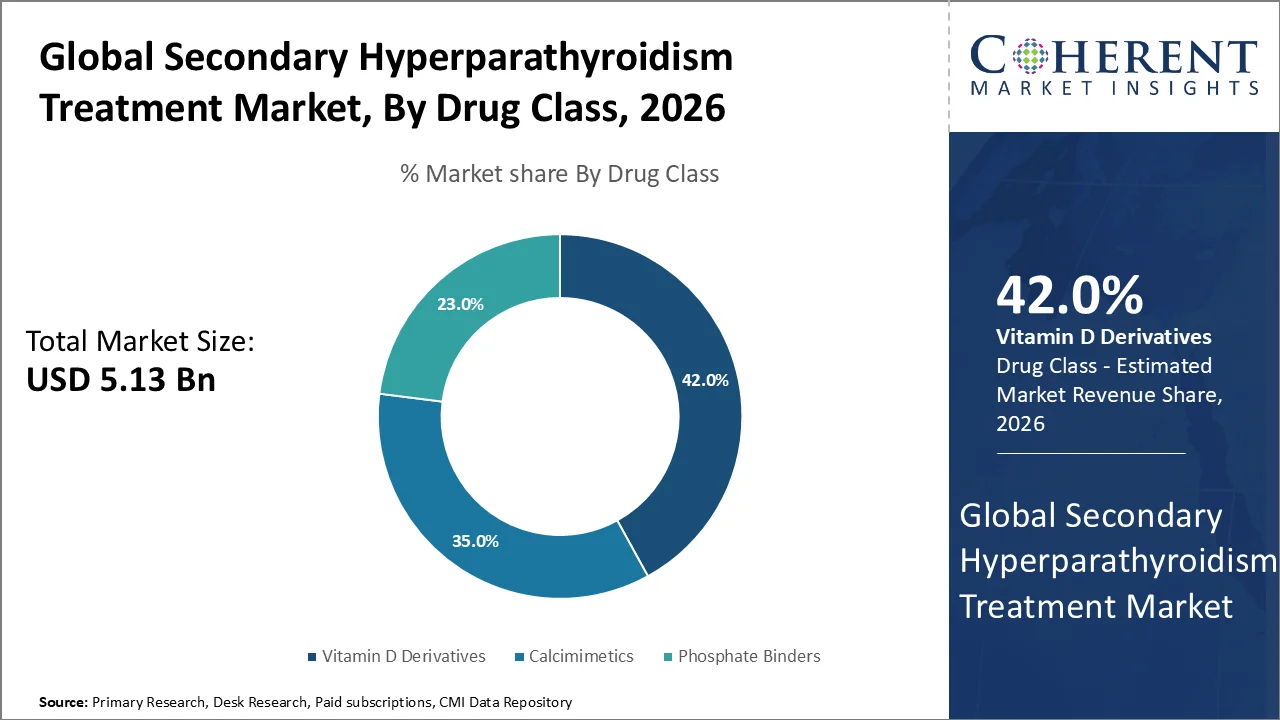
- The vitamin D derivatives segment is expected to be the most dominant one with about 42.0% of market share in 2026. Among the factors driving the growth of the segment are the use of calcitriol, paricalcitol, and doxercalciferol to lower high levels of parathyroid hormone, availability in oral and injection formulations, and usage in advanced CKD and dialysis patients. It was highlighted in a clinical review paper published in 2024 that the prevalence of secondary hyperparathyroidism is estimated at around 72% in stage G4–G5 CKD patients, and almost 60% of dialysis patients receive treatment using vitamin D.
- The hospital pharmacies have been projected to account for the largest distribution channel with around 49.0% market share by 2026. It is due to the presence of secondary hyperparathyroidism in patients with dialysis treatment in hospitals, intravenous drugs administration during dialysis treatment, and need for testing of parathyroid hormone levels, calcium, and phosphates levels. The data published by United States Renal Data System Annual Data Report in 2025 shows that only 14.1% of patients with newly diagnosed end stage kidney disease commenced peritoneal dialysis in 2023.
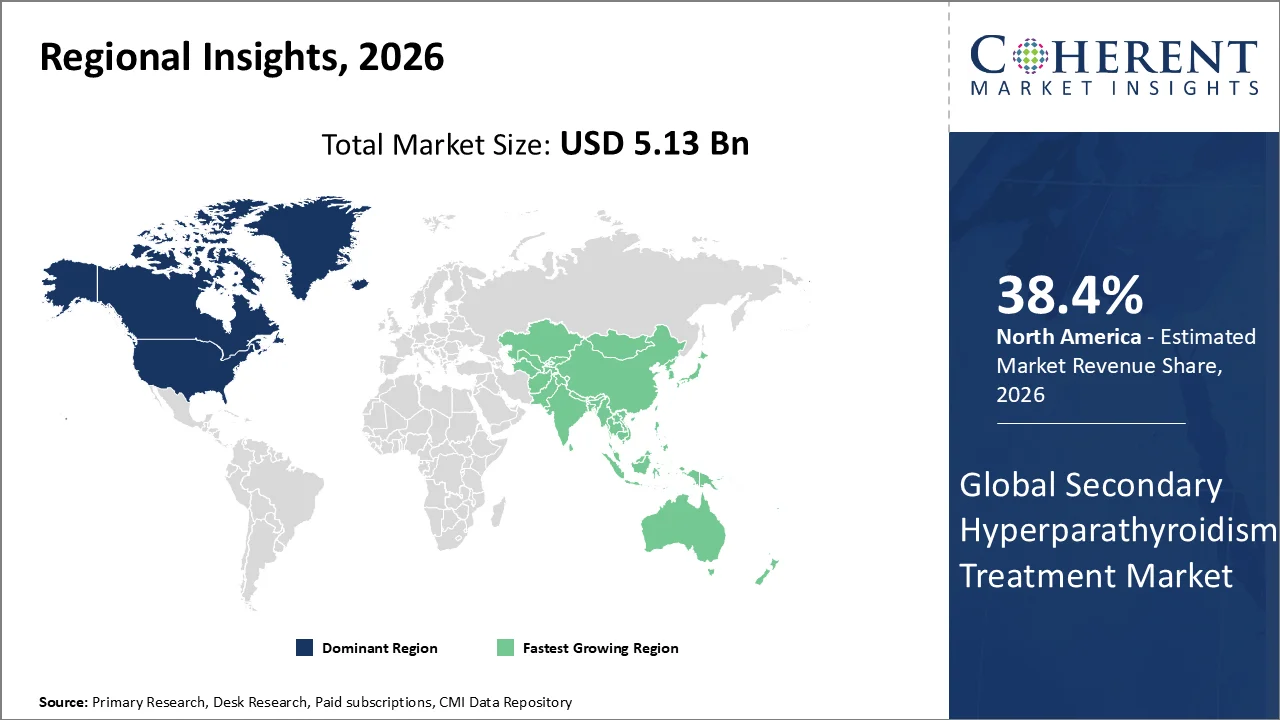
- The North America region is expected to dominate the global secondary hyperparathyroidism treatment market with an estimated 38.4% revenue share in 2026. The region’s leadership is attributable to its large kidney-failure population, established dialysis infrastructure, routine monitoring of CKD-related mineral and bone disorders, and strong access to calcimimetics, vitamin D derivatives, and phosphate binders. CMS also increased the ESRD bundled-payment base rate to USD 281.71 per treatment, representing an estimated 2.2% increase in total payments compared with 2025.
Market Drivers
Expanding Chronic Kidney Disease and Kidney-Failure Population Is Increasing the Need for SHPT Treatment
The rising global burden of chronic kidney disease is a major driver of the secondary hyperparathyroidism treatment market. The reduction in renal function leads to the occurrence of hyperparathyroidism due to phosphorus retention, hypocalcemia, and disturbances in mineral metabolism. The increased secretion of PTH makes it necessary to use more of vitamin D analogs, calcium mimetics, phosphate binders, biochemical control, and surgery in serious cases.
A 2024 systematic review and meta-analysis published in Frontiers in Endocrinology evaluated 21 studies involving 110,977 CKD patients and estimated the pooled global prevalence of CKD-associated secondary hyperparathyroidism at 49.5%.
In August 2024, Pathalys Pharma secured USD 105 million in Series B financing to support the completion of clinical development, preparation of a U.S. New Drug Application, and pre-commercialization activities for upacicalcet.
Broader Treatment Options and Personalized CKD-MBD Management Are Supporting Market Growth
The secondary hyperparathyroidism treatment landscape is moving towards personalized therapy for PTH, as well as calcium, phosphorus, vitamin D level, bone metabolism, and cardiovascular risk. This development is bringing more variety in pharmacotherapy classes used, dosage titration, combination therapy, and lab tests performed among patients receiving dialysis and with advanced chronic kidney disease.
The KDIGO Controversies Conference Report on CKD-Mineral and Bone Disorders from 2025 stressed the importance of monitoring and treatment of hyperparathyroidism for bone and vascular integrity. Moreover, elevated PTH concentrations and secondary hyperparathyroidism were found to be an independent risk factor for CKD, cardiovascular events, fractures, and death rate.
In March 2025, Kidney Disease: Improving Global Outcomes (KDIGO) released its final CKD-Mineral and Bone Disorder Controversies Conference Report to present a new, patient-based approach for managing CKD-MBD and secondary hyperparathyroidism.
Current Events and Their Impact on the Secondary Hyperparathyroidism Treatment Market
Current Event | Description and its Impact |
CMS Incorporates Oral Phosphate Binders into Medicare’s ESRD Payment Framework (January 2025) |
|
CMS Raises Dialysis-Facility Payments Under the CY 2026 ESRD PPS Final Rule (November 2025) |
|
- Current Industry Events of 2026
- Market Size Estimation
- Regional Breakdown
- Competitive Landscape
- Customer Intelligence
- Segmental Analysis
- Pricing Analysis
- Key Market Drivers, Challenges & Future Trends
- Customized Insights Section
Segmental Insights
Why Are Vitamin D Derivatives Acquiring the Largest Share?
On the basis of drug class, the vitamin D derivatives segment is projected to account for the largest share of the secondary hyperparathyroidism treatment market, with an estimated 42.0% share in 2026. The segment’s growth is supported by the established use of calcitriol, paricalcitol, and doxercalciferol to suppress excessive parathyroid hormone secretion, manage calcium balance, and reduce the progression of CKD-related mineral and bone disorders.
A study involving hemodialysis patients at an NHS renal centre reported that vitamin D supplementation increased median 1,25-dihydroxyvitamin D levels from 48.3 pmol/L to 96.2 pmol/L over 12 months, demonstrating the continuing clinical importance of vitamin D-based treatment in kidney-failure patients.
In April 2026, OPKO Health expanded its commercialization agreement with Nicoya Therapeutics for RAYALDEE, an extended-release formulation of calcifediol used to treat secondary hyperparathyroidism in adults with stage 3 or 4 chronic kidney disease and vitamin D insufficiency.
Hospital Pharmacies Hold the Largest Market Share
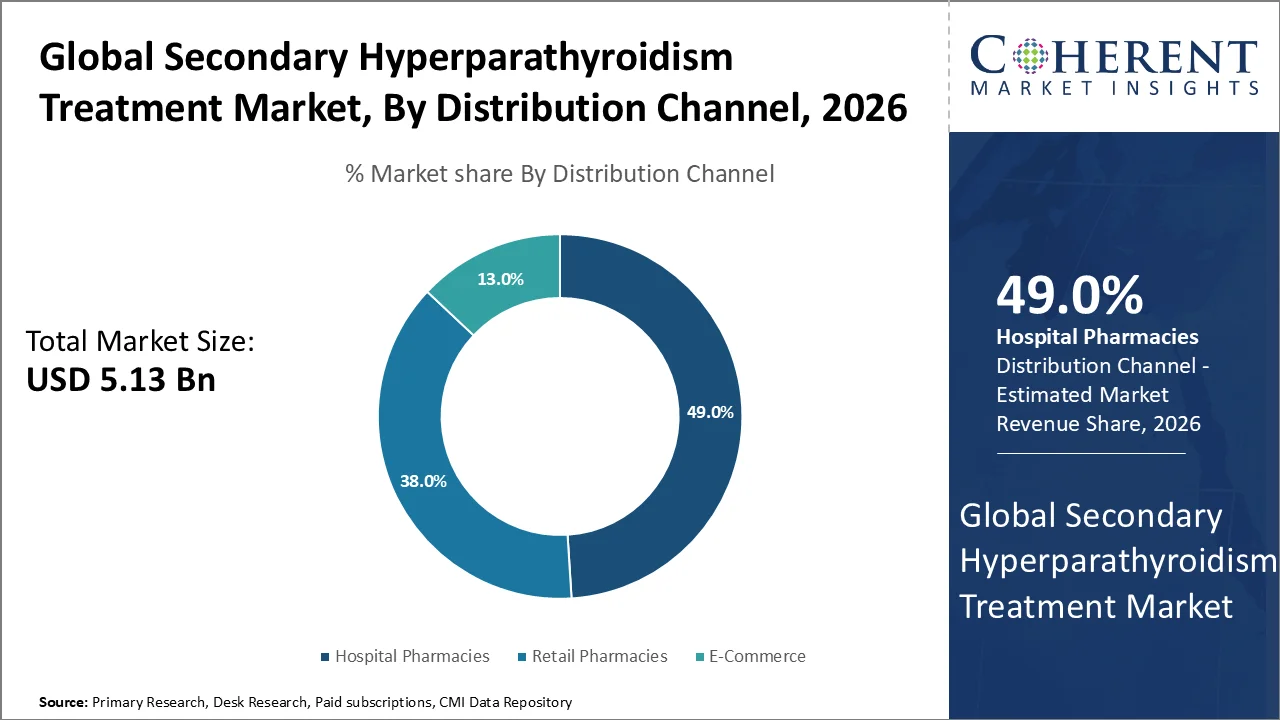
On the basis of distribution channel, the hospital pharmacies segment is expected to lead the market with an estimated 49.0% share in 2026. The segment’s dominance is attributable to the institutional management of advanced secondary hyperparathyroidism, frequent administration of injectable therapies during dialysis, specialist-led dose adjustment, and the requirement for regular monitoring of calcium, phosphate, vitamin D, and PTH levels.
According to DaVita’s 2025 Annual Report, the company provided dialysis and related laboratory services to approximately 200,500 U.S. patients through 2,657 outpatient dialysis centres as of December 31, 2025.
Secondary Hyperparathyroidism Treatment Market Trends
- The development of next-generation intravenous calcimimetics is expanding treatment options for hemodialysis patients who require stronger and more consistent PTH control. In May 2026, Pathalys Pharma presented new mechanistic data showing that investigational upacicalcet activated the calcium-sensing receptor at a higher calcium set point than the other calcimimetics evaluated, supporting continued development of differentiated dialysis-administered therapies.
- The rise in the use of combined treatment strategies has resulted in reduced dependence on monotherapy for the management of secondary hyperparathyroidism. A peer-reviewed journal article published in July 2026 indicates that the combination of nutritional vitamin D and calcimimetics might have a complementary effect on the regulation of PTH, calcium, phosphate, and fibroblast growth factor-23.
- The growing trend of employing phosphate absorption inhibitors with alternative methods of action from that of traditional binders is expanding the treatment options for CKD-MBD. In February 2025, Ardelyx announced that it had completed the first commercial year of XPHOZAH, a phosphate absorption inhibitor taken twice daily for the treatment of dialysis patients who under react to or can’t tolerate traditional binders.
Regional Insights
North America Dominates Owing to Its Extensive Dialysis Infrastructure and High Treatment Utilization
The North America region is projected to account for the largest secondary hyperparathyroidism treatment market share, with an estimated 38.4% in 2026. The region’s leadership is supported by its extensive dialysis-care infrastructure, high utilization of CKD-related mineral and bone disorder therapies, established reimbursement systems, and broad access to calcimimetics, vitamin D derivatives, phosphate binders, and biochemical monitoring.
According to Fresenius Medical Care’s 2025 Annual Report, the company treated 205,483 dialysis patients through 2,622 company-owned or operated clinics in the U.S. during 2025. The company also delivered approximately 31.07 million dialysis treatments in the U.S. during the year, demonstrating the considerable scale of institutional kidney care and the resulting demand for medicines used to control PTH, calcium, phosphate, and vitamin D levels.
Asia Pacific Is Expected to Be the Fastest-Growing Regional Market
The Asia Pacific secondary hyperparathyroidism treatment market is expected to register the fastest growth during 2026–2033. Regional expansion is being driven by increasing government investment in dialysis access, a large CKD population, expansion of hospital-based renal services, improving disease diagnosis, and rising availability of SHPT medicines across India, China, Japan, South Korea, and Southeast Asia.
Japan also represents a substantial established treatment base within the region. The Japanese Society for Dialysis Therapy’s 2024 registry, published in 2025, recorded 337,414 chronic dialysis patients, a prevalence of 2,725.4 patients per million people, and 36,404 patients newly initiating dialysis during 2024. The registry covered more than 4,400 dialysis facilities, highlighting the scale of renal-treatment delivery and laboratory monitoring across the country.
In August 2025, India’s Ministry of Health and Family Welfare reported that the Pradhan Mantri National Dialysis Programme had expanded to 1,704 operational dialysis centres across 751 districts in all 36 states and union territories as of June 30, 2025.
Large CKD Population and availability and reimbursement of established therapies Support the U.S. Market
The U.S. secondary hyperparathyroidism treatment market is expected to maintain a leading position owing to its large CKD patient population, established nephrology infrastructure, regular biochemical monitoring, and broad availability of vitamin D derivatives, calcimimetics, and phosphate-control therapies. The National Institute of Diabetes and Digestive and Kidney Diseases estimates that 35.5 million Americans, more than one in seven U.S. adults, have CKD, while approximately nine in ten affected adults are unaware of their condition. This undiagnosed population creates considerable potential for future CKD-MBD and SHPT diagnosis as kidney disease progresses.
In February 2026, OPKO Health reported USD 8.8 million in fourth-quarter 2025 revenue from RAYALDEE, an extended-release calcifediol therapy indicated in the U.S. for adults with stage 3 or 4 CKD, vitamin D insufficiency, and secondary hyperparathyroidism.
China Secondary Hyperparathyroidism Treatment Market Trends
The China secondary hyperparathyroidism treatment market is expected to experience strong growth owing to its substantial maintenance-dialysis population, unmet need for improved PTH control, introduction of newer calcimimetics, and expanding government reimbursement for innovative renal therapies. According to WinHealth Pharma, approximately 60% of China’s maintenance-dialysis patients experience SHPT to varying degrees, while only around 55% achieve recommended PTH targets, highlighting a considerable need for more effective and accessible treatment options.
In December 2025, WinHealth Pharma announced that Orkedia, evocalcet tablet, was included in China’s 2025 National Reimbursement Drug List, following its NMPA approval for dialysis-associated SHPT in July 2024.
Who are the Major Companies in Secondary Hyperparathyroidism Treatment Industry
Some of the major key players in Secondary Hyperparathyroidism Treatment Market are AbbVie, Inc., Shire, Inc., OPKO Health, Amgen, Inc., Sanofi SA, F. Hoffmann-La Roche AG, Kyowa Hakko Kirin Co. Ltd., KAI Pharmaceuticals, Astellas Pharma, Inc., Deltanoid Pharmaceuticals, and Leo Pharma.
Key News
- In April 2026, Sanofi received authorization for an updated Canadian product monograph for RENVELA (sevelamer carbonate). The update included revisions to dosing considerations, recommended dose adjustment and pediatric precautions, supporting the continued use of the non-calcium phosphate binder for controlling serum phosphorus in CKD patients receiving dialysis.
- In August 2024, AbbVie updated the U.S. prescribing information for ZEMPLAR® (paricalcitol injection). The vitamin D analogue remains indicated for the prevention and treatment of secondary hyperparathyroidism in CKD patients aged five years and older receiving dialysis, with treatment adjusted according to PTH and serum-calcium monitoring.
Market Report Scope
Secondary Hyperparathyroidism Treatment Market Report Coverage
| Report Coverage | Details | ||
|---|---|---|---|
| Base Year: | 2025 | Market Size in 2026: | USD 5.13 Bn |
| Historical Data for: | 2020 To 2024 | Forecast Period: | 2026 To 2033 |
| Forecast Period 2026 to 2033 CAGR: | 6.8% | 2033 Value Projection: | USD 8.14 Bn |
| Geographies covered: |
| ||
| Segments covered: |
| ||
| Companies covered: | AbbVie, Inc., Shire, Inc., OPKO Health, Amgen, Inc., Sanofi SA, F. Hoffmann-La Roche AG, Kyowa Hakko Kirin Co. Ltd., KAI Pharmaceuticals, Astellas Pharma, Inc., Deltanoid Pharmaceuticals, and Leo Pharma | ||
| Growth Drivers: |
| ||
| Restraints & Challenges: |
| ||
Analyst Opinion
- The secondary hyperparathyroidism treatment market is expected to remain monitoring-intensive and highly individualized, as controlling PTH without causing excessive calcium or phosphate disturbances remains clinically challenging. A March 2025 study covering 492 hemodialysis patients across two Italian dialysis centres found that 8.1% had PTH levels above 600 pg/mL, while 24.0% had suppressed PTH levels below 150 pg/mL. This variation supports sustained demand for laboratory monitoring, dose adjustment, and customized combinations of vitamin D derivatives, calcimimetics, and phosphate-control therapies.
- Vitamin D analogs are expected to maintain their significant market presence since they are effective in inhibiting PTH production and are widely used for treatment of SHPT during dialysis. According to a randomized multicentre study carried out in March 2026, taking oral paricalcitol leads to lowering PTH concentration from 319 pg/mL initially to 189 pg/mL in six weeks and 164 pg/mL in 12 weeks. It means that proper dosing can help keep adequate PTH level without causing excessive changes in mineral-metabolism indicators.
- The market’s next growth phase is expected to be shaped by injectable and differentiated calcimimetics that improve adherence and allow administration during dialysis. A 2024 Phase III study of upacicalcet enrolled 157 hemodialysis patients, of whom 94.2% achieved the target PTH range after 52 weeks, without reported symptomatic hypocalcemia or calcium levels below 7.5 mg/dL.
Speak to the analyst
Want personalized insights?
Take the findings above to one of our principal consultants, or have the report rebuilt around the segments, geographies and competitors you actually track.
Market Segmentation
- By Drug Class (Revenue, USD Bn, 2021-2033)
- Vitamin D Derivatives
- Calcitriol
- Doxercalciferol
- Paracalcitol
- Calcimimetics
- Phosphate Binders
- Calcium-Based Binders
- Non-Calcium Based Binders
- Vitamin D Derivatives
- By Distribution Channel (Revenue, USD Bn, 2021-2033)
- Hospital Pharmacies
- Retail Pharmacies
- E-Commerce
- By Region (Revenue, USD Bn, 2021-2033)
- North America
- U.S.
- Canada
- Latin America
- Brazil
- Mexico
- Argentina
- Rest of Latin America
- Europe
- Germany
- U.K.
- France
- Italy
- Spain
- Russia
- Rest of Europe
- Asia Pacific
- China
- India
- Japan
- Australia
- South Korea
- ASEAN
- Rest of Asia Pacific
- Middle East
- GCC
- Israel
- Rest of Middle East
- Africa
- South Africa
- Central Africa
- North Africa
- North America
Sources
Primary Research Interviews
- Nephrologists and renal-care physicians
- Endocrinologists involved in CKD-mineral and bone disorder management
- Dialysis-centre medical directors and clinical managers
- Hospital and dialysis pharmacy procurement professionals
- Clinical researchers working on calcimimetics and vitamin D therapies
- Pharmaceutical company medical affairs and product-development executives
- Key opinion leaders in secondary hyperparathyroidism and chronic kidney disease
Databases
- World Health Organization (WHO)
- U.S. Renal Data System (USRDS)
- Centers for Disease Control and Prevention (CDC)
- Centers for Medicare & Medicaid Services (CMS)
- National Institute of Diabetes and Digestive and Kidney Diseases (NIDDK)
- ClinicalTrials.gov
Magazines
- Nephrology News & Issues
- Renal & Urology News
- Kidney News
- Pharmaceutical Technology
- BioPharma Dive
Journals
- Kidney International
- American Journal of Kidney Diseases
- Clinical Journal of the American Society of Nephrology
- Nephrology Dialysis Transplantation
- Journal of the American Society of Nephrology
- Frontiers in Endocrinology
Newspapers
- Reuters
- The Wall Street Journal
- Financial Times
- Bloomberg
- The Economic Times
Associations
- Kidney Disease: Improving Global Outcomes (KDIGO)
- International Society of Nephrology (ISN)
- American Society of Nephrology (ASN)
- European Renal Association (ERA)
- National Kidney Foundation (NKF)
- Japanese Society for Dialysis Therapy (JSDT)
Public Domain Sources
- Company Annual Reports and Investor Presentations
- Pharmaceutical Company Press Releases and Pipeline Updates
- FDA, EMA, and Other Regulatory Authority Publications
- National Kidney Disease Registries and Dialysis Statistics
- Clinical Trial Protocols and Published Study Results
- CKD-MBD and Secondary Hyperparathyroidism Treatment Guidelines
- Medicare Reimbursement and ESRD Payment Policy Documents
- Patent Databases such as WIPO, USPTO, EPO, and Google Patents
Proprietary Elements
- CMI Data Analytics Tool
- Proprietary CMI Existing Repository of Information for the Last 10 Years
Get access to 250+ pages report
Every segment, forecast, competitor profile and data table behind the analysis above — available for instant download.
- ESOMAR Member
- ISO 9001:2015 Certified
- D-U-N-S Registered
- GDPR & CCPA Compliant
Missing comfort of reading report in your local language? Find your preferred language:
Transform your Strategy with Exclusive Trending Reports
Frequently Asked Questions
The Secondary Hyperparathyroidism Treatment Market is expected to reach approximately USD 8.14 Bn by 2033, increasing from USD 5.13 Bn in 2026.
Major companies covered in the global Secondary Hyperparathyroidism Treatment Market include AbbVie, Inc., Shire, Inc., OPKO Health, Amgen, Inc., Sanofi SA, F. Hoffmann-La Roche AG, Kyowa Hakko Kirin Co. Ltd., KAI Pharmaceuticals, Astellas Pharma, Inc., Deltanoid Pharmaceuticals, and Leo Pharma
The high cost of treatment and medications, limited diagnosis during early-stage CKD, adverse effects associated with certain therapies, high phosphate-binder pill burden, complex dose-adjustment requirements, and restricted access to dialysis in developing markets are major factors hampering market growth.
The rising prevalence of chronic kidney disease, expanding dialysis-dependent population, increasing diagnosis of CKD-related mineral and bone disorders, and growing adoption of vitamin D derivatives, calcimimetics, and phosphate binders are driving market growth.
The Secondary Hyperparathyroidism Treatment Market is anticipated to grow at a CAGR of 6.8% between 2026 and 2033.
North America is expected to dominate the global market with an estimated 38.4% revenue share in 2026, supported by its extensive dialysis infrastructure, established reimbursement systems, routine biochemical monitoring, and strong access to SHPT medicines.
Asia Pacific is expected to register the fastest growth during 2026–2033, driven by expanding dialysis infrastructure, improving CKD diagnosis, government-supported renal-care programs, and increasing availability of secondary hyperparathyroidism therapies.