

Life Sciences BPO Market Size and Forecast
Global life sciences BPO market is estimated to be valued at USD 525.77 Bn in 2026 and is expected to reach USD 1,283.65 Bn by 2033, exhibiting a compound annual growth rate (CAGR) of 13.6% from 2026 to 2033.
Key Takeaways
- By Service Type, the pharmaceutical outsourcing segment is projected to dominate the market with a 61.6% share in 2026 as increasing r&d costs and complexity.
- By End-User, pharmaceutical companies’ segment is estimated to contribute the highest market share of 41.6% in 2026 as cost reduction and operational efficiency.
- By Region, North America acquires the prominent market share of 40.7% in 2026 as consolidation and cost pressures in healthcare.
Market Overview
Global life sciences BPO market growth is driven by increasing research and development expenditure globally and rising reliance on outsourcing of non-core functions by pharmaceutical and biotech companies. Growing awareness for cost control alongside focus on expansion of manufacturing capabilities and services has encouraged market players to outsource business processes to third-party life sciences BPO providers. Furthermore, life sciences BPO’s bring opportunities to leverage location and technology advantages from their global network to increase efficiencies and optimize costs. This helps research organizations to focus more on their core functions and pipelines.
Current Events and their Impact on the Life Sciences BPO Market
Current Events | Description and its impact |
US-China Tech Deceleration |
|
AI Adoption in Clinical Operations |
|
Drug Shortage Crisis Response |
|
End-user Feedback and Unmet Needs in the Europe Life Sciences BPO Market
End-user Feedback and Unmet Needs
- Demand for Integrated, End-to-End Service Models: European pharmaceutical and biotech firms actively seek BPO partners capable of offering integrated services across clinical, regulatory, and commercial domains. They often express frustration with fragmented outsourcing, which complicates coordination. These businesses want to consolidate vendors to improve data flow, simplify management, and accelerate timelines while maintaining strict compliance.
- Need for Region-Specific Regulatory Expertise: End-users consistently highlight the difficulty of navigating the EU’s diverse regulatory landscape. They expect BPO providers to demonstrate strong, localized expertise—particularly in post-Brexit UK, Germany, and emerging markets. Clients demand partners well-versed in EMA rules, local HTA procedures, and multilingual documentation for efficient regulatory execution.
- Limited Real-Time Visibility and Data Transparency: Clients regularly call for greater transparency and live updates throughout outsourced projects. Many BPOs fall short by lacking real-time dashboards or unified platforms. This limitation causes delays, miscommunication, and compliance issues. End-users urge providers to adopt tech-driven solutions that enhance visibility, accuracy, and accountability in project tracking.
- Current Industry Events of 2026
- Market Size Estimation
- Regional Breakdown
- Competitive Landscape
- Customer Intelligence
- Segmental Analysis
- Pricing Analysis
- Key Market Drivers, Challenges & Future Trends
- Customized Insights Section
Segmental Insights
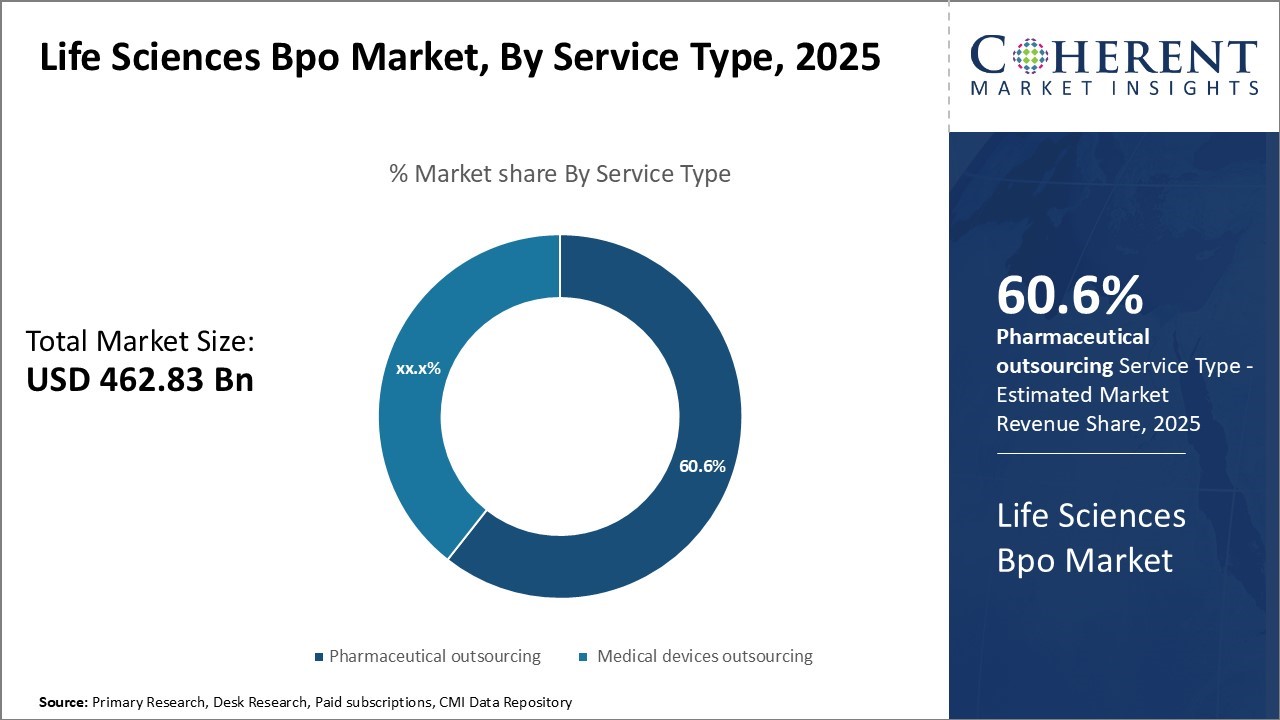
Life Sciences BPO Market Insights, By Service Type - Pharmaceutical outsourcing contributes the highest share of the market owing to its expansion of biologics and personalized medicine
The pharmaceutical outsourcing segment is projected to dominate the market with a 61.6% share in 2026 due to several key factors. Pharmaceutical and biotech companies increasingly outsource clinical trials and related services to Contract Research Organizations (CROs). CROs excel in managing comprehensive aspects of drug development, from early-stage research to post-marketing trials, leveraging their expertise in clinical monitoring, data management, biostatistics, and regulatory compliance. This specialization helps sponsors accelerate development timelines, efficiently navigate complex regulatory landscapes, and optimize resource allocation. By offering end-to-end solutions and access to global patient populations, CROs enhance trial quality and cost-efficiency, making them the preferred partners in the pharmaceutical industry.
For instance, according to an article published by Life Sciences Review, as drug discovery and development grow more complex, pharmaceutical companies are increasingly relying on Life Sciences Business Process Outsourcing (BPO) to enhance efficiency, reduce expenses, and speed up research efforts.
Life Sciences BPO Market Insights, By End User - Pharmaceutical companies contribute the highest share of the market owing to its access to global talent and infrastructure
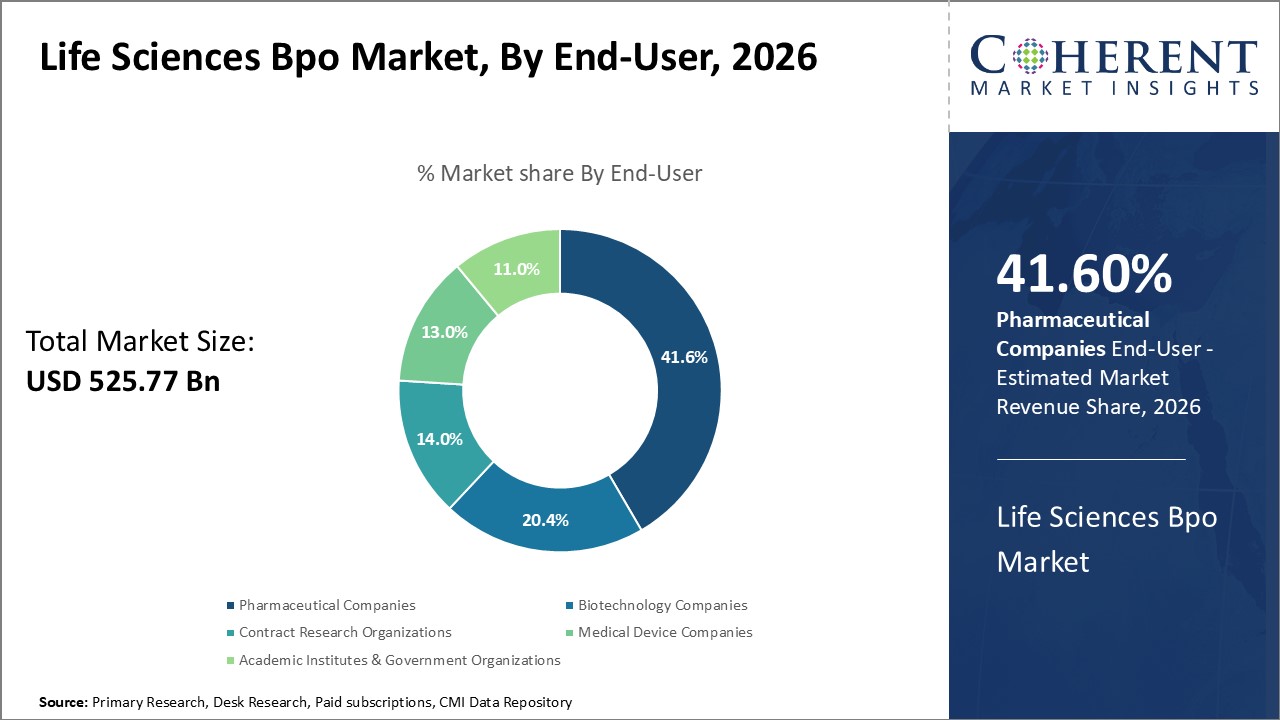
Pharmaceutical companies’ segment is estimated to contribute the highest market share of 41.6% in 2026. Drug makers continue to outsource non-core functions in order to streamline internal operations and concentrate on high-value strategic activities. Their outsourcing requirements extend across the entire value chain from discovery and pre-clinical testing to commercialization support. Clinical development presents the biggest opportunity due to scale and complexity of trials. Pharma companies partner with CROs to execute global multi-site studies and leverage specialized technical expertise. Manufacturing and quality testing is also increasingly handled by contract manufacturing organizations (CMO) to gain capacity and flexibility. On the commercial front, contract sales organizations (CSO) are engaged for promotional activities in select therapeutic areas and geographical markets.
In March 2025, Shilpa Medicare, based in Raichur, launched a new full-service hybrid CDMO, supporting both small and large molecule development, including peptides, with a focus on oncology. The hybrid model offers end-to-end discovery, clinical, and commercial services, along with ready-to-license novel formulations for B2B partners. This dual approach allows pharma companies to benefit from Shilpa’s oncology expertise while minimizing development risks and timelines.
Regional Insights
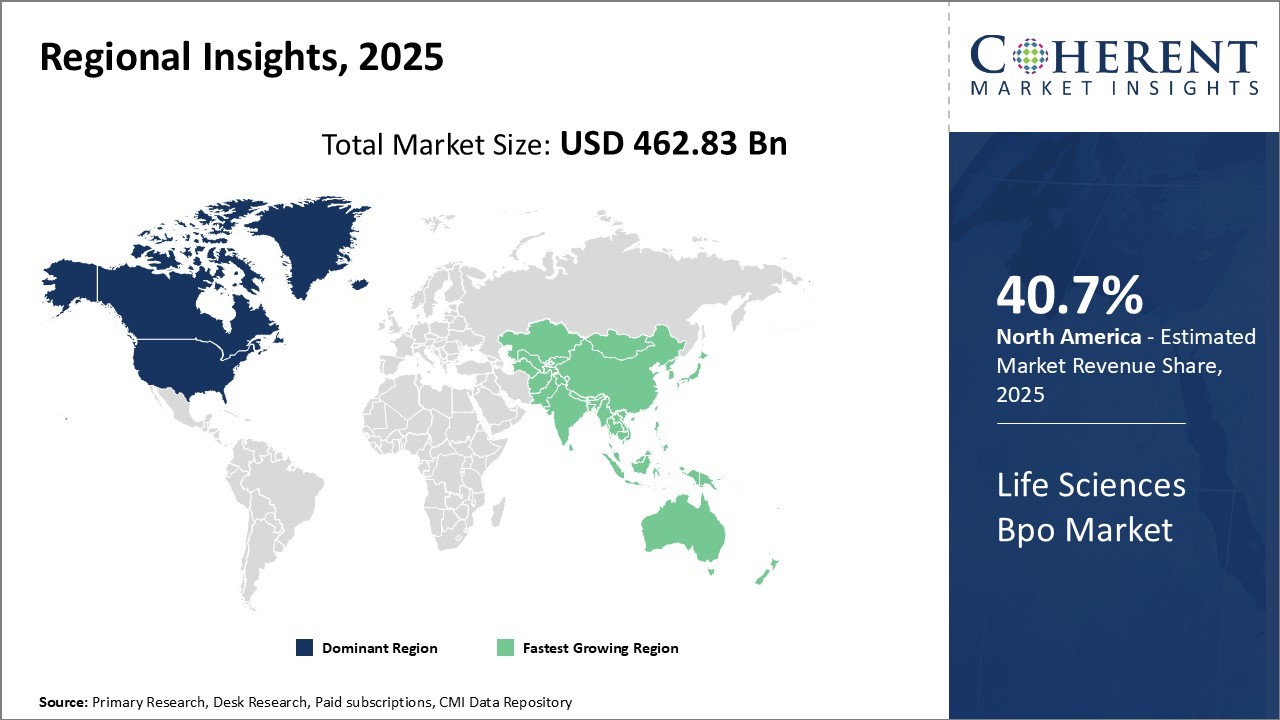
North America Life Sciences BPO Market Trends
The Life Sciences BPO industry in North America is undergoing transformation as providers actively embrace digital technologies and integrated service models. Leading firms are enhancing clinical data management, pharmacovigilance, and regulatory processes by incorporating AI, automation, and real-world evidence analytics. The region’s strong pharmaceutical and biotech presence, coupled with complex regulations and rising cost pressures, is driving companies to outsource non-core functions.
Asia Pacific Life Sciences BPO Market Trends
Asia Pacific leads the global life sciences business process outsourcing industry, with pharmaceutical services generating most of the revenue. Medical device outsourcing is growing rapidly, especially in China and India, due to cost advantages and a skilled workforce. BPO providers are driving decentralized trials and remote patient monitoring by leveraging telehealth and digital platforms to improve site accessibility, data quality, and patient retention.
Canada Life Sciences BPO Market Trends
Canadian CROs are actively integrating artificial intelligence, machine learning, and real-world evidence analytics into decentralized and hybrid clinical trials. They use mobile wearables, e-consent, and AI-driven recruitment to accelerate timelines, expand patient access across regions, and uphold the integrity of key oncology studies. To address payer demands and simplify vendor management, Canadian BPO providers now offer unified contracts that bundle clinical, commercial, and digital services, linking compensation to patient outcomes, cost efficiency, and milestone achievements.
Europe Life Sciences BPO Market Trends
Life sciences companies are shifting their outsourcing strategies by choosing nearshore hubs in Eastern and Central Europe over distant offshore locations. Countries such as Poland, Hungary, and Czechia offer cost-effective services, skilled talent, and regulatory alignment with the EMA. At the same time, BPO providers are leading efforts to digitize clinical trial management and regulatory documentation. They employ AI-powered eCTD publishing, e-signature systems, and remote monitoring tools to boost accuracy, speed up submissions, and ensure compliance with evolving EU Clinical Trial Regulation (CTR) standards.
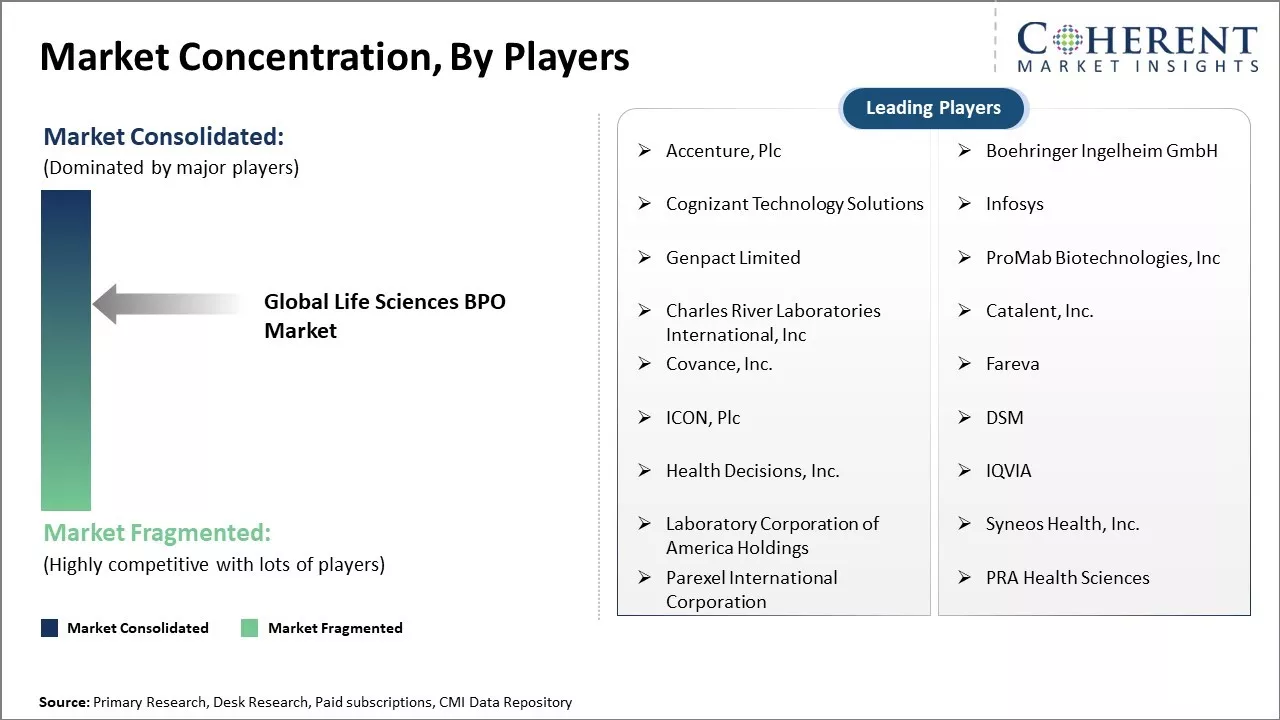
Market Concentration and Competitive Landscape
Life Sciences BPO Market News
In January 2025, IQVIA, a clinical research, commercial analytics, and healthcare intelligence company , announced a strategic collaboration with NVIDIA to unlock the potential of AI in healthcare and life sciences.
In December 2024, Infosys announced a ₹8.3 crore (approximately USD 1 million) investment in healthcare and life sciences startup 4baseCare through the Infosys Innovation Fund.
Market Report Scope
Life Sciences BPO Market Report Coverage
| Report Coverage | Details | ||
|---|---|---|---|
| Base Year: | 2025 | Market Size in 2026: | USD 525.77 Bn |
| Historical Data for: | 2020 To 2024 | Forecast Period: | 2026 To 2033 |
| Forecast Period 2026 to 2033 CAGR: | 13.6% | 2033 Value Projection: | USD 1,283.65 Bn |
| Geographies covered: |
| ||
| Segments covered: |
| ||
| Companies covered: | Accenture, Plc, Boehringer Ingelheim GmbH, Cognizant Technology Solutions, Infosys, Genpact Limited, ProMab Biotechnologies, Inc, Charles River Laboratories International, Inc, Catalent, Inc., Covance, Inc., Fareva, ICON, Plc, DSM, Health Decisions, Inc., IQVIA, Laboratory Corporation of America Holdings, Syneos Health, Inc., Parexel International Corporation, PRA Health Sciences | ||
| Growth Drivers: |
| ||
| Restraints & Challenges: |
| ||
Life Sciences BPO Market Trend
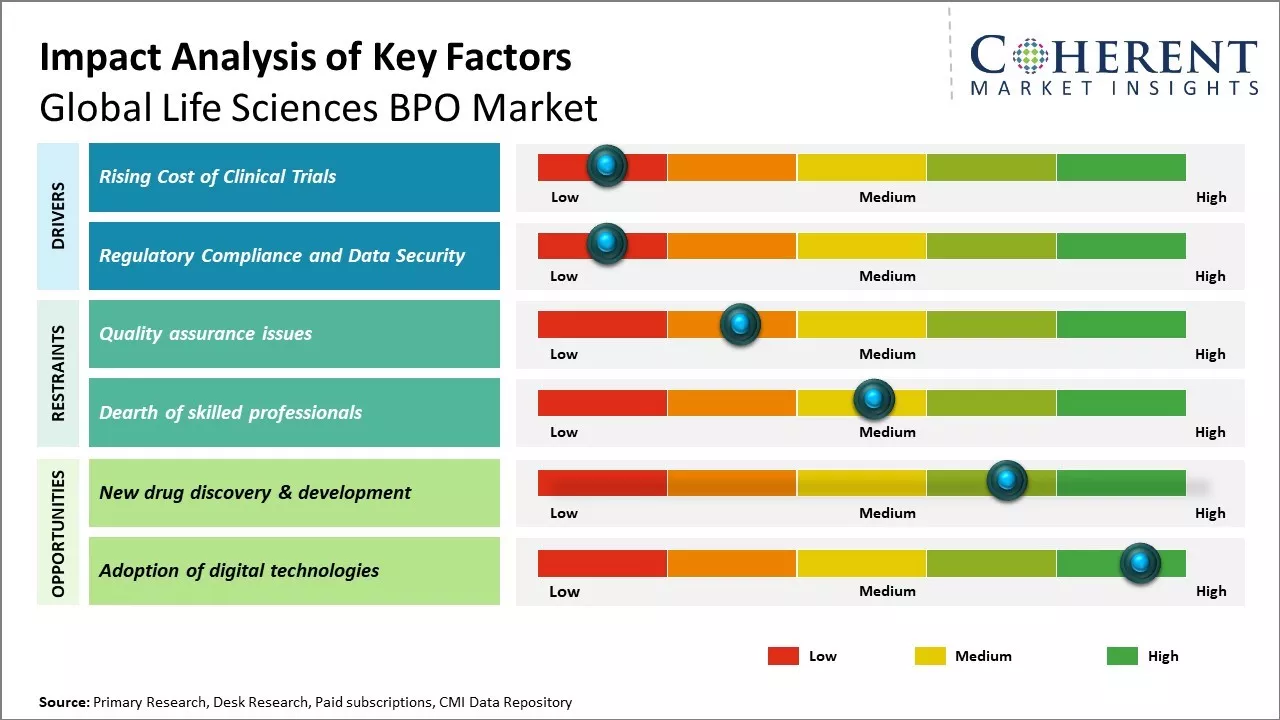
Rising Cost of Clinical Trials
With rising R&D spending in the pharmaceutical and biotech industry, the costs associated with clinical drug trials have also exponentially increased. Clinical trials have become lengthy and complex procedures involving thousands of patients enrolled across hundreds of sites worldwide. The management of these large-scale clinical operations requires specialized skills and expertise that many biopharma companies lack in-house. Outsourcing non-core functions like patient recruitment and retention, site management, laboratory sample testing, and clinical data management to specialist BPO providers has become increasingly attractive as it allows biopharma companies to focus on their core drug development work.
Regulatory Compliance and Data Security
Regulators across the world are placing greater scrutiny on clinical trial conduct and are imposing stricter rules for data privacy, integrity, and security. From the FDA to the EMA to Japan's PMDA, regulators are ramping up GXP inspections and enforcing heavy penalties for non-compliance issues. The regulatory landscape in life sciences has become highly complex with a plethora of global guidelines and directives that sponsors must adhere. Ensuring full compliance and maintaining customizable systems for safety reporting, document control, and auditing is challenging for most biopharma companies. By leveraging BPO providers that have extensive regulatory expertise and technology-enabled platforms, sponsors can address compliance in a more efficient, low risk manner.
Life Sciences BPO Market Opportunity
Expansion of Decentralized and Hybrid Clinical Trials
The global shift toward decentralized and hybrid clinical trial models offers BPO providers a major opportunity. Sponsors are increasingly outsourcing trial components like remote monitoring, e-consent, and virtual patient engagement. BPOs that invest in telehealth infrastructure, wearable data integration, and regulatory-compliant digital platforms can capture significant value. As sponsors prioritize faster enrollment and patient-centric approaches, demand for end-to-end support in managing decentralized protocols will accelerate across both developed and emerging markets.
Analyst Opinion (Expert Opinion)
- The Life Sciences BPO market is undergoing a major transformation, shifting from labor-cost advantages to a focus on technology-driven, outcome-based partnerships. Cost-centric outsourcing models are quickly becoming outdated. Pharmaceutical sponsors now actively seek integrated, tech-enabled BPO relationships—particularly in pharmacovigilance, clinical data, and regulatory functions—where speed, compliance, and real-time insights are critical.
- As real-world evidence (RWE) and health economics increasingly shape market access strategies, BPO providers face growing pressure to evolve into analytics-driven HEOR partners. A 2024 Tufts CSDD survey shows that 63% of mid-sized biopharma firms rank RWE and value-based submissions as essential criteria when choosing outsourcing partners.
- Regulatory complexity is also driving demand for higher-value partnerships. Diverging post-Brexit UK rules, the EU CTR, and the FDA’s Project Optimus are overwhelming in-house regulatory teams. As a result, firms like PharmaLex and Indegene are being chosen not just for operational support but for strategic regulatory leadership across global markets.
- The greatest opportunity lies in eliminating service silos. Life sciences clients increasingly demand interconnected ecosystems over isolated pharmacovigilance or clinical data solutions. BPOs that build platforms using AI/ML for signal detection, fuse RWE with clinical outcomes, and automate safety reporting are emerging as industry frontrunners.
- In this evolving landscape, success depends not on being the lowest-cost provider but on delivering digitally orchestrated, cross-functional, data-centric solutions. The future of life sciences outsourcing belongs to those who execute faster, smarter, and with measurable value embedded in every engagement.
Speak to the analyst
Want personalized insights?
Take the findings above to one of our principal consultants, or have the report rebuilt around the segments, geographies and competitors you actually track.
Market Segmentation
- Service Type Insights (Revenue, USD Bn, 2021 - 2033)
- Pharmaceutical outsourcing
- Medical devices outsourcing
- End User Insights (Revenue, USD Bn, 2021 - 2033)
- Pharmaceutical Companies
- Biotechnology Companies
- Contract Research Organizations
- Academic Institutes & Government Organizations
- Regional Insights (Revenue, USD Bn, 2021 - 2033)
- North America
- U.S.
- Canada
- Latin America
- Brazil
- Argentina
- Mexico
- Rest of Latin America
- Europe
- Germany
- U.K.
- Spain
- France
- Italy
- Russia
- Rest of Europe
- Asia Pacific
- China
- India
- Japan
- Australia
- South Korea
- ASEAN
- Rest of Asia Pacific
- Middle East
- GCC Countries
- Israel
- Rest of Middle East
- Africa
- South Africa
- North Africa
- Central Africa
- Key Players Insights (Revenue, USD Bn, 2021 - 2033)
- Accenture, Plc
- Boehringer Ingelheim GmbH
- Cognizant Technology Solutions
- Infosys
- Genpact Limited
- ProMab Biotechnologies, Inc.
- Charles River Laboratories International, Inc
- Catalent, Inc.
- Covance, Inc.
- Fareva
- ICON, Plc
- DSM
- Health Decisions, Inc.
- IQVIA
- Laboratory Corporation of America Holdings
- Syneos Health, Inc.
- Parexel International Corporation
- PRA Health Sciences
Sources
Primary Research interviews
- Discussions with executives from Contract Research Organizations (CROs)
- Interviews with clinical operations and pharmacovigilance managers in pharmaceutical companies
- Insights from regulatory affairs and HEOR professionals
- Conversations with digital transformation leaders in life sciences
Databases
- ClinicalTrials.gov
- U.S. FDA Drug Database
- EMA Clinical Trials Register
- PubMed
- WHO Global Health Observatory
Magazines
- PharmaVOICE
- Life Science Leader
- Pharmaceutical Executive
- Contract Pharma
Journals’
- Drug Safety (Springer)
- Journal of Clinical Research Best Practices
- The Lancet Digital Health
- Journal of Pharmaceutical Health Services Research
- Regulatory Focus (RAPS)
Newspapers
- The Wall Street Journal – Health & Pharma Section
- Financial Times – Healthcare Segment
- The Guardian – Science & Health
- Business Standard – Pharma & Biotech Coverage
Associations
- Regulatory Affairs Professionals Society (RAPS)
- Drug Information Association (DIA)
- International Society for Pharmacoeconomics and Outcomes Research (ISPOR)
- International Society for Pharmaceutical Engineering (ISPE)
- Biotechnology Innovation Organization (BIO)
Public Domain sources
- U.S. Food and Drug Administration (FDA)
- European Medicines Agency (EMA)
- World Health Organization (WHO)
- National Institutes of Health (NIH)
- Medicines and Healthcare products Regulatory Agency (MHRA)
- Clinical Data Interchange Standards Consortium (CDISC)
- OECD Health Statistics
Proprietary Elements
- CMI Data Analytics Tool, and Proprietary CMI Existing Repository of information for last 8 years
Get access to 250+ pages report
Every segment, forecast, competitor profile and data table behind the analysis above — available for instant download.
- ESOMAR Member
- ISO 9001:2015 Certified
- D-U-N-S Registered
- GDPR & CCPA Compliant
Missing comfort of reading report in your local language? Find your preferred language:
Transform your Strategy with Exclusive Trending Reports
Frequently Asked Questions
The Life Sciences BPO Market is estimated to be valued at USD 525.77 Bn in 2026, and is expected to reach USD 1,283.65 Bn by 2033.
The CAGR of the Life Sciences BPO Market is projected to be 13.6% from 2026 to 2033.
Rising cost of clinical trials and regulatory compliance and data security are the major factors driving the growth of global life sciences BPO market.
Quality assurance issues and dearth of skilled professionals are the major factors hampering the growth of global life sciences BPO market.
In terms of service type, pharmaceutical outsourcing segment is estimated to dominate the market in 2026.
Accenture Plc, Boehringer Ingelheim GmbH, Cognizant Technology Solutions, Infosys, Genpact Limited, ProMab Biotechnologies, Inc, Charles River Laboratories International, Inc, Catalent, Inc., Covance, Inc., Fareva, ICON, Plc, DSM, Health Decisions, Inc., IQVIA, Laboratory Corporation of America Holdings, Syneos Health, Inc., Parexel International Corporation, PRA Health Sciences are the major players.
North America is expected to lead the global life sciences BPO market.