

Bioactive Peptide Market Analysis & Forecast 2026-2033
The global bioactive peptide market was valued at USD 7,089.6 Mn in 2026 and is forecast to reach a value of USD 13,328.0 Mn by 2033 at a CAGR of 9.4% between 2026 and 2033.
Key Takeaways
- Based on Sources, the milk-derived peptides segment is expected to hold 37.2% share of the market in 2026.
- Based on Therapeutic Area, the antihypertensive peptides segment is expected to lead the market with 32.8% share in 2026.
- Based on Distribution Channel, the hospital pharmacies segment is projected to account for 42.6% share of the market in 2026.
- Based on Region, North America is set to lead the bioactive peptide market with 37.2% share in 2026. While, Asia Pacific is anticipated to be the fastest growing region.
Market Overview
Bioactive peptides are amino acids combined together through a covalent bond. Bioactive peptides are extracted from various natural sources, such as soy, oat, and pulses (chickpea, beans, peas, and lentils) etc. Thereby providing a variety of health benefits such as better cardiovascular, digestive, endocrine functioning, as well as the immune and nervous system. They are also used in protecting important contents of food and beverages, resulting in decreased oxidation and degradation of the products. Although these peptides are extracted from natural sources, some of them have been designed with the help of chemical synthesis.
Current Events and their Impacts on the Bioactive Peptide Market
Current Event | Description and its Impact |
AI-Driven Drug Discovery and Peptide Design Revolution |
|
China's Biotechnology Sector Expansion and Regulatory Reforms |
|
Can bioactive peptides change food, medicine and farming all at the same time?
- New ideas in functional foods: Collagen-derived peptides that are easier for the body to absorb are becoming more popular in the beauty and anti-aging markets.
- Precision medicine: AI-driven peptide design makes it possible to create personalized treatments for diabetes, obesity, and resistant infections.
- Sustainability in farming: Short peptides regulating the plant genes are expressed are becoming eco-friendly alternatives to chemical pesticides.
- Current Industry Events of 2026
- Market Size Estimation
- Regional Breakdown
- Competitive Landscape
- Customer Intelligence
- Segmental Analysis
- Pricing Analysis
- Key Market Drivers, Challenges & Future Trends
- Customized Insights Section
Segmental Insights
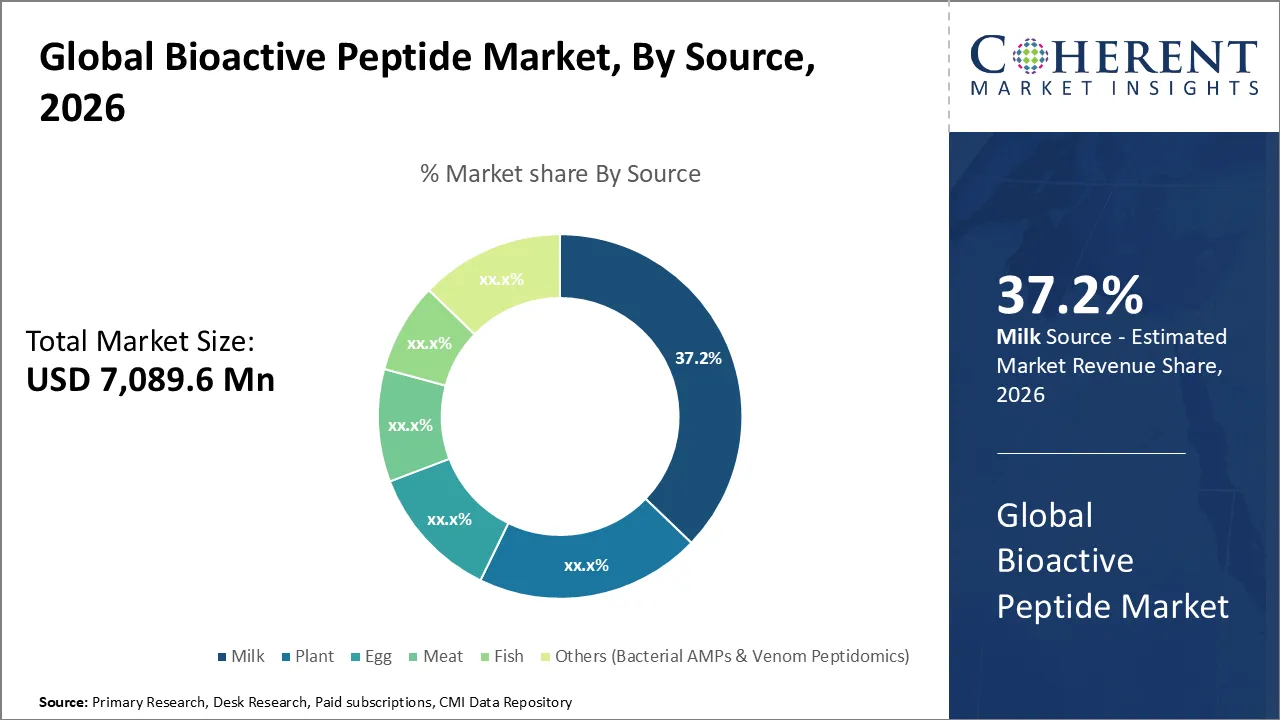
Bioactive Peptide Market Insights, By Sources - Milk-derived peptides are leading due to their proven health benefits and widespread use in nutraceuticals and functional foods
In terms of sources, the milk-derived peptides segment is expected to hold 37.2% share of the market in 2026, because they have been shown to lower blood pressure, boost the immune system, and improve overall health. They are used in dietary supplements, functional foods, and nutraceuticals. They are the most successful source in the bioactive peptide market due to strong clinical validation, are widely accepted by consumers, and are easy to extract.
For instance, in June 2025, PFx Biotech is making progress in precision fermentation to make human milk proteins like lactoferrin. This new product fits in with the bioactive peptide market as it has health benefits and can be used in baby food. It does not just concentrate on traditional dairy peptides; it also tries to copy the components of human milk. This opens up new possibilities in nutraceuticals and biotechnology-driven food solutions.
Bioactive Peptide Market Insights, By Therapeutic Area - Antihypertensive peptides dominance is driven by rising global hypertension cases and strong clinical validation
In terms of therapeutic area, the antihypertensive peptides segment is expected to lead the market with 32.8% share in 2026, due to the ongoing global health priority of cardiovascular diseases. These peptides inhibit angiotensin-converting enzymes, which lowers blood pressure. Their integration in functional foods and supplements guarantees extensive consumer accessibility. As high blood pressure becomes more common around the world, the need for safe, natural alternatives drives their popularity in the therapeutic market.
For instance, studies show that bioactive peptides from fermented foods can help control blood sugar, blood pressure, immunity, and inflammation. These peptides have properties that lower blood pressure, fight free radicals, kill bacteria, and change the immune system, which makes them very useful for cardiovascular health and a key area of research in the bioactive peptide market.
Bioactive Peptide Market Insights, By Distribution Channel - Hospital pharmacies supported by physician prescriptions and trusted patient access
In terms of distribution channel, the hospital pharmacies segment is projected to account for 42.6% share of the market in 2026, because they are often prescribed or recommended in clinical settings. Their credibility, adherence to regulations, and direct access to patients make them the main way to get information. Doctors prefer hospital pharmacies for specialized peptide-based treatments as they are reliable and always in demand. This channel will have the largest share of the market in 2026.
Regional Insights
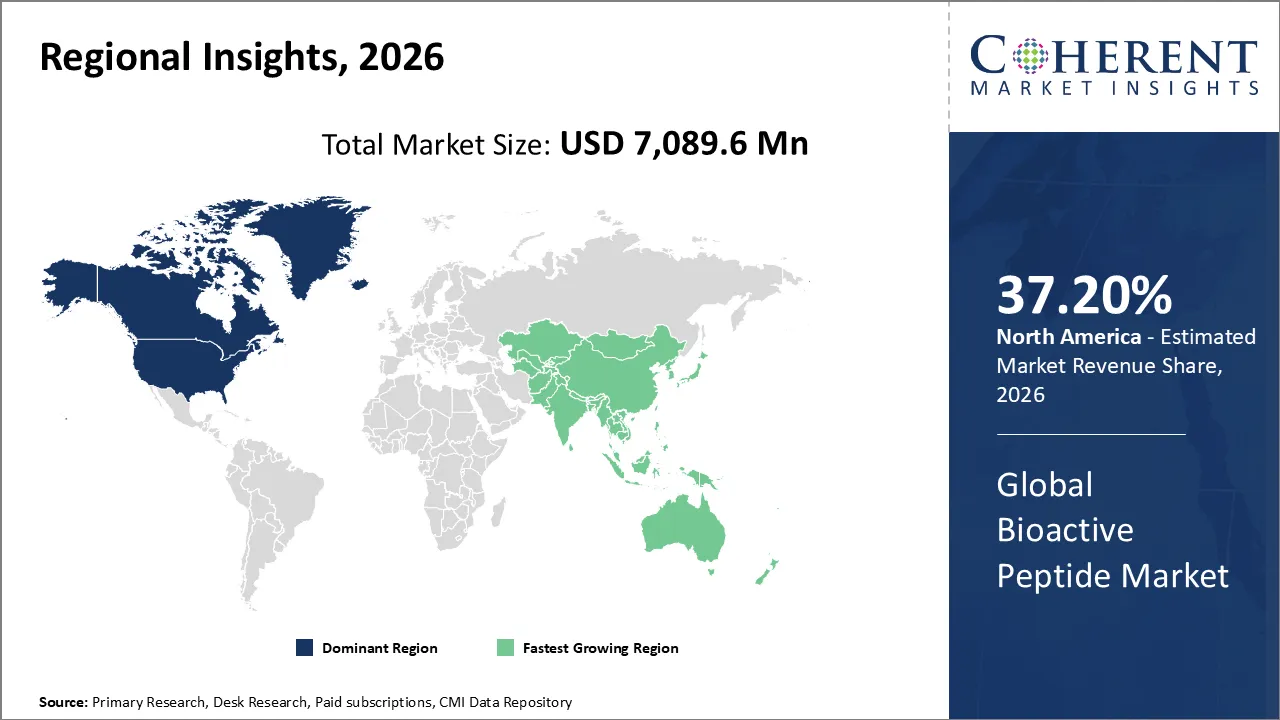
North America Bioactive Peptide Market Analysis & Trends
North America is expected to dominate with 37.20% share in bioactive peptide market in 2026, because it has strong pharmaceutical and nutraceutical industries, advanced biotechnology infrastructure, and high consumer awareness about functional foods. Supportive laws and well-established distribution networks help adoption even more, making the area a leader in peptide-based innovations for wellness and preventive healthcare.
For instance, in September 2025, Freemen Nutra Group and Rawga Inc. introduced VC-H1, a peptide ingredient made from hibiscus that is good for skin health, to North America. It has rich bioactive peptides and polyphenols, which help fight aging and free radicals. As a plant-based alternative to collagen, it opens up new uses for bioactive peptides in cosmetics and nutraceuticals.
Asia Pacific Bioactive Peptide Market Analysis & Trends
Asia Pacific is expected to exhibit the fastest growing, due to disposable incomes are rising, the middle class is becoming more health-conscious, and functional foods and nutraceuticals are becoming more popular quickly. The growth is driven by trends in preventive healthcare and interest in peptides from plants and marine sources. Cosmetics and personal care use help the region grow even faster.
For instance, in September 2025, Nutraceutical companies showcased new products from all over the APAC region at Vitafoods Asia in Bangkok. Gelita focused on bioactive peptides derived from collagen, like VERISOL® and PEPTIPLUS®, which are good for beauty, healthy aging, and sports nutrition. These peptide-based solutions strengthen Asia-Pacific's increasing role in functional health, making bioactive peptides important players in the region's nutraceutical markets.
Bioactive Peptide Market Outlook Country-Wise
The U.S Bioactive Peptide Market Trends
In 2026, the United States will have a strong demand for bioactive peptides because its pharmaceutical and nutraceutical industries are advanced, its biotechnology infrastructure is strong, and consumers are aware about functional foods. The U.S. is a top place for peptide-based innovations and commercialization owing to its supportive laws, established distribution networks, and focus on preventive healthcare.
For instance, in February 2026, At the Natural Products Expo West 2026 in California, Nuritas showcased plant-based bioactive peptides and emphasized their potential for muscle strength, recovery, and healthy aging. These peptides are marketed as natural alternatives in sports nutrition and functional health. They show the plant-based innovations are becoming more important in the U.S. bioactive peptide market.
China Bioactive Peptide Market Trends
China is driving strong demand in the bioactive peptide market in 2026 because its healthcare system is getting better, rising prevalence of chronic diseases, and consumer focus on preventive nutrition. Adoption is speeding up because people are making more money and want functional foods and nutraceuticals. China's market leadership is even stronger because the government supports biotechnology and new ideas.
Market Report Scope
Bioactive Peptide Market Report Coverage
| Report Coverage | Details | ||
|---|---|---|---|
| Base Year: | 2025 | Market Size in 2026: | USD 7,089.6 Mn |
| Historical Data for: | 2020 To 2024 | Forecast Period: | 2026 To 2033 |
| Forecast Period 2026 to 2033 CAGR: | 9.4% | 2033 Value Projection: | USD 13,328.0 Mn |
| Geographies covered: |
| ||
| Segments covered: |
| ||
| Companies covered: | Archer Daniels Midland Company, Seagarden AS, Phermpep Co. Ltd., Arlak Biotech Pvt. Ltd., Naturade, Royal DSM, MYOS RENS Technology Inc., Natural Factors Inc., Valio Oy, GenScript, HELIX BIOMEDIX, Oryn Therapeutics, Selecta Biosciences, NIBEC, vivitide, PEPTIDE INSTITUTE, INC, BCN Peptides, Setlance srl., APEPTICO Forschung und Entwicklung GmbH, and BIONANOPLUS. | ||
| Growth Drivers: |
| ||
| Restraints & Challenges: |
| ||
Market Dynamics
Bioactive Peptide Market Driver
Rising demand for functional foods & nutraceuticals
People are growing more interested in foods that deliver more than just give them basic nutrition, which is a encourages the bioactive peptide market growth. Functional foods that are high in bioactive peptides are highly desirable to health-conscious shoppers as they have antioxidant, antihypertensive, and antimicrobial properties. A greater number of individuals are seeking for natural ways to stay healthy, so manufacturers are adding peptides to dairy, cereals, and drinks. This trend not only leads to more new products, but it also makes bioactive peptides more important in the growing functional food industry.
For instance, in January 2026, Specialty Enzymes & Probiotics in the US made Pepzyme AG, which helps break down collagen and release low-molecular-weight bioactive peptides. These peptides boost DPP-IV inhibitory activity by more than 30%, which is good for GLP-1 metabolic health. The new product shows that more people in North America want functional foods and nutraceuticals.
Preventive healthcare focus
The rise in chronic diseases like high blood pressure, diabetes, and heart problems has changed the way people shop for health products. Bioactive peptides are becoming more well-known as natural substances that help control blood pressure, improve metabolic health, and support heart health. People are choosing safe, natural alternatives to synthetic drugs, which is driving the Bioactive Peptide Market demand. As healthcare systems focus more on prevention, bioactive peptides are being added to more nutraceuticals and supplements. This strengthens their role in proactive health management and long-term wellness plans.
Bioactive Peptide Market Opportunity
Pharmaceutical & nutraceutical innovation
Bioactive peptides offer considerable potential in pharmaceuticals and nutraceuticals owing to their varied biological activities, encompassing antihypertensive, antimicrobial, and immunomodulatory effects. These characteristics render them promising candidates for the development of innovative pharmaceuticals and dietary supplements intended to manage chronic conditions such as cardiovascular diseases, diabetes, and hypertension. Peptides are seen as natural, safe alternatives to synthetic compounds as healthcare systems put more and more emphasis on preventive care. This trend is likely to give the Bioactive Peptide Market forecast a strong momentum, as it will be used continually in both the health and wellness sectors.
For instance, in February 2026, CyanoCapture and Persist AI have teamed up to build the world's first robotic GMP facility for oral protein and peptide drugs in the San Francisco Bay Area. The project is an example of innovation in the pharmaceutical and nutraceutical fields. It uses AI-powered robotics and cyanobacteria-based oral delivery to improve the production of peptide drugs and make them more accessible to patients.
Analyst Opinion (Expert Opinion)
The market for bioactive peptides is growing as an increasing number of people demand health-promoting ingredients in functional foods, nutraceuticals, and pharmaceuticals. Industry data show that the functional foods and beverages segment accounts for a large part of bioactive peptide use, supported by growing consumer interest in products that offer specific benefits, such as lowering blood pressure, boosting antioxidants, and modulating the immune system. Peptides from dairy, fish, soy, and plant proteins are some of the most important for business. Dairy-based peptides are often used in sports nutrition and heart health products.
Trends in production and research show that there is steady increase in scientific papers and patents about isolating and making bioactive peptides, reflecting the sector is moving forward with new ideas. Functional food companies are adding peptides to fortified drinks, bars, and supplements to take advantage of research that shows certain peptide sequences are linked to certain health effects. Ingredient analytics companies' market data show that the number of peptide-enriched products launched in food and health markets around the world has been steadily growing year after year.
Statistical trends indicate that the bioactive peptide market is becoming more diverse in terms of applications, regions, and product formats. This is owing to scientific validation and a growing demand for health-oriented products.
Speak to the analyst
Want personalized insights?
Take the findings above to one of our principal consultants, or have the report rebuilt around the segments, geographies and competitors you actually track.
Global Bioactive Peptide Market: Key Developments
- In June 2025, Lembas, an Israeli foodtech startup, made GLP-1 Edge, a bioactive peptide that is meant to boost GLP-1 and other gut hormones that control appetite and metabolism. As a functional food innovation, it offers a natural alternative to drugs for managing weight and metabolic health. This shows the importance of Israel in peptide-driven nutrition.
- In June 2025, Micropep Technologies and Corteva Agriscience have teamed up for several years to work on environmentally friendly biocontrol solutions in Europe and North America. Micropep makes short bioactive peptides that control how plants express their genes. These peptides are a natural alternative to chemical pesticides. This partnership shows how useful peptides could be in farming, leading to new ways to protect crops that are good for the environment and biofungicides.
Market Segmentation
- By Source
- Plant
- Milk
- Egg
- Meat
- Fish
- Others (Bacterial Antimicrobial Peptides, Venom Peptidomics)
- By Therapeutic Area
- Antihypertensive
- Antioxidant
- Immunostimulatory
- Antimicrobial
- Diabetes
- Others (Gastrointestinal System, Cardiovascular System)
- By Distribution Channel
- Hospital Pharmacies
- Retail Pharmacies
- Online Pharmacies
- Others (Drug Store, Mail-Order Pharmacy)
- By Region
- North America
- U.S.
- Canada
- Latin America
- Brazil
- Argentina
- Mexico
- Rest of Latin America
- Europe
- Germany
- U.K.
- Spain
- France
- Italy
- Russia
- Rest of Europe
- Asia Pacific
- China
- India
- Japan
- Australia
- South Korea
- ASEAN
- Rest of Asia Pacific
- Middle East & Africa
- GCC Countries
- Israel
- Rest of Middle East & Africa
- North America
- Key Players
- Archer Daniels Midland Company
- Seagarden AS
- Phermpep Co. Ltd.
- Arlak Biotech Pvt. Ltd.
- Naturade
- Royal DSM
- MYOS RENS Technology Inc.
- Natural Factors Inc.
- Valio Oy, GenScript
- HELIX BIOMEDIX
- Oryn Therapeutics
- Selecta Biosciences
- NIBEC
- Vivitide
- PEPTIDE INSTITUTE, INC
- BCN Peptides
- Setlance srl.
- APEPTICO Forschung und Entwicklung GmbH
- BIONANOPLUS
Sources
Primary Research Interviews
- Bioactive Peptide Manufacturers
- Peptide Synthesis Service Providers
- Food & Nutraceutical Formulators
- Pharmaceutical R&D Experts
- Cosmetic & Skincare Product Developers
- Others
Databases
- Bloomberg Terminal
- Thomson Reuters Eikon
- Others
Magazines
- NutraIngredients
- Food & Nutrition Magazine
- Cosmetics & Toiletries
- Chemical Engineering Magazine
- Others
Journals
- Journal of Peptide Science
- Peptides
- International Journal of Peptide Research and Therapeutics
- Nutrition & Metabolism
- Others
Newspapers
- Financial Times
- The Wall Street Journal
- Reuters
- Bloomberg News
- Others
Associations
- International Society for Nutraceuticals & Functional Foods (ISNFF)
- American Peptide Society (APS)
- European Peptide Society (EPS)
- International Peptide Society (IPS)
- Others
Public Domain Sources
- U.S. Food & Drug Administration (FDA)
- European Food Safety Authority (EFSA)
- World Health Organization (WHO)
- National Center for Biotechnology Information (NCBI)
- FAO – Food and Agriculture Organization of the United Nations
- Others
Proprietary Elements
- CMI Data Analytics Tool
- Proprietary CMI Existing Repository of Information for the Last 8 Years
Get access to 250+ pages report
Every segment, forecast, competitor profile and data table behind the analysis above — available for instant download.
- ESOMAR Member
- ISO 9001:2015 Certified
- D-U-N-S Registered
- GDPR & CCPA Compliant
Missing comfort of reading report in your local language? Find your preferred language:
Transform your Strategy with Exclusive Trending Reports
Frequently Asked Questions
The global Bioactive Peptide Market size was valued at USD 7,089.6 million in 2026 and is expected to reach USD 13,328.0 million in 2033.
Rising demand for functional foods & nutraceuticals and preventive healthcare focus are factors expected to drive the market.
Milk-derived is the leading source segment in the market.
The major factors hampering growth of the market include High production costs and stability and bioavailability issues.
Major players operating in the market include Archer Daniels Midland Company, Seagarden AS, Phermpep Co. Ltd., Arlak Biotech Pvt. Ltd., Naturade, Royal DSM, MYOS RENS Technology Inc., Natural Factors Inc., Valio Oy, GenScript, HELIX BIOMEDIX, Oryn Therapeutics, Selecta Biosciences, NIBEC, vivitide, PEPTIDE INSTITUTE, INC, BCN Peptides, Setlance srl., APEPTICO Forschung und Entwicklung GmbH and BIONANOPLUS.