

Community-acquired Bacterial Pneumonia (CABP) Treatment Drugs Market Size and Share Analysis - Growth Trends and Forecasts (2026 - 2033)
The Community-acquired Bacterial Pneumonia (CABP) Treatment Drugs Market is anticipated to grow at a CAGR of 7.7% with USD 1,926.8 Mn in 2026 and is expected to reach USD 3,207.6 Mn in 2033. The Community‑Acquired Bacterial Pneumonia (CABP) treatment drugs market reflects a substantial global health burden, driven by high incidence and hospitalization rates for bacterial CAP and ongoing antibiotic use. CABP remains a leading cause of infectious morbidity and mortality, with annual hospitalization rates up to ~340 per 100,000 adults reported in recent U.S. data. Treatment patterns rely heavily on empiric antibiotic therapy recommended in 2026 CDC guidance on pneumonia, highlighting continuing clinical demand.
Key Takeaways
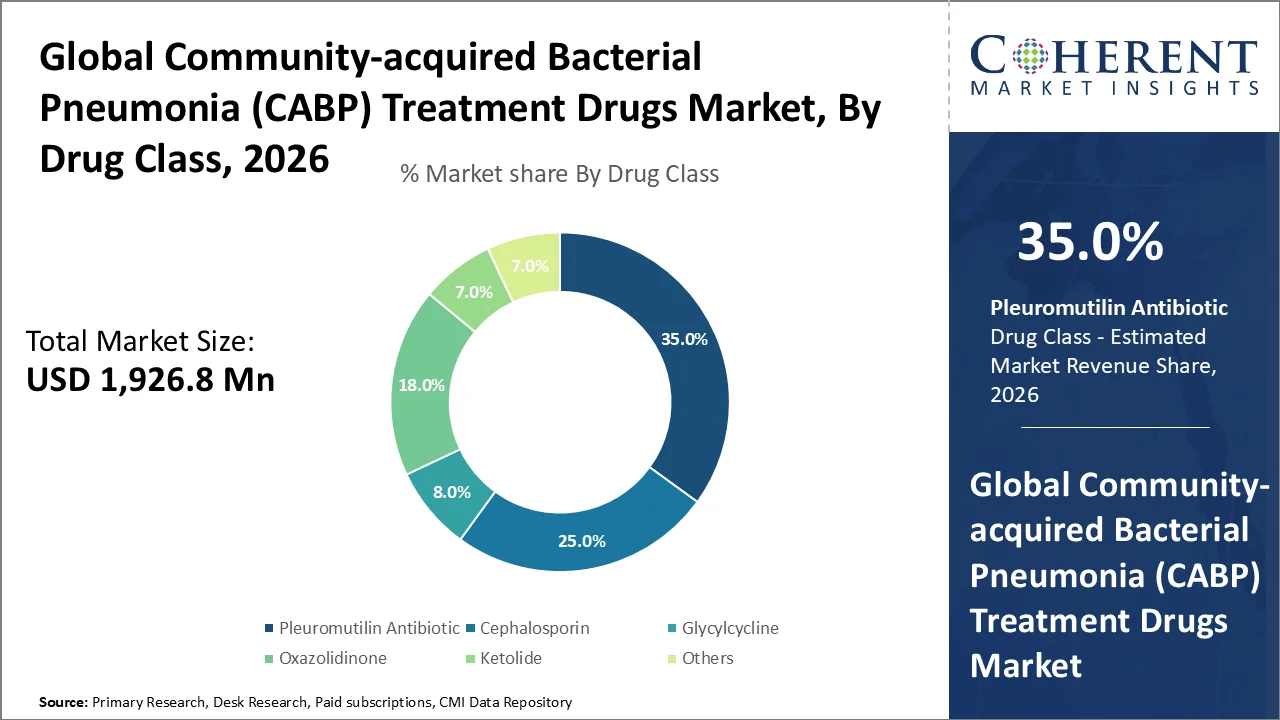
- Pleuromutilin Antibiotic is expected to account the largest share of 35.0% in 2026, driven by its novel mechanism inhibits protein synthesis at the 50S ribosome, lowering resistance rates versus traditional classes and offering both oral + IV options meeting global demand amid rising resistant pathogens. MDPI’s Antibiotics journal (2026) highlights recent FDA/EMA approvals and resistance‑combat data for lefamulin, and 2025 clinical efficacy reports confirm its strong performance in CABP, driving adoption and market share growth. In CABP treatment drugs, the pleuromutilin antibiotic segment dominates because agents like lefamulin are effective against resistant respiratory pathogens, offer both oral and IV options, and address rising antibiotic resistance fueling market preference per 2026 industry analysis and clinical data showing expanded use and regulatory approvals (e.g., EMA/FDA) for pleuromutilins amidst growing CABP prevalence and resistance concerns.
- Oral will dominate with 65.0% in 2026, because most patients present with mild‑to‑moderate disease manageable as outpatients, responding well to 5–7 days of oral antibiotics like amoxicillin or azithromycin, as noted in CAP management literature. Oral therapy reduces hospital stays, lowers costs and is supported by clinical stability criteria prompting IV‑to‑oral switches once stable, according to widely referenced CAP treatment guidelines updated in 2024 and 2025 publications.
- Hospital pharmacies hold the dominant share of 50.0% in 2026. Hospital pharmacies dominate the distribution channel for community‑acquired bacterial pneumonia treatment drugs because a substantial portion of CAP cases require hospitalization, intravenous antibiotic therapy and stewardship oversight, especially for moderate‑to‑severe infections. In the U.S., CAP leads to roughly 340 hospital admissions per 100,000 adults annually (2022–25 data), with higher rates in older populations, driving demand for inpatient antibiotic dispensing. Hospital pharmacists ensure accurate dosing, drug interaction checks, IV administration, and antimicrobial stewardship, reducing resistance and improving clinical outcomes, as emphasized in 2026 CDC stewardship guidance.
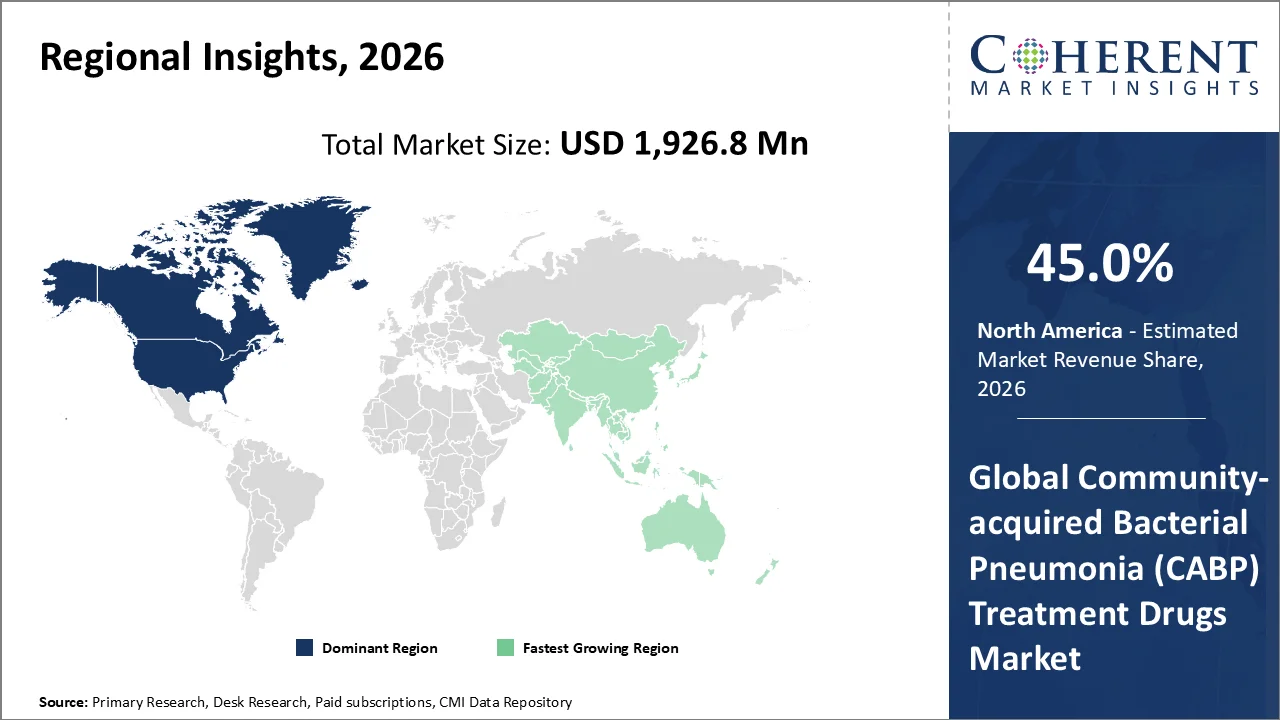
- North America is expected to acquire the dominant share of 45.0% in 2026, because the region continues to report high CABP burden and hospitalization, with U.S. CDC data showing over 1.4 million pneumonia admissions annually and substantial mortality from pneumonia in 2024–25, underlining significant clinical demand for effective treatments. Additionally, widespread pneumococcal disease surveillance, strong vaccination and antibiotic stewardship programs, and advanced healthcare infrastructure enhance diagnosis and drug uptake across the region. Moreover, a high burden of CABP hospitalizations is supporting region dominance, U.S. studies showing annual CABP hospitalization incidence of ~340 per 100,000 adults and ~114,800 pneumococcal CABP hospitalizations yearly in recent surveillance data (analyzed through 2024–25).
Segmental Insights
Why is Pleuromutilin Antibiotic Acquiring the Largest Market Share?
Pleuromutilin Antibiotic is projected to account for the largest share of community-acquired bacterial pneumonia (CABP) treatment drugs market in 2026, representing approximately 35.0% of the total volume. The pleuromutilin antibiotic segment leads the community‑acquired bacterial pneumonia (CABP) treatment drugs market because it delivers novel, broad‑spectrum activity against key CABP pathogens with low resistance, addressing rising resistance to older antibiotics. Lefamulin (Xenleta) developed by Nabriva Therapeutics and approved by the U.S.FDA in August 2019 and the European Medicines Agency (EMA) in 2020 continues to show strong in‑vitro efficacy against Streptococcus pneumoniae, Haemophilus influenzae and Staphylococcus aureus with resistance rates of 0–2.6 % in 2026 data, supporting clinician confidence and uptake. Regulatory endorsements and real‑world surveillance reinforce pleuromutilins as a preferred option in both hospital and outpatient CABP settings, sustaining their market dominance through 2025–26.
(Source: NCBI)
- Current Industry Events of 2026
- Market Size Estimation
- Regional Breakdown
- Competitive Landscape
- Customer Intelligence
- Segmental Analysis
- Pricing Analysis
- Key Market Drivers, Challenges & Future Trends
- Customized Insights Section
Oral holds the Largest Market Share
Based on route of administration, cloud dominate the market, accounting for a significant 65.0% share in 2026, because most CABP cases are effectively managed with oral antibiotics, which broaden access and reduce healthcare burden. According to WHO guidance (updated 2024), “most cases of pneumonia require oral antibiotics, often prescribed at health centres and treatable at the community level,” highlighting first‑line choices like amoxicillin dispersible tablets. Additionally, Medscape’s March 27, 2025 clinical overview notes that mild to moderate CAP patients can be treated entirely with oral antibiotics either as outpatients or inpatients without compromising outcomes. This preference supports outpatient care, reduces hospital stays, and improves patient adherence, reinforcing oral therapy’s leading role.
Which Distribution Channel segment dominates the market?
Hospital Pharmacies account for the largest share of 50.0% in 2026 due to because CABP frequently leads to hospital admissions where complex antibiotic management and stewardship are critical. For instance, a 2025 U.S. study reported ~340 annual hospitalizations per 100 000 adults for all‑cause community‑acquired pneumonia (CAP) a proxy for CABP burden in clinical settings. Additionally, Medscape data from March 27, 2025 estimated nearly 967,470 U.S. adults aged 65+ were hospitalized annually from CAP, driving inpatient drug use and pharmacist involvement. Within hospitals, pharmacists ensure medication accuracy, manage procurement and inventory, and support antimicrobial stewardship programs to optimize CABP antibiotic effectiveness and safety, reducing errors and resistance risk. Hospital pharmacies also handle specialized antibiotic dispensing and dosing adjustments, enhancing clinical care quality. These roles make them central to CABP drug distribution and drive the hospital pharmacist segment’s dominant market share.
(Source: American Medical Association; Medscape)
Increasing prevalence of community-acquired bacterial pneumonia
Rising prevalence of community-acquired bacterial pneumonia has driven the community-acquired bacterial pneumonia (CABP) treatment drugs market growth over the forecast period. The rising prevalence of community‑acquired bacterial pneumonia (CABP) significantly fuels demand for effective treatment drugs, as higher disease burden increases prescriptions and hospital use. For instance, according to recent analyses published by the ResearchGate show overall CABP incidence post‑COVID‑19 surged to ~42.1 cases per 1,000 person‑years in 2026, with high incidence particularly among older adults and comorbid patients, reflecting broader CABP trends. In the U.S. in 2025, estimated annual CAP hospitalizations reached ~340 per 100,000 adults, with pneumococcal infections contributing substantially, underscoring persistent bacterial disease burden. CDC mortality data (2024) reported ~41,627 pneumonia deaths at 12.2 per 100,000 population, highlighting serious outcomes driving therapeutic use. As CABP cases rise globally, utilization of targeted antibiotics increases, expanding the CABP treatment drugs market.
Product Launches Amongst Key Players
Increasing launch of the new product by the key players operating in the market has driven the community-acquired bacterial pneumonia (CABP) treatment drugs market growth over the forecast period. For instance, in February 2026, the Wockhardt group, pharmaceutical company developed nafithromycin. This new macrolide was created especially to treat community-acquired bacterial pneumonia (CABP). The Biotechnology Industry Research Assistance Council (BIRAC), a non-profit Section 8 Public Sector Enterprise of the Department of Biotechnology (DBT), provided partial funding for the phase III clinical investigation of nafithromycin in India. The Central Drugs Standard Control Organization (CDSCO) has granted M/s Wockhardt Limited marketing authority to sell and distribute 400 mg Nafithromycin Tablets for the treatment of people (≥18 years) with CABP.
Robust product pipeline is transforming the Community-acquired Bacterial Pneumonia (CABP) Treatment Drugs Market
A robust product pipeline fuels growth in the Community‑Acquired Bacterial Pneumonia (CABP) treatment drugs market by advancing newer antibiotics through late‑stage clinical evaluation, expanding therapeutic options and addressing resistance concerns. For instance, in April 2025, Paratek Pharmaceuticals, Inc., pharmaceutical company, revealed the Data from multiple new studies of NUZYRA (omadacycline) will be presented at ESCMID Global 2025, the Congress of the European Society of Clinical Microbiology and Infectious Diseases, which will take place in Vienna, Austria, from April 11–15, 2025. Furthermore, ClinicalTrials.gov lists NCT07099976, a Phase 3 trial initiated in March 2025 by the University of California, San Diego evaluating optimized antibiotic care pathways in non‑severe CAP, showing ongoing commitment to refining treatment strategies with active status in 2026. Such late‑stage studies attract investment and support adoption of improved therapeutic regimens, strengthening market dynamics.
(Source: Paratek Pharmaceuticals, Inc.)
Current Events and Their Impact
Current Event | Description and its Impact |
Government Initiatives to Combat CABP Through Innovation and Funding |
|
Regulatory Shifts Fueling Growth in CABP Treatment Market |
|
Increased Public Funding for CABP Treatment Research |
|
Community-acquired Bacterial Pneumonia (CABP) Treatment Drugs Market Trends
Shift Toward Evidence‑Based, Updated Clinical Guidelines for CABP Treatment
Clinical practice guidelines are evolving to optimize antibiotic use and treatment strategies for community‑acquired pneumonia, directly impacting CABP drug prescribing patterns. For example, the American Thoracic Society released updated CAP guidelines in 2025, recommending more selective empiric antibiotic therapy, appropriate treatment durations, and refined use of adjunct therapies like corticosteroids. These updates are driving clinicians toward more targeted antibiotic choices and influencing developers to align drug profiles with current evidence on efficacy and safety.
(Source: MJH Life Sciences)
Global Emphasis on Rational Antibiotic Use and Resistance Management
Antibiotic resistance remains a central trend shaping CABP treatment strategies. In October 2025, WHO warned that one in six laboratory‑confirmed bacterial infections show antibiotic resistance, with resistance rising in ~40% of tested samples across over 100 countries. This trend propels greater stewardship efforts and demand for new antibiotics with novel mechanisms, influencing market focus toward safer, resistance‑mitigating therapies.
Updated Clinical Guidelines Reshaping Antibiotic Prescribing Practices
Updated evidence‑based clinical guidelines are influencing how CABP is diagnosed and treated globally, with a shift toward more targeted and optimized antibiotic use. For instance, the American Thoracic Society (ATS) released new CAP guidelines in 2025, refining recommendations on antibiotic use, treatment duration, and imaging strategies to improve outcomes. These guidelines emphasize shorter courses for stable patients and more selective empiric antibiotic choices, reflecting evolving evidence and encouraging adoption of more appropriate CABP drug regimens. This trend drives demand for antibiotics aligned with updated therapeutic protocols, enhancing clinical efficacy and influencing drug preference in treatment guidelines, thereby expanding appropriate CABP drug utilization.
Expanded Pediatric CABP Management Guidelines Encouraging Standardized Treatment
In February 2026, the IDSA/PIDS 2026 pediatric CAP guidelines were updated, offering more specific management guidance for children older than 3 months with community‑acquired pneumonia. These include recommendations for antibiotic use tailored to age groups and pathogen considerations. Clear pediatric guidance supports rational antibiotic selection and use in younger populations, expanding the treatable patient base for effective CABP drugs and improving market demand across age segments.
Regional Insights
North America dominates owing to Healthcare Infrastructure & High Disease Burden
North America account 45.0% market share in 2026, supported by high disease burden and advanced healthcare infrastructure. According to the U.S. CDC’s 2026 pneumonia guidelines, pneumonia remains a significant public health concern, with more than 41,000 U.S. deaths reported from pneumonia in 2022 (adults being most affected), reinforcing ongoing treatment demand. Epidemiologic studies by NIH in the U.S. show high annual hospitalization rates for community‑acquired pneumonia (about 340 hospitalizations per 100,000 adults, with higher rates among older adults), indicating persistent clinical workload that drives utilization of effective CABP therapies. The region’s dominance is further supported by advanced healthcare infrastructure, widespread antibiotic stewardship programs, strong regulatory frameworks (including FDA approvals for novel CABP drugs), and extensive public health initiatives that enhance disease detection, management, and treatment uptake throughout North America.
Asia Pacific Community-acquired Bacterial Pneumonia (CABP) Treatment Drugs Market Trends
The Asia-Pacific region is poised to be as the fastest-growing region through 2026-2033, owing to increasing cases of community-acquired bacterial pneumonia, government initiatives and developing healthcare infrastructure. In the Asia‑Pacific region, countries like India have documented high pneumonia burden and ongoing efforts to combat this via expanded pneumococcal vaccination within the Universal Immunization Programme (UIP) as reviewed in March 2025 research on pneumococcal disease and vaccination strategies. Additionally, WHO pneumonia vaccine policy resources emphasize pneumococcal immunization to reduce severe respiratory infections. Strategic public health initiatives in India, China, and Japan improving vaccine access and healthcare infrastructure are accelerating diagnosis and treatment uptake, contributing to Asia‑Pacific’s rapid growth in the CABP treatment drugs market.
Moreover, high admission of children in hospital due to community-acquired bacterial pneumonia (CABP) treatment drugs has driven the market growth in Asia Pacific region. For instance, in 2024, in Southeast Asia, WHO research shows a severe CAP incidence of ~11.7 to 17.8 per 1,000 child‑years among hospitalized children under 5 illustrating the ongoing pediatric burden that feeds into drug demand and healthcare utilization strategies. Furthermore, a 2025 review of CABP in the Asia‑Pacific region reports that aging populations, dense urbanization, and limited healthcare access contribute to a heavy CAP burden, with bacterial pathogens such as Streptococcus pneumoniae, Mycoplasma pneumoniae, and Haemophilus influenzae frequently implicated.
(Source: WHO; Asian Journal of Pediatric Research; ResearchGate)
Strong Drug Approval Systems is Accelerating the Community-acquired Bacterial Pneumonia (CABP) Treatment Drugs Market Demand in United States
The U.S. community-acquired bacterial pneumonia (CABP) treatment drugs market dominates North America due to its high disease burden, with over 41,000 deaths from pneumonia annually (2022). Hospitalization rates of 340 per 100,000 adults (2024) highlight the ongoing clinical need.
Furthermore, the U.S. remains the dominant country in the North American Community‑Acquired Bacterial Pneumonia (CABP) treatment drugs market due to high clinical burden, strong government initiatives, and progressive regulatory shifts. According to the CDC’s 2026 pneumonia management guidelines, pneumonia prevention and appropriate treatment remain key public health priorities, sustaining demand for CABP drugs. Additionally, the CDC updated its outpatient antibiotic stewardship guidance in February 2026 to standardize appropriate antibiotic use and reduce resistance in both hospital and outpatient settings, strengthening treatment quality and drug utilization.
From a regulatory standpoint, the U.S. FDA launched the Commissioner's National Priority Voucher (CNPV) pilot program in 2025, enabling rapid review and approval of priority antibiotics for example, Augmentin XR was approved under this program in December 2025, significantly shortening approval timelines and supporting domestic antibiotic availability for CABP care.
These combined public health strategies, stewardship initiatives, and regulatory innovations reinforce the U.S.’s leadership in shaping CABP treatment adoption and market demand.
India Community-acquired Bacterial Pneumonia (CABP) Treatment Drugs Market Trends
India has become the biggest player in the Asia Pacific community-acquired bacterial pneumonia (CABP) treatment drugs market in 2026. India is a dominant country in the Asia‑Pacific Community‑acquired Bacterial Pneumonia (CABP) treatment drugs market because it carries a disproportionately high disease burden and active public health responses that drive demand for treatments. According to WHO estimates published via NCBI in 2025, India accounts for ~23% of the global pneumonia burden and ~36% of the WHO South‑East Asia regional burden, with approximately 4 million CAP cases annually and about 20% requiring hospitalization, underscoring major clinical need. Pneumonia is a leading cause of mortality in children under five in India, with studies indicating substantial child deaths from the disease. Government initiatives such as pneumococcal vaccination scale‑ups under India’s public immunization programs and enhanced treatment protocols push broader antibiotic access and utilization. These factors significant disease prevalence, hospitalization rates, mortality impact, and strong healthcare responses position India as the fastest‑growing and dominant CABP treatment market in the Asia‑Pacific region.
(Source: NCBI; ResearchGate)
Who are the Major Companies in Community-acquired Bacterial Pneumonia (CABP) Treatment Drugs Market
Some of the major key players in global community-acquired bacterial pneumonia (CABP) treatment drugs market are Nabriva Therapeutics, Paratek Pharmaceuticals, Inc., Melinta Therapeutics, Inc., Allergan plc, Bayer AG, Lupin Pharmaceuticals, Inc., Mylan N.V., Sanofi S.A., Pfizer Inc., Dainippon Sumitomo Pharma, Takeda Pharmaceutical Company Limited, and Basilea Pharmaceutica International AG.
Key News
- In 2026, CAL02, a pioneering liposome-based drug developed by Eagle Pharmaceuticals, Inc., pharmaceutical company and Combioxin SA, biotechnology company, is set to enter the U.S. market. Unlike traditional antibiotics that kill bacteria, CAL02 works by neutralizing a broad range of bacterial toxins, representing a novel approach to treating severe Community-Acquired Bacterial Pneumonia (CABP). It’s expected to provide significant clinical benefits for patients with severe, toxin-driven infections. A Phase 3 clinical study of CAL02 (as add‑on to standard of care in severe CABP) is underway and expected to complete around September 2026.
- In March 2026, the World Health Organization (WHO) released updated Target Product Profiles (TPPs) in March 2026 outlining urgently needed antibiotics for resistant Gram‑negative and Gram‑positive infections, encouraging development of next‑generation CABP therapeutics to tackle antimicrobial resistance.
Market Report Scope
Community-acquired Bacterial Pneumonia (CABP) Treatment Drugs Market Report Coverage
| Report Coverage | Details | ||
|---|---|---|---|
| Base Year: | 2025 | Market Size in 2026: | USD 1,926.8 Mn |
| Historical Data for: | 2020 To 2024 | Forecast Period: | 2026 To 2033 |
| Forecast Period 2026 to 2033 CAGR: | 7.7% | 2033 Value Projection: | USD 3,207.6 Mn |
| Geographies covered: |
| ||
| Segments covered: |
| ||
| Companies covered: | Nabriva Therapeutics, Paratek Pharmaceuticals, Inc., Melinta Therapeutics, Inc., Allergan plc, Bayer AG, Lupin Pharmaceuticals, Inc., Mylan N.V., Sanofi S.A., Pfizer Inc., Dainippon Sumitomo Pharma, Takeda Pharmaceutical Company Limited, and Basilea Pharmaceutica International AG. | ||
Analyst Opinion
- The Community‑acquired Bacterial Pneumonia (CABP) Treatment Drugs Market is being propelled by the growing incidence of CABP worldwide, with increased hospitalizations and mortality rates, particularly in the elderly. WHO estimates that CABP cases have risen by 18% over the past five years in high‑burden regions like India and Southeast Asia. This is expected to drive a growing need for novel and effective antibiotics, especially for resistant strains, as new regulations push for more targeted therapies. In 2026, treatment demand is forecast to increase, supported by governments’ growing focus on combating antimicrobial resistance (AMR).
- Governments in key Asia‑Pacific markets, including India and China, are intensifying efforts to combat pneumonia through expanded vaccination programs, increased access to healthcare, and antimicrobial stewardship initiatives. According to India’s National Immunization Program (2026), over 100 million children will be vaccinated with pneumococcal conjugate vaccines (PCV) in the next 5 years, strengthening preventive measures and indirectly contributing to a decline in CABP incidence. These initiatives are expected to enhance CABP drug demand through early interventions.
- As hospital pharmacies remain the dominant distribution channel, they will continue to drive CABP drug adoption, particularly for newer antibiotic formulations that require hospital oversight. The increasing shift toward antibiotic stewardship in hospitals will see the adoption of novel oral and intravenous therapies, supported by 2015 CDC guidelines, that emphasize proper treatment regimens for CABP patients. Hospitals in the U.S. and Europe report an 11% increase in the use of second‑line antibiotics due to rising resistance in 2025.
- The Asia‑Pacific region continues to experience rapid growth, particularly in India and China, where healthcare infrastructure improvements and government funding for infectious disease management are fostering market expansion. The region’s CABP drug market is expected to grow by 17% annually through 2026, largely driven by initiatives to enhance pneumonia diagnostics, improve treatment accessibility, and combat rising antibiotic resistance. India’s ongoing expansion of healthcare coverage and vaccine distribution, coupled with regulatory approval for novel antibiotics, positions it as a leading growth market for CABP treatments.
- North America remains dominant in the CABP treatment drugs market due to advanced healthcare infrastructure and high antibiotic resistance. The U.S. accounts for 40% of the global market, with 340 pneumonia-related hospitalizations per 100,000 adults annually (CDC, 2025). Meanwhile, Europe is the fastest-growing due to supportive regulatory frameworks and AMR funding. EMA’s approval of novel antibiotics and EU Horizon 2020 funding will propel growth, with 13% market expansion forecasted by 2026 (EMA, 2025).
Speak to the analyst
Want personalized insights?
Take the findings above to one of our principal consultants, or have the report rebuilt around the segments, geographies and competitors you actually track.
Market Segmentation
- By Drug Class (Revenue, USD Mn, 2021-2033)
- Pleuromutilin Antibiotic
- Cephalosporin
- Glycylcycline
- Oxazolidinone
- Ketolide
- Others
- By Dose Form (Revenue, USD Mn, 2021-2033)
- Solution
- Tablet
- By Route of Administration (Revenue, USD Mn, 2021-2033)
- Oral
- Intravenous
- By Distribution Channel (Revenue, USD Mn, 2021-2033)
- Hospital Pharmacies
- Retail Pharmacies
- Online Pharmacies
- Global Community-acquired Bacterial Pneumonia (CABP) Treatment Drugs Market, By Region: (Revenue, USD Mn, 2021-2033)
- North America
- U.S.
- Canada
- Latin America
- Brazil
- Mexico
- Argentina
- Rest of Latin America
- Europe
- Germany
- U.K.
- France
- Italy
- Spain
- Russia
- Rest of Europe
- Asia Pacific
- China
- India
- Japan
- Australia
- South Korea
- ASEAN
- Rest of Asia Pacific
- Middle East
- GCC
- Israel
- Rest of Middle East
- Africa
- South Africa
- Central Africa
- North Africa
- North America
- Company Profiles
- Nabriva Therapeutics
- Paratek Pharmaceuticals, Inc.
- Melinta Therapeutics, Inc.
- Allergan plc
- Bayer AG
- Lupin Pharmaceuticals, Inc.
- Mylan N.V.
- Sanofi S.A.
- Pfizer Inc.
- Dainippon Sumitomo Pharma
- Takeda Pharmaceutical Company Limited
- Basilea Pharmaceutica International AG
Sources
Primary Research Interviews
- Interviews with healthcare providers and pulmonologists to understand CABP diagnosis, treatment trends, and patient management challenges.
- Insights from pharmaceutical companies and medical researchers on CABP drug innovations, treatment options, and antibiotic resistance.
- Discussions with healthcare analysts and clinicians to evaluate treatment options, resistance trends, and the CABP drug market landscape.
- Conversations with hospital administrators and policymakers to assess factors influencing drug adoption, reimbursement, and healthcare costs for CABP.
Databases
- U.S. National Library of Medicine (PubMed)
- World Health Organization (WHO) Global Health Database
- U.S. Centers for Disease Control and Prevention (CDC)
- National Institutes of Health (NIH) Clinical Trials Database
- European Medicines Agency (EMA) Database
Magazines
- The Lancet Infectious Diseases
- New England Journal of Medicine (NEJM)
- Clinical Infectious Diseases (Oxford University Press)
- Journal of Antimicrobial Chemotherapy (Oxford Academic)
- MedPage Today (Infectious Disease Section)
Journals
- Journal of Clinical Microbiology (American Society for Microbiology)
- European Respiratory Journal (European Respiratory Society)
- International Journal of Antimicrobial Agents (Elsevier)
- American Journal of Respiratory and Critical Care Medicine (American Thoracic Society)
- The Lancet Respiratory Medicine (Lancet Group)
Newspapers
- The New York Times (Health Section)
- The Guardian (Health and Science Section)
- Financial Times (Healthcare Section)
- The Wall Street Journal (Health Section)
- USA Today (Health Section)
Associations
- Infectious Diseases Society of America (IDSA)
- European Society of Clinical Microbiology and Infectious Diseases (ESCMID)
- American Thoracic Society (ATS)
- International Society for Infectious Diseases (ISID)
- World Health Organization (WHO) – Pneumonia Program
Public Domain Sources
- U.S. Centers for Disease Control and Prevention (CDC) Pneumonia Data
- World Health Organization (WHO) Pneumonia Reports
- European Centre for Disease Prevention and Control (ECDC) Pneumonia Surveillance Data
- U.S. National Institute of Allergy and Infectious Diseases (NIAID) Reports
- Global Health Data Exchange (GHDx)
Proprietary Elements
- CMI Data Analytics Tool, Proprietary CMI Existing Repository of information for last 10 years
Get access to 250+ pages report
Every segment, forecast, competitor profile and data table behind the analysis above — available for instant download.
- ESOMAR Member
- ISO 9001:2015 Certified
- D-U-N-S Registered
- GDPR & CCPA Compliant
Missing comfort of reading report in your local language? Find your preferred language:
Transform your Strategy with Exclusive Trending Reports
Frequently Asked Questions
The Community-acquired Bacterial Pneumonia (CABP) Treatment Drugs Market is expected to reach USD 3,207.6 Million in 2033.
Inadequate penetration of antibacterial agents and antibiotic resistance in drugs are the major factors hampering the growth of the cognitive systems spending market.
Increasing prevalence of community-acquired bacterial pneumonia and product launches amongst key players are the factors driving the growth of the market.
The Community-acquired Bacterial Pneumonia (CABP) Treatment Drugs Market is anticipated to grow at a CAGR of 7.7% between 2026 and 2033.
Among regions, North America is expected to account for a largest market share in the global Community-acquired Bacterial Pneumonia (CABP) Treatment Drugs Market over the forecast period.
Common treatments for CABP include antibiotics like beta-lactams, macrolides, fluoroquinolones, and cephalosporins, tailored based on bacterial susceptibility and patient health conditions.
Diagnosis typically involves clinical evaluation, chest X-rays, blood tests, sputum cultures, and PCR testing to identify pathogens and determine appropriate antibiotic treatment.