

Global Oral Antibiotics Market Size and Forecast – 2026 to 2033
The Global Oral Antibiotics Market is estimated to be valued at USD 25.94 Bn in 2026 and is expected to reach USD 32.56 Bn by 2033, exhibiting a compound annual growth rate (CAGR) of 3.3% from 2026 to 2033. This steady growth is driven by the increasing prevalence of bacterial infections, advancements in antibiotic formulations, and rising awareness about antimicrobial treatments across both developed and emerging markets.
Key Takeaways of the Global Oral Antibiotics Market
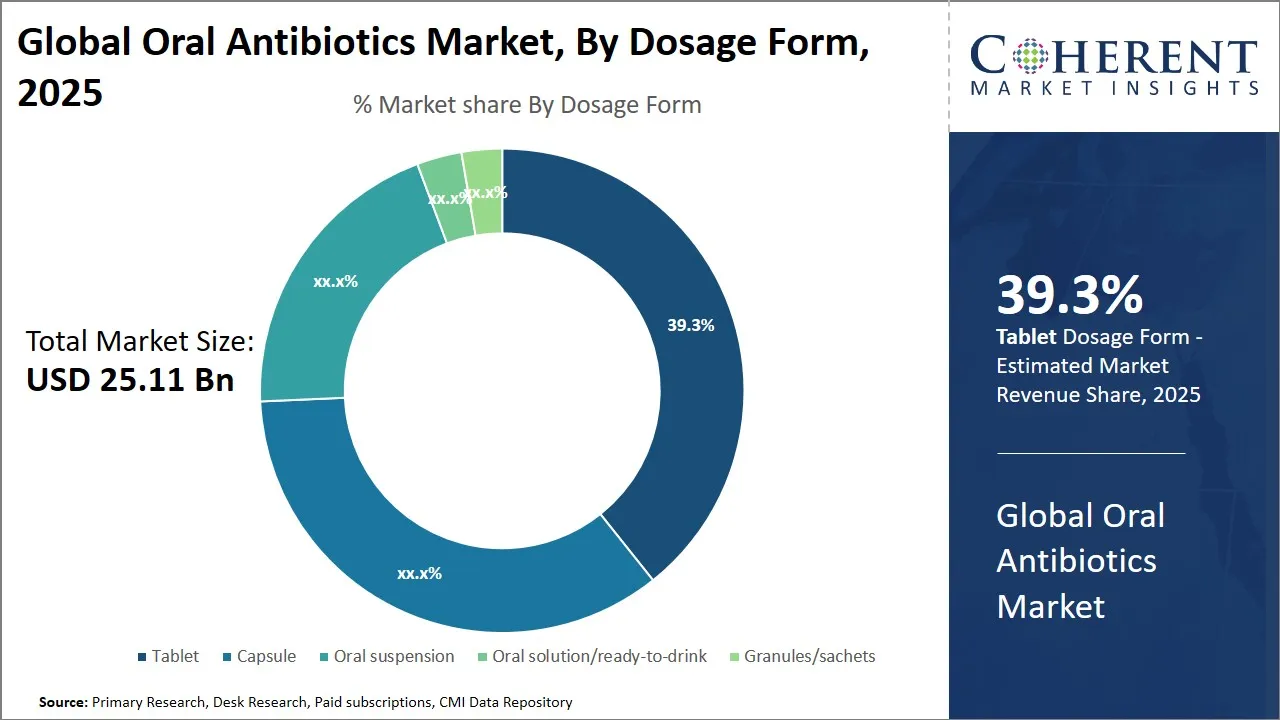
- The tablet segment is expected to lead the global oral antibiotics market with a 40.3 % share in 2026, mainly due to its unmatched convenience, ease of use, and affordability.
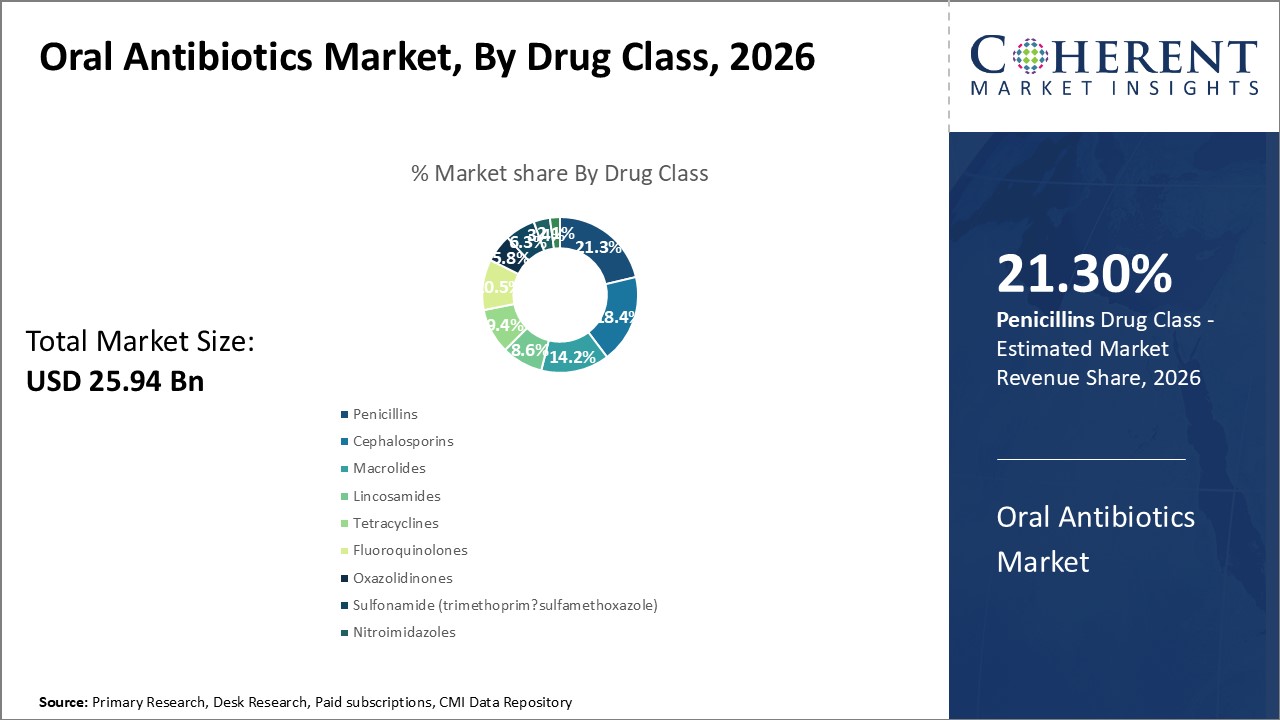
- Penicillins are the dominant drug class in the market, accounting for an estimated 21.3 % of the market share in 2026, driven by their broad-spectrum antibacterial properties.
- Respiratory tract infections represent the largest application segment within the global oral antibiotics market, capturing an estimated 33.4 % of the market share in 2026.
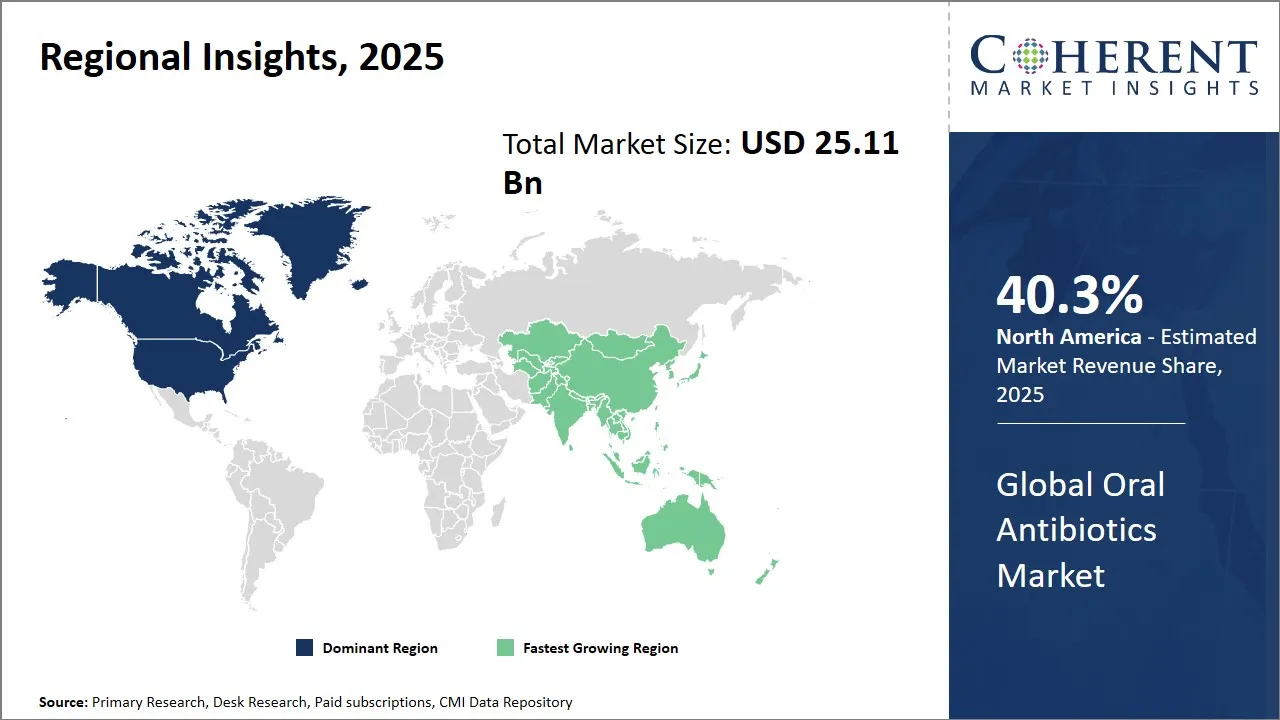
- North America is expected to lead the market, holding a share of 40.3 % in 2026. Asia Pacific is anticipated to be the fastest-growing region, with a market share of 23.4% in 2026.
Market Overview
Market trends indicate a growing emphasis on the development of novel oral antibiotic therapies that target resistant bacterial strains, coupled with a shift towards personalized medicine approaches. Additionally, the rise in outpatient treatments and the preference for oral administration over injectable forms contribute significantly to the market’s expansion. Furthermore, regulatory support for antibiotic stewardship programs aims to optimize antibiotic use, fostering sustainable growth in this sector.
Current Events and Its Impact
Current Events | Description and its Impact |
Government Funding for Indigenous Drug Development |
|
Accelerated Integration of Artificial Intelligence in Drug Development |
|
Segmental Insights
- Current Industry Events of 2026
- Market Size Estimation
- Regional Breakdown
- Competitive Landscape
- Customer Intelligence
- Segmental Analysis
- Pricing Analysis
- Key Market Drivers, Challenges & Future Trends
- Customized Insights Section
Oral Antibiotics Market Insights, By Dosage Form - Tablet contributes the highest share of the market owing to widespread patient preference and manufacturing advantages
In 2026, the tablet segment is expected to dominate the oral antibiotics market, holding a 40.3% share, primarily due to its unparalleled convenience, ease of use, and affordability. Tablets are the most prescribed and taken dosage, influenced by patients favoring a stable form of dosage that is easy to administer and portable to a large degree. They are highly accurate in dosing and far more stable to chemical agents than liquid dosage forms and can thus be used with a wide variety of antibiotics, such as penicillins, cephalosporins, and fluoroquinolones.
In August 2025, Iterum Therapeutics, a drug development company that aims to develop next-generation antibiotics, declared that ORLYNVAH (sulopenem etzadroxil and probenecid) oral pills were launched in the U.S. This is the U.S. FDA-approved oral penem which is the first oral penem available in the U.S. intended to treat simple urinary tract infections.
Oral Antibiotics Market Insights, By Drug Class - Penicillins hold the highest market share driven by broad-spectrum efficacy and established clinical usage
Penicillins is the most notable drug class in the oral antibiotics market, with an estimated market share of 21.3% in 2026. This is mainly due to their broad-spectrum antibacterial activity, established clinical profile, and comparably good safety margin. Penicillins are the oldest antibiotics to be discovered, and as a result, they have served as the basis of antimicrobial therapy, and are the first-line agents in treating the most common bacterial infections.
Amoxicillin and ampicillin are considered key representatives of the drug class because they are widely used since they are effective in treating respiratory tract infections, skin and urinary tract infections.
Oral Antibiotics Market Insights, By Application - Respiratory tract infections contribute the highest market share influenced by high prevalence and the critical need for antibiotic intervention
The dominant application segment in the global oral antibiotics market is respiratory tract infections. This segment is projected to account for a market share of 33.4% in 2026 because of their high incidence and high impact on public health. The RTIs include bronchitis, pneumonia, sinusitis, and pharyngitis, which are often treated with empirical antibiotics to treat and prevent complications.
This trends of RTIs in antibiotic use is driven by seasonal variations, pollution of the environment, prevalence of smoking, and increased exposure to airborne diseases. The prevalence of respiratory tract infections (RTIs) across all age groups, particularly among vulnerable populations like children and the elderly, continues to drive a consistent demand for effective oral antibiotics to treat these conditions.
Regional Insights
North America Oral Antibiotics Market Analysis and Trends
In 2026, North America is expected to lead the global oral antibiotics market with a 40.3% share, driven by its well-established healthcare system, advanced understanding of infectious diseases, and robust pharmaceutical research and development. North America has a stable regulatory environment making sure that antibiotics are safe and effective to facilitate continuous innovation and product introduction. The availability of leading multinational pharmaceutical firms like Pfizer, Johnson and Johnson, and Merck is also a significant factor to the market leadership.
In October 2020, Pfizer announced its intention to purchase Arixa Pharmaceuticals, a U.S.-based firm that focuses on oral antibiotics to treat drug-resistant infections. The acquisition will push forward Arixa lead compound, ARX-1796, to the clinical trials. ARX-1796 is a prodrug of avibactam, which is normally delivered orally through injection and Arixa formulation is an oral drug.
Asia Pacific Oral Antibiotics Market Analysis and Trends
The oral antibiotics market is projected to experience the fastest growth in the Asia Pacific region with a share of 23.4% in 2026. The drivers of this growth are increased access to healthcare, the growing cases of infectious disease, government spending on healthcare infrastructure, and the increasing awareness about antibiotic treatment in emerging economies such as India and China.
The area accommodates a combination of international drug giants as well as more local players, including Sun Pharmaceutical Industries and Cipla in India, that supports competitive pricing and broader market penetration. Moreover, regulatory reforms are being progressive and the channels of distribution are being improved in rural and urban regions to increase access to patients.
Oral Antibiotics Market Outlook for Key Countries
U.S. Oral Antibiotics Market Trends
The U.S. remains a leader in both innovation and consumption of oral antibiotics, supported by strong healthcare policies and robust reimbursement systems. Such major stakeholders as Pfizer, Merck, and AbbVie invest much in the development of new antibiotics and in controlling antibiotic resistance by using stewardship programs. The stringent regulatory control by the U.S FDA provides high standards that motivate companies to work on the next generation of oral antibiotics against resistant strains. The large number of healthcare providers in the country and the high level of patient awareness promote the level of adoption of advanced therapies.
In May 2026, Innoviva Specialty Therapeutics, a subsidiary of Innoviva, announced the commercial launch of its antibiotic ceftobiprole (Zevtera) in the U.S. This marks the first U.S. FDA-approved cephalosporin for treating Staphylococcus aureus bacteremia, including right-sided endocarditis caused by methicillin-resistant Staphylococcus aureus (MRSA).
India Oral Antibiotics Market Trends
The Indian market of oral antibiotics enjoys the fact that there is a high number of patients, rising healthcare spending, and growing urbanization. Local pharmaceutical firms like Sun Pharma, Cipla, and Dr. Reddy Laboratories are very important as they offer cheap and efficient oral antibiotics and the treatment becomes accessible to a greater number of people. The government attempts to regulate the use of antibiotics and fight resistance, the increase of health insurance coverage is adding to market growth.
In January 2026, the Central Drugs Standard Control Organization (CDSCO) in India approved Wockhardt's new generation oral antibiotic, Miqnaf (nafithromycin), for the treatment of community-acquired bacterial pneumonia (CABP) in adults. Miqnaf offers an ultra-short, once-a-day, 3-day treatment regimen, targeting both typical and multi-drug resistant (MDR) pathogens.
China Oral Antibiotics Market Trends
China is also a dominant force in oral antibiotics demand in Asian Pacific because of its huge population, increasing healthcare investment, and increasing drug distribution channels. The focus of the Chinese government on healthcare reform and rural health coverage favor more access to antibiotics. Leading local companies, such as Shanghai Pharmaceuticals and Hengrui Medicine, as well as multinational companies, are the innovation drivers and diversify the products. Regulatory enhancements that were standardized with international standards enhanced confidence in the market that invited foreign investments and partnering.
In August 2023, Shionogi & Co., Ltd., based in Osaka, Japan, announced the launch of Flomox Fine Granules for children in China through its partner, Beijing Huawei Pharmaceutical Co. Ltd. This pediatric oral cephem antibiotic was added to the National Reimbursement Drug List (NRDL) in January 2023. In China, where options for pediatric infectious disease treatments are limited, Flomox is expected to provide a valuable new solution.
Germany Oral Antibiotics Market Trends
The oral antibiotics market in Germany is highly regulated, has well-developed healthcare delivery system, and strong pharmaceutical research potentials. Companies like Bayer and Boehringer Ingelheim are also influential since they specialize in antibiotic therapies of high quality and they are involved in European antimicrobial resistance programs. The health insurance system of the country is well-developed and ensures that patients have access to the necessary medications.
In November 2023, Sandoz, a global leader in generic and biosimilar medicines, inaugurated two new facilities in Europe to strengthen its commitment to sustainable development and the supply of critical medicines. The investment includes a new penicillin production plant in Kundl, Austria, and a biosimilar development center in Holzkirchen, Germany.
End User Feedback and Unmet Needs in the Global Oral Antibiotics Market
- Oral antibiotics market experience has shown that the global market has both positive and negative feedbacks on the product performance and accessibility. On the upside, caregivers and patients have reported a high degree of satisfaction with how effective and fast oral antibiotics are in combating common infections with specific praise directed at the level of convenience offered by oral formulations versus injectable ones. A case in point is evident in the patients with respiratory tract infections who emphasized how antibiotics such as amoxicillin offered prompt relief without the need of hospitalization which cut down the treatment time and healthcare expenditure. But recurring issues are being raised, particularly the question of antibiotic resistance. Numerous healthcare providers have documented challenges in prescribing antibiotics because of the pattern of resistance and growing impatience with the fact that only few effective antibiotics are available to treat resistant infections. In low-resource settings, this is worsened by the fact that there is limited access to new drugs which are more effective.
- The gaps in the market are considerable and indicate major areas of improvement. The first of these gaps is the missing customization of the treatment process since the patients with particular health issues (e.g., those with co-infections or compromised immune systems) tend to struggle with locating antibiotics that would work with their peculiarities. Another certain problem that is observable is the affordability problem especially in developing countries whereby the price of the newer antibiotics may be prohibitively high. The solution to these loopholes would present huge growth potential. An example is that more investment in the creation of special antibiotics against specific resistant strains would not only enhance patient outcomes but also lead to innovation in the pharmaceutical industry. Furthermore, enhancing the availability of cost-effective treatments with the help of public-private partnerships and policy interventions may enhance higher market penetration and better customer retention particularly in under-served areas.
Market Players, Key Developments, and Competitive Intelligence
Key Developments
- In June 2025, the U.S. FDA accepted the New Drug Application (NDA) for zoliflodacin, a novel oral antibiotic developed for treating uncomplicated gonorrhea in adults and pediatric patients aged 12 and older. Zoliflodacin, a spiropyrimidinetrione antibiotic, demonstrated non-inferiority to the standard ceftriaxone and azithromycin regimen in a Phase 3 study, with microbiological cure rates of 90.9% versus 96.2%, respectively.
- In March 2025, GSK plc., a global healthcare company, introduced Blujepa (gepotidacin), the first new oral antibiotic for urinary tract infections (UTIs) in 30 years. Approved by the U.S. Food and Drug Administration, Blujepa offers a promising treatment for uncomplicated UTIs in women and pediatric patients. This novel antibiotic, part of the triazaacenaphthylene class, targets bacterial DNA replication by inhibiting two essential enzymes, DNA gyrase and topoisomerase IV.
- In November 2024, Zai Lab, a biopharmaceutical company focused on developing and commercializing innovative medicines in China, signed an agreement with Pfizer, a global healthcare company, to commercialize XACDURO, a sulbactam-durlobactam combination. This collaboration will bring a new treatment option for hospital-acquired bacterial pneumonia in mainland China, specifically targeting multidrug-resistant infections.
- In June 2024, GARDP, a global initiative focused on combating antimicrobial resistance (AMR), partnered with Bugworks Research Inc., a biopharmaceutical company, to develop BWC0977. These broad-spectrum antibiotic targets multidrug-resistant bacteria, furthering global efforts to address the growing threat of AMR.
Top Strategies Followed by Global Oral Antibiotics Market Players
- Established players dominate the market through substantial investments in research and development (R&D), new product launches, driving the innovation of high-performance, next-generation antibiotic formulations that address resistance challenges and improve patient outcomes. These companies prioritize developing novel drug delivery systems, enhancing bioavailability, and expanding their therapeutic pipelines.
- Major companies like Johnson & Johnson, GSK, and Bayer dominate the market with substantial R&D investments. Johnson & Johnson offers Invanz (ertapenem) for resistant infections, while GSK’s Augmentin (amoxicillin/clavulanate) is widely prescribed. Bayer’s Avelox (moxifloxacin) targets severe infections.
- Mid-level players in the global oral antibiotics market adopt a contrasting yet effective strategy by focusing on delivering cost-effective solutions that strike a balance between quality and affordability. Recognizing the price-sensitive nature of large consumer segments, especially in developing regions, these companies tailor their portfolios to offer generic and value-for-money antibiotic products that maintain therapeutic efficacy while catering to budget-conscious buyers.
- Companies such as Dr. Reddy's, Mylan, and Zydus Cadila focus on cost-effective generic antibiotics. Dr. Reddy’s offers affordable options like Cefdinir and Levofloxacin, while Mylan and Zydus provide widely used generics such as Azithromycin and Ciprofloxacin. These players balance affordability and quality to cater to price-sensitive markets.
- Meanwhile, small-scale players carve out distinct niches within the oral antibiotics market by emphasizing specialized, innovative products that address unmet clinical needs or focus on particular bacterial strains and delivery mechanisms. These companies often leverage cutting-edge technologies such as nanotechnology, advanced formulation techniques, or digital health integration to differentiate their offerings and compete effectively against larger rivals.
- Smaller firms like Iterum Therapeutics, Revolo Biotherapeutics, and Eloxx Pharmaceuticals focus on niche, innovative solutions. Iterum’s SUL-DUR tackles multi-drug resistance, while Revolo explores immune-boosting treatments. Eloxx develops therapies for rare infections.
Market Report Scope
Oral Antibiotics Market Report Coverage
| Report Coverage | Details | ||
|---|---|---|---|
| Base Year: | 2025 | Market Size in 2026: | USD 25.94 Bn |
| Historical Data for: | 2020 To 2024 | Forecast Period: | 2026 To 2033 |
| Forecast Period 2026 to 2033 CAGR: | 3.3% | 2033 Value Projection: | USD 32.56 Bn |
| Geographies covered: |
| ||
| Segments covered: |
| ||
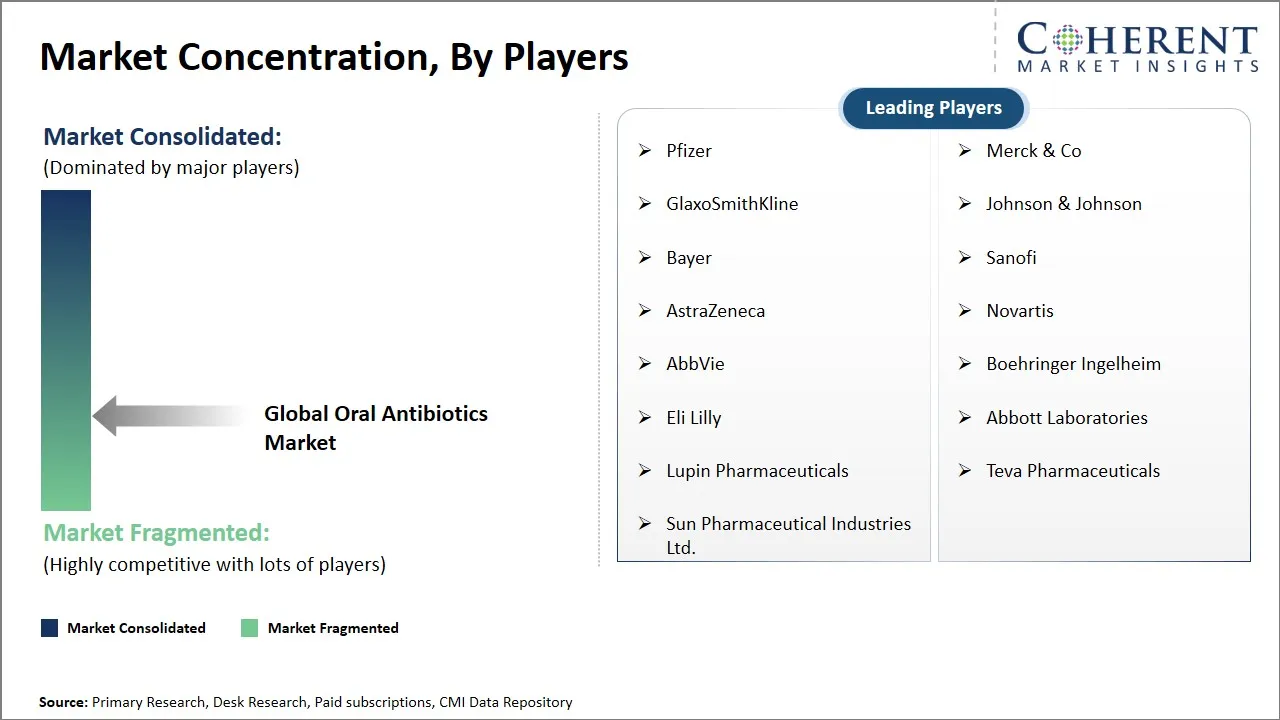
| Companies covered: | Pfizer, Merck & Co, GlaxoSmithKline, Johnson & Johnson, Bayer, Sanofi, AstraZeneca, Novartis, AbbVie, Boehringer Ingelheim, Eli Lilly, Abbott Laboratories, Lupin Pharmaceuticals, Teva Pharmaceuticals, and Sun Pharmaceutical Industries Ltd. | ||
| Growth Drivers: |
| ||
| Restraints & Challenges: |
| ||
Oral Antibiotics Market Dynamics
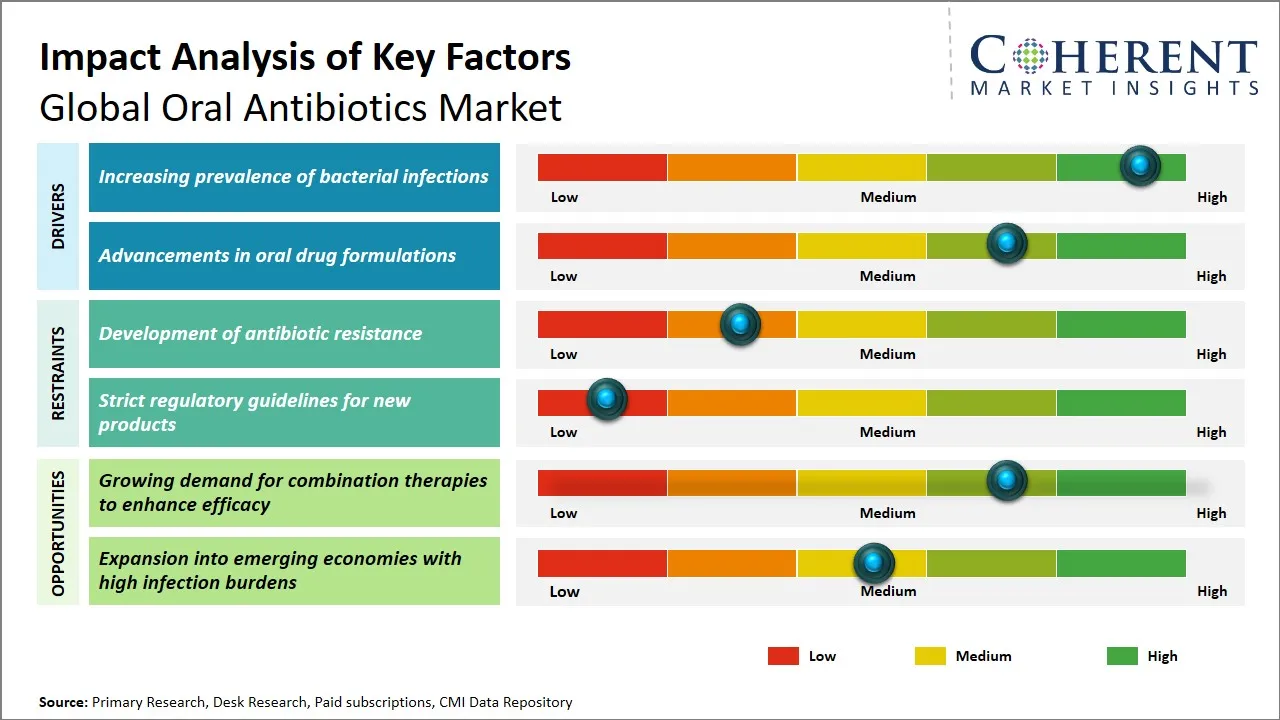
Oral Antibiotics Market Driver - Increasing Prevalence of Bacterial Infections
The emergence of bacterial diseases in both developed and developing world contributes immensely to the market of oral antibiotics worldwide. Urbanization, population density, increased prevalence of lifestyle-related and communicable diseases are some of the factors that have led to increased burden of infections that demand effective use of antimicrobial treatment. RTI, UTI, skin, and soft tissue infections, etc. still impact large populations, so there is a need to have ready and effective treatment options.
In June 2024, WHO indicated a dire global requirement in new antibacterial therapies as antimicrobial resistance (AMR) keeps growing, complicating the management of such illnesses as pneumonia and bloodstream infections and making them more dangerous. Although the number of antibacterial agents is growing, only some are novel and able to deal with the most threatening pathogens. In the meantime, the rise in NDM-CRE, a very resistant bacterium, increased more than 460% in the U.S. in 2019 to 2023 itself, which complicates treatment and detection because of a lack of test capacity.
Oral Antibiotics Market Opportunity - Growing Demand for Combination Therapies to Enhance Efficacy
A major opportunity in the global oral antibiotics market is the rising consumption of combination therapies in the effort to increase the effectiveness of treatment and counteract antibiotic resistance. Combination therapies, used when two or more antibiotics are used, or when combining an antibiotic with non-antibiotic agents, have a strategic benefit in treating complex bacterial infections that are becoming more and more difficult to treat by themselves. This technique has not only the benefit of expanding the antimicrobial spectrum, but also decreases the chances of developing resistance since the pathways of various bacteria are attacked at once.
In June 2023, Pfizer Inc., a U.S.-based pharmaceutical company, announced positive Phase 3 results for its investigational antibiotic combination aztreonam-avibactam (ATM-AVI). The data from the REVISIT and ASSEMBLE studies showed that ATM-AVI effectively treats serious infections caused by Gram-negative bacteria, including multidrug-resistant strains. In the REVISIT study, ATM-AVI demonstrated a similar safety profile to aztreonam alone and showed promising cure rates for complicated intra-abdominal infections and hospital-acquired pneumonia.
Analyst Opinion (Expert Opinion)
- The oral antibiotics market is experiencing steady growth, driven by several key factors, including the increasing prevalence of bacterial infections and the rising demand for more efficient, accessible treatments. Technological advancements, such as the development of new drug formulations and the increasing integration of AI in drug discovery, are propelling the market forward. Regulatory support, especially in key markets like the U.S. and Europe, is ensuring a favorable environment for antibiotic development. However, the market faces challenges such as growing antibiotic resistance and stringent regulatory hurdles, which could impact the availability of newer drugs. The industry's focus on innovation, along with global initiatives to combat antimicrobial resistance, is creating emerging opportunities, especially in regions with rising healthcare access.
- Conferences and events have played a crucial role in advancing the conversation around antibiotic resistance and treatment development. Recent global conferences such as the World Health Summit and the European Congress of Clinical Microbiology and Infectious Diseases have facilitated important discussions on emerging resistance patterns and new antibiotic therapies. These events not only highlight cutting-edge research but also serve as platforms for policy formulation. Notable industry initiatives include collaborations between pharmaceutical companies and governments aimed at addressing resistance, such as the U.K.'s National Antimicrobial Resistance Strategy and the U.S. Antibiotic Resistance Solutions Initiative, both of which are expected to shape the market landscape positively in the coming years.
Speak to the analyst
Want personalized insights?
Take the findings above to one of our principal consultants, or have the report rebuilt around the segments, geographies and competitors you actually track.
Market Segmentation
- Dosage Form Insights (Revenue, USD Bn, 2021 - 2033)
- Tablet
- Capsule
- Oral suspension
- Oral solution/ready-to-drink
- Granules/sachets
- Drug Class Insights (Revenue, USD Bn, 2021 - 2033)
- Penicillins
- Amoxicillin
- Ampicillin
- Others
- Cephalosporins
- Cephalexin
- Cefpodoxime
- Others
- Macrolides
- Azithromycin
- Clarithromycin
- Others
- Lincosamides
- Clindamycin
- Tetracyclines
- Doxycycline
- Minocycline
- Others
- Fluoroquinolones
- Ciprofloxacin
- Levofloxacin
- Others
- Oxazolidinones
- Linezolid
- Tedizolid
- Others
- Sulfonamide (trimethoprim–sulfamethoxazole)
- Nitroimidazoles
- Metronidazole
- Tinidazole
- Others
- Others (Rifamycins, Nitrofurans, Glycopeptides, Macrocyclics, etc.)
- Penicillins
- Application Insights (Revenue, USD Bn, 2021 - 2033)
- Respiratory tract infections
- Skin and soft tissue infections
- Urinary tract infections
- Gastrointestinal/enteric infections
- Sexually transmitted infections
- Dental/orofacial infections
- Clostridioides difficile infection
- Others (Mycobacterial infections)
- Release Profile Insights (Revenue, USD Bn, 2021 - 2033)
- Immediate-release
- Extended-release/delayed-release
- Spectrum Of Activity Insights (Revenue, USD Bn, 2021 - 2033)
- Broad-spectrum antibiotics
- Narrow-spectrum antibiotics
- Patient Group Insights (Revenue, USD Bn, 2021 - 2033)
- Adult
- Pediatric
- Geriatric
- Prescription Type Insights (Revenue, USD Bn, 2021 - 2033)
- Prescription Drugs
- Over-the-Counter (OTC)
- Manufacturer Type Insights (Revenue, USD Bn, 2021 - 2033)
- Branded
- Generics
- Distribution Channel Insights (Revenue, USD Bn, 2021 - 2033)
- Hospital Pharmacy
- Retail Pharmacy
- Online Pharmacy
- Regional Insights (Revenue, USD Bn, 2021 - 2033)
- North America
- U.S.
- Canada
- Latin America
- Brazil
- Argentina
- Mexico
- Rest of Latin America
- Europe
- Germany
- U.K.
- Spain
- France
- Italy
- Russia
- Rest of Europe
- Asia Pacific
- China
- India
- Japan
- Australia
- South Korea
- ASEAN
- Rest of Asia Pacific
- Middle East
- GCC Countries
- Israel
- Rest of Middle East
- Africa
- South Africa
- North Africa
- Central Africa
- North America
- Key Players Insights
- Pfizer
- Merck & Co
- GlaxoSmithKline
- Johnson & Johnson
- Bayer
- Sanofi
- AstraZeneca
- Novartis
- AbbVie
- Boehringer Ingelheim
- Eli Lilly
- Abbott Laboratories
- Lupin Pharmaceuticals
- Teva Pharmaceuticals
- Sun Pharmaceutical Industries Ltd.
Sources
Primary Research Interviews
- Industry Stakeholders
- U.S. Department of Health and Human Services (HHS)
- Centers for Disease Control and Prevention (CDC)
- End users
- World Health Organization (WHO)
- National Institutes of Health (NIH)
Government and International Databases
- World Health Organization (WHO) Global Health Observatory
- U.S. Centers for Disease Control and Prevention (CDC)
- European Medicines Agency (EMA)
- U.S. Food and Drug Administration (FDA)
- National Institute for Health and Care Excellence (NICE)
- Public Health England (PHE)
Trade Publications
- The Pharmaceutical Journal
- Pharmaceutical Technology
- PharmaTimes
- Pharmaceutical Executive
- Pharma Manufacturing
- Pharmaceutical Business Review
Academic Journals
- The Lancet Infectious Diseases
- Clinical Infectious Diseases
- Journal of Antimicrobial Chemotherapy
- Antimicrobial Agents and Chemotherapy
- Infection Control & Hospital Epidemiology
- Journal of Global Antimicrobial Resistance
Reputable Newspapers
- The New York Times
- The Guardian
- The Washington Post
- BBC News
- Reuters
- Associated Press
Industry Associations
- International Federation of Pharmaceutical Manufacturers & Associations (IFPMA)
- Generic Pharmaceutical Association (GPhA)
- European Federation of Pharmaceutical Industries and Associations (EFPIA)
- Pharmaceutical Research and Manufacturers of America (PhRMA)
- Indian Pharmaceutical Alliance (IPA)
- Brazilian Pharmaceutical Industry Association (ABIFINA)
Public Domain Resources
- U.S. National Library of Medicine - PubMed Central
- National Institutes of Health - National Library of Medicine
- World Health Organization - Global Health Observatory
- Centers for Disease Control and Prevention - Antibiotic Resistance
- European Centre for Disease Prevention and Control (ECDC)
- Public Health Agency of Canada - Antimicrobial Resistance
Proprietary Elements
- CMI Data Analytics Tool: Proprietary analytics tool to analyze real-time market trends, consumer behavior, and technology adoption in market
- Proprietary CMI Existing Repository of Information for Last 8 Years
Get access to 250+ pages report
Every segment, forecast, competitor profile and data table behind the analysis above — available for instant download.
- ESOMAR Member
- ISO 9001:2015 Certified
- D-U-N-S Registered
- GDPR & CCPA Compliant
Missing comfort of reading report in your local language? Find your preferred language:
Transform your Strategy with Exclusive Trending Reports
Frequently Asked Questions
The global oral antibiotics market is estimated to be valued at USD 25.94 Bn in 2026 and is expected to reach USD 32.56 Bn by 2033.
The CAGR of global oral antibiotics market is projected to be 3.3% from 2026 to 2033.
Increasing prevalence of bacterial infections and advancements in oral drug formulations are the major factors driving the growth of the global oral antibiotics market.
Development of antibiotic resistance and strict regulatory guidelines for new products are the major factors hampering the growth of the global oral antibiotics market.
In terms of dosage form, tablet is estimated to dominate the market revenue share in 2026.
Pfizer, Merck & Co, GlaxoSmithKline, Johnson & Johnson, Bayer, Sanofi, AstraZeneca, Novartis, AbbVie, Boehringer Ingelheim, Eli Lilly, Abbott Laboratories, Lupin Pharmaceuticals, Teva Pharmaceuticals, and Sun Pharmaceutical Industries Ltd. are the major players.
North America is expected to lead the global oral antibiotics market in 2026.