

Pediatric Antibiotics Market Size and Forecast – 2026 to 2033
The Pediatric Antibiotics Market is estimated to be valued at USD 6.8 Bn in 2026 and is expected to reach USD 9.2 Bn by 2033, exhibiting a compound annual growth rate (CAGR) of 3.1% from 2026 to 2033.
Key Takeaways
- By Infection, Acute Sinusitis hold the largest market share of 42.2% in 2026 owing to its disease & epidemiology drivers.
- By Route of Administration, Intravenous expected to hold largest market share of 37.8% in 2026 owing to the rising incidence of severe pediatric infections.
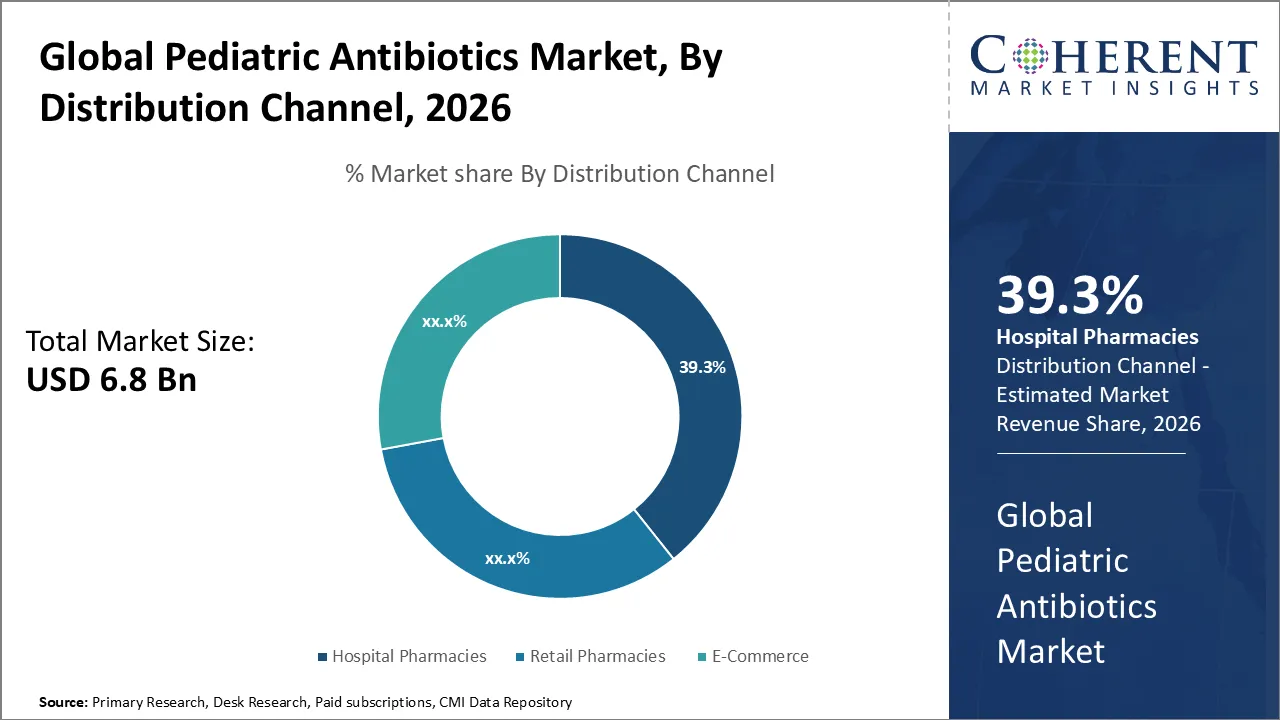
- By Distribution Channel, Hospital Pharmacies acquired the prominent market share of 39.3% in 2026 owing to the dominance of hospitals as primary treatment centers.
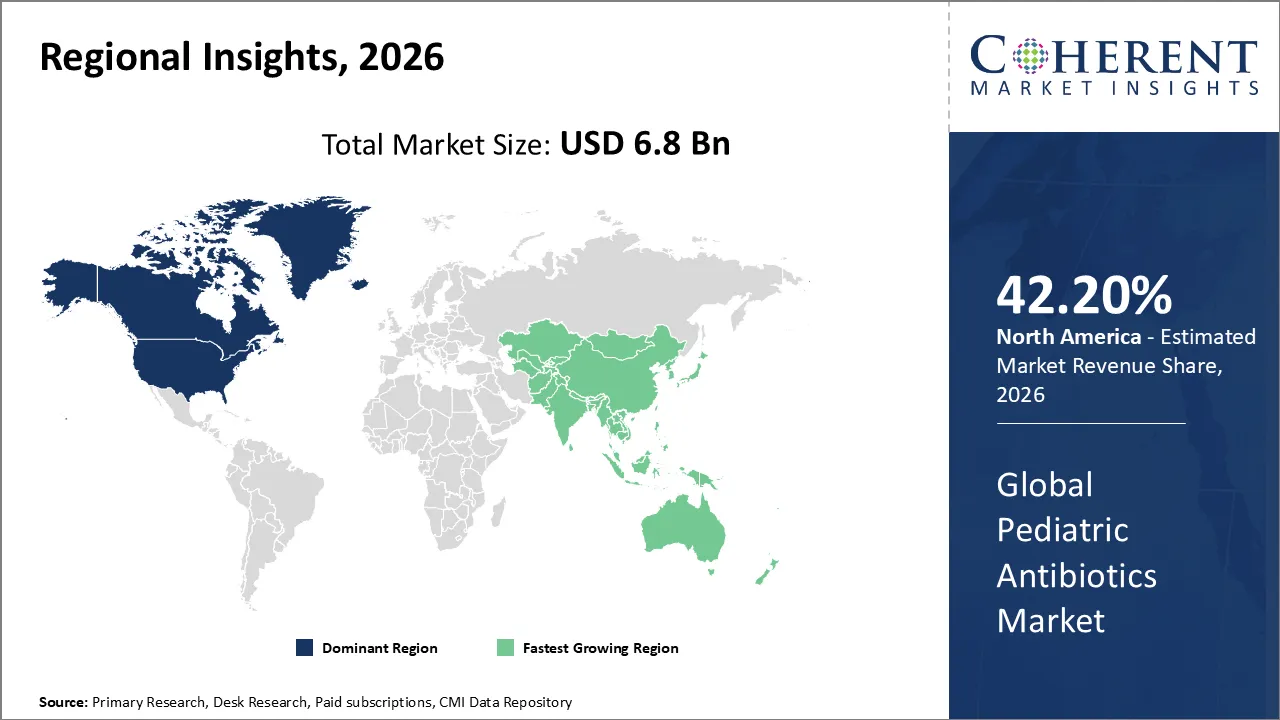
- By Region, North America dominates the overall market with an estimated share of 42.20% in 2026 owing to the advanced healthcare infrastructure.
Market Overview
Healthcare providers drive the pediatric antibiotics market by treating a high prevalence of infectious diseases among children, especially respiratory, ear, and skin infections that require timely intervention. Expanding healthcare access, increasing hospital admissions, and the availability of child-friendly formulations such as suspensions and dispersible tablets support pediatric antibiotics market demand. Pharmaceutical companies advance growth through drug development, while hospital and retail pharmacies strengthen distribution. At the same time, regulators and clinicians address antimicrobial resistance by enforcing stricter prescribing guidelines and promoting more cautious, targeted antibiotic use.
Current Events and their Impact on the Pediatric Antibiotics Market
Current Events | Description and its impact |
Regulatory and Policy Changes in Key Regions |
|
Technological and Scientific Advancements |
|
Competitive and Industry Dynamics |
|
Segmental Insights
- Current Industry Events of 2026
- Market Size Estimation
- Regional Breakdown
- Competitive Landscape
- Customer Intelligence
- Segmental Analysis
- Pricing Analysis
- Key Market Drivers, Challenges & Future Trends
- Customized Insights Section
Pediatric Antibiotics Market Insights, By Distribution Channel: Hospital Pharmacies contribute the highest share of the market owing to its availability of specialized pediatric formulations.
Hospital Pharmacies acquired the prominent market share of 39.3% in 2026. Hospital pharmacies drive the pediatric antibiotics market by supplying essential medications promptly to children with acute and complex infections. They offer specialized formulations, such as liquid suspensions and age-specific doses, to ensure accurate and safe administration. Pharmacists collaborate closely with pediatricians and infectious disease specialists to optimize therapy and monitor treatment. Increasing pediatric hospitalizations, especially in intensive care units, boost reliance on hospital pharmacies, while their active role in managing multidrug-resistant infections and following regulatory standards strengthens ongoing antibiotic demand.
Pediatric Antibiotics Market Insights, By Infection: Acute Sinusitis contribute the highest share of the market owing to its physician & caregiver behavior.
Acute Sinusitis hold the largest market share of 42.2% in 2026. Clinicians drive the pediatric antibiotics market by treating children who present with persistent nasal congestion, facial pressure, and fever after upper respiratory infections. School exposure and underdeveloped immunity increase children’s susceptibility to acute sinusitis. Physicians often prescribe antibiotics due to difficulty distinguishing viral from bacterial cases. Parents seeking quick relief further influence prescribing behavior. Expanding healthcare access and the availability of effective first-line antibiotics sustain demand, while seasonal infection surges continue to support consistent treatment volumes.
Pediatric Antibiotics Market Insights, By Route of Administration: Intravenous contribute the highest share of the market owing to its superior efficacy & rapid action of IV Route.
Intravenous expected to hold largest market share of 37.8% in 2026. Healthcare providers drive the pediatric antibiotics market by prioritizing intravenous delivery for rapid and reliable treatment of severe infections such as sepsis and complicated pneumonia. Hospitals and intensive care units use IV administration to ensure precise dosing and immediate therapeutic action. Increasing admissions of critically ill and immunocompromised children boost demand. Clinicians choose IV therapy when oral options fail or prove unsuitable. The growing presence of resistant pathogens also pushes providers to use potent injectable antibiotics for effective disease management. For instance, in March 2026, Long Grove Pharmaceuticals launched the generic Dalvance, dalbavancin for injection, a single-dose antibiotic administered intravenously for pediatric patients to treat acute Gram-positive bacterial skin infections.
Regional Insights
North America Pediatric Antibiotics Market Trends
North America dominates the overall market with an estimated share of 42.20% in 2026. Pharmaceutical companies and healthcare providers drive the North America pediatric antibiotics market by developing advanced formulations and targeted therapies for children. Widespread healthcare access, established hospital networks, and strong insurance coverage enable early diagnosis and prompt treatment of infections. Clinicians address rising antimicrobial resistance through strategic prescribing, while government initiatives, awareness campaigns, and robust regulations ensure safe and effective use. These combined efforts create a market defined by high-quality pediatric care and sustained demand for antibiotics across the region. For instance, in March 2025, GSK plc announced that the FDA approved Blujepa (gepotidacin) to treat adults (≥40 kg) and pediatric patients (≥12 years, ≥40 kg) with uncomplicated urinary tract infections caused by susceptible E. coli, K. pneumoniae, C. freundii complex, S. saprophyticus, and E. faecalis.
Asia Pacific Pediatric Antibiotics Market Trends
Healthcare providers and pharmaceutical companies drive the Asia Pacific pediatric antibiotics market by expanding access and raising awareness of childhood infections. Hospitals and clinics increasingly use pediatric-specific formulations, while rising hospital admissions boost demand for oral and intravenous antibiotics. Companies develop affordable, child-friendly medications to address diverse regional needs, and clinicians prioritize early treatment and infection management in high-prevalence areas. Government programs and public health initiatives actively promote safe antibiotic use, collectively shaping a market driven by accessibility, growing demand, and evolving pediatric care practices.
United States Pediatric Antibiotics Market Trends
Healthcare providers drive the United States pediatric antibiotics market by prioritizing early diagnosis and effective management of childhood infections. Hospitals and clinics use pediatric-specific formulations, such as liquid and dispersible options, to ensure accurate and safe dosing. Pharmaceutical companies innovate with broad-spectrum and child-friendly antibiotics, while clinicians apply strategic prescribing to address antimicrobial resistance. Strong insurance coverage, established hospital networks, and government health programs enhance access and treatment. These combined efforts shape a market defined by safety, innovation, and steady pediatric antibiotic demand. For instance, Krystal Biotech announced that the FDA approved VYJUVEK (beremagene geperpavec‑svdt) to treat patients aged six months and older with dystrophic epidermolysis bullosa (DEB).
China Pediatric Antibiotics Market Trends
Healthcare providers and pharmaceutical companies drive the China pediatric antibiotics market by treating a high burden of childhood infections and managing increasing hospital visits. Hospitals and clinics use pediatric-specific formulations, such as liquid suspensions and age-appropriate dosages, to ensure safe and accurate administration. Growing parental awareness and proactive infection management by clinicians increase antibiotic use. Pharmaceutical manufacturers develop affordable, accessible child-friendly medications, while government initiatives and public health programs enforce responsible prescribing, collectively strengthening market growth and enhancing pediatric healthcare outcomes.
Pediatric Antibiotics Market Trend
Rise of Pediatric-Specific Formulations
Pharmaceutical companies increasingly focus on developing child-friendly formulations such as flavored suspensions, dispersible tablets, and age-adjusted dosages. These products improve adherence, reduce administration difficulties, and cater to infants, toddlers, and school-aged children. Hospitals and pharmacies adopt these formulations widely to ensure safe dosing, while caregivers appreciate easier administration. This trend highlights a growing emphasis on convenience, accuracy, and patient-centric drug design in pediatric antibiotic therapy, shaping product development strategies globally.
Shift Toward Targeted and Broad-Spectrum Therapy
Clinicians are increasingly choosing antibiotics based on pathogen identification and local resistance patterns. Broad-spectrum and targeted therapies are preferred for severe infections or resistant strains. This trend is supported by advancements in diagnostic tools and antimicrobial stewardship programs. Pediatric care emphasizes balancing efficacy with minimizing unnecessary exposure. The adoption of precision prescribing and guideline-driven therapy is driving the development of antibiotics that are both effective and safe for children.
Pediatric Antibiotics Market Opportunity
Development of Child-Friendly Formulations
There is a strong opportunity for pharmaceutical companies to develop palatable, easy-to-administer pediatric antibiotics, including flavored suspensions, chewables, and dispersible tablets. Caregivers seek solutions that simplify dosing and improve adherence, especially for younger children. Expanding product lines to cover a wider age range and offering formulations that reduce gastrointestinal discomfort can enhance market adoption. Companies that focus on patient-centric, convenient, and safe formulations can capture significant pediatric demand and strengthen brand loyalty.
Market Report Scope
Pediatric Antibiotics Market Report Coverage
| Report Coverage | Details | ||
|---|---|---|---|
| Base Year: | 2025 | Market Size in 2026: | USD 6.8 Bn |
| Historical Data for: | 2020 To 2024 | Forecast Period: | 2026 To 2033 |
| Forecast Period 2026 to 2033 CAGR: | 3.1% | 2033 Value Projection: | USD 9.2 Bn |
| Geographies covered: |
| ||
| Segments covered: |
| ||
| Companies covered: | Johnson & Johnson, Astellas Pharma, Inc, Pfizer Inc., Novartis AG, Bayer AG, Bristol-Myers Squibb Company, Abbott., DAIICHI SANKYO COMPANY, LIMITED, Dr. Reddy’s Laboratories Ltd, Teva Pharmaceuticals USA, Inc., Aurobindo Pharma USA, GlaxoSmithKline Plc., Hikma Pharmaceuticals PLC, Cipla Inc., Glenmark Pharmaceuticals, and Torrent Pharmaceuticals Ltd. | ||
| Growth Drivers: |
| ||
| Restraints & Challenges: |
| ||
Pediatric Antibiotics Market News
- In July 2025, Pelthos Therapeutics launched berdazimer topical gel 10.3% (Zelsuvmi), a first-in-class nitric oxide gel for at-home use in adults and children aged 1 year and older, offering the first FDA-approved topical molluscum treatment that avoids in-office procedures.
Analyst Opinion (Expert Opinion)
- The current trajectory of the pediatric antibiotics market is being shaped more by clinical realities than pure commercial dynamics. Prescribing patterns in tertiary care settings in South India show that over 60 % of children aged 0–4 years receive antibiotics, a practice that has statistically significant associations with rising antimicrobial resistance, increased costs, and treatment complications. This trend underscores the disconnect between empirical antibiotic use and microbiologically guided therapy in pediatric practice, which continues to erode the clinical utility of standard regimens.
- Resistance trends among the most vulnerable populations are particularly troubling: a focused neonatal study in India recorded alarmingly high resistance rates—90.2 % to ceftriaxone, 78.7 % to cefepime and 72.1 % to ampicillin—signalling that first‑line therapies are rapidly losing effectiveness in neonatal sepsis where timely intervention is critical. Such resistance levels not only compromise patient outcomes but also necessitate the use of broader‑spectrum agents, accelerating the cycle of resistance development.
- These clinical resistance patterns are mirrored in global pediatric mortality data. A multi‑country analysis presented at an international forum estimated that more than 3 million children died worldwide in 2022 due to infections unresponsive to antibiotic therapy, with substantial burden in Southeast Asia and Africa. This statistic should recalibrate how stakeholders evaluate “demand” in the pediatric antibiotics segment, shifting focus from volume growth to the urgent need for effective stewardship and diagnostic support.
- Policy and guideline shifts are also influencing therapeutic paradigms. Recent neonatal sepsis research suggests that shorter antibiotic courses (7 days versus traditional 10–14 days) can be equally efficacious and safer, a finding that if widely adopted could reduce unnecessary exposure and resistance pressure while optimizing resource utilization in pediatric care.
Speak to the analyst
Want personalized insights?
Take the findings above to one of our principal consultants, or have the report rebuilt around the segments, geographies and competitors you actually track.
Market Segmentation
- By Infection
- Acute Sinusitis
- Acute Otitis Media
- Non-Specific Upper Respiratory Tract Infections
- Urinary Tract Infections and Others
- By Route Of Administration
- Oral
- Topical
- Intravenous
- Others
- By Distribution Channel
- Hospital Pharmacies
- Retail Pharmacies
- E-Commerce
- By Regional Insights
- North America
- U.S.
- Canada
- Latin America
- Brazil
- Argentina
- Mexico
- Rest of Latin America
- Europe
- Germany
- U.K.
- Spain
- France
- Italy
- Russia
- Rest of Europe
- Asia Pacific
- China
- India
- Japan
- Australia
- South Korea
- ASEAN
- Rest of Asia Pacific
- Middle East
- GCC Countries
- Israel
- Rest of Middle East
- Africa
- South Africa
- North Africa
- Central Africa
- North America
- Key Players Insights
- Johnson & Johnson
- Astellas Pharma, Inc
- Pfizer Inc.
- Novartis AG
- Bayer AG
- Bristol-Myers Squibb Company
- DAIICHI SANKYO COMPANY, LIMITED
- Reddy’s Laboratories Ltd
- Teva Pharmaceuticals USA, Inc.
- Aurobindo Pharma USA
- GlaxoSmithKline Plc.
- Hikma Pharmaceuticals PLC
- Cipla Inc.
- Glenmark Pharmaceuticals
- Torrent Pharmaceuticals Ltd.
Sources
Primary Research interviews
- Pediatric infectious disease specialists in tertiary care hospitals
- Clinical pharmacists specializing in pediatrics
- Hospital procurement and formulary decision-makers
- Pediatricians in urban and rural clinics
Databases
- PubMed
- WHO Global Health Observatory
- CDC WONDER (Centers for Disease Control and Prevention)
- UNICEF Data Portal
Magazines
- Pharmaceutical Executive
- The Pharmaceutical Journal
- MedPage Today
- Pediatric Drug Update
Journals
- The Lancet Infectious Diseases
- Pediatric Infectious Disease Journal
- Journal of Antimicrobial Chemotherapy
- Indian Journal of Pediatrics
Newspapers
- The Times of India (Health Section)
- NDTV Health
- The Hindu – Health & Science
- Hindustan Times – Health
Associations
- American Academy of Pediatrics (AAP)
- Indian Academy of Pediatrics (IAP)
- Infectious Diseases Society of America (IDSA)
- European Society for Paediatric Infectious Diseases (ESPID)
Public Domain sources
- WHO Essential Medicines List – Pediatric Formulations
- UNICEF Vaccine and Antibiotic Access Reports
- CDC Antimicrobial Resistance Reports
- National Health Mission (India) Health Statistics
Proprietary Elements
- CMI Data Analytics Tool
- Proprietary CMI Existing Repository of information for last 8 years
Get access to 250+ pages report
Every segment, forecast, competitor profile and data table behind the analysis above — available for instant download.
- ESOMAR Member
- ISO 9001:2015 Certified
- D-U-N-S Registered
- GDPR & CCPA Compliant
Missing comfort of reading report in your local language? Find your preferred language:
Transform your Strategy with Exclusive Trending Reports
Frequently Asked Questions
The Pediatric Antibiotics Market is estimated to be valued at USD 6.8 Bn in 2026 and is expected to reach USD 9.2 Bn by 2033.
Factors such as increasing adoption of inorganic growth strategies by key players, and surge in prevalence of bacterial infections among children are expected to drive market growth over the forecast period.
Intravenous segment is expected to hold a major market share during the forecast period.
The major factors hampering growth of the market include side effects caused due to adverse reaction of certain antibiotics and stringent regulations for the use of antibiotics in pediatrics.
Major players operating in the market are Johnson & Johnson, Astellas Pharma, Inc, Pfizer Inc., Novartis AG, Bayer AG, Bristol-Myers Squibb Company, Abbott., DAIICHI SANKYO COMPANY, LIMITED, Dr. Reddy’s Laboratories Ltd, Teva Pharmaceuticals USA, Inc., Aurobindo Pharma USA, GlaxoSmithKline Plc., Hikma Pharmaceuticals PLC, Cipla Inc., Glenmark Pharmaceuticals, and Torrent Pharmaceuticals Ltd.