

Migraine Therapeutic Market Analysis & Forecast: 2026-2033
Migraine Therapeutic Market size is estimated to be valued at USD 7,515.4 Mn in 2026 and is expected to reach USD 14,368.1 Mn in 2033, exhibiting a compound annual growth rate (CAGR) of 9.7% from 2026 to 2033.
Key Takeaways
- By Therapeutic Segment, Pain‑relieving Medications is expected to dominate the migraine drugs market with 74.3% shares in 2026, driven by widespread use of OTC/prescription acute relief drugs.
- By Regional Outlook, North America is expected to capture 40.8% share, driven by high prevalence of migraine.
Market Overview
The global migraine therapeutic market value is experiencing strong growth, driven by the rising prevalence of migraine worldwide and increasing awareness of available treatment options. Moreover, increase in demand for safe and effective treatment and rise in research and development around the world is expected to boost the growth of the market. However, factors such as adverse effects of migraine drugs and lack of proper diagnosis and increasing undiagnosed cases are expected to hamper the growth of the global migraine therapeutic market.
Current Events and Its Impact on the Migraine Therapeutic Market
Event | Description and Impact |
FDA Regulatory Developments and Drug Approvals |
|
Technological Advancement in Neuroscience and Digital Health |
|
Global Supply Chain Disruptions and Manufacturing Challenges |
|
Migraine Therapeutic Market: Pipeline Analysis
The migraine drug pipeline is expanding with innovations in CGRP antagonists, novel targets, and delivery systems. In Phase III, oral gepants like Atogepant (AbbVie) and injectable CGRP antibodies such as Erenumab and Fremanezumab focus on migraine prevention and extended dosing.
Phase II includes Zavegepant (Pfizer), an intranasal gepant expanding indications for acute and preventive treatment, alongside ongoing Botox dosing optimization. Phase I features next-generation oral gepants and RNA-based biologics targeting CGRP pathways with improved pharmacokinetics.
In the preclinical stage, research is advancing on non-CGRP targets like PACAP and ion channels, and innovative delivery forms including nasal sprays and implants. Key platforms combine oral small molecules, monoclonal antibodies, and novel biologics aimed at improving convenience and efficacy.
Major trends include a shift toward oral therapies, long-acting injectables, and diversified mechanisms to address non-responders. Regulatory agencies support accelerated approvals, with growing emphasis on real-world evidence and personalized treatment approaches. These pipeline developments signal a move toward more effective, patient-friendly migraine management.
- Current Industry Events of 2026
- Market Size Estimation
- Regional Breakdown
- Competitive Landscape
- Customer Intelligence
- Segmental Analysis
- Pricing Analysis
- Key Market Drivers, Challenges & Future Trends
- Customized Insights Section
Patent Landscape
The migraine drugs market exhibits a dynamic patent landscape, with leading pharmaceutical companies like AbbVie, Eli Lilly, Teva, Amgen, and Pfizer holding over 70% of active patents. Key innovation areas include CGRP receptor antagonists, novel biologics, delivery systems, and digital therapeutics integration.
Recent patent filings focus on oral gepants, long-acting monoclonal antibodies, intranasal formulations, and combination therapies aimed at improving efficacy and patient adherence. Additionally, emerging patents cover non-CGRP targets such as PACAP modulators and ion channel blockers, reflecting efforts to diversify treatment options.
Academic institutions and biotech startups contribute patents in RNA-based therapeutics, wearable monitoring devices, and AI-driven migraine management solutions, supporting the trend toward personalized care.
Geographically, patent activity is concentrated in the U.S., Europe, and Japan, underscoring strong global R&D efforts. This competitive intellectual property environment is expected to drive innovation, encourage strategic collaborations, and increase barriers for new entrants in the migraine therapeutics market.
Reimbursement Scenario
The global reimbursement landscape for migraine therapeutics is complex and varies significantly across regions, influenced by national healthcare policies, coding systems, and payer structures. In the U.S., reimbursement is driven by Medicare Part D and commercial insurers like UnitedHealth and Blue Cross Blue Shield, with coverage often requiring prior authorization and step therapy protocols. Medicare generally covers 80% of drug costs post-deductible, while commercial payers reimburse at rates 10–30% higher but enforce utilization management for high-cost biologics.
In Europe, reimbursement decisions are nationally governed, with bodies such as NICE (UK), HAS (France), and IQWiG (Germany) evaluating cost-effectiveness and clinical benefit for CGRP inhibitors and novel migraine treatments. Germany’s G-BA and the European Medicines Agency (EMA) play pivotal roles in pricing and market access.
Across Asia-Pacific, countries like Japan and Australia operate national drug reimbursement schedules with periodic reviews; Japan’s system supports some newer migraine therapies under its National Health Insurance, while Australia includes key migraine drugs on the Pharmaceutical Benefits Scheme (PBS).
Globally, payers increasingly focus on real-world evidence, cost-benefit analyses, and patient outcomes, which shape access to emerging migraine treatments and influence market uptake.
Prescribers’ Preference
Prescribers’ preferences for migraine therapeutics vary based on patient type, migraine severity, and treatment goals. For acute migraine attacks, triptans remain a first-line choice due to their proven efficacy and rapid relief, with preference given to oral or nasal formulations depending on onset needs and tolerability. Gepants and ditans are increasingly favored for patients contraindicated for triptans, offering options with fewer cardiovascular risks.
In preventive treatment, CGRP monoclonal antibodies such as Erenumab and Fremanezumab are preferred for patients with frequent or refractory migraines, valued for their efficacy and convenient monthly or quarterly dosing. Oral preventive agents like topiramate and beta-blockers are often prescribed initially but are increasingly supplemented or replaced by newer targeted therapies based on patient response.
Prescribers also consider comorbidities, drug interaction profiles, and patient adherence, often integrating digital health tools for monitoring. Cost and reimbursement influence treatment choice, especially in biologics, with emphasis on balancing efficacy, safety, and patient quality of life. Overall, personalized treatment approaches and expanding therapeutic options drive evolving prescriber preferences in migraine care.
Segmental Insights
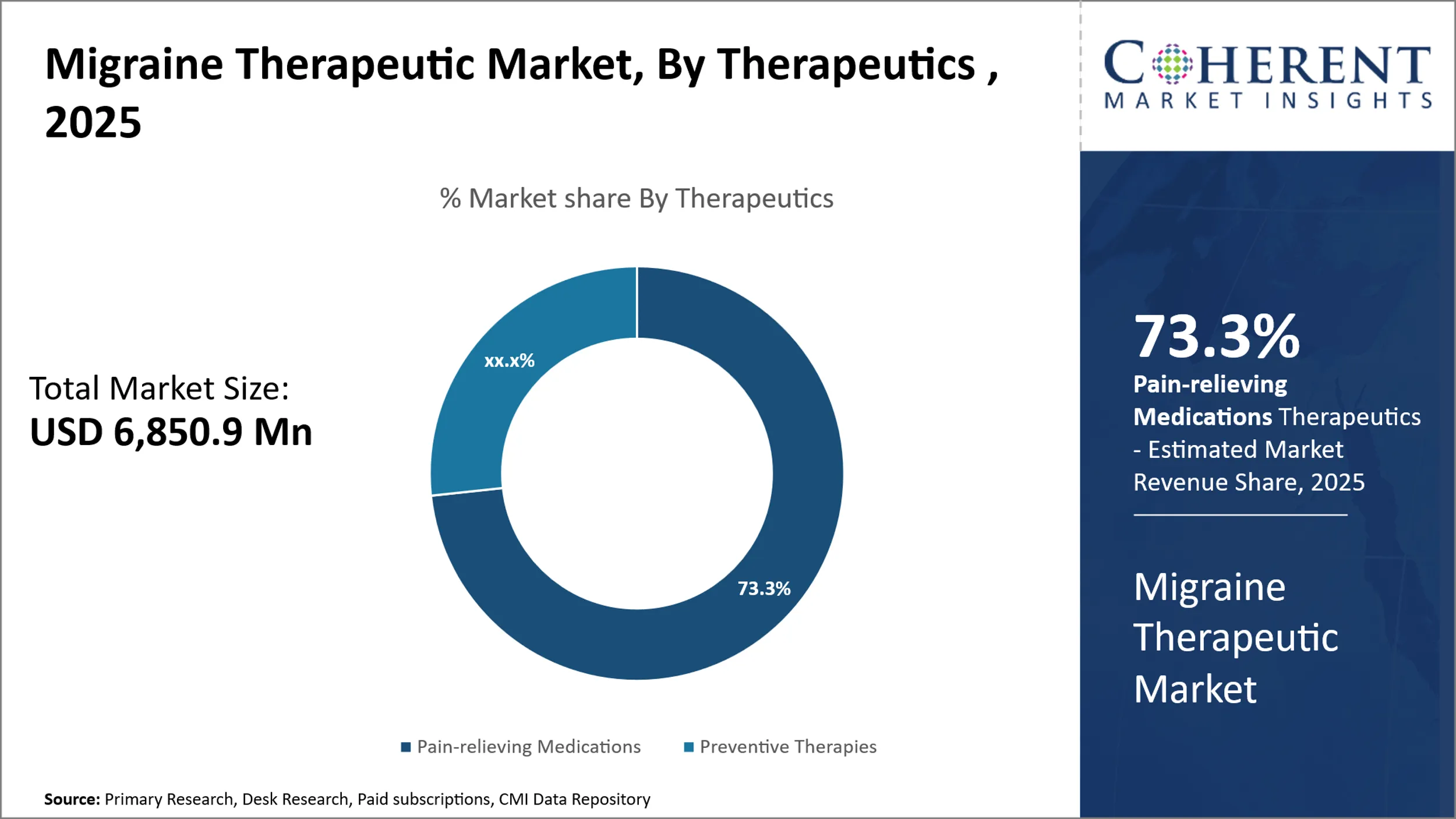
Global Migraine Therapeutic Market Insights, By Therapeutics
The market is segmented into Pain-relieving Medications and Preventive Medications. The pain-relieving medications segment is projected to dominate the global migraine therapeutic market outlook over the forecast period, driven by rising demand for effective migraine pain relief. These over-the-counter and/or prescription pain relievers include non-steroidal anti-inflammatory drugs (NSAIDs), Opioids, and salicylates. NSAIDs are the commonly used drugs for patients with migraine.
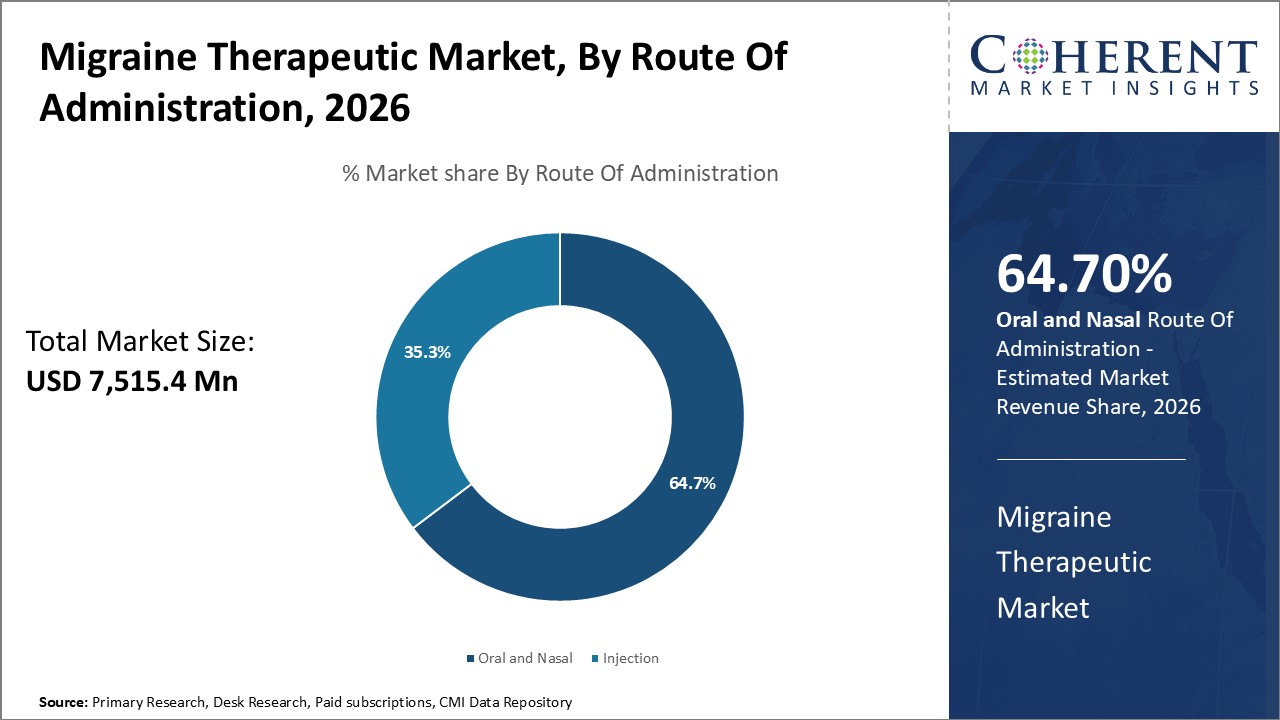
Global Migraine Therapeutic Market Insights, By Route of Administration
The market is segmented into Oral and Nasal and Injection. Of which, Oral and Nasal Segment is expected to dominate the market during the forecast period and this is attributed to the increase in use of oral and nasal migraine medications. Oral and nasal medications are the most frequently used route of administration for the migraine treatment.
Regional Insights
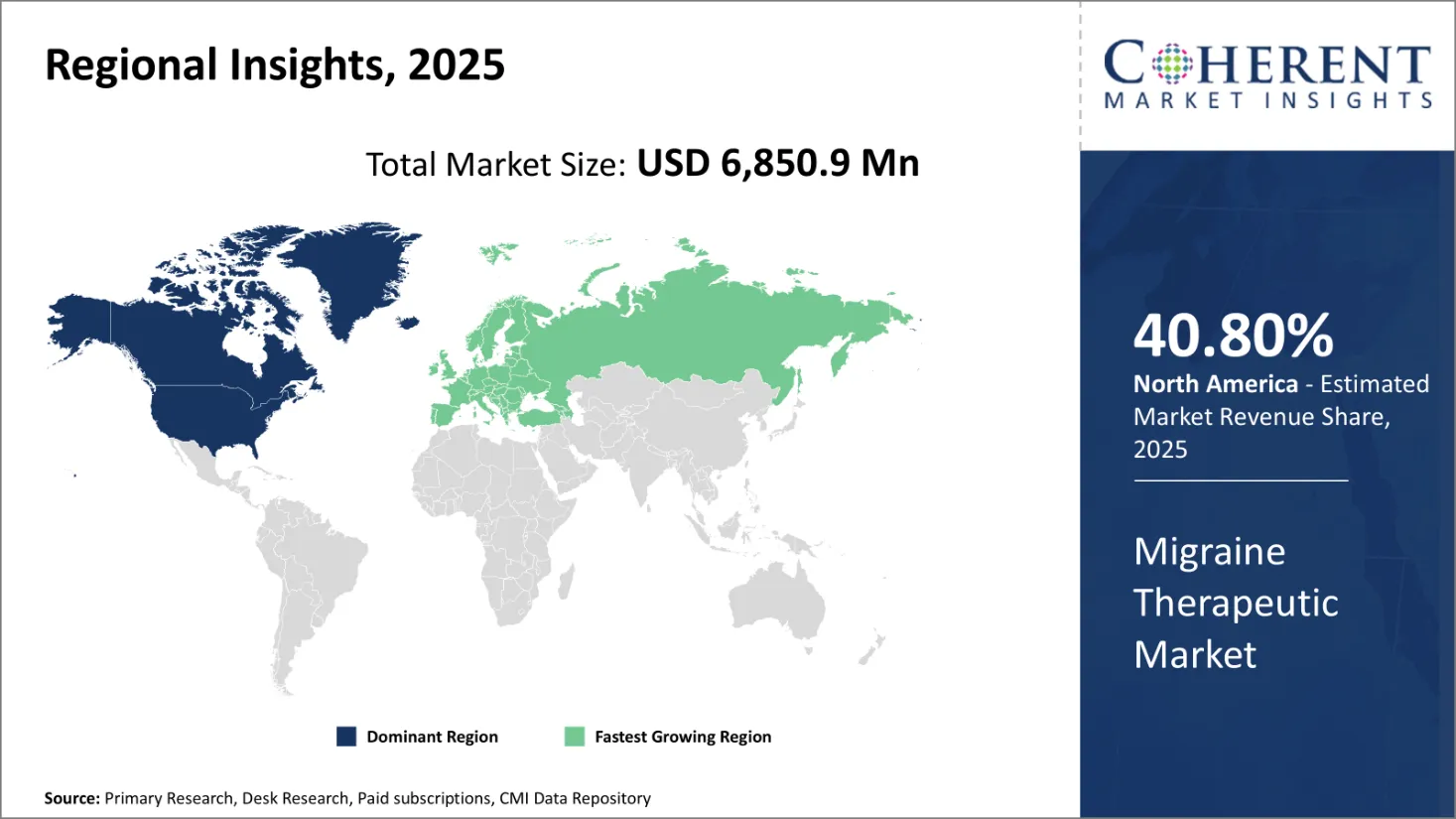
North America Migraine Therapeutic Market Analysis and Trends
Among regions, North America is expected to gain highest share in the market over the forecast period due to the high prevalence of migraine and rise in awareness among people about migraine and its therapeutics in this region.
For instance, according to the Migraine Research Foundation, migraines affect more than 39 million people in the United States and women are three times more likely to get migraines than men. According to the Migraine Institute, around 43% of U.S. women and 18% of men will experience migraines at some point in their life. Thus, there is an increasing demand for migraine therapeutics in the United States.
Asia Pacific Migraine Therapeutic Market Analysis and Trends
Asia Pacific is expected to reflect key migraine therapeutic market trends, with robust growth driven by the rising burden of migraine, growing adoption of novel therapeutics, and a large target population in the region.
For instance, according to a 2019 Study by Lancet Global Health, more than 213 million people in India were found to be suffering from migraine in 2019 while 60% of these cases were reported by women. The prevalence of migraine was higher in women aged 35-59 years than in men of the same age. This in turn has increased and/or increasing the demand for migraine therapeutics in India, driving the market growth.
Dominating Countries in the Migraine Drugs Market
The United States is projected to dominate the global migraine drugs market, holding a significant market share due to a well-established healthcare infrastructure, high prevalence of migraine, and robust adoption of advanced migraine therapeutics such as CGRP inhibitors and gepants. Strong investment in research and development, along with favorable reimbursement policies, support the U.S. leadership in this market.
Other key contributors include European countries like Germany, France, and the United Kingdom, which have growing patient populations and increasing access to innovative migraine treatments. These countries benefit from supportive regulatory frameworks and increasing awareness about migraine management.
Global Migraine Therapeutic Market Drivers
- Rise in burden of to migraine to underpin market growth
Migraine therapeutic market research indicates that one of the key factors expected to augment market growth during the forecast period is the rising prevalence of migraine worldwide. For instance, headache disorders, including migraine, are the second-leading cause of years lived with disability (YLD) worldwide among men and women.
According to National Center for Biotechnology Information, migraine affects more than one billion people each year worldwide, and is one of the most common neurologic disorders, with a high prevalence and morbidity, especially among young adults and females. Thus, there is an increase in demand for migraine therapeutics.
- Increasing awareness among people to augment market growth
Another factor which is driving the growth of the global biosurgery market is the rise in awareness among individuals about migraine and its treatment options. For instance, migraines are a chronic neurological disorder that affects around one billion people around the world.
With the increase in awareness among people, the demand for migraine therapeutics is also increasing. Every year, the United Kingdom observes Migraine Awareness Week in the first week of September. In 2023, it will be observed from September 4 to 13. Purple is the official color of the National Migraine and Headache Awareness Month (MHAM).
Global Migraine Therapeutic Market Opportunities
Increase in demand for safe and effective treatment across the globe is expected to offer significant growth opportunities for players in the migraine therapeutic market. For instance, with the increase in burden of migraine and increase in awareness, the demand for safe and effective treatment is also increasing rapidly.
In January 2022, BioDelivery Sciences announced the launch of new drug, Elyxyb (celecoxib oral solution), a fast-acting liquid. Elyxyb is a notable example in the migraine therapeutic market with drug classes, as it is one of the first FDA-approved ready-to-use oral solutions for treating migraine, with or without aura, within the pain-relief medication class. This in turn is driving the market growth.
Rise in research and development (R&D) around the world is expected to offer significant growth opportunities for players in the global migraine therapeutic market. For instance, in April 2020, Novartis announced that clinical data for Aimovig (erenumab) was reported in Neurology.
Real-world evidence supports benefits seen in Aimovig clinical trials. This data supports the role of Aimovig as a preventive migraine treatment and highlights its potential to improve access to migraine therapy in rural areas by offering a long-term, effective, and easy-to-administer option for patients with episodic and chronic migraine. This in turn is expected to augment the growth of the global migraine therapeutic market.
Market Report Scope
Migraine Therapeutic Market Report Coverage
| Report Coverage | Details | ||
|---|---|---|---|
| Base Year: | 2025 | Market Size in 2026: | USD 7,515.4 Mn |
| Historical Data for: | 2020 To 2024 | Forecast Period: | 2026 To 2033 |
| Forecast Period 2026 to 2033 CAGR: | 9.7% | 2033 Value Projection: | USD 14,368.1 Mn |
| Geographies covered: |
| ||
| Segments covered: |
| ||
| Companies covered: | Pfizer Inc., Novartis International AG, Merck & Co. Inc., GlaxoSmithKline PLC, Eli Lilly and Company, AstraZeneca PLC, Amgen Inc., Allergan Inc., Bausch Health Companies Inc., and Teva Pharmaceutical Industries Ltd., among others. | ||
| Growth Drivers: |
| ||
| Restraints & Challenges: |
| ||
Global Migraine Therapeutic Market Trends
- Increase in focus on disease diagnosis is a recent trend
The field of migraine has seen many new advances that have the potential to improve diagnosis and provide more personalized treatments for this condition. New treatments are rapidly becoming available to patients, raising awareness of the complexity of brain diseases, which often overlooked and under-managed.
Migraines are difficult to treat, but there have been a number of advancements recently that have revealed new and exciting potential treatments. This, in turn, is expected to propel the migraine therapeutic market growth globally.
- Increase in consumer awareness is another trend
Although migraine sufferers are aware of their headaches, they are often not aware that they have a migraine. This can lead to inappropriate and/or ineffective use of treatments, delays in receiving appropriate care, and miscommunication during clinical encounters. June is National Migraine & Headache Awareness Month (MHAM), and the full headache, migraine, and cluster communities are working together for our diseases to be recognized. This trend is expected to continue over the forecast period, driving the growth of the market.
Global Migraine Therapeutic Market Restraints
- Side effects of migraine drugs to hinder market growth
One of the key factors expected to impact the migraine therapeutic market forecast is the adverse effects associated with migraine drugs. Common adverse effects include nausea/vomiting, diarrhea, drowsiness, headache, tingling or numbness in toes, and tightness or discomfort in the chest/throat.
Sleepiness and fatigue are also common in migraine patients. The other less frequently mentioned side effects include muscle weakness, warm sensations, and chest pressure. NSAIDS (nonsteroidal anti-inflammatory drugs like ibuprofen) are the first line of treatment when it comes to migraines, and are the safest medication for migraines.
- Increasing undiagnosed cases to hamper market growth
Another factor hampering the growth of migraine therapeutic market demand is the lack of proper diagnosis, resulting in an increasing number of undiagnosed migraine cases. Migraines are often undiagnosed and untreated. If there are regular signs/symptoms of migraine, it is important to make an appointment with the doctor to discuss ways to treat and manage migraines.
It is also important to get medical help immediately if the headache feels different from the usual migraine headaches. Moreover, the lack of consultation for headache is also found to be a major contributing factor to underdiagnosed cases. This in turn is restraining the growth of the market.
Global Migraine Therapeutic Market: Key Developments
- In March 2022, AbbVie reported a positive phase 3 progress trial evaluating atogepant (QULIPTA in the U.S.) for the preventive treatment of chronic migraine in adults.
- In November 2021, Biohaven Pharmaceutical Holding Company Ltd. and Pfizer Inc. collaborated for the commercialization of Rimegepant outside the United States. Rimegepant is commercialized as Nurtec ODT in the U.S., and is indicated for the acute treatment of migraine attacks with/without aura and the preventive treatment of episodic migraine in adults.
- In September 2021, the United States Food and Drug Administration (FDA) approved QULIPTA (atogepant) to AbbVie for the prevention of episodic migraine in adults.
Analyst Viewpoint
- The global migraine drugs market is experiencing strong growth driven by increasing migraine prevalence, rising awareness, and expanding access to innovative therapies such as CGRP inhibitors and gepants. Advances in targeted biologics and oral small molecules are transforming treatment paradigms, offering more personalized and effective options.
- Opportunities are growing with digital therapeutics, wearable monitoring devices, and novel delivery systems enhancing patient adherence and outcomes. Additionally, emerging non-CGRP targets provide avenues for addressing unmet needs in patients resistant to existing therapies.
- Challenges include high treatment costs, reimbursement variability across regions, and physician hesitancy due to safety concerns with newer agents. Patient adherence and education also remain critical for maximizing therapeutic benefits.
- North America continues to lead the market, fueled by strong R&D, supportive regulatory pathways, and broad payer coverage. Meanwhile, the Asia-Pacific region is the fastest-growing market, driven by improving healthcare infrastructure, growing patient awareness, and expanding access to advanced migraine treatments.
Market Segmentation
- Global Migraine Therapeutic Market, By Therapeutics (Revenue, USD Mn, 2021 - 2033)
- Pain-relieving Medications
- Preventive Medications
- Global Migraine Therapeutic Market, By Route of Administration (Revenue, USD Mn, 2021 - 2033)
- Oral and Nasal
- Injection
- Global Migraine Therapeutic Market, By (Revenue, USD Mn, 2021 - 2033) Geography
- North America
- U.S.
- Canada
- Latin America
- Brazil
- Argentina
- Mexico
- Rest of Latin America
- Europe
- Germany
- U.K.
- Spain
- France
- Italy
- Russia
- Rest of Europe
- Asia Pacific
- China
- India
- Japan
- Australia
- South Korea
- ASEAN
- Rest of Asia Pacific
- Middle East
- GCC Countries
- Israel
- Rest of Middle East
- Africa
- South Africa
- North Africa
- Central Africa
- North America
- Company Profiles
- Pfizer Inc.
- Novartis International AG
- Merck & Co. Inc.
- GlaxoSmithKline PLC
- Eli Lilly and Company
- AstraZeneca PLC
- Amgen Inc.
- Allergan Inc.
- Bausch Health Companies Inc.
- Teva Pharmaceutical Industries Ltd.
Source
Primary Research Interviews
- Neurologists and Headache Specialists
- Pharmaceutical Company Executives
- Healthcare Providers and Pain Management Specialists
- Regulatory Affairs Professionals
- Others
Databases
- FDA Orange Book Database
- ClinicalTrials.gov
- IMS Health Database
- Others
Magazines
- Neurology Today
- Pharmaceutical Executive
- Drug Discovery & Development Magazine
- Pain Medicine News
- Others
Journals
- Headache The Journal of Head and Face Pain
- Cephalalgia
- The Journal of Headache and Pain
- Others
Newspapers
- The Wall Street Journal
- Financial Times
- Reuters Health News
- Bloomberg Healthcare
- Others
Associations
- American Headache Society (AHS)
- International Headache Society (IHS)
- American Migraine Foundation
- European Headache Federation
- Others
Public Domain Sources
- World Health Organization (WHO)
- FDA Drug Approvals and Databases
- National Institute of Neurological Disorders and Stroke (NINDS)
- Centers for Disease Control and Prevention (CDC)
- Others
Proprietary Elements
- CMI Data Analytics Tool
- Proprietary CMI Existing Repository of information for last 8 years
*Definition: Migraine is a neurological disorder often described as intense pulsing or throbbing pain in one area of the head. Migraines are a type of headache that tend to cause other symptoms, too, such as nausea and vision problems. There's no cure for migraines yet. But medications can help prevent or stop them, or keep signs and symptoms from getting worse. People can also avoid things that trigger their migraines.
Get access to 250+ pages report
Every segment, forecast, competitor profile and data table behind the analysis above — available for instant download.
- ESOMAR Member
- ISO 9001:2015 Certified
- D-U-N-S Registered
- GDPR & CCPA Compliant
Missing comfort of reading report in your local language? Find your preferred language:
Transform your Strategy with Exclusive Trending Reports
Frequently Asked Questions
The Migraine Therapeutic Market size is estimated to be valued at USD 7,515.4 Mn in 2026, and is expected to reach USD 14,368.1 Mn by 2033.
The CAGR of the global Market is projected to be 9.7% from 2026 to 2033.
Companies can effectively differentiate their migraine products by focusing on unique delivery methods, faster onset of action, improved safety profiles, and personalized treatment solutions.
The pain-relieving medications segment is the leading therapeutics segment in the market.
CGRP inhibitors work by blocking the calcitonin gene-related peptide pathway to prevent migraine attacks and are best suited for patients with frequent or chronic migraines who don’t respond well to traditional treatments.
Co. Inc., GlaxoSmithKline PLC, Eli Lilly and Company, AstraZeneca PLC, Amgen Inc., Allergan Inc., Bausch Health Companies Inc., and Teva Pharmaceutical Industries Ltd., among others.