

Ankylosing Spondylitis Market Size and Share Analysis - 2026 To 2033
The Ankylosing Spondylitis market is anticipated to grow at a CAGR of 6.51% with USD 7.28 Bn in 2026 and is expected to reach USD 11.40 Bn in 2033. The increasing prevalence of ankylosing spondylitis (16.5 lakh people in India) is expected to drive the global ankylosis spondylitis market growth during the forecast period. One of the leading trends identified in the ankylosing spondylitis market analysis is the growing adoption of interleukin inhibitors and biosimilar drugs that improve treatment accessibility and therapeutic effectiveness.
Key Takeaways
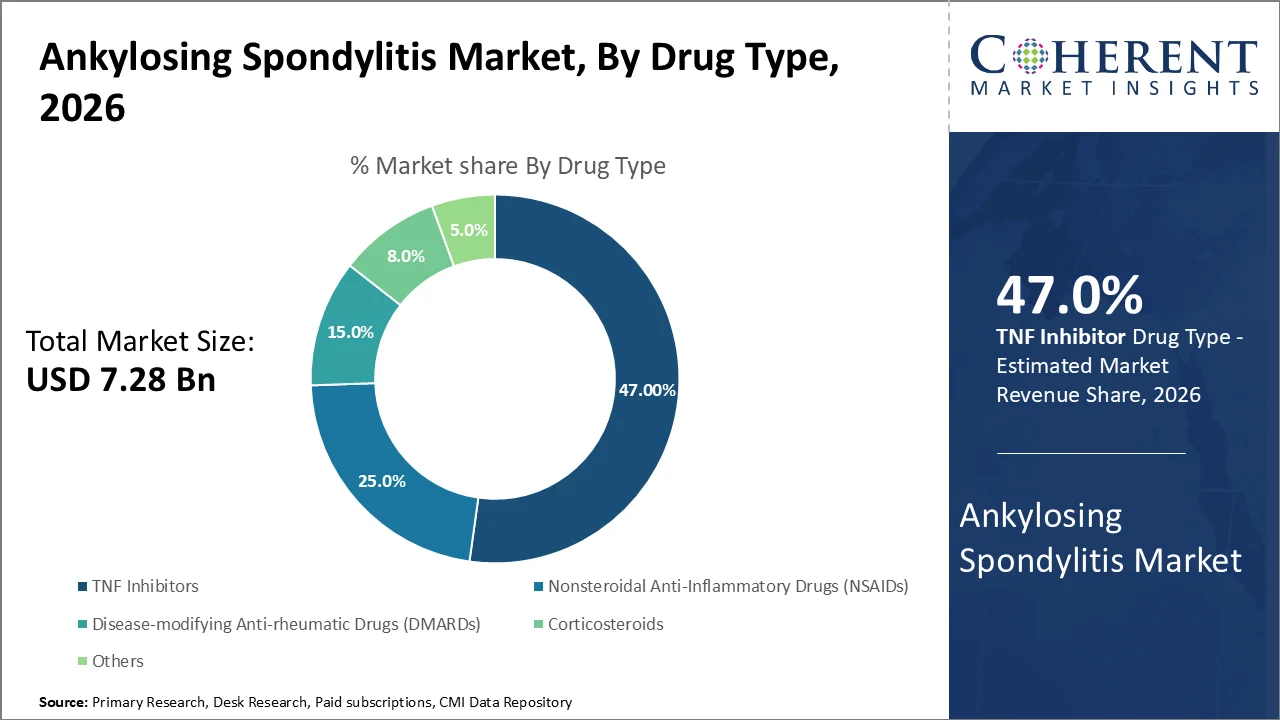
- TNF Inhibitors is expected to account the largest share of 47% in 2026, because they sit at the intersection of strongest clinical evidence, broad physician adoption, and high-value biologic pricing.
- Parenteral will dominate with 60% in 2026, because biologic drugs especially TNF and IL-17 inhibitors are injectable, highly effective, long-term treatments that generate the majority of market revenue. Their dominance is further reinforced by high clinical efficacy (up to 70% response rates) and long-term treatment persistence, leading to sustained multi-year revenue generation.
- Hospital pharmacies will dominate with 58% in 2026, these therapies require specialist supervision, injection-based administration, and hospital-based monitoring, which strengthens hospital pharmacy dependence. Globally around 16 Bn injections are administered every year. The majority of the injections (90%) are given for curative purposes.
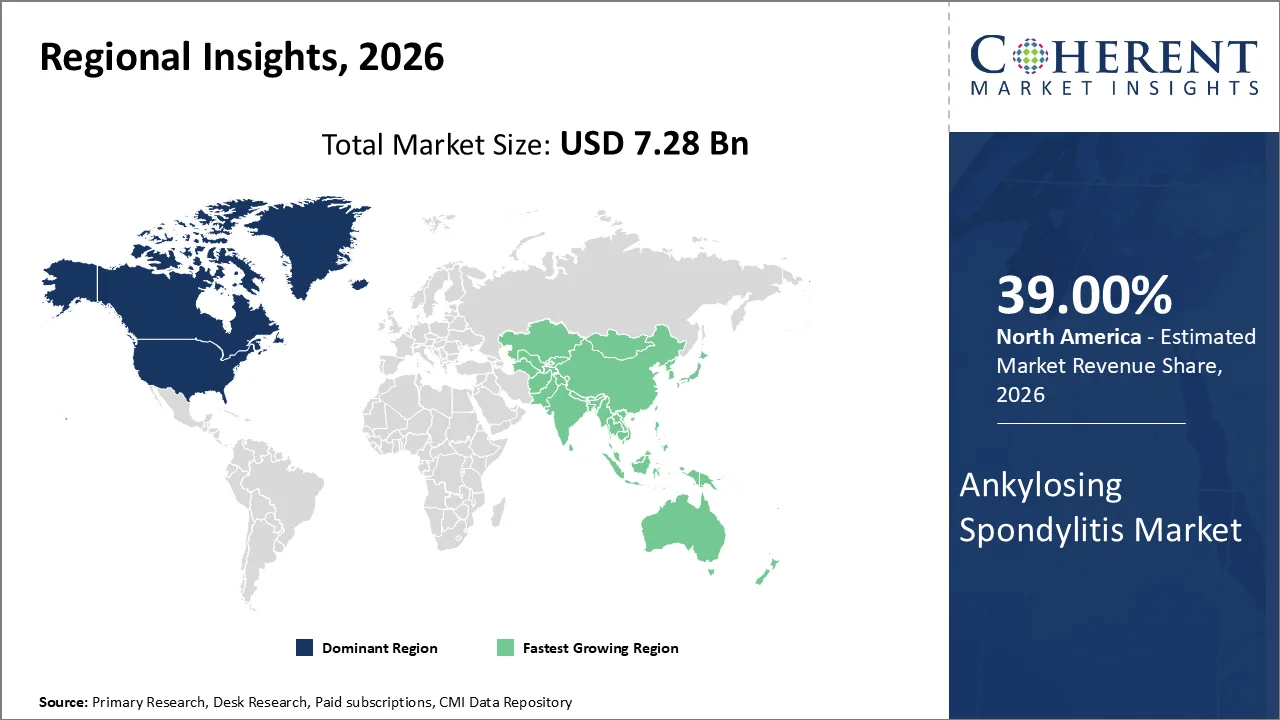
- North America is expected to acquire the dominant share of 39% in 2026, the region benefits from advanced healthcare delivery networks and widespread use of TNF and IL-17 inhibitors, which drive higher treatment penetration and revenue. One in 6 Americans is now older than 65,6 a group with more complex care needs. Additionally, 35% of Medicare beneficiaries require behavioral health services,7 creating further demand on an already stretched system.
Segmental Insights
Why is TNF Inhibitors Acquiring the Largest Market Share?
TNF inhibitors is projected to account for the largest share of drug type in 2026, representing approximately 47% of the total volume. Their well-established clinical efficacy, strong physician preference, broad patient adoption, as well as continuous label expansions across global markets. TNF inhibitors show similar clinical effectiveness compared with tofacitinib, with approximately 30.1% of initiators achieving low disease activity at 12 months versus 25.1%, although the difference is not statistically significant (OR 1.29; 95% CI 0.94–1.76). Their clinical use is supported by long-term evidence across multiple trials in inflammatory arthritis.
Decades of clinical validation, regulatory approvals spanning multiple geographies, as well as an expansive body of evidence is augmenting the market, supporting their ability to not only alleviate symptoms but also potentially slow radiographic progression of the disease.
The Assessment of Spondylo Arthritis International Society (ASAS), a globally recognized non-profit organization dedicated to advancing spondyloarthritis research, has continously incorporated TNF inhibitor therapy into its internationally accepted treatment recommendations.
- Current Industry Events of 2026
- Market Size Estimation
- Regional Breakdown
- Competitive Landscape
- Customer Intelligence
- Segmental Analysis
- Pricing Analysis
- Key Market Drivers, Challenges & Future Trends
- Customized Insights Section
Parenteral holds the Largest Market Share
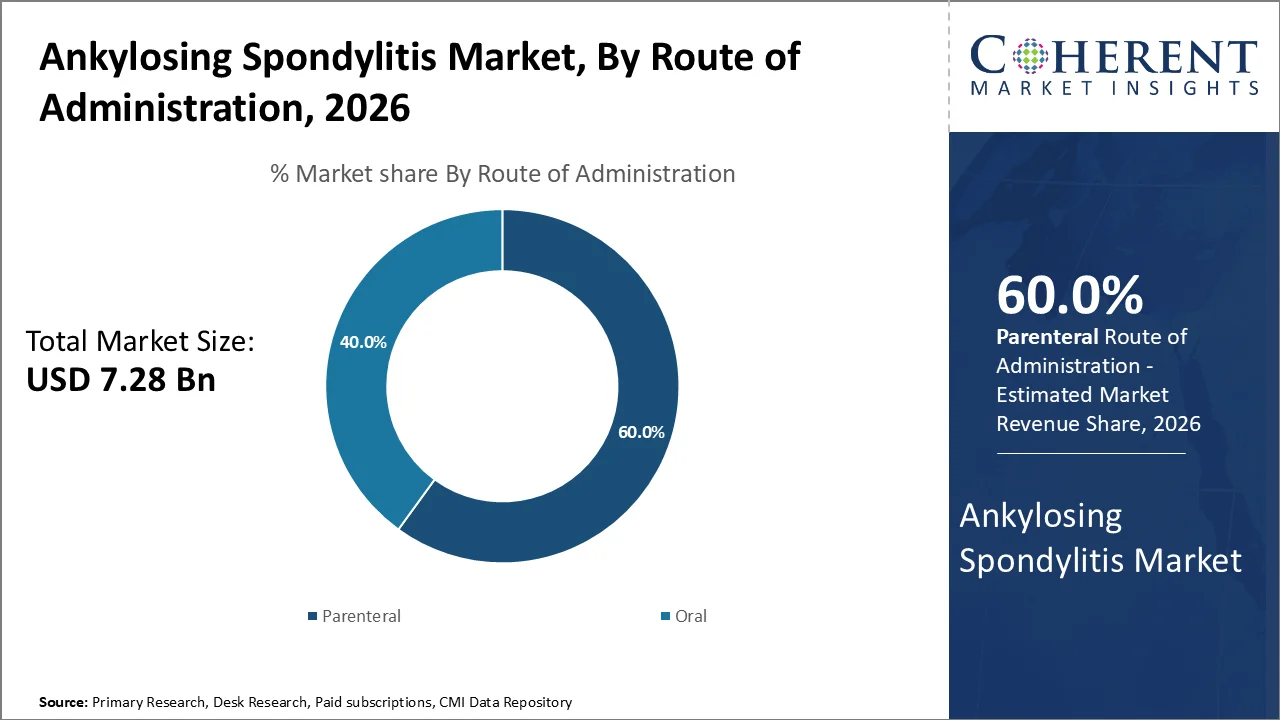
Based on route of administration, parenteral dominates the market, accounting for a significant 60% share in 2026, the established clinical dominance of biologic therapies that are predominantly delivered through injectable or infusible mechanisms is propelling the market. The therapeutic landscape that has been shaped by decades of biologic drug development is further stimulating the growth.
Ankylosing spondylitis is primarily managed using TNF and IL-17 inhibitors, which are majorly administered via subcutaneous or intravenous injection. In some studies, IL-17 inhibitors have shown strong efficacy, with approximately 58.6% of patients achieving PASI 75 and 41.5% achieving PASI 90 at 12 weeks, reflecting their potent anti-inflammatory effects across associated immune-mediated diseases.
Hospital Pharmacies holds the Largest Market Share
Based on distribution channel, hospital pharmacies dominates the market, accounting for a significant 58% share in 2026, due to increasing patient reliance on specialist consultations and advanced therapeutic monitoring. The Centers for Disease Control and Prevention’s NHANES study now estimates that at least 1.7 million adults in the U.S. have AS (while 3.2 million have a form of axial spondyloarthritis).
Hospital Pharmacies hold the leading position in the Ankylosing Spondylitis distribution channel landscape primarily because AS is a chronic, progressive inflammatory disease that demands a highly coordinated and supervised approach to drug dispensing, particularly for advanced biologics and disease-modifying antirheumatic drugs (DMARDs).
The therapeutic management of AS involves agents such as Tumor Necrosis Factor (TNF) inhibitors, Interleukin-17 (IL-17) inhibitors, and Janus Kinase (JAK) inhibitors, all of which are specialty-class medications that require refrigerated storage, precise handling procedures, and stringent patient monitoring for adverse events.
Market Drivers
TNF-Alpha Inhibitor Technology is transforming the Ankylosing Spondylitis Industry
TNF-alpha inhibitors are a group of advanced medicines utilized to treat ankylosing spondylitis (AS), a long-term inflammatory disease that affects the spine as well as joints. They work by blocking a harmful protein called TNF-alpha, which drives inflammation in the body. These drugs are prepared using biotechnology and are given as injections.
They are highly effective, with about 55%–70% of patients showing significant improvement (ASAS20 response) compared to much lower response rates with older treatments. Studies also show around a 50% improvement in disease activity scores (like BASDAI) and major reduction in pain and stiffness. Because of this strong clinical benefit, TNF inhibitors became the standard treatment for moderate to severe AS.
IL-17A Inhibitor Technology: A major breakthrough in Ankylosing Spondylitis
IL-17A inhibitor technology is a newer type of biologic medicine used for ankylosing spondylitis. It works by blocking a protein called IL-17A, which causes inflammation and also holds a major role in new abnormal bone formation in the spine. One of the main drugs in this group is secukinumab (Cosentyx), which is prepared using advanced antibody engineering and is given as a subcutaneous injection.
This treatment has shown strong results in clinical trials. Around 60% of patients achieve major improvement in symptoms (ASAS response), and many patients observe rapid relief within a few weeks of starting therapy. IL-17A inhibitors are considered the next-generation biologics after TNF inhibitors because they target a different inflammation pathway as well as aid patients who do not respond well to older treatments.
Current Events and Their Impact on the Ankylosing Spondylitis Market
Current Event | Description and its Impact |
Rising adoption of biosimilars for TNF inhibitors (adalimumab, infliximab, etanercept) |
|
Expansion of IL-17 inhibitors as second-line biologic therapy (e.g., secukinumab, ixekizumab) |
|
Ankylosing Spondylitis Market Trends
- TNF-alpha inhibitors (adalimumab, etanercept, infliximab) continue to anchor the treatment algorithm, the emergence of IL-17A inhibitors (secukinumab, ixekizumab) has introduced a highly effective therapeutic alternative, particularly for patients who demonstrate inadequate response or intolerance to anti-TNF agents.
- The expiration of key patents for blockbuster TNF inhibitors, most notably Humira (adalimumab) has catalyzed an aggressive wave of biosimilar entries across North America and Europe. The United States Food and Drug Administration has now approved 86 biosimilars in total, with the most recent additions arriving in May 2026.
- A critical and underappreciated trend is the growing clinical and regulatory recognition of non-radiographic axial spondyloarthritis (nr-axSpA) as a distinct but related condition on the AS disease spectrum. It is estimated that roughly 1.6 million adults in the U.S. have nr-axSpA (while 3.2 million people have axial spondyloarthritis in general).
- The adoption of AI-powered imaging analytics, digital biomarkers, and MRI-based diagnostic tools is steadily improving the historically poor diagnostic delay associated with AS (average delay of 7–10 years from symptom onset to confirmed diagnosis).
- Emerging digital health platforms integrating patient-reported outcomes (PROs), wearable monitoring, and electronic health records (EHR) are enabling earlier identification of disease activity flares, supporting both improved clinical outcomes and commercial lifecycle management for pharmaceutical stakeholders.
Regional Insights
North America dominates owing to the well-established healthcare infrastructure
North America account 39% market share in 2026, owing to the well-established healthcare infrastructure, high disease awareness, and robust adoption of advanced biologic therapies across the United States and Canada.
The United States alone accounts for a disproportionately large patient burden, with the Spondylitis Association of America estimating that approximately 2.7 million Americans are affected by Ankylosing Spondylitis and related spondyloarthropathies, making sustained demand for diagnostic as well as therapeutic solutions.
The presence of leading pharmaceutical manufacturers as well as research institutions headquartered in the region has facilitated early access to next-generation treatments, including TNF inhibitors and IL-17 inhibitors such as secukinumab and ixekizumab.
Asia Pacific Ankylosing Spondylitis Market Trends
The Asia Pacific region is poised to be the fastest-growing region through 2026-2033, expanding at a CAGR of approximately 8.2%. An escalating burden of rheumatic diseases across densely populated counties including China, India, Japan, South Korea, Australia, etc., is propelling the market growth. The incidence rate of RA in China rose from 11.6 per 100,000 population in 1990 to 13.7 per 100,000 population in 2021, showing a statistically significant increase.
HLA-B27 is a gene linked to Ankylosing Spondylitis. It is more common in some Asian populations. In some Han Chinese groups, about 6–8% of people have this gene, according to the Asia Pacific League of Associations for Rheumatology (APLAR). Because this gene is more common there, Ankylosing Spondylitis is also seen more often in these populations compared to Western countries.
The high adoption of biosimilars across markets including India, South Korea, etc., is dramatically improving treatment accessibility. Particularly as biosimilar versions of established TNF inhibitors receive regulatory clearance from authorities including Japan's Pharmaceuticals and Medical Devices Agency (PMDA) and India's Central Drugs Standard Control Organisation (CDSCO).
Established Healthcare Infrastructure is Accelerating the Ankylosing Spondylitis Market Demand in United States
The U.S. contributes the highest share in the Ankylosing Spondylitis market in North America owing to its deeply established healthcare infrastructure, robust pharmaceutical pipeline, and exceptionally high disease awareness among both clinicians and patients.
The U.S. healthcare system supports early as well as aggressive diagnosis of axial spondyloarthritis, including Ankylosing Spondylitis, driven by the widespread adoption of HLA-B27 genetic testing and MRI-based diagnostic protocols that have significantly improved detection rates across rheumatology practices nationwide.
China Ankylosing Spondylitis Market Trends
China contributes the highest share in the market in APAC owing to its massive patient pool, expanding healthcare infrastructure, and accelerating adoption of biologic therapies across major urban and semi-urban centers.
China carries one of the highest burdens of ankylosing spondylitis (AS) in the Asia Pacific region, with epidemiological studies supported by the Chinese Rheumatology Association indicating that AS prevalence in China ranges between 0.2% to 0.54% of the general population, translating into millions of affected individuals nationally.
The high prevalence of HLA-B27 antigen positivity, which is a primary genetic risk factor for AS, is notably elevated in northern Chinese ethnic populations, further compounding the disease burden.
Who are the Major Companies in Ankylosing Spondylitis Industry
Some of the major key players in Ankylosing Spondylitis market include, Amgen Inc., AbbVie Inc., Pfizer Inc., Novartis AG, Bristol-Myers Squibb Company, CELGENE CORPORATION, Eli Lilly and Company, Cipla Inc., Emcure Pharmaceuticals, Torrent Pharmaceuticals Ltd., UCB S.A., Suzhou Zelgen Biopharmaceuticals Co., Ltd., HENGRUI USA, and Johnson & Johnson Services, Inc.
Key News
- In January 2026, Akeso, Inc. announced its supplemental New Drug Application (sNDA) for gumokimab (AK111), a novel humanized anti-IL-17A monoclonal antibody for the treatment of active ankylosing spondylitis (AS), has been accepted for review by the Center for Drug Evaluation (CDE) of the National Medical Products Administration (NMPA).
- In March 2025, Pfizer Canada announced the availability of IXIFI (infliximab for injection) in Canada. IXIFI is a biosimilar to Remicade (infliximab.) IXIFI was approved by Health Canada in December 2021 for all eligible indications of the reference product, including rheumatoid arthritis, ankylosing spondylitis, Crohn’s disease (in adults and pediatric patients 9 years and older), fistulising Crohn’s disease, ulcerative colitis (in adults and pediatric patients 6 years and older), psoriatic arthritis, and plaque psoriasis.
Market Report Scope
Ankylosing Spondylitis Market Report Coverage
| Report Coverage | Details | ||
|---|---|---|---|
| Base Year: | 2025 | Market Size in 2026: | USD 7.28 Bn |
| Historical Data for: | 2020 To 2024 | Forecast Period: | 2026 To 2033 |
| Forecast Period 2026 to 2033 CAGR: | 6.51% | 2033 Value Projection: | USD 11.40 Bn |
| Geographies covered: |
| ||
| Segments covered: |
| ||
| Companies covered: | Amgen Inc., AbbVie Inc., Pfizer Inc., Novartis AG, Bristol-Myers Squibb Company, CELGENE CORPORATION, Eli Lilly and Company, Cipla Inc., Emcure Pharmaceuticals, Torrent Pharmaceuticals Ltd., UCB S.A., Suzhou Zelgen Biopharmaceuticals Co., Ltd., HENGRUI USA, and Johnson & Johnson Services, Inc. | ||
| Growth Drivers: |
| ||
| Restraints & Challenges: |
| ||
Analyst Opinion
- The Ankylosing Spondylitis (AS) market is witnessing a transformative phase driven by significant advancements in biologic and targeted synthetic therapies. Biosimilars have generated more than USD56 billion in U.S. healthcare savings.
- The growing adoption of TNF inhibitors and IL-17 inhibitors has fundamentally redefined treatment paradigms, offering patients improved clinical outcomes and enhanced quality of life.
- Increasing disease awareness among healthcare professionals and patients alike continues to fuel early diagnosis rates, which remains a critical driver for market expansion.
- However, the market faces notable restraints, including the high cost of biologic therapies, which significantly limits patient access, particularly in low- and middle-income countries.
- Biosimilar competition is intensifying, exerting considerable pricing pressure on established branded biologics, thereby challenging revenue sustainability for key market players. Delayed diagnosis remains another persistent challenge, as AS symptoms often overlap with common musculoskeletal conditions, leading to prolonged diagnostic journeys.
- From an opportunity standpoint, the rising investment in precision medicine and biomarker research presents substantial potential for developing targeted therapies with improved efficacy profiles.
Speak to the analyst
Want personalized insights?
Take the findings above to one of our principal consultants, or have the report rebuilt around the segments, geographies and competitors you actually track.
Market Segmentation
- By Drug Type (Revenue, USD Bn, 2021-2033)
- Nonsteroidal anti-inflammatory drugs (NSAIDs)
- Disease-modifying anti-rheumatic drugs (DMARDs)
- TNF Inhibitors
- Corticosteroids
- Others
- By Route of Administration (Revenue, USD Bn, 2021-2033)
- Oral
- Parenteral
- By Distribution Channel (Revenue, USD Bn, 2021-2033)
- Hospital Pharmacies
- Retail Pharmacies
- Online Pharmacies
- By Region (Revenue, USD Bn, 2021-2033)
- North America
- U.S.
- Canada
- Latin America
- Brazil
- Mexico
- Argentina
- Rest of Latin America
- Europe
- Germany
- U.K.
- France
- Italy
- Spain
- Russia
- Rest of Europe
- Asia Pacific
- China
- India
- Japan
- Australia
- South Korea
- ASEAN
- Rest of Asia Pacific
- Middle East
- GCC
- Israel
- Rest of Middle East
- Africa
- South Africa
- Central Africa
- North Africa
- North America
Sources
Primary Research Interviews
- Rheumatologists, Orthopedic Specialists
- Oncologists & Immunologists
- Pharmaceutical & Biotech Company Executives
- Healthcare Payers & Reimbursement Specialists
- Others
Databases
- IQVIA Health Analytics Database
- GlobalData Healthcare Database
- Clarivate Analytics (Cortellis)
- WHO Global Health Observatory Database
- Others
Magazines
- Rheumatology Today
- Arthritis & Rheumatism Magazine
- Modern Medicine Network
- BioPharma Dive Magazine
- Others
Journals
- Annals of the Rheumatic Diseases
- Arthritis & Rheumatology Journal
- The Journal of Rheumatology
- RMD Open (Rheumatic & Musculoskeletal Diseases)
- Others
Newspapers
- The Wall Street Journal (Healthcare Section)
- Financial Times (Pharmaceuticals)
- Reuters Health News
- The BMJ News
- Others
Associations
- Assessment of SpondyloArthritis International Society (ASAS)
- Spondylitis Association of America (SAA)
- European League Against Rheumatism (EULAR)
- American College of Rheumatology (ACR)
- Others
Public Domain Sources
- U.S. National Institutes of Health (NIH) – ClinicalTrials.gov
- World Health Organization (WHO) Official Publications
- U.S. Food & Drug Administration (FDA) Drug Approvals Database
- European Medicines Agency (EMA) Reports
- Others
Proprietary Elements
- CMI Data Analytics Tool
- Proprietary CMI Existing Repository of information for last 10 years
Get access to 250+ pages report
Every segment, forecast, competitor profile and data table behind the analysis above — available for instant download.
- ESOMAR Member
- ISO 9001:2015 Certified
- D-U-N-S Registered
- GDPR & CCPA Compliant
Missing comfort of reading report in your local language? Find your preferred language:
Transform your Strategy with Exclusive Trending Reports
Frequently Asked Questions
The Ankylosing Spondylitis market is expected to reach USD 11.40 Bn in 2033.
Major players operating in the global Ankylosing Spondylitis market include Amgen Inc., AbbVie Inc., Pfizer Inc., Novartis AG, Bristol-Myers Squibb Company, CELGENE CORPORATION, Eli Lilly and Company, Cipla Inc., Emcure Pharmaceuticals, Torrent Pharmaceuticals Ltd., UCB S.A., Suzhou Zelgen Biopharmaceuticals Co., Ltd., HENGRUI USA, and Johnson & Johnson Services, Inc.
High cost of treatment and lack of skilled surgeons and physiotherapists is expected to restrain the Ankylosing Spondylitis market growth over the forecast period.
Rising prevalence of ankylosing spondylitis, increasing launch of biosimilars, and increasing research & development efforts being undertaken by key industry players to augment treatment options are driving growth of the global Ankylosing Spondylitis market.
The Ankylosing Spondylitis market is anticipated to grow at a CAGR of 6.51% between 2026 and 2033.
Among regions, North America is expected to account for a largest market share in the global Ankylosing Spondylitis market over the forecast period.
Ankylosing spondylitis (AS) progresses over years from inflammation to potential bone fusion. The four stages, primarily defined by radiographic findings and structural damage, include early inflammation, early discal calcification, fibrous ankylosis, and bony ankylosis.