

Recurrent Glioblastoma Multiforme Treatment Market Size and Share Analysis: (2026 - 2033)
The recurrent glioblastoma multiforme treatment market was valued at USD 3.5 Bn in 2026 and is forecast to reach a value of USD 5.37 Bn by 2033 at a CAGR of 8.35% between 2026 and 2033.
Key Takeaways
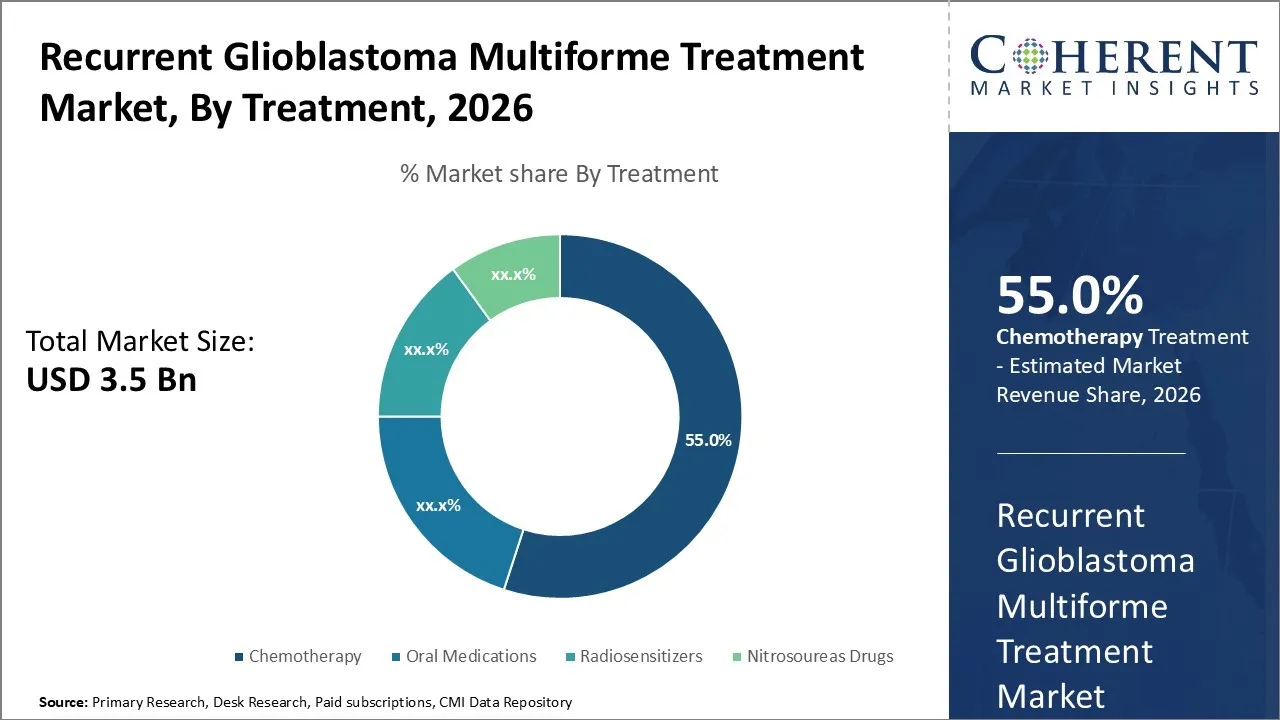
- Based on treatment, the chemotherapy segment is expected to hold 55% share of the market in 2026.
- Based on type, the grade IV segment is projected to account for 75% share of the market in 2026.
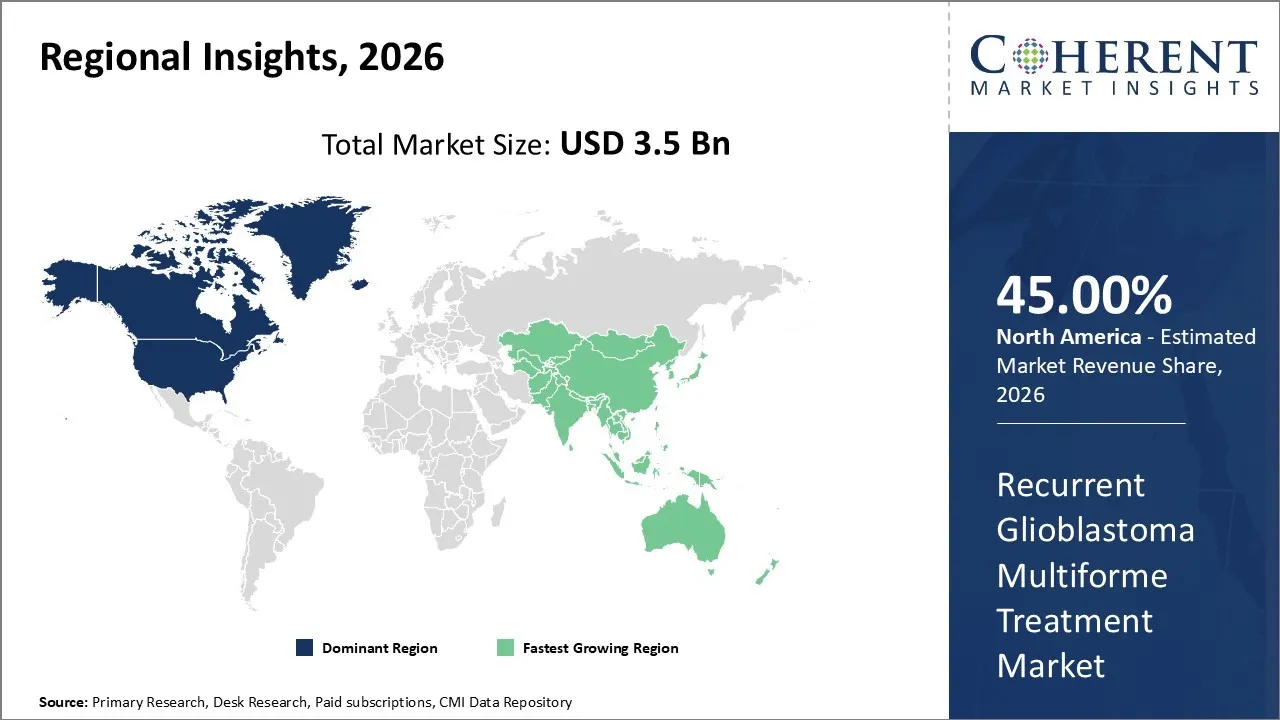
- Based on region, North America is set to lead the recurrent glioblastoma multiforme treatment market with 45% share in 2026. While, Asia Pacific is anticipated to be the fastest growing region.
Market Overview
Glioblastoma is a type of brain tumor that arises from the glial or supportive brain tissue called ‘glioma’. Glioblastoma multiforme (abbreviated as GBM) is an aggressive malignant brain tumor that has a very poor prognosis. The commercially available treatment option for this condition faces many challenges, including the crossing of blood brain barrier, which are limiting the concentration of drugs at the tumor site. Key companies in this market are actively focused on research & development activities to develop, and commercialize novel drugs for the treatment of such condition.
Current Events and their Impacts on the Recurrent Glioblastoma Multiforme Treatment Market
Current Event | Description and its Impact |
FDA Clears New Clinical Trials for Innovative GBM Therapies |
|
Growth in Clinical Research and Trials in Asia-Pacific |
|
Segmental Insights
- Current Industry Events of 2026
- Market Size Estimation
- Regional Breakdown
- Competitive Landscape
- Customer Intelligence
- Segmental Analysis
- Pricing Analysis
- Key Market Drivers, Challenges & Future Trends
- Customized Insights Section
Recurrent Glioblastoma Multiforme Treatment Market Insights, By Treatment - Chemotherapy represent the largest share, due to its established clinical efficacy
In terms of treatment, the chemotherapy segment is expected to lead the market with 55% share in 2026. Chemotherapy has remained the main treatment for GBM due to decades of clinical research showing its effectiveness, both alone and combined with other therapies. Studies and treatment protocols consistently show that chemotherapy can slow tumor growth and improve patient survival, making it the cornerstone therapy for GBM globally.
Temozolomide, one of the most broadly used chemotherapeutic agents for GBM, has been extensively validated through numerous clinical trials as well as real-world applications, establishing a robust foundation for chemotherapy's market leadership position.
Recurrent Glioblastoma Multiforme Treatment Market Insights, By Type - Grade IV dominate the market due to its aggressive nature
In terms of type, the grade IV segment is expected to hold 75% share of the market in 2026. Grade IV glioblastoma multiforme represents the most malignant form of brain tumor, characterized by rapid proliferation, extensive vascularization, as well as profound resistance to conventional therapies. The World Health Organization's classification system designates Grade IV as the most severe category, as well as clinical data from major cancer centers consistently demonstrates that approximately 80-85% of all glioblastoma cases fall into this category.
The dominance of this segment is fundamentally stimulated by the tumor's inherent biological characteristics, including its tendency to develop treatment resistance through multiple molecular pathways, necessitating continuous innovation in therapeutic approaches and creating sustained demand for specialized treatment protocols.
Regional Insights
North America Recurrent Glioblastoma Multiforme Treatment Market Analysis & Trends
North America is expected to dominate the Recurrent Glioblastoma Multiforme Treatment market with 45% share in 2026, owing to its robust healthcare infrastructure, extensive research and development capabilities, as well as favorable regulatory environment that accelerates the approval and adoption of innovative recurrent glioblastoma multiforme treatments. The region's dominance is exemplified by the significant concentration of world-class medical institutions such as Mayo Clinic, Johns Hopkins Hospital, Memorial Sloan Kettering Cancer Center, etc., which serve as pioneers in developing and implementing cutting-edge therapeutic approaches for recurrent GBM.
For instance, in August 2025, a new clinical trial for patients with recurring glioblastoma multiforme (GBM), a very aggressive and hard-to-treat brain cancer, has been approved by the US FDA. Starlight Therapeutics, part of Lantern Pharma, said its new drug trial combining STAR-001 (LP-184) with the FDA-approved drug spironolactone has been approved. The trial will include adult patients whose GBM got worse after their first treatment.
Asia Pacific Recurrent Glioblastoma Multiforme Treatment Market Analysis & Trends
Asia Pacific is expected to exhibit the fastest growth, owing to rapidly expanding healthcare capabilities as well as increasing investment in oncology infrastructure across key countries. The remarkable growth trajectory is exemplified by China's National Health Commission's recent approval of CAR-T cell therapy for brain tumors, marking a major milestone in locally developed advanced treatments.
Japan's Pharmaceuticals and Medical Devices Agency has accelerated approval pathways for innovative GBM treatments, resulting in faster market entry for novel therapeutic approaches developed by domestic companies like Takeda Pharmaceuticals and Daiichi Sankyo.
Recurrent Glioblastoma Multiforme Treatment Market Outlook Country-Wise
The U.S. Recurrent Glioblastoma Multiforme Treatment Market Trends
The U.S. contributes the highest share to the recurrent glioblastoma multiforme treatment market in North America due to its robust healthcare infrastructure, as well as extensive research capabilities, as well as the major presence of leading pharmaceutical companies actively developing innovative treatment modalities. The United States benefits from having premier cancer research institutions such as the National Cancer Institute (NCI), which has been instrumental in advancing glioblastoma research through initiatives like The Cancer Genome Atlas project that has offered crucial insights into GBM molecular characteristics.
For instance, in July 2025, , a biotech company working on new treatments for aggressive cancers, said that the U.S. FDA has given Orphan Drug Designation (ODD) to GLIX1. This drug is for treating malignant glioma, a serious type of brain cancer that includes glioblastoma.
Japan Recurrent Glioblastoma Multiforme Treatment Market Trends
Japan contributes the highest share in the recurrent glioblastoma multiforme treatment market due to its sophisticated healthcare infrastructure, advanced regulatory framework, as well as established pharmaceutical ecosystem that facilitates rapid adoption of innovative therapeutic approaches. The Japan Pharmaceuticals and Medical Devices Agency (PMDA) have implemented streamlined approval processes for oncology treatments, particularly for rare and aggressive cancers like recurrent glioblastoma multiforme, which has accelerated the availability of cutting-edge therapies including tumor treating fields (TTFields) and novel immunotherapeutic agents.
Market Report Scope
Recurrent Glioblastoma Multiforme Treatment Market Report Coverage
| Report Coverage | Details | ||
|---|---|---|---|
| Base Year: | 2025 | Market Size in 2026: | USD 3.5 Bn |
| Historical Data for: | 2020 To 2024 | Forecast Period: | 2026 To 2033 |
| Forecast Period 2026 to 2033 CAGR: | 8.35% | 2033 Value Projection: | USD 5.37 Bn |
| Geographies covered: |
| ||
| Segments covered: |
| ||
| Companies covered: | GlaxoSmithKline plc., AstraZeneca, F. Hoffman-La Roche, Ltd., Pfizer, Inc., Merck & Co., Inc., Vascular Biogeneics, AngioChem, Inc., Boehringer Ingelheim GmbH, Bristol-Myers Squibb Company, Boston Biomedical, Inc., Cantex Pharmaceuticals, Inc., Celldex Therapeutics, Inc., Cavion LLC, Coherus BioSciences, Inc., Eisai, Eli Lilly and Company, Cortice Biosciences, Inc., EnGeneIC Ltd., GenSpera, Inc., ERC Belgium SA, Genzyme Corporation, ImmunoCellular Therapeutics, Ltd., and GW Pharmaceuticals Plc. | ||
| Growth Drivers: |
| ||
| Restraints & Challenges: |
| ||
Recurrent Glioblastoma Multiforme Treatment Market Driver
Rising incidence of glioblastoma multiforme globally
The rising incidence of glioblastoma multiforme (GBM), particularly recurrent glioblastoma multiforme, is significantly propelling the growth of treatment options worldwide. Glioblastoma, a highly aggressive and malignant brain tumor, poses substantial therapeutic challenges due to its rapid progression and high recurrence rate after initial treatment.
Increasing investment in oncology R&D by pharmaceutical companies
Increasing investment in oncology research and development (R&D) by pharmaceutical companies is significantly accelerating advancements in the treatment landscape for Recurrent Glioblastoma Multiforme (rGBM). Given the aggressive nature of rGBM and its poor prognosis, there remains an unmet medical need for more effective therapies beyond the current standard of care. Pharmaceutical companies are channeling substantial resources into exploring innovative treatment modalities such as immunotherapies, targeted therapies, and gene therapies that hold promise in enhancing patient outcomes.
Recurrent Glioblastoma Multiforme Treatment Market Opportunity
Development of combination therapy approaches
The development of combination therapy approaches represents a significant opportunity in the treatment of Recurrent Glioblastoma Multiforme (rGBM), a notoriously aggressive and difficult-to-treat brain tumor. Current monotherapies, including surgery, radiation, and chemotherapy, have shown limited success in extending patient survival, primarily due to tumor heterogeneity and the blood-brain barrier’s impediment to drug delivery. Combination therapies, integrating modalities such as immunotherapy, targeted molecular agents, and standard chemoradiation, seek to address these limitations by simultaneously attacking multiple pathways involved in tumor growth and resistance.
Analyst Opinion (Expert Opinion)
- Recurrent Glioblastoma Multiforme (rGBM) treatment remains a critical and challenging area within neuro-oncology due to the aggressive nature and poor prognosis of the tumor upon recurrence. The primary drivers shaping this market include advancements in targeted therapies, immunotherapies, as well as personalized medicine alternatives, which are highly tailored based on molecular as well as genetic tumor profiling. These innovations promise improved patient outcomes and extended survival rates, fueling research investments as well as clinical trial activities.
- However, the market faces major restraints such as the blood-brain barrier’s limitation on drug delivery as well as the heterogeneity of tumor cells, which complicate treatment efficacy and contribute to high relapse rates.
- New opportunities are in using better ways to deliver drugs, like special pumps or nanoparticles, and in combining treatments, such as immunotherapy with chemotherapy or radiation.
- Additionally, the integration of artificial intelligence along with machine learning to optimize treatment protocols presents a promising frontier. Geographically, North America dominates the rGBM treatment landscape, fueled by substantial healthcare infrastructure, well-established clinical trial networks, as well as strong presence of pharmaceutical innovators. Meanwhile, the Asia-Pacific region is the fastest-growing market due to high healthcare investments, rising awareness, as well as expanding patient populations.
Speak to the analyst
Want personalized insights?
Take the findings above to one of our principal consultants, or have the report rebuilt around the segments, geographies and competitors you actually track.
Global Recurrent Glioblastoma Multiforme Treatment Market: Key Developments
- In October 2025, Cyteph Pty Ltd, a biotech company working on new immune-based treatments for hard-to-treat cancers, said it has finished signing up patients for its first Phase I trial of CYT-101. This is important for the glioblastoma treatment market because if the trial is successful, CYT-101 could become a new treatment option, helping the market grow.
- In December 2025, Alpha Tau Medical Ltd., the company that makes the Alpha DaRT alpha-radiation therapy, said that the first patient has been treated in its pilot study for people with recurrent glioblastoma (GBM) using Alpha DaRT.
- In September 2025, NeOnc Technologies Holdings, Inc. said that the U.S. FDA has allowed the company to start Phase IIa/IIb of its clinical trial for NEO212-01, a treatment for brain and central nervous system (CNS) cancers.
- In September 2025, NeuroNOS, a company making treatments for brain disorders and brain cancers and part of Beyond Air, said today that the U.S. FDA has given Orphan Drug Designation (ODD) to its main drug, BA-101, for treating glioblastoma (GBM).
Market Segmentation
- By Treatment
- Oral Medications
- Radiosensitizers
- Nitrosoureas Drugs
- Chemotherapy
- By Type
- Grade II or Grade III
- Grade IV
- Others
- By Region
- North America
- U.S.
- Canada
- Latin America
- Brazil
- Argentina
- Mexico
- Rest of Latin America
- Europe
- Germany
- U.K.
- Spain
- France
- Italy
- Russia
- Rest of Europe
- Asia Pacific
- China
- India
- Japan
- Australia
- South Korea
- ASEAN
- Rest of Asia Pacific
- Middle East & Africa
- GCC Countries
- Israel
- Rest of Middle East & Africa
- North America
- Key Players
- GlaxoSmithKline plc.
- AstraZeneca
- Hoffman-La Roche, Ltd.
- Pfizer, Inc.
- Merck & Co., Inc.
- Vascular Biogeneics
- AngioChem, Inc.
- Boehringer Ingelheim GmbH
- Bristol-Myers Squibb Company
- Boston Biomedical, Inc.
- Cantex Pharmaceuticals, Inc.
- Celldex Therapeutics, Inc.
- Cavion LLC
- Coherus BioSciences, Inc.
- Eisai
- Eli Lilly and Company
- Cortice Biosciences, Inc.
- EnGeneIC Ltd.
- GenSpera, Inc.
- ERC Belgium SA
- Genzyme Corporation
- ImmunoCellular Therapeutics, Ltd.
- GW Pharmaceuticals Plc.
Sources
Primary Research Interviews
- Neuro-oncologists and Brain Cancer Specialists
- Pharmaceutical Company Executives and R&D Directors
- Hospital Administrators and Healthcare Facility Managers
- Regulatory Affairs Specialists
- Others
Databases
- ClinicalTrials.gov Database
- PubMed/MEDLINE Database
- FDA Orange Book Database
- WHO Global Health Observatory Database
- Others
Magazines
- Oncology Business Review
- BioWorld Intelligence
- Cancer Network Magazine
- Pharmaceutical Executive Magazine
- Others
Journals
- Journal of Neuro-Oncology
- Neuro-Oncology Journal
- Cancer Research Journal
- Others
Newspapers
- BioPharma Dive
- STAT News
- FiercePharma
- Medical Device Daily
- Others
Associations
- American Association for Cancer Research (AACR)
- Society for Neuro-Oncology (SNO)
- National Brain Tumor Society (NBTS)
- International Association of Neuro-Oncology (IANO)
- Others
Public Domain Sources
- National Cancer Institute (NCI) Publications
- FDA Drug Approval Reports
- WHO Cancer Statistics and Reports
- NIH Clinical Research Publications
- Others
Proprietary Elements
- CMI Data Analytics Tool
- Proprietary CMI Existing Repository of Information for the Last 8 Years
Get access to 250+ pages report
Every segment, forecast, competitor profile and data table behind the analysis above — available for instant download.
- ESOMAR Member
- ISO 9001:2015 Certified
- D-U-N-S Registered
- GDPR & CCPA Compliant
Missing comfort of reading report in your local language? Find your preferred language:
Transform your Strategy with Exclusive Trending Reports
Frequently Asked Questions
The global recurrent glioblastoma multiforme treatment market size was valued at USD 3.5 Bn in 2026 and is expected to reach USD 5.37 Bn in 2033.
Major players operating in the market include GlaxoSmithKline plc., AstraZeneca, F. Hoffman-La Roche, Ltd., Pfizer, Inc., Merck & Co., Inc., Vascular Biogeneics, AngioChem, Inc., Boehringer Ingelheim GmbH, Bristol-Myers Squibb Company, Boston Biomedical, Inc., Cantex Pharmaceuticals, Inc., Celldex Therapeutics, Inc., Cavion LLC, Coherus BioSciences, Inc., Eisai, Eli Lilly and Company, Cortice Biosciences, Inc., EnGeneIC Ltd., GenSpera, Inc., ERC Belgium SA, Genzyme Corporation, ImmunoCellular Therapeutics, Ltd., and GW Pharmaceuticals Plc.
Among treatment, the chemotherapy segment estimated significant revenue in 2026.
Increasing incidence of brain cancers is a major factor driving growth of this market.
The market is estimated to exhibit a CAGR of 8.35% till 2033.
Among region, North America is expected to witness significant growth over the forecast period.