

Global Long Acting Injectables Market Size and Forecast – 2026 to 2033
The Global Long Acting Injectables Market is estimated to be valued at USD 21.71 Bn in 2026 and is expected to reach USD 52.03 Bn by 2033, reflecting a compound annual growth rate (CAGR) of 13.3% from 2026 to 2033. This significant growth reflects the increasing demand for sustained-release drug formulations that enhance patient compliance and therapeutic effectiveness across various chronic diseases and mental health conditions worldwide.
Key Takeaways of the Global Long Acting Injectables Market
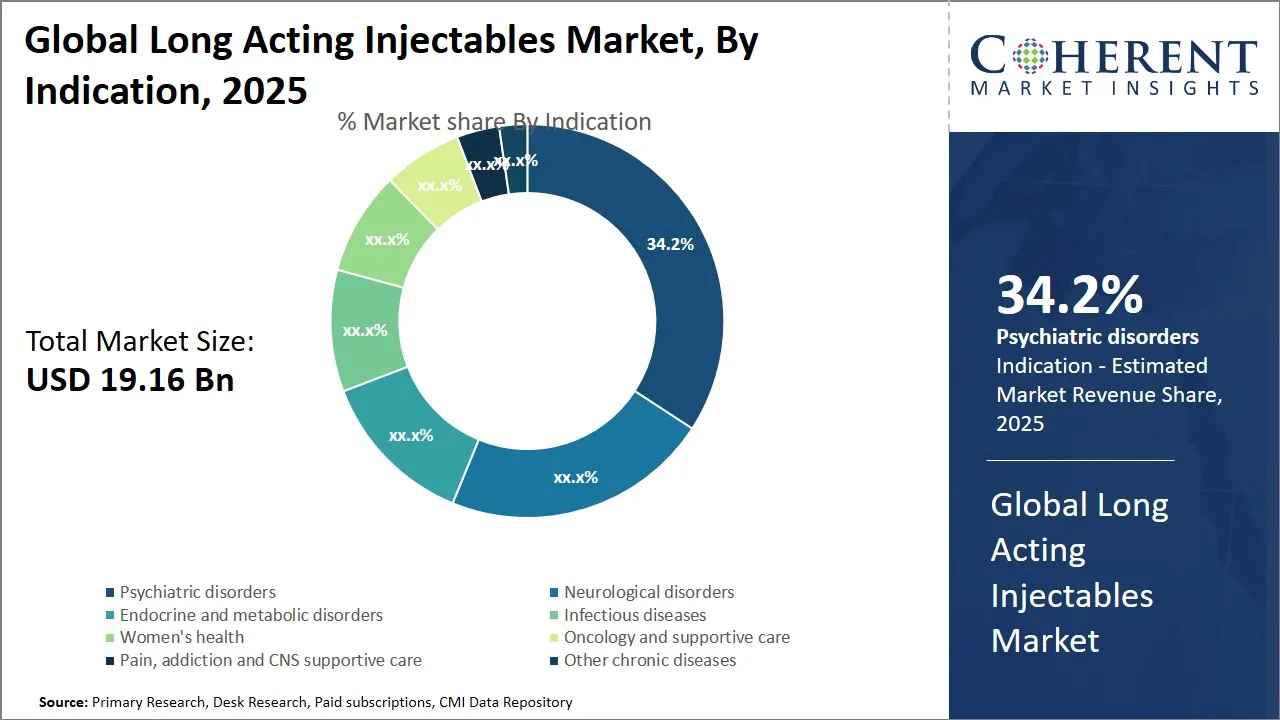
- In terms of indication, the psychiatric disorders segment is expected to lead the global long acting injectables market, accounting for 35.2% share in 2026.
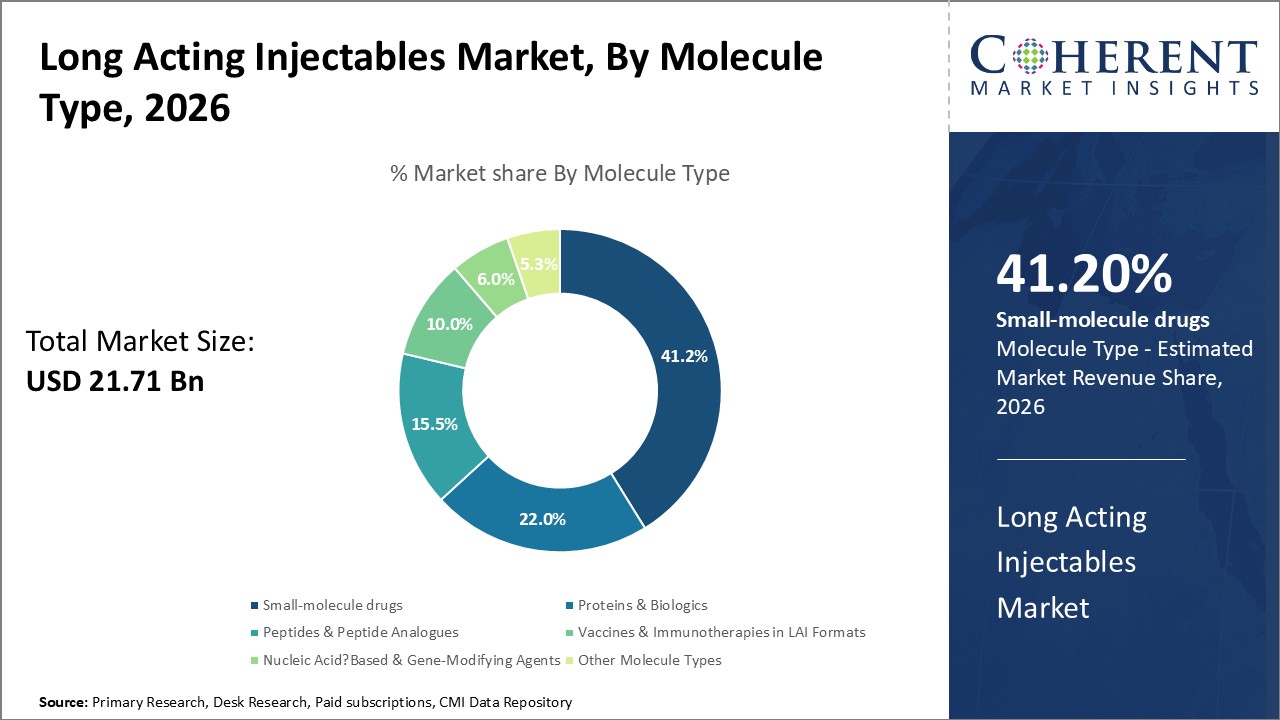
- The small-molecule drugs segment is estimated to dominate the long acting injectables market, holding a share of 41.2% in 2026.
- The Intramuscular (IM) segment is projected to capture 36.4% of the global acting injectables market share in 2026.
- North America is expected to lead the market, holding a share of 43.2% in 2026. Asia Pacific is anticipated to be the fastest-growing region, with 24.4% share in 2026.
Market Overview
- A key market trend driving this expansion is the growing adoption of long-acting injectables in the treatment of conditions such as diabetes, schizophrenia, and hormone therapies, supported by advancements in drug delivery technologies.
- Additionally, rising awareness about medication adherence and the benefits of reduced dosing frequency are boosting market penetration.
- Pharmaceutical companies are also investing heavily in R&D to develop novel formulations, further propelling market growth and innovation in this space.
Current Events and Its Impact
Current Events | Description and its Impact |
Accelerated Adoption of mRNA & Biologic Therapies |
|
Ultra Long‑Acting & Digital Delivery Innovation |
|
Segmental Insights
- Current Industry Events of 2026
- Market Size Estimation
- Regional Breakdown
- Competitive Landscape
- Customer Intelligence
- Segmental Analysis
- Pricing Analysis
- Key Market Drivers, Challenges & Future Trends
- Customized Insights Section
How Significant is the Role of Psychiatric Disorders in Driving the Long Acting Injectables Market Growth?
Psychiatric disorders will capture the largest global long acting injectables market share of 35.2% in the year 2026, because of the high demand of better treatment compliance and the management of chronic mental disorders like schizophrenia and bipolar disorder.
Psychiatric diseases are the cases of frequent pharmacological treatment where adherence to medication is the key aspect to avoid a relapse, hospitalization, and decline in the quality of life of the patient. The conventional oral therapies have big challenges such as intake irregularities, forgetfulness and social stigma among others, which together, negate their efficacy.
In January 2025, Health Canada approved ABILIFY ASIMTUFII (aripiprazole), a once-every-two-months long-acting injectable for schizophrenia and bipolar I disorder. Developed by Otsuka and Lundbeck, it offers sustained plasma levels with a single dose, improving patient adherence and reducing treatment burden.
(Source: https://www.liverpool.ac.uk/celt-global-health/global-news/stories/title,1504584,en.php)
Long Acting Injectables Market Insights, By Molecule Type - Small-Molecule Drugs Segment Dominates Due to Cost-Effectiveness, Established Regulatory Pathways, and Broader Application Scope
The highest share of 41.2% in 2026 is attributed to the small-molecule drugs which are versatile and have well-developed therapeutic profiles in many indications. Their superiority is linked to the comparative ease of conversion into sustained-release injectable dosage forms, strong production lines, and extensive clinical experience.
Antipsychotics, analgesics and other small molecules can be modified into long-acting delivery systems, e.g. microspheres, implants, and depot injections, allowing controlled release of drugs over weeks or months.
Why is Intramuscular (IM) the Predominant Administration Pathway for Long-Acting Injectables?
Intramuscular (IM) segment is in the lead with a share of 36.4% in 2026, due to a number of intrinsic benefits connected with patient safety, pharmacokinetics, and logistics of healthcare delivery.
Drug formulations can be deposited deep into the muscle tissue using IM injections which forms a reservoir that releases the drug slowly as time goes by. The controlled release plays a vital role in ensuring the stability of the therapeutic drug levels particularly in chronic diseases that have long-term treatment periods.
CMO/CDMO Capability Mapping for Long Acting Injectables Production (Microencapsulation, Depot Formulations, Liposomes, Nanoparticles) in Long Acting Injectables Market
- Microencapsulation Capabilities
- Specialized in controlled release and sustained release formulations.
- Expertise in polymer-based microencapsulation for injectable formulations.
- Advanced techniques for the encapsulation of peptides, proteins, and biologics.
- Depot Formulations
- Focus on injectable depot formulations for long-term drug release.
- Experience in formulating depot injections using biodegradable polymers like Poly(lactic-co-glycolic acid) and Poly(lactic-co-glycolic acid)-Polyethylene Glycol
- Capability to manufacture high-quality depot formulations for chronic disease management.
- Liposome-Based Formulations
- Expertise in liposome formulation for targeted drug delivery.
- Capabilities for large-scale production of liposomal LAIs (Long Acting Injectables).
- Utilization of liposomal encapsulation to improve bioavailability and reduce side effects.
- Nanoparticle Drug Delivery Systems
- Development and scaling of nanoparticle-based LAI formulations.
- Expertise in PEGylated nanoparticles for extended release and reduced immunogenicity.
- Capability to incorporate nanoparticles for improved stability and therapeutic efficacy.
- Regulatory and Compliance Expertise
- Strong knowledge of regulatory requirements for LAI formulations (USFDA, EMA).
- Proven track record in preparing and submitting IND and NDA dossiers.
- Experience in GMP-compliant facilities for large-scale production.
- Analytical and Formulation Development
- In-house analytical testing for stability, release profiles, and quality control.
- Collaborative formulation development capabilities with an emphasis on tailored solutions for specific therapies.
- Fill-Finish and Packaging
- Fully integrated fill-finish capabilities for sterile injectable products.
- Expertise in vial and prefilled syringe packaging for enhanced patient convenience.
- Supply Chain and Scale-Up Expertise
- Strong capabilities for scaling up production from clinical to commercial levels.
- Experience in managing the complex logistics and supply chain requirements for LAIs.
Regional Insights
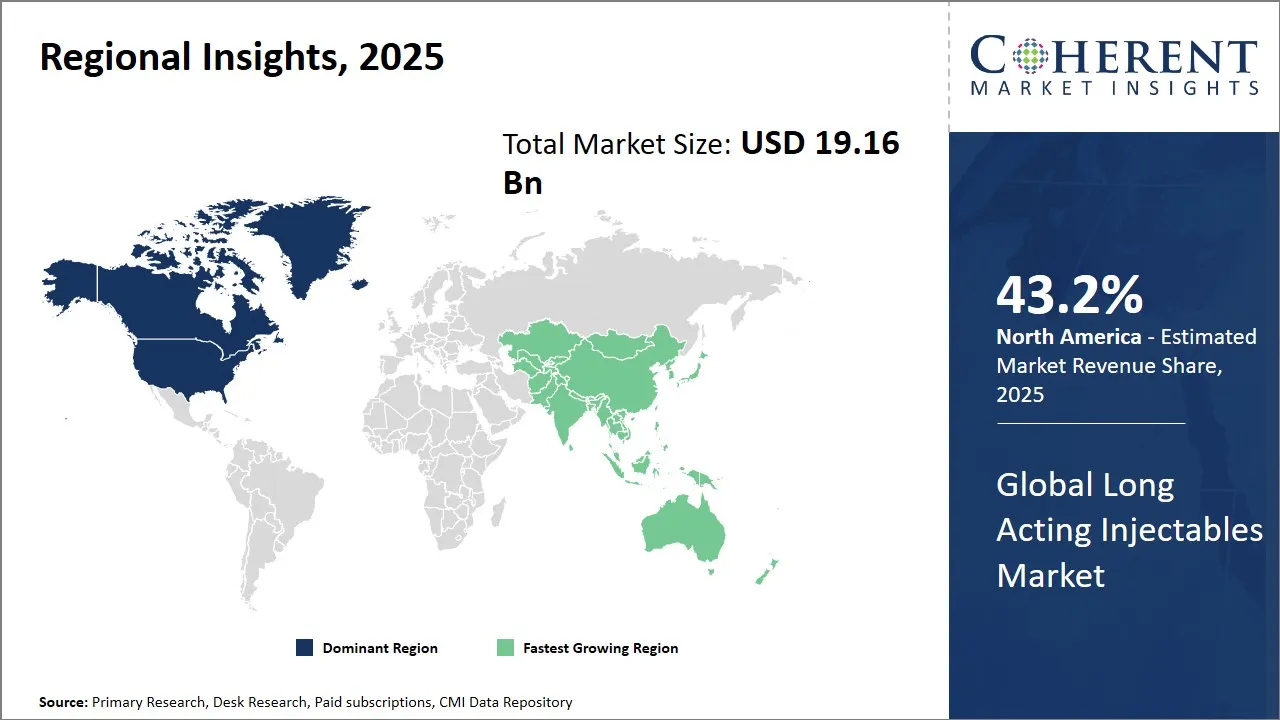
North America Long Acting Injectables Market Analysis and Trends
North America is set to lead the global long-acting injectables market with a 43.2% share in 2026, driven by its well-established healthcare infrastructure and advanced pharmaceutical research and development. The region enjoys high levels of government backing through good regulatory policies which are faster in drug approvals and encouraging innovation.
There is also the powerful presence of major pharmaceutical firms including Johnson and Johnson, Pfizer and Gilead Sciences, which drives on-going development of long-acting injectable preparations, especially on chronic disease treatment such as HIV, oncology and hormonal therapy.
For instance, in June 2026, Gilead Sciences announced that the USFDA approved Yeztugo (lenacapavir), a twice-yearly injectable HIV prevention option. It is the first treatment offering six months of protection against HIV, based on Phase 3 trials showing over 99.9% efficacy. Yeztugo, a major breakthrough in HIV prevention, addresses adherence challenges and stigma faced by daily oral PrEP users.
Asia Pacific Long Acting Injectables Market Analysis and Trends
Asia Pacific is experiencing the most rapid expansion in the global market of long acting injectables with a share of 24.4% in 2026, triggered by the rising healthcare investments, rising prevalence rate of the chronic diseases and also by the rising number of patients. Governments of countries like China, India and South Korea are mounting effort to increase drug access and health infrastructure and in many cases are relaxing regulations to allow foreign investments in multinational pharmaceutical firms.
Market expansion is also significantly contributed by the dynamic nature of industrial environment in which there are companies like Lupin, Sun Pharmaceutical and Takeda Pharmaceuticals, which are rapidly expanding. Moreover, urbanization and growing disposable incomes are raising the demand of the high level of drug delivery like long-acting injectables.
Global Long Acting Injectables Market Outlook for Key Countries
What's Driving the U.S. Long Acting Injectables Market Growth?
U.S. long acting injectables is a critical point in the long acting injectables market that is oriented by innovative pharmaceutical companies and robust R&D pipelines. Such companies as AbbVie and Amgen play an important part in creating injectable medications used in treating autoimmune diseases and cancer. The level of transparency and support of breakthrough therapies offered by regulatory authorities, including the U.S. FDA, makes it easy to adopt the therapy on a clinical basis. The relevance of the benefits of long acting injectables to the healthcare providers of the U.S. with the aim of increasing patient adherence and reducing hospital visits is quite favorable, which consolidates its market position.
China Long Acting Injectables Market Trends
The long acting injectables market in China is fast changing with the enormous investment by the government in terms of extending healthcare coverage and encouraging pharmaceutical development in the country. Hansoh Pharmaceutical and Innovent Biologics are some local players that are investing more and more in long-acting injectable research, and usually in collaboration with global companies. The regulatory changes have facilitated the approvals of medical products making them to gain market penetration fast. The rising population of middle-class consumers and increased emphasis on chronic illnesses such as diabetes and cancer are some of the major reasons why there is the need to have long-acting therapies.
Germany Long Acting Injectables Market Trends
The market for long acting injectables in Europe is still being headed by Germany because of its good pharmaceutical industry and healthcare standards. Firms such as Bayer and Bio NTech have played a critical role in exploiting the new technologies in drug delivery. The extensive healthcare insurance system in the country means that many people are exposed to new care methods. Besides, the investment of Germany in personal medicine and clinical research helps in sustained innovation in injectable medicines.
What Are the Key Drivers of the India Long Acting Injectables Market?
The long acting injectables market is growing rapidly in India due to high number of patients and growing investments in pharmaceutical manufacturing facilities. Significant domestic companies like Cipla and Dr. Reddy Laboratories are oriented at producing cost effective long acting injectable preparation to deal with local disease burden like infectious and chronic illnesses. Still-wider adoption is also encouraged by government initiatives to improve the availability of healthcare in rural settings. Additionally, the presence of India as a pharmaceutical manufacturing hub in the world supports the availability of sophisticated treatment in the country and elsewhere across the world.
Japan Long Acting Injectables Market Trends
Japan is a well-established market due to its leading pharmaceutical research, and the ageing population, which is highly targeted to find a solution to chronic diseases. The firms like the Takeda Pharmaceutical and Astellas Pharma are at the center of development and commercialization of long acting injectables, especially those in the oncology and metabolic disorders. The regulatory climate and the healthcare reimbursement system in Japan are well organized, which contributes to the utilization of novel therapies into the clinical practice that ensures the stable growth and patient availability.
Pricing & Reimbursement Variation for Long Acting Injectables (LAIs) Across Major Markets
- U.S.
- Pricing: High, influenced by innovation and competition.
- Reimbursement: Covered by Medicare/Medicaid and private insurers, with utilization management.
- European Union
- Pricing: Varies by country, influenced by price negotiations.
- Reimbursement: Nationally determined, based on HTA and cost-effectiveness.
- Canada
- Pricing: Regulated by PMPRB for maximum prices.
- Reimbursement: Provincial health plans provide coverage, though high-cost LAIs may face delays.
- Japan
- Pricing: Negotiated with MHLW, generally lower than the U.S.
- Reimbursement: Provided through national health insurance, with regular price reviews.
- China
- Pricing: Lower than Western markets due to regulations.
- Reimbursement: Covered by NRDL if cost-effective, though newer LAIs may have limited access.
- Australia
- Pricing: Influenced by PBS pricing reviews.
- Reimbursement: Fixed rate once listed on PBS, but new LAIs may face delays.
- Brazil
- Pricing: More affordable, but still impacted by import costs.
- Reimbursement: Available under SUS, but high-cost LAIs may have limited access.
- India
- Pricing: Lower than in Western markets due to price sensitivity.
- Reimbursement: Limited public coverage, with private insurance covering some treatments.
Market Players, Key Developments, and Competitive Intelligence
Key Developments
- On December 9, 2025, Teva Pharmaceuticals, a global biopharma leader, submitted an NDA to the U.S. FDA for its olanzapine extended-release injectable suspension TEV-749 a once-monthly Long Acting Injectable designed to improve schizophrenia treatment adherence. The company highlighted Phase 3 SOLARIS results showing efficacy and safety consistent with oral olanzapine and noted the product uses Medincell’s SteadyTeq controlled-release technology.
- In November 2025, Lupin, a global pharma company, launched Risperidone Long Acting Injectable in the U.S. with 180-day CGT exclusivity after U.S. FDA approval. Lupin introduced this as its first product using PrecisionSphere the proprietary LAI platform from its subsidiary Nanomi which develops uniform microspheres for extended drug release.
- In September 2025, Amneal, a global biopharmaceutical company, received the U.S. FDA approval for its risperidone extended release long acting injectable with CGT exclusivity and plans a U.S. launch in late 2025. The company said the approval strengthens its complex injectables portfolio and reflects strong microsphere and cold-chain manufacturing capabilities that support future long acting injectables in mental health.
- In July 2025, ViiV Healthcare, the global HIV specialist backed by GSK, Pfizer, and Shionogi, reported new real-world data showing strong outcomes for its long acting injectables including CAB plus RPV for HIV treatment and cabotegravir LA for PrEP.
Top Strategies Followed by Global Long Acting Injectables Market Players
Player Type | Strategic Focus | Example |
Established Market Leaders | Heavy R&D investment for advanced LAI formulations, strategic alliances with major pharma and OEMs, accelerated regulatory pathways, and aggressive global expansion targeting high-growth regions | Companies like Teva, Johnson & Johnson, and GSK strengthen LAI pipelines through advanced delivery technologies, partner with OEMs to enhance development speed, and scale distribution across Asia Pacific, Latin America, and Africa. |
Mid-Level Players | Cost-efficient LAI development balancing affordability and quality, collaborations with CMOs and technology providers to scale production, and partnerships with regional distributors to widen access | Firms such as Amneal, Lupin, and Dr. Reddy’s optimize LAI manufacturing through CMO partnerships, integrate advanced microsphere or polymer platforms, and expand reach in price-sensitive markets. |
Small-Scale Players | Niche innovation in LAI technologies using polymers, nanotechnology, or novel devices, supported by localized alliances for regulatory navigation and selective market penetration | Companies like Nanomi, Intas-regional innovators, and small tech-driven formulation startups create specialty LAIs, build local partnerships for faster entry, and target unmet clinical needs with differentiated products. |
Market Report Scope
Long Acting Injectables Market Report Coverage
| Report Coverage | Details | ||
|---|---|---|---|
| Base Year: | 2025 | Market Size in 2026: | USD 21.71 Bn |
| Historical Data for: | 2020 To 2024 | Forecast Period: | 2026 To 2033 |
| Forecast Period 2026 to 2033 CAGR: | 13.3% | 2033 Value Projection: | USD 52.03 Bn |
| Geographies covered: |
| ||
| Segments covered: |
| ||
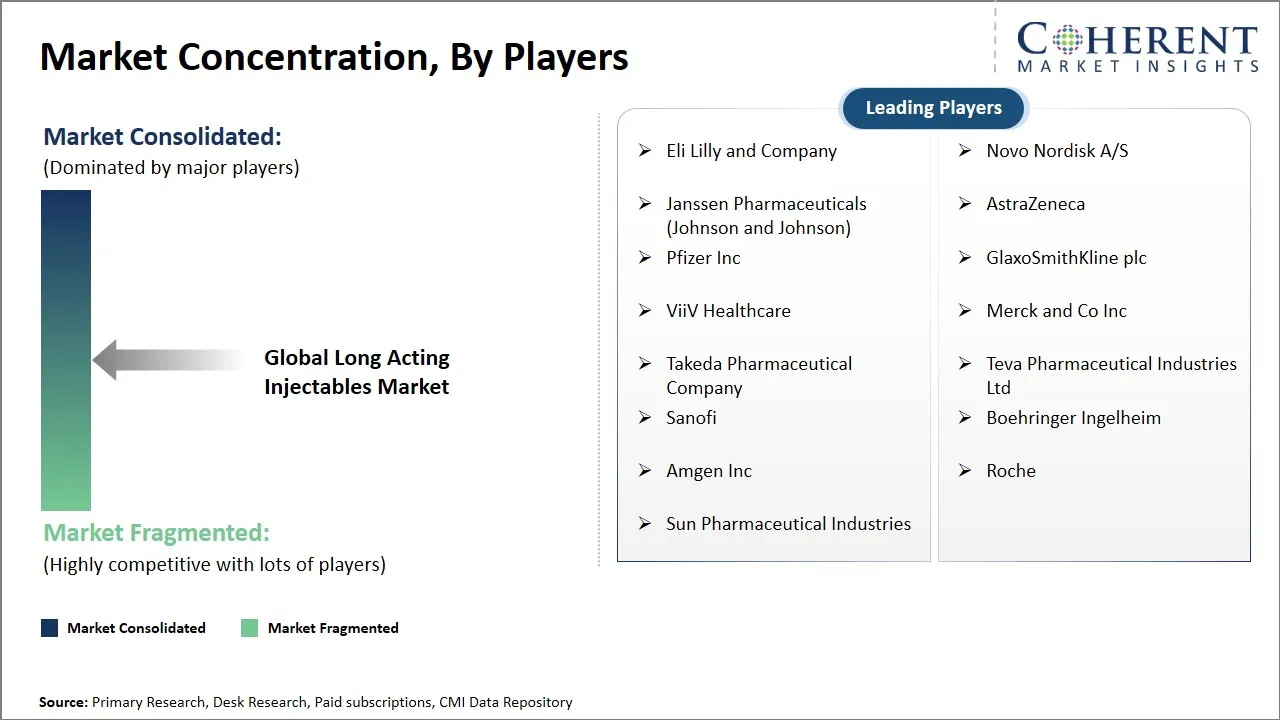
| Companies covered: | Eli Lilly and Company, Novo Nordisk A/S, Janssen Pharmaceuticals (Johnson and Johnson), AstraZeneca, Pfizer Inc, GlaxoSmithKline plc, ViiV Healthcare, Merck and Co Inc, Takeda Pharmaceutical Company, Teva Pharmaceutical Industries Ltd, Sanofi, Boehringer Ingelheim, Amgen Inc, Roche, and Sun Pharmaceutical Industries | ||
| Growth Drivers: |
| ||
| Restraints & Challenges: |
| ||
Long Acting Injectables Market Dynamics
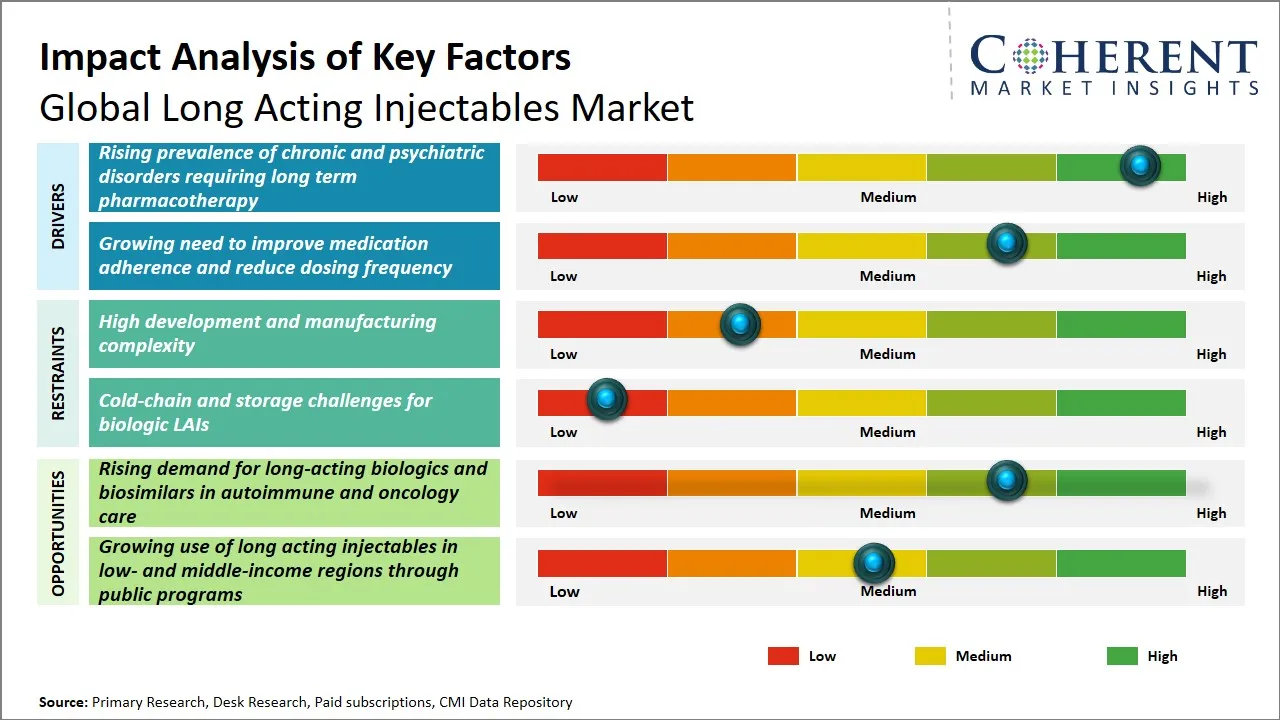
Long Acting Injectables Market Driver - Rising Prevalence of Chronic and Psychiatric Disorders Requiring Long Term Pharmacotherapy
The rising prevalence of chronic diseases in the world like diabetes, cardiovascular diseases and autoimmune diseases, the heightened diagnosis and awareness of psychiatric disorders like schizophrenia and bipolar disorder, has greatly led to the rise of the need of long-acting injectables (LAIs). These treatment fields normally involve a prolonged and continuous administration of drugs over a longer period of time to achieve the best patient results because sporadic use of medication may cause exacerbation of disease and healthcare overloads. Liquid injectable formulations are also convenient because they allow stable plasma drug levels, lessen the dose schedule, and reduce the chances of missed doses, which is especially important in chronic and psychiatric management.
For instance, in September 2025, the World Health Organization a global public health agency reported that over one billion people are living with mental health disorders and warned that countries must urgently scale up services.
Moreover, in September 2025, the World Health Organization (WHO) reported a sharp rise in the global burden of chronic or noncommunicable diseases, which claimed around 43 million lives in 2021 accounting for 75% of non-pandemic-related deaths.
(Source: https://www.who.int/news-room/fact-sheets/detail/noncommunicable-diseases)
Long Acting Injectables Market Opportunity - Rising Demand for Long-Acting Biologics and Biosimilars in Autoimmune and Oncology Care
The success of the global long acting injectables market is experiencing a huge growth opportunity due to the rising need of long act biologics and biosimilars especially in the treatment of autoimmune and oncology. The rheumatoid arthritis, psoriasis, and inflammatory bowel disease are chronic conditions, which necessitate long-term treating interventions, and this makes long-acting biologics a perfect modality of treatment because it increases patient adherence and reduces the need to take medications on a regular basis.
The increasing rate of cancer across countries is also driving a market demand of good and convenient treatment of cancer where injectables with long-acting properties would provide constant supply of the drug increasing its efficacy and decrease the number of visits to the hospital. Biosimilars, that are cost-effective to branded biologics, are rapidly gaining acceptance because of their similar safety and efficacy profiles, providing an opportunity to a larger number of patients at a lower cost of healthcare expenditure.
In May 2024, Shanghai Henlius Biotech, a Chinese biopharma company reported that its adalimumab biosimilar HANDAYUAN received NMPA approval for four new indications expanding its use across adult and pediatric autoimmune diseases. The company said the biosimilar now covers all adalimumab indications in China and noted growing access through national insurance listing provincial procurement and international partnerships supporting broader biologic availability.
(Source- https://www.henlius.com/en/NewsDetails-4590-26.html)
Analyst Opinion (Expert Opinion)
- The long acting injectables market has been growing owing to the improved technology in drug delivery mechanism such as microencapsulation and nanoparticles, and growing regulatory favoritism by agencies such as the USFDA and EMA. The increased demand in chronic disease management and patient-centric solutions is compelling growth, but the issues of high development costs and multifaceted manufacturing still exist.
- Some of these events such as the "International Conference on Long-Acting Injectable Formulations" have played a critical role in knowledge exchange and innovation. Programs like the USFDA expedited applications of LAIs and case studies like the Gileade long actionable HIV injection demonstrate that the market has a potential of revolutionizing the way patients are treated especially in chronic diseases.
Speak to the analyst
Want personalized insights?
Take the findings above to one of our principal consultants, or have the report rebuilt around the segments, geographies and competitors you actually track.
Market Segmentation
- Indication Insights (Revenue, USD Bn, 2021 - 2033)
- Psychiatric disorders
- Neurological disorders
- Endocrine and metabolic disorders
- Infectious diseases
- Women’s health
- Oncology and supportive care
- Pain, addiction and CNS supportive care
- Other chronic diseases
- Molecule Type Insights (Revenue, USD Bn, 2021 - 2033)
- Small-molecule drugs
- Antipsychotics
- Hormonal agents (e.g., contraceptives)
- Analgesics and addiction therapies
- Other small-molecule LAIs
- Peptides and peptide analogues
- GLP-1 and related incretin mimetics
- Other therapeutic peptides
- Proteins and biologics
- Monoclonal antibodies
- Fusion proteins and recombinant hormones
- Long-acting growth factors and cytokines
- Nucleic acid–based and gene-modifying agents
- Oligonucleotides
- Gene therapy–linked depot systems
- Vaccines and immunotherapies in LAI formats
- Other molecule types
- Small-molecule drugs
- Route of Administration Insights (Revenue, USD Bn, 2021 - 2033)
- Intramuscular (IM)
- Subcutaneous (SC)
- Intravitreal
- Intra-articular
- Intrathecal and epidural
- Other specialized parenteral routes
- Device Format Insights (Revenue, USD Bn, 2021 - 2033)
- Pre-filled Syringes
- Auto-injectors
- Vial and Syringe Kits
- Implant Kits
- Pen-injector LAI Systems
- Formulation Technology Insights (Revenue, USD Bn, 2021 - 2033)
- Microsphere-based Depots
- In-situ Forming Depots
- Liposomal LAIs
- Nano-suspensions
- Polymer-conjugated LAIs
- Implantable LAI Devices
- Oil-based Injectable Depots
- Long-acting Injectable Crystalline Suspensions
- Patient Type Insights (Revenue, USD Bn, 2021 - 2033)
- Adult
- Geriatric
- Pediatric
- End User Insights (Revenue, USD Bn, 2021 - 2033)
- Hospitals
- Specialty Clinics
- Community Health Centers
- Ambulatory Surgical Centers
- Home-care/Self-administration Programs
- Government and Public Health Programs
- Distribution Channel Insights (Revenue, USD Bn, 2021 - 2033)
- Retail Pharmacies
- Hospital Pharmacies
- Online Pharmacies
- Payer Insights (Revenue, USD Bn, 2021 - 2033)
- Public
- Private
- Regional Insights (Revenue, USD Bn, 2021 - 2033)
- North America
- U.S.
- Canada
- Latin America
- Brazil
- Argentina
- Mexico
- Rest of Latin America
- Europe
- Germany
- U.K.
- Spain
- France
- Italy
- Russia
- Rest of Europe
- Asia Pacific
- China
- India
- Japan
- Australia
- South Korea
- ASEAN
- Rest of Asia Pacific
- Middle East
- GCC Countries
- Israel
- Rest of Middle East
- Africa
- South Africa
- North Africa
- Central Africa
- North America
- Key Players Insights
- Eli Lilly and Company
- Novo Nordisk A/S
- Janssen Pharmaceuticals (Johnson and Johnson)
- AstraZeneca
- Pfizer Inc
- GlaxoSmithKline plc
- ViiV Healthcare
- Merck and Co Inc
- Takeda Pharmaceutical Company
- Teva Pharmaceutical Industries Ltd
- Sanofi
- Boehringer Ingelheim
- Amgen Inc
- Roche
- Sun Pharmaceutical Industries
Sources
Primary Research Interviews
- Industry Stakeholders List
- Pharmaceutical Manufacturers
- Contract Manufacturing Organizations (CMOs)
- End-Users List
- Healthcare Providers (Hospitals, Clinics)
- Patients (Chronic Disease Management)
Government and International Databases
- U.S. Food and Drug Administration (FDA)
- European Medicines Agency (EMA)
- National Institutes of Health (NIH)
- World Health Organization (WHO)
- Centers for Disease Control and Prevention (CDC)
- Indian Ministry of Health and Family Welfare
Trade Publications
- Pharmaceutical Technology
- BioPharma Reporter
- The Pharma Letter
- Drug Development & Delivery
- Contract Pharma
- Pharmaceutical Journal
Academic Journals
- Journal of Controlled Release
- International Journal of Pharmaceutics
- European Journal of Pharmaceutical Sciences
- Journal of Pharmaceutical Sciences
- Drug Delivery and Translational Research
- Advanced Drug Delivery Reviews
Reputable Newspapers
- The New York Times
- The Wall Street Journal
- The Financial Times
- The Guardian
- The Economic Times (India)
- The Times of India
Industry Associations
- International Pharmaceutical Federation (FIP)
- American Pharmaceutical Association (APhA)
- Pharmaceutical Research and Manufacturers of America (PhRMA)
- Biotechnology Innovation Organization (BIO)
- European Federation of Pharmaceutical Industries and Associations (EFPIA)
- Indian Pharmaceutical Alliance (IPA)
Public Domain Resources
- ClinicalTrials.gov
- National Institutes of Health (NIH) Clinical Center
- European Clinical Trials Database (EudraCT)
- National Cancer Institute (NCI) Database
- U.S. National Library of Medicine
Proprietary Elements
- CMI Data Analytics Tool: Proprietary analytics tool to analyze real-time market trends, consumer behavior, and technology adoption in market
- Proprietary CMI Existing Repository of Information for Last 8 Years
Get access to 250+ pages report
Every segment, forecast, competitor profile and data table behind the analysis above — available for instant download.
- ESOMAR Member
- ISO 9001:2015 Certified
- D-U-N-S Registered
- GDPR & CCPA Compliant
Missing comfort of reading report in your local language? Find your preferred language:
Transform your Strategy with Exclusive Trending Reports
Frequently Asked Questions
The global long acting injectables market is estimated to be valued at USD 21.71 Bn in 2026 and is expected to reach USD 52.03 Bn by 2033.
The CAGR of global long acting injectables market is projected to be 13.3% from 2026 to 2033.
Rising prevalence of chronic and psychiatric disorders requiring long term pharmacotherapy and growing need to improve medication adherence and reduce dosing frequency are the major factors driving the growth of the global long acting injectables market.
High development and manufacturing complexity and cold-chain and storage challenges for biologic LAIs are the major factors hampering the growth of the global long acting injectables market.
In terms of indication, the psychiatric disorders are estimated to dominate the market revenue share in 2026.
The long acting injectables market is expected to grow as new treatments emerge and more diseases are targeted with long-acting formulations.
Biodegradable polymers like PLGA and PLGA-PEG enable controlled drug release, improving the therapeutic efficacy of LAIs.