

Ischemic Neurological Interventional Medical Devices Market Analysis & Forecast 2026-2033
The global ischemic neurological interventional medical devices market is valued at USD 2,764.7 Mn in 2026 and is forecast to reach a value of USD 4,050.2 Mn by 2033 at a CAGR of 5.6% between 2026 and 2033.
Key Takeaways
- Based on Device Type, the neurothrombectomy devices segment is expected to hold 40% share of the market in 2026, by effectively restoring blood flow in large vessel occlusion strokes.
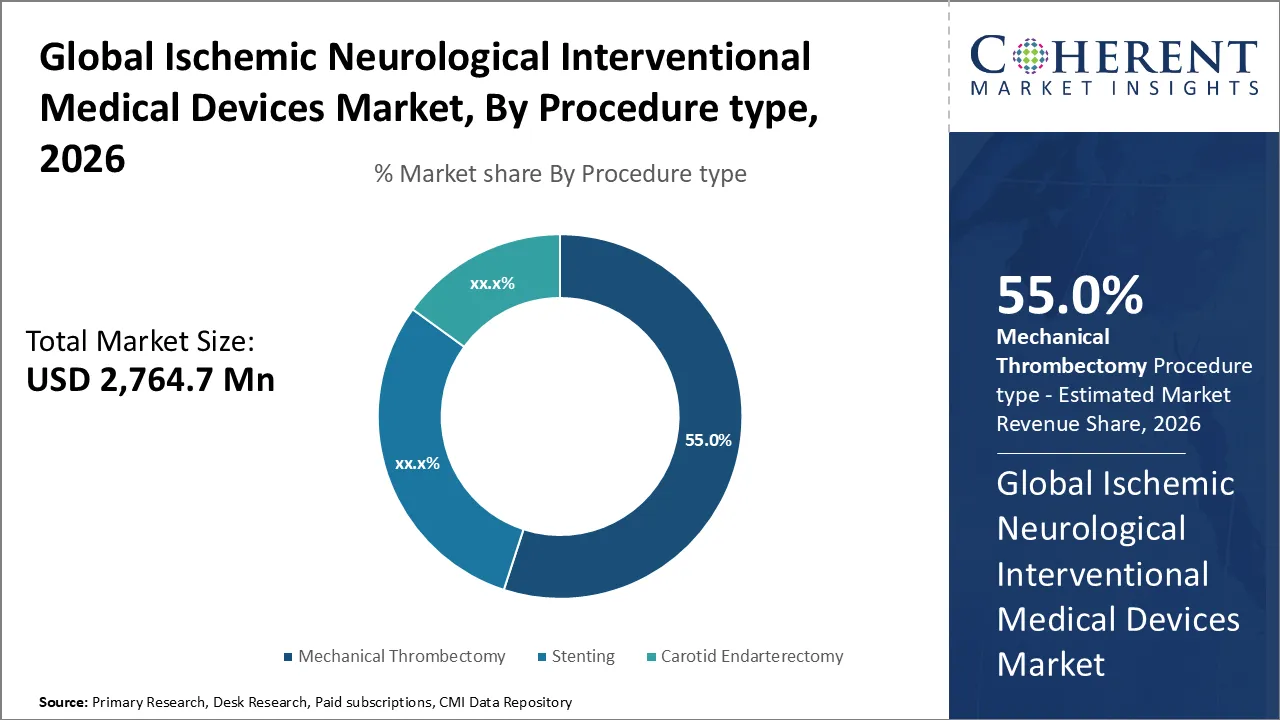
- Based on Procedure Type, the mechanical thrombectomy segment is expected to lead the market with 55% share in 2026, superior patient outcomes and strong international guideline endorsements.
- Based on End User, the hospitals segment is projected to account for 60% shares of the market win 2026, due to advanced infrastructure and specialized neurointerventional teams.
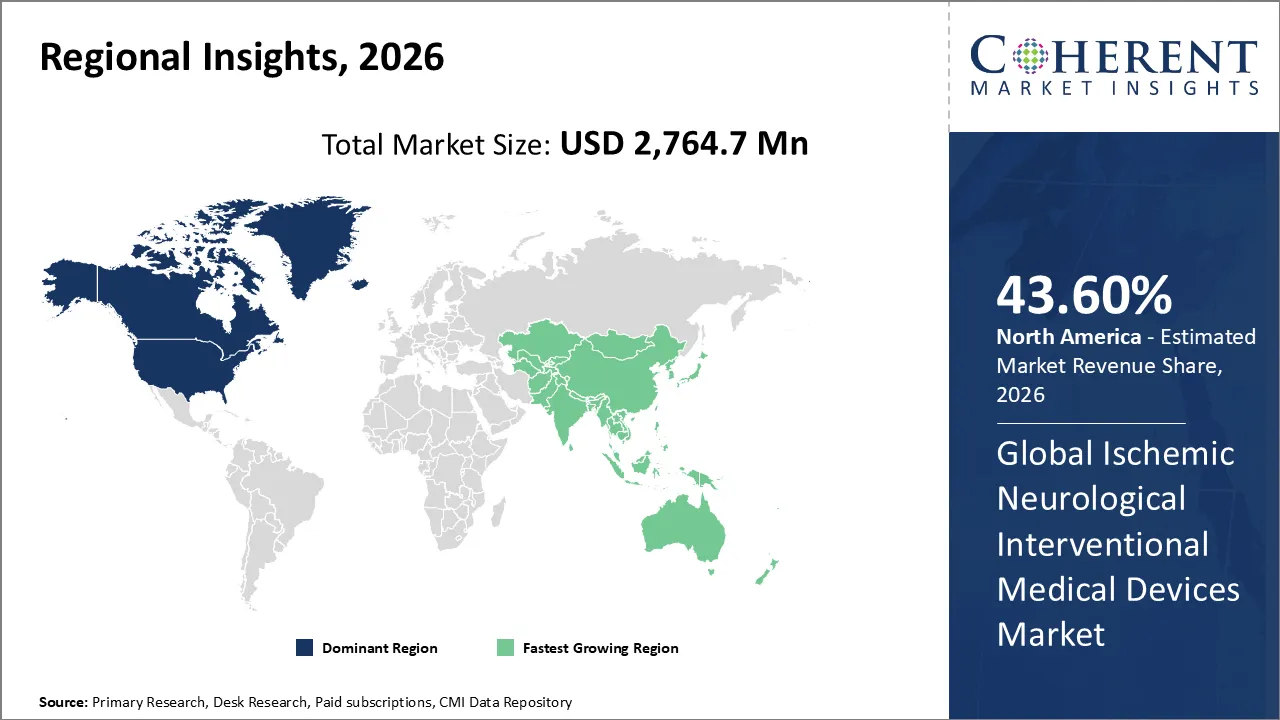
- Based on Region, North America is set to lead the ischemic neurological interventional medical devices market with 43.6% share in 2026. While, Asia Pacific is anticipated ot be the fastest growing region.
Market Overview
Medical devices are the electronic products which have medical use and make medical claim. The medical devices includes ultrasound products, x-ray machines, medical lasers and neurological interventional kits. Neuro-interventional devices are catheters-based, minimally-invasive approaches which are used to treat specific diseases of the blood vessels of spine, neck, head and which includes strokes, brain aneurysms, vascular malformation in brain, spine and artery diseases.
The several types of Neuro-interventional devices such as flow diverters, stents, and aspiration devices are mainly used for ischemic stroke. There are mainly two types of strokes ischemic and hemorrhagic. Ischemic stroke is common type, and usually cause by blood clotting that blocks blood vessels of brain. Different Neuro-interventional devices like Aspiration device, stenting systems, clot retriever, lasers are used for diagnosis and treatment of ischemic stroke.
Current Events and their Impacts on the Ischemic Neurological Interventional Medical Devices Market
Current Event | Description and its Impact |
AI Integration and Next-Generation Device Innovation |
|
Emerging Market Healthcare Infrastructure Development |
|
Which stroke treatment delivers the greatest long-term cost savings?
Treatment | Cost Impact | Hospital Stay | Rehab Costs | Notes |
Mechanical Thrombectomy | Saves USD 20k–30k per patient | ~3 days shorter | Much lower due to independence | High device cost offset by reimbursement. |
IV Thrombolysis (tPA) | Drug cost USD 6k–8k | Slightly shorter | Moderate; limited large vessel use | Effective only within 4.5-hour window. |
Medical Therapy Alone | Low upfront (USD 2k–5k) | Longer (7–10 days) | High; disability common | Appears cheap but costly long-term. |
Carotid Stenting/CEA | USD 15k–20k | 2–4 days | Preventive savings | More preventive than acute intervention. |
- Current Industry Events of 2026
- Market Size Estimation
- Regional Breakdown
- Competitive Landscape
- Customer Intelligence
- Segmental Analysis
- Pricing Analysis
- Key Market Drivers, Challenges & Future Trends
- Customized Insights Section
Segmental Insights
Which procedure type dominates in 2026?
In terms of procedure type, the mechanical thrombectomy segment is expected to lead the market with 55% share in 2026. Evidence shows it improves functional independence in nearly half of treated patients, which is much better than standard care. It is the most common procedure because it works well, has a high success rate, and is well-known in international stroke guidelines.
For instance, in February 2025, Johnson & Johnson MedTech released the Cereglide 92 Catheter System to treat acute ischemic stroke. The device makes it easier to get to the neurovascular system and get rid of clots, which directly helps with mechanical thrombectomy procedures. This new idea makes their role in ischemic neurological interventional medical devices stronger, which leads to better results and more advanced stroke care options around the world.
Which device type emerges as the leader in 2026, with neurothrombectomy devices advancing stroke care?
In terms of device type, the neurothrombectomy devices segment is expected to hold 40% share of the market in 2026, because they have been shown to restore blood flow in strokes that block large blood vessels. Clinical trials consistently show that patients reflect better outcomes when they get both medical therapy and clinical trials. Endorsements from guidelines have made them even more popular, and by 2026, they will be the most important part of treating ischemic stroke.
For instance, in May 2025, S3V Vascular Technologies, with help from the Department of Science and Technology, announced India's first indigenous mechanical thrombectomy kit for acute ischemic stroke. The goal of the initiative is to make the product less reliant on imports, more affordable, more widely available through Ayushman Bharat, and to get CE and USFDA approvals for global distribution.
Which end user rises strongest in 2026, with hospitals driving adoption through advanced stroke infrastructure?
In terms of end user, the hospitals segment is projected to account for 60% shares of the market win 2026, because they have advanced imaging systems, specialized neurointerventional teams, and full stroke units. Their infrastructure allows for quick diagnosis and treatment, which is crucial for managing acute ischemic stroke. This readiness makes sure that hospitals are still the main place to get thrombectomy and stenting procedures in 2026.
For instance, in March 2026, Johnson & Johnson launched CEREGLIDE 42 and CEREGLIDE 57 aspiration catheters, as well as INNERGLIDE 7, to improve the treatment of acute ischemic stroke. These devices make it easier to get to distal clots, make aspiration more effective, and boost procedural confidence. They also strengthen hospital-based neurointerventional workflows and add to their portfolio of ischemic neurological interventional medical devices.
Regional Insights
North America Ischemic Neurological Interventional Medical Devices Market Analysis & Trends
North America is expected to dominate the ischemic neurological interventional medical devices market with 43.60% share in 2026, because there is large incidence of strokes, the healthcare system is advanced, there are good reimbursement policies, and new devices are quickly adopted. The area's aging population and the presence of major manufacturers make the market even stronger.
For instance, in January 2026, the new AHA/ASA guideline for acute ischemic stroke, which released in the US, adds to the advice for mechanical thrombectomy and thrombolysis. It emphasizes the importance of hospital-based stroke systems, direct transport to centers that can do thrombectomy, and longer treatment windows.
Asia Pacific Ischemic Neurological Interventional Medical Devices Market Analysis & Trends
Asia Pacific is expected to exhibit the fastest growth, due to the rise in strokes, the rapid growth of healthcare infrastructure, and government efforts to make it easier for people to access care. The market is growing the fastest in this region because more people are moving to cities, lifestyles are changing, and more people are using advanced neurointerventional technologies.
For instance, in July 2025, Researchers at CUHK created a microcatheter with a magnetic tip that can be turned for use in treating acute ischemic stroke. The device accurately moves through complicated blood vessels in the brain to deliver drugs, break up clots, and pick up debris. It was tested on both animals and humans and showed that it was safe and effective, which was a big step forward for neurointerventional medical devices.
Ischemic Neurological Interventional Medical Devices Market Outlook Country-Wise
The U.S. Ischemic Neurological Interventional Medical Devices Market Trends
In 2026, the U.S. has high demand for ischemic neurological interventional medical devices due to high prevalence of strokes, the healthcare system is advanced, the reimbursement systems are exceptionally good, and new technologies are being adopted quickly. The country's market dominance is even stronger because its population is getting older and there are many leading manufacturers there.
For instance, in March 2026, Medtronic plan on purchasing Scientia Vascular, which is based in Salt Lake City, Utah, for $550 million, plus extra payments for reaching certain goals. The deal, which was announced from Galway, Ireland, combines Scientia's guidewires and microcatheters with Medtronic's neurovascular therapies. This will improve global ischemic neurological interventional medical device innovation and expand advanced stroke care capabilities around the world.
India Ischemic Neurological Interventional Medical Devices Market Trends
India's need for ischemic neurological interventional medical devices will grow in 2026 because strokes are becoming more common, cities are growing quickly, and people are living unhealthy lives. India is a key growth market in Asia-Pacific due to its healthcare infrastructure is getting better, the government is working to make it easier for people to get care, and more people are using advanced neurointerventional technologies.
For instance, in March 2026, XCath made history in India by performing the world's first remote robotic mechanical thrombectomy for acute ischemic stroke. Using the Iris Surgical Robotic System, doctors were able to remove a clot that was more than 200 kilometers away. This restored blood flow and showed how robotics could help people around the world get better stroke care.
Market Report Scope
Ischemic Neurological Interventional Medical Devices Market Report Coverage
| Report Coverage | Details | ||
|---|---|---|---|
| Base Year: | 2025 | Market Size in 2026: | USD 2,764.7 Mn |
| Historical Data for: | 2020 To 2024 | Forecast Period: | 2026 To 2033 |
| Forecast Period 2026 to 2033 CAGR: | 5.6% | 2033 Value Projection: | USD 4,050.2 Mn |
| Geographies covered: |
| ||
| Segments covered: |
| ||
| Companies covered: | Stryker, Johnson & Johnson Private Limited., Penumbra, Inc., Medtronic, VESALIO, LLC., Sense Neuro, 880 Medical, LLC., Terumo Corporation., Imperative Care., W. L. Gore & Associate, Inc., MicroPort Scientific Corporation., KANEKA COPORATION., Integer Holdings Corporation., Wallaby Medical. | ||
| Growth Drivers: |
| ||
| Restraints & Challenges: |
| ||
Global Ischemic Neurological Interventional Medical Device Market- Drivers
Ongoing research in ischemic neurological interventional medical devices
The increasing focus on research and development by key players in order to strengthen their market presence in the global market is expected to drive growth of the global ischemic neurological interventional medical devices market over the forecast period. For instance, in March 2026, Researchers examined multidirectional diffusion-weighted imaging (DWI) utilizing portable low-field MRI to enhance the detection of acute ischemic stroke. In a study involving 95 patients, multidirectional diffusion-weighted imaging (DWI) demonstrated superior sensitivity compared to single-direction DWI, successfully identifying minute lesions and improving emergency triage, indicative of continuous advancements in ischemic neurological interventional medical devices.
New developments in ischemic neurological interventional medical devices
The increasing product launch and product approval by key players in order to strengthen their market presence in the global market is expected to drive growth of the global ischemic neurological interventional medical devices market over the forecast period. For instance, in February 2026, The CE Mark approvals for NeVa VS, which treats cerebral vasospasm, and NeVa 3.0 mm, which is used for mechanical thrombectomy in smaller vessels, added to Vesalio's neurovascular portfolio. The company also got FDA 510(k) approval for aspiration catheters. This is a big step forward for ischemic neurological interventional medical devices and stroke care.
Global Ischemic Neurological Interventional Medical Device Market Opportunity
Aspiration & Suction Catheters
The ischemic neurological interventional medical device market forecast shows that aspiration and suction catheters are essential because they work well with thrombectomy procedures. They do a great job of getting rid of thrombus fragments, which lowers the risk of distal embolization and makes patients risk-free. Hospitals and neurosurgery centers all over the world are becoming more interested in them because they are minimally invasive and work with existing thrombectomy systems. This is especially true where cost-effective solutions are important. Aspiration catheters are an enormous expansion opportunity in the global market because more people want better stroke care.
Analyst Opinion (Expert Opinion)
- Trends in clinical and procedural adoption: Acute ischemic stroke accounts for around 87% of all stroke cases globally, making interventional devices like aspiration catheters, stenting systems, and embolization stents essential for treatment. Mechanical thrombectomy has shown to be highly efficient, with randomized trials showing that up to 46% of patients compared to 26% with standard care alone were able to function independently. This strong evidence base has sped up the use of the procedure, especially in areas with established stroke networks and advanced neurovascular centers.
- Changes in technology and regions: North America has a large share of the world's procedure volumes, thanks to its extensive reimbursement systems and specialized stroke centers. Europe has also seen similar adoption, with an increasing focus on early intervention protocols. Asia-Pacific is becoming an important area for growth because there are more strokes and the healthcare system is getting bigger. Aspiration/suction catheters are becoming more popular because they are effective at removing clots. Stenting systems are still widely used in carotid interventions. These trends show a clear path toward technologies that are minimally invasive, based on evidence, and that improve patient outcomes and lower the risk of long-term disability.
Speak to the analyst
Want personalized insights?
Take the findings above to one of our principal consultants, or have the report rebuilt around the segments, geographies and competitors you actually track.
Key Developments
- In March 2026, Acandis GmbH started the CARESTAR study to test the CARESTO® heal stent in people with symptomatic non-stenotic carotid disease (less than 50% stenosis). This international randomized trial aims to lower the number of recurrent embolic events and improve stroke prevention. It shows that ischemic neurological interventional medical devices and hospital-based neurovascular care are always getting better.
- In February 2026, Imperative Care added the Zoom 4S catheter to its Zoom Stroke Solution line of products. The device is made for aspiration thrombectomy in acute ischemic stroke. It makes it easier to find, support, and remove clots in complicated neurovascular anatomy. This new idea makes neurointerventional care in hospitals better and speeds up the development of ischemic neurological interventional medical devices.
Market Segmentation
- Global Ischemic Neurological Interventional Medical Devices Market, By Device Type
- Neurothrombectomy Devices
- Aspiration/Suction Catheters
- Clot Retrievers
- Snare-like devices
- Others (Lasers etc.)
- Embolization Stents
- Stenting System
- Neurothrombectomy Devices
- Global Ischemic Neurological Interventional Medical Devices Market, By Procedure Type
- Mechanical Thrombectomy
- Carotid Endarterectomy
- Stenting
- Global Ischemic Neurological Interventional Medical Devices Market, By End User
- Hospitals
- Specialty Clinics
- Ambulatory Surgical Centers
- Global Ischemic Neurological Interventional Medical Devices Market, By Region
- North America
- U.S.
- Canada
- Latin America
- Brazil
- Argentina
- Mexico
- Rest of Latin America
- Europe
- Germany
- U.K.
- Spain
- France
- Italy
- Russia
- Rest of Europe
- Asia Pacific
- China
- India
- Japan
- Australia
- South Korea
- ASEAN
- Rest of Asia Pacific
- Middle East & Africa
- GCC Countries
- Israel
- Rest of Middle East & Africa
- North America
- Global ischemic neurological interventional medical devices market: Key Players
- Stryker
- Johnson & Johnson Private Limited.
- Penumbra, Inc.
- Medtronic
- VESALIO, LLC.
- Sense Neuro
- 880 Medical, LLC.
- Terumo Corporation.
- Imperative Care.
- W.L. Gore & Associate, Inc.
- MicroPort Scientific Corporation.
- KANEKA COPORATION.
- Integer Holdings Corporation.
- Wallaby Medical
Sources
Primary Research Interviews
- Neurologists
- Interventional Radiologists
- Neurovascular Surgeons
- Medical Device Manufacturers
- Hospitals & Healthcare Providers
- Medical Device Distributors
- Regulatory Authorities
- Research & Development (R&D) Heads in Neurotechnology
- Others
Databases
- Bloomberg Terminal
- Thomson Reuters Eikon
- IHS Markit
- PubMed
- ClinicalTrials.gov
- Scopus
- Others
Magazines
- Stroke Journal
- Interventional Neurology
- Journal of NeuroInterventional Surgery
- Medical Device and Diagnostic Industry (MD+DI)
- Neurosurgery
- Others
Journals
- Journal of Cerebral Blood Flow & Metabolism
- Journal of NeuroInterventional Surgery
- Stroke: Journal of the American Heart Association
- Journal of Vascular and Interventional Neurology
- European Stroke Journal
- Others
Newspapers
- The New York Times – Health Section
- The Wall Street Journal – Health & Science
- Reuters Health
- Bloomberg News – Healthcare
- The Guardian – Health
- Others
Associations
- Society of NeuroInterventional Surgery (SNIS)
- American Stroke Association (ASA)
- World Federation of Interventional and Therapeutic Neuroradiology (WFITN)
- European Society of Neuroradiology (ESNR)
- American Heart Association (AHA)
- Others
Public Domain Sources
- U.S. National Institutes of Health (NIH)
- World Health Organization (WHO)
- U.S. Centers for Disease Control and Prevention (CDC)
- National Institute of Neurological Disorders and Stroke (NINDS)
- European Medicines Agency (EMA)
- Others
Proprietary Elements
- CMI Data Analytics Tool
- Proprietary CMI Existing Repository of Information for the Last 8 Years
Get access to 250+ pages report
Every segment, forecast, competitor profile and data table behind the analysis above — available for instant download.
- ESOMAR Member
- ISO 9001:2015 Certified
- D-U-N-S Registered
- GDPR & CCPA Compliant
Missing comfort of reading report in your local language? Find your preferred language:
Transform your Strategy with Exclusive Trending Reports
Frequently Asked Questions
The global Ischemic Neurological Interventional Medical Devices Market size is valued at USD 2,764.7 Mn in 2026 and is expected to reach USD 4,050.2 Mn in 2033.
The global ischemic neurological interventional medical devices market size is estimated to be valued at USD 2,764.7 Mn in 2026 and is expected to exhibit a CAGR of 5.6% between 2026 and 2033.
New developments in ischemic neurological interventional medical devices, increasing prevalence of stroke, and ongoing research in ischemic neurological interventional medical devices are expected to drive the market.
Mechanical Thrombectomy is a leading segment and is expected to hold major market share, owing to increasing product approvals and launches during the forecast period.
Major factors hampering growth of the market include termination and withdrawal of many ischemic neurological interventional medical devices clinical trials.
Major players operating in the market include Stryker, Johnson & Johnson Private Limited., Penumbra, Inc. Medtronic, VESALIO, LLC., Sense Neuro, 880 Medical, LLC., Terumo Corporation., Imperative Care., W. L. Gore & Associate, Inc. , MicroPort Scientific Corporation., KANEKA COPORATION., Integer Holdings Corporation., Wallaby Medical.