

Drug Delivery Technologies Market Size and Forecast – 2026 to 2033
The global drug delivery technologies market is estimated to be valued at USD 56.31 Bn in 2026 and is expected to exhibit a compound annual growth rate (CAGR) of 13.1% during the forecast period, reaching USD 133.30 Bn by 2033.
Key Takeaways from the Drug Delivery Technologies Market Report
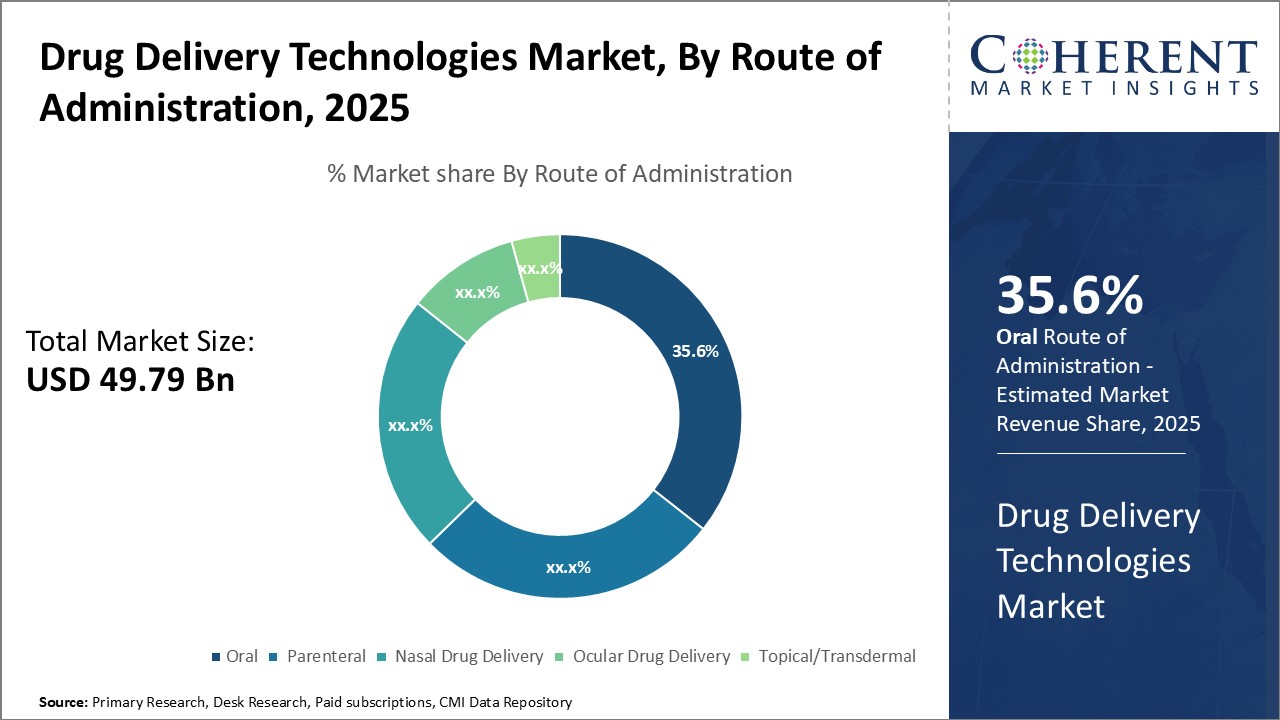
- Based on route of administration, oral segment is expected to dominate the market with a share of 36.6% in 2026.
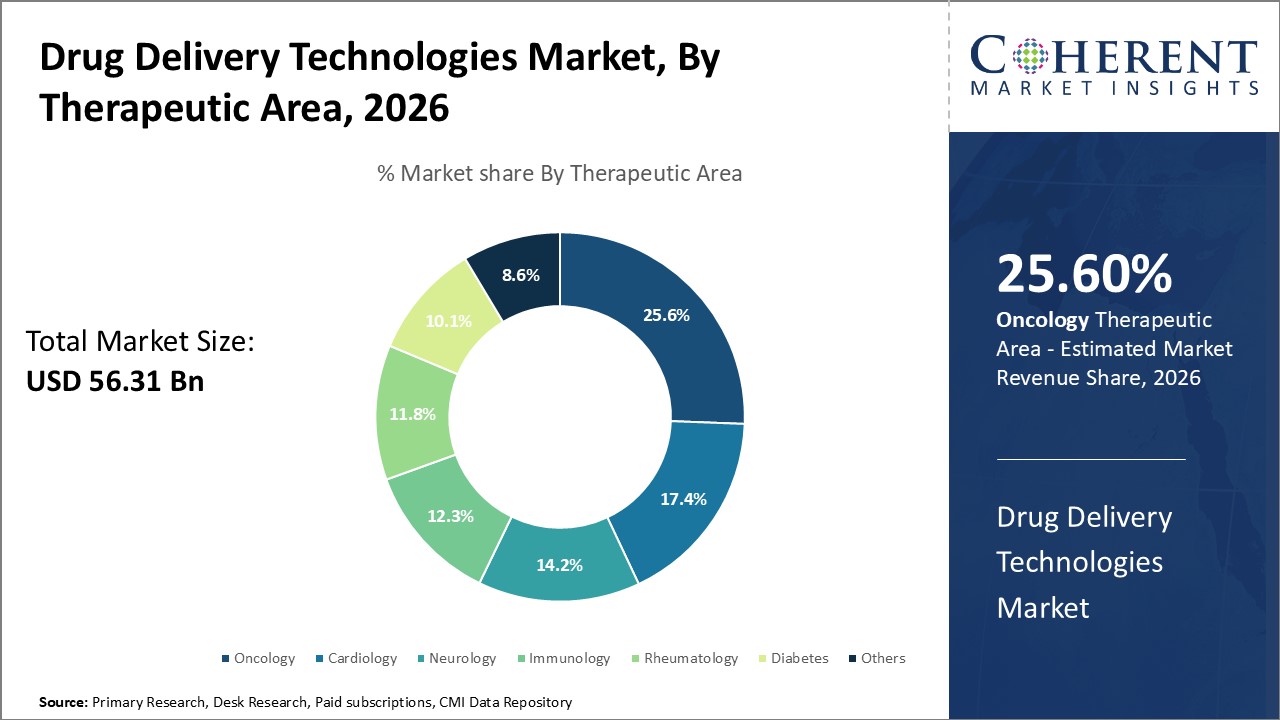
- By therapeutic area, oncology segment is slated to account for 25.6% of the global drug delivery technologies market share by 2026.
- In terms of end user, ambulatory surgical clinics segment is projected to hold a prominent market share of 24.62% in 2026.
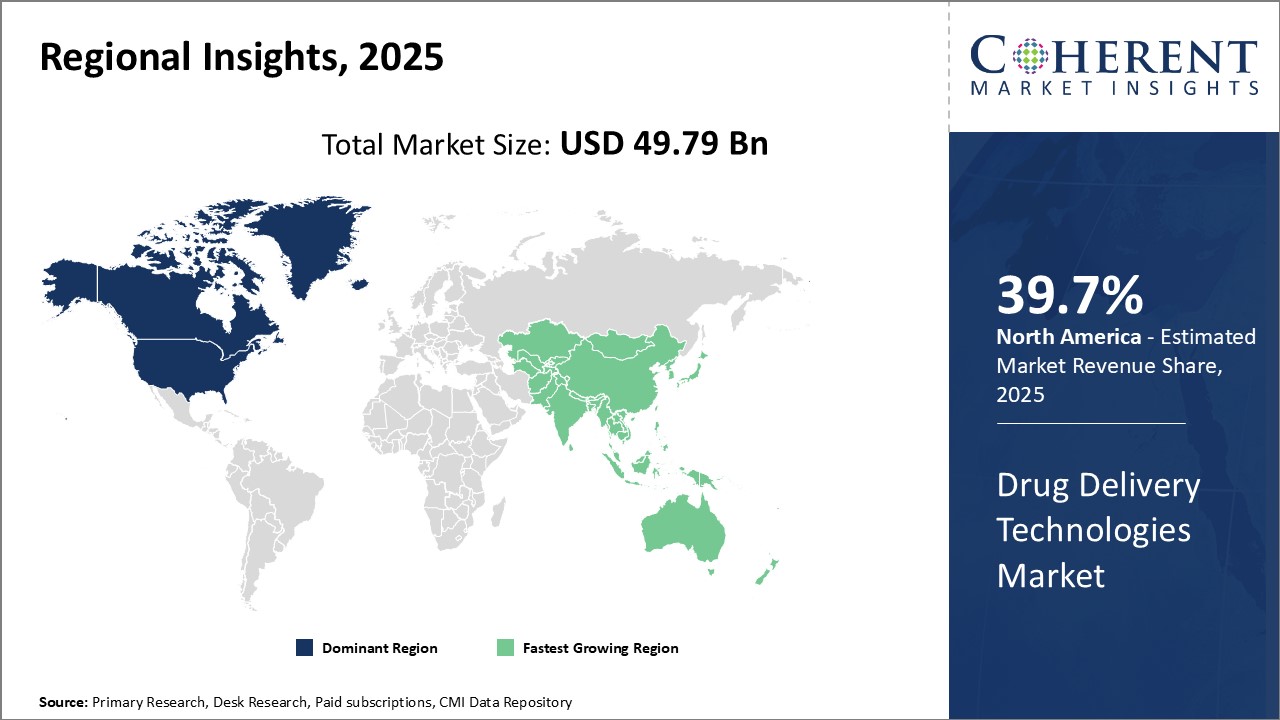
- North America remains at the epicentre of drug delivery technologies market growth, capturing 39.7% of the global market share in 2026.
- Asia Pacific is poised to emerge as the fastest-growing drug delivery technologies market during the forecast period.
Drug Delivery Technologies Market Overview
The global drug delivery technologies market is expected to record robust growth during the forecast period. This can be attributed to increasing prevalence of chronic diseases and advancements in drug delivery systems.
Technologies such as oral, pulmonary, and transdermal drug delivery have significantly enhanced the efficiency and convenience of therapeutic administration. Moreover, the increasing focus on targeted drug delivery, supported by innovations in nanotechnology, is expected to boost market growth during the forecast period.
The global prevalence of chronic diseases such as diabetes, cardiovascular disorders, and cancer is increasing rapidly. For example, as per the IDF, about 853 million people will be living with diabetes by 2050. This is expected to drive demand for drug delivery technologies during the forthcoming period.
Current Events and Their Impact on the Drug Delivery Technologies Market
Current Event | Description and its Impact |
AI and Machine Learning Revolution in Healthcare |
|
Global Aging Population and Chronic Disease Epidemic |
|
Segmental Insights
- Current Industry Events of 2026
- Market Size Estimation
- Regional Breakdown
- Competitive Landscape
- Customer Intelligence
- Segmental Analysis
- Pricing Analysis
- Key Market Drivers, Challenges & Future Trends
- Customized Insights Section
Drug Delivery Technologies Market Insights, By Route of Administration: Ease of Use Fuels Oral Segment’s Dominance
As per Coherent Market Insights’ latest drug delivery technologies market analysis, oral segment is expected to account for the highest market share of 36.6% in 2026. This dominance is mostly due to the accessibility and convenience offered by oral drug delivery technologies.
Oral drug delivery provides easy self-administration without the need for healthcare professionals. This reduces treatment costs and improves compliance for patients needing long-term medication.
The non-invasive nature of oral delivery also increases patient acceptance and comfort over alternative routes. Oral drugs can be administered discreetly without needles or apparatus. As a result, the target segment is expected to continue its dominance during the forecast period.
Leading companies are focusing on expanding their oral drug delivery solutions to stay ahead of the competition. For example, in August 2025, BioMed X teamed up with Novo Nordisk to develop novel oral-formulation technologies for therapeutic peptides.
The collaboration seeks to develop innovative technologies that improve oral delivery as well as absorption of peptide-based drugs. These innovations will likely boost growth of the target segment in the coming years.
Drug Delivery Technologies Market Insights, By Therapeutic Area: Advances in Therapies Reinforce Oncology’s Leadership in Drug Delivery Technologies
Based on therapeutic area, oncology segment is expected to dominate the industry, capturing 25.6% of the market share in 2026. This is mostly due to rapid advancements in cancer treatment options.
There is significant research underway to develop improved targeted drug carriers as well as combination therapies for oncology. Novel drug delivery systems help combat challenges in achieving required dosage at tumor sites.
Liposomes, polymeric, and antibody-drug conjugates effectively enhance drug loading and binding for chemotherapeutics. These facilitate localized or controlled release of anti-cancer payloads to improve efficacy and safety profiles.
For example, in October 2025, AstraZeneca and Daiichi Sankyo’s antibody-drug conjugate Datroway showed improved survival in aggressive breast cancer patients. This highlights how targeted drug delivery systems are advancing cancer treatment.
Drug Delivery Technologies Market Insights, By End User: Ambulatory Surgical Clinics Take Lead in Drug Delivery Technology Adoption
Ambulatory surgical clinics segment is expected to lead the global drug delivery technologies industry with a share of 24.62% in 2026. This leadership is attributed to the efficiency advantages of ambulatory clinics over hospitals,
Ambulatory clinics offer day-case surgeries and infusions without overnight hospitalization. This reduces medical costs for lower acuity procedures and infusions. It provides a convenient option to free up hospital bed capacity for serious cases.
Ambulatory clinics also have flexible schedules suited to working patients. Their streamlined workflows as well as dedicated staff deliver targeted care efficiently.
Regional Insights
North America Remains Market Leader in Drug Delivery Technologies
North America dominates the drug delivery technologies market, with an estimated share of 39.7% in 2026. This is attributable to strong presence of leading pharmaceutical and biotech companies, rising healthcare expenditure, and supportive government policies.
Some major players like Johnson & Johnson and Pfizer have established their primary research headquarters in the U.S. They are developing novel delivery systems, ensuring the dominance of the region.
For instance, Johnson & Johnson received U.S. FDA approval for INLEXZO in September 2026. It is the first and only intravesical drug-releasing system designed to provide extended local delivery of gemcitabine into the bladder.
Asia Pacific Becoming a Hotbed for Drug Delivery Technologies Market Companies
Asia Pacific is expected to emerge as a highly lucrative market for manufacturers of drug delivery technologies during the forthcoming period. This can be attributed to the increasing healthcare needs of the large patient population and government initiatives to strengthen regional core capabilities in producing sophisticated medical technologies.
Global firms like GlaxoSmithKline PLC have also expanded into nations like China and India to tap growth opportunities. For example, in July 2026, GlaxoSmithKline (GSK) entered into a significant licensing agreement with China's Jiangsu Hengrui Pharmaceuticals.
Together, the two companies will develop innovative medicines, including advanced drug delivery systems. Such development will further contribute to the expansion of drug delivery technologies industry in the region.
Drug Delivery Technologies Market Outlook – Country-wise
Significant R&D Investments and U.S. FDA Approvals Propel Market Growth in the U.S.
The U.S. drug delivery technologies market is poised to exhibit strong growth during the assessment period. This is mostly due to substantial investments in research and development aimed at enhancing the efficacy and convenience of therapeutic solutions.
These efforts are supported by a robust regulatory framework, with the U.S. FDA actively approving innovative drug delivery systems that cater to diverse healthcare needs. For example, the FDA approval of Datroway in 2023 for treating certain types of breast cancer highlights how innovative drug delivery technologies are reaching patients, improving treatment effectiveness as well as minimizing side effects.
Expanding Healthcare Expenditures and Healthy China 2030 Initiative
China is becoming a happy hunting ground for drug delivery technology manufacturers. This is mostly due to rising healthcare expenditures, growing aging population, and shift toward a patient-centric healthcare approach.
The government’s Healthy China 2030 initiative aims to improve healthcare access, which is expected to boost the market growth significantly. Similarly, rising demand for personalized medicine will likely trigger drug delivery technologies market growth in China.
Market Concentration and Competitive Landscape
Drug Delivery Technologies Industry News
- In July 2025, Johnson & Johnson received U.S. FDA Priority Review for TAR-200 NDA in high-risk non-muscle invasive bladder cancer. TAR-200 NDA is an innovative drug delivery system designed to deliver the chemotherapy drug gemcitabine directly into the bladder over several weeks, offering a possible alternative to surgery.
- In October 2025, Novartis announced its agreement to acquire Avidity Biosciences, a San Diego-based biopharmaceutical company specializing in RNA delivery to muscle. This acquisition strengthens Novartis’ position in the drug delivery technologies sector, particularly in innovative RNA-based therapies.
- In 2024, researchers at the Karolinska Institute successfully designed DNA-origami nanorobots that selectively release chemotherapy agents in mice, with promising anti‑tumor efficacy.
Market Report Scope
Drug Delivery Technologies Market Report Coverage
| Report Coverage | Details | ||
|---|---|---|---|
| Base Year: | 2025 | Market Size in 2026: | USD 56.31 Bn |
| Historical Data for: | 2020 To 2024 | Forecast Period: | 2026 To 2033 |
| Forecast Period 2026 to 2033 CAGR: | 13.1% | 2033 Value Projection: | USD 133.30 Bn |
| Geographies covered: |
| ||
| Segments covered: |
| ||
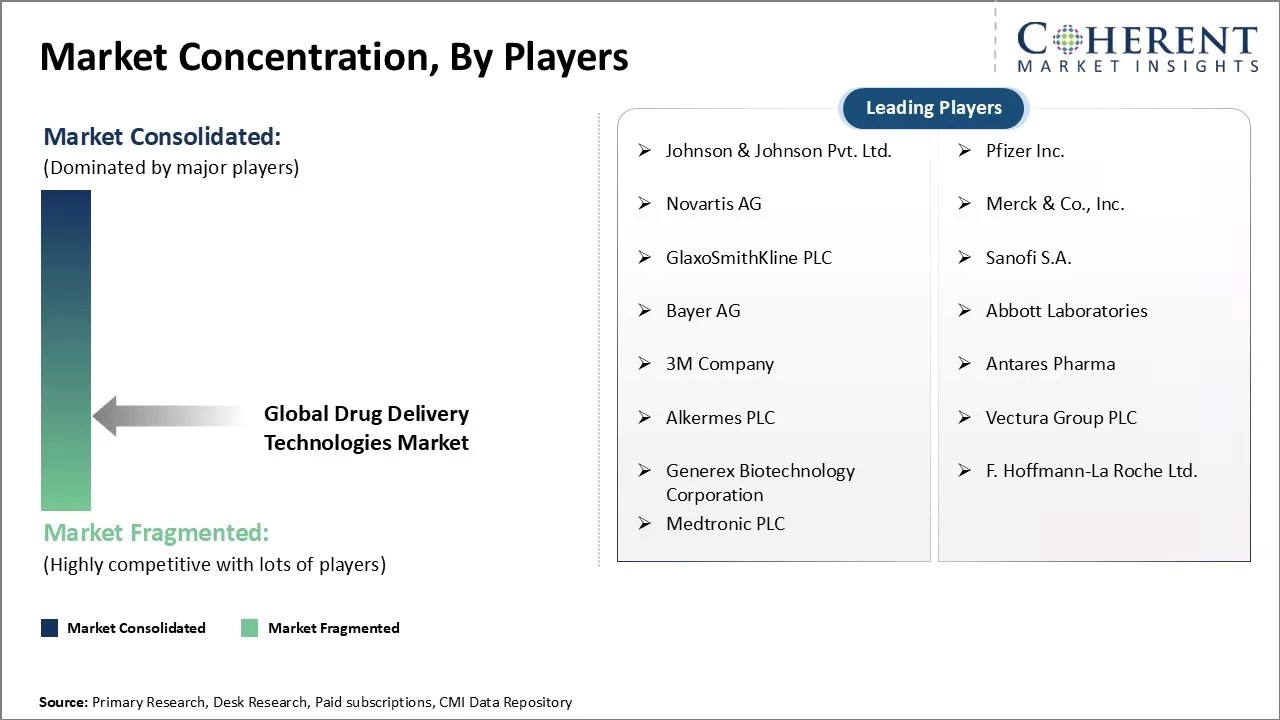
| Companies covered: | Johnson & Johnson Pvt. Ltd., Pfizer Inc., Novartis AG, Merck & Co., Inc., GlaxoSmithKline PLC, Sanofi S.A., Bayer AG, Abbott Laboratories, 3M Company, Antares Pharma, Alkermes PLC, Vectura Group PLC, Generex Biotechnology Corporation, F. Hoffmann-La Roche Ltd., and Medtronic PLC | ||
| Growth Drivers: |
| ||
| Restraints & Challenges: |
| ||
Market Drivers
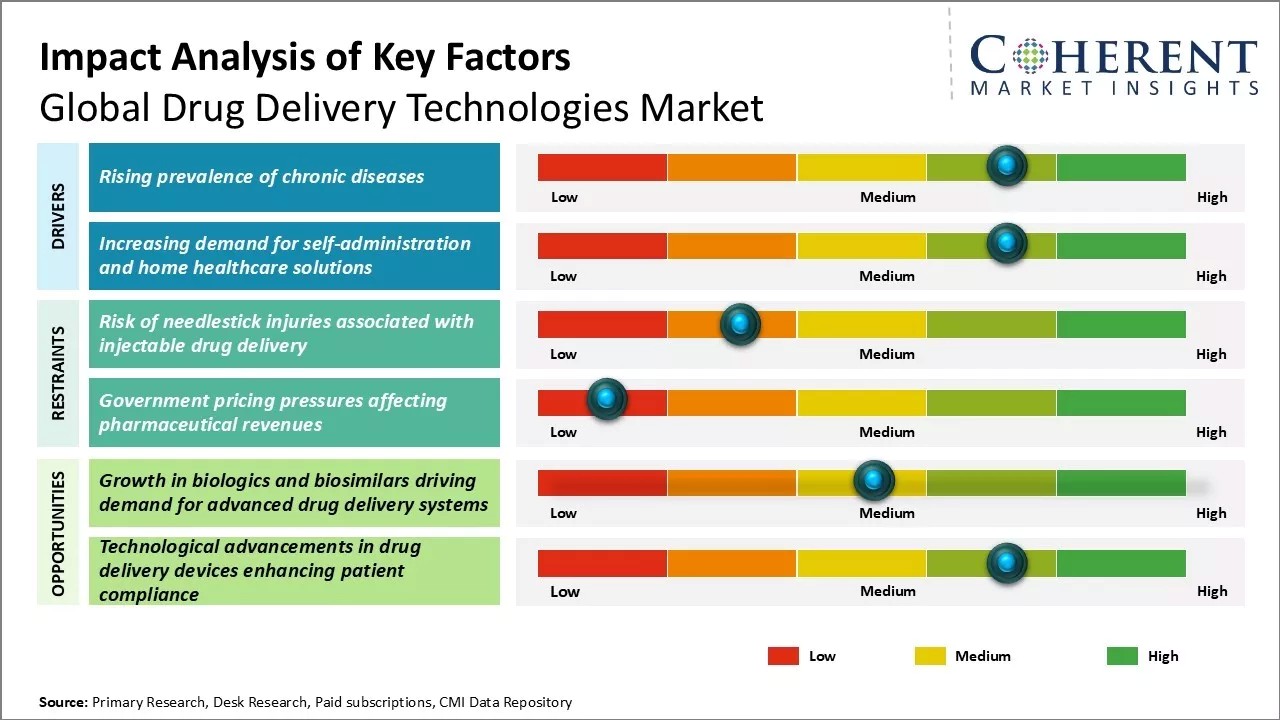
Rising Prevalence of Chronic Diseases
The incidence of chronic diseases has been steadily increasing worldwide. Conditions such as cancer, diabetes, and cardiovascular diseases are major contributors to global mortality and morbidity.
According to the World Health Organization (WHO), non-communicable diseases (NCDs) currently cause about 74% of all deaths globally. Projections suggest that chronic conditions may account for up to 86% of annual deaths by 2050.
Factors such as rising obesity, and air pollution, have further challenged health systems. These factors highlight the urgent need for innovative drug delivery solutions.
Drug Delivery Technologies Market Opportunity
Growth in Biologics and Biosimilars
The growing pipeline of biologics and biosimilars offers lucrative opportunities for drug delivery technologies market players. These medicines are driving demand for novel drug delivery technologies.
Biologics are usually administered through injectable routes but have limited shelf life and stability issues when stored at room temperature in traditional delivery forms like vials. This necessitates the need for advanced drug delivery systems such as pre-filled syringes, patch pumps, and auto-injectors that provide benefits of safe and convenient long-term storage and administration of biologics.
Drug Delivery Technologies Market Challenges
Risk of Needlestick Injuries Associated with Injectable Drug Delivery
The global drug delivery technologies market outlook remains positive. However, the risk of needlestick injuries associated with traditional injectable drug delivery such as syringes and needles might limit market growth to some extent during the forecast period.
Needlestick injuries pose severe health and safety risks to healthcare professionals by exposing them to blood-borne pathogens like hepatitis B, hepatitis C, and HIV. It has been estimated by the World Health Organization (WHO) in November 2023 that around 2 million needlestick injuries occur among healthcare workers globally each year.
Analyst Opinion (Expert Opinion)
- The global drug delivery technologies industry is set for steady growth, owing to rising prevalence of chronic diseases, an aging population, and advancements in biologic drugs. While developed regions like North America and Europe lead adoption, Asia Pacific is poised for the fastest growth due to increasing healthcare spending and patient populations.
- Oral drug delivery dominates the market, with transdermal and injectable technologies gaining traction for chronic disease management and vaccinations. However, regulatory challenges and intellectual property issues pose barriers. Continuous innovation and product development remain crucial for success in this evolving market.
- Long-acting injectables are gaining popularity due to their potential to improve patient adherence, especially in chronic disease management. For instance, Amneal Pharmaceuticals' recent FDA approval of enalidomide capsules for blood cancers highlights the growing acceptance of such therapies.
- The integration of drug delivery systems with digital health technologies is enhancing patient monitoring as well as treatment personalization. Collaborations like that between Aptar Digital Health and SHL Medical aim to improve the patient experience for self-injectable therapies.
- Nanotechnology is changing the way medicines are delivered by allowing drugs to reach exactly the cells or tissues they need to. A good example is AstraZeneca, which is creating tiny fat-based particles to deliver medicine directly inside cells.
Speak to the analyst
Want personalized insights?
Take the findings above to one of our principal consultants, or have the report rebuilt around the segments, geographies and competitors you actually track.
Market Segmentation
- Route of Administration Insights (Revenue, USD Bn, 2021 - 2033)
- Oral
- Parenteral
- Intramuscular
- Intravenous
- Intra-Arterial
- Subcutaneous
- Nasal Drug Delivery
- Ocular Drug Delivery
- Topical/Transdermal
- Therapeutic Area Insights (Revenue, USD Bn, 2021 - 2033)
- Oncology
- Cardiology
- Neurology
- Immunology
- Rheumatology
- Diabetes
- Others (Infectious Diseases, etc.)
- End User Insights (Revenue, USD Bn, 2021 - 2033)
- Ambulatory Surgical Clinics
- Diagnostic Centers
- Hospitals
- Homecare Settings
- Others
- Regional Insights (Revenue, USD Bn, 2021 - 2033)
- North America
- U.S.
- Canada
- Latin America
- Brazil
- Argentina
- Mexico
- Rest of Latin America
- Europe
- Germany
- U.K.
- Spain
- France
- Italy
- Russia
- Rest of Europe
- Asia Pacific
- China
- India
- Japan
- Australia
- South Korea
- ASEAN
- Rest of Asia Pacific
- Middle East
- GCC Countries
- Israel
- Rest of Middle East
- Africa
- South Africa
- North Africa
- Central Africa
- Key Players Insights
- Johnson & Johnson Pvt. Ltd.
- Pfizer Inc.
- Novartis AG
- Merck & Co., Inc.
- GlaxoSmithKline PLC
- Sanofi S.A.
- Bayer AG
- Abbott Laboratories
- 3M Company
- Antares Pharma
- Alkermes PLC
- Vectura Group PLC
- Generex Biotechnology Corporation
- F. Hoffmann-La Roche Ltd.
- Medtronic PLC
Sources
Primary Research interviews
- Interviews with pharmaceutical industry experts, drug delivery system developers, biotech researchers, and healthcare professionals.
Databases
- PubMed
- ClinicalTrials.gov
- FDA Database (Drugs@FDA)
- WHO Global Health Observatory
- European Medicines Agency (EMA) Database
Magazines
- Pharmaceutical Technology
- Drug Development & Delivery
- BioPharm International
- Nature Biotechnology (magazine section)
Journals
- Journal of Controlled Release
- International Journal of Pharmaceutics
- Advanced Drug Delivery Reviews
- Molecular Pharmaceutics
Newspapers
- The New York Times (Health Section)
- The Guardian (Science & Health)
- The Times of India (Health Section)
- Reuters Health News
Associations
- International Society for Pharmaceutical Engineering (ISPE)
- American Association of Pharmaceutical Scientists (AAPS)
- Parenteral Drug Association (PDA)
- European Federation for Pharmaceutical Sciences (EUFEPS)
Public Domain sources
- Government reports and white papers on drug delivery technologies
- WHO guidelines on biologics and biosimilars
- Patent filings from WIPO and USPTO
Proprietary Elements
- CMI Data Analytics Tool
- Proprietary CMI Existing Repository of information for last 8 years
Get access to 250+ pages report
Every segment, forecast, competitor profile and data table behind the analysis above — available for instant download.
- ESOMAR Member
- ISO 9001:2015 Certified
- D-U-N-S Registered
- GDPR & CCPA Compliant
Missing comfort of reading report in your local language? Find your preferred language:
Transform your Strategy with Exclusive Trending Reports
Frequently Asked Questions
The Drug Delivery Technologies Market is estimated to be valued at USD 56.31 Bn in 2026, and is expected to reach USD 133.30 Bn by 2033.
The CAGR of the Drug Delivery Technologies Market is projected to be 13.1% from 2026 to 2033.
Rising prevalence of chronic diseases and increasing demand for self-administration and home healthcare solutions are the major factors driving the growth of the global drug delivery technologies market.
Risk of needlestick injuries associated with injectable drug delivery and government pricing pressures affecting pharmaceutical revenues are the major factors hampering the growth of the global drug delivery technologies market.
Oral segment dominates the global drug delivery technologies industry.
Johnson & Johnson Pvt. Ltd., Pfizer Inc., Novartis AG, Merck & Co., Inc., GlaxoSmithKline PLC, Sanofi S.A., Bayer AG, Abbott Laboratories, 3M Company, Antares Pharma, Alkermes PLC, Vectura Group PLC, Generex Biotechnology Corporation, F. Hoffmann-La Roche Ltd., and Medtronic PLC are the major players.
North America is expected to lead the global drug delivery technologies market in 2026.