

Ambulatory Surgical Center Market Size & Forecast
Ambulatory Surgical Center Market is estimated to be valued at USD 109.04 Bn in 2026 and is expected to reach USD 147.39 Bn in 2033, exhibiting a compound annual growth rate (CAGR) of 4.4% from 2026 to 2033.
Key Takeaways
- Based on Center Type, the Multispecialty Center segment acquired the prominent market share of 66% in 2026, due to their ability to offer a wide range of surgical procedures under one roof.
- Based on Modality, the Hospital-Based Ambulatory Surgical Center segment is expected to lead the market with largest share in 2026, due to a combination of operational, clinical, and financial advantages.
- Based on Services, the Diagnostic Services segment leads the global ambulatory surgical center market, holding the greatest share in 2026, due to their efficiency, convenience, and ability to offer timely, cost-effective care.
- Based on Specialty Area, the Orthopedics segment is expected to dominate holding the substantial share of the market in 2026, driven by minimally invasive and cost-effective ability.
- Based on Region, North America is expected to lead the market, holding a share of 43. 7% in 2026. While, Asia Pacific is anticipated to be the fastest growing region during the forecast period in global ambulatory surgical center market.
Market Overview
The ambulatory surgical center market demand is steadily increasing due to the rising preference for cost-effective, patient-centric surgical care outside traditional hospital settings. Ambulatory Surgical Centers (ASCs) offer streamlined services, reduced hospital stays, and quicker recovery times, making them an attractive option for both patients and payers. The growing adoption of minimally invasive surgical procedures, supported by technological advancements in equipment and diagnostics, is significantly enhancing the capabilities of ASCs.
Furthermore, government policies and reimbursement models are increasingly favorable toward outpatient care, encouraging hospitals and private investors to expand their ASC networks. The market is also witnessing growth in single-specialty and multi-specialty ASCs, particularly in fields such as orthopedics, ophthalmology, and cardiovascular surgery. Additionally, the expansion of telehealth, digital integration, and robotic-assisted surgeries is helping ASCs offer high-quality care with greater operational efficiency. These factors collectively contribute to the strong upward trend in ambulatory surgical center market demand globally.
Current Events and their Impact on the Ambulatory Surgical Center Market
Current Event | Description and Its Impact |
Regulatory and Payment Policy Changes in Key Markets |
|
Market Expansion Drivers and Investment Trends |
|
Role of Artificial Intelligence (AI) in Ambulatory Surgical Center Market
The integration of artificial intelligence into ambulatory surgical center has significantly transforming the operations and clinical efficiency of Ambulatory Surgical Centers (ASCs) by enhancing decision-making, streamlining workflows, and improving patient outcomes. AI algorithms analyze patient histories, lab results, and imaging to predict surgical risks and determine eligibility for outpatient procedures. This ensures only low-risk patients are scheduled for ASC-based surgeries, reducing cancellations and complications. AI-powered scheduling tools automate appointment slots, align surgical teams, and optimize operating room usage, helping ASCs maximize throughput and reduce wait times. AI is automating coding, billing, and documentation tasks, reducing clerical errors and administrative burden, thereby improving compliance and reimbursement efficiency.
For instance, Oath Surgical has emerged from stealth with an innovative end‑to‑end model for ambulatory surgical centers (ASCs), centered on its proprietary AI-powered operating system, OathOS, launched alongside company-owned centers in Portland. The system integrates AI-assisted scribing, automated charting, and post-operative recovery management across the patient journey.
- Current Industry Events of 2026
- Market Size Estimation
- Regional Breakdown
- Competitive Landscape
- Customer Intelligence
- Segmental Analysis
- Pricing Analysis
- Key Market Drivers, Challenges & Future Trends
- Customized Insights Section
Segmental Insights
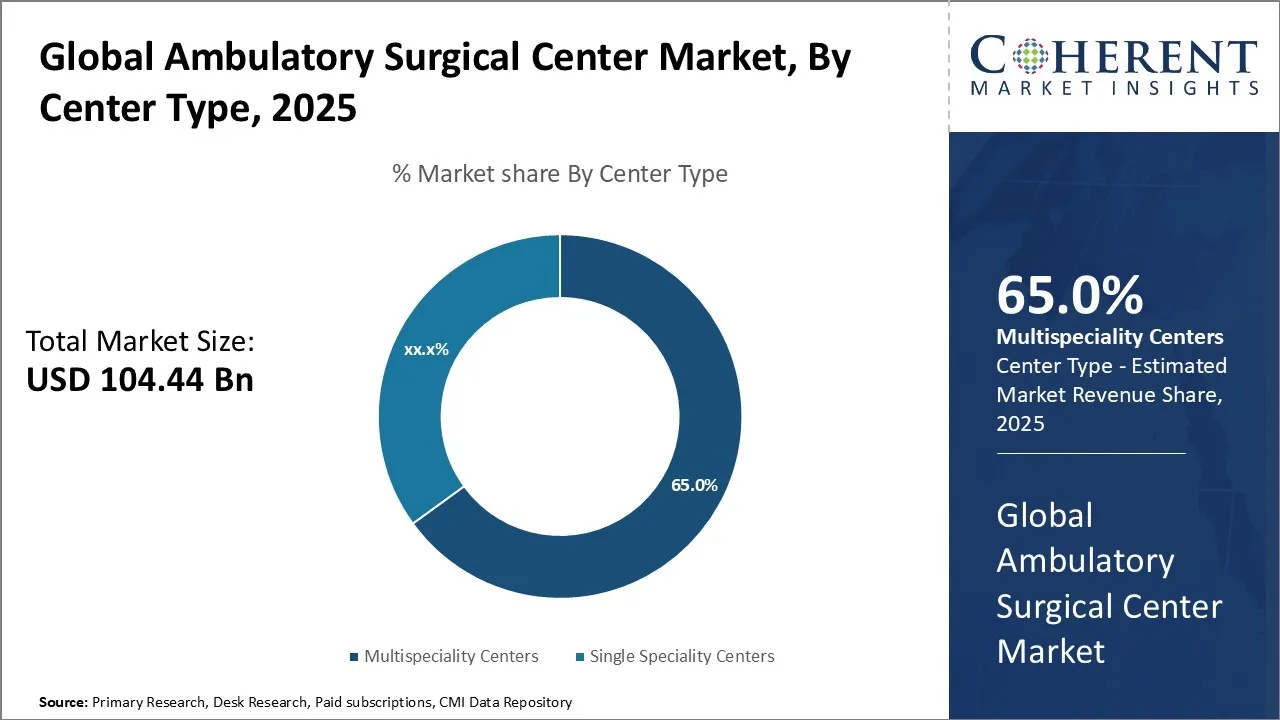
Ambulatory Surgical Center Market Insights, By Center Type: Multispecialty Centers Acquires the Largest Share owing to Wide Range of Surgical Procedures
In terms of center type, the multispecialty centers segment is estimated to hold 66.0% of the maket share in 2026, due to their ability to offer a wide range of surgical procedures under one roof, making them more efficient, profitable, and convenient for both patients and healthcare providers. Unlike single-specialty centers, multispecialty ASCs can accommodate various specialties such as orthopedics, gastroenterology, ophthalmology, urology, and general surgery, which allows for better resource utilization and higher patient throughput.
From a clinical perspective, they attract a larger and more diverse patient base, improving scheduling flexibility and maximizing the use of expensive surgical infrastructure and staff. For patients, these centers offer the advantage of consolidated care, reduced wait times, and continuity across procedures without needing multiple hospital visits. Additionally, insurers and government payers support them due to lower operational costs compared to hospital-based outpatient departments.
In March 2025, Compass Surgical Partners collaborated with the Orthopaedic Institute of North Texas and Lam Vascular & Associates to develop the “Frisco Station Surgery Center,” a multispecialty ambulatory surgery center (ASC). The 12,000‑sq-ft facility, opening in late 2026, will feature four operating rooms offering orthopedic, spine, podiatry, pain management, cardiovascular, endovascular and other services, with planned AAAHC accreditation.
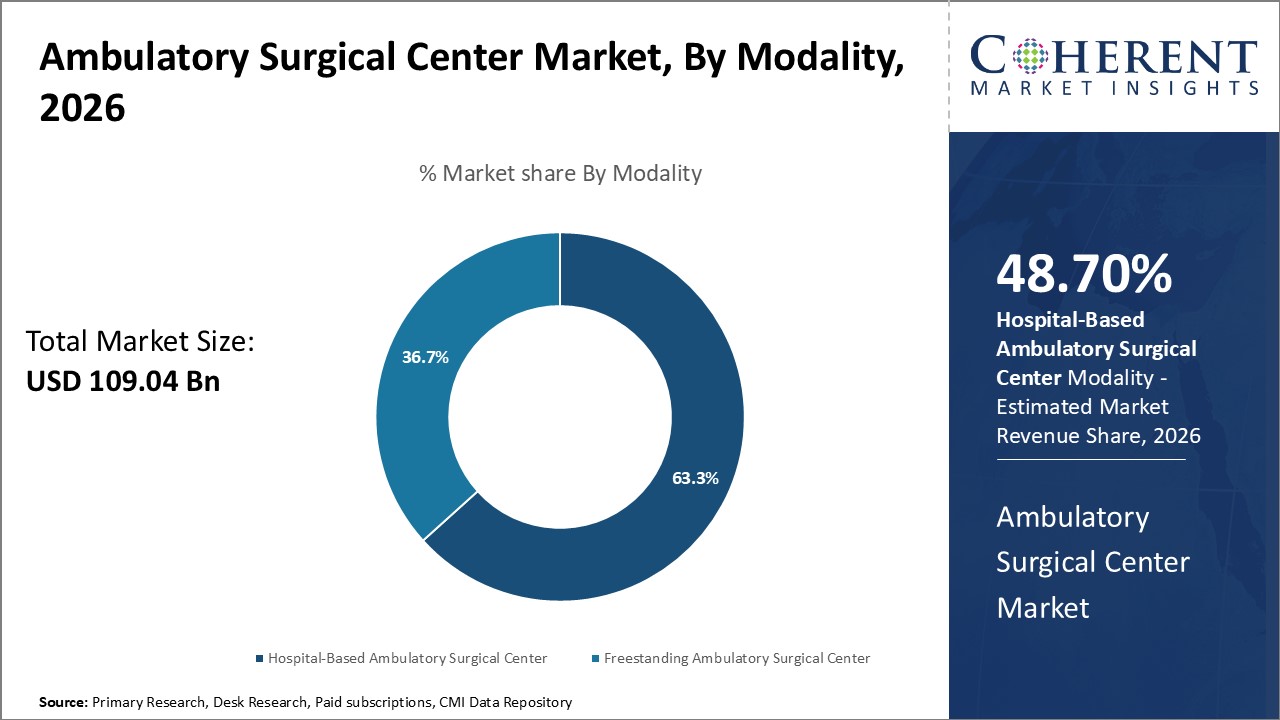
Ambulatory Surgical Center Market Insights, By Modality: Hospital-Based Ambulatory Surgical Center Acquires the dominant share Driven by Operational and Clinical Advantages
In terms of modality, the hospital-based ambulatory surgical center segment is estimated to hold the largest market share in 2026, due to a combination of operational, clinical, and financial advantages. Unlike freestanding ASCs, hospital-based centers benefit from seamless integration with inpatient care services, advanced diagnostic support, and emergency backup, which makes them more appealing for complex or higher-risk procedures. Hospitals are increasingly leveraging ASCs to offload low-acuity surgical volume from main facilities, helping reduce congestion, optimize resource use, and cut operational costs.
Moreover, hospital-based ASCs often enjoy stronger negotiating power with payers and insurers, allowing them to secure more favorable reimbursement rates. They also adhere to rigorous accreditation and compliance standards, which builds greater patient trust and physician confidence. As value-based care models grow, hospitals are positioning ASCs as strategic assets to improve outcomes, enhance patient experience, and expand service reach. These factors are driving significant growth in hospital-based ASC demand, particularly in urban and semi-urban healthcare ecosystems.
In April 2024, AdventHealth Daytona Beach inaugurated its new 60,000 sq ft medical office building and hospital-based ambulatory surgery center (ASC). The facility includes four operating rooms, two catheterization labs, and clinics for cardiac rehabilitation and surgical care. This $45.7 million joint venture with Meadows & Ohly reflects the growing trend toward bringing ASC services in-house for greater cost-efficiency and integrated patient care. Such developments are propelling the ambulatory surgical center market share.
Ambulatory Surgical Center Market Insights, By Services: Diagnostics Services acquires the dominant share driven by Efficiency and Convenience
In terms of services, the diagnostics services segment is estimated to hold the highest share of the market in 2026, due to their efficiency, convenience, and ability to offer timely, cost-effective care. These centers are designed for outpatient procedures, and diagnostic services such as endoscopy, colonoscopy, imaging, and biopsies are critical components of many pre-surgical and preventive care pathways. By offering diagnostics on-site, ASCs reduce the need for hospital visits, shorten waiting times, and streamline patient care, particularly for early disease detection and elective surgeries.
Moreover, the integration of diagnostics into ASCs aligns with the growing trend of value-based healthcare, where early, accurate diagnosis improves outcomes while reducing overall costs. Technological advancements such as portable imaging equipment, digital pathology, and real-time data sharing further enhance the efficiency of diagnostic services in these centers. As a result, ASCs are becoming a preferred choice for both patients and healthcare providers seeking accessible, high-quality diagnostic care outside traditional hospital systems.
For instance, New ambulatory center at Johnson Memorial Hospital’s Enfield campus includes diagnostic imaging, CT, X‑ray, mammography, bone density scans, and ultrasounds, plus four ORs and two procedure rooms, better addressing outpatient surgery and diagnostic demand
Ambulatory Surgical Center Market Insights, By Specialty Area: Orthopedic Acquires the Dominant Share Owing to the Minimally Invasive and Cost-Effective
In terms of specialty area, the orthopedic segment is expected to dominate the global ambulatory surgical center market with a greatest share in 2026. Orthopedic surgeries such as joint arthroscopy, ligament repair, and minor joint replacements are often minimally invasive, making them well-suited for outpatient settings. ASCs offer shorter wait times, lower procedural costs, and faster recovery, which aligns with patient expectations for elective orthopedic treatments. Additionally, advancements in surgical tools, anesthesia, and post-operative care have made it possible to safely perform many orthopedic interventions outside of hospitals.
Payers also favor orthopedic procedures in ASCs due to their cost-efficiency, often reimbursing at lower rates than hospital outpatient departments while maintaining high clinical outcomes. Surgeons benefit from greater control over scheduling and equipment, further encouraging a shift to ASC settings. As musculoskeletal conditions continue to rise, especially in aging populations, the ambulatory surgical center market growth for orthopedic care is expected to remain strong, driven by both clinical effectiveness and economic value.
In June 2025, Smith+Nephew and Standard Health teamed up to launch the UK’s first Orthopaedic Ambulatory Surgery Centre (ASC) in Poole, Dorset. The new facility will serve both NHS and private patients, offering advanced procedures such as rotator cuff repair, ACL reconstruction, and hip and knee replacements.
Regional Insights
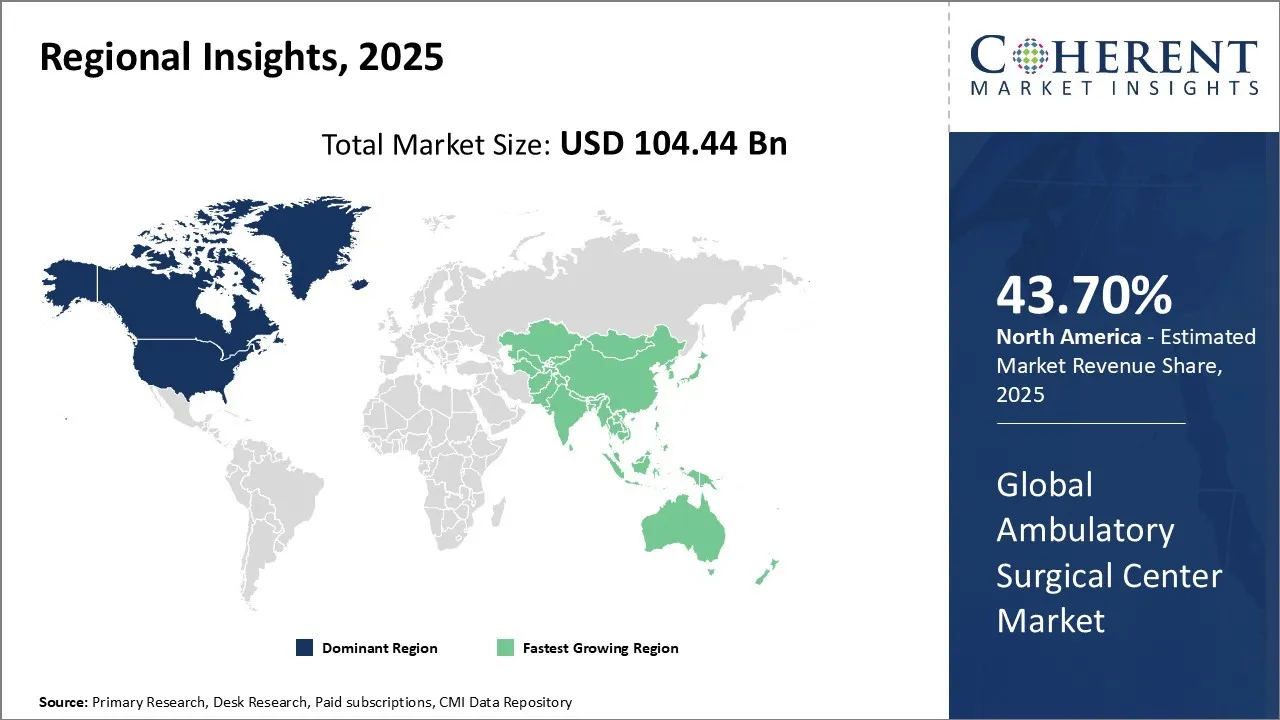
North America Ambulatory Surgical Center Market Analysis & Trends
North America dominates the global ambulatory surgical center market, holding an estimated share of 43.70% in 2026. The growth in North America market is primarily driven by a combination of healthcare system dynamics, regulatory support, and patient preferences. One of the primary drivers is the rising pressure to reduce healthcare costs while maintaining high-quality outcomes. ASCs offer a more affordable alternative to hospital-based surgeries, often delivering procedures at significantly lower costs. This cost-effectiveness is highly appealing to both public and private payers in the U.S. and Canada.
Additionally, the aging population in North America is increasing the need for surgical interventions, particularly in specialties like orthopedics, ophthalmology, and cardiovascular care—areas where ASCs are highly active. In April 2026, Pixee Medical, a leader in Augmented Reality (AR) navigation for orthopedic procedures, received FDA 510(k) clearance for its Knee+ NexSight system — an advanced AR guidance tool for total knee replacement surgeries. This next-generation solution is specifically developed to meet the rising demand within ambulatory surgical centers (ASCs).
Asia Pacific Ambulatory Surgical Center Market Analysis & Trends
The Asia Pacific region is expected to exhibit the fastest growth in the global ambulatory surgical center market due to several converging factors. The region is experiencing rapid urbanization and an expanding middle-class population, which increases the need for accessible, cost-effective surgical care. ASCs provide a convenient alternative to overcrowded public hospitals and expensive private hospitals, especially in countries like India, China, and Southeast Asian nations. Secondly, there is growing awareness and acceptance of day-care surgeries and minimally invasive procedures, which aligns with the ASC model.
Governments across the region are also actively promoting healthcare infrastructure development, including public-private partnerships to establish modern outpatient centers. In countries like India, policy reforms such as the Ayushman Bharat initiative are creating greater insurance coverage for procedures that can be performed in ASCs. Additionally, the shortage of inpatient beds and the increasing burden of chronic conditions, such as cataracts, orthopedic issues, and cardiovascular diseases are pushing healthcare providers to adopt more scalable and efficient outpatient solutions.
Technological advancements, particularly in robotic surgery, telemedicine, and diagnostic tools, are enabling ASCs in Asia Pacific to handle complex procedures with high precision. As a result, the ambulatory surgical center market demand in the region is poised for strong growth, driven by affordability, scalability, and healthcare modernization.
Ambulatory Surgical Center Market Outlook Country-Wise
The U.S. Ambulatory Surgical Center Market Trends
The United States leads the Ambulatory Surgical Center Market Demand due to its high hospital care costs, favorable insurance reimbursements, and well-established outpatient infrastructure. ASCs offer cost-effective, efficient alternatives to inpatient procedures, making them attractive to patients, providers, and insurers alike. Medicare and private payers support the shift toward outpatient care, especially for specialties like orthopedics, ophthalmology, gastroenterology, and pain management therapeutics. Additionally, advancements in minimally invasive surgery and anesthesia enable complex procedures to be safely performed in ASCs. Physician ownership models and integration with health systems further drive growth and innovation across the U.S. market.
India Ambulatory Surgical Center Market Trends
India is witnessing strong growth in the ambulatory surgical center market demand due to rapid urbanization, a growing middle class, and government-backed health schemes like Ayushman Bharat, which expand access to outpatient surgical care. ASCs offer cost-effective solutions for high-volume procedures such as cataract surgeries, ENT treatments, diagnostics, and basic orthopedics, helping to reduce pressure on overcrowded hospitals. Private players are increasingly investing in ASCs thanks to their lower setup costs and quicker returns. With growing digital integration and patient preference for quicker recovery, ASCs are becoming a key component of India’s evolving healthcare landscape.
Market Report Scope
Ambulatory Surgical Center Market Report Coverage
| Report Coverage | Details | ||
|---|---|---|---|
| Base Year: | 2025 | Market Size in 2026: | USD 109.04 Bn |
| Historical Data for: | 2020 To 2024 | Forecast Period: | 2026 To 2033 |
| Forecast Period 2026 to 2033 CAGR: | 4.4% | 2033 Value Projection: | USD 147.39 Bn |
| Geographies covered: |
| ||
| Segments covered: |
| ||
| Companies covered: | AmSurg Corp., HCA Holdings, Inc., Tenet Healthcare, Surgical Care Affiliates, Inc., Surgery Partners, Ambulatory Surgical Centers of America, Heathway Medical Group, Community Health Systems, Inc., and Vision Group Holdings | ||
| Growth Drivers: |
| ||
| Restraints & Challenges: |
| ||
Global Ambulatory Surgical Center Market Driver
- Increasing burden of chronic diseases to drive market growth
The burden of chronic diseases, the rise in surgical demand, and the trend towards ambulatory surgery centres are all driving the market expansion under study. According to an article published by the National Council on Aging research published in 2025, 93% of adults aged 65 and over have at least one health condition, and 79% are living with two or more. Additionally, the main market player’s strategic moves and the introduction of new products will further fuel market growth. According to the WHO statistics, it is anticipated that the increasing incidence rate of neurogenerative diseases such as Parkinson's disease, Alzheimer's disease, and dementia would accelerate market expansion over time.
Global Ambulatory Surgical Center Market Trends
- Purchase of ownership and management
Ownership and management shifts are reshaping the ambulatory surgical center market, with hospitals, private equity firms, and national ASC operators acquiring full or partial stakes in outpatient centers to expand reach and boost efficiency. A key example is Trinity Health of New England acquiring full ownership of its ASC at Johnson Memorial Hospital, enhancing service delivery and control.
This consolidation trend is driving up ambulatory surgical center market price, with physician-owned centers being valued highly, some fetching up to $275,000 per 1% ownership. These deals offer physicians capital liquidity and operational support while enabling investors to tap into the ASC model’s high margins and scalable structure.
Analyst Opinion (Expert Opinion)
- The Ambulatory Surgical Center market value continues to reflect a decisive shift in healthcare delivery models, with structural efficiency, cost competitiveness, and care quality improvements serving as its core differentiators.
- One of the most compelling value propositions of ASCs lies in procedure-level cost efficiency. Studies published by the U.S. Department of Health and Human Services indicate that Medicare payments for common surgeries performed at ASCs are approximately 45–60% lower compared to hospital outpatient departments. This price differential is not trivial, it is actively shaping payer behavior, incentivizing both public and private insurers to encourage migration of high-volume, low-acuity procedures to ASCs.
- Additionally, the case-mix complexity in ASCs has expanded significantly over the past five years. Procedures that were once deemed hospital-exclusive, such as total joint arthroplasty, spine interventions, and cardiovascular catheterizations are now routinely conducted in ASCs equipped with hybrid ORs and advanced anesthetic capabilities. For instance, over 50% of all joint replacement surgeries in the U.S. are expected to be performed in outpatient settings by 2026, with ASCs playing the lead role. This is not just a function of technological readiness, but a strong testament to the confidence of surgeons and patients in the ASC setting.
- From a payer mix standpoint, while commercial insurers dominate, the increasing inclusion of complex ASC procedures within Medicare’s approved lists reflects federal endorsement. The 2023 CMS Outpatient Prospective Payment System (OPPS) final rule added 11 surgical procedures to the ASC-covered list, further accelerating procedural migration.
- Operationally, ASCs have proven to be far more resilient and scalable. Physician ownership models, lean governance structures, and outpatient-focused supply chains enable higher throughput with lower overhead. A comparative benchmark shows ASC turnover times averaging 12–15 minutes, versus 30–50 minutes in hospitals, which materially impacts daily case volume and revenue capture.
Speak to the analyst
Want personalized insights?
Take the findings above to one of our principal consultants, or have the report rebuilt around the segments, geographies and competitors you actually track.
Key Developments
- In May 2025, Cleveland Clinic formed a joint venture with Regent Surgical to develop ambulatory surgery centers (ASCs) across U.S. markets, aiming to broaden access to streamlined, high-quality surgical care. The health system will hold majority ownership and branding rights in the new facilities.
- In March 2025, Distalmotion launched Northtowns Ambulatory Surgery Center (ASC) which has become the first US outpatient facility to acquire its DEXTER® Robotic Surgery System. It is designed for seamless integration, DEXTER features a compact, mobile footprint and a sterile console, enabling surgeons to transition between robotic and manual laparoscopy without workflow disruption.
- In September 2024, MedStar Health unveiled its newest outpatient Ambulatory Surgery Center (ASC) at 810 Bestgate Road in Annapolis, expanding its regional network to seven facilities. The 10,000‑square‑foot center offers a comprehensive suite of services including gastroenterology procedures (like colonoscopies), orthopedic surgery, vascular interventions, electrophysiology and pain management.
- In August 2024, ChristianaCare and Atlas Healthcare Partners announced formation of a joint venture to create a network of ambulatory surgery centers (ASCs) across Delaware, Maryland, New Jersey, and Pennsylvania. ASCs offer same‑day outpatient surgery with advanced technologies, lower costs, and high patient satisfaction. ChristianaCare currently operates facilities in Newark and Wilmington.
Market Segmentation
- Global Ambulatory Surgical Center Market, By Center Type (Revenue, USD Bn, 2021 - 2033)
- Single Specialty Centers
- Multispecialty Centers
- Global Ambulatory Surgical Center Market, By Modality (Revenue, USD Bn, 2021 - 2033)
- Hospital-Based Ambulatory Surgical Center
- Freestanding Ambulatory Surgical Center
- Global Ambulatory Surgical Center Market, By Services (Revenue, USD Bn, 2021 - 2033)
- Diagnostic Services
- Surgical Services
- Global Ambulatory Surgical Center Market, By Specialty Area (Revenue, USD Bn, 2021 - 2033)
- Gastroenterology
- Ophthalmology
- Orthopedics
- Pain/Neurology
- Urology
- Dermatology
- Others
- Global Ambulatory Surgical Center Market, By Region (Revenue, USD Bn, 2021 - 2033)
- North America
- U.S.
- Canada
- Latin America
- Brazil
- Argentina
- Mexico
- Rest of Latin America
- Europe
- Germany
- U.K.
- Spain
- France
- Italy
- Russia
- Rest of Europe
- Asia Pacific
- China
- India
- Japan
- Australia
- South Korea
- ASEAN
- Rest of Asia Pacific
- Middle East
- GCC Countries
- Israel
- Rest of Middle East
- Africa
- South Africa
- North Africa
- Central Africa
- North America
- Company Profiles
- AmSurg Corp.
- Company Highlights
- Products Portfolio
- Key Highlights
- Financial Performance
- Strategies
- HCA Holdings, Inc.
- Tenet Healthcare
- Surgical Care Affiliates, Inc.
- Surgery Partners
- Ambulatory Surgical Centers of America
- Heathway Medical Group
- Community Health Systems, Inc.
- Vision Group Holdings
- AmSurg Corp.
Sources
Primary Research Interviews from the following stakeholders
Stakeholders
- Interviews with administrators of ambulatory surgical centers, clinical directors, procurement managers, supply chain executives, payor network managers, revenue cycle leaders, outpatient surgical nurses, and healthcare IT coordinators across key markets.
Specific Stakeholders
- Directors of surgery and operations at leading ASCs
- Procurement and medical device sourcing heads at hospital chains with ASC affiliations
- Insurance contract managers and reimbursement officers at payor companies
- Clinical quality managers and compliance officers involved in outcome tracking and value-based care
- Healthcare IT system administrators deploying EHR and scheduling platforms at ASCs
- Representatives from device OEMs and suppliers serving ASCs
- Referral relationship managers and network development leads coordinating with private practices and health systems
Databases
- National Health Expenditure Database (CMS)
- U.S. Agency for Healthcare Research and Quality (AHRQ) – HCUP Ambulatory Surgery Data
- Organisation for Economic Co-operation and Development (OECD) Health Statistics
- India's Ministry of Health & Family Welfare – National Health Profile
- Eurostat – Healthcare and Ambulatory Services
- Australian Institute of Health and Welfare (AIHW) – Day Procedures Statistics
- Canadian Institute for Health Information (CIHI) – Ambulatory Care Data
- Central Bureau of Health Intelligence (CBHI), India
- Department of Health and Human Services (HHS) – Ambulatory Care Trends
Magazines
- Becker’s ASC Review
- Outpatient Surgery Magazine
- Healthcare Purchasing News
- Modern Healthcare
- Medical Device Network
- Health Management Technology
- Healthcare Design Magazine
- Hospital & Healthcare Management
Journals
- Journal of Ambulatory Care Management
- Health Affairs
- BMJ Open – Surgery & Ambulatory Care Section
- Journal of Patient Safety and Risk Management
- Journal of Healthcare Management
- International Journal for Quality in Health Care
- The American Journal of Surgery
- Journal of Nursing Care Quality
Newspapers
- The Wall Street Journal – Health Business Section
- The Economic Times – Healthcare Industry
- The Hindu Business Line – Medical Infrastructure
- Financial Times – Healthcare Delivery and Operations
- Mint – Hospitals and Health Tech
- Business Standard – Private Healthcare Segment
- Washington Post – U.S. Health Sector
- The Guardian – Global Health
Associations
- Ambulatory Surgery Center Association (ASCA)
- Federation of Indian Chambers of Commerce & Industry (FICCI) – Healthcare Services Wing
- Indian Association of Day Surgery (IADS)
- National Association for Healthcare Quality (NAHQ)
- Association for Professionals in Infection Control and Epidemiology (APIC)
- Health Information and Management Systems Society (HIMSS)
- Federation of Private Medical Practitioners of India (FPMPI)
- European Association for Ambulatory Surgery (EAAS)
Public Domain Sources
- Centers for Medicare & Medicaid Services (CMS)
- Ministry of Health and Family Welfare (India)
- U.S. Department of Health & Human Services (HHS)
- NITI Aayog – Healthcare Delivery and PPP Reports
- Reserve Bank of India – Sectoral Credit Deployment in Healthcare
- NHS Digital – Day Surgery Reports (UK)
- India Brand Equity Foundation (IBEF) – Healthcare Industry Insights
- World Health Organization (WHO) – Day Surgery & Primary Care Reports
- SEBI Filings and Annual Reports of ASC-Linked Hospital Chains
Proprietary Elements
- CMI Data Analytics Tool, and Proprietary CMI Existing Repository of information for last 8 years
Get access to 250+ pages report
Every segment, forecast, competitor profile and data table behind the analysis above — available for instant download.
- ESOMAR Member
- ISO 9001:2015 Certified
- D-U-N-S Registered
- GDPR & CCPA Compliant
Missing comfort of reading report in your local language? Find your preferred language:
Transform your Strategy with Exclusive Trending Reports
Frequently Asked Questions
The Ambulatory Surgical Center Market is estimated to be valued at USD 109.04 Bn in 2026, and is expected to reach USD 147.39 Bn by 2033.
The CAGR of the Ambulatory Surgical Center Market is projected to be 4.4% from 2026 to 2033.
Increasing burden of chronic diseases is expected to drive the market growth.
Orthopedics is the leading specialty area segment in the market.
Disappearance of out-of-network reimbursement is expected to hinder the market over the forecast period.
Major players operating in the market include AmSurg Corp., HCA Holdings, Inc., Tenet Healthcare, Surgical Care Affiliates, Inc., Surgery Partners, Ambulatory Surgical Centers of America, Heathway Medical Group, Community Health Systems, Inc., and Vision Group Holdings.
Ambulatory Surgical Centers (ASCs) average 15–30 minutes, significantly faster than hospitals, enhancing efficiency and increasing daily case volume.