

Beta Catenin Market Size and Share Analysis: (2026 - 2033)
The beta catenin market was valued at USD 3,594 Mn in 2026 and is forecast to reach a value of USD 6,822 Mn by 2033 at a CAGR of 11.2% between 2026 and 2033.
Key Takeaways
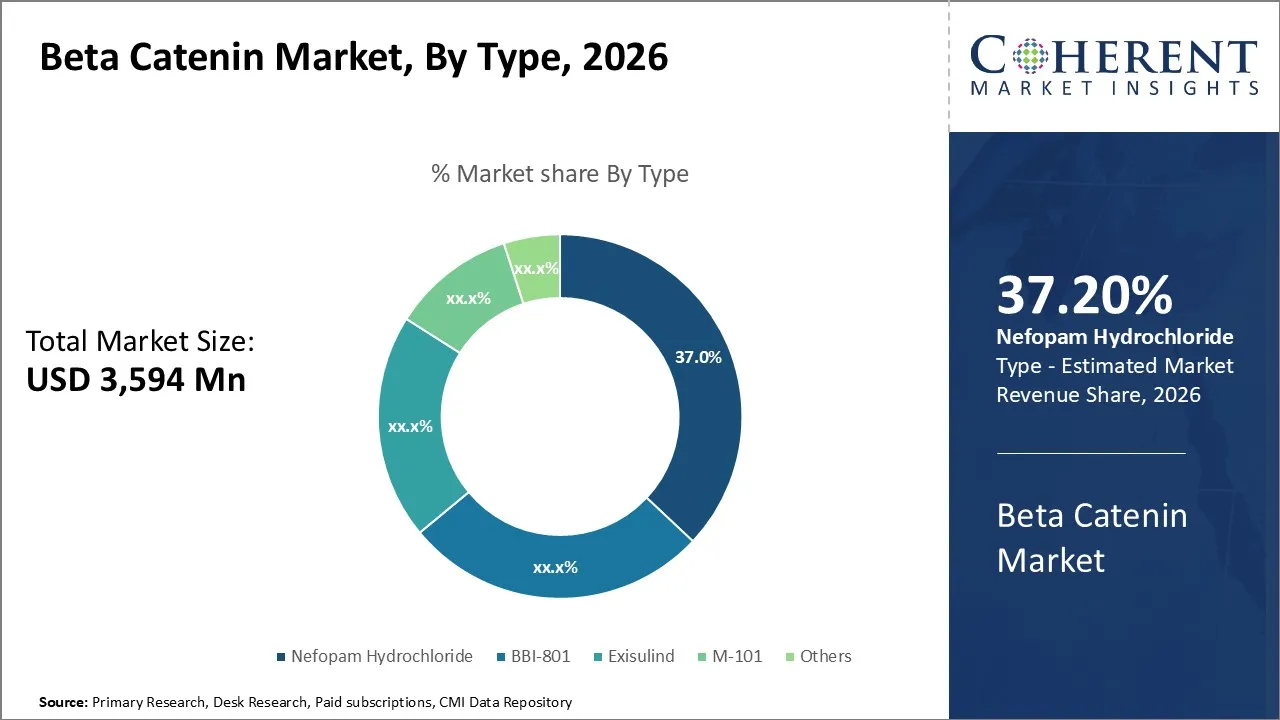
- Based on type, the Nefopam Hydrochloride segment is expected to hold 37.2% share of the market in 2026.
- Based on application, the oncology segment is projected to account for 60% share of the market in 2026.
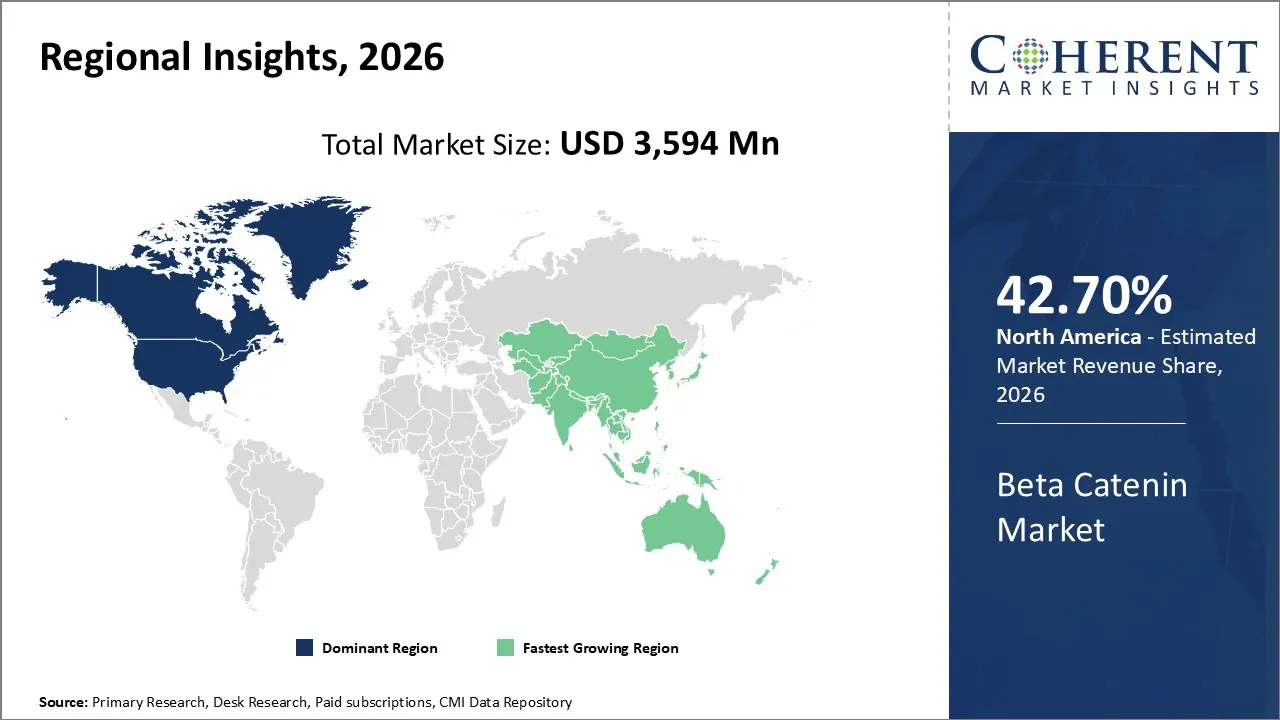
- Based on Region, North America is set to lead the Beta Catenin market with 42.7% share in 2026. While, Asia Pacific is anticipated to have the fastest growing region.
Market Overview
Β-catenin is a multifunctional protein that is essential for preserving physiological homeostasis. A variety of illnesses, including cancer, are caused by its aberrantly high expression. The human equivalent of the drosophila armadillo gene is called β-catenin. It serves as an adapter protein for intracellular adhesion as well as a transcriptional co-regulator. Factors such as increase in the number of genetic disorders & increase in approval of gene therapies are expected to drive the market growth over the forecast period.
Current Events and their Impacts on the Beta Catenin Market
Current Event | Description and its Impact |
Advances in Clinical Development of Beta-Catenin Inhibitors |
|
Technological and AI-Driven Drug Discovery Platforms |
|
Segmental Insights
- Current Industry Events of 2026
- Market Size Estimation
- Regional Breakdown
- Competitive Landscape
- Customer Intelligence
- Segmental Analysis
- Pricing Analysis
- Key Market Drivers, Challenges & Future Trends
- Customized Insights Section
Beta Catenin Market Insights, By Type - Nefopam Hydrochloride represent the largest share, because it’s the most widely used or the most commercially available compound
In terms of type, the Nefopam Hydrochloride segment is expected to lead the market with 37.20% share in 2026, owing to its well-established clinical applications and proven efficacy in modulating the beta-catenin pathway, which is crucial in several pathological conditions such as cancer, fibrosis, and neurodegenerative diseases. The prominence of Nefopam Hydrochloride can be primarily attributed to its high utilization as a non-opioid analgesic with additional advantages in modulating cellular signaling pathways, including beta-catenin.
For instance, various preclinical studies published by the National Institutes of Health (NIH) have shown Nefopam’s potential in lowering beta-catenin mediated oncogenic activity, thereby lowering tumor proliferation as well as invasiveness in colorectal and lung cancers, which are among the leading causes of cancer-related mortality worldwide.
Beta Catenin Market Insights, By Application - Oncology dominate the market
In terms of application, the oncology segment is expected to hold 60% share of the market in 2026. primarily owing to the pivotal role Beta Catenin plays in cancer biology and its emerging significance as both a diagnostic marker and therapeutic target. Beta Catenin, a major component of the Wnt signaling pathway, is critically involved in cell proliferation, differentiation, as well as survival, mechanisms that are usually dysregulated in oncogenic processes. The aberrant activation of Beta Catenin has been documented extensively in various cancers, particularly colorectal cancer, hepatocellular carcinoma, as well as certain forms of breast cancer, making oncology the lead application segment in this market landscape.
For instance, in October 2025, Parabilis Medicines announced that their drug FOG-001, the first to directly block β-catenin:TCF, shows early activity in several cancers fueled by the Wnt/β-catenin pathway, including both rare as well as common types. Their Helicon™ peptide platform also shows the ability to target cancer-driving proteins that were previously considered “undruggable,” highlighting strong potential for new cancer therapies.
Regional Insights
North America Beta Catenin Market Analysis & Trends
North America is expected to dominate the Beta Catenin market with 42.70% share in 2026, owing to its well-established healthcare infrastructure, advanced research capabilities, and a robust pipeline of clinical trials focusing on Wnt/β-catenin signaling pathway inhibitors. The United States, as a key market in North America, has been pivotal in driving innovations in targeted therapies involving beta-catenin due to major funding by government authorities as well as collaborations between biotech firms along with academic institutions.
For instance, in March 2026, Parabilis Medicines, a company developing new cancer treatments, announced that the FDA has given Orphan Drug status to zolucatetide for treating desmoid tumors. Zolucatetide is the first drug to directly block β-catenin:TCF, a major protein interaction that aids these tumors grow. The drug has also received Fast Track designation from the FDA to speed up its development.
Asia Pacific Beta Catenin Market Analysis & Trends
Asia Pacific is expected to exhibit the fastest growth, driven by multiple region-specific factors including a rapidly expanding biotechnology sector, rising funding by government authorities for precision medicine, and a rising burden of cancers associated with beta-catenin dysregulation. Countries such as China, Japan, South Korea, as well as India have intensified their focus on molecular signaling pathways as therapeutic targets, with beta-catenin being central due to its pivotal role in carcinogenesis and tissue regeneration.
For instance, in May 2025, PRISM BioLab, a Japan-based biotech company, developed E7386 in collaboration with Eisai. E7386 directly targets the β-catenin:CBP interaction, a key part of the Wnt/β-catenin pathway, making it an important therapy in the global beta-catenin market. The study results, including its combination with Lenvatinib, will be presented at the ASCO 2025 cancer conference.
Beta Catenin Market Outlook Country-Wise
The U.S. Beta Catenin Market Trends
The U.S. contributes the highest share in the Beta-Catenin market within the region owing to several key factors. Foremost among these is the extensive presence of leading biotechnology and pharmaceutical companies deeply engaged in oncology and regenerative medicine, two areas where Beta-Catenin signaling is critically researched.
For instance, in February 2026, Dewpoint Therapeutics has reached an important milestone by giving the first patient a dose of DPTX3186 in a Phase 1a/2a clinical trial. This new drug is the first of its kind to target beta-catenin in advanced solid tumors, especially gastric cancer. It uses a novel approach to block beta-catenin, a protein that drives many cancers as well as has been difficult to target with traditional drugs.
China Beta Catenin Market Trends
The China contributes the highest share in the Beta Catenin market owing to its vast and rapidly expanding biotechnology and pharmaceutical sectors. The country’s strong support by governmental authorities life sciences research, coupled with substantial investments in genomics and molecular biology, underpins its leadership in this space.
For instance, January 2025, DP Technology has successfully used its discovery platform RiDYMO to design a new cyclic peptide that targets β-catenin, a protein that has been very hard to treat, in just two months. The platform use AI, simulations, and fast lab testing to quickly develop potential drugs for difficult targets. This success shows that DP Technology’s approach could change how drugs are made for proteins that were previously considered “undruggable,” including those involved in cancer.
Market Report Scope
Beta Catenin Market Report Coverage
| Report Coverage | Details | ||
|---|---|---|---|
| Base Year: | 2025 | Market Size in 2026: | USD 3,594 Mn |
| Historical Data for: | 2020 To 2024 | Forecast Period: | 2026 To 2033 |
| Forecast Period 2026 to 2033 CAGR: | 11.2% | 2033 Value Projection: | USD 6,822 Mn |
| Geographies covered: |
| ||
| Segments covered: |
| ||
| Companies covered: | Boston Biomedical Inc, Dicerna Pharmaceuticals Inc., Marina Biotech Inc., Propanac Biopharma Inc, Warp Drive Bio Inc., prism pharma co ltd, , aileron therapeutics inc, MD2 Biosciences Inc, WntRx Pharmaceuticals Inc, Sapience Therapeutics Inc, and Venn Therapeutics LLC | ||
| Growth Drivers: |
| ||
| Restraints & Challenges: |
| ||
Beta Catenin Market Driver
Increasing prevalence of cancer and other degenerative diseases
The increasing prevalence of cancer and other degenerative diseases is a significant driver in the expansion of the Beta Catenin market, primarily because of Beta Catenin’s critical role in cellular signaling pathways linked to tumorigenesis and tissue degradation. Beta Catenin is a key protein in the Wnt signaling pathway, which regulates cell proliferation, differentiation, and apoptosis. Dysregulation of this protein has been implicated in various types of cancers such as colorectal, liver, and breast cancers, as well as in degenerative conditions like osteoporosis and fibrotic diseases.
Growth in targeted therapy and personalized medicine
The expansion of targeted therapy and personalized medicine has become a significant catalyst driving the growth of the Beta Catenin market, primarily due to the increasing recognition of Beta Catenin’s role in oncogenic pathways and its potential as a therapeutic target. Beta Catenin, a key player in the Wnt signaling pathway, is widely implicated in the development and progression of various cancers, including colorectal, liver, and ovarian cancers.
Beta Catenin Market Opportunity
Development of novel inhibitors and modulators targeting β-catenin
The development of novel inhibitors and modulators targeting β-catenin presents a significant opportunity in the expanding landscape of therapeutic innovation, primarily due to β-catenin’s pivotal role in the Wnt signaling pathway, which is crucial in cell proliferation, differentiation, and oncogenesis. Aberrant activation of β-catenin is implicated in numerous cancers, including colorectal, liver, and lung cancers, making it a highly attractive target for drug development. Traditional cancer treatments, such as chemotherapy and radiation, often come with severe side effects and variable efficacy, prompting the scientific community to focus on more precise molecular targets like β-catenin.
Analyst Opinion (Expert Opinion)
- The Beta Catenin market is poised for notable expansion due to its critical role in the Wnt signaling pathway, which is heavily implicated in various cancers and other diseases. High prevalence of cancer worldwide as well as growing investment in targeted therapies are major drivers fueling demand for Beta Catenin inhibitors as well as modulators.
- Additionally, advancements in molecular biology as well as drug discovery platforms are accelerating the recognition of novel therapeutics aimed at regulating Beta Catenin activity. However, challenges such as complex drug development processes, high research costs, along with limited clinical data on long-term safety are constraining rapid market utilization.
- Opportunities abound in personalized medicine, where Beta Catenin-targeted treatments can be tailored based on genetic profiles, enhancing efficacy as well as patient outcomes. Moreover, escalating research on Beta Catenin’s role beyond oncology, including in fibrosis as well as degenerative diseases, opens new opportunites for therapeutic applications.
- North America currently dominates the market owing to the presence of established biopharmaceutical companies, substantial healthcare R&D expenditure, as well as supportive regulatory frameworks. Meanwhile, the Asia-Pacific region is emerging as the fastest-growing market, driven by increasing healthcare infrastructure investment, rising awareness, and growing initiatives in biotechnology research.
Speak to the analyst
Want personalized insights?
Take the findings above to one of our principal consultants, or have the report rebuilt around the segments, geographies and competitors you actually track.
Global Beta Catenin Market: Key Developments
- In February 2026, Iterion Therapeutics announced that the first patient has received tegavivint in a clinical trial. Tegavivint is a new drug that blocks the Wnt/β-catenin pathway and is being tested with gemcitabine for patients with relapsed or hard-to-treat osteosarcoma. The trial is run at Children’s Healthcare of Atlanta, sponsored by Emory University, and supported by the Peach Bowl LegACy Fund, showing strong support from research, clinical, and charitable groups.
Market Segmentation
- By Type
- BBI-801,
- Exisulind
- M-101
- Nefopam Hydrochloride
- Others
- By Application
- Dermatology
- Oncology
- Genetic Disorder
- Others
- By Region
- North America
- U.S.
- Canada
- Latin America
- Brazil
- Argentina
- Mexico
- Rest of Latin America
- Europe
- Germany
- U.K.
- Spain
- France
- Italy
- Russia
- Rest of Europe
- Asia Pacific
- China
- India
- Japan
- Australia
- South Korea
- ASEAN
- Rest of Asia Pacific
- Middle East & Africa
- GCC Countries
- Israel
- Rest of Middle East & Africa
- North America
- Key Players
- Boston Biomedical Inc
- Dicerna Pharmaceuticals Inc.
- Marina Biotech Inc.
- Propanac Biopharma Inc
- Warp Drive Bio Inc.
- prism pharma co ltd.,
- aileron therapeutics inc.,
- MD2 Biosciences Inc.,
- WntRx Pharmaceuticals Inc.,
- Sapience Therapeutics Inc.,
- Venn Therapeutics LLC
Sources
Primary Research Interviews
- Key Opinion Leaders (KOLs) in Oncology Research
- Pharmaceutical R&D Heads
- Biotech Industry Experts
- Clinical Researchers specializing in Wnt/β-catenin Pathway
- Others
Databases
- IMS Health
- EvaluatePharma
- Others
Magazines
- Genetic Engineering & Biotechnology News
- BioCentury
- Pharmaceutical Executive
- Others
Journals
- Journal of Cellular Biochemistry
- Cancer Research
- Oncogene
- Others
Newspapers
- The Wall Street Journal (Health Section)
- Financial Times (Life Sciences)
- The New York Times (Health & Science)
- Others
Associations
- American Association for Cancer Research (AACR)
- International Society for Stem Cell Research (ISSCR)
- National Cancer Institute (NCI)
- Others
Public Domain Sources
- ClinicalTrials.gov
- World Health Organization (WHO) Reports
- U.S. Food & Drug Administration (FDA) Database
- Others
Proprietary Elements
- CMI Data Analytics Tool
- Proprietary CMI Existing Repository of Information for the Last 8 Years
Get access to 250+ pages report
Every segment, forecast, competitor profile and data table behind the analysis above — available for instant download.
- ESOMAR Member
- ISO 9001:2015 Certified
- D-U-N-S Registered
- GDPR & CCPA Compliant
Missing comfort of reading report in your local language? Find your preferred language:
Transform your Strategy with Exclusive Trending Reports
Frequently Asked Questions
The global Beta Catenin Market size was valued at USD 3,594 Mn in 2026 and is expected to reach USD 6,822 Mn in 2033.
Major players operating in the market include Boston Biomedical Inc, Dicerna Pharmaceuticals Inc., Marina Biotech Inc., Propanac Biopharma Inc, Warp Drive Bio Inc., prism pharma co ltd, , aileron therapeutics inc, MD2 Biosciences Inc, WntRx Pharmaceuticals Inc, Sapience Therapeutics Inc, and Venn Therapeutics LLC
Among type, the Nefopam Hydrochloride segment estimated significant revenue in 2026.
Factors such as increase in the number of genetic disorders & increase in approval of gene therapies are expected to drive the market growth over the forecast period.
The market is estimated to exhibit a CAGR of 11.2% till 2033.
Among region, North America is expected to witness significant growth over the forecast period.