

Muscular Dystrophy Treatment Market Size and Forecast — 2026-2033
The Muscular Dystrophy Treatment Market size is estimated to be valued at USD 5.22 billion in 2026 and is expected to reach USD 10.83 billion by 2033, exhibiting a compound annual growth rate (CAGR) of 11.0% from 2026 to 2033.
Muscular Dystrophy Treatment Market Trends
Muscular Dystrophy is characterized by a collection of muscle-wasting conditions. The disorder is caused by genetic mutations which interfere with the production of muscle protein dystrophin, necessary to build muscles. Muscular dystrophy is a genetic disease, consequently, the chance of an individual developing a disease increases with a history of muscular dystrophy in the family. The symptoms include shortening of muscles and tendons, the curvature of spine, weakening of heart muscles leading to cardiac problems, and breathing problems. The most common forms of muscular dystrophies include duchenne muscular dystrophy, becker muscular dystrophy, myotonic disease, congenital disease and oculopharyngeal muscular dystrophy. The cure for any form of muscular dystrophy is currently unspecified, but the symptoms can be relived through physical therapy, exercise, rehabilitative devices like a powered wheelchair, respiratory care and surgery.
Key Takeaways
The Gene Therapy segment dominates the treatment modality market with 39% market share due to robust clinical pipeline growth and high therapeutic efficacy.
Duchenne Muscular Dystrophy leads disease type segments holding 46% industry share attributed to prevalence and focused R&D investments.
North America maintains its dominance, holding over 40% regional market share thanks to advanced healthcare infrastructure and substantial R&D funding.
Asia Pacific is the fastest-growing region with a CAGR surpassing 12%, propelled by governmental initiatives enhancing rare disease treatment accessibility and increasing industry presence.
Muscular Dystrophy Treatment Market – Segmentation Analysis
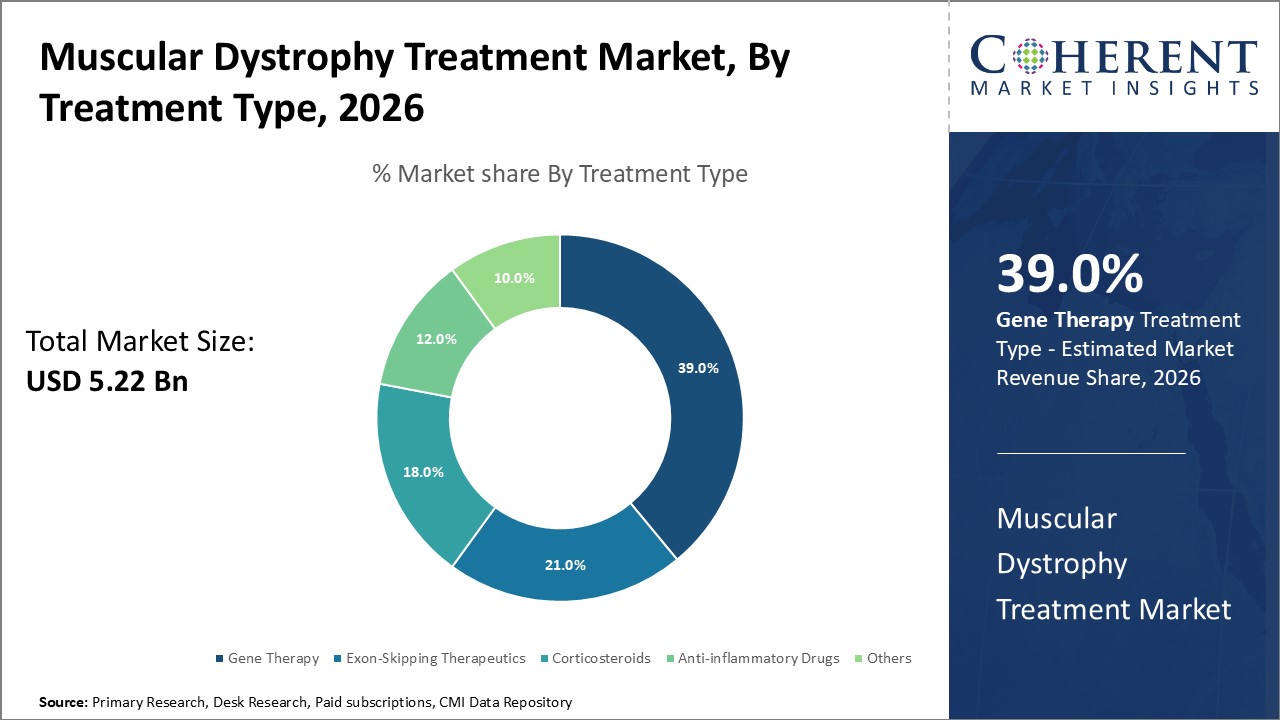
Muscular Dystrophy Treatment Market Insights, By Treatment Type
As it can treat underlying genetic reasons rather than just symptoms, gene therapy has the largest market share of any of these, accounting for 39% of the total. This category has grown at the fastest rate due to FDA approvals and the growing success of gene-editing techniques, making it the most profitable in terms of market revenue and forecast.
Muscular Dystrophy Treatment Market Insights, By Disease Type
Due to its prevalence and intense research, Duchenne Muscular Dystrophy dominates the illness segment with 45% of the market, generating significant R&D expenditures. Higher rates of innovation and commercial revenue are the results of the clinical focus on DMD.
Muscular Dystrophy Treatment Market Insights, By End User
Hospitals dominate this segment holding a 52% market share, attributed to centralized neuromuscular disorder treatment centres with multidisciplinary expertise enabling comprehensive muscular dystrophy management. Hospitals also lead in the adoption of advanced therapies owing to superior resources and patient volumes.
Muscular Dystrophy Treatment Market Trends
The Muscular Dystrophy Treatment market is transitioning from symptom management to curative approaches, primarily fueled by breakthroughs in CRISPR-Cas9 gene-editing and antisense oligonucleotide technologies.
In 2025, clinical trials showed a 31% higher efficacy rate for novel gene therapies targeting specific dystrophin gene mutations, signaling a substantial market shift.
Additionally, personalized medicine delivery using patient-specific genetic profiling is reshaping treatment paradigms, improving patient response rates.
Market revenue streams are diversifying with the advent of non-viral delivery systems, which offer safer and more scalable therapeutic options. These emerging trends underscore a fundamental shift in market dynamics, steering future growth and investment directions.
Muscular Dystrophy Treatment Market Insights, By Geography
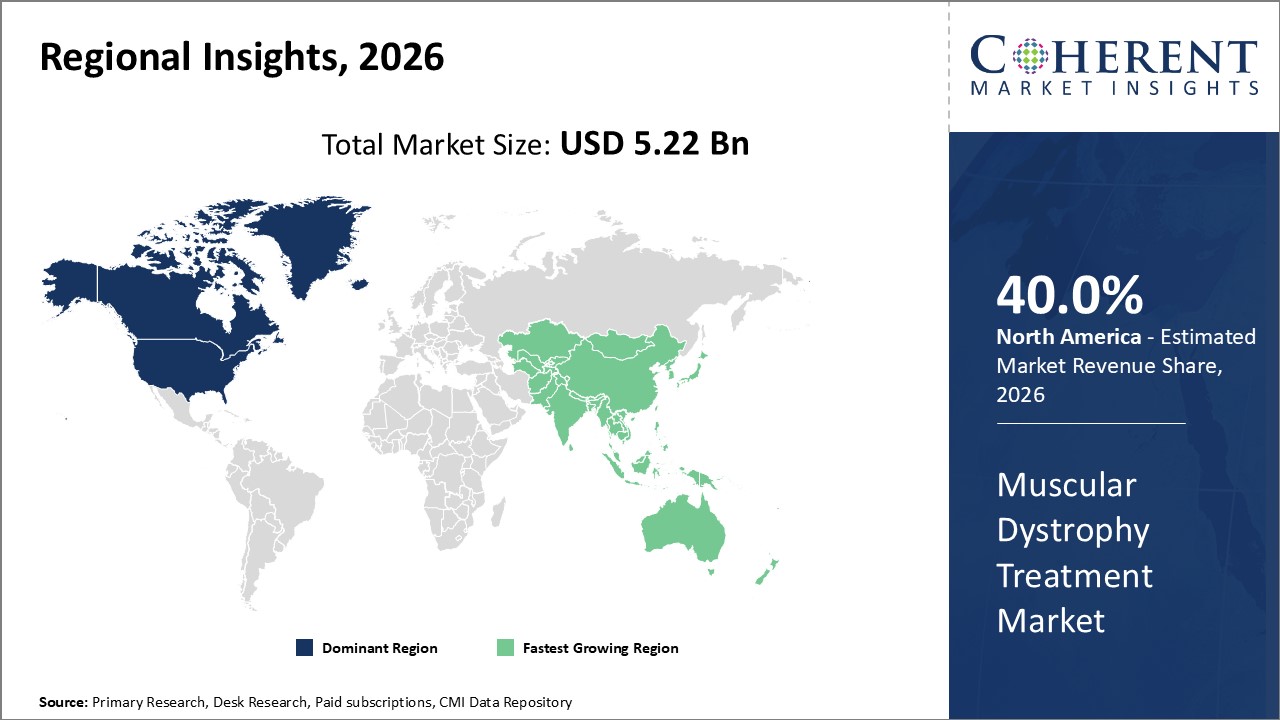
North America Muscular Dystrophy Treatment Market Analysis and Trends
Having more than 40% of the market, North America dominates the muscular dystrophy therapy industry is dominated. This is due to a robust healthcare system, a surge in biotech venture financing, and regulatory alignment that speeds up medication approvals. Businesses like Roche and Sarepta Therapeutics have a major presence in this area thanks to their extensive clinical trials and market penetration tactics.
Asia Pacific Muscular Dystrophy Treatment Market Analysis and Trends
Asia Pacific, on the other hand, is growing at the quickest rate, with a compound annual growth rate (CAGR) of over 12%. This rise is being driven by greater patient awareness, expanding healthcare facilities, and increased government financing for rare diseases. This trend, where local regulations supporting biotech investments and pricing reforms encourage rapid market expansion, is supported by notable contributions from companies growing in China and India.
Muscular Dystrophy Treatment Market Outlook for Key Countries
Market Analysis and Trends for Muscular Dystrophy Treatment in the United States
The United States is a major influence on global business trends. Large federal monies, including those from the NIH, which rose by 40% a year until 2025, were used to finance gene therapy research.
Market Analysis and Trends for Muscular Dystrophy Treatment in the India
Government initiatives like the National Rare Disease Policy, which was adopted in 2025 and improved patient access to medicines for muscular dystrophy, are driving rapid market evolution in India. Notwithstanding past infrastructural issues, growing partnerships with multinational corporations such as Roche and BioMarin have increased diagnostic capabilities and initiatives for cheap access.
Analyst Opinion
Genetic Therapy Expansion: The progressive adoption of gene therapies is a pivotal driver for market growth. In 2025, the approval rate of gene therapy candidates for muscular dystrophy increased by 35% compared to 2023, reflecting accelerated R&D success. Moreover, with pipeline products targeting different genetic mutations, production capacity for these therapies increased by approximately 28% in North America alone, bolstering market revenue significantly.
Increasing Diagnostic Accuracy: Enhanced diagnostic platforms using next-generation sequencing (NGS) have improved early detection by nearly 41% since 2022, leading to earlier treatment interventions. For instance, the FDA’s clearance of advanced diagnostic kits in 2025 enabled wider patient screening, directly impacting market size via expanded patient accessibility.
Rising Use Cases Across Age Groups: Market analysis indicates a rising number of pediatric and adult patients receiving muscular dystrophy treatments worldwide. In 2026, registries reported a 23% increase in treated adult patients, an emerging demand segment formerly underserved, positively influencing market share distribution.
Pricing Dynamics and Reimbursement Policies: Pricing strategies have evolved with some gene therapies reaching premium pricing models, averaging USD 750,000 per treatment course, backed by favorable reimbursement frameworks in regions such as Europe and North America. This has elevated market revenue despite challenges in affordability, demonstrated by a 15% growth in insured patient coverage from 2023 to 2026.
- Current Industry Events of 2026
- Market Size Estimation
- Regional Breakdown
- Competitive Landscape
- Customer Intelligence
- Segmental Analysis
- Pricing Analysis
- Key Market Drivers, Challenges & Future Trends
- Customized Insights Section
Market Scope
| Report Coverage | Details | ||
|---|---|---|---|
| Base Year: | 2025 | Market Size in 2026: | USD 5.22 billion |
| Historical Data for: | 2020 To 2024 | Forecast Period: | 2026 To 2033 |
| Forecast Period 2026 to 2033 CAGR: | 11.0% | 2033 Value Projection: | USD 10.83 billion |
| Geographies covered: |
| ||
| Segments covered: |
| ||
| Companies covered: | Sarepta Therapeutics, PTC Therapeutics, BioMarin Pharmaceutical, Roche Holding AG, Pfizer Inc., Novartis AG, Catalent Inc., Solid Biosciences, Audentes Therapeutics (Astellas Pharma subsidiary), and Summit Therapeutics. | ||
| Growth Drivers: |
| ||
Muscular Dystrophy Treatment Market Growth factors
The maturation of gene therapy technologies remains the foremost growth driver, with an increasing number of gene-editing clinical trials surpassing 60 active studies globally as of 2026, driving market forecast confidence. Regulatory support across key markets has streamlined the approval pathways, increasing cumulative market revenue by approximately 19% annually.
The expanding patient registries and awareness campaigns have significantly addressed market challenges related to diagnosis delays, pushing the adoption of advanced therapeutics.
Furthermore, healthcare infrastructure improvements in APAC nations like China and India have turbocharged treatment penetration, contributing to the lucrative regional market growth. Lastly, heightened focus on orphan drug designations and reimbursement enhancements have reduced market restraints, facilitating better access and outcomes.
Muscular Dystrophy Treatment Market Development
In April 2026, University College London (UCL) researchers have been granted a £1 million grant from LifeArc and Muscular Dystrophy UK with the goal of creating possible treatments for congenital muscular dystrophy (CMD). A class of hereditary muscular disorders known as CMD is typically apparent at birth or in the early stages of infancy. While there are many different symptoms, some of the more common ones are tight joints, delayed motor milestones, muscle weakness, and low muscle tone and floppiness.
In July 2026, The U.S. FDA announced that it is investigating the death of another patient who got Elevidys, a gene therapy for Duchenne muscular dystrophy (DMD), last month. Sarepta and its former U.S. partner Roche promptly acknowledged that the death occurred in a young boy in Brazil.
In April 2026, the Muscular Dystrophy Association (MDA) announced the start of its national campaign on ALS during ALS Awareness Month in May, celebrating a strong tradition that started in the 1950s when Eleanor Gehrig, the widow of baseball legend Lou Gehrig, was appointed National Campaign Chairman. Dr. Stanley Appel, Sunny Brous, Karen Toennis, RN, BSN, Brooke Eby, and other patient activists and professionals will be joining MDA to discuss their experiences.
Key Players
Sarepta Therapeutics
PTC Therapeutics
BioMarin Pharmaceutical
Roche Holding AG
Pfizer Inc.
Novartis AG
Catalent Inc.
Audentes Therapeutics (Astellas Pharma subsidiary)
Summit Therapeutics
A number of prominent market players have implemented aggressive growth tactics, such as pipeline expansions and strategic license deals.
For instance, by acquiring complementary gene-editing technology, Sarepta therapies was able to successfully expand its line of exon-skipping therapies, which led to a 20% increase in revenue annually in 2025.
By using customized pricing methods to access emerging countries like Brazil and India, Roche Holding AG expanded its geographic reach and helped the region's market share increase by 16% in only a single year.
Muscular Dystrophy Treatment Market Future Outlook
The future outlook for the Muscular Dystrophy Treatment Market is optimistic, driven by rapid advancements in gene therapy, molecular treatments, and personalized medicine. Increasing investments in research and development, coupled with growing awareness and early diagnosis, are expected to significantly enhance therapeutic options and patient outcomes.
The market is also benefiting from supportive regulatory frameworks and a robust pipeline of innovative therapies including exon-skipping and RNA-targeted treatments. Regions with advanced healthcare infrastructure, especially North America and Europe, are anticipated to lead market growth due to their focus on cutting-edge research and strategic collaborations. Additionally, the integration of digital health technologies and assistive care complements therapeutic advancements, collectively promising substantial progress in managing muscular dystrophy over the coming years.
Historical Analysis
According to the Centers for Disease Control and Prevention estimates in 2007, 349 out of 2.37 million males aged 5 to 24 years were reported to have Duchenne muscular dystrophy or Becker muscular dystrophy in the United States. North America was expected to dominate the global muscular dystrophy treatment market owing to the absence of marketed pharmacological therapies indicated to treat muscular dystrophy, rising prevalence of the disease and rising research and development for producing effective drugs. Europe was expected to boost the market share in the forecast period with the growing public awareness and increasing research activities.
According to the research conducted by the Karger Journal in 2014, the global prevalence for muscular dystrophies accounted between 19.8 and 25.1 per 100,000 persons every year with myotonic dystrophy (0.5–18.1 per 100,000), Duchenne muscular dystrophy (1.7–4.2) and facioscapulohumeral muscular dystrophy (3.2–4.6 per 100,000) being the most common types of disorders. The initial research phase of the therapies and ongoing clinical trials for the development of innovative products drove the global muscular dystrophy treatment market. Also, specific guidance for drug development for muscular dystrophy drugs published by the U.S. FDA in 2015 was expected to accelerate the new drug development for the treatment of the disorder.
Sources
Primary Research interviews:
Pediatric specialists
Orthopedic surgeons
Physiotherapists
Databases:
ClinicalTrials.gov
WHO Global Health Observatory
World Bank Data
Magazines:
The Scientist
Biopharm International
Drug Discovery & Development
Journals:
Journal of Neurology, Neurosurgery & Psychiatry
Muscle & Nerve
The Lancet Neurology
Newspapers:
The Times of India (Health section)
The Hindu (Science & Health section)
Financial Times (Healthcare section)
Associations:
Parent Project Muscular Dystrophy
CureDuchenne
World Duchenne Organization
Get access to 250+ pages report
Every segment, forecast, competitor profile and data table behind the analysis above — available for instant download.
- ESOMAR Member
- ISO 9001:2015 Certified
- D-U-N-S Registered
- GDPR & CCPA Compliant
Missing comfort of reading report in your local language? Find your preferred language:
Transform your Strategy with Exclusive Trending Reports
Frequently Asked Questions
The dominant players include Sarepta Therapeutics, BioMarin Pharmaceutical, Roche Holding AG, and PTC Therapeutics, recognized for their innovative gene and exon-skipping therapies.
The market is projected to nearly double from USD 5.22 billion in 2026 to USD 10.83 billion by 2033, driven by technological advances and diagnosis rates.
Hospitals remain the primary end user segment offering the greatest growth opportunity, supported by expanding neuromuscular treatment centers globally.
Market trends are set to evolve towards personalized gene therapies and safer delivery platforms, with a surge in orphan drug designations enhancing patient access.
The competitive landscape is innovation-driven with intense pipeline rivalry; main challenges include high treatment costs and reimbursement disparities across regions.
Market players commonly adopt licensing deals, geographic expansion, and price differentiation strategies to navigate regulatory and market access challenges effectively.