

Anti-Malarial Drugs Market Analysis & Forecast: 2026-2033
Anti-Malarial Drugs Market size is estimated to be valued at USD 1,132.0 Mn in 2026 and is expected to reach USD 1,561.3 Mn in 2033, exhibiting a compound annual growth rate (CAGR) of 4.7% from 2026 to 2033.
Key Takeaways
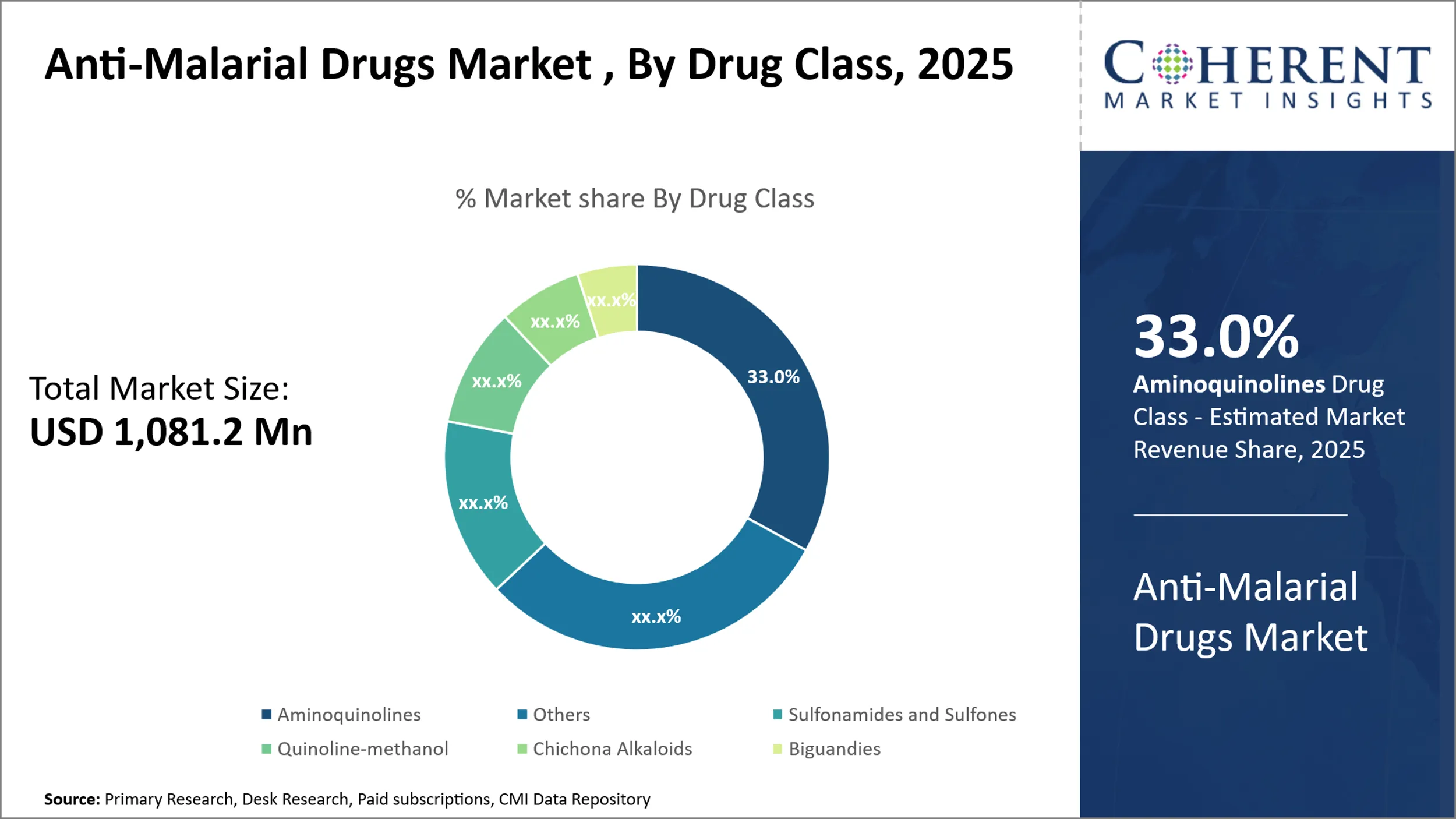
- By Drug Class, the Aminoquinolines segment is projected to account for the largest share of the Anti-Malarial Drugs Market at 34% in 2026, driven by their widespread use, established efficacy against Plasmodium species, and cost-effectiveness in endemic regions.
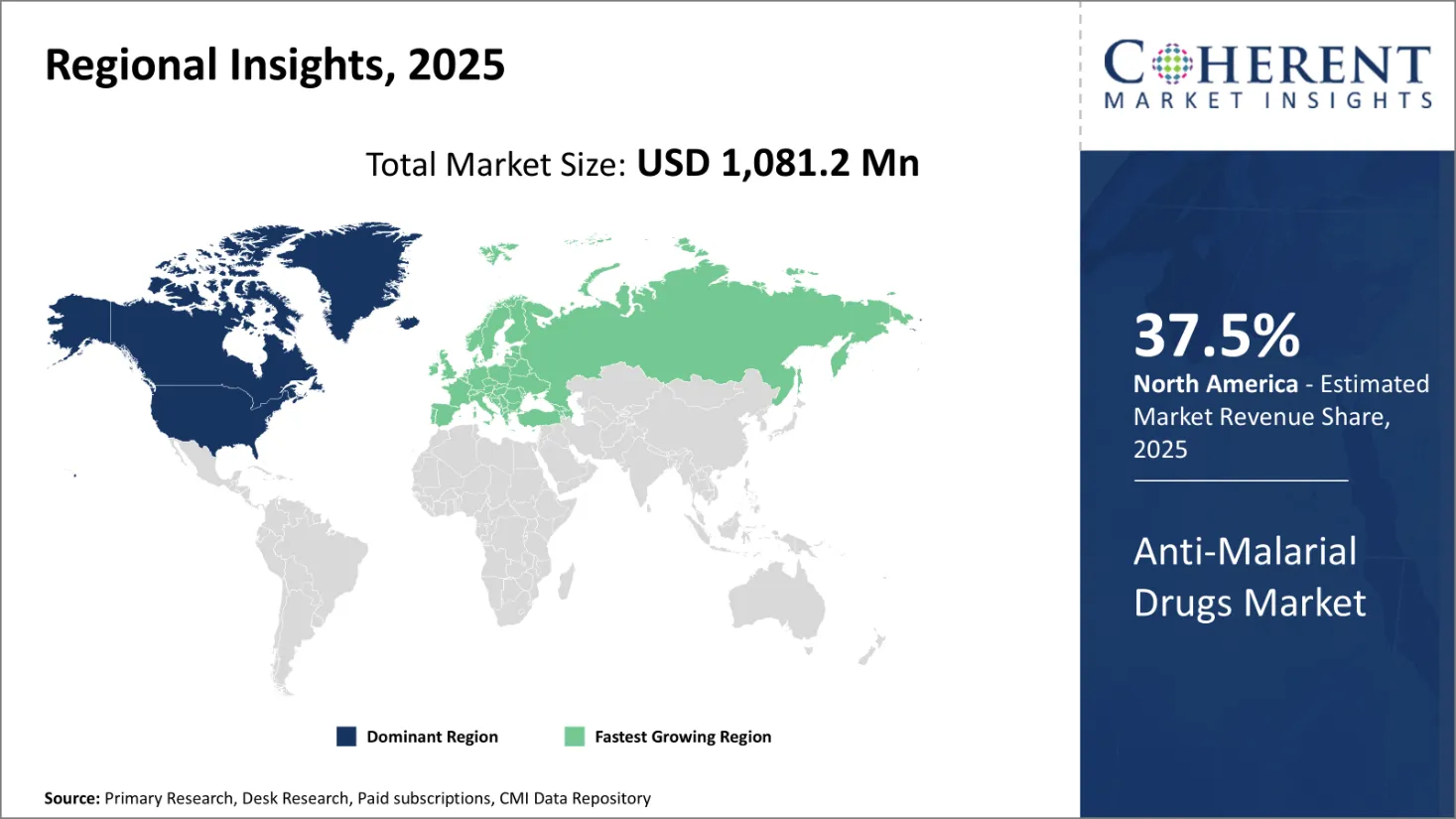
- By Region, North America is anticipated to dominate the Anti-Malarial Drugs Market outlook with a projected share of 37.5% in 2026, underpinned by robust research and development activities, favorable reimbursement frameworks, and increased focus on controlling imported malaria cases through advanced treatment protocols.
Market Overview
The Anti-Malarial Drugs Market forecast is witnessing steady growth, primarily driven by the ongoing prevalence of malaria in tropical and subtropical regions such as Sub-Saharan Africa and Southeast Asia. This persistent health burden continues to create strong demand for effective and accessible treatment options across affected populations.
Rising drug resistance has prompted increased research and development efforts, with initiatives like the WHO’s endorsement of triple artemisinin-based combination therapies (TACTs) addressing evolving treatment challenges. Public-private partnerships and global health programs are also playing a key role in expanding access to anti-malarial drugs, particularly in low- and middle-income countries.
Current Events and Its Impact on the Anti-Malarial Drugs Market
Event | Description and Impact |
Global Health Funding and Policy Shifts |
|
Technological and Medical Innovations |
|
Supply Chain and Geopolitical Disruptions |
|
Segmental Insights
- Current Industry Events of 2026
- Market Size Estimation
- Regional Breakdown
- Competitive Landscape
- Customer Intelligence
- Segmental Analysis
- Pricing Analysis
- Key Market Drivers, Challenges & Future Trends
- Customized Insights Section
Anti-Malarial Drugs Market Insights, By Drug Class
The aminoquinolines segment is projected to dominate the global anti-malarial drugs market growth with 34% share of the market in 2026, driven by its expanding application in treating not only malaria but also viral infections. Aminoquinolines are favored due to their broad-spectrum efficacy and safety profile.
Key market players are actively pursuing growth strategies such as research and development, strategic acquisitions, and partnerships, which are expected to further accelerate the adoption and availability of aminoquinoline-based treatments. This ongoing innovation and expansion in use cases underpin the segment’s anticipated market leadership.
Anti-Malarial Drugs Market Insights, By Route of Administration
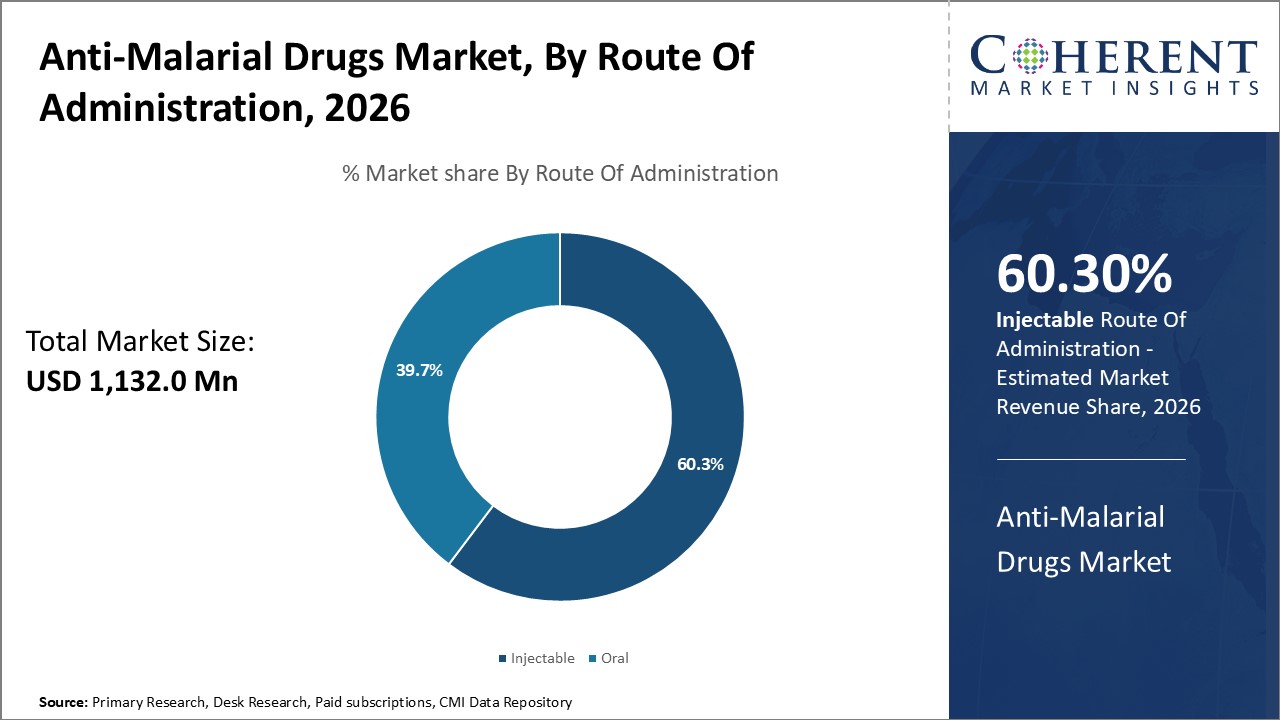
Among routes of administration, injectable anti-malarial drugs are set to capture the largest market share over the forecast period. This dominance is primarily attributed to the increasing prevalence of severe malaria cases, where rapid onset of action is critical. Injectable formulations ensure faster systemic availability compared to oral drugs, enabling timely and effective treatment outcomes.
The demand for injectable anti-malarials is also bolstered by key developments such as the partnership between FFF Enterprises Inc. and Amivas, Inc. to supply U.S. FDA-approved Artesunate for Injection, a lifesaving treatment for severe malaria.
Anti-Malarial Drugs Market Insights, By Distribution Channel
Hospital pharmacies are expected to maintain their dominance in the distribution channel segment, driven by the need for prescription-based anti-malarial drugs administered under medical supervision. Hospitals remain the primary point of care for severe malaria treatment, requiring access to injectable and advanced therapeutic options. The preference for hospital pharmacies reflects the critical role healthcare practitioners play in prescribing and managing anti-malarial therapies, ensuring effective and monitored patient outcomes.
Regional Insights
North America Anti-Malarial Drug Market Analysis and Trends
North America is projected to hold a significant 37.5% share of the global anti-malarial drug market trend in 2026. This strong position is driven by the presence of advanced healthcare infrastructure, leading pharmaceutical companies, and robust government initiatives targeting infectious disease control. The U.S., in particular, hosts several key players in anti-malarial drug development and distribution, supported by substantial investments in research and development.
The region benefits from a mature healthcare ecosystem with established clinical research networks and widespread access to treatment, which sustains steady demand for innovative anti-malarial therapies. Additionally, North American public health policies focusing on malaria prevention and control further contribute to the market’s stability and growth potential.
Asia Pacific Anti-Malarial Drug Market Analysis and Trends
Asia Pacific is expected to witness the fastest growth in the global anti-malarial drug market during the forecast period. This growth is fueled by the high prevalence of malaria across many countries in the region, including India, Indonesia, and parts of Southeast Asia, driving urgent demand for effective treatments.
Rapid improvements in healthcare infrastructure, rising government expenditure on disease control programs, and increased focus on research and development activities are catalyzing market expansion. The availability of cost-effective manufacturing capabilities and a growing base of pharmaceutical companies in countries like India and China also support Asia Pacific’s expanding role in the global anti-malarial drug supply chain.
Dominating Countries in the Anti-Malarial Drug Market
United States Anti-Malarial Drug Market Analysis and Trends
The U.S. remains the key market leader within North America, supported by its advanced pharmaceutical research ecosystem and strong regulatory framework. The presence of major drug manufacturers and biotechnology firms engaged in developing novel anti-malarial therapies underpins the country’s dominance. Ongoing government funding for infectious disease research and global health initiatives ensures sustained innovation and demand in this market segment.
India Anti-Malarial Drug Market Analysis and Trends
India is emerging as a critical growth market in the Asia Pacific anti-malarial drug landscape. High malaria incidence combined with expanding healthcare access and increased government focus on malaria eradication programs are primary growth drivers. India’s thriving pharmaceutical manufacturing sector, known for cost-effective production and increasing R&D investments, is boosting the development and availability of anti-malarial drugs domestically and internationally.
Market Report Scope
Anti-malarial Drugs Market Report Coverage
| Report Coverage | Details | ||
|---|---|---|---|
| Base Year: | 2025 | Market Size in 2026: | USD 1,132.0 Mn |
| Historical Data for: | 2020 To 2024 | Forecast Period: | 2026 To 2033 |
| Forecast Period 2026 to 2033 CAGR: | 4.7% | 2033 Value Projection: | USD 1,561.3 Mn |
| Geographies covered: |
| ||
| Segments covered: |
| ||
| Companies covered: | Major players operating in the global anti-malarial drugs market include Ipca Laboratories Ltd., Zydus Group, Merck KGaA, Pfizer Inc., GSK plc., Cipla Inc., Sun Pharmaceutical Industries Ltd., Novartis AG, Alvizia Health Care, Bayer AG, and F. Hoffmann-La Roche Ltd. | ||
| Growth Drivers: |
| ||
| Restraints & Challenges: |
| ||
Global Anti-malarial Drugs Market Driver: Increasing regional government funds and increasing prevalence of malaria
Increasing incidence of malaria is expected to boost growth of the global anti-malarial drugs market over the forecast period. Increasing regional government funds for the development and research can also propel the growth over the forecast period.
For instance, on April 24 2025, the U.S. and Mali worked together to provide malaria services that saved lives and supported communities. Investments in malaria prevention and treatment tools, along with the training and equipping of health workers, advanced Mali’s progress against the disease while strengthening the country’s health system.
The U.S. President’s Malaria Initiative (PMI) has partnered with Mali to fight malaria since, contributing US$ 364 million to date and US$ 25 million in FY 2022. PMI’s Annual Report, released, showcases how PMI is working with partner countries, such as Mali to help make sure all those at risk from malaria are protected and to support local communities to shape and lead activities to end malaria faster.
Global Anti-malarial Drugs Market Cross Sectional Analysis
Rising incidence of malaria in emerging economies is also expected to boost demand for anti-malarial drugs in African region. For instance, according to the World Health Organization (WHO) report 2021, there were an estimated 241 million cases of malaria worldwide in 2020, among them, the WHO African Region carried a significant share of the global malaria burden of 228 million cases. Therefore, the Middle East and Africa region are expected to have one of the largest shares in the total anti-malarial drugs market.
Global Anti-malarial Drugs Market Key Trends: Rising demand of research and development, increasing need to treat malaria patients and surging demand of combination therapy
Rising demand of malarial treatment, increasing need to treat malaria patients and surging demand of combination therapy, the anti-malarial drugs market is expected to experience considerable expansion in the African region.
For instance, in July 2022, MMV, a product development partnership in the field of antimalarial drug research and development, announced the start of ARCTIC (Assessing Radical Cure Treatment In routine Care), a feasibility study of a new Plasmodium vivax malaria treatment protocol.
This study is using single-dose tafenoquine in the Asia Pacific region and provide evidence to the Thai Ministry of Public Health on the potential role for these tools in supporting the country’s 2024 malaria elimination goal.
Global Anti-malarial Drugs Market - Key Players
Major players operating in the global anti-malarial drugs market include Ipca Laboratories Ltd., Zydus Group, Merck KGaA, Pfizer Inc., GSK plc., Cipla Inc., Sun Pharmaceutical Industries Ltd., Novartis AG, Alvizia Health Care, Bayer AG, and F. Hoffmann-La Roche Ltd.
Global Anti-malarial Drugs Market: Key Developments
- In May 2025, GlaxoSmithKline (GSK) received WHO prequalification for its single-dose anti-relapse drug Tafenoquine, which targets Plasmodium vivax. This development is expected to accelerate procurement and distribution across Asia-Pacific and Latin America.
- In March 2025, the Medicines for Malaria Venture (MMV) partnered with India’s Cipla to launch a new fixed-dose pediatric formulation of artemether-lumefantrine, designed for improved compliance and palatability among children under five in malaria-endemic regions.
- In November 2022, Novartis announced the successful Phase III trial results for its next-generation anti-malarial candidate KAF156 (ganaplacide), which showed high efficacy against drug-resistant Plasmodium falciparum The company plans to file for regulatory approval by Q4 2025.
Analyst Viewpoint
- The Anti-Malarial Drugs Market is poised for steady growth, driven by the high malaria burden in endemic regions, particularly in Africa, and increased government initiatives aimed at disease control and eradication.
- Rising awareness of early diagnosis and treatment, along with the growing adoption of artemisinin-based combination therapies (ACTs), is expected to fuel demand and open up innovation opportunities.
- Emergence of drug-resistant malaria strains remains a critical challenge, potentially undermining the effectiveness of current therapies and creating a need for continual R&D investment.
- High R&D costs and limited global funding for anti-malarial drug development may restrict the pipeline and affect long-term market sustainability.
Market Segmentation
- Global Anti-malarial Drugs Market, By Drug Class (Revenue, USD Mn, 2021 - 2033)
- Aminoquinolines
- Quinoline-methanol (4-quinolinemethanols)
- Cinchona Alkaloids
- Biguanides
- Sulfonamides and sulfones
- Others
- Global Anti-malarial Drugs Market By Route of Administration (Revenue, USD Mn, 2021 - 2033)
- Oral
- Injectable
- Global Anti-malarial Drugs Market By Distribution Channel (Revenue, USD Mn, 2021 - 2033)
- Hospital Pharmacies
- Retail Pharmacies
- Online Pharmacies
- Global Anti-malarial Drugs Market, By Region (Revenue, USD Mn, 2021 - 2033)
- North America
- U.S.
- Canada
- Latin America
- Brazil
- Mexico
- Argentina
- Rest of Latin America
- Europe
- Germany
- U.K.
- France
- Italy
- Spain
- Russia
- Rest of Europe
- Asia Pacific
- China
- India
- Japan
- Australia
- South Korea
- ASEAN
- Rest of Asia Pacific
- Middle East
- GCC
- Israel
- Rest of Middle East
- Africa
- South Africa
- Central Africa
- North Africa
- Company Profiles
- Ipca Laboratories Ltd.
- Zydus Group
- Merck KGaA
- Pfizer Inc.
- GSK plc.
- Cipla Inc.
- Sun Pharmaceutical Industries Ltd.
- Novartis AG
- Alvizia Health Care
- Bayer AG
- Hoffmann-La Roche Ltd
Sources
Primary Research Interviews
- Pharmaceutical industry executives
- Healthcare policy advisors (National Malaria Control Programs)
- Clinical research organization (CRO) representatives
- Hospital pharmacy procurement managers
- Others
Databases
- WHO Global Malaria Programme Database
- CDC Malaria Surveillance Data Repository
- World Malaria Report 2021–2025 Datasets
- Pharmaprojects Pipeline Database
- Others
Magazines
- Pharmaceutical Technology
- Pharmaceutical Executive
- The Lancet Global Health
- Others
Journals
- The American Journal of Tropical Medicine and Hygiene
- Malaria Journal
- Journal of Antimicrobial Chemotherapy
- Others
Newspapers
- The New York Times (Global Health Section)
- The Guardian (Pharmaceutical Innovations Coverage)
- Financial Times (Healthcare Market Trends)
- Others
Associations
- World Health Organization (WHO)
- Roll Back Malaria (RBM) Partnership
- Medicines for Malaria Venture (MMV)
- Others
Public Domain Sources
- WHO Malaria Reports (2018–2025)
- CDC Malaria Treatment Guidelines
- World Bank Malaria Funding Statistics
- ClinicalTrials.gov (Malaria Therapy Trials)
- Others
Proprietary Elements
- CMI Data Analytics Tool
- Proprietary CMI Existing Repository of Information for Last 8 Years
*Definition: Antimalarial drugs function by eliminating the parasite that has infected the red blood cells. Antimalarial medications come in a variety of structural variations, and each one kills the parasite in a different way. Antimalarial medications are used to prevent malaria as well as treat it. In addition to treating malaria, antimalarial medications are also used to treat rheumatoid arthritis, systemic lupus erythematosus, and arrhythmias (irregular heartbeats). Treatment of the acute blood stage infection is necessary for malaria caused by all malaria species. In addition, for infection due to Plasmodium ovale or Plasmodium vivax, terminal prophylaxis is required with a drug active against hypnozoites (which can remain dormant in the liver for months and, occasionally, years after the initial infection). The 4 major drug classes used to treat malaria include quinoline-related compounds, antifolates, artemisinin derivatives, and antimicrobials.
Get access to 250+ pages report
Every segment, forecast, competitor profile and data table behind the analysis above — available for instant download.
- ESOMAR Member
- ISO 9001:2015 Certified
- D-U-N-S Registered
- GDPR & CCPA Compliant
Missing comfort of reading report in your local language? Find your preferred language:
Transform your Strategy with Exclusive Trending Reports
Frequently Asked Questions
The Anti-Malarial Drugs Market size is estimated to be valued at USD 1,132.0 Mn in 2026, and is expected to reach USD 1,561.3 Mn by 2033.
The CAGR of the global Market is projected to be 4.7% from 2026 to 2033.
Increasing regional government funds and increasing prevalence of malaria is expected to drive the global market growth.
Aminoquinolines is the leading segment in the market.
Severe side effects associated with the drugs is expected to hinder the market over the forecast period.
Severe side effects associated with the drugs is expected to hinder the market over the forecast period.
Major players operating in the market include Ipca Laboratories Ltd., Zydus Group, Merck KGaA, Pfizer Inc., GSK plc., Cipla Inc., Sun Pharmaceutical Industries Ltd., Novartis AG, Alvizia Health Care, Bayer AG, and F. Hoffmann-La Roche Ltd.