

Intramuscular Vaccine Adjuvants Market Analysis & Forecast: 2026-2033
Intramuscular Vaccine Adjuvants Market is estimated to be valued at USD 845.4 Mn in 2026 and is expected to reach USD 1,348.6 Mn in 2033, exhibiting a compound annual growth rate (CAGR) of 6.9% from 2026 to 2033.
Key Takeaways
- Based on Type of Adjuvants, the Oil-Based Adjuvants segment dominates the global intramuscular vaccine adjuvants market, holding the largest share of the market in 2026, due to their proven ability to enhance immune responses effectively.
- Based on End User, the Pediatrics segment leads the market, contributing the highest share in 2026, as children require multiple vaccinations to build immunity against various infectious diseases.
- Based on Application, the Infectious Disease segment lead the market in global intramuscular vaccine adjuvants market with maximum share in 2026, driven by the increasing prevalence of infectious diseases worldwide.
- Based on Distribution Channels, the Hospitals segment dominates the overall market on account of their ability to handle large-scale immunization operations
- Based on Region, North America is expected to be the dominant region in the intramuscular vaccine adjuvants market in 2026. While, Asia Pacific is anticipated to be the fastest growing region during the forecast period.
Market Overview
The global intramuscular vaccine adjuvants market demand is growing due to rising need for more effective vaccines and increasing prevalence of infectious diseases. Intramuscular adjuvants, including oil-based, liposome-based, polymer-based, and mineral-based types, enhance immune response, which is crucial for infectious disease and cancer vaccines.
Current Events and their Impact on the Intramuscular Vaccine Adjuvants Market
Current Events | Description and its Impact |
Advances in Adjuvant Nanotechnology and Formulation |
|
Policy and Funding Shifts in Global Health Initiatives |
|
Pipeline Developments
- Novel Adjuvant Formulations: Researchers are developing new adjuvant formulations to improve the immunogenicity and safety profiles of vaccines. For instance, a study published in ScienceDirect discusses the establishment of a novel adjuvant screening system to identify adjuvants suitable for use in combination with intranasal vaccines from a list of existing approved drugs.
- Nanoemulsion Adjuvants: Advancements in nanoemulsion adjuvants are being explored to enhance vaccine delivery. A study published in PubMed Central presents the development of a newly formulated oil-in-water nanoemulsion adjuvant composed of squalene oil and α-tocopheryl polyethylene glycol 1000 succinate, aiming to improve the stability and efficacy of vaccines.
- Current Industry Events of 2026
- Market Size Estimation
- Regional Breakdown
- Competitive Landscape
- Customer Intelligence
- Segmental Analysis
- Pricing Analysis
- Key Market Drivers, Challenges & Future Trends
- Customized Insights Section
Patent Landscape
- Oil-in-Water Emulsions: The patent landscape for intramuscular vaccine adjuvants includes innovations in oil-in-water emulsions. For example, a patent describes an adjuvant composition comprising a metabolizable oil and an emulsifying agent, wherein the oil and the emulsifying agent are present in the form of an oil-in-water emulsion having oil droplets substantially all of which are less than 1 micron in diameter.
- Adjuvant Compositions: Other patents focus on adjuvant compositions that aim to enhance the immune response to vaccines. These innovations are crucial for developing vaccines with improved efficacy and safety profiles.
Segmental Insights
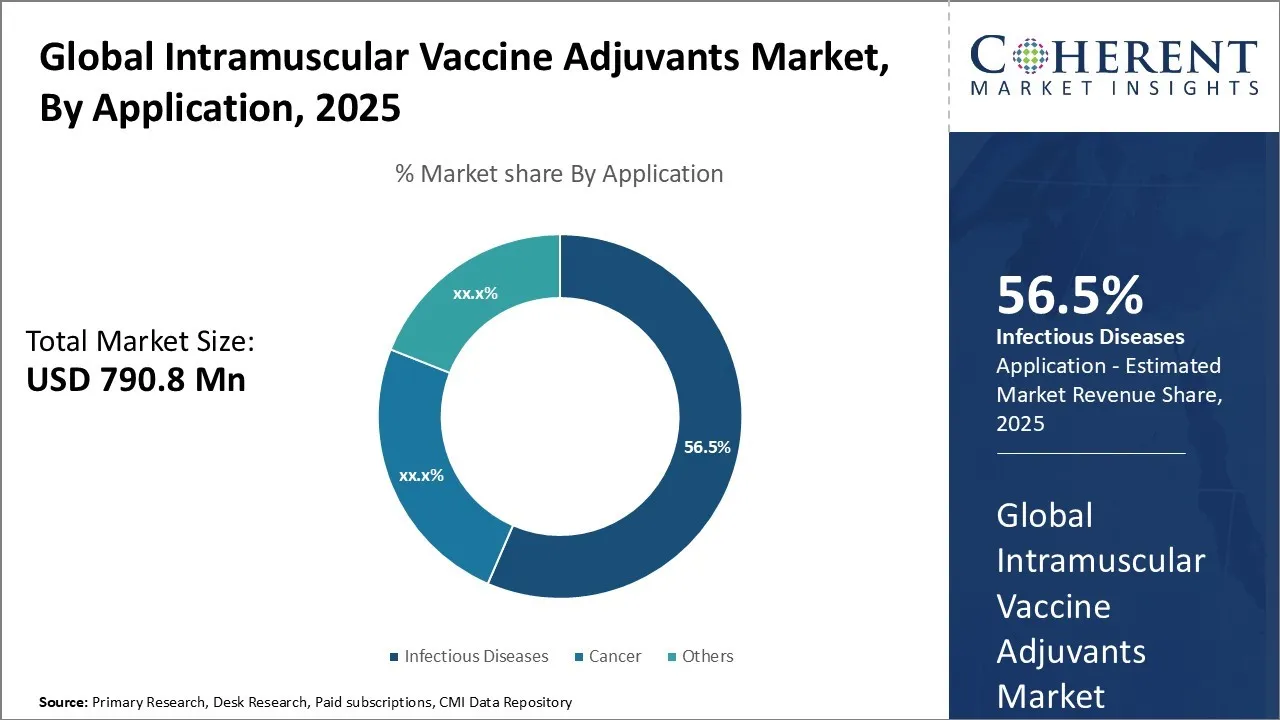
Intramuscular Vaccine Adjuvants Market Insights, By Application: Infectious disease holds the dominant share owing to the Increasing Prevalence of Infectious Diseases Worldwide
In terms of application, the infectious diseases segment is projected to hold the greatest share of the global intramuscular vaccine adjuvants market in 2026, driven by the increasing prevalence of infectious diseases worldwide. Vaccines often require adjuvants to enhance the body’s immune response, ensuring stronger and longer-lasting protection against pathogens. With the rise of diseases such as influenza, hepatitis, and emerging viral infections, there is a growing need for more effective vaccines. Adjuvants help improve immunogenicity, reduce the amount of antigen needed per dose, and can enable broader protection across populations with varying immune profiles.
For instance, in April 2025, a recent study published in ImmunoHorizons identified EmT4™, a synthetic vaccine adjuvant, as a promising candidate for enhancing tuberculosis (TB) vaccines. Developed by Dr. Rhea Coler and her team at Seattle Children’s Hospital, EmT4™ is a TLR4 agonist formulated in an oil-in-water emulsion. When combined with TB vaccine candidates ID93 or ID91, EmT4™ stimulated robust TH1-biased immune responses and significantly reduced bacterial burden in both standard and immunocompromised animal models.
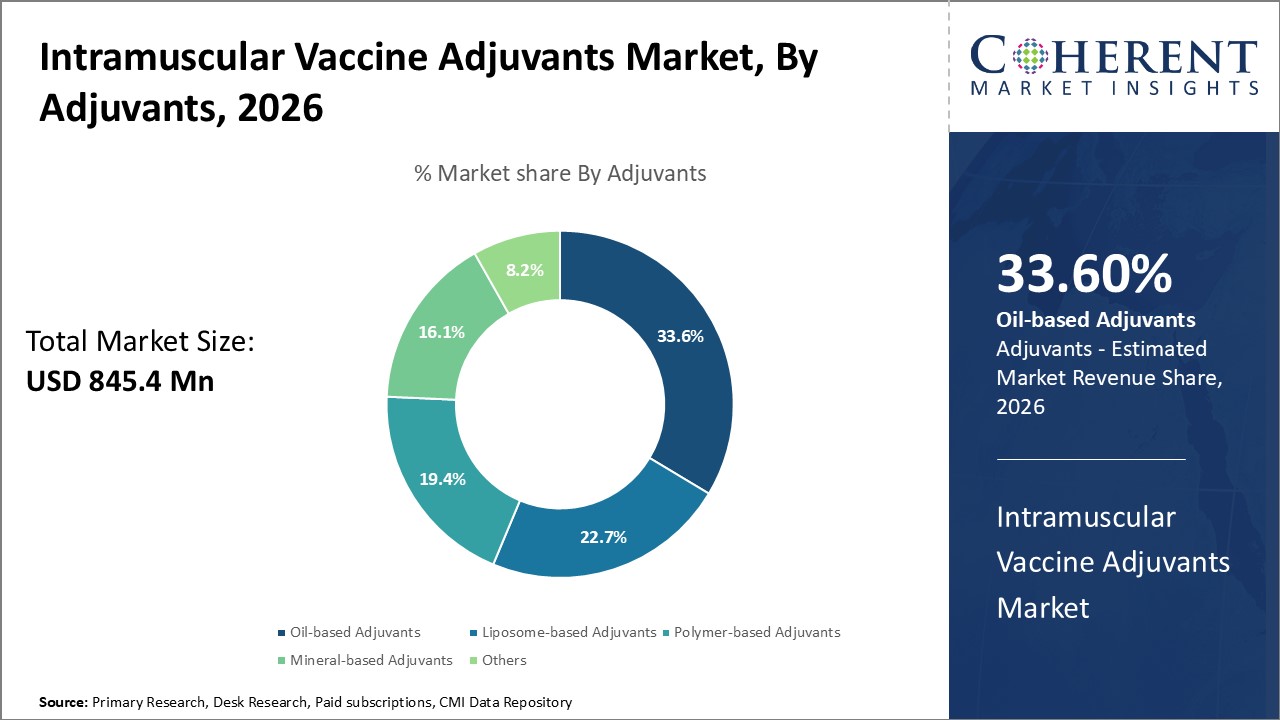
Intramuscular Vaccine Adjuvants Market Insights, By Adjuvants: Oil-Based Adjuvants Segment Acquires the largest share owing to ts Ability to Enhance Immune Responses Effectively
In terms of adjuvants, the oil-based adjuvants segment is expected to contribute the largest share of the market in 2026, due to their proven ability to enhance immune responses effectively. They work by forming a depot at the injection site, which allows for slow and sustained release of antigens, resulting in a stronger and longer-lasting immunity. Additionally, oil-based adjuvants such as MF59 and Freund’s adjuvant have an established safety profile and are widely used in vaccines for influenza, veterinary applications, and other infectious diseases. Their compatibility with various antigens, ease of formulation, and ability to boost both humoral and cellular immunity make them preferred over newer or less-tested adjuvant types. The combination of efficacy, reliability, and regulatory familiarity drives their strong demand in the market.
For instance, in February 2025, OZ Biosciences introduced SqualVax Vegetal, an oil-in-water emulsion adjuvant derived from plant-based phytosqualene sourced from premium European olive oil. This innovation offers a sustainable alternative to traditional squalene, typically extracted from animal sources. Designed to enhance immune responses, SqualVax Vegetal is fully biodegradable and free from animal-derived components.
Intramuscular Vaccine Adjuvants Market Insights, By End User: Pediatrics holds the Largest share
In terms of end user, the pediatrics segment is set to account for the highest share of the market in 2026, as children require multiple vaccinations to build immunity against various infectious diseases. Intramuscular adjuvants enhance the immune response, ensuring vaccines are more effective and provide longer-lasting protection, which is especially critical for infants and young children with developing immune systems. Additionally, pediatric vaccines often target highly contagious diseases such as influenza, measles, and whooping cough, where robust immune stimulation is essential.
For instance, in October 2023, Inimmune Corporation, a clinical-stage biotechnology firm, partnered with Boston Children’s Hospital to develop innovative small-molecule vaccine adjuvants aimed at enhancing immune responses. The collaboration focuses on a TLR7/8 agonist adjuvant to improve the efficacy of flu vaccines. This initiative is supported by a five-year, $9 million contract from the NIH/NIAID's Vaccine Adjuvant Development Program.
Intramuscular Vaccine Adjuvants Market Insights, By Distribution Channel: Hospitals Segment Acquires the largest share
In terms of distribution channel, the hospitals segment is expected to hold the enormous share of the market in 2026, as these adjuvants enhance vaccine efficacy, ensuring stronger and longer-lasting immune responses for patients. They are especially critical for immunizations against infectious diseases and certain cancers, where a robust immune response is essential. Hospitals also benefit from intramuscular adjuvants’ ability to reduce the number of vaccine doses needed, improving patient compliance and vaccination coverage. Additionally, with increasing vaccination campaigns, rising awareness of preventive healthcare, and the need to protect vulnerable populations such as children, the elderly, and immunocompromised patients, hospitals are increasingly procuring vaccines containing intramuscular adjuvants to optimize treatment outcomes and overall public health impact, further proliferating the intramuscular vaccine adjuvants market revenue.
For instance, in April 2025, the University of Minnesota’s Center for Infectious Disease Research and Policy (CIDRAP) launched the Vaccine Integrity Project to safeguard U.S. vaccine use amid rising misinformation and policy shifts. The initiative aims to ensure vaccines remain grounded in scientific evidence and free from external influence. The project will focus on developing evidence-based immunization recommendations, addressing misinformation, and fostering collaboration among healthcare providers, public health officials, and medical societies.
Regional Insights
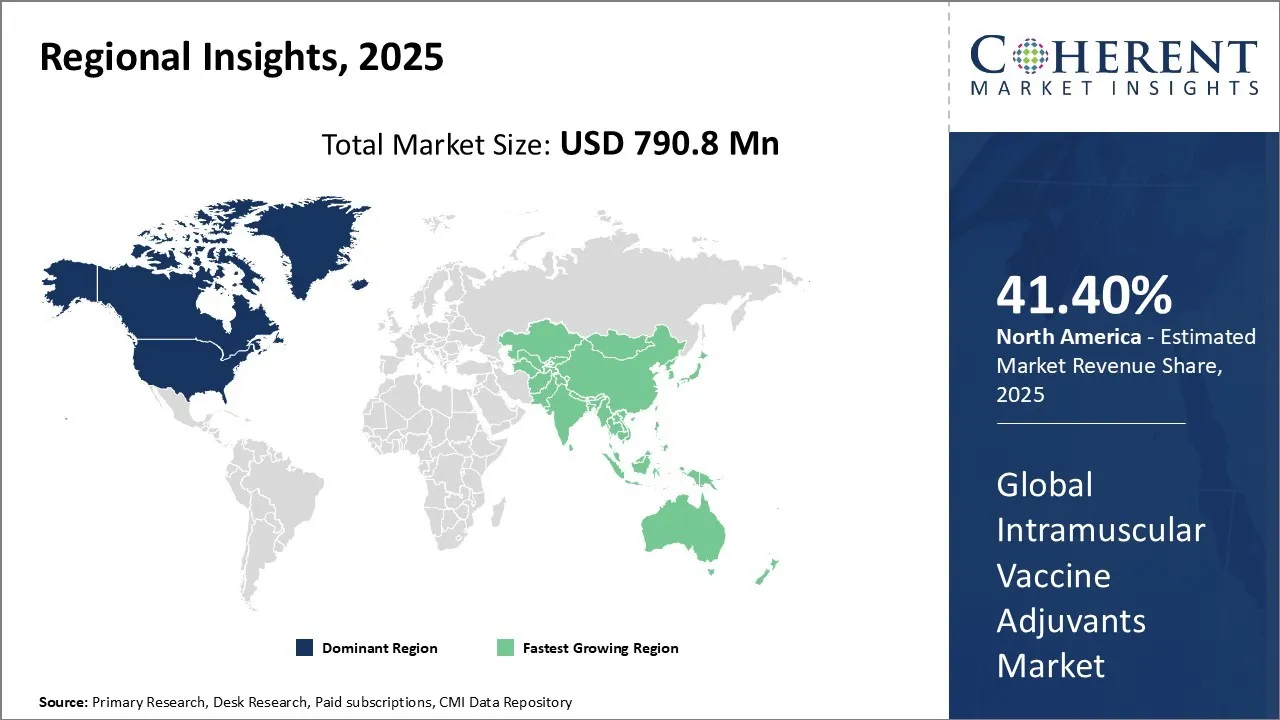
North America Intramuscular Vaccine Adjuvants Market Analysis & Trends
North America held the largest share of the intramuscular vaccine adjuvants market in 2026, and is expected to maintain its dominance during the forecast period. This can be attributed to the high prevalence of infectious diseases in the region, along with the presence of key market players. Additionally, the increasing adoption of advanced technologies for vaccine development is expected to further fuel the intramuscular vaccine adjuvants market growth in North America.
For instance, in August 2026, the Coalition for Epidemic Preparedness Innovations (CEPI) awarded USD 5 million to Boost Biopharma to advance its rapid antigen design technology. This funding aims to accelerate the creation of protein-based vaccines against emerging viral threats, including SARS-CoV-2 and its variants. Boost's approach utilizes stable, easily purified antigens that can be produced at scale and stored without refrigeration, enhancing global accessibility.
Asia Pacific Intramuscular Vaccine Adjuvants Market Analysis & Trends
The Asia-Pacific region is projected to witness the fastest growth rate during the forecast period, owing to the increasing investments in vaccine development by both public and private organizations. Additionally, the rising prevalence of infectious diseases and the increasing awareness about the benefits of vaccination are expected to further drive market growth in this region. The large population base in countries like China and India also presents a significant growth opportunity for the intramuscular vaccine adjuvants market in the region.
For instance, in December 2024, Serum Institute of India (SII) and Valneva SE have entered into an exclusive license agreement to expand access to Valneva’s single-dose chikungunya vaccine across Asia. This collaboration aims to address the urgent public health need amid a significant outbreak in India. Under the agreement, Valneva will supply the vaccine's drug substance to SII, which will handle manufacturing and regulatory approvals in India and other Asian countries. The partnership includes a profit-sharing model and milestone payments, with SII committing to supply affordable doses to low- and middle-income countries and stockpiling 100,000 doses for potential clinical trials and outbreak response.
Intramuscular Vaccine Adjuvants Market Outlook Country-Wise
The U.S. Intramuscular Vaccine Adjuvants Market Trends
The U.S. leads in the intramuscular vaccine adjuvants market, driven by advanced healthcare infrastructure, substantial investments in vaccine research and development, and a high prevalence of vaccine-preventable diseases. The country's robust pharmaceutical industry and regulatory support further bolster the demand for effective vaccine adjuvants. According to the WHO, Vaccines have saved more than 150 million lives over the past five decades in the United States.
For instance, from April 26 to May 3, 2026, the Pan American Health Organization (PAHO) led the 23rd annual Vaccination Week in the Americas (VWA) alongside the 14th World Immunization Week (WIW). Under the theme “Your decision makes a difference. Immunization for all,” the initiative aimed to bolster vaccine equity across the region. This year's campaign aligns with PAHO’s Disease Elimination Initiative, targeting the eradication of over 30 communicable diseases by 2030, including 11 vaccine-preventable ones.
India Intramuscular Vaccine Adjuvants Market Trends
India is emerging as a key player in the vaccine adjuvants market, with a growing biotechnology sector and increasing collaborations between Indian pharmaceutical companies and international vaccine developers. The government's proactive support for domestic vaccine development and expanding vaccination programs are driving the intramuscular vaccine adjuvants market demand.
For instance, in June 2026, Bharat Biotech International Limited (BBIL), based in Hyderabad, secured in-licensing rights for GSK's Shigella vaccine candidate, altSonflex1-2-3. This collaboration aims to advance the development of a vaccine targeting Shigellosis, a severe diarrheal disease primarily affecting children under five in low- and middle-income countries. The vaccine utilizes GSK's innovative Generalized Modules for Membrane Antigens (GMMA) technology, which employs bacterial outer membrane vesicles to stimulate a robust immune response.
Market Report Scope
Intramuscular Vaccine Adjuvants Market Report Coverage
| Report Coverage | Details | ||
|---|---|---|---|
| Base Year: | 2025 | Market Size in 2026: | USD 845.4 Mn |
| Historical Data for: | 2020 To 2024 | Forecast Period: | 2026 To 2033 |
| Forecast Period 2026 to 2033 CAGR: | 6.9% | 2033 Value Projection: | USD 1,348.6 Mn |
| Geographies covered: |
| ||
| Segments covered: |
| ||
| Companies covered: | Novavax, Inc., Adjuvance Technologies, Inc., Invivogen, Vaxine Pty Ltd., SEPPIC, SPI Pharma, Inc., Agenus Inc., Avanti Polar Lipids, Inc., CSL Limited, OZ Biosciences | ||
| Growth Drivers: |
| ||
| Restraints & Challenges: |
| ||
Global Intramuscular Vaccine Adjuvants Market Drivers
- Increasing Prevalence of Infectious Diseases: One of the major drivers of the intramuscular vaccine adjuvants market is the increasing prevalence of infectious diseases. Diseases such as influenza, hepatitis, and human papillomavirus (HPV) continue to be a significant public health burden. The use of intramuscular vaccine adjuvants helps in improving the efficacy of vaccines, which is particularly important for immunocompromised individuals who may have a weaker immune response to vaccines. For instance, in July 2025, The Coalition for Epidemic Preparedness Innovations (CEPI) has launched the world’s first global adjuvant library, a pioneering initiative designed to enhance vaccine efficacy and accelerate responses to epidemic and pandemic threats. Hosted by the UK’s Medicines and Healthcare products Regulatory Agency (MHRA), the library houses 25 adjuvants substances that boost immune responses, provided by leading research institutes and pharmaceutical companies worldwide.
- Growing Need for Effective Vaccines: There is a growing need for effective vaccines that can provide long-lasting protection against infectious diseases. Intramuscular vaccine adjuvants play a crucial role in improving vaccine efficacy by enhancing the immune response to vaccines. This is particularly important in the case of elderly individuals and those with weakened immune systems, who may not mount a robust immune response to traditional vaccines.
- Government Initiatives to Promote Vaccination: Governments across the world are taking initiatives to promote vaccination and reduce the burden of infectious diseases. For instance, the Centers for Disease Control and Prevention (CDC) in the United States recommends annual influenza vaccination for everyone over the age of six months. Such initiatives have contributed to an increased intramuscular vaccine adjuvants market share, as these adjuvants are widely used to enhance the efficacy of influenza vaccines and ensure stronger, longer-lasting immune responses. For instance, in May 2025, The U.S. Department of Health and Human Services (HHS) and the National Institutes of Health (NIH) have unveiled "Generation Gold Standard," a next-generation universal vaccine platform aimed at combating pandemic-prone viruses. Utilizing a beta-propiolactone (BPL)-inactivated, whole-virus approach, this initiative focuses on developing universal vaccines for influenza and coronaviruses, including candidates BPL-1357 and BPL-24910. These vaccines aim to provide broad-spectrum protection against multiple strains of viruses such as H5N1 avian influenza and coronaviruses like SARS-CoV-2, SARS-CoV-1, and MERS-CoV.
Analyst Opinion (Expert Opinion)
The Intramuscular Vaccine Adjuvants market value is poised to reflect a shift in strategic focus toward formulations that enhance immunogenicity while minimizing reactogenicity. Oil-based adjuvants continue to dominate clinical preference, particularly in influenza and hepatitis vaccines, due to their proven efficacy in eliciting robust humoral responses. However, emerging evidence suggests that liposome-based adjuvants are rapidly gaining traction in early-stage clinical trials, especially for recombinant protein vaccines, owing to their ability to target antigen-presenting cells effectively and modulate cellular immunity. For instance, studies indicate that liposomal formulations can increase antigen-specific T-cell proliferation by up to 60% compared with traditional mineral-based adjuvants, highlighting their potential in next-generation vaccine platforms.
Polymer-based adjuvants are increasingly being explored for sustained-release delivery, improving antigen stability and reducing dosing frequency, which can significantly enhance patient compliance in pediatric and geriatric populations. Notably, the integration of synthetic polymers in influenza and RSV vaccines has shown a measurable improvement in antibody titers, with a reported 40–50% increase in neutralizing activity compared to unadjuvanted controls in preclinical models.
From a commercial standpoint, vaccine developers are strategically prioritizing adjuvants with flexible compatibility across multiple antigens, as this reduces formulation development time and accelerates regulatory approval. The preference for modular adjuvant platforms is particularly evident in the oncology vaccine space, where immune system specificity is paramount, and safety margins are narrow. Mineral-based adjuvants, while historically widespread, are gradually being supplemented or replaced in high-value therapeutic vaccines due to localized reactogenicity concerns and limited efficacy in stimulating cell-mediated immunity.
Speak to the analyst
Want personalized insights?
Take the findings above to one of our principal consultants, or have the report rebuilt around the segments, geographies and competitors you actually track.
Global Intramuscular Vaccine Adjuvants Market Recent Developments
- In October 2024, AdJane launched as a leader in the field of vaccine adjuvants, aiming to enhance vaccine efficacy. The company focuses on developing innovative adjuvant solutions that improve immune responses to vaccines. By advancing the science of vaccine adjuvants, AdJane seeks to address global health challenges and contribute to the development of more effective vaccines.
Market Segmentation
- Global Intramuscular Vaccine Adjuvants Market, By Type of Adjuvants (Revenue, USD Mn, 2021 - 2033)
- Oil-based Adjuvants
- Liposome-based Adjuvants
- Polymer-based Adjuvants
- Mineral-based Adjuvants
- Others
- Global Intramuscular Vaccine Adjuvants Market, By End Users (Revenue, USD Mn, 2021 - 2033)
- Pediatrics
- Adults
- Geriatrics
- Global Intramuscular Vaccine Adjuvants Market, By Applications (Revenue, USD Mn, 2021 - 2033)
- Infectious diseases
- Cancer
- Others
- Global Intramuscular Vaccine Adjuvants Market, By Distribution Channels (Revenue, USD Mn, 2021 - 2033)
- Hospitals
- Clinics
- Research Centers
- Global Intramuscular Vaccine Adjuvants Market, By Region (Revenue, USD Mn, 2021 - 2033)
- North America
- U.S.
- Canada
- Latin America
- Brazil
- Argentina
- Mexico
- Rest of Latin America
- Europe
- Germany
- U.K.
- Spain
- France
- Italy
- Russia
- Rest of Europe
- Asia Pacific
- China
- India
- Japan
- Australia
- South Korea
- ASEAN
- Rest of Asia Pacific
- Middle East
- GCC Countries
- Israel
- Rest of Middle East
- Africa
- South Africa
- North Africa
- Central Africa
- North America
- Global Intramuscular Vaccine Adjuvants Market Companies
- Novavax, Inc.
- Adjuvance Technologies, Inc.
- Invivogen
- Vaxine Pty Ltd.
- SEPPIC
- SPI Pharma, Inc.
- Agenus Inc.
- Avanti Polar Lipids, Inc.
- CSL Limited
- OZ Biosciences
Sources
Primary Research Interviews from the following stakeholders
Stakeholders
- Interviews with vaccine manufacturers, pharmaceutical R&D heads, immunology experts, hospital procurement managers, clinical trial coordinators, and regulatory affairs professionals across leading global markets.
Specific Stakeholders
- R&D heads and formulation scientists at vaccine manufacturers
- Immunologists and clinical researchers at hospitals and academic institutions
- Procurement and supply chain managers at healthcare systems and hospitals
- Regulatory affairs and quality assurance leads at pharmaceutical companies and contract manufacturing organizations
- Clinical trial coordinators and pharmacovigilance officers in vaccine development programs
- Product development and formulation specialists at adjuvant suppliers and excipient manufacturers
Databases
- World Health Organization (WHO) Vaccine Data Portal
- UNICEF Supply Division Procurement Statistics
- U.S. Food and Drug Administration (FDA) Biologics & Vaccines Data
- European Medicines Agency (EMA) Vaccine Approvals and Safety Data
- Ministry of Health and Family Welfare (MoHFW), India
- Centers for Disease Control and Prevention (CDC) Vaccine Coverage Reports
- National Health Service (NHS) Immunization Statistics, UK
- China National Medical Products Administration (NMPA) Vaccine Approvals
Magazines
- Vaccine Technology Magazine
- Pharmaceutical Technology
- BioPharma-Reporter
- ImmunoHorizons
- Clinical Trials Arena
- Pharmaceutical Executive
Journals
- Vaccine (Elsevier)
- Human Vaccines & Immunotherapeutics
- Journal of Immunology Research
- Frontiers in Immunology
- Clinical and Vaccine Immunology (CVI)
- International Journal of Molecular Sciences – Immunology Section
Newspapers
- The Hindu – Health & Science
- The Times of India – Health & Pharma
- Financial Times – Healthcare & Biotech
- The Wall Street Journal – Healthcare & Pharma
- South China Morning Post – Health & Medicine
Associations
- International Vaccine Institute (IVI)
- World Health Organization (WHO) Immunization Division
- Global Alliance for Vaccines and Immunization (GAVI)
- International Society for Vaccines (ISV)
- American Society for Microbiology (ASM) – Immunology & Vaccine Section
- Indian Pharmacopoeia Commission – Vaccine & Biologics Forum
Public Domain Sources
- Ministry of Health & Family Welfare (MoHFW), India
- U.S. National Institutes of Health (NIH) – Vaccine Research
- European Centre for Disease Prevention and Control (ECDC)
- Centers for Disease Control and Prevention (CDC), U.S.
- NITI Aayog – Health & Vaccine Reports
- WHO Global Vaccine Market Reports
- India Investment Grid – Pharmaceuticals & Biologics Sector
- EU Health Data Portal – Vaccine Coverage and Trends
Proprietary Elements
- CMI Data Analytics Tool, and Proprietary CMI Existing Repository of information for last 8 years
Get access to 250+ pages report
Every segment, forecast, competitor profile and data table behind the analysis above — available for instant download.
- ESOMAR Member
- ISO 9001:2015 Certified
- D-U-N-S Registered
- GDPR & CCPA Compliant
Missing comfort of reading report in your local language? Find your preferred language:
Transform your Strategy with Exclusive Trending Reports
Frequently Asked Questions
The Intramuscular Vaccine Adjuvants Market is estimated to be valued at USD 845.4 Mn in 2026, and is expected to reach USD 1,348.6 Mn by 2033.
Increasing prevalence of infectious diseases is expected to drive the market.
The North America region will lead the in market.
The CAGR of the Intramuscular Vaccine Adjuvants Market is projected to be 6.9% from 2026 to 2033.
Major players operating in the market include Novavax, Inc., Adjuvance Technologies, Inc., Invivogen, Vaxine Pty Ltd., SEPPIC, SPI Pharma, Inc., Agenus Inc., Avanti Polar Lipids, Inc., CSL Limited, OZ Biosciences.
Yes, they are generally safe, but safety profiles vary by age, health status, and specific adjuvant formulations.
Efficacy is assessed through preclinical animal studies, clinical trials, immune response measurements, and monitoring protective antibody and cellular responses.