

Epilepsy Drugs Market Size and Forecast – 2026 to 2033
The epilepsy drugs market is estimated to be valued at USD 11.50 Bn in 2026 and is expected to reach USD 16.95 Bn by 2033, exhibiting a compound annual growth rate (CAGR) of 5.7% from 2026 to 2033.
Key Takeaways
- Based on Type, the Focal Epilepsy segment leads the market holding an estimated share of 35.7 in 2026 due to advancements in diagnostics technologies that enhance the accuracy of seizure localization.
- Based on Drugs, the 1st Generation segment is expected to capture the 53.1 % share in 2026 due to their established safety and efficacy profiles developed over decades of clinical use.
- Based on Route of Administration, the Oral segment leads the market holding an estimated share of 53.1 % in 2026 due to its advantages in patient adherence and lifestyle compatibility.
- Based on Age Group, the Adult segment leads the market with the largest share in 2026, due to higher disease prevalence, long-term treatment needs, and age-related neurological conditions.
- Based on Distribution Channel, the Retail Pharmacies segment leads the market with the highest share in 2026, due to their accessibility, affordability, and convenience
- Based on Region, North America is estimated to lead the market with a share of 37.4 % in 2026. While, Asia Pacific. Holding a share of 19.8% in 2025, is projected to be the fastest growing region.
Market Overview
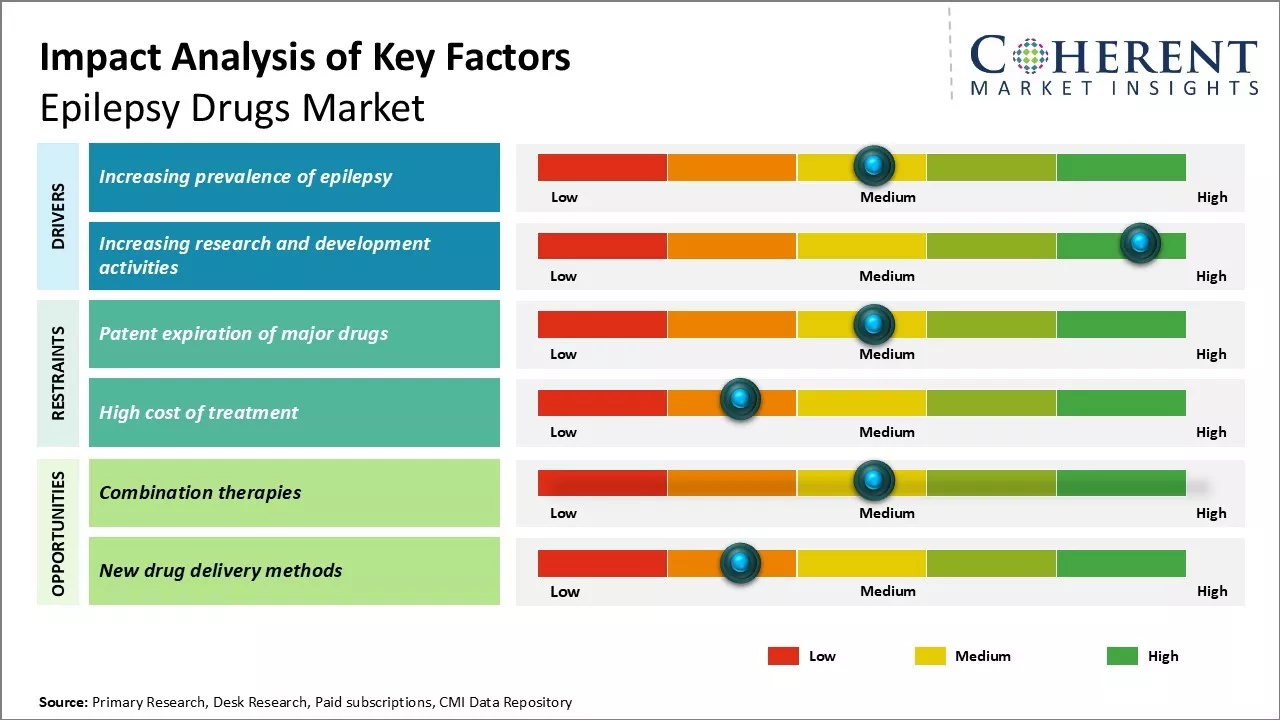
The epilepsy drugs industry is poised for significant growth due to the increasing prevalence of epilepsy, particularly among the aging population. The approval of new drugs for refractory epilepsy enhances treatment options, while rising healthcare expenditures and intensified research support epilepsy drugs market demand and expansion. However, patent expirations of key drugs and the persistent social stigma surrounding epilepsy may hinder growth, necessitating innovative strategies to overcome these barriers.
Current Events and Its Impact
Current Event | Description and its Impact |
Global Supply Chain Vulnerabilities and Dependencies |
|
Regulatory Framework Evolution and Drug Access Policies |
|
Technological Innovation and Digital Health Integration |
|
Emerging Technologies
Emerging technologies in the epilepsy drugs market are reshaping treatment approaches and improving patient outcomes, thereby influencing epilepsy drugs market share globally. Advances in precision medicine and genetic profiling allow therapies to be tailored to individual patients based on their genetic and phenotypic profiles, improving efficacy and minimizing side effects. Novel drug delivery systems, including sustained-release formulations, transdermal patches, and targeted nanocarriers, enhance drug absorption and adherence. Additionally, digital therapeutics and wearable seizure monitoring devices enable real-time tracking of patient conditions, allowing timely interventions and personalized treatment adjustments.
For instance, in August 2025, The TESS Research Foundation received FDA clearance to initiate the first human clinical trial for TSHA-105, a gene therapy targeting SLC13A5 epilepsy. This milestone marks a significant advancement in developing treatments for this rare, severe neurological disorder. The trial aims to assess the safety and efficacy of TSHA-105 in patients with SLC13A5-related epilepsy. The foundation continues to collaborate with researchers and clinicians to address this unmet medical need.
- Current Industry Events of 2026
- Market Size Estimation
- Regional Breakdown
- Competitive Landscape
- Customer Intelligence
- Segmental Analysis
- Pricing Analysis
- Key Market Drivers, Challenges & Future Trends
- Customized Insights Section
Segmental Insights
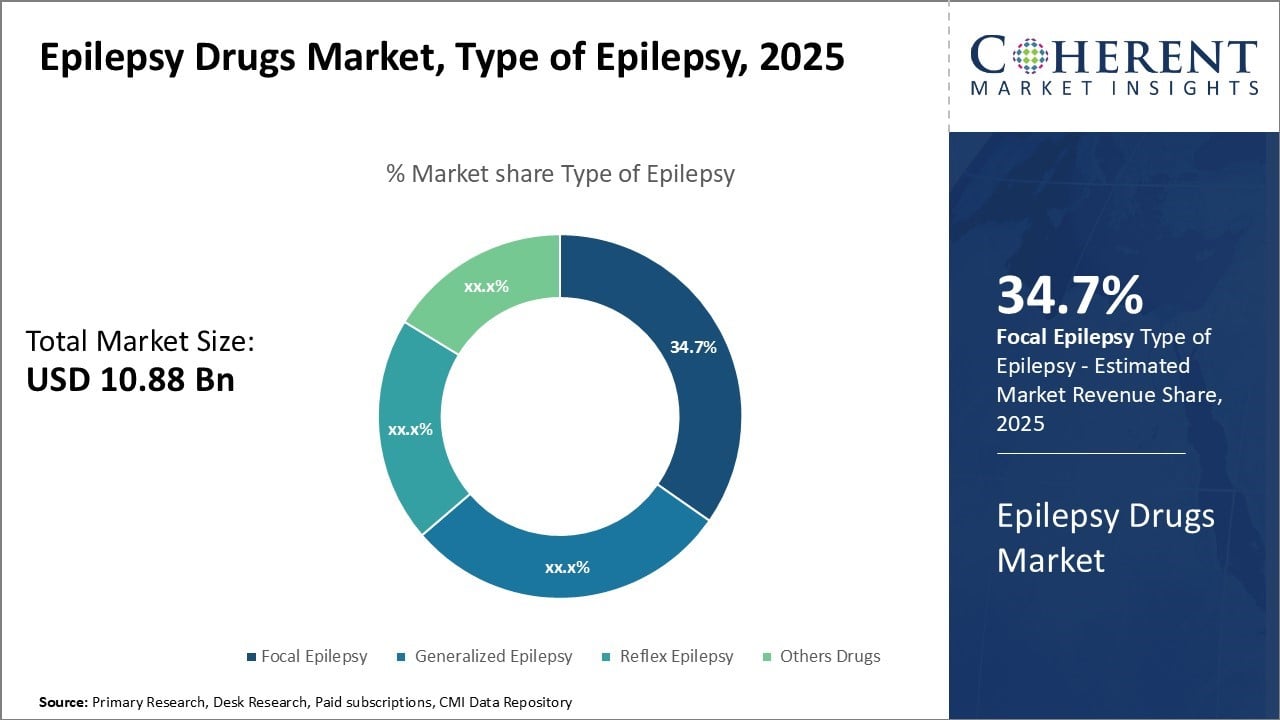
Epilepsy Drugs Market Insights, By Type of Epilepsy - Specificity in Diagnosis and Treatment is Driving Growth of the Focal Epilepsy Segment
In terms of type of epilepsy, focal epilepsy segment is expected to contribute the highest market share of 35.7% in 2026, due to advancements in diagnostics technologies that enhance the accuracy of seizure localization. Focal epilepsy, allows for more targeted evaluation and treatment than generalized types. Improved neuroimaging techniques, such as high-resolution magnetic resonance imaging, enable precise identification of lesions associated with focal seizures, facilitating better management options for patients.
For instance, in August 2025, Praxis Precision Medicines reports compelling Phase 2 topline data from its RADIANT study of vormatrigine in focal onset seizures. Over an eight-week treatment period, patients experienced a median 56.3 % reduction in seizure frequency, with 22 % achieving complete seizure freedom, highlighting promising potential for focal epilepsy therapy.
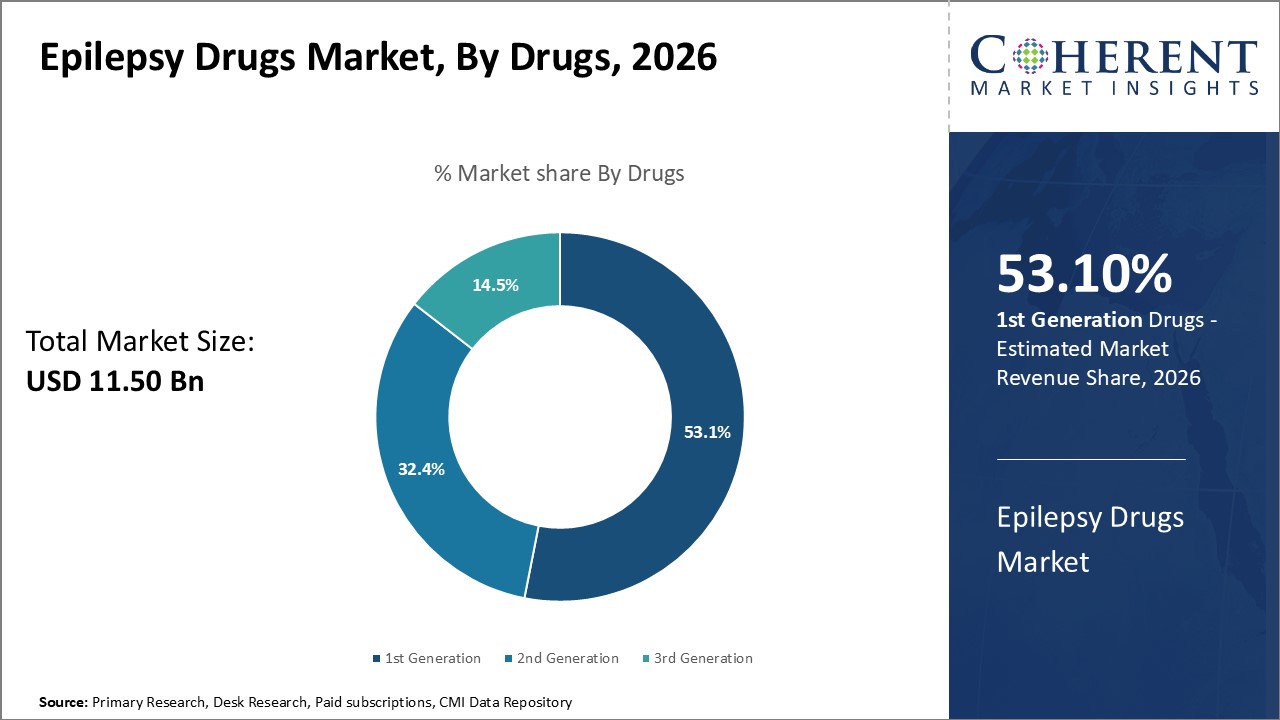
Epilepsy Drugs Market Insights, By Drugs - Well-established Safety and Efficacy Profiles are Driving Growth of the 1st Generation Drugs
In terms of drugs, 1st Generation segment is projected to dominate the epilepsy drugs industry with highest share of 53.1% in 2026, due to their established safety and efficacy profiles developed over decades of clinical use. Key medications such as phenobarbital, effectively controlling seizures with minimal side effects. Real-world data supports their continued use, providing confidence to both physicians and patients in managing epilepsy effectively.
For instance, in August 2025, Brussels-based biopharmaceutical company UCB presented 26 scientific abstracts at the International Epilepsy Congress in Lisbon, spotlighting advances in developmental and epileptic encephalopathies like Dravet and Lennox-Gastaut syndromes, prolonged seizure management, and fenfluramine safety. Notably, UCB's research also references longstanding benchmarks in epilepsy care, such as phenytoin.
Epilepsy Drugs Market Insights, By Route of Administration - Patient Adherence and Lifestyle are Driving the Preference for Oral Administration
In terms of route of administration, oral segment is projected to dominate the epilepsy drugs industry with 53.1% share in 2026. This is primarily due to its advantages in patient adherence and lifestyle compatibility. Oral dosing is non-invasive and discreet, fitting seamlessly into daily routines and travel, unlike intravenous options. Additionally, healthcare systems are increasingly prioritizing cost-effective outpatient oral therapies over more resource-intensive inpatient treatments.
For instance, in July 2025, The U.S. FDA has approved new administration routes for Spritam, allowing it to be delivered via nasogastric (NG) and gastrostomy (G) feeding tubes in addition to oral use—providing vital flexibility for patients with swallowing difficulties. The revised prescribing information outlines specific preparation and flushing procedures to ensure safe, effective dosing.
Epilepsy Drugs Market Insights, By Age Group - Adults Dominance Is Due to Higher Disease Prevalence, Long-Term Treatment Needs, and Age-Related Neurological Conditions.
In terms of age group, the adult segment is expected to lead with the largest share of the market in 2026. The prevalence of epilepsy is higher in adults, particularly among the aging population, where risks increase with neurological degeneration, stroke, and other chronic conditions. Adults also tend to require long-term, consistent drug therapy for seizure management, leading to higher prescription volumes. The growing incidence of refractory and partial-onset seizures in this group further supports demand for advanced and newly approved anti-epileptic drugs. In addition, lifestyle stress, traumatic brain injuries, and comorbidities such as diabetes and hypertension contribute to epilepsy diagnoses in adults.
According to CDC 2024, About 3 million adults in the United States have active epilepsy. New cases of epilepsy are also higher in adults aged 55 and older. This population is at a higher risk of epilepsy causes such as stroke, brain tumors, or Alzheimer’s disease.
Epilepsy Drugs Market Insights, By Distribution Channel - Retail Pharmacies is Driven by Easy Accessibility, Affordability, and Continuous Prescription Refills for Chronic Care.
In terms of distribution channel, the retail pharmacies segment is expected to contribute the highest share of the market in 2026, due to their accessibility, affordability, and convenience. Since epilepsy is a chronic condition requiring long-term outpatient management, patients rely heavily on retail outlets for regular prescription refills. Retail pharmacies also provide a wide range of generic anti-epileptic drugs, making treatment more affordable and accessible to a larger patient base. Their widespread presence in both urban and rural areas ensure convenience, while strong integration with insurance and reimbursement systems reduces out-of-pocket costs for patients.
Regional Insights
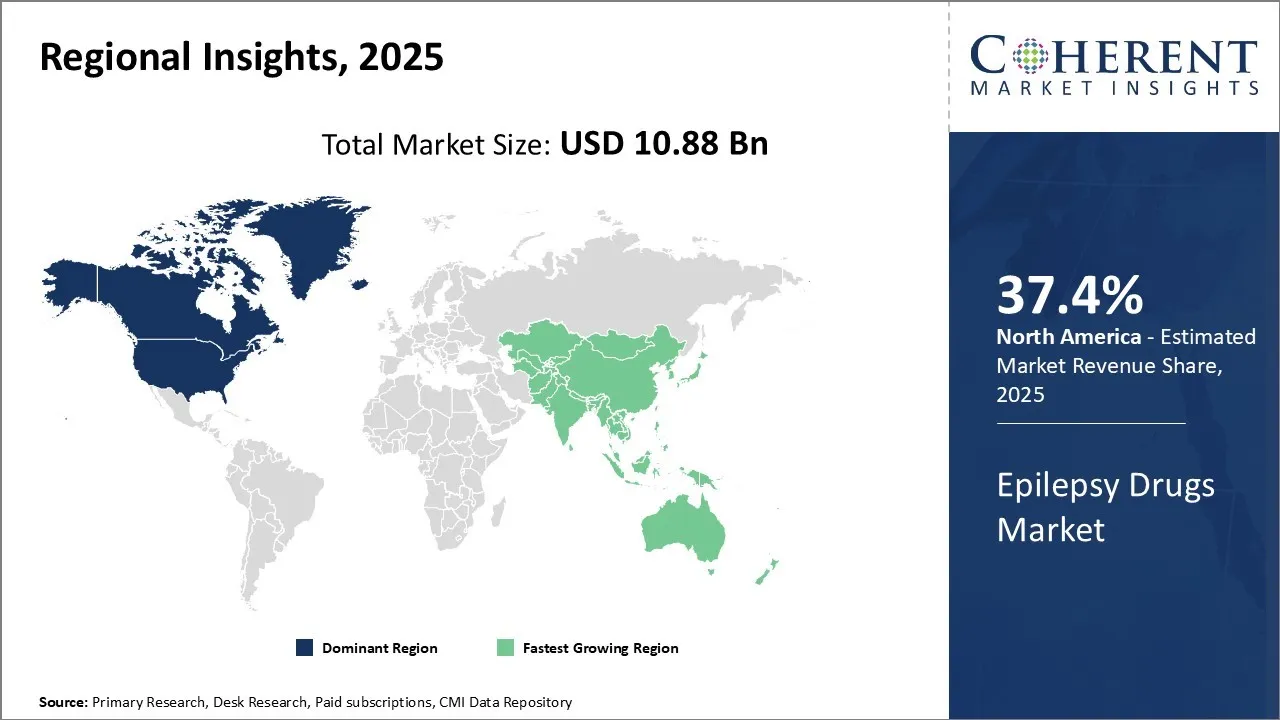
North America Epilepsy Drugs Market Analysis & Trends
North America is expected to account for the greatest revenue share of 37.4% in 2026. The dominance in the epilepsy drugs industry can be attributed to factors such as robust healthcare infrastructure, presence of leading pharmaceutical companies, and high disease awareness levels.
For instance, in August 2026, the Epilepsy Foundation of America, in partnership with Amazon Web Services and powered by Anthropic’s Claude, unveiled Sage, an empathetic AI assistant on epilepsy.com. Designed to support the nation’s 3.4 million epilepsy patients, Sage delivers compassionate, accurate guidance in multiple languages and complements but does not replace the Foundation’s helpline.
Asia Pacific Epilepsy Drugs Market Analysis & Trends
Asia Pacific region exhibits the fastest growth with 19.8% market share in 2026, driven by rising geriatric populations, growing healthcare expenditure, and improving access to medications across emerging countries. The gradual shift towards modern epilepsy management in countries like China and India augurs well for market expansion.
For instance, in May 2026, SK Life Science, the U.S. subsidiary of South Korea's SK biopharmaceuticals, launched its first national TV campaign for Xcopri (cenobamate), an anti-seizure medication for adults with epilepsy. Airing across streaming platforms and social media, the campaign, titled "Road to Seizure Reduction," portrays a father and son’s journey to symbolize overcoming treatment fears. Market research indicates strong interest from patients and healthcare providers.
Epilepsy Drugs Market Outlook for Key Countries
U.S. leadership in neurological research
The U.S. epilepsy drugs industry is significantly benefiting from its leadership in neurological research and a growing demand for innovative treatment options. Companies like Eisai Co., Ltd., a biopharmaceutical company and Viatris, a pharmaceutical company are actively launching new drugs to address the increasing prevalence of neurological disorders, particularly focusing on drug-resistant epilepsy, thus enhancing patient care and expanding opportunities for epilepsy drugs industry.
For instance, in May 2026, Mumbai-based Lupin Limited introduced Eslicarbazepine Acetate Tablets in the United States, offering 200 mg through 800 mg strengths. The launch, following U.S. FDA approval of Lupin’s ANDA, grants the company 180 days of shared generic exclusivity. The drug, bioequivalent to Aptiom®, treats partial-onset seizures in patients aged four and older.
Japan’s universal healthcare coverage and strong manufacturing
Japan maintains a strong position in the Asia Pacific epilepsy drugs market due to its universal healthcare coverage and robust manufacturing base, featuring major players like Daiichi Sankyo Company, a pharmaceutical company, The country's strong regulatory environment and commitment to enhancing patient care further support its growth in the epilepsy therapeutics sector, fostering innovation and ensuring access to effective treatments for patients.
For instance, in July 2026, Otsuka Pharmaceutical, in collaboration with eMind and Tohoku University, has launched Phase II of the Epilepsy Smart Medical Joint Research Project. Utilizing the eMind smartphone application, the initiative aims to enhance the quality of life for epilepsy patients by integrating AI-driven seizure prediction and psychosocial support.
China's rapid changes through healthcare reforms is promoting access to advanced therapies
China's epilepsy drugs industry is experiencing a significant transformation due to healthcare reforms that improve access to advanced therapies. With an estimated 10 million individuals living with epilepsy, local firms are emerging to address unmet medical needs, particularly in underserved areas. This growth is driven by increasing awareness and the demand for effective, highlighting the potential for substantial market expansion and innovation in therapeutic options.
For instance, in September 2024, a groundbreaking study by Chinese researchers has identified a significant genetic link between bipolar disorder type I (BD-I) and epilepsy. Utilizing data from over 26,000 epilepsy and 25,000 BD-I cases, the team discovered approximately 1,300 shared genetic variants and six independent loci associated with both conditions. Notably, a causal effect of epilepsy on BD-I was observed. The SP4 gene emerged as a key factor, suggesting potential for targeted treatments. These findings open new avenues for understanding and addressing neuropsychiatric disorders.
Market Concentration and Competitive Landscape
Epilepsy Drugs Industry News
- In April 2025, Neurelis, Inc., focused of the treatment of epilepsy, announced that the FDA has approved Valtoco® (diazepam nasal spray) for immediate, short-term treatment of seizure clusters in children aged 2 to 5, expanding its earlier approval for older patients. The nasal formulation, using INTRAVAIL® absorption technology, maintains orphan drug exclusivity and offers a non-invasive alternative to rectal gel therapies.
- In June 2024, Angelini Pharma, a pharmaceutical company, in partnership with Wazoku, a health technology company, launched a new crowdsourcing campaign to identify new innovative Drug Delivery Systems (DDS) and treatments approaches to significantly improve the lives of people with epilepsy, especially elderly and pediatric patients
- In May 2024, Eisai Co., Ltd., a pharmaceutical company, announced that it had received approval in China from National Medical Products Administration for an additional indication for its antiepileptic drug, Fycompa (generic name: perampanel hydrate). This approval allows Fycompa to be used as an adjunctive treatment for primary generalized tonic-clonic seizures in patients with epilepsy aged 12 years and older.
Market Report Scope
Epilepsy Drugs Market Report Coverage
| Report Coverage | Details | ||
|---|---|---|---|
| Base Year: | 2025 | Market Size in 2026: | USD 11.50 Bn |
| Historical Data for: | 2020 To 2024 | Forecast Period: | 2026 To 2033 |
| Forecast Period 2026 to 2033 CAGR: | 5.7% | 2033 Value Projection: | USD 16.95 Bn |
| Geographies covered: |
| ||
| Segments covered: |
| ||
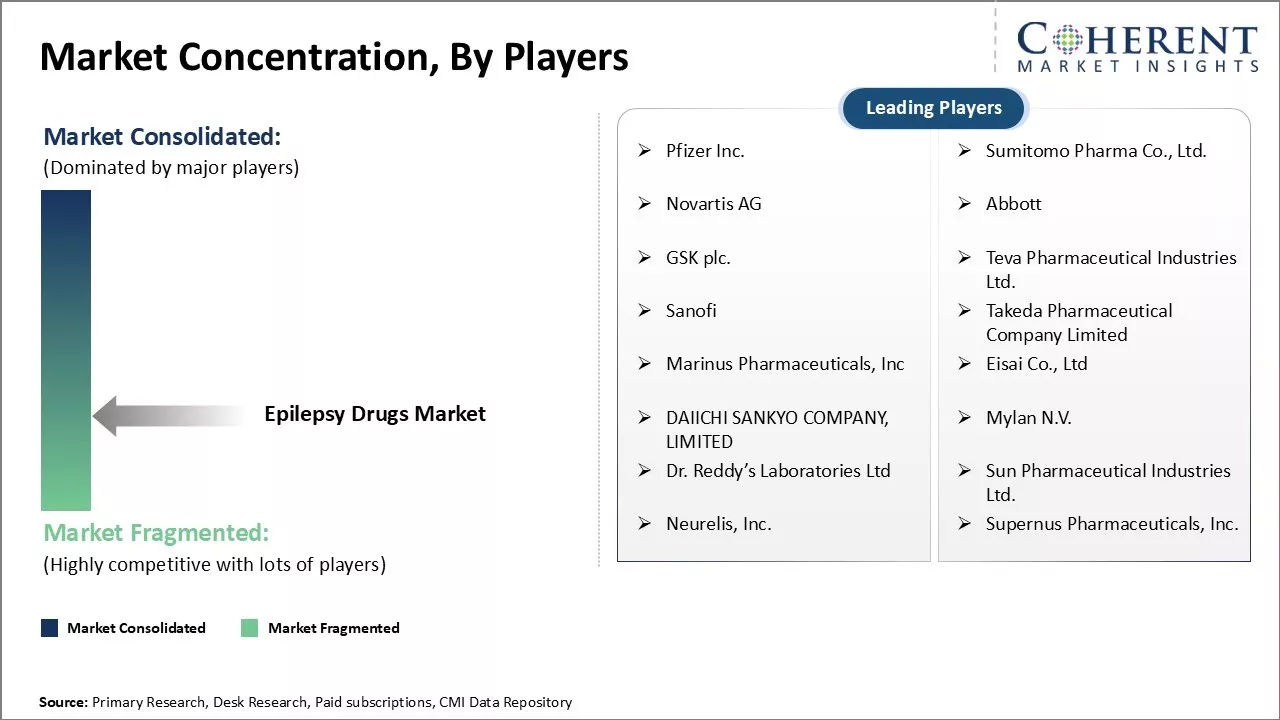
| Companies covered: | Pfizer Inc., Sumitomo Pharma Co., Ltd., Novartis AG, Abbott, GSK plc., Teva Pharmaceutical Industries Ltd., Sanofi, Takeda Pharmaceutical Company Limited, Marinus Pharmaceuticals, Inc, Eisai Co., Ltd, DAIICHI SANKYO COMPANY, LIMITED, Mylan N.V., Dr. Reddy’s Laboratories Ltd, Sun Pharmaceutical Industries Ltd., Neurelis, Inc., and Supernus Pharmaceuticals, Inc. | ||
| Growth Drivers: |
| ||
| Restraints & Challenges: |
| ||
Epilepsy Drugs Market Drivers
Increasing prevalence of epilepsy
The prevalence of epilepsy is rising alarmingly worldwide, affecting approximately 50 million people across all age groups. This increase is particularly pronounced in developing regions, driven by factors such as lack of awareness, inadequate healthcare access, pollution, and high alcohol consumption. These issues contribute significantly to the growing burden of epilepsy, highlighting the urgent need for improved education and healthcare resources.
Increasing Research and Development Activities
Increasing Research and Development Activities are a key driver in shaping epilepsy drugs market trends. Pharmaceutical and biotechnology companies are investing heavily in discovering new anti-epileptic drugs (AEDs) that target refractory and rare forms of epilepsy, aiming to improve efficacy, safety, and patient adherence. Clinical trials are increasingly focused on precision medicine approaches, combination therapies, and novel drug delivery systems, including sustained-release formulations and transdermal patches. Additionally, research efforts are expanding into digital therapeutics, AI-driven drug discovery, and biomarker identification to personalize treatment plans and optimize outcomes. These intensified R&D initiatives are not only expanding the pipeline of innovative therapies but also strengthening the overall growth prospects and competitive positioning within the epilepsy drugs market, reflecting a major trend in the sector.
Analyst Opinion (Expert Opinion)
The Epilepsy Drugs Market is undergoing a significant transformation, driven by a confluence of factors that underscore its dynamic evolution.
The market's trajectory is increasingly influenced by the introduction of novel therapies targeting previously underserved patient populations. For instance, the recent clinical trial of RAP-219 by Rapport Therapeutics demonstrated a remarkable 77.8% reduction in seizure frequency among patients with focal onset seizures, a cohort often resistant to conventional treatments. This development not only highlights the potential of innovative therapies but also reflects the growing investor confidence in the sector, as evidenced by the substantial surge in Rapport's stock price following the announcement.
Similarly, Praxis Precision Medicines reported exceptional results from a midstage study of its epilepsy treatment, achieving a 100% complete response rate at the 45-milligram dose in patients with photoparoxysmal response. Such outcomes underscore the therapeutic promise of targeting specific seizure disorders and may redefine treatment paradigms, particularly in the U.S. epilepsy treatment market, valued at approximately $3 billion.
Strategic mergers and acquisitions further illuminate the market's direction. The $2.6 billion acquisition of Longboard Pharmaceuticals by Lundbeck underscores the strategic value of innovative epilepsy treatments. Longboard's lead drug, bexicaserin, targets severe childhood epilepsies such as Dravet syndrome, with potential global peak sales estimated between $1.5 billion and $2 billion.
Speak to the analyst
Want personalized insights?
Take the findings above to one of our principal consultants, or have the report rebuilt around the segments, geographies and competitors you actually track.
Market Segmentation
- Type of Epilepsy Insights (Revenue, USD Bn, 2021 - 2033)
- Focal Epilepsy
- Generalized Epilepsy
- Reflex Epilepsy
- Others (Progressive Myoclonic Epilepsy, etc.)
- Drugs Insights (Revenue, USD Bn, 2021 - 2033)
- 1st Generation
- 2nd Generation
- 3rd Generation
- Route of Administration Insights (Revenue, USD Bn, 2021 - 2033)
- Oral
- Injectable
- Others (Nasal, etc.)
- Age Group Insights (Revenue, USD Bn, 2021 - 2033)
- Pediatric
- Adults
- Geriatric
- Distribution Channel Insights (Revenue, USD Bn, 2021 - 2033)
- Hospital Pharmacies
- Retail Pharmacies
- Online Pharmacies
- Regional Insights (Revenue, USD Bn, 2021 - 2033)
- North America
- U.S.
- Canada
- Latin America
- Brazil
- Argentina
- Mexico
- Rest of Latin America
- Europe
- Germany
- U.K.
- Spain
- France
- Italy
- Russia
- Rest of Europe
- Asia Pacific
- China
- India
- Japan
- Australia
- South Korea
- ASEAN
- Rest of Asia Pacific
- Middle East
- GCC Countries
- Israel
- Rest of Middle East
- Africa
- South Africa
- North Africa
- Central Africa
- North America
- Key Players Insights
- Pfizer Inc.
- Sumitomo Pharma Co., Ltd.
- Novartis AG
- Abbott
- GSK plc.
- Teva Pharmaceutical Industries Ltd.
- Sanofi
- Takeda Pharmaceutical Company Limited
- Marinus Pharmaceuticals, Inc
- Eisai Co., Ltd
- DAIICHI SANKYO COMPANY, LIMITED
- Mylan N.V.
- Reddy’s Laboratories Ltd
- Sun Pharmaceutical Industries Ltd.
- Neurelis, Inc.
- Supernus Pharmaceuticals, Inc.
Sources
Primary Research Interviews from the following stakeholders
Stakeholders
- Interviews with neurologists, epileptologists, hospital pharmacists, retail pharmacy managers, online pharmacy heads, and procurement specialists across leading global markets.
Specific stakeholders
- Clinical leads and neurologists at hospitals and specialty epilepsy centers (e.g., Mayo Clinic, AIIMS, Cleveland Clinic)
- Pharmacy operations and procurement managers at retail chains (e.g., CVS Health, Apollo Pharmacy, Walgreens)
- E-commerce pharmacy managers and logistics heads (e.g., 1mg, PharmEasy, Amazon Pharmacy)
- Medical directors and R&D heads at pharmaceutical manufacturing units producing antiepileptic drugs
- Health insurance policy managers and formulary specialists
- Researchers and pharmacologists in academic and clinical research institutes
Databases
- World Health Organization (WHO) Global Health Observatory
- IMS Health / IQVIA Drug Sales Data (public datasets)
- United Nations Comtrade Database
- U.S. Food and Drug Administration (FDA) Drug Approval Reports
- European Medicines Agency (EMA) Reports
- National Health Service (NHS) Digital – Prescribing Data, UK
- Centers for Disease Control and Prevention (CDC) – Epilepsy Surveillance Reports
- Ministry of Health and Family Welfare (MoHFW), India
Magazines
- Pharmaceutical Technology
- PharmExec
- Drug Topics
- PharmaTimes
- Med Ad News
- FiercePharma
Journals
- Epilepsia (International League Against Epilepsy journal)
- Seizure: European Journal of Epilepsy
- Journal of Neurology, Neurosurgery & Psychiatry
- CNS Drugs
- Neurology
- Therapeutic Advances in Neurological Disorders
Newspapers
- The Wall Street Journal – Health & Pharma
- The Economic Times – Healthcare & Pharmaceuticals
- The Hindu Business Line – Healthcare Industry
- Financial Times – Pharmaceuticals & Biotechnology
- Nikkei Asia – Health & Pharma
- South China Morning Post – Healthcare
Associations
- International League Against Epilepsy (ILAE)
- Epilepsy Foundation
- World Federation of Neurology (WFN)
- American Epilepsy Society (AES)
- Indian Epilepsy Society (IES)
- European Federation of Neurological Societies (EFNS)
Public Domain Sources
- U.S. National Institutes of Health (NIH) – Epilepsy Research
- Ministry of Health and Family Welfare (India) – National Health Statistics
- U.S. Food and Drug Administration (FDA)
- European Medicines Agency (EMA)
- Centers for Disease Control and Prevention (CDC)
- WHO – Global Epilepsy Programs
- National Institute for Health and Care Excellence (NICE), UK
Proprietary Elements
- CMI Data Analytics Tool, and Proprietary CMI Existing Repository of information for last 8 years
Get access to 250+ pages report
Every segment, forecast, competitor profile and data table behind the analysis above — available for instant download.
- ESOMAR Member
- ISO 9001:2015 Certified
- D-U-N-S Registered
- GDPR & CCPA Compliant
Missing comfort of reading report in your local language? Find your preferred language:
Transform your Strategy with Exclusive Trending Reports
Frequently Asked Questions
The Epilepsy Drugs Market is estimated to be valued at USD 11.50 Bn in 2026, and is expected to reach USD 16.95 Bn by 2033.
The CAGR of the Epilepsy Drugs Market is projected to be 5.7% from 2026 to 2033.
Increasing prevalence of epilepsy and increasing research and development activities are the major factors driving the growth of the epilepsy drugs market.
Patent expiration of major drugs and high cost of treatment are the major factors hampering the growth of the epilepsy drugs market.
In terms of type of epilepsy, focal epilepsy segment is estimated to dominate the market revenue share in 2026.
Pfizer Inc., Sumitomo Pharma Co., Ltd., Novartis AG, Abbott, GSK plc., Teva Pharmaceutical Industries Ltd., Sanofi, Takeda Pharmaceutical Company Limited, Marinus Pharmaceuticals, Inc, Eisai Co., Ltd, DAIICHI SANKYO COMPANY, LIMITED, Mylan N.V., Dr. Reddy’s Laboratories Ltd, Sun Pharmaceutical Industries Ltd., Neurelis, Inc., and Supernus Pharmaceuticals, Inc. are the major players.
North America is expected to lead the epilepsy drugs market in 2026.