

Complex Regional Pain Syndrome Market Size and Forecast – 2026 to 2033
The Complex Regional Pain Syndrome Market is estimated to be valued at USD 109.76 Mn in 2026 and is expected to reach USD 138.56 Mn by 2033, exhibiting a compound annual growth rate (CAGR) of 2.6% from 2026 to 2033.
Key Takeaways
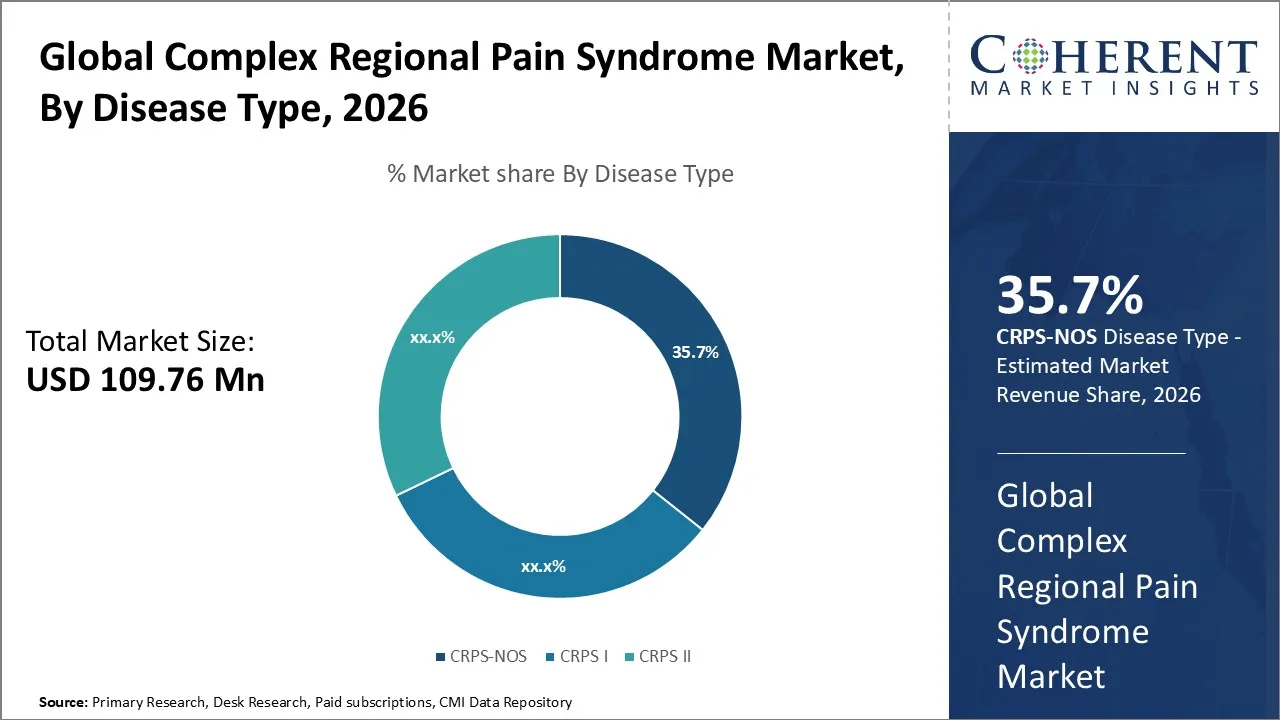
- By Disease Type, CRPS-NOS hold the largest market share of 35.7% in 2026 owing to the increasing incidence of CRPS following injury & surgery.
- By Drug Type, Neridronic Acid expected to hold largest market share of 43.3% in 2026 owing to its Unmet Medical Need & Lack of Approved CRPS Drugs.
- By Distribution Channel, Hospital Pharmacies acquired the prominent market share of 34.4% in 2026 owing to the Central Role in Multidisciplinary CRPS Care.
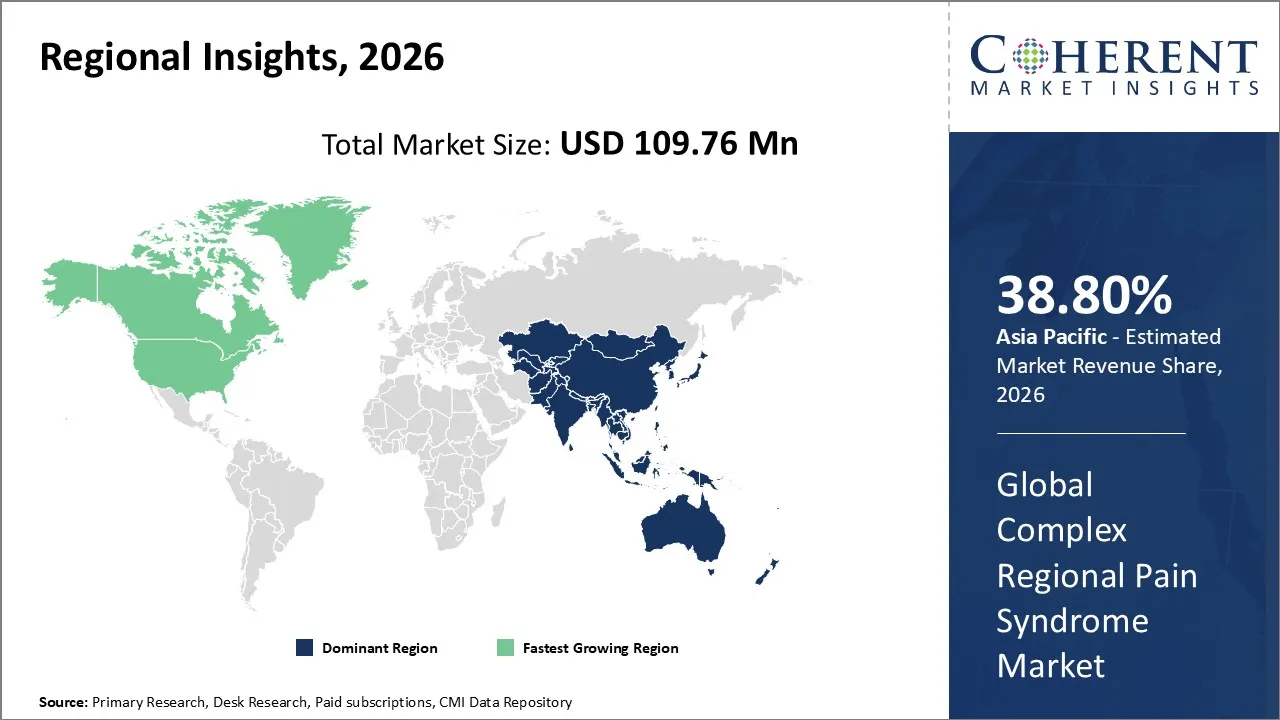
- By Region, Asia Pacific dominates the overall market with an estimated share of 38.8% in 2026 owing to the rising awareness of pain disorders.
Market Overview
Rising awareness of chronic pain disorders, a growing number of trauma- and surgery-related cases, and increasing demand for effective pain management actively drive the Complex Regional Pain Syndrome market. The market includes pharmacological treatments, interventional procedures, neuromodulation devices, and multidisciplinary care approaches. Advances in diagnostic techniques, the expansion of pain management centers, and continuous research into novel therapies enhance diagnosis and treatment outcomes. Ongoing improvements in healthcare infrastructure and greater access to specialized care further propel global market growth.
Current Events and Its Impact on the Complex Regional Pain Syndrome Market
Current Events | Description and its impact |
Geopolitical and Regulatory Developments |
|
Technological and Pharmaceutical Advances |
|
Economic and Healthcare Spending Trends |
|
Segmental Insights
- Current Industry Events of 2026
- Market Size Estimation
- Regional Breakdown
- Competitive Landscape
- Customer Intelligence
- Segmental Analysis
- Pricing Analysis
- Key Market Drivers, Challenges & Future Trends
- Customized Insights Section
Complex Regional Pain Syndrome Market Insights, By Disease Type - CRPS-NOS contribute the highest share of the market owing to its growth of interventional & neuromodulation therapies
CRPS-NOS hold the largest market share of 35.7% in 2026. Diagnostic ambiguity in early and atypical presentations actively drives the CRPS-NOS segment of the Complex Regional Pain Syndrome market by prompting broader NOS classification and earlier treatment initiation. Clinicians increasingly prioritize early intervention even without clear subtype confirmation, which boosts therapy utilization. The absence of standardized biomarkers and the presence of overlapping symptoms sustain reliance on NOS diagnoses. In parallel, expanding pain clinic availability, greater use of imaging and assessment tools, and wider acceptance of symptom-based treatment approaches continue to fuel global market growth for CRPS-NOS.
Complex Regional Pain Syndrome Market Insights, By Drug Type - Neridronic Acid contribute the highest share of the market owing to its proven safety profile & existing approvals
Neridronic Acid expected to hold largest market share of 43.3% in 2026. The absence of approved disease-specific drugs and the demand for targeted treatment options actively drive the uptake of neridronic acid in the Complex Regional Pain Syndrome market. Clinical evidence demonstrating its ability to alleviate pain and inflammatory bone involvement strengthens physician confidence. Its intravenous delivery fits well within hospital-based pain management programs. In addition, increasing research efforts, supportive regulatory frameworks for rare pain disorders, and clinician preference for mechanism-based therapies continue to accelerate the adoption of neridronic acid in CRPS treatment pathways. For instance in December 2025, Ramaswamy launched his latest startup, Ambros Therapeutics, aiming to develop a treatment for a rare form of the chronic pain condition Complex Regional Pain Syndrome. Ambros already holds a drug candidate, having licensed neridronate from the Italian pharmaceutical company Abiogen Pharma S.p.A.
Complex Regional Pain Syndrome Market Insights, By Distribution Channel - Hospital Pharmacies contribute the highest share of the market owing to its bulk procurement & supply chain advantages
Hospital Pharmacies acquired the prominent market share of 34.4% in 2026. Hospital pharmacies actively drive the Complex Regional Pain Syndrome market by providing centralized access to specialized medications and controlled therapies. They coordinate closely with multidisciplinary pain management teams to ensure timely and accurate delivery of complex treatments. By managing intravenous and specialty formulations, maintaining regulatory compliance, and supporting post-surgical and inpatient care, they reinforce their critical role. Expanding hospital infrastructure, the growth of dedicated pain clinics, and the need for closely monitored therapy further increase reliance on hospital pharmacies in CRPS management.
Regional Insights
Asia Pacific Complex Regional Pain Syndrome Market Trends
Asia Pacific dominates the overall market with an estimated share of 38.80% in 2026. Rising awareness of chronic pain disorders and increased diagnosis of post-traumatic and post-surgical cases are actively shaping the Asia Pacific Complex Regional Pain Syndrome market. Healthcare providers are expanding infrastructure, including specialized pain clinics and rehabilitation centers, to improve patient access to advanced treatments. Clinicians are adopting modern diagnostic tools and multidisciplinary care approaches to enhance treatment effectiveness. In addition, growing healthcare spending, the rise of medical tourism, and government initiatives to strengthen pain management services continue to drive the region’s growth and leadership in CRPS care.
North America Complex Regional Pain Syndrome Market Trends
Increasing recognition of chronic pain conditions and rising post-injury and post-surgical CRPS cases are actively driving the North America Complex Regional Pain Syndrome market. Healthcare providers are leveraging advanced infrastructure and a widespread network of specialized pain management centers to deliver early diagnosis and comprehensive treatment. Clinicians are adopting innovative therapies, including neuromodulation and targeted pharmacological interventions, to improve patient outcomes. In addition, strong government support, ongoing clinical research, and heightened awareness among healthcare professionals continue to shape treatment practices and expand the market across the region. For instance, Ambros Therapeutics launched with a $125 million Series A, planning to enter Phase III immediately, developing neridronate, a non-opioid pain drug already approved in Italy.
India Complex Regional Pain Syndrome Market Trends
Growing awareness of chronic pain disorders among patients and healthcare providers is actively driving the India Complex Regional Pain Syndrome market. Rising post-traumatic and post-surgical cases are increasing demand for timely diagnosis and effective management. Hospitals and specialized pain clinics are expanding infrastructure to deliver multidisciplinary care, while clinicians are adopting advanced imaging and treatment technologies to improve patient outcomes. In addition, rising healthcare investment, government initiatives to enhance pain management programs, and expanding medical education are actively improving access to CRPS diagnosis and treatment across the country.
United States Complex Regional Pain Syndrome Market Trends
Rising awareness of chronic pain disorders among patients and healthcare providers is actively driving the United States Complex Regional Pain Syndrome market. The growing number of post-surgical and trauma-related cases is increasing demand for early diagnosis and comprehensive care. Hospitals and specialty pain centers are expanding services to provide multidisciplinary treatment, while clinicians are implementing innovative therapies, including neuromodulation and targeted pharmacological interventions, to enhance patient outcomes. In addition, strong government support, ongoing research, and professional training programs continue to shape treatment protocols and improve nationwide access to CRPS care.
In April 2025, Abbott launched a next-generation delivery system to simplify electrode implantation for its Proclaim DRG neurostimulation system, aiming to enhance treatment for patients with CRPS types 1 and 2.
End-user Feedback and Unmet Needs in the Complex Regional Pain Syndrome Market
- Delayed Diagnosis and Awareness Gaps: Patients and clinicians report frequent delays in CRPS diagnosis due to overlapping symptoms with other pain disorders. Limited awareness among general practitioners and insufficient training in recognizing early-stage CRPS hinder timely intervention. End-users emphasize the need for educational programs, diagnostic guidelines, and standardized assessment tools to enable faster and more accurate identification.
- Limited Disease-Specific Treatment Options: Many patients highlight the lack of approved, targeted pharmacological therapies for CRPS, leading to reliance on symptomatic pain management. Current treatments often provide incomplete relief or require complex regimens. End-users express demand for novel drugs or interventions that address underlying disease mechanisms rather than just managing pain.
- Accessibility to Specialized Care: Patients note challenges in accessing multidisciplinary pain management centers and specialized clinics, particularly in rural or underserved regions. Long travel distances, appointment delays, and insufficient facility coverage reduce treatment continuity. Users advocate for expanded networks of pain clinics and telemedicine support to improve equitable access to CRPS care.
Complex Regional Pain Syndrome Market Trend
Growing Adoption of Multidisciplinary Care Approaches
Healthcare providers increasingly embrace multidisciplinary treatment models for CRPS, integrating pharmacological therapies, physical rehabilitation, psychological support, and interventional procedures. This trend improves patient outcomes by addressing both physical and psychosocial aspects of chronic pain. Hospitals and specialized clinics are expanding these programs, promoting collaborative care between pain specialists, physiotherapists, and mental health professionals. End-users report better symptom management and functional recovery, which further encourages adoption of coordinated care approaches as a standard in CRPS management.
Rising Demand for Targeted Pharmacological Therapies
Patients and clinicians are showing increased interest in disease-specific therapies that address the underlying pathophysiology of CRPS rather than only alleviating pain. This trend has stimulated development and clinical trials for drugs such as bisphosphonates and novel neuromodulatory agents. Healthcare providers prefer treatments with proven efficacy in reducing inflammatory and nerve-related changes. The focus on mechanism-based therapy adoption reflects a shift toward precision medicine in chronic pain management, improving patient satisfaction and long-term clinical outcomes.
Complex Regional Pain Syndrome Market Opportunity
Expansion of Multidisciplinary Pain Management Programs
There is significant opportunity to establish integrated care centers that combine pharmacological treatment, physiotherapy, rehabilitation, and psychological support for CRPS patients. Coordinated care models enhance treatment efficacy and patient satisfaction. Hospitals and specialty clinics can leverage this trend to create structured programs, improving continuity of care and outcomes. This approach also opens avenues for partnerships, subscription-based care packages, and telemedicine integration, catering to a growing population of patients seeking comprehensive CRPS management solutions.
Market Report Scope
Complex Regional Pain Syndrome Market Report Coverage
| Report Coverage | Details | ||
|---|---|---|---|
| Base Year: | 2025 | Market Size in 2026: | USD 109.76 Mn |
| Historical Data for: | 2020 To 2024 | Forecast Period: | 2026 To 2033 |
| Forecast Period 2026 to 2033 CAGR: | 2.6% | 2033 Value Projection: | USD 138.56 Mn |
| Geographies covered: |
| ||
| Segments covered: |
| ||
| Companies covered: | Boston Scientific Corporation, GlaxoSmithKline plc., Johnson & Johnson, Viatris, Sanofi S.A, and Medtronic Plc. | ||
| Growth Drivers: |
| ||
| Restraints & Challenges: |
| ||
Analyst Opinion (Expert Opinion)
- The Complex Regional Pain Syndrome market remains uniquely constrained by the clinical reality of a poorly understood and heterogeneous condition, where reliable epidemiological data are scarce and contradictory. Population‑based research shows incidence estimates ranging from about 5.5 to 26.2 per 100,000 person‑years, illustrating variability due to differing diagnostic criteria and study methodologies, and reinforcing diagnostic ambiguity that hinders standardized care pathways.
- Treatment paradigms reflect inconsistent evidence bases rather than definitive, high‑level clinical proof, with bisphosphonates, neuromodulatory approaches, and sympathetic blocks offering only modest to moderate pain reduction according to systematic reviews. This evidentiary gap creates a market where clinicians often default to multimodal, practice‑based approaches rather than universally accepted standards, inflating variability in utilization and patient outcomes.
- Moreover, epidemiological patterns such as a female predominance of approximately four to one and frequent onset in mid‑adulthood demonstrate persistent unmet needs in targeted therapies and guideline development. The absence of robust, disease‑modifying treatments amplifies reliance on symptomatic management, which in turn burdens healthcare systems with long‑term disability costs and underscores the need for strategic investment in high‑quality research and innovation to drive meaningful clinical breakthroughs.
Speak to the analyst
Want personalized insights?
Take the findings above to one of our principal consultants, or have the report rebuilt around the segments, geographies and competitors you actually track.
Market Segmentation
- By Disease Type
- CRPS I
- CRPS II
- CRPS - NOS
- By Drug Type
- T-121
- NTRX-07
- Neridronic Acid
- Others
- By Distribution Channel
- Hospital Pharmacies
- Retail Pharmacies
- Online Pharmacies
- Others
- By Regional Insights
- North America
- U.S.
- Canada
- Latin America
- Brazil
- Argentina
- Mexico
- Rest of Latin America
- Europe
- Germany
- U.K.
- Spain
- France
- Italy
- Russia
- Rest of Europe
- Asia Pacific
- China
- India
- Japan
- Australia
- South Korea
- ASEAN
- Rest of Asia Pacific
- Middle East
- GCC Countries
- Israel
- Rest of Middle East
- Africa
- South Africa
- North Africa
- Central Africa
- North America
- Key Players Insights
- Boston Scientific Corporation
- GlaxoSmithKline plc.
- Johnson & Johnson
- Viatris
- Sanofi S.A
- Medtronic Plc.
Sources
Primary Research interviews
- Pain management specialists
- Neurologists and physiatrists
- Clinical researchers in CRPS
- Hospital administrators
- Patient advocacy groups and CRPS patient interviews
Databases
- PubMed
- ClinicalTrials.gov
- WHO Global Health Observatory
- National Center for Biotechnology Information (NCBI)
- Cochrane Library
Magazines
- Pain Medicine News
- Neurology Today
- MedPage Today
- Practical Pain Management
Journals
- The Journal of Pain
- Pain Medicine
- European Journal of Pain
- Journal of Neurology, Neurosurgery & Psychiatry
- Clinical Journal of Pain
Newspapers
- The New York Times – Health Section
- The Guardian – Science & Health
- The Washington Post – Health Section
Associations:
- International Association for the Study of Pain (IASP)
- American Chronic Pain Association (ACPA)
- National Institute of Neurological Disorders and Stroke (NINDS)
- American Pain Society (APS)
Public Domain sources
- U.S. Food and Drug Administration (FDA) – Public databases
- Centers for Disease Control and Prevention (CDC)
- National Institutes of Health (NIH) publications
- Government health statistics portals
Proprietary Elements:
- CMI Data Analytics Tool
- Proprietary CMI Existing Repository of information for last 8 years
Get access to 250+ pages report
Every segment, forecast, competitor profile and data table behind the analysis above — available for instant download.
- ESOMAR Member
- ISO 9001:2015 Certified
- D-U-N-S Registered
- GDPR & CCPA Compliant
Missing comfort of reading report in your local language? Find your preferred language:
Transform your Strategy with Exclusive Trending Reports
Frequently Asked Questions
The Complex Regional Pain Syndrome Market is estimated to be valued at USD 109.76 Mn in 2026 and is expected to reach USD 138.56 Mn by 2033.
The CAGR of the Complex Regional Pain Syndrome Market is projected to be 2.6% from 2026 to 2033.
The market is primarily driven by rising awareness of chronic pain disorders, increasing post-traumatic and post-surgical cases, and the expansion of multidisciplinary pain management services.
The primary challenges include diagnostic complexity, limited disease-specific therapies, high treatment costs, and inconsistent access to specialized pain management facilities
Opportunities lie in the development of disease-modifying pharmacological therapies, integration of diagnostic and wearable monitoring technologies, and entry into emerging markets with limited access to specialized care.