

Allergy Treatment Drugs Market Size and Forecast — 2026-2033
The Global Allergy Treatment Drugs Market size is estimated to be valued at USD 35.00 billion in 2026 and is expected to reach USD 58.83 billion by 2033, exhibiting a compound annual growth rate (CAGR) of 7.7% from 2026 to 2033.
Overview
Allergy treatment drugs include pharmaceutical products used to prevent or relieve allergic reactions caused by pollen, dust mites, foods, insect stings, and environmental triggers. These products encompass antihistamines, corticosteroids, decongestants, mast cell stabilizers, leukotriene inhibitors, and biologics for severe allergic conditions. They are delivered via oral tablets, nasal sprays, eye drops, inhalers, injections, or sublingual formulations. Product differentiation is based on onset of action, duration, side-effect profile, and suitability for chronic or acute allergy management.
Key Takeaways
The respiratory allergies segment, dominated by biologics, continues to secure the largest market share owing to the increasing prevalence of conditions like asthma and allergic rhinitis.
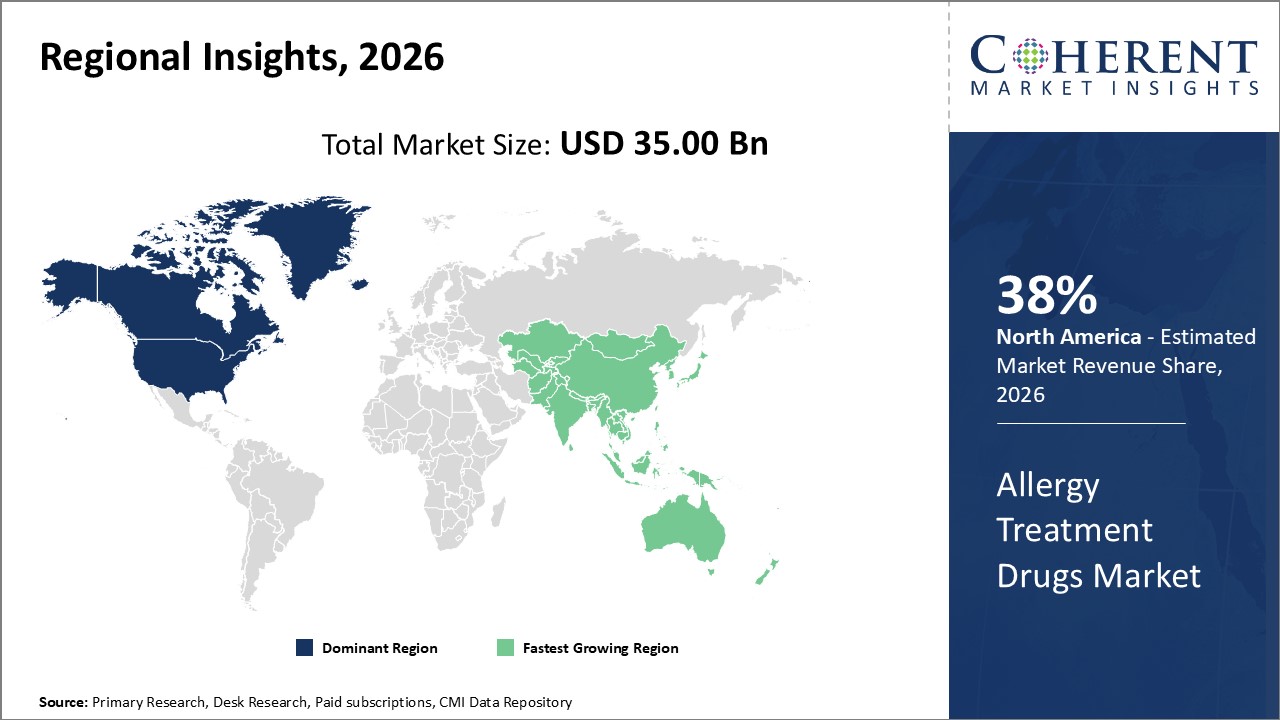
In terms of regions, North America holds the dominant 38% market share, fueled by the presence of advanced healthcare infrastructure and strong R&D funding by market players.
Meanwhile, the Asia Pacific is the fastest-growing region, registering an impressive CAGR driven by rising allergy incidence, improving healthcare access, and expanding pharmaceutical investments in countries like India and China.
Allergy Treatment Drugs Market Segmentation Analysis
Allergy Treatment Drugs Market Insights, By Drug Type
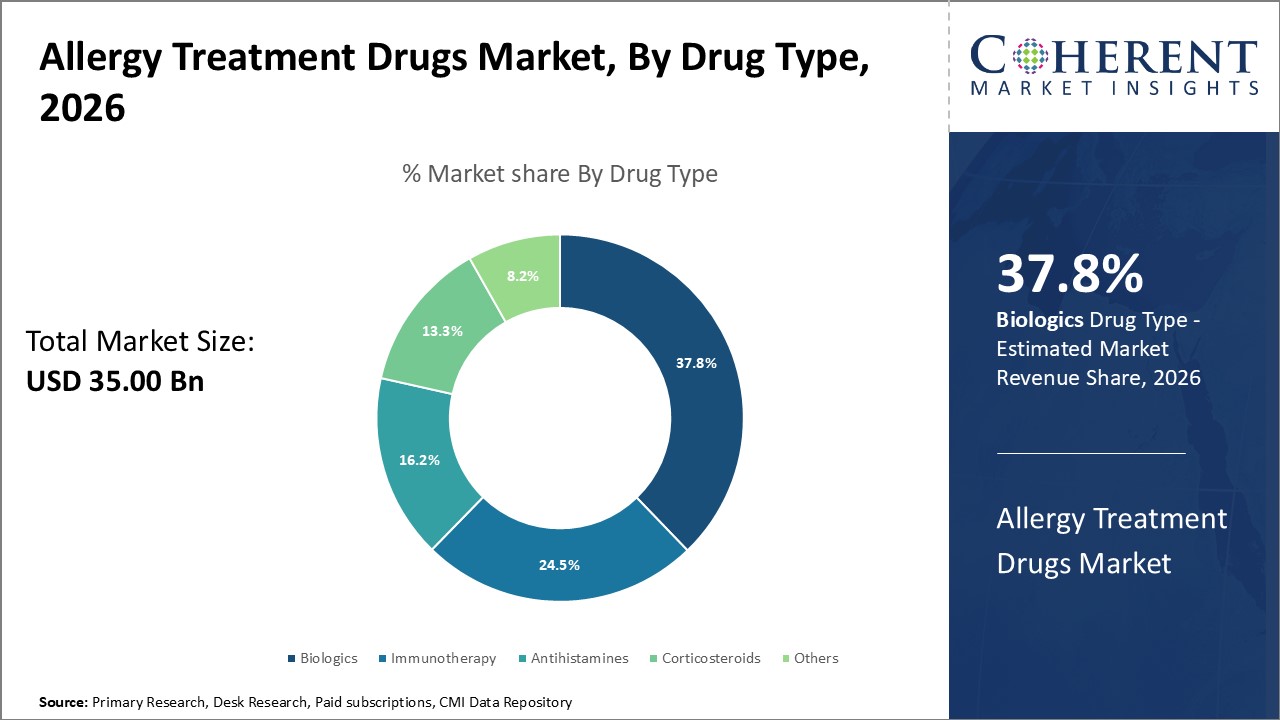
Biologics currently command approximately 37.8% of the market share, driven by their targeted action in chronic and severe allergies. The segment’s growth factors include increased provider preference for monoclonal antibodies targeting cytokines such as IL-4, IL-5, and IgE. Their superior efficacy and reduced side-effect profiles compared to steroids fuel demand. Immunotherapy is the fastest-growing subsegment, expanding rapidly due to rising patient preference for disease-modifying treatments through sublingual and subcutaneous routes. Antihistamines still serve the broad base of the allergy population, offering symptomatic relief post-exposure. Corticosteroids maintain a niche role, primarily in acute treatment and specialized cases. The ‘Others’ category includes emerging drug types in early clinical phases targeting novel immunological pathways.
Allergy Treatment Drugs Market Insights, By Application
Respiratory Allergies, including asthma and allergic rhinitis, sustained by the increasing global patient base and clinical success of biologics, dominate due to high disease prevalence. Biologics targeting eosinophilic asthma notably support this segment’s preeminence. Food Allergies represent the fastest-growing segment due to rising patient awareness and novel oral immunotherapy products improving patient outcomes. Dermatological Allergies maintain a steady growth trajectory with the introduction of topical immunomodulators catering to conditions like atopic dermatitis.
Allergy Treatment Drugs Market Insights, By Distribution Channel
Hospital Pharmacies lead due to their critical role in dispensing specialized biologics and immunotherapyrequiring medical supervision. The segment benefits from hospital-based allergy clinics and integrated care models, which have grown significantly in major markets. Retail Pharmacies continue to serve as primary access points for OTC antihistamines and corticosteroids. ‘Others’ include specialized mail-order pharmacy services and subscription-based delivery models, gaining traction especially in advanced markets.
Allergy Treatment Drugs Market Trends
The market landscape is reshaping, particularly through the rapid adoption of biologics and immunotherapies.
Recent examples include Regeneron Pharmaceuticals' launch of next-gen monoclonal antibodies targeting IL-5 receptors, which reported a revenue uplift of 25% in North America during 2025.
Additionally, the increasing prevalence of food allergies has driven advancements in oral immunotherapy, especially in Europe, where regulatory bodies fast-tracked approvals to meet urgent patient needs.
Another key trend is leveraging digital health platforms for allergy monitoring and telemedicine, catalyzing patient adherence and opening new revenue streams for market companies.
Allergy Treatment Drugs Market Insights, By Geography
North America Allergy Treatment Drugs Market Analysis and Trends
In North America, the market benefits from robust healthcare infrastructure, high per capita healthcare spend, and early adoption of innovative biologics and digital health solutions. Holding a commanding 38% industry share, the U.S. is the primary contributor, backed by dominant market companies and steady regulatory support that encourages fast approvals, contributing to strong market revenue.
Asia Pacific Allergy Treatment Drugs Market Analysis and Trends
Meanwhile, Asia Pacific exhibits the fastest growth with a CAGR above 9%, fueled by increasing allergy incidence, rising patient awareness, and large-scale pharmaceutical investments, especially in China and India. Government healthcare initiatives and expanding healthcare penetration further enhance the regional market scope and dynamics.
Allergy Treatment Drugs Market Outlook for Key Countries
USA Allergy Treatment Drugs Market Analysis and Trends
The USA commands the largest market revenue share owing to extensive R&D infrastructure and high adoption rates of biologics and immunotherapies. Leading players like Sanofi and Regeneron have contributed significantly through innovation-driven pipeline expansions and successful market penetration strategies. In 2025, biologics accounted for nearly 40% of allergy drug revenues in the U.S., signaling a sustained shift from conventional therapies. Moreover, favorable reimbursement policies and elevated patient awareness underlie robust business growth in this market.
India Allergy Treatment Drugs Market Analysis and Trends
India's allergy treatment drugs market is emerging rapidly due to increasing urban allergic disease prevalence and improving healthcare accessibility. Government-driven healthcare reforms and incentivized pharmaceutical manufacturing have facilitated market expansion, with import volumes growing by approximately 15% in 2026. Major international and domestic pharmaceutical market players are investing heavily in biologic and generic immunotherapy segments, driving competitive market share growth. The rise in health insurance penetration and generic drug affordability is expected to accelerate market growth trajectories in the coming years.
Analyst Opinion
The surge in biologic allergy treatment drugs adoption represents one of the most pivotal supply-side indicators impacting market size. In 2025, biologics contributed to approximately 35% of the total allergy treatment drugs revenue in North America alone, driven by improved efficacy in severe asthma and chronic urticaria. This trend is expected to escalate, given the 22% year-over-year increase in biologics prescriptions reported by major healthcare providers in the U.S.
On the demand side, patient-centric therapeutic options, particularly sublingual and subcutaneous immunotherapies, have demonstrated robust growth. For instance, in Europe, immunotherapy drug imports increased by 18% in 2026 compared to 2023, which correlates strongly with rising patient preference for disease-modifying allergy treatments over symptomatic drugs.
Market micro-indicators such as regional drug pricing strategies are showing strong influence. Price adjustments in emerging markets like India and Brazil have resulted in a 13% growth in drug accessibility and sales volume, as governments support improved reimbursement policies and incentivize generic drug market entry in 2025.
Nano-scale clinical trial results indicate a trend towards personalized allergy therapy. Recent 2026 trials in Japan have shown a 16% improved therapeutic response when using allergy treatment drugs tailored to patient IgE profiles, influencing larger market players to invest heavily in precision medicine approaches.
- Current Industry Events of 2026
- Market Size Estimation
- Regional Breakdown
- Competitive Landscape
- Customer Intelligence
- Segmental Analysis
- Pricing Analysis
- Key Market Drivers, Challenges & Future Trends
- Customized Insights Section
Market Scope
| Report Coverage | Details | ||
|---|---|---|---|
| Base Year: | 2025 | Market Size in 2026: | USD 35.00 billion |
| Historical Data for: | 2020 To 2024 | Forecast Period: | 2026 To 2033 |
| Forecast Period 2026 to 2033 CAGR: | 7.7% | 2033 Value Projection: | USD 58.83 billion |
| Geographies covered: |
| ||
| Segments covered: |
| ||
| Companies covered: | Pfizer Inc., GlaxoSmithKline plc, Sanofi S.A., Novartis AG, Johnson & Johnson, AstraZeneca plc, Merck & Co., Teva Pharmaceutical Industries Ltd., Regeneron Pharmaceuticals Inc., CSL Limited, Viatris Inc. | ||
| Growth Drivers: |
| ||
Allergy Treatment Drugs Market Growth Factors
The rising prevalence of allergic diseases worldwide, with WHO reporting a 10% increase in diagnosed cases from 2023 to 2026, is pushing demand for advanced allergy medications. Increased investment in research and development led to the launch of next-generation biologics and immunotherapies, such as anti-IgE and anti-IL-5 monoclonal antibodies, which accounted for roughly 41% of new drug approvals in 2025. Expanding healthcare infrastructure and enhanced health insurance coverage in emerging economies, improving patient accessibility, thereby increasing market revenue by 16% in these regions in 2026.Growing awareness and adoption of personalized medicine approaches, reflected in a 21% rise in patient adherence and treatment success rates reported in clinical settings across North America and Europe in 2025.
Allergy Treatment Drugs Market Development
In February 2025, ALK-Abelló launched its next-generation sublingual immunotherapy (SLIT) tablets targeting dust mite and pollen allergies in the U.S. and Japan. These tablets are designed to improve long-term disease modification by desensitizing patients to allergens, offering a convenient at-home alternative to traditional allergy shots, and supporting wider adoption of immunotherapy.
In October 2025, AstraZeneca’s Fasenra (benralizumab) received approval in Europe for the treatment of severe eosinophilic asthma. The approval reinforced Fasenra’s role as a biologic therapy that reduces asthma exacerbations by targeting eosinophils, expanding AstraZeneca’s respiratory portfolio across key European markets.
In October 2026, Cadila Pharmaceuticals introduced Dlorfast-M, a fixed-dose combination of desloratadine and montelukast, in India. The launch aimed to provide broader and more effective relief for patients suffering from allergic rhinitis and related respiratory allergies by addressing both histamine- and leukotriene-mediated symptoms.
Key Players
Leading Companies of the Market
Pfizer Inc.
GlaxoSmithKline plc,
Sanofi S.A.
Novartis AG
Johnson & Johnson
AstraZeneca plc
Merck & Co.
Teva Pharmaceutical Industries Ltd.
Regeneron Pharmaceuticals Inc.
CSL Limited
Viatris Inc.
Several leading companies have adopted innovative market growth strategies such as Pfizer’s licensing agreement with Regeneron to co-commercialize biologics that significantly enhanced their market access and patient reach, resulting in a 28% increase in allergy biologic therapy revenue in 2025. Likewise, Sanofi’s focus on biosimilar development has allowed expansion into emerging markets post-2023, expanding its market scope and competitive edge.
Allergy Treatment Drugs Market Future Outlook
Future growth in the allergy treatment drugs market will be driven by rising disease awareness, improved diagnostics, and increasing use of targeted biologic therapies. Personalized medicine approaches and immunotherapy-based treatments are expected to gain momentum. Pharmaceutical companies are likely to focus on long-acting formulations, improved safety profiles, and pediatric-friendly products. Emerging markets, where allergy diagnosis rates are increasing, will represent significant growth opportunities.
Allergy Treatment Drugs Market Historical Analysis
The allergy treatment drugs market has experienced sustained growth driven by the increasing prevalence of allergic conditions worldwide. Historically, treatment relied primarily on first-generation antihistamines, which were effective but associated with side effects such as drowsiness. Over time, the introduction of second and third-generation antihistamines, corticosteroids, and combination therapies significantly improved treatment outcomes. Urbanization, pollution, and lifestyle changes contributed to rising allergy incidence, strengthening long-term demand. Regulatory approvals of biologics marked a major shift in treatment paradigms for severe allergies.
Sources
Primary Research Interviews:
Allergists
Pulmonologists
Pharmacists
Clinical Researchers
Hospital Buyers
Databases:
IQVIA Pharma Data
FDA Drug Database
WHO Drug Statistics
GlobalData Pharma Reports
Magazines:
Pharmaceutical Technology
Drug Discovery Today
Pharma Times
BioPharma Dive
Medscape
Journals:
Journal of Allergy and Clinical Immunology
Clinical & Experimental Allergy
Allergy Journal
The Lancet Respiratory Medicine
Drug Development Research
Associations:
American Academy of Allergy Asthma & Immunology
European Academy of Allergy and Clinical Immunology
WHO
International Pharmaceutical Federation, FDA
Get access to 250+ pages report
Every segment, forecast, competitor profile and data table behind the analysis above — available for instant download.
- ESOMAR Member
- ISO 9001:2015 Certified
- D-U-N-S Registered
- GDPR & CCPA Compliant
Missing comfort of reading report in your local language? Find your preferred language:
Transform your Strategy with Exclusive Trending Reports
Frequently Asked Questions
The dominant players include Pfizer Inc., GlaxoSmithKline plc, Sanofi S.A., Novartis AG, and Johnson & Johnson, known for their extensive biologics and immunotherapy portfolios driving significant market share.
The Allergy Treatment Drugs market size is projected to reach USD 58.83 billion by 2033, growing at a CAGR of 7.7% from 2026 to 2033, driven by increasing allergy prevalence and biologic therapy adoption.
Respiratory allergy treatments hold the largest growth opportunity due to high asthma and allergic rhinitis patient populations benefiting from advanced biologics and immunotherapies.
Trends point toward personalized medicine, greater biologic therapy adoption, and digital health tools integration, fostering targeted allergy treatments and improved patient outcomes.
The market is highly competitive with innovation-driven market players focusing on R&D, biosimilar launches, and market expansion strategies while managing pricing pressures and regulatory hurdles.
Companies employ strategies like co-commercialization agreements, biosimilar development, geographic market expansion, and direct-to-consumer awareness campaigns to enhance market growth.