

Solid Tumors Treatment Market Size and Forecast — 2026 - 2033
The Global Solid Tumors Treatment Market size is estimated to be valued at USD 22.5 billion in 2026 and is expected to reach USD 39.8 billion by 2033, exhibiting a compound annual growth rate (CAGR) of 8.3% from 2026 to 2033.
Overview
The Solid Tumors Treatment Market includes a wide range of therapies used to manage cancers such as lung, breast, colorectal, prostate, and liver cancers. Key product segments include chemotherapy drugs, targeted therapies, immunotherapies, hormone therapies, and radiotherapy systems. Monoclonal antibodies and immune checkpoint inhibitors are driving innovation in immuno-oncology. Targeted therapies focus on specific genetic mutations, improving precision and reducing side effects. Additionally, surgical oncology tools and advanced radiation technologies like proton therapy play a major role. The market is expanding due to rising cancer incidence, improved diagnostics, and increasing adoption of personalized medicine approaches across healthcare systems globally.
Key Takeaways
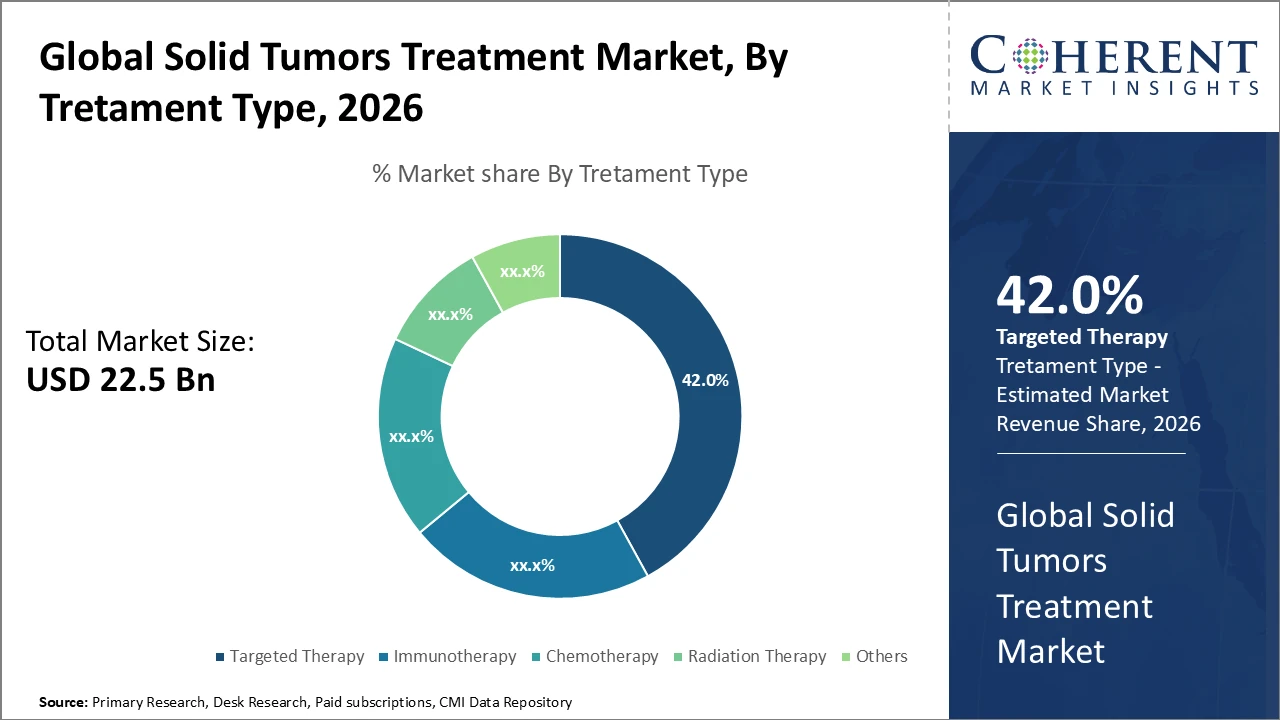
The targeted therapy segment dominates the solid tumors treatment market, holding 42% market share, underscoring the market shift toward molecular-specific interventions.
Breast cancer treatment shows the fastest growth, driven by increasing incidence and expanding targeted treatment availability.
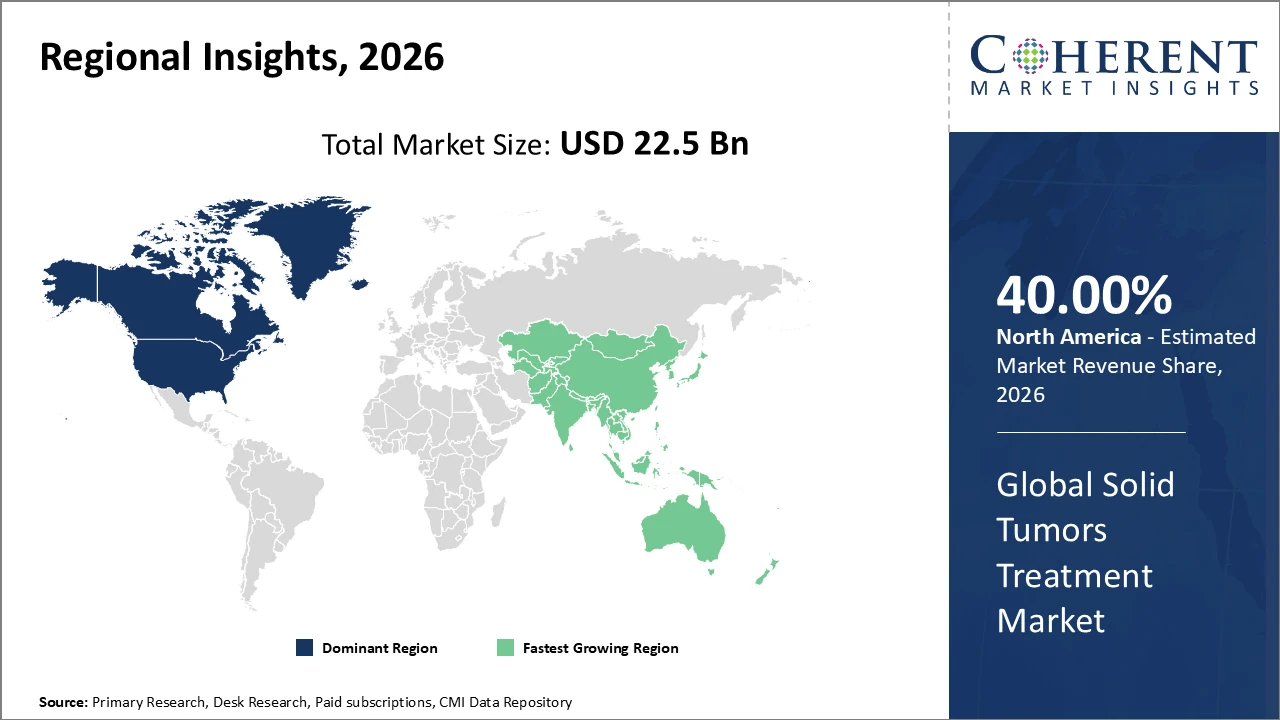
In terms of region, North America leads the market, capturing over 40% of industry share owing to advanced healthcare infrastructure and early adoption of novel therapies.
Asia Pacific registers the fastest CAGR, fueled by expanding healthcare investments, increasing oncology awareness, and growing clinical trial activities in countries like China and India.
Solid Tumors Treatment Market Segmentation Analysis
Solid Tumors Treatment Market Insights, By Treatment Type
Targeted therapy dominates the solid tumors treatment market with a 42% share, driven by its ability to selectively inhibit cancer-driving molecular pathways, offering improved efficacy and reduced side effects compared to conventional treatments. Immunotherapy is the fastest-growing subsegment, supported by breakthrough therapy designations for checkpoint inhibitors and increasing adoption of CAR-T cell therapies, enhancing clinical outcomes in multiple solid tumors. Chemotherapy continues to be widely used but is witnessing a gradual decline in market share due to the rise of advanced targeted approaches. Radiation therapy remains a key component in combination regimens, showing steady but moderate growth. Other therapies include hormone and gene therapies.
Solid Tumors Treatment Market Insights, By End User
Hospitals account for the majority share at 55%, supported by comprehensive oncology infrastructure, advanced diagnostic facilities, and multidisciplinary teams capable of delivering complex solid tumor treatments. Specialty oncology clinics are experiencing strong growth as outpatient care models expand, offering patients cost-effective and convenient access to targeted therapies and follow-up care. Ambulatory surgical centers are also gaining traction, driven by the increasing use of minimally invasive procedures and day-care administration of certain cancer therapies, including immunotherapy infusions. Other end users, such as home healthcare services and research institutes, play a supporting role by enabling clinical trials, experimental treatments, and patient monitoring programs.
Solid Tumors Treatment Market Trends
The solid tumors treatment industry trend is increasingly shaped by advancements in personalized medicine and integrated care pathways, enabling more precise and patient-specific treatment strategies.
The adoption of AI-driven diagnostic platforms, such as oncology-focused enhancements in IBM Watson applications in 2025, is improving patient stratification, accelerating diagnosis, and enhancing treatment planning efficiency.
The rise of combination immunotherapies, supported by positive Phase III clinical trial outcomes in 2026 for non-small cell lung cancer, highlights a strong shift toward multidrug treatment regimens for better survival outcomes.
The growing use of digital therapeutics and real-world evidence studies is enabling continuous monitoring and real-time optimization of cancer treatment approaches.
Solid Tumors Treatment Market Insights, By Geography
North America Solid Tumors Treatment Market Analysis and Trends
North America dominates the solid tumors treatment market with over 40% share, driven by advanced healthcare infrastructure, strong oncology research institutions, and high R&D investments from major companies such as Roche and Merck & Co. The region benefits from robust clinical trial networks and early adoption of innovative therapies, including immunotherapies and targeted treatments. Strong regulatory frameworks, particularly expedited approval pathways by the FDA, further accelerate drug development and commercialization. The United States plays a central role in market growth, contributing significantly through frequent new oncology drug approvals and widespread integration of advanced cancer treatment technologies across healthcare systems.
Asia Pacific Solid Tumors Treatment Market Analysis and Trends
The Asia Pacific region is the fastest-growing market for solid tumors treatment, with a CAGR exceeding 10%, driven by rising cancer prevalence and improving access to healthcare services. Rapidly expanding medical infrastructure and increasing healthcare spending in countries such as China and India are supporting broader adoption of advanced oncology treatments. Government initiatives aimed at strengthening cancer care systems and early diagnosis programs are further accelerating market growth. Additionally, growing awareness campaigns are encouraging timely treatment. Regional pharmaceutical companies are also forming strategic partnerships with global players to enhance technology transfer, expand clinical research, and strengthen their presence in local and international markets.
Solid Tumors Treatment Market Outlook for Key Countries
USA Solid Tumors Treatment Market Analysis and Trends
The United States remains a key contributor to the solid tumors treatment market, driven by extensive clinical research activity and a strong pace of drug innovation. In 2025, the country accounted for nearly 45% of global oncology drug sales, supported by major advancements in immunotherapy and targeted therapies. The presence of leading pharmaceutical companies such as Bristol-Myers Squibb and Pfizer further strengthens market growth through continuous pipeline expansion and strategic acquisitions. Favorable regulatory support, advanced healthcare infrastructure, and high adoption of novel treatments continue to reinforce the United States’ dominant position in the global solid tumors treatment landscape.
Germany Solid Tumors Treatment Market Analysis and Trends
Germany’s solid tumors treatment market is characterized by strong healthcare infrastructure, high cancer screening rates, and widespread access to advanced oncology therapies. The country benefits from a well-established reimbursement system that supports the adoption of innovative treatments, including targeted therapies and immunotherapies. Increasing incidence of cancers such as breast, lung, and colorectal is driving demand for effective treatment solutions. Germany is also a hub for clinical research, with numerous trials supporting new drug development. Market growth is further supported by collaborations between pharmaceutical companies and research institutions, along with rising emphasis on personalized medicine and precision oncology approaches.
Analyst Opinion
Demand-side dynamics show that adoption of immunotherapy and targeted therapies increased by over 25% in 2025, as cancer centers worldwide expanded access to advanced and personalized treatment options, improving patient outcomes and driving market growth.
Supply-side indicators highlight a 15% increase in production capacity for biosimilar antibodies targeting solid tumors in 2024, reflecting a growing emphasis on cost-effective therapies and large-scale manufacturing expansion.
Pricing trends indicate moderate cost inflation; however, strategic pricing approaches introduced by key companies in 2026 have enhanced affordability and improved treatment access, particularly in emerging economies.
Micro-level indicators reveal a 12% rise in oncology service imports in North America in 2025, while Asia Pacific has seen increased export activity due to strengthened clinical manufacturing and research capabilities.
- Current Industry Events of 2026
- Market Size Estimation
- Regional Breakdown
- Competitive Landscape
- Customer Intelligence
- Segmental Analysis
- Pricing Analysis
- Key Market Drivers, Challenges & Future Trends
- Customized Insights Section
Market Scope
| Report Coverage | Details | ||
|---|---|---|---|
| Base Year: | 2025 | Market Size in 2026: | USD 22.5 billion |
| Historical Data for: | 2020 To 2024 | Forecast Period: | 2026 To 2033 |
| Forecast Period 2026 to 2033 CAGR: | 8.3% | 2033 Value Projection: | USD 39.8 billion |
| Geographies covered: |
| ||
| Segments covered: |
| ||
| Companies covered: | Roche, Pfizer, Novartis, AstraZeneca, Amgen, Sanofi, Bayer AG, Johnson & Johnson, GlaxoSmithKline, Merck & Co. | ||
| Growth Drivers: |
| ||
Solid Tumors Treatment Market Growth Factors
The accelerating focus on precision oncology remains a primary driver of the solid tumors treatment market, with over 60% of drugs approved between 2024 and 2026 targeting specific genetic mutations. Favorable regulatory frameworks, including fast-track and breakthrough designations, have reduced time-to-market for innovative therapies, encouraging strong R&D investments. The growing number of advanced oncology centers equipped with cutting-edge diagnostics and treatment technologies, especially in developed regions, is improving patient access to specialized care. Additionally, increased government funding for cancer research, such as a 20% budget rise for the U.S. National Cancer Institute in 2025, continues to support innovation and market expansion.
Solid Tumors Treatment Market Development
In January 2026, CARsgen Therapeutics and Dispatch Bio announced a collaboration to initiate a Phase 1 trial in China, combining an oncolytic virus platform with CARsgen’s CAR-T therapy for solid tumors.
Key Players
Leading Companies of the Market
Novartis
Pfizer
AstraZeneca
GlaxoSmithKline
Amgen
Johnson & Johnson
Bayer AG
Sanofi
Roche
Merck & Co.
Several leading companies in the solid tumors treatment market are pursuing aggressive growth strategies, including licensing novel molecular entities and expanding their oncology pipelines. For example, Roche entered a strategic alliance in 2025 to co-develop antibody-drug conjugates, which contributed to a notable increase in its oncology segment revenue. Similarly, Pfizer strengthened its market position through the acquisition of a biopharmaceutical firm specializing in CAR-T cell therapies, accelerating its presence in lung and breast cancer treatments and boosting overall market share by 2026.
Solid Tumors Treatment Market Future Outlook
The solid tumors treatment market is expected to witness strong growth in the coming years, driven by continuous advancements in precision oncology, immunotherapy, and targeted drug development. Increasing integration of artificial intelligence in diagnostics and treatment planning will further enhance patient outcomes and clinical efficiency. The expansion of combination therapies and next-generation modalities such as gene and cell therapies is likely to reshape treatment standards. Emerging markets will play a crucial role due to improving healthcare infrastructure and rising cancer awareness. Additionally, ongoing investments in research, supportive regulatory policies, and strategic collaborations will continue to accelerate innovation and market expansion globally.
Solid Tumors Treatment Market Historical Analysis
The solid tumors treatment market has evolved significantly over the past decade, driven by advancements in oncology research and treatment technologies. Historically, chemotherapy and radiation therapy dominated the market, offering broad but less targeted approaches. Over time, the introduction of targeted therapies and monoclonal antibodies marked a shift toward precision medicine, improving efficacy and reducing side effects. The 2010s saw rapid growth in immunotherapy, particularly checkpoint inhibitors, transforming treatment outcomes for several cancers. Increased cancer incidence, improved diagnostic capabilities, and rising healthcare investments further supported market expansion, while regulatory approvals and clinical breakthroughs accelerated the adoption of innovative therapies worldwide.
Sources
Primary Research Interviews:
Oncologists, radiologists, and oncology nurses involved in the administration and evaluation of solid tumor treatments such as chemotherapy, immunotherapy, and targeted therapy
Pharmaceutical company executives, clinical researchers, and R&D scientists working on oncology drug development, including immunotherapies, targeted therapies, and combination treatments
Hospital administrators, oncology center directors, and procurement managers responsible for selecting cancer treatment technologies and drugs
Magazines:
Pharmaceutical Technology – Updates on oncology drug development and clinical advancements
Fierce Pharma – Industry news on cancer therapies, drug approvals, and company strategies
BioPharma Dive – Trends in biopharmaceutical innovation, including immunotherapy and targeted treatments
Healthcare IT News – Digital health integration and AI applications in oncology care
Journals:
Journal of Clinical Oncology – Research on cancer treatment outcomes, clinical trials, and therapy advancements
The Lancet Oncology – Studies on global cancer burden and innovative treatment approaches
Cancer Research – Scientific developments in tumor biology and targeted therapies
Newspapers:
The Wall Street Journal – Healthcare industry trends and pharmaceutical market developments
Financial Times – Global oncology market growth and investment trends
Reuters Health – Updates on cancer treatment approvals and regulatory developments
Bloomberg – Market analysis, company performance, and oncology sector insights
Associations:
American Society of Clinical Oncology (ASCO) – Clinical guidelines and oncology research updates
European Society for Medical Oncology (ESMO) – Standards for cancer treatment and clinical practice
World Health Organization (WHO) – Global cancer statistics, policies, and healthcare infrastructure initiatives
Get access to 250+ pages report
Every segment, forecast, competitor profile and data table behind the analysis above — available for instant download.
- ESOMAR Member
- ISO 9001:2015 Certified
- D-U-N-S Registered
- GDPR & CCPA Compliant
Missing comfort of reading report in your local language? Find your preferred language:
Transform your Strategy with Exclusive Trending Reports
Frequently Asked Questions
Leading players include Roche, Bayer AG, Merck & Co., Pfizer, and Novartis, noted for their extensive oncology pipelines and strategic alliances boosting market revenue and share.
The market size is projected to reach USD 39.8 billion by 2033 from USD 22.5 billion in 2026, reflecting sustained growth driven by innovation and rising cancer incidence.
Hospitals continue to hold the largest market share at 55%, benefiting from integrated oncology services and advanced therapy infrastructures.
Market trends indicate robust adoption of immunotherapies, AI-enabled treatment personalization, and combination therapies, all contributing to enhanced clinical outcomes and market expansion.
The market landscape is marked by intense innovation competition and pricing pressures, with challenges in regulatory approvals and reimbursement frameworks impacting business growth strategies.
Partnerships for co-development, licensing of novel compounds, and geographic expansion into emerging markets are key strategies deployed by leading market companies to enhance market penetration and share.