

Gynecological Cancer Drugs Market Size and Forecast — 2026 - 2033
The Global Gynecological Cancer Drugs Market size is estimated to be valued at USD 14.3 billion in 2026 and is expected to reach USD 27.9 billion by 2033, exhibiting a compound annual growth rate (CAGR) of 9.5% from 2026 to 2033.
Overview
The gynecological cancer drugs market is driven by the rising incidence of cervical, ovarian, uterine, vaginal, and vulvar cancers worldwide, increasing demand for effective treatment options, and growing awareness of early diagnosis and screening programs. Advancements in targeted therapies, immunotherapies, and personalized medicine are improving treatment outcomes and expanding therapeutic choices. Increased investment in oncology research and development, along with a robust pipeline of novel drug candidates, is further fueling market growth. Supportive government initiatives, favorable reimbursement policies in developed regions, and expanding healthcare infrastructure in emerging economies are enhancing patient access to innovative treatments and driving overall market expansion.
Key Takeaways
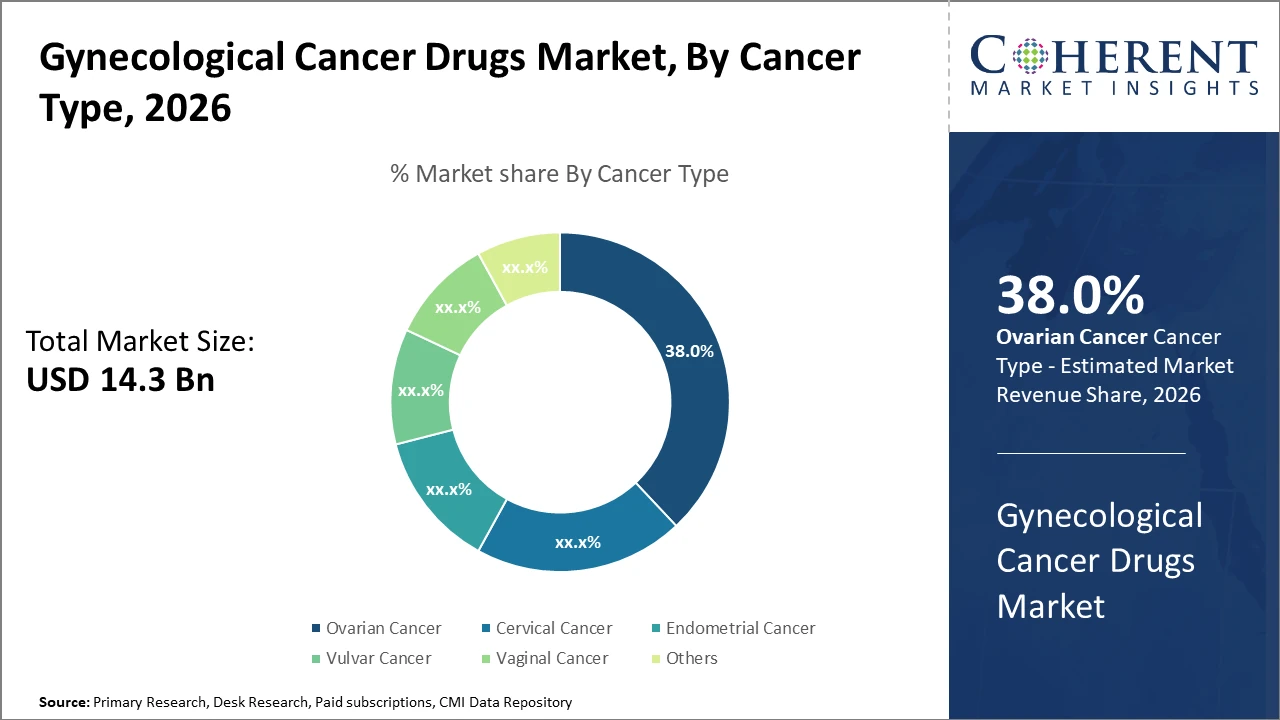
- The Ovarian Cancer Drugs segment dominates the gynecological cancer drugs market, accounting for approximately 38% of total market share. Growth is supported by advancements in targeted therapies, biomarker-based treatment approaches, and improved patient outcomes, while immunotherapy within this segment is emerging as the fastest-growing treatment category.
- Targeted Therapy remains the leading drug class in the market due to the increasing adoption of precision medicine and the strong clinical efficacy demonstrated by PARP inhibitors, angiogenesis inhibitors, and other molecularly targeted treatments. Immunotherapy is the fastest-growing drug class, driven by recent approvals and expanding clinical indications.
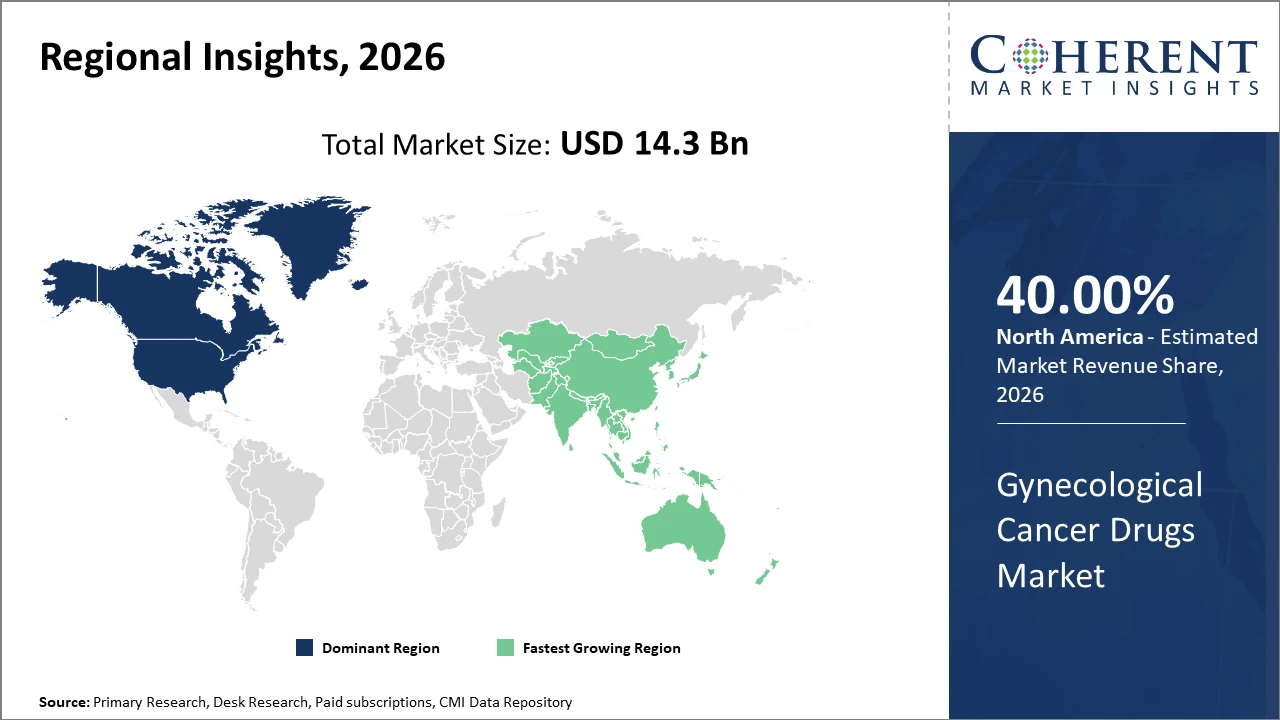
- North America holds more than 40% of the global market share, supported by advanced healthcare infrastructure, substantial oncology research investments, and favorable reimbursement frameworks that facilitate access to innovative cancer therapies.
- Asia Pacific is the fastest-growing regional market, registering a CAGR exceeding 11%, fueled by increasing healthcare spending, expanding insurance coverage, improving cancer screening programs, and growing adoption of advanced oncology treatments in countries such as China, India, and Japan.
Gynecological Cancer Drugs Market Segmentation Analysis
Gynecological Cancer Drugs Market Insights, By Cancer Type
Ovarian cancer dominates the gynecological cancer drugs market, accounting for approximately 38% of total market share. Its leadership is attributed to high disease mortality rates, increasing incidence, and strong demand for advanced treatment options. Significant research investments have led to the development of targeted therapies, including PARP inhibitors, which have improved progression-free survival and treatment outcomes. Cervical cancer also represents a substantial market segment, supported by ongoing treatment needs despite expanded screening and HPV vaccination programs. Endometrial cancer is experiencing steady growth due to rising prevalence linked to lifestyle and hormonal factors. Vulvar, vaginal, and other rare gynecological cancers constitute smaller but specialized segments requiring innovative therapeutic approaches.
Gynecological Cancer Drugs Market Insights, By Drug Class
Targeted therapy is the leading drug class in the gynecological cancer drugs market, generating the highest revenue share due to its precision-based treatment approach and strong clinical effectiveness. The widespread adoption of PARP inhibitors, anti-angiogenic agents, and other biomarker-driven therapies has significantly improved patient outcomes, particularly in ovarian cancer treatment. Immunotherapy is the fastest-growing segment, driven by increasing approvals of immune checkpoint inhibitors and combination treatment regimens that offer durable responses in advanced and recurrent cancers. Chemotherapy continues to play an important role in standard treatment protocols, although its growth is moderating. Hormonal therapies remain relevant for hormone-sensitive cancers, while emerging therapies are expanding future treatment possibilities.
Gynecological Cancer Drugs Market Insights, By End User
Hospitals and clinics dominate the distribution channel segment of the gynecological cancer drugs market, accounting for the largest share of drug dispensation due to the need for specialist supervision, intravenous drug administration, and continuous patient monitoring. These settings remain essential for managing complex treatment regimens and adverse effects. Retail pharmacies play a significant role in providing access to oral oncology therapies and long-term maintenance medications for outpatient care. Online pharmacies are experiencing rapid growth, supported by increasing digital healthcare adoption, patient convenience, and evolving regulatory frameworks. Other channels, including specialized distributors and government healthcare programs, are helping expand treatment access in underserved and developing regions.
Gynecological Cancer Drugs Market Trends
- The gynecological cancer drugs market is increasingly shifting toward personalized medicine, with treatment decisions guided by genetic biomarkers, molecular profiling, and precision oncology approaches.
- Approvals of advanced PARP inhibitors and immune checkpoint inhibitors during 2024 and 2025 have significantly improved treatment outcomes and progression-free survival rates for patients with ovarian and other gynecological cancers.
- Artificial intelligence and digital health technologies are being integrated into clinical development and patient stratification processes, helping accelerate drug discovery and optimize treatment selection.
- Pharmaceutical companies are expanding their portfolios through biosimilar development and launches, particularly following the expiration of patents for several high-value oncology therapies in North America and Europe.
- Patient-centric care models, value-based healthcare strategies, and efforts to improve treatment affordability are shaping future market growth while supporting broader access to innovative cancer therapies.
Gynecological Cancer Drugs Market Insights, By Geography
North America Gynecological Cancer Drugs Market Analysis and Trends
North America dominates the gynecological cancer drugs market with a share of 40% due to its advanced healthcare infrastructure, strong oncology research ecosystem, and favorable reimbursement policies that facilitate access to innovative cancer therapies. The United States accounted for more than 35% of global market revenue in 2026, reflecting its substantial investment in cancer treatment and drug development. The region benefits from extensive clinical trial activity, early adoption of novel therapeutics, and strong regulatory support for breakthrough oncology medicines. Furthermore, the presence of major pharmaceutical and biotechnology companies continues to drive pipeline innovation, resulting in the development and commercialization of advanced targeted therapies and immunotherapies.
Asia Pacific Gynecological Cancer Drugs Market Analysis and Trends
The Asia Pacific gynecological cancer drugs market is witnessing the fastest growth globally, registering a CAGR exceeding 11%. This rapid expansion is driven by increasing government initiatives focused on cancer awareness, early screening programs, and improved access to oncology care. Countries such as China and India are investing heavily in healthcare infrastructure and expanding reimbursement coverage for cancer treatments. Rising healthcare expenditure, growing prevalence of gynecological cancers, and increasing availability of innovative therapies are further supporting market growth. Additionally, the expansion of private healthcare networks is accelerating the adoption of advanced targeted therapies and immunotherapies across the region.
Gynecological Cancer Drugs Market Outlook for Key Countries
USA Gynecological Cancer Drugs Market Analysis and Trends
The United States remains the largest contributor to the gynecological cancer drugs market, supported by early adoption of advanced oncology therapies and comprehensive insurance coverage frameworks. Favorable regulatory pathways for breakthrough and priority-review medicines have enabled companies such as Roche and AstraZeneca to introduce innovative treatments efficiently. In 2025, prescriptions for PARP inhibitors increased significantly following expanded indications for ovarian cancer management. Extensive clinical trial activity led by pharmaceutical and biotechnology companies further strengthens the country's leadership in gynecological cancer drug innovation, contributing to substantial market revenue growth and continued therapeutic advancements.
Germany Gynecological Cancer Drugs Market Analysis and Trends
The Germany gynecological cancer drugs market is experiencing steady growth, driven by increasing incidence of ovarian, cervical, and endometrial cancers, along with rising adoption of targeted therapies and immunotherapies. Germany’s advanced healthcare infrastructure and comprehensive reimbursement system support broad access to innovative oncology treatments. The market is witnessing growing utilization of precision medicine approaches, including biomarker-guided therapies such as PARP inhibitors for ovarian cancer. Strong clinical research activity and participation in international oncology trials further contribute to market development. Additionally, government initiatives promoting early cancer detection and improved screening programs are enhancing diagnosis rates, supporting sustained demand for advanced gynecological cancer therapeutics across the country.
Analyst Opinion
- Precision medicine is driving market growth, with targeted therapies accounting for a significant share of revenue as biomarker-based treatments improve efficacy and reduce treatment-related side effects.
- Increased competition from biosimilars and evolving reimbursement policies have lowered therapy costs, improving patient access and supporting broader adoption of gynecological cancer drugs.
- Rising incidence of cervical, ovarian, and endometrial cancers, combined with expanded diagnostic screening programs, continues to increase demand for advanced oncology therapeutics worldwide.
- Advances in molecular profiling and nanoparticle-based drug delivery systems are enhancing treatment effectiveness, enabling more personalized therapies and contributing to continued market innovation.
- Current Industry Events of 2026
- Market Size Estimation
- Regional Breakdown
- Competitive Landscape
- Customer Intelligence
- Segmental Analysis
- Pricing Analysis
- Key Market Drivers, Challenges & Future Trends
- Customized Insights Section
Market Scope
Report Coverage | Details | ||
Base Year: | 2025 | Market Size in 2026: | USD 14.3 billion |
Historical Data for: | 2020 To 2024 | Forecast Period: | 2026 To 2033 |
Forecast Period 2026 to 2033 CAGR: | 9.5 % | 2033 Value Projection: | USD 27.9 billion |
Geographies covered: | North America: U.S. and Canada Latin America: Brazil, Argentina, Mexico, and Rest of Latin America Europe: Germany, U.K., Spain, France, Italy, Benelux, Denmark, Norway, Sweden, Russia, and Rest of Europe. Asia Pacific: China, Taiwan, India, Japan, South Korea, Indonesia, Malaysia, Philippines, Singapore, Australia, and Rest of Asia Pacific. Middle East & Africa: Bahrain, Kuwait, Oman, Qatar, Saudi Arabia, United Arab Emirates, Israel, South Africa, North Africa, Central Africa, and Rest of MEA. | ||
Segments covered: | By Cancer Type: Ovarian Cancer, Cervical Cancer, Endometrial Cancer, Vulvar Cancer, Vaginal Cancer, Others By Drug Class: Targeted Therapy, Immunotherapy, Chemotherapy, Hormonal Therapy, Others By End User: Hospitals & Clinics, Retail Pharmacies, Online Pharmacies, Others | ||
Companies covered: | Roche, Pfizer, Novartis, AstraZeneca, GlaxoSmithKline, Johnson & Johnson, Merck & Co., Amgen, Mylan, Ipsen | ||
Growth Drivers: | The rise in prevalence of gynecological cancers Expnding healthcare infrastructure | ||
Gynecological Cancer Drugs Market Growth Factors
The increasing prevalence of gynecological cancers, particularly ovarian and cervical cancers, remains a major driver of market growth. Rising diagnosis rates across developed and developing regions are creating sustained demand for effective and innovative treatment options. Advances in molecular diagnostics have accelerated the adoption of targeted therapies, which accounted for a significant portion of new oncology drug approvals in 2025. Expanding reimbursement coverage and supportive government healthcare policies in North America and Europe have improved patient access to advanced cancer treatments. Additionally, growing healthcare infrastructure, increased cancer awareness, and large-scale screening initiatives in emerging economies such as India are generating new opportunities for market expansion.
Gynecological Cancer Drugs Market Development
In April 2026, Labcorp announced nationwide access to Agilent Technologies’s PD-L1 IHC 22C3 pharmDx, an FDA-approved companion diagnostic used to identify patients with platinum-resistant ovarian cancer who may qualify for treatment with Keytruda.
Key Players
Leading Companies of the Market
- Roche
- Pfizer
- Novartis
- Merck & Co.
- Johnson & Johnson
- AstraZeneca
- GlaxoSmithKline
- Amgen
- Mylan
- Ipsen
Competitive strategies in the gynecological cancer drugs market are increasingly centered on portfolio diversification, precision medicine integration, and strategic partnerships. For example, Roche strengthened its oncology portfolio through acquisitions and collaborations in the diagnostics sector, enabling the integration of companion diagnostics with targeted drug development and enhancing treatment personalization. AstraZeneca accelerated the development of its immuno-oncology pipeline through strategic partnerships with biotechnology companies, supporting revenue growth and expanding its therapeutic reach. Meanwhile, Pfizer focused on biosimilar development and commercialization strategies, helping the company expand its presence in cost-sensitive markets across Europe and Asia Pacific while improving patient access to oncology treatments.
Gynecological Cancer Drugs Market Future Outlook
The future outlook for the gynecological cancer drugs market remains highly positive, driven by continuous advancements in precision medicine, immunotherapy, and targeted treatment approaches. Increasing adoption of biomarker-based therapies and companion diagnostics is expected to improve treatment outcomes and expand personalized care options. Ongoing clinical trials focusing on PARP inhibitors, antibody-drug conjugates, and immune checkpoint inhibitors will likely introduce new therapeutic opportunities. Rising healthcare expenditure, enhanced cancer screening programs, and improved access to oncology treatments in emerging markets will further support growth. Additionally, expanding research into rare gynecological cancers and innovative drug delivery technologies is expected to strengthen long-term market development through 2033.
Gynecological Cancer Drugs Market Historical Analysis
The gynecological cancer drugs market has evolved significantly over the past decade, driven by increasing cancer incidence, advancements in oncology research, and improved diagnostic capabilities. Historically, chemotherapy served as the primary treatment option for ovarian, cervical, and endometrial cancers. However, the introduction of targeted therapies and immunotherapies transformed treatment paradigms by offering improved efficacy and reduced toxicity. Growing understanding of genetic mutations such as BRCA1 and BRCA2 accelerated the adoption of precision medicine approaches, particularly in ovarian cancer treatment. Increased investment in clinical trials, supportive regulatory approvals, and expanding access to innovative therapies across developed markets have consistently contributed to the market’s historical growth trajectory.
Sources
- Primary Research Interviews:
- Medical oncologists, gynecologic oncologists, hospital pharmacists, oncology clinic administrators, cancer treatment center specialists, pharmaceutical manufacturers, and distributors involved in gynecological cancer therapeutics and oncology drug delivery.
- Cancer researchers, molecular biologists, immunotherapy specialists, clinical trial investigators, regulatory consultants, biotechnology professionals, and R&D directors specializing in targeted therapies, immuno-oncology, biomarker-driven treatments, and precision medicine for gynecological cancers.
- Magazines:
- Oncology Times – Insights into cancer treatment advances, oncology drug developments, and clinical practice trends.
- Pharmaceutical Executive – Coverage of oncology drug commercialization, regulatory developments, and pharmaceutical innovation.
- Drug Discovery & Development – Updates on targeted therapies, immunotherapies, and emerging oncology research.
- Journals:
- Journal of Clinical Oncology – Research on cancer therapeutics, clinical trials, and treatment outcomes in gynecological cancers.
- Gynecologic Oncology – Studies focused on ovarian, cervical, endometrial, vulvar, and vaginal cancer treatment advancements.
- The Lancet Oncology – Research related to oncology drug innovation, precision medicine, and immunotherapy applications in cancer care.
- Newspapers:
- Financial Times – Coverage of pharmaceutical investments, oncology drug development, and healthcare market trends.
- Reuters – Reporting on oncology drug approvals, clinical trial results, and pharmaceutical industry developments.
- Bloomberg – Insights into mergers, acquisitions, partnerships, and strategic initiatives among global pharmaceutical and biotechnology companies.
- Associations:
- Society of Gynecologic Oncology – Research developments, clinical guidelines, and innovations in gynecological cancer treatment.
- European Society for Medical Oncology – Information on oncology research, treatment standards, and cancer care advancements.
- American Society of Clinical Oncology – Insights into clinical oncology research, drug development, and evidence-based cancer treatment practices.
Get access to 250+ pages report
Every segment, forecast, competitor profile and data table behind the analysis above — available for instant download.
- ESOMAR Member
- ISO 9001:2015 Certified
- D-U-N-S Registered
- GDPR & CCPA Compliant
Missing comfort of reading report in your local language? Find your preferred language:
Transform your Strategy with Exclusive Trending Reports
Frequently Asked Questions
Leading companies in the gynecological cancer drugs market include Roche, AstraZeneca, Pfizer, Merck & Co. These companies maintain strong market positions through extensive oncology portfolios, robust clinical pipelines, and continuous innovation in targeted therapies and immuno-oncology treatments.
The global gynecological cancer drugs market is projected to grow from USD 14.3 billion in 2026 to approximately USD 27.9 billion by 2033, registering a CAGR of 9.5% during the forecast period.
Hospitals and clinics represent the largest growth opportunity, supported by increasing oncology patient volumes, expanding outpatient treatment services, and the adoption of advanced cancer treatment protocols across specialized oncology centers.
Key trends are expected to include greater adoption of precision medicine, expanded use of immunotherapies and targeted therapies, increased availability of oral oncology treatments, and integration of digital health technologies for patient monitoring, real-world evidence generation, and treatment optimization.
The market is highly competitive and innovation-driven, characterized by intensive R&D investment, strategic partnerships, and expansion into emerging markets. Major challenges include high therapy costs, complex regulatory approval pathways, pricing pressures, and reimbursement variations across different healthcare systems.
Companies commonly pursue portfolio diversification, partnerships for companion diagnostics and biomarker testing, biosimilar development, strategic acquisitions, and geographic expansion into high-growth regions such as Asia Pacific and Latin America to strengthen market presence and improve patient access to innovative therapies.