

Europe And Japan Allergy Immunotherapy Market Size and Share Analysis - Growth Trends and Forecasts (2026 - 2033)
The Europe and Japan allergy immunotherapy market size is expected to reach approximately USD 1,675.6 Mn in 2026 and USD 2,894.4 Mn by 2033, growing at a CAGR of 8.4% throughout the forecast period (2026-2033).
Key Takeaways from the Europe and Japan Allergy Immunotherapy Market Report
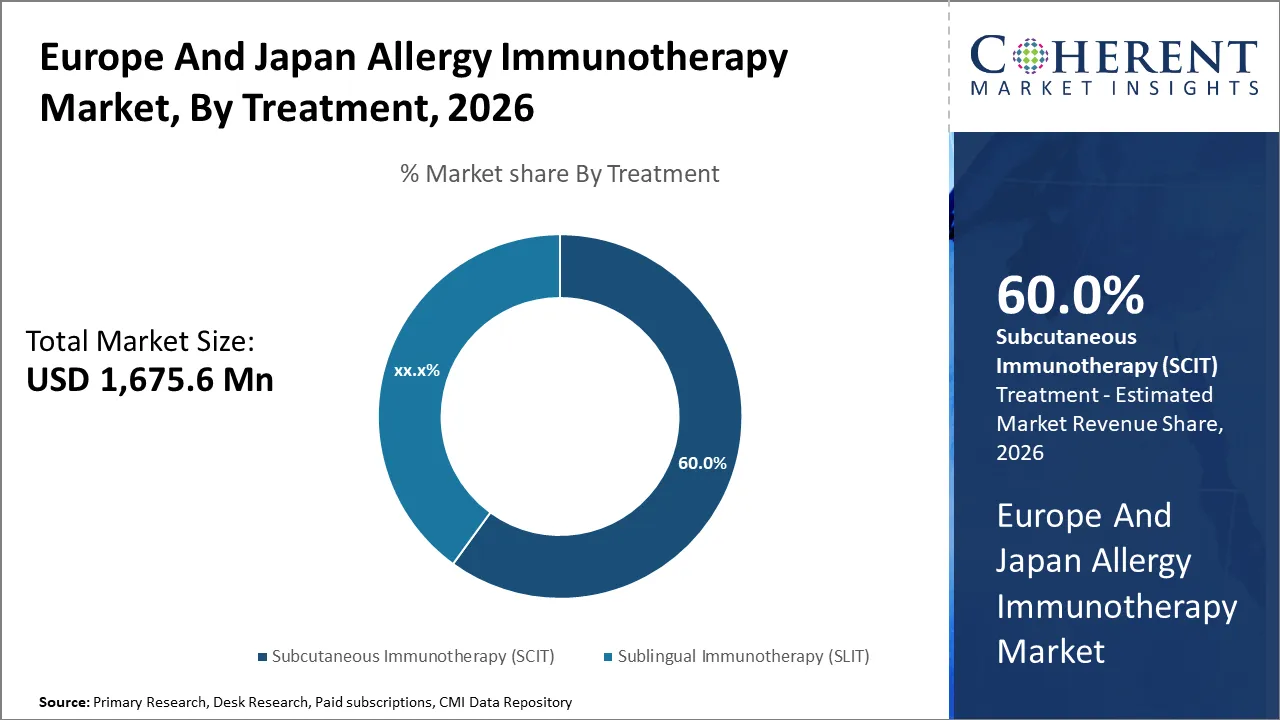
- Subcutaneous Immunotherapy (SCIT) segment holds the dominant position in the market, accounting for about 60% of the market share in 2026.
- Allergy Rhinitis are expected to remain leading allergy type, accounting for 40% of market revenue in 2026, driven by high prevalence and growing awareness.
- The hospital pharmacies segment registered its dominance over the Europe and Japan allergy immunotherapy market with share of 60% in 2026.
- Europe is projected to dominate the market in 2026, with a share of over 70% due to strong presence of key players and supportive regulatory and research ecosystem.
Europe and Japan Allergy Immunotherapy Market Overview
The medical treatment that gradually exposes patient to controlled doses of allergens to modify the immune system’s response and provide long-term relief from allergic diseases such as allergic asthma, rhinitis, and pollen allergies is known as allergy immunotherapy. The immunotherapy is believed to target root cause of allergies and treat the symptoms. The Europe and Japan allergy immunotherapy market is gaining strategic importance because of increasing incidence of allergic disorders, growing patient awareness, advancement in healthcare infrastructure, and growing clinical research supporting advanced therapies such as subcutaneous and sublingual immunotherapy.
Current Events and Their Impact
Current Event | Description and its Impact |
Expansion of Reimbursement Access for SLIT Tablets in Europe |
|
High Pollen Exposure and Stronger Allergy Seasons Across Europe and Japan |
|
Pediatric Label Expansion for Allergy Immunotherapy in Europe |
|
Segmental Insights
- Current Industry Events of 2026
- Market Size Estimation
- Regional Breakdown
- Competitive Landscape
- Customer Intelligence
- Segmental Analysis
- Pricing Analysis
- Key Market Drivers, Challenges & Future Trends
- Customized Insights Section
Europe and Japan Allergy Immunotherapy Market Insights, By Treatment - Subcutaneous Immunotherapy (SCIT) Remain Leading Treatment in the Market
The Subcutaneous Immunotherapy (SCIT) segment is projected to dominate the market, capturing a 60% revenue share by 2026. This segment's strength stems from its potential to modify the disease over the long haul, its proven effectiveness, robust backing from clinical guidelines, and the fact that it's administered under a doctor's supervision, especially in Europe. Subcutaneous Immunotherapy (SCIT) treatment remains clinically relevant due to effective standardized allergen extracts, though wider adoption is moderated by convenience and safety considerations. The preference for the Subcutaneous Immunotherapy (SCIT) treatment more because its benefits can persist after the treatment course ends, which makes it attractive versus symptom-only drug therapy.
Europe and Japan Allergy Immunotherapy Market Insights, By Allergy Type - Allergy Rhinitis to Holds Dominant Position in the Market
Based on allergy type, the allergy rhinitis segment held a dominant position in the market with a share of 50% in 2026. The major factor supporting the dominance of the allergic rhinitis segment is high and rising disease prevalence, especially in Japan, where allergic rhinitis is a major public health burden due to Japanese cedar pollen and house dust mite allergy. In Europe, pollen and house dust mite allergies create strong demand for rhinitis-focused immunotherapy, while in Japan, the market is especially supported by standardized cedar pollen and dust mite immunotherapy options. Hence, the allergic rhinitis drives market demand because it has a clear daily life burden: nasal congestion, sneezing, sleep disturbance, productivity loss, and frequent association with conjunctivitis and asthma.
Europe and Japan Allergy Immunotherapy Market Insights, By Distribution Channel
Based on Distribution Channel, hospital pharmacies segment led the Europe and Japan allergy immunotherapy market with a share of 60% in 2026. As the allergy immunotherapy treatments require clinical supervision, specialized handling, and coordinated care with allergists, the dominance of the hospital pharmacies segment persists over the forecast period. Moreover, due safe storage and handling of allergen extracts by the well-trained hospital staff and a strong supply chain, the hospital pharmacies segment hold dominant position in the market.
Regional Insights
Europe Remains the Market Leader in Allergy Immunotherapy
Europe is expected to dominate the Europe and Japan allergy immunotherapy market, accounting for a share of 70% in 2026. The key drivers of Europe include high prevalence of allergic diseases and advanced healthcare infrastructure. As the European countries such France and German have favourable reimbursement policy and statutory health insurance coverage for allergy immunotherapy, encourages long-term treatment adoption for patients in the region. Supportive regulatory and research ecosystem encourages research and development of new product for the treatment which has been considered as major driving factor in the European region.
- For instance, in July 2025, the European Medicines Agency (EMA) Committee for Medicinal Products for Human Use proposed guidelines for clinical development and approval of allergen immunotherapy and diagnostic products which will be legal effective from 1 January, 2026. The new framed guidelines encourage more flexible clinical study approaches and regulatory pathways to support innovation in allergen immunotherapy product development.
As well as strong presence of leading pharmaceutical companies support the dominance of the Europe region in the market. Europe hosts several major allergy immunotherapy manufacturers (e.g., Stallergenes Greer, ALK-Abelló, HAL Allergy), which drives product availability, innovation, and clinical research across the region.
Japan Allergy Immunotherapy Market Trends
The Japan is expected to grow at the fastest CAGR in the market over the forecast period owing to several technological, epidemiological, and policy-driven factors. Rising incidence of allergic rhinitis caused by Japanese cedar pollen (pollinosis), has drive the growth of the market in the region. According to the studies published by the MDPI AG it has been suggested that around 40% of the Japanese population may develop cedar pollen allergy, creating a large patient base requiring long-term treatments such as immunotherapy. This increasing allergy burden significantly rises demand for allergy immunotherapy solutions. Furthermore, growing adoption of sublingual immunotherapy in Japan due to its better safety profile and convenience compared with injectable treatments has driven the market growth. Japan’s advanced healthcare system with high diagnostic rates for allergic conditions has driven the growth of the market.
Europe and Japan Allergy Immunotherapy Market Outlook – Country-wise
UK Allergy Immunotherapy Market Trends
The UK market is driven by the increasing burden of allergic disease, rapid adoption of sublingual immunotherapy (SLIT), and launch of new immunotherapy tablets & NHS approvals. The UK allergy immunotherapy market is growing at notable rate due to is the rapid adoption of sublingual immunotherapy (SLIT). The administration of the sublingual immunotherapy (SLIT) is easy and can often be taken at home. This improves patient compliance and reduces frequency of hospital visits. As healthcare providers increasingly recommend convenient treatment options, the adoption of SLIT is accelerating market expansion in the UK. Increase in drug approval by regulatory bodies and government, particularly through the NHS, significantly improve accessibility and reimbursement coverage, increasing adoption of therapy across the country. Growing use of precision allergy diagnostics and shift toward disease-modifying allergy treatments in the UK country has driven the growth of the market.
Europe and Japan Allergy Immunotherapy Market News
- In January 2026, Stallergenes Greer International AG, pharmaceutical company signed acquisition agreement with Entomon s.r.l., pharmaceutical company based in Italy. An agreement has been reached for Stallergenes Greer company to purchase Entomon s.r.l., an Italian business that produces certified stinging-insect venom immunotherapy and diagnostic preparations. The acquisition ensures the long-term access to premium venom extracts. Additionally, it supports a diversified model for venom immunotherapy components and
- In February 2026, Altamira Therapeutics Ltd., a pharmaceutical company, unveiled that its associate company Altamira Medica ("Medica") received a notice of allowance for Medica’s patent application covering its Bentrio nasal spray from the Japan Patent Office. Bentrio is a medication-free, preservative-free medical device that helps shield the nasal mucosa from dangerous airborne particles.
Market Report Scope
Europe And Japan Allergy Immunotherapy Market Report Coverage
| Report Coverage | Details | ||
|---|---|---|---|
| Base Year: | 2025 | Market Size in 2026: | USD 1,675.6 Mn |
| Historical Data for: | 2020 To 2024 | Forecast Period: | 2026 To 2033 |
| Forecast Period 2026 to 2033 CAGR: | 8.4% | 2033 Value Projection: | USD 2,894.4 Mn |
| Geographies covered: |
| ||
| Segments covered: |
| ||
| Companies covered: | ALK-Abelló, Stallergenes Greer, HAL Allergy Group, Allergy Therapeutics, Aimmune Therapeutics, DBV Technologies, Torii Pharmaceutical, ASIT Biotech, Inmunotek, Laboratorios LETI Pharma, ROXALL Medizin, Merck KGaA, Kyowa Kirin, Shionogi & Co., and Novartis International AG, among others | ||
| Growth Drivers: |
| ||
| Restraints & Challenges: |
| ||
Europe and Japan Allergy Immunotherapy Market Drivers
Increasing Epidemiology Of Allergic Diseases
The increased epidemiology of allergic diseases has prompted researchers to explore various environmental and genetic factors contributing to this trend. Understanding these influences is important when creating effective prevention and treatment strategies. Rising incidence of allergic diseases such as allergic asthma, rhinitis, and pollen allergies across Europe and Japan is notably fuelling demand for allergy immunotherapy. The factors such as urban lifestyles, rising pollution levels, and environmental changes are increasing allergy prevalence. Due to growing number of patient population, healthcare providers are adopting immunotherapy treatment that address the underlying immune response, thereby supporting long-term disease management and growth of the market.
For instance, in 2025, according to the data published by the Centers for Disease Control and Prevention, it has been estimated that 29.5% of children had a confirmed with seasonal allergy (seasonal, subsequently allergy) in the year 2024. According to the sources 20.6% that is one out of five children had a seasonal allergy and 1 in 20 were diagnosed with food allergy approximately 5.3% out of 29.5%. According to the data published by the ALLERGOPHARMA GmbH & Co. KG, it has been estimated that approximately 23% of the European population suffers from allergic rhinitis, representing nearly 90-120 million individuals across the European Union in the year 2025. Moreover, according to the same source prevalence of asthma in Europe is anticipated at around 5-12% of the population, with a large portion categorized as allergic asthma triggered by environmental allergens such as mold, pollen and dust mines.
Europe and Japan Allergy Immunotherapy Market Drivers
Rising Product Approvals and Clinical Trials
Increasing product approval by regulatory bodies and ongoing clinical trials for novel allergen immunotherapy products have driven the growth of the Europe and Japan allergy immunotherapy market over the forecast period. For instance, in April 2025, ALK-Abelló A/S (ALK), a specialty pharmaceutical company, revealed the approval of ITULAZAX (tree pollen sublingual allergy immunotherapy tablet) by the health authorities in 17 EU countries via a type II variation procedure for the treatment of adolescents and young children aged five to 17.
Europe and Japan Allergy Immunotherapy Market Trends
Increasing Adoption of Sublingual Immunotherapy (SLIT)
Sublingual immunotherapy (SLIT) is increasingly preferred in Europe and Japan due to its non-invasive administration and improved patient convenience. Unlike injection-based therapies, SLIT tablets or drops can be taken at home under medical guidance, reducing hospital visits. This improves patient adherence to long-term treatment. Pharmaceutical companies are also launching standardized SLIT tablets for allergens such as pollen and dust mites, further accelerating market adoption.
Europe and Japan Allergy Immunotherapy Market Trends
Expansion of Personalized Allergy Treatment
Increasing preference for personalized allergy treatment has driven the growth of the market. The key trend to use personalized allergy treatment has increased where therapies are tailored to a patient’s specific allergen sensitivities and immune profile. With the help of advanced version of diagnostic tools such as molecular allergy testing physicians identify precise allergen triggers. Based on these findings, we can create personalized immunotherapy treatments. This precise approach improves treatment effectiveness, reduces side effects, and increases patient satisfaction with long-term allergy management.
Increased Focus on Long-Term Disease-Modifying Therapies
A remarkable shift is underway by healthcare providers increasingly moving away from medications that simply mask symptoms. Instead, they're focusing on therapies designed to alter the immune system's reaction to allergens. Patient are focused on seeking therapies that resolve root cause, rather than just managing symptoms. Allergy immunotherapy provides long-term benefits by gradually developing immune tolerance to allergens. This long-term disease-modifying approach can minimize the severity of allergic reactions and the need for continuous medication. The demand for immunotherapy treatments is expanding across Europe and Japan as awareness of these long-term benefits grows.
Europe and Japan Allergy Immunotherapy Market Opportunities
Development of Next-Generation Allergen Vaccines
Increasing research and development and technology advancement has enabled the innovation of peptide-based vaccines, recombinant allergens, and modified allergen extracts. Next-generation allergen vaccines targets to shorten therapy duration, improve safety, and increase effectiveness. This research and development could lead to greater patient acceptance and a wider utilization of allergy immunotherapy for various allergies.
Growth in Emerging Patient Populations
Growing prevalence of the allergic diseases is increasing in the Europe and Japan due to climate changes, lifestyle, and environmental pollution. Increasing incidence of allergy prevalence among infants, elderly population, and urban populations in Japan and Europe represents advance therapy opportunities. Increasing launch of advanced technology for the diagnosis of allergy and rising awareness has estimated to create a significant opportunity for the growth of the Europe and Japan allergy immunotherapy market. There is growth in long term demand for immunotherapies as early intervention with immunotherapy can prevent disease progression.
Ongoing Clinical Trials for the Allergy Immunotherapy in Europe and Japan
Immunotherapy / treatment | Target allergy / population | Phase | Registry status | Countries |
Epicutaneous immunotherapy with DBV712 250 µg (Viaskin Peanut patch) | Peanut allergy in children 1–3 years | Phase III | Ongoing, recruiting | France, Ireland, Netherlands, Spain |
Local nasal immunotherapy with birch pollen–galactomannan conjugate ointment (BP-GMC) | Pollen-food allergy syndrome (PFAS) with oral allergy symptoms to raw apple | Specified clinical research, randomized placebo-controlled double-blind multicenter trial | Recruiting | Keiko Komatsuzaki / jRCT listing |
SCIT with PURETHAL Mites 50,000 AUeq/mL | Adult house dust mite allergic rhinitis/rhinoconjunctivitis ± asthma | Phase III | Ongoing, recruitment ended | Austria, Bulgaria, Germany, Latvia, Lithuania, Poland |
SLIT with Sublingual MM09 | House dust mite rhinitis/rhinoconjunctivitis with or without mild-moderate asthma | Phase III | Authorised, recruiting | Portugal, Spain |
SCIT with mannan-conjugated Dermatophagoides allergoids | House dust mite rhinitis/rhinoconjunctivitis with or without mild-moderate asthma | Phase III | Authorised, recruiting | Portugal, Spain |
SCIT with mannan-conjugated Dermatophagoides allergoids | House dust mite rhinitis/rhinoconjunctivitis with or without mild-moderate asthma | Phase III | Authorised, recruiting | Portugal, Spain |
Analyst Opinion (Expert Opinion)
- As patients are increasingly looking for therapies that tackle the main causes of their issues instead of just easing the symptoms, doctors and healthcare systems are emphasising more on long-term treatments that can change the course of allergic rhinitis, pet allergies, and certain asthma-related allergies. This shift is helping the allergy immunotherapy market in Europe and Japan grow steadily. Allergen immunotherapy is known as Allergen immunotherapy is widely recognized as the only treatment approach that can modify the underlying allergic response, due to which the market has gained a stronger clinical value proposition.
- A significant growth driver is the increasing prevalence and persistent burden of respiratory allergies across both regions. In Japan demand for allergy immunotherapy is being reinforced by the very large patient pool affected by seasonal pollen allergies, especially Japanese cedar pollinosis. In Japan, cedar pollen allergy remains a major public health issue, creating a particularly strong base for immunotherapy adoption in routine allergy care.
- In European region, the expansion of the market is supported by a high burden of chronic allergic disease and established guideline-based adoption of allergen immunotherapy. In Europe, allergic rhinitis affects a substantial share of the population and continues to impose meaningful quality-of-life and economic burdens, which supports demand for therapies with sustained benefits beyond one allergy season. From a market standpoint, this means the addressable patient population is not only large, but also increasingly motivated to seek durable control rather than repeated short-term pharmacological management.
- Expert analysis indicates a trend toward more patient-centered therapeutic approaches, with sublingual immunotherapy (SLIT) gaining traction, even as subcutaneous immunotherapy (SCIT) remains clinically significant. European guidelines endorse both SCIT and SLIT; however, the practicality of home administration renders SLIT particularly appealing for appropriate patients who prioritize adaptability and reduced treatment interruptions. Japan has also accepted the Sublingual Immunotherapy (SLIT), particularly through approved products for house dust mite and cedar pollen allergies. This shift in route of administration is commercially important because it supports treatment expansion beyond specialist centers, broadens patient acceptance, and encourages product research & development around tablets and other standardized allergen formats.
- Increasing clinical trials and regulatory approvals are further strengthening the competitive outlook of the market. In Europe, the European Medicines Agency has continued refining the innovation framework for allergen products, including updated guidance relevant to immunotherapy in moderate- to low-sized study populations. In Japan, PMDA’s established review and drug approval pathway for allergen immunotherapy products has assisted formalize the market and improve confidence around product safety, quality, and labelling.
Speak to the analyst
Want personalized insights?
Take the findings above to one of our principal consultants, or have the report rebuilt around the segments, geographies and competitors you actually track.
Market Segmentation
- By Treatment Insights ( Revenue, US$ Mn, 2020 - 2033)
- Subcutaneous Immunotherapy (SCIT)
- Sublingual Immunotherapy (SLIT)
- By Allergy Type Size Insights ( Revenue, US$ Mn, 2020 - 2033)
- Allergy Rhinitis
- Allergy Asthma
- Pollen Allergies
- Cedar
- Birch
- Oak
- Others
- Pet Allergy
- Cats
- Dogs
- Other Pets
- Birds Allergy
- Others
- By Distribution Channel Insights ( Revenue, US$ Mn, 2020 - 2033)
- Hospital Pharmacies
- Retail Pharmacies
- Online Pharmacies
- By Region Insights ( Revenue, US$ Mn, 2020 - 2033)
- Europe
- U.K.
- Germany
- Italy
- Spain
- Denmark
- Sweden
- Poland
- Belgium
- Netherlands
- Russia
- Rest of Europe
- Japan
- Europe
- Key Players
- ALK-Abelló
- Stallergenes Greer
- HAL Allergy Group
- Allergy Therapeutics
- Aimmune Therapeutics
- DBV Technologies
- Torii Pharmaceutical
- ASIT Biotech
- Inmunotek
- Laboratorios LETI Pharma
- ROXALL Medizin
- Merck KGaA
- Kyowa Kirin
- Shionogi & Co.
- Novartis International AG
Sources
Primary Research interviews
- Interviews with allergists, immunologists, ENT specialists, and respiratory care experts across Europe and Japan
- Insights from allergy immunotherapy manufacturers, distributors, hospital pharmacies, and specialty clinics involved in treatment delivery
- Discussions with regulatory experts, reimbursement advisors, and healthcare professionals on product approval, treatment adoption, and patient preference trends
Databases
- WHO Database – disease burden, allergy prevalence, and public health data
- OECD Health Statistics – healthcare spending, reimbursement trends, and treatment access indicators
- IMF Financial Statistics – macroeconomic indicators and healthcare expenditure trends
- World Bank Database – demographic data, public health indicators, and healthcare infrastructure statistics
Magazines
- Allergy & Asthma Today
- Biotechnology Focus
- International Pharmaceutical Industry
- Pharma Japan
- The Immunology News
- Life Sciences Review
- Pharmaceutical Technology
- MedTech Outlook
- Healthcare Europe
- European Pharmaceutical Review
Journals
- Clinical and Translational Allergy
- Japanese Journal of Allergology
- The Journal of Allergy and Clinical Immunology (JACI)
- The Journal of Allergy and Clinical Immunology: In Practice
- Pediatric Allergy and Immunology
- Clinical and Translational Allergy
Newspapers
- Khaleej Times
- Gulf News
- The National (UAE)
- The Wall Street Journal
- Financial Times
Newspapers
- The Japan Times
- The Guardian
- Financial Times
- The Wall Street Journal
- Reuters
Associations
- European Academy of Allergy and Clinical Immunology (EAACI)
- Japanese Society of Allergology (JSA)
- Asia Pacific Association of Allergy, Asthma and Clinical Immunology (APAAACI)
- World Allergy Organization (WAO)
Public Domain sources
- European Medicines Agency (EMA) – regulatory approvals, product authorizations, and clinical trial data for allergy immunotherapy
- Pharmaceuticals and Medical Devices Agency (PMDA), Japan – drug approvals, safety reports, and clinical evaluation data
- World Health Organization (WHO)
- European Centre for Disease Prevention and Control (ECDC) – epidemiological data on allergic diseases and respiratory conditions
- National Institute of Allergy and Infectious Diseases (NIAID)
Proprietary Elements
- CMI Data Analytics Tool
- Proprietary CMI Existing Repository of information for last 8 years
Get access to 250+ pages report
Every segment, forecast, competitor profile and data table behind the analysis above — available for instant download.
- ESOMAR Member
- ISO 9001:2015 Certified
- D-U-N-S Registered
- GDPR & CCPA Compliant
Missing comfort of reading report in your local language? Find your preferred language:
Transform your Strategy with Exclusive Trending Reports
Frequently Asked Questions
The market is estimated to be valued at USD 1,675.6 Mn in 2026.
The Europe and Japan Allergy Immunotherapy Market value is expected to reach USD 2,894.4 Mn by 2033.
The market is poised to exhibit a CAGR of 8.4% from 2026 to 2033.
Major growth factors include increasing epidemiology of allergic diseases and rising product approvals and clinical trials.
Stringent regulatory laws and approval process and availability of substitute treatment
Subcutaneous Immunotherapy (SCIT) segment holds the dominant position in the market, accounting for about 60% of the market share in 2026.
Some major companies in the Europe and Japan Allergy Immunotherapy Market include ALK-Abelló, Stallergenes Greer, HAL Allergy Group, Allergy Therapeutics, Aimmune Therapeutics, DBV Technologies, Torii Pharmaceutical, ASIT Biotech, Inmunotek, Laboratorios LETI Pharma, ROXALL Medizin, Merck KGaA, Kyowa Kirin, Shionogi & Co., and Novartis International AG, among others