

Stretch Marks Treatment Market Size and Share Analysis: (2026 – 2033)
The global stretch marks treatment market size is projected to grow from USD 3,259.6 Mn in 2026 to USD 4,636.0 Mn by 2033, registering a compound annual growth rate (CAGR) of 5.5% during the forecast period (2026–2033). This growth is primarily driven by increasing demand for aesthetic dermatology treatments, rising awareness about skin care and body image, expanding availability of non-invasive cosmetic procedures, and ongoing advancements in topical and laser-based stretch mark therapies.
Key Takeaways from the Stretch Marks Treatment Market Report
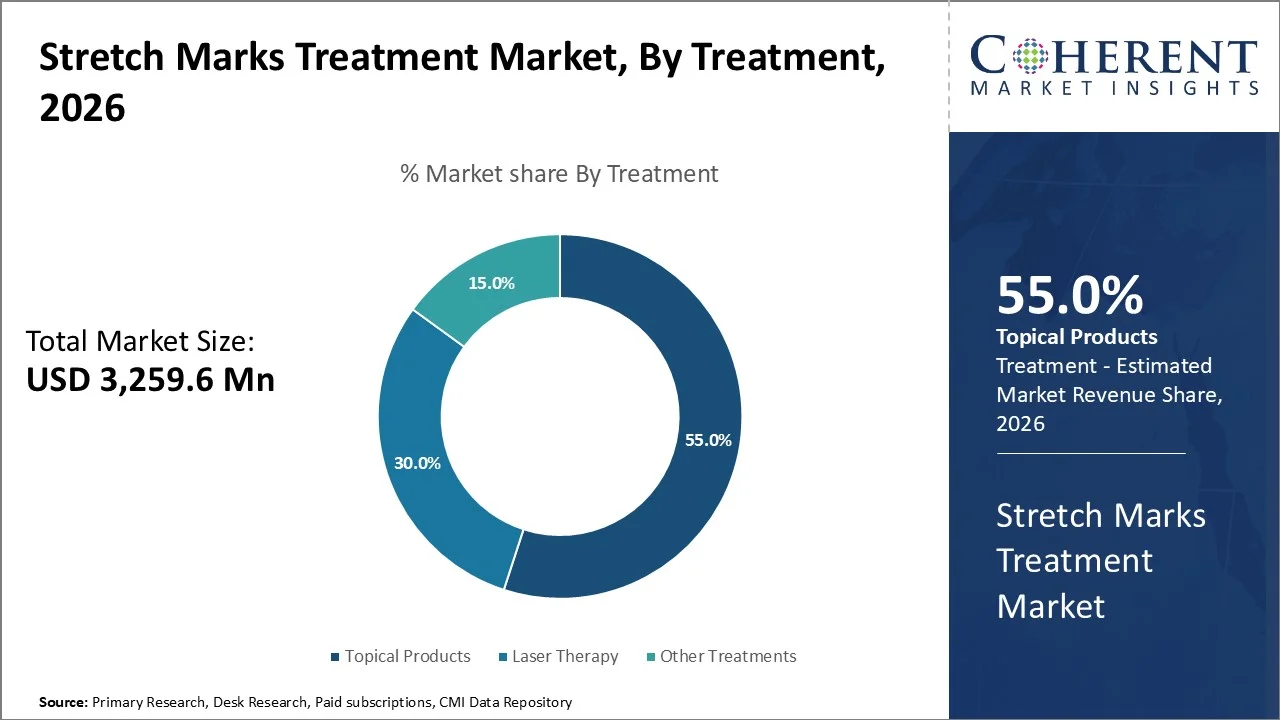
- Topical products segment is expected to lead the market with a share of 55% in 2026, driven by widespread use of creams, lotions, oils, and serums for at-home management of stretch marks. As per National Library of Medicine of U.S., the use of topical retinoids, hyaluronic acid, and glycolic acid is common for treatment of early stretch marks, but their results are usually modest and most effective in newly developed lesions due to remodeling of collagen.
- The home-use segment is anticipated to dominate with 60% share in 2026, driven by ease of access, preference for self-care dermatology solutions, and widespread use of over-the-counter topical formulations. Medical literature confirms that most topical treatments are applied at home and are commonly used for cosmetic management despite limited clinical efficacy for complete removal.
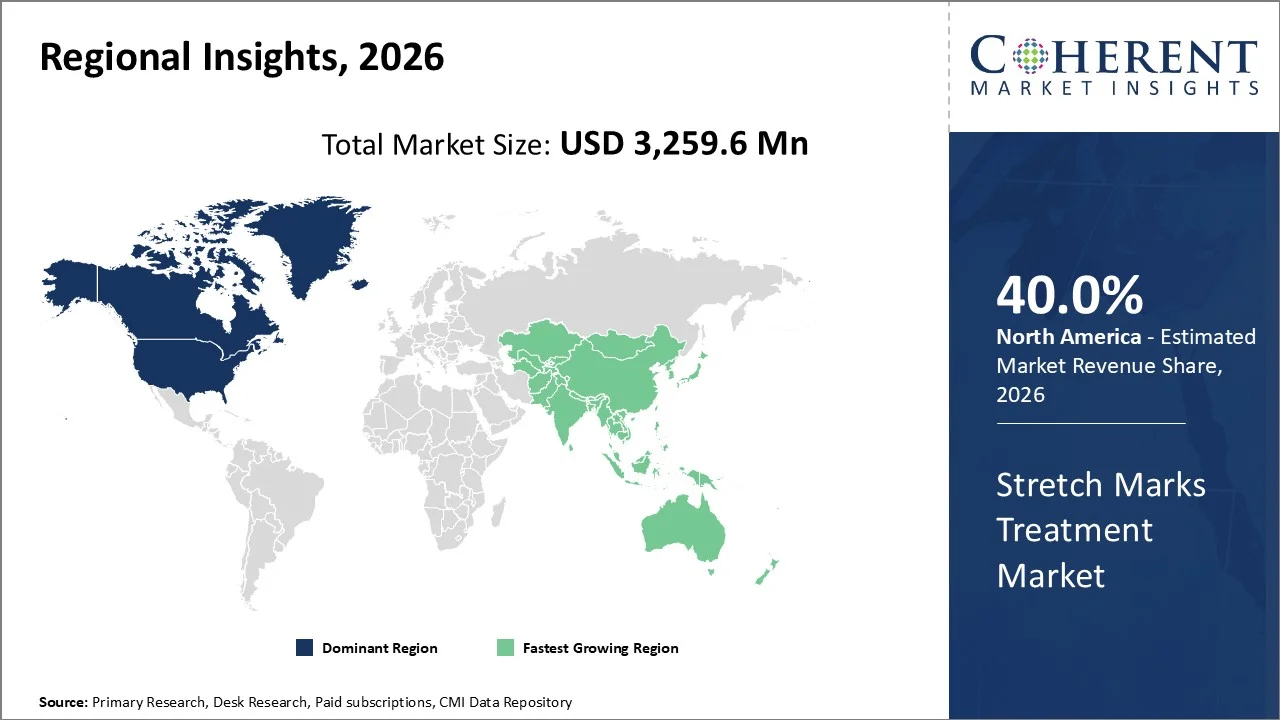
- North America is estimated to dominate the global stretch marks treatment market, accounting for 40% of the market in 2026, owing to high consumer awareness regarding aesthetic dermatology, well-developed healthcare infrastructure, and the widespread use of clinical as well as home care solutions for skin care. The clinical studies have proved that stretch marks are highly prevalent dermatological conditions associated with fast stretching of the skin and hormonal imbalances, thus frequently treated in dermatology clinics in developed healthcare systems like the U.S. and Canada.
Rising Prevalence of Stretch Marks is Transforming the Stretch Marks Treatment Market
The rising global incidence rate of stretch marks (striae distensae) remains a significant factor driving the dermatological treatment market. Scientific literature indicates that stretch marks are highly prevalent among pregnant women, teenagers, and obese individuals suffering from skin stretching disorders.
According to the National Library of Medicine (NCBI), striae distensae affect approximately 43%–88% of pregnant women, up to 86% of adolescents, and a significant proportion of individuals experiencing rapid weight gain or obesity.
Increasing Demand for Aesthetic Dermatology is Accelerating Treatment Adoption
Growing consumer focus on appearance and skincare is increasing global demand for stretch mark treatments. The clinical literature on dermatology clearly supports the notion that stretch marks (striae distensae), while being non-cancerous conditions, pose serious cosmetic issues affecting people’s quality of life.
PubMed-indexed dermatology emphasize that patients are becoming more interested in therapies like topical retinoids, hyaluronic acid preparations, and energy-based treatments to enhance skin quality. The rising aesthetic awareness is a major factor contributing to market growth, especially in urban areas where dermatology services are readily available.
- Current Industry Events of 2026
- Market Size Estimation
- Regional Breakdown
- Competitive Landscape
- Customer Intelligence
- Segmental Analysis
- Pricing Analysis
- Key Market Drivers, Challenges & Future Trends
- Customized Insights Section
Current Events and Their Impact on the Stretch Marks Treatment Market
Current Event | Description and its Impact |
Rising Demand for At-Home Dermatology and OTC Skincare Products (2025–2026) |
|
Expansion of Minimally Invasive Aesthetic Procedures in Dermatology Clinics (2025–2026) |
|
Segmental Insights
Why is Topical Products Segment Acquiring the Largest Market Share?
Topical products segment is estimated to dominate the stretch marks treatment market with a share of about 55% in 2026. This trend can be attributed to the growing popularity of non-invasive, affordable, and convenient treatment modalities like creams, oils, and serums for stretch mark treatments.
According to a systematic review study found in PubMed (National Institute of Health), topical agents like Tretinoin 0.1% have shown about 20–30% positive results for the initial stage of stretch marks, after several months of usage.
Why is the Home-Use Segment Dominating the Market?
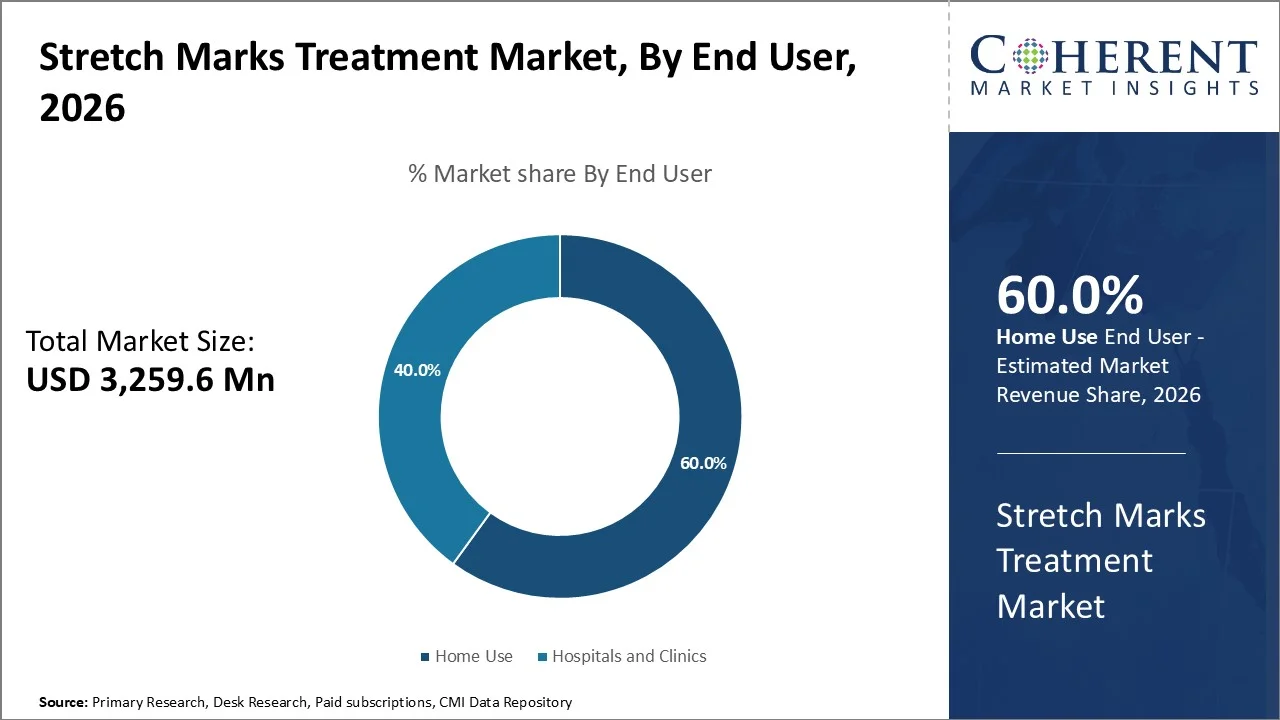
The home-use segment is projected to lead the market in 2026, contributing around 60% to the overall market share. This trend is attributed to the growing inclination towards self-care dermatology products, ease of treatment at home, and the availability of topical OTC medicines.
Based on the National Center for Biotechnology Information (NCBI), the initial treatment is often through topicals, which include retinoids, hyaluronic acid, and emollients. These topical creams are commonly applied even outside the clinic because of their accessibility and safety concerns.
Stretch Marks Treatment Market Trends
- Home-based treatment primarily relies on topical products such as retinoids, hyaluronic acid, and emollients constitute the primary approach to treating stretch marks.
- The high global prevalence of stretch marks continues to support consistent market demand, impacting 43%–88% of pregnant women and a significant percentage of adolescents.
- Increased usage of minimally invasive procedures (laser, microneedling) results in better collagen regeneration and texture improvement.
- Growing awareness regarding cosmetic procedures is causing a global rise in treatment popularity.
- E-commerce and over-the-counter sales increase the accessibility of such products for household application.
Regional Insights
Strong Dermatology Infrastructure Making North America a Dominant Market
North America is anticipated to dominate the global market for stretch mark treatment, holding a market share of 40% in 2026. This is due to the high consumer awareness about aesthetic dermatology in addition to a good health care system along with advanced skin care products.
Rapid Urbanization and Rising Aesthetic Awareness Making Asia Pacific the Fastest-Growing Market
Asia Pacific is predicted to emerge as the fastest-growing region in the stretch mark treatments market, owing to increasing urbanization, rise in disposable income levels, and growing awareness about cosmetic dermatology procedures.
Moreover, rising levels of obesity and fast-changing lifestyles have been linked to the growing number of cases of stretch marks in Asia Pacific populations. According to NIH dermatological statistics, the development of stretch marks is mainly attributed to fast changes in body weight and hormones.
U.S. Stretch Marks Treatment Market Trends
The U.S. stretch marks treatment market is expected to witness healthy growth throughout the forecast period, owing largely to rising incidences of obesity, dermatological issues associated with pregnancy, growing aesthetic consciousness, and widespread acceptance of clinical and self-care dermatology therapies. According to the Centers for Disease Control and Prevention, approximately 3.6 million births were recorded in 2025.
In October 2025, Vogue identified Paula’s Choice Retinol Skin-Smoothing Body Treatment among the most recommended dermatologist-backed topical products for stretch marks, noting its role in improving skin elasticity, texture, and hyperpigmentation through retinol-driven cell turnover.
China Stretch Marks Treatment Market Forecast
China is projected to be one of the fastest-growing countries in terms of stretch mark treatments over the forecast period. The factors responsible for this include fast urbanization, higher levels of disposable income, increased awareness about cosmetic procedures, and greater use of skin care products.
According to NIH (NCBI StatPearls), striae distensae commonly occur in conditions such as pregnancy (75%–90% prevalence in third trimester), obesity, and rapid body growth, directly linking lifestyle and hormonal factors to increasing demand for treatment.
Who are the Major Companies in Stretch Marks Treatment Industry
Some of the major key players in Stretch Marks Treatment are Weleda, Union Swiss (Pty) Ltd., Laboratoires Expanscience, HRA Pharma, Helix BioMedix Inc., Dermaclara, Candela Corporation, Clarins Group, Basq Skin Care, Alliance Pharma PLC, and E. T. Browne Drug Co. Inc. (Palmer’s), among others.
Industry News
- In October 2025, HRA Pharma (Mederma brand) continued strong global promotion of its Mederma Stretch Marks Therapy range, which is widely recommended for improving the appearance of stretch marks using clinically formulated gels and creams.
Market Report Scope
Stretch Marks Treatment Market Report Coverage
| Report Coverage | Details | ||
|---|---|---|---|
| Base Year: | 2025 | Market Size in 2026: | USD 3,259.6 Mn |
| Historical Data for: | 2020 To 2024 | Forecast Period: | 2026 To 2033 |
| Forecast Period 2026 to 2033 CAGR: | 5.5% | 2033 Value Projection: | USD 4,636.0 Mn |
| Geographies covered: |
| ||
| Segments covered: |
| ||
| Companies covered: | Weleda, Union Swiss (Pty) Ltd., Laboratoires Expanscience, HRA Pharma, Helix BioMedix Inc., Dermaclara, Candela Corporation, Clarins Group, Basq Skin Care, Alliance Pharma PLC, and E. T. Browne Drug Co. Inc. (Palmer’s), among others. | ||
| Growth Drivers: |
| ||
| Restraints & Challenges: |
| ||
Analyst Opinion
- The stretch marks treatment market is supported by the presence of a chronic dermatological problem rather than being influenced by any temporary cosmetic fad. Scientific studies indicate that around 75%-90% of pregnant females as well as many teenagers and obese patients develop stretch marks, thus ensuring a steady demand in the global marketplace.
- Topical medications are dominant due to the fact that stretch marks cannot be cured using any treatment option. According to clinical dermatology literature, retinoids, hyaluronic acid, and emollients offer limited success, especially for initial lesion formation. Therefore, creams, oils, and lotions are used repeatedly and consistently for years to come in both mature and developing countries.
- Minimally invasive methods, such as laser therapy and microneedling are becoming increasingly popular, but these therapies need several sittings, and the results vary according to the severity and the skin type. Clinical trials have proven that the fractional laser therapy helps in restructuring the skin's collagen, making it a growing favorite for dermatologists, which is further bolstering the procedure-based segment.
Speak to the analyst
Want personalized insights?
Take the findings above to one of our principal consultants, or have the report rebuilt around the segments, geographies and competitors you actually track.
Market Segmentation
- By Treatment (Revenue, USD Mn, 2021-2033)
- Topical Product
- Laser
- Other Treatments
- By End User (Revenue, USD Mn, 2021-2033)
- Hospitals and Clinics
- Home Use
- By Region (Revenue, USD Mn, 2021-2033)
- North America
- U.S.
- Canada
- Latin America
- Brazil
- Mexico
- Argentina
- Rest of Latin America
- Europe
- Germany
- U.K.
- France
- Italy
- Spain
- Russia
- Rest of Europe
- Asia Pacific
- China
- India
- Japan
- Australia
- South Korea
- ASEAN
- Rest of Asia Pacific
- Middle East
- GCC
- Israel
- Rest of Middle East
- Africa
- South Africa
- Central Africa
- North Africa
- North America
- Key Players
- Weleda
- Union Swiss (Pty) Ltd.
- Laboratoires Expanscience
- HRA Pharma
- Helix BioMedix Inc.
- Dermaclara
- Candela Corporation
- Clarins Group
- Basq Skin Care
- Alliance Pharma PLC
- T. Browne Drug Co. Inc. (Palmer’s)
Sources
Primary Research interviews
- Interviews with dermatologists, aesthetic medicine practitioners, cosmetic surgeons, skincare product developers, pharmacy chain managers, and industry experts in dermatology and cosmeceuticals
Databases
- National Library of Medicine (NIH / NCBI) dermatology and clinical research database
- PubMed biomedical literature database
- ClinicalTrials.gov (clinical studies on topical retinoids, laser therapy, and skin remodeling treatments)
- WHO Global Health Observatory (obesity and pregnancy-related skin condition prevalence data)
- Cosmetic and dermatology market intelligence databases (global skincare consumption trends)
Magazines
- Dermatology Times
- Modern Aesthetics Magazine
- Vogue Beauty & Skincare Reports
- Allure Beauty Industry Publications
- Cosmetics Business Magazine
Journals
- Journal of the American Academy of Dermatology (JAAD)
- Dermatologic Surgery Journal
- British Journal of Dermatology
- Clinical, Cosmetic and Investigational Dermatology
- Aesthetic Surgery Journal
Newspapers
- Financial Times (healthcare and cosmetic industry coverage)
- Wall Street Journal (consumer health and beauty trends)
- The Guardian (public health and dermatology awareness reporting)
- Reuters Health (global skincare and pharmaceutical developments)
Associations
- American Academy of Dermatology (AAD)
- International Society of Dermatology (ISD)
- European Academy of Dermatology and Venereology (EADV)
- International Society of Aesthetic Plastic Surgery (ISAPS)
- World Health Organization (WHO) dermatology and skin health initiatives
Public Domain sources
- National Library of Medicine (NCBI) medical publications and StatPearls dermatology references
- World Health Organization (WHO) obesity and maternal health datasets
- U.S. FDA cosmetic and dermatology regulatory information
- European Medicines Agency (EMA) cosmetic and dermatology guidelines
- Company annual reports and official skincare brand product disclosures (Clarins, Palmer’s, Mustela, etc.)
Proprietary Elements
- CMI Dermatology Market Intelligence Tool
- Proprietary CMI Skincare & Cosmeceutical Market Repository (historical dataset covering last 8+ years)
Get access to 250+ pages report
Every segment, forecast, competitor profile and data table behind the analysis above — available for instant download.
- ESOMAR Member
- ISO 9001:2015 Certified
- D-U-N-S Registered
- GDPR & CCPA Compliant
Missing comfort of reading report in your local language? Find your preferred language:
Transform your Strategy with Exclusive Trending Reports
Frequently Asked Questions
The global stretch marks treatment market is estimated to be valued at USD 3,259.6 Mn in 2026.
The global stretch marks treatment market value is expected to reach USD 4,636.0 Mn by 2033.
The global market is poised to exhibit a CAGR of 5.5% from 2026 to 2033.
Major growth factors include increasing consumer preference for at-home and OTC skincare treatments, rising awareness of aesthetic dermatology, and growing demand for non-invasive cosmetic procedures such as topical and laser-based therapies.
Some major companies in the Stretch Marks Treatment Market include Weleda, Union Swiss (Pty) Ltd., Laboratoires Expanscience, HRA Pharma, Helix BioMedix Inc., Dermaclara, Candela Corporation, Clarins Group, Basq Skin Care, Alliance Pharma PLC, and E. T. Browne Drug Co. Inc. (Palmer’s), among others.
North America, with about 40% share in 2026, is expected to lead the market during the forecast period due to high awareness of aesthetic dermatology and strong adoption of skincare solutions.