

Cattle Healthcare Market Size and Share Analysis - 2026 to 2033
The cattle healthcare market was valued at USD 9.7 Bn in 2026 and is forecast to reach a value of USD 12.2 Bn by 2033 at a CAGR of 4.5% between 2026 and 2033.
Key Takeaways
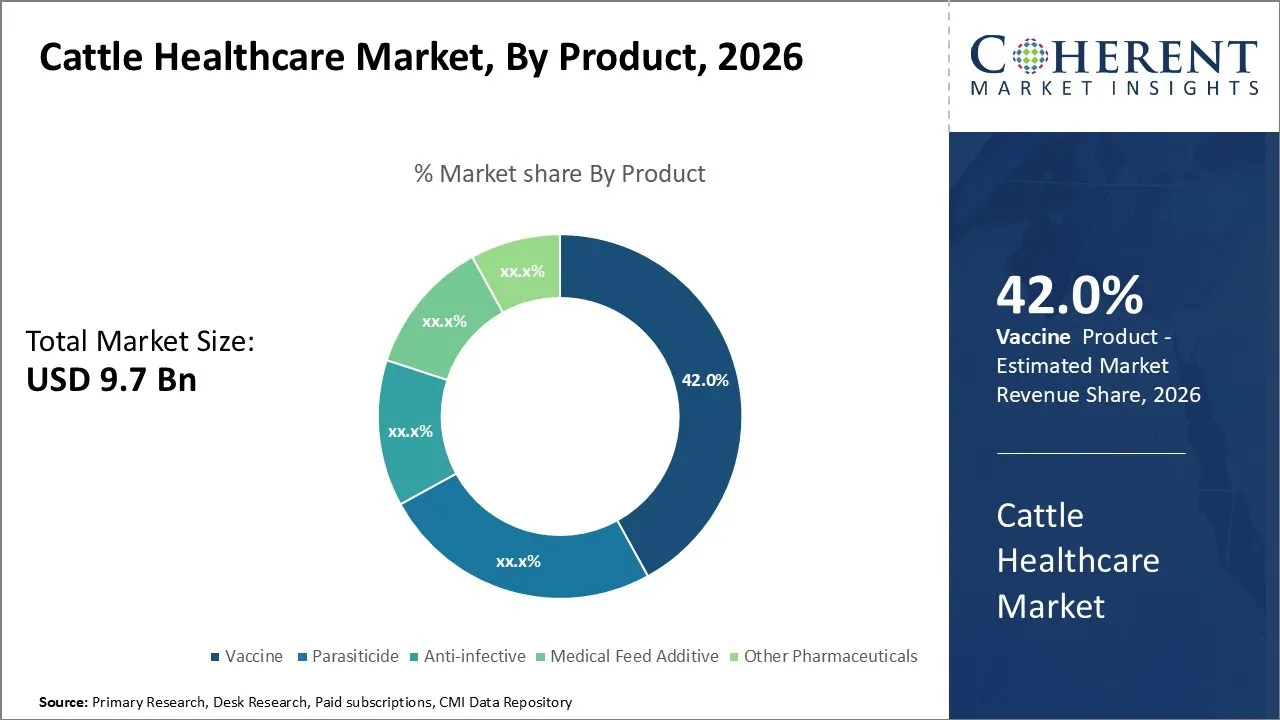
- Based on product, the vaccine segment is expected to hold 42% share of the market in 2026.
- Based on diagnostic type, the immunodiagnostic test segment is projected to account for 48% share of the market in 2026.
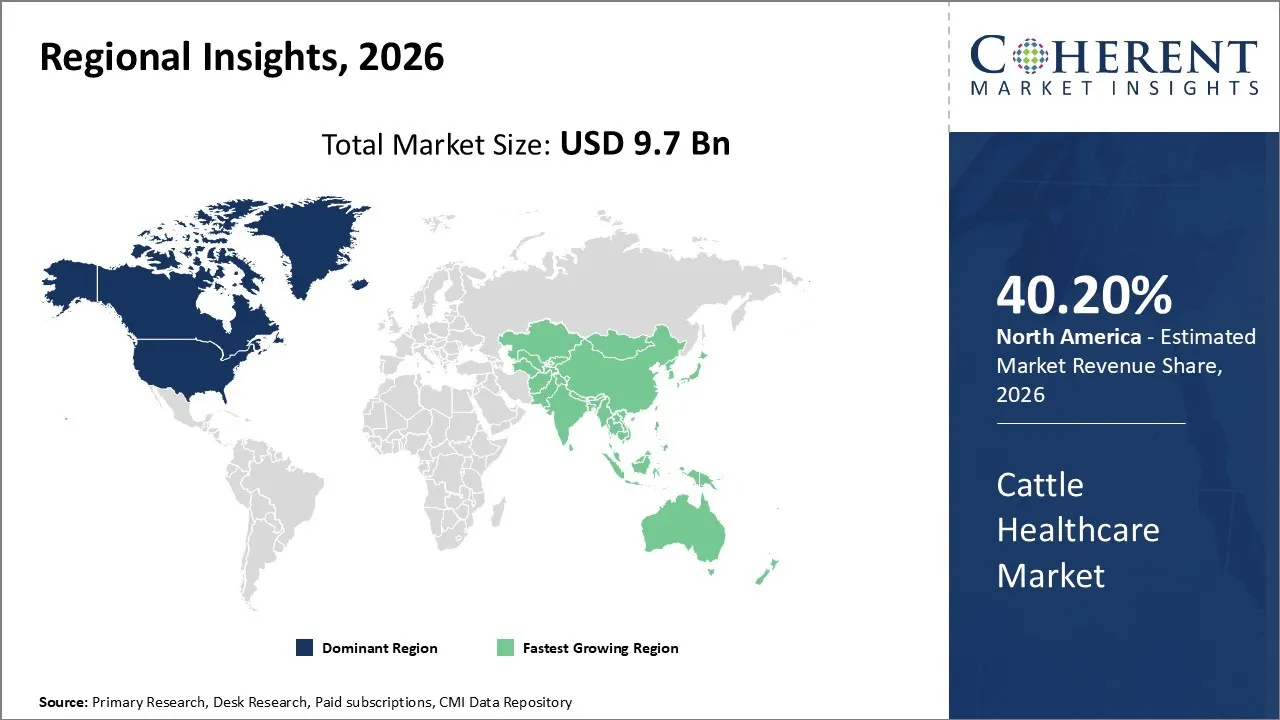
- Based on Region, North America is set to lead the Cattle Healthcare market with 40.2% share in 2026. While, Asia Pacific is anticipated to have the fastest growing region.
Market Overview
The global cattle healthcare market is experiencing strong growth due to the growing focus on cattle health around the world and involvement of the government or favorable government initiatives. Moreover, rise in focus on the cattle healthcare and rise in demand for vaccination is expected to boost the market growth. However, regulatory challenges, high cost of animal testing, and lack of infrastructure and funding are major factors expected to hamper market growth.
Current Events and their Impacts on the Cattle Healthcare Market
Current Event | Description and its Impact |
Launch of New Cattle Vaccines (e.g., NUPLURA PH+5, Biolumpivaxin, EXZOLT CATTLE-CA1) |
|
High Growth of Cattle Farming in Asia-Pacific |
|
Segmental Insights
- Current Industry Events of 2026
- Market Size Estimation
- Regional Breakdown
- Competitive Landscape
- Customer Intelligence
- Segmental Analysis
- Pricing Analysis
- Key Market Drivers, Challenges & Future Trends
- Customized Insights Section
Cattle Healthcare Market Insights, By Product: Vaccine represent the largest market share
In terms of product, the vaccine segment is expected to lead the market with 42% share in 2026, driven by their critical role in preventing infectious diseases that can severely impact cattle health, productivity, and consequently, the livelihoods of millions of farmers worldwide. The importance of vaccines in cattle healthcare is supported by the global emphasis from organizations like the Food and Agriculture Organization (FAO) as well as the World Organisation for Animal Health (WOAH), which advocate widespread immunization programs to control and eradicate key cattle diseases such as Foot-and-Mouth Disease (FMD), Bovine Tuberculosis, and Brucellosis.
For instance, in July 2025, Elanco Animal Health Incorporated introduced a new cattle vaccine called NUPLURA PH+5. This vaccine helps protect young cattle (calves) from different respiratory diseases. It is made by combining Titanium 5, a live vaccine, with NUPLURA PH+. The product is designed to be low in endotoxins, which makes it safer and gentler on cattle while still providing strong protection against harmful bacteria and viruses.
Cattle Healthcare Market Insights, By Diagnostic Type: Immunodiagnostic dominate the market
In terms of diagnostic type, the immunodiagnostic segment is expected to hold 48% share of the market in 2026. Owing to its high adoption, reliability, and critical role in the early detection and management of infectious diseases in cattle. Immunodiagnostic tests, which include enzyme-linked immunosorbent assays (ELISA), agglutination tests, along with lateral flow assays, offers rapid, specific, as well as sensitive detection of antibodies or antigens related to specific pathogens.
For instance, the utilization of ELISA tests for detecting bovine tuberculosis and brucellosis is prevalent worldwide, especially in livestock-dense regions where controlling such diseases is vital for both animal health and public safety. Organizations such as the Food and Agriculture Organization (FAO) as well as the World Organization for Animal Health (WOAH) focus the importance of immunodiagnostic techniques for surveillance programs targeting these diseases, to prevent transmission to humans and reduce economic losses.
Regional Insights
North America Cattle Healthcare Market Analysis & Trends
North America is expected to dominate the cattle healthcare market with 40.20% share in 2026. The U.S. Department of Agriculture (USDA) highlights that North America, particularly the United States, maintains one of the largest cattle populations globally, supported by advanced veterinary infrastructure and stringent regulations on animal health. This region’s leading position stems from its well-established veterinary services, widespread adoption of modern cattle healthcare practices, and the government’s proactive role in disease prevention and control measures.
For instance, in December 2025, Merck Animal Health, called MSD Animal Health outside the U.S. and Canada, said that the U.S. Food and Drug Administration (FDA) has given conditional approval for EXZOLT CATTLE-CA1. This is a new medicine for cattle that is applied to the skin. It belongs to a new type of parasite-fighting drugs called isoxazolines, which help protect cattle from pests.
Asia Pacific Cattle Healthcare Market Analysis & Trends
The Asia-Pacific stands out as the fastest growing segment within the cattle healthcare market, fueled by a confluence of demographic, economic, as well as policy drivers unique to the region. Countries such as China, India, Vietnam, and Indonesia exhibit rapidly expanding cattle populations alongside a surging demand for dairy and meat products bolstered by rising middle-class incomes as well as changing dietary preferences.
For instance, India’s Ministry of Fisheries, Animal Husbandry and Dairying has launched schemes to enhance veterinary infrastructure, encourage the development of temperature-controlled supply chains, and promote disease surveillance using smart technology.
Cattle Healthcare Market Outlook Country-Wise
The U.S. Cattle Healthcare Market Trends
The U.S. contributes the highest share in the cattle healthcare market within the region owing to its well-established large-scale cattle farming industry, extensive infrastructure for veterinary healthcare, as well as robust implementation of advanced cattle health monitoring technologies. The United States has an extensive history of cattle production, with states like Texas, Nebraska, Kansas, Oklahoma, etc., ranking as the highest cattle-producing states, which naturally fuels demand for advanced healthcare services.
For instance, in September 2025, Zoetis Inc. announced that Dectomax-CA1 Injectable is the first medicine approved by the U.S. Food and Drug Administration (FDA) to help cattle fight a type of parasite called Cochliomyia hominivorax (myiasis). It can prevent and treat infestations and stops them from coming back for 21 days. The approval is for beef cattle, young female dairy cattle under 20 months, pregnant beef cows, newborn calves, and bulls.
China Cattle Healthcare Market Trends
China contributes the highest share in the cattle healthcare market, owing to a well-established livestock sector combined with strong governmental initiatives aimed at improving animal health and productivity. China remains the world’s largest producer and consumer of cattle, providing a solid base for its dominance in the cattle healthcare segment within the region.
For instance, the Ministry of Agriculture and Rural Affairs regularly publishes overall reports outlining efforts to control diseases such as bovine tuberculosis as well as foot-and-mouth disease, which have historically influenced production rates.
Market Report Scope
Cattle Healthcare Market Report Coverage
| Report Coverage | Details | ||
|---|---|---|---|
| Base Year: | 2025 | Market Size in 2026: | USD 9.7 Bn |
| Historical Data for: | 2020 To 2024 | Forecast Period: | 2026 To 2033 |
| Forecast Period 2026 to 2033 CAGR: | 4.5% | 2033 Value Projection: | USD 12.2 Bn |
| Geographies covered: |
| ||
| Segments covered: |
| ||
| Companies covered: | Idexx Laboratories, Boehringer Ingelheim, Virbac, Elanco, IDVet, Zoetis Inc., Bayer Healthcare, Merck & Co. Inc., and Ceva Animal Health Inc., among others. | ||
| Growth Drivers: |
| ||
| Restraints & Challenges: |
| ||
Cattle Healthcare Market Driver
Rising demand for animal protein
The rising demand for animal protein, driven by increasing global population, urbanization, and rising incomes, is a significant catalyst propelling the growth of the cattle healthcare market. As consumers look for more nutritious and protein-rich diets, especially in developing economies such as India, China, and parts of Africa, the consumption of beef and dairy products has surged. This heightened demand necessitates improvements in cattle health management to make sure productivity, disease prevention, and sustainable livestock farming.
Increasing focus on livestock health and productivity
The high focus on livestock health and productivity is majorly driving the growth of the cattle healthcare market, showing a broader transformation within the agricultural and veterinary sectors. With the global demand for meat and dairy products rising due to population growth as well as urbanization, there is an urgent need to enhance cattle health to optimize production efficiency and profitability. Livestock diseases not only lead to substantial economic losses but also pose risks of zoonotic diseases, making cattle healthcare paramount for food security and public health.
Cattle Healthcare Market Opportunity
Development of innovative vaccines and diagnostics
The development of innovative vaccines and diagnostic tools presents a significant opportunity in the cattle healthcare market by addressing some of the most pressing challenges faced by livestock producers worldwide. Infectious diseases such as bovine respiratory disease (BRD), mastitis, as well as foot-and-mouth disease, continue to cause substantial economic losses as well as lower productivity in cattle herds. Advancements in vaccine technology, including mRNA-based vaccines as well as recombinant vector vaccines, have the potential to offer more effective, targeted protection with quicker development timelines compared to traditional approaches.
Analyst Opinion (Expert Opinion)
The cattle healthcare market is experiencing major advancements driven by increasing global demand for dairy and meat products, compelling farmers and commercial enterprises to prioritize animal health for optimal productivity. One of the primary growth drivers is the escalating awareness regarding cattle diseases along with the need for effective preventive healthcare measures, including vaccines, antibiotics, as well as nutritional supplements.
Additionally, technological innovations such as precision farming as well as wearable health monitoring devices are improving disease detection and management, thereby improving overall herd health.
However, the market faces certain restraints, including stringent regulations on antibiotic use as well as concerns over veterinary drug residues affecting food safety. These challenges compel stakeholders to look for alternative solutions like phytogenic feed additives as well as probiotics, which are gaining traction as safer substitutes. Furthermore, the growing emphasis on sustainable and organic farming practices presents substantial opportunities for natural and eco-friendly cattle healthcare products.
Geographically, North America remains a dominant region due to its well-established veterinary healthcare infrastructure as well as high adoption of advanced technologies. Meanwhile, the Asia Pacific region is coming as the fastest-growing market, fueled by expanding livestock populations, increasing income levels, and governmental initiatives supporting animal health. The advancing consumer preference for quality meat and dairy along with heightened disease outbreaks in regions like Latin America also underscores major potential for market expansion.
Overall, the cattle healthcare market is poised for continued growth, driven by a combination of technological innovation, regulatory shifts, as well as advancing consumer demands, making it a major focus area for industry stakeholders.
Speak to the analyst
Want personalized insights?
Take the findings above to one of our principal consultants, or have the report rebuilt around the segments, geographies and competitors you actually track.
Global Cattle Healthcare Market: Key Developments
- In May 2025, Bharat Biotech’s subsidiary, Biovet, has launched a new vaccine called Biolumpivaxin for lumpy skin disease in cattle. The vaccine helps farmers protect their cattle from this disease. It was officially introduced by Andhra Pradesh Chief Minister N. Chandrababu Naidu at the Livestock Prosperity Conclave in Vijayawada.
Market Segmentation
- By Product
- Vaccine
- Parasiticide
- Anti-infective
- Medical Feed Additive
- Other Pharmaceuticals
- By Diagnostic Type
- Immunodiagnostic Test
- Molecular Diagnostics
- Diagnostic Imaging
- Clinical Chemistry
- Other Veterinary Diagnostics
- By Region
- North America
- U.S.
- Canada
- Latin America
- Brazil
- Argentina
- Mexico
- Rest of Latin America
- Europe
- Germany
- U.K.
- Spain
- France
- Italy
- Russia
- Rest of Europe
- Asia Pacific
- China
- India
- Japan
- Australia
- South Korea
- ASEAN
- Rest of Asia Pacific
- Middle East
- GCC Countries
- Israel
- Rest of Middle East
- Africa
- South Africa
- North Africa
- Central Africa
- North America
- Key Players
- Idexx Laboratories
- Boehringer Ingelheim
- Virbac
- Elanco
- IDVet
- Zoetis Inc.
- Bayer Healthcare
- Merck & Co. Inc.
- Ceva Animal Health Inc.
Sources
Primary Research Interviews
- Veterinarians specializing in cattle healthcare
- Cattle farm owners and managers
- Veterinary pharmaceutical company executives
- Animal health product distributors
- Others
Databases
- Animal Health Intelligence (AHI) Database
- Global Animal Health Database
- FAOSTAT (Food and Agriculture Organization Statistics)
- Livestock Market Intelligence Database
- Others
Magazines
- Cattle Today
- Bovine Veterinary Journal
- Hoard's Dairyman
- Farm Journal
- Others
Journals
- Journal of Dairy Science
- Preventive Veterinary Medicine
- Journal of Animal Science
- Veterinary Record
- Others
Newspapers
- The Cattle Network
- The Agricultural Gazette
- The Beef Magazine
- Farmers Weekly
- Others
Associations
- American Association of Bovine Practitioners (AABP)
- National Cattlemen’s Beef Association (NCBA)
- World Veterinary Association (WVA)
- International Dairy Federation (IDF)
- Others
Public Domain Sources
- Food and Agriculture Organization (FAO)
- United States Department of Agriculture (USDA)
- World Health Organization (WHO)
- Centers for Disease Control and Prevention (CDC)
- Others
Proprietary Elements
- CMI Data Analytics Tool
- Proprietary CMI Existing Repository of Information for the Last 8 Years
Get access to 250+ pages report
Every segment, forecast, competitor profile and data table behind the analysis above — available for instant download.
- ESOMAR Member
- ISO 9001:2015 Certified
- D-U-N-S Registered
- GDPR & CCPA Compliant
Missing comfort of reading report in your local language? Find your preferred language:
Transform your Strategy with Exclusive Trending Reports
Frequently Asked Questions
The global Cattle Healthcare Market size was valued at USD 9.7 Mn in 2026 and is expected to reach USD 12.2 Mn in 2033.
Major players operating in the market include Idexx Laboratories, Boehringer Ingelheim, Virbac, Elanco, IDVet, Zoetis Inc., Bayer Healthcare, Merck & Co. Inc., and Ceva Animal Health Inc., among others.
Among product, the vaccine segment estimated significant revenue in 2026.
Growing focus on cattle health around the world and involvement of the government or favorable government initiatives is fueling the growth of the market.
The market is estimated to exhibit a CAGR of 4.5% till 2033.
Among region, North America is expected to witness significant growth over the forecast period.