

Cancer Cell Market Size and Forecast – 2026 to 2033
The Cancer Cell Market is anticipated to grow at a CAGR of 10.3% with USD 12.8 Bn share in 2026 and is expected to reach USD 24.4 Bn in 2033. Rising Global Cancer Incidence, Growing Investment in Cancer Research (R&D) and Advancements in Biotechnology & Cell-Based Therapies is propelling the market growth. The global cancer burden is expected to rise sharply, with over 35 million new cases projected by 2050, representing a 77% increase from 2022 levels.
Key Takeaways
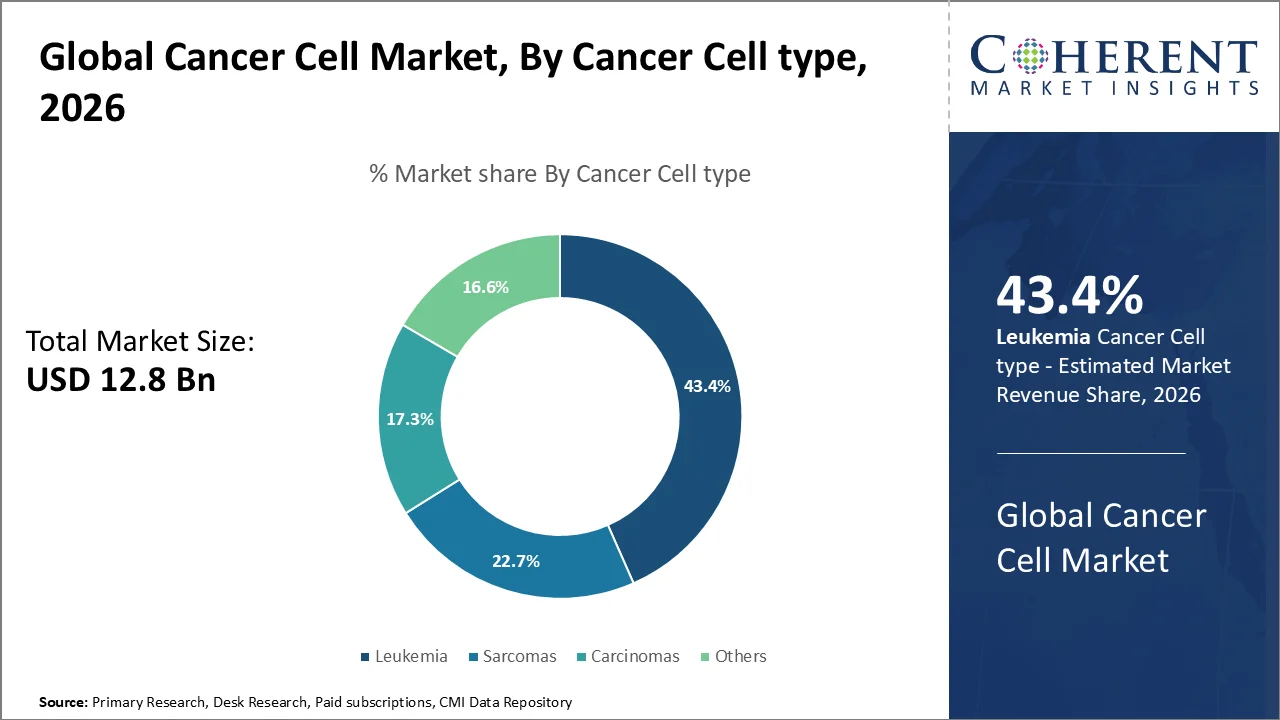
- Leukemia holds the largest market share of 43.4% in 2026, owing to the rising incidence of leukemia. Globally, leukemia accounts for over 470,000 new cases annually, with incidence rates steadily increasing due to aging populations and improved diagnostics. Additionally, leukemia represents nearly 2.5% of all new cancer cases worldwide, reinforcing its significant contribution to market demand.
- Chemotherapy is expected to hold the largest market share of 34.9% in 2026, owing to its widespread use across multiple cancer types. Despite advancements in targeted therapies, chemotherapy remains a cornerstone treatment, used in over 60% of cancer cases either alone or in combination. It continues to be critical in treating high-burden cancers such as breast, lung, and colorectal cancers, which together account for millions of new cases annually.
- Hospitals & Clinics acquired a prominent market share of 43.9% in 2026, owing to their central role in cancer treatment delivery. Approximately 70–80% of cancer patients receive treatment in hospital settings, supported by access to advanced diagnostic infrastructure, oncology specialists, and inpatient care facilities.
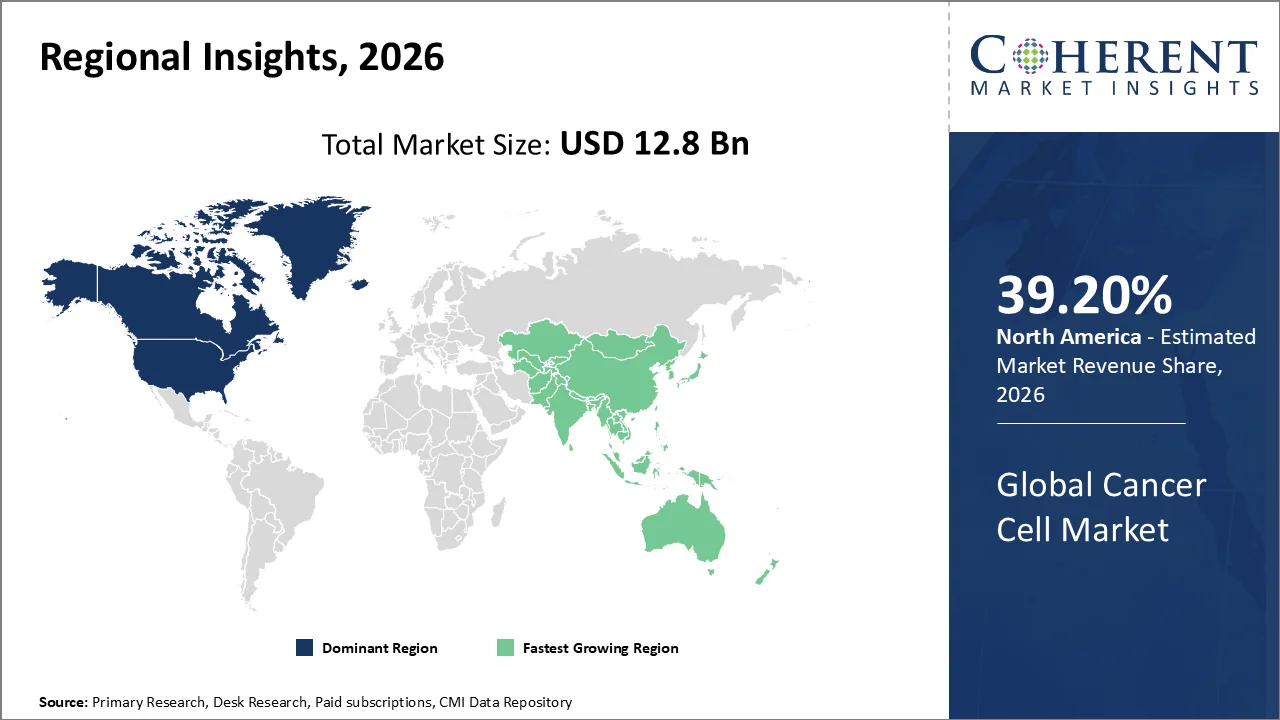
- North America is expected to acquire the dominant share of 39.2% in 2026, owing to its advanced healthcare infrastructure and high healthcare spending. The United States alone reported over 1.9 million new cancer cases in 2023, with oncology-related healthcare expenditure exceeding $200 billion annually, making it one of the largest contributors to the global oncology market.
Current Events and Their Impact on the Cancer Cell Market
Current Event | Description and its Impact |
U.S. Drug Pricing Reform under Inflation Reduction Act |
|
BIOSECURE Act and U.S. Restrictions on Chinese Biotech Firms |
|
Segmental Insights
- Current Industry Events of 2026
- Market Size Estimation
- Regional Breakdown
- Competitive Landscape
- Customer Intelligence
- Segmental Analysis
- Pricing Analysis
- Key Market Drivers, Challenges & Future Trends
- Customized Insights Section
Why is Leukemia Acquiring the Largest Market Share?
Leukemia holds the largest market share of 43.4% in 2026 owing to improved diagnostics and early detection. Rising cases of leukemia, along with greater awareness and advanced diagnostic technologies, are driving early detection in the cancer cell market. This trend is supported by global data—leukemia accounts for over 470,000 new cases annually worldwide, with incidence rates increasing due to aging populations and better screening capabilities. Additionally, leukemia contributes to approximately 310,000 deaths per year, underscoring the significant disease burden and demand for effective therapies.
Chemotherapy holds the Largest Market Share
Chemotherapy is expected to hold the largest market share of 34.9% in 2026. Rising cases of various cancers continue to drive the chemotherapy segment in the cancer cell market, as healthcare providers widely use it as a standard treatment across multiple cancer types. This dominance is supported by clinical data—chemotherapy is utilized in approximately 29–60% of cancer treatment regimens, either as a primary or combination therapy depending on cancer type and stage.
Clinicians rely on chemotherapy for its effectiveness in combination therapies and its ability to manage both early- and advanced-stage cancers. For example, in breast cancer, nearly 38.9% of patients receive chemotherapy, often in combination with targeted therapies, demonstrating its continued clinical relevance. Similarly, in lung cancer, around 31% of patients globally undergo chemotherapy, with usage rising to over 44% in advanced-stage cases, highlighting its importance in late-stage disease management.
Which End User segment dominates the market?
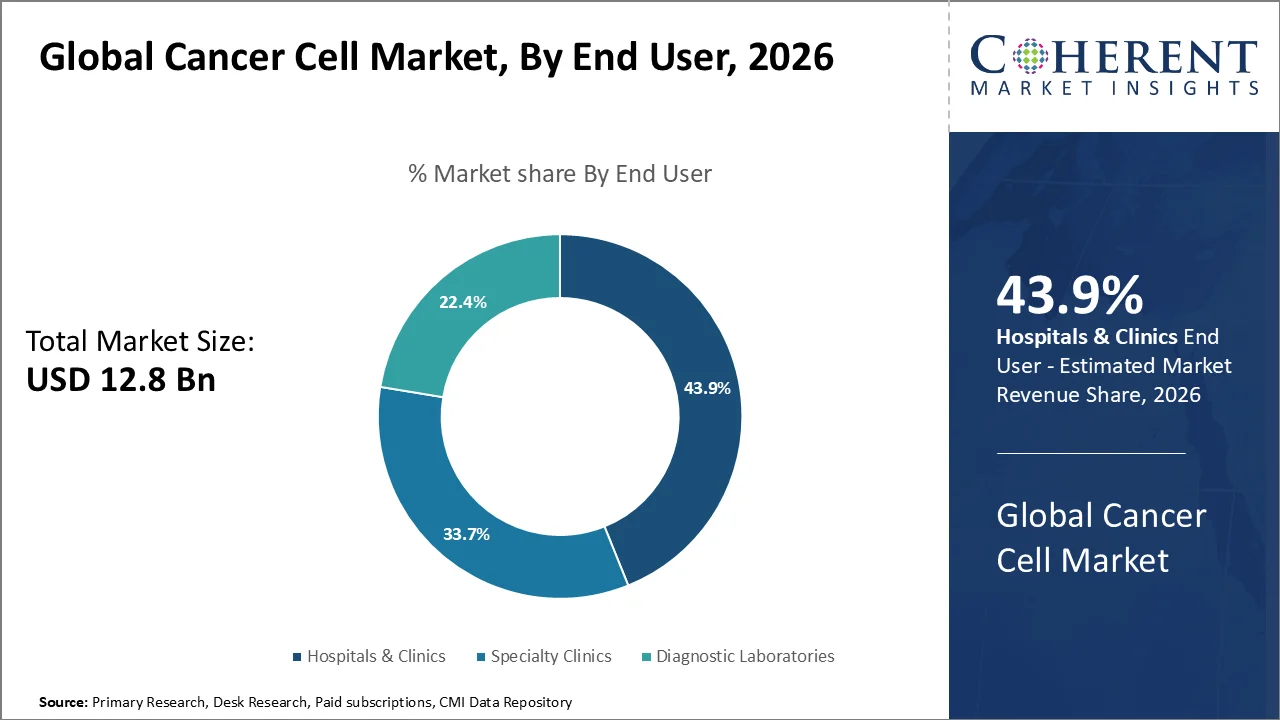
Hospitals & Clinics acquired the prominent market share of 43.9% in 2026 owing to the expansion of oncology infrastructure. Rising cancer cases push hospitals and clinics to take a central role in the cancer cell market by delivering essential diagnosis, treatment, and care services. Healthcare providers expand oncology departments to handle growing patient volumes and adopt advanced therapies that require clinical supervision. They strengthen healthcare infrastructure, improve access to specialized care, and increase healthcare spending to support growth. Hospitals and clinics also implement multidisciplinary treatment approaches, promote early cancer detection programs, and expand outpatient oncology services across regions.
Cancer Cell Market Trends
- Rising incidence of cancer increases demand for advanced treatment options, including targeted therapy, immunotherapy, and chemotherapy, strengthening overall market growth and adoption of innovative oncology solutions. Globally, cancer cases reached 20 million in 2022 and are projected to exceed 35 million by 2050 (↑77%).
- Expanding use of precision medicine and biomarker-based therapies improves treatment effectiveness by enabling personalized approaches tailored to individual patient profiles across various cancer types. Currently, 30–35% of oncology drugs in development are precision-based, with biomarker-driven therapies improving outcomes by 30%% in select cancers.
- Rapid adoption of immunotherapy and cell-based treatments, including CAR-T therapy, enhances survival outcomes and drives innovation. CAR-T therapies have demonstrated 60–90% remission rates in certain leukemia and lymphoma patients, particularly in relapsed/refractory cases.
- Aging global populations significantly increase cancer prevalence, particularly leukemia, breast, and lung cancers. By 2050, ~16% of the global population (1 in 6 people) will be aged 65+, and ~60% of cancers occur in this age group.
- Improvements in diagnostic technologies such as genomic testing and liquid biopsy enable earlier detection, improving treatment success rates. Early-stage detection can result in 5-year survival rates >90%, compared to <30% in advanced-stage cancers (e.g., lung cancer).
- Supportive healthcare policies and rising insurance coverage improve affordability and access to cancer treatments, increasing patient participation in advanced oncology care. In the United States, >90% population coverage is achieved through public and private insurance, while in India, the Ayushman Bharat scheme targets ~500 million beneficiaries, expanding oncology access.
Regional Insights
North America dominates owing to Strong Presence of Pharmaceutical & Biotech Companies
North America is expected to acquire the dominant share of 39.2% in 2026. Strong healthcare infrastructure and high cancer prevalence drive the cancer cell market in North America, particularly in the United States and Canada. The region records a significant disease burden, with the United States alone reporting ~1.9–2.0 million new cancer cases annually and over 600,000 cancer-related deaths each year. Canada contributes over ~240,000 new cancer cases annually, further strengthening regional demand.
Asia Pacific Cancer Cell Market Trends
Rising cancer incidence drives the cancer cell market in Asia Pacific, as growing populations in countries such as China and India increase demand for advanced oncology care. The region accounts for nearly 50% of global cancer cases, with Asia reporting over 9–10 million new cases annually, making it the largest cancer burden region worldwide.
Healthcare providers are expanding diagnostic and treatment facilities, supported by improving infrastructure and government initiatives. For example, India’s public healthcare expansion has increased oncology access, where over 70% of cancer patients still seek treatment at advanced stages, highlighting strong unmet demand.
United States Cancer Cell Market Trends
Strong healthcare infrastructure and high cancer prevalence drive the cancer cell market in the United States. The country reports 1 in 3 individuals developing cancer during their lifetime, underscoring strong demand for oncology treatments.
Healthcare providers widely adopt immunotherapy, targeted therapy, and precision medicine. Immunotherapy alone now accounts for over 25% of oncology drug sales in the U.S. market, reflecting rapid adoption of advanced therapies.
High healthcare spending (over $4.5 trillion annually) and comprehensive insurance coverage improve access to cancer care. More than 90% of the U.S. population has health insurance coverage, supporting treatment affordability.
Japan Cancer Cell Market Trends
An aging population and rising cancer incidence drive the cancer cell market in Japan. The country records over 1 million new cancer cases annually, with cancer being the leading cause of death, accounting for ~27–30% of total mortality.
Healthcare providers adopt immunotherapy, targeted therapy, and precision medicine, supported by strong technological capabilities and healthcare infrastructure. Japan’s universal healthcare system ensures 100% population coverage, improving access to advanced treatments.
Who are the Major Companies in Cancer Cell Industry
Some of the major key players in Cancer Cell Industry are Abbott Laboratories, Novartis International AG, Arcellx, Autolus Therapeutics, Kite Pharma, Cellectis, Celyad Oncology, Crescendo Biologics Limited, GammaDelta Therapeutics Ltd., Bio-Rad Laboratories Inc, QIAGEN Inc, Thermo Fisher Scientific, Merck Millipore, Siemens Healthineers AG, and GE Healthcare.
Key News
- In April 2026, South Korea launched a project to develop its own next-generation FLASH radiotherapy machine, which targets and destroys cancer cells in under one second, replacing conventional treatments that require multiple lengthy sessions.
Market Report Scope
Cancer Cell Market Report Coverage
| Report Coverage | Details | ||
|---|---|---|---|
| Base Year: | 2025 | Market Size in 2026: | USD 12.8 Bn |
| Historical Data for: | 2020 To 2024 | Forecast Period: | 2026 To 2033 |
| Forecast Period 2026 to 2033 CAGR: | 10.3% | 2033 Value Projection: | USD 24.4 Bn |
| Geographies covered: |
| ||
| Segments covered: |
| ||
| Companies covered: | Abbott Laboratories, Novartis International AG, Arcellx, Autolus Therapeutics, Kite Pharma, Cellectis, Celyad Oncology, Crescendo Biologics Limited, GammaDelta Therapeutics Ltd., Bio-Rad Laboratories Inc, QIAGEN Inc, Thermo Fisher Scientific, Merck Millipore, Siemens Healthineers AG, and GE Healthcare. | ||
Analyst Opinion
- The cancer cell market is fundamentally driven by clinical necessity rather than cyclical demand, and this is most evident in the persistent global cancer burden. In 2022 alone, cancer accounted for nearly 10 million deaths globally, reinforcing that oncology care is not discretionary but essential.
- Chemotherapy remains deeply embedded in oncology practice despite the rise of newer modalities. More than 60% of cancer patients globally still receive chemotherapy at some stage of treatment, particularly in solid tumors such as breast, lung, and colorectal cancers.
- Targeted therapy and immunotherapy are reshaping treatment expectations, but their adoption is strongly anchored in measurable survival improvements. CAR-T cell therapies, for instance, have demonstrated complete remission rates exceeding 80% in certain relapsed or refractory blood cancers such as B-cell acute lymphoblastic leukemia.
- From a healthcare delivery standpoint, hospitals and oncology centers remain the core execution hubs of cancer care.
- Overall, the cancer cell market is not shaped by optional healthcare consumption but by unavoidable clinical demand. Survival statistics, treatment dependency ratios, and rising global incidence collectively confirm that oncology is one of the most structurally resilient and medically indispensable segments in modern healthcare.
Speak to the analyst
Want personalized insights?
Take the findings above to one of our principal consultants, or have the report rebuilt around the segments, geographies and competitors you actually track.
Market Segmentation
- By Cancer Cell Type (Revenue, USD Bn, 2021-2033)
- Carcinomas
- Sarcomas
- Leukemia
- Others
- By Application (Revenue, USD Bn, 2021-2033)
- Chemotherapy
- Radiation Therapy
- Immunotherapy
- Hormone Therapy
- Targeted Drug Therapy
- Others
- By End User (Revenue, USD Bn, 2021-2033)
- Hospitals & Clinics
- Specialty Clinics
- Diagnostic Laboratories
- By Region (Revenue, USD Bn, 2021-2033)
- North America
- U.S.
- Canada
- Latin America
- Brazil
- Mexico
- Argentina
- Rest of Latin America
- Europe
- Germany
- U.K.
- France
- Italy
- Spain
- Russia
- Rest of Europe
- Asia Pacific
- China
- India
- Japan
- Australia
- South Korea
- ASEAN
- Rest of Asia Pacific
- Middle East
- GCC
- Israel
- Rest of Middle East
- Africa
- South Africa
- Central Africa
- North Africa
- North America
Sources
Primary Research interviews
- Oncology specialists, hematologists, hospital administrators, and clinical researchers involved in cancer diagnosis and treatment decision-making
- Pharmacists and healthcare procurement managers from oncology centers and multi-specialty hospitals
- Medical device and pharmaceutical professionals engaged in oncology drug development and distribution
Databases
- National Cancer Institute (NCI) SEER Database
- World Health Organization (WHO) Global Health Observatory
- Global Burden of Disease (GBD) Study Database
- PubMed and MEDLINE biomedical literature databases
- ClinicalTrials.gov for oncology-related clinical trial data
Magazines
- Oncology-focused medical practice magazines
- Hospital management and clinical research publications
- Biotechnology and pharmaceutical industry magazines
Journals
- Journal of Clinical Oncology
- The Lancet Oncology
- Cancer Research Journal
- Blood (American Society of Hematology journal)
- Nature Reviews Cancer
Newspapers
- The New York Times (health and science section)
- The Guardian (health coverage)
- The Hindu (health and medical updates)
- Reuters Health News coverage
- BBC Health reporting
Associations
- American Cancer Society (ACS)
- American Society of Clinical Oncology (ASCO)
- European Society for Medical Oncology (ESMO)
- World Oncology Network collaborations
- National Comprehensive Cancer Network (NCCN)
Public Domain sources
- Government health ministry cancer reports
- WHO cancer fact sheets and global cancer observatory data
- National public hospital registries
- Academic open-access oncology research papers
- Publicly released clinical trial outcomes and FDA/EMA drug approvals
Proprietary Elements
- CMI Data Analytics Tool
- Proprietary CMI Existing Repository of information for last 10 years
Get access to 250+ pages report
Every segment, forecast, competitor profile and data table behind the analysis above — available for instant download.
- ESOMAR Member
- ISO 9001:2015 Certified
- D-U-N-S Registered
- GDPR & CCPA Compliant
Missing comfort of reading report in your local language? Find your preferred language:
Transform your Strategy with Exclusive Trending Reports
Frequently Asked Questions
The Cancer Cell Market is anticipated to grow at a CAGR of 10.3% with USD 12.8 Bn share in 2026 and is expected to reach USD 24.4 Bn in 2033.
Increasing prevalence of cancers such as head and neck cancer, lung cancer, and breast cancer globally and key players focusing on research and development for the treatment of various cancers are expected to drive growth of the global cancer cell market.
Chemotherapy segment is estimated to hold major market share in the global cancer cell market during the forecast period, owing to chemotherapy exhibiting high efficiency and safety of patients, while treating cancer.
North America is estimated to generate largest revenue share in the global cancer cell market.
CAR-T increases the release of cytokines in the body which leads to high fevers and low blood pressure in individuals and high restrictions on the regulatory approval of cancer cell therapies are the key factor that is expected to hamper growth of the market.