
Global Epigenetic Floral Actives Market Size and Forecast – 2026 To 2033
The global epigenetic floral actives market is expected to grow from USD 1.55 Bn in 2026 to USD 2.80 Bn by 2033, registering a compound annual growth rate (CAGR) of 5.0% from 2026 to 2033. The global epigenetic floral actives market is driven by rising adoption of botanical actives in anti-aging skincare products. In March 2025, Shiseido Company, Limited announced its latest science-backed innovation: a new ULTIMUNE, backed by over 30 years of research, and infused with SHISEIDO’s own world-leading technology focused on skin’s innate strength for fundamental aging care.
Key Takeaways of the Global Epigenetic Floral Actives Market
- The Rose-Derived Actives segment is expected to account for 31.0% of the global epigenetic floral actives market share in 2026. Growing consumer preference for nature-inspired cosmetic formulations is driving the growth of the segment. On March 26, 2025, Symrise launched SymRelief Green. The patented ingredient combines biotechnology-derived bisabolol with organic ginger root extract.
- The Floral Polyphenols segment is estimated to capture 34.0% of the market share in 2026. Increasing hybrid workplace requirements is majorly driving the growth of the segment. On May 6, 2025, Croda Beauty introduced Phytessence Green Coffee EC. The botanical ingredient was developed by Croda's Beauty Botanicals team.
- The Solvent Extraction segment is estimated to capture 39.0% of the market share in 2026. Expansion of functional botanical ingredients in personal care products is driving the growth of the segment. On April 4, 2025, dsm-firmenich introduced ETERWELL HAIR. The ingredient incorporates ethically sourced Alpine blue flax and other natural components.
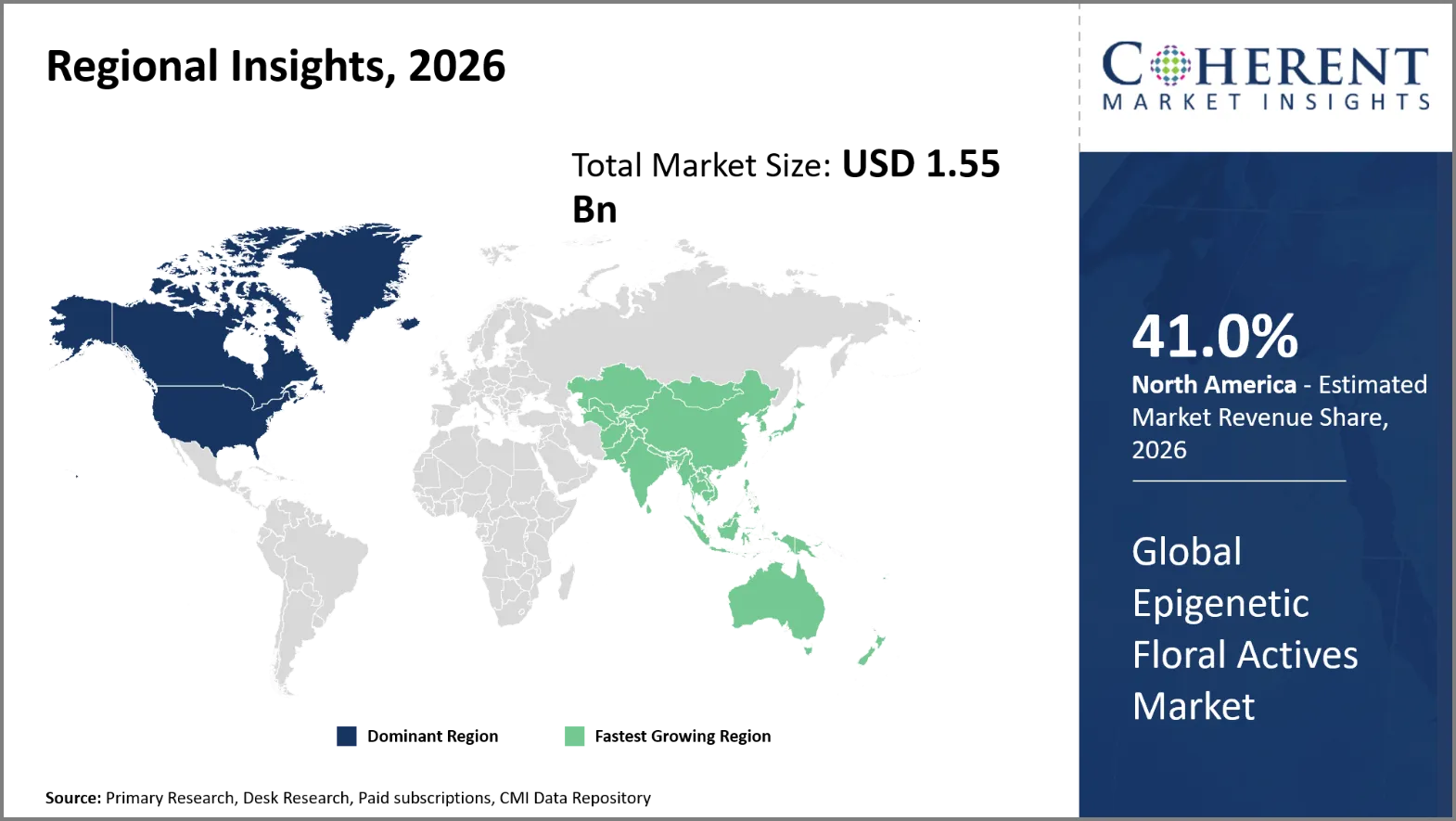
- North America is expected to dominate the epigenetic floral actives market in 2026 with a market share of 41.0%. Rising demand for differentiated ingredients in premium beauty formulations in North America is driving the growth of the regional market. On October 15, 2025, BASF introduced Ameriflor Calm through its Personal Care business on 15 October 2025. The botanical active uses Self-Heal (Prunella vulgaris) sourced from regenerative organic farms in Oregon, U.S.
- Asia Pacific is expected to account for 26.0% share in 2026. Growing interest in cellular longevity and skin resilience technologies in Asia Pacific is driving the growth of the regional market. On February 2, 2026, Amorepacific unveiled its Holistic Longevity Solution technology vision at the 2026 IMCAS World Congress. The company collaborated with Korea Advanced Institute of Science and Technology researchers on cellular senescence.
Segmental Insights
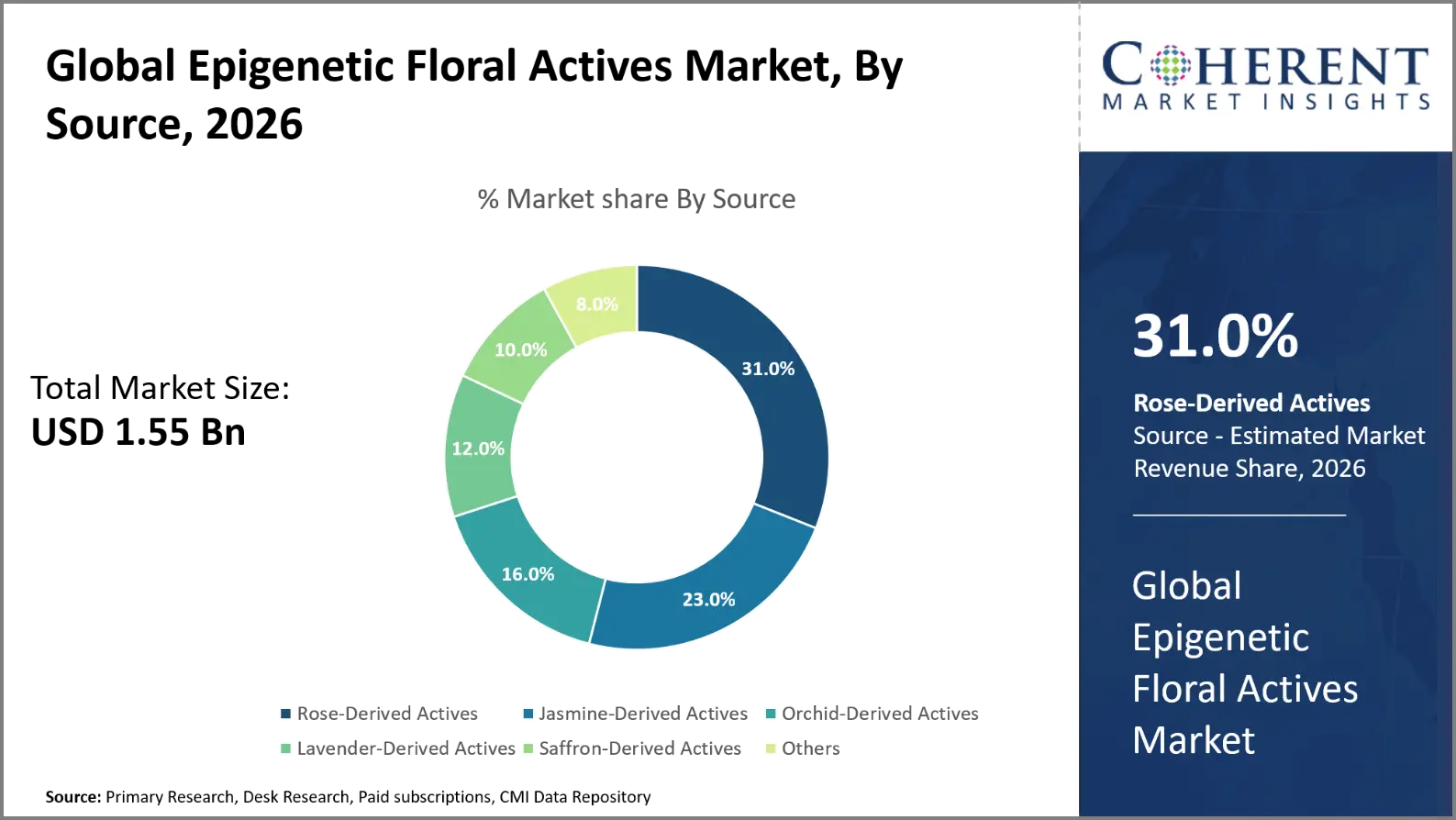
Why Does Rose-Derived Actives Dominate the Global Epigenetic Floral Actives Market?
The rose-derived actives segment is expected to account for 31.0% of the global epigenetic floral actives market share in 2026. Rose-derived actives are at the forefront, owing to the wealth of bioactive substances they contain, ready to be harnessed in sophisticated skincare products. Polyphenols, flavonoids, anthocyanins and aromatic chemicals with antioxidant qualities are abundant in rose petals. These chemicals help protect skin cells from oxidative stress and environmental damage. Rose extracts are used for hydration, soothing and complexion for the skin as well. Their ability to work with creams, serums, face oils and emulsions increases commercial demand. Cosmetic makers are increasingly turning to rose-derived chemicals for cellular protection and skin-aging recipes. This also enhances the premium skincare positioning by establishing customer familiarity with rose compounds. These properties make rose-derived actives suitable for commercial development of novel floral products for skin care.
On June 16, 2025, Mibelle Biochemistry launched LunaRose, an active ingredient from Finnish organic rosehip. The chemical has melatonin-like actions that are intended to assist the skin’s natural circadian rhythm. Its formulation targets antioxidant protection, mitochondrial function and skin-barrier strength.
- Current Industry Events of 2026
- Market Size Estimation
- Regional Breakdown
- Competitive Landscape
- Customer Intelligence
- Segmental Analysis
- Pricing Analysis
- Key Market Drivers, Challenges & Future Trends
- Customized Insights Section
Why is Floral Polyphenols the Most Preferred Ingredient Type?
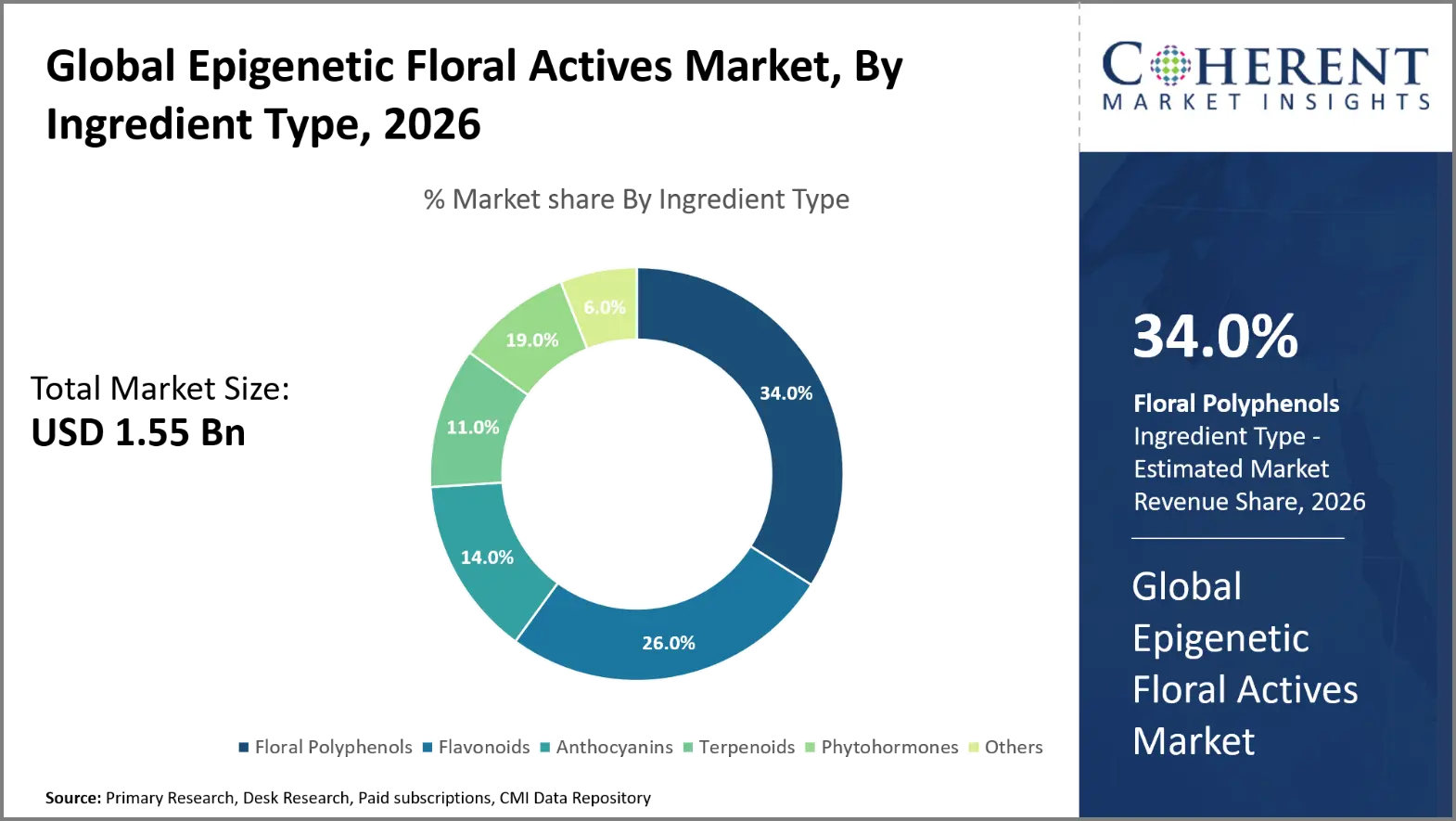
The floral polyphenols segment is expected to account for 34.0% of the global epigenetic floral actives market share in 2026. Floral polyphenols are a desirable ingredient category due to their various antioxidant and skin protecting effects. These chemicals help neutralize reactive oxygen species linked to oxidative stress. Their biological features support formulations to fight environmental skin damage and premature aging. Polyphenols have also shown potential anti-inflammatory and calming qualities in cosmetic applications. They can be found in rose, hibiscus, lavender and other flowers, opening more formulation options. Cosmetic developers are increasingly looking at their effect on cellular signaling and skin-barrier protection. They are compatible with botanicals in cosmetics formulations, which increases commercial interest. Scientific characterization and standardized extraction make them even more suitable for advanced cosmetic uses.
On May 6, 2025, BIONAP announced the development of PURYFLOWER, the revolutionary element for a natural oily skin balance. PURYFLOWER contains isorhamnetin from prickly pear cactus flowers, standardized to >0.3% for assured constant efficacy. This botanical active ingredient blocks 5-alpha reductase and controls sebocyte activity with proven proof of a tailored treatment for oil control, reduced pores and a naturally matte, balanced complexion.
Solvent Extraction Dominates the Global Epigenetic Floral Actives Market
The solvent extraction segment is expected to account for 39.0% of the global epigenetic floral actives market share in 2026. Solvent extraction is the most widely used method because of its proven ability to handle a wide range of floral materials to recover bioactive chemicals. The method enables producers to extract polyphenols, flavonoids and other phytochemicals in an effective manner. Processors can target substances with different chemical characteristics using different solvent systems. Extraction conditions can also be optimized to increase the concentration and consistency of the ingredients. Solvent extraction can be scaled up for commercial synthesis of bigger plant ingredients. Existing equipment also simplifies the manufacturing for suppliers of cosmetic ingredients. Manufacturers can customize extraction settings to individual floral materials and formulation needs. These benefits make it a material of choice for the production of floral actives.
On June 5, 2025, Herbolea Biotech announced its unique method for the extraction and purification of active ingredients from botanical sources. The technology combines physical and chemical processing with integrated purification. It eliminates chemical solvents and targets pesticide, heavy-metal and microbial contamination.
Current Events and their Impact
Current Events | Description and its Impact |
U.S. - Modernization of Cosmetics Regulation Act of 2022 (MoCRA), Public Law 117-328, Division FF, Title III |
|
European Union - Commission Regulation (EU) 2025/877 |
|
Epigenetic Floral Actives Market Dynamics
Market Drivers
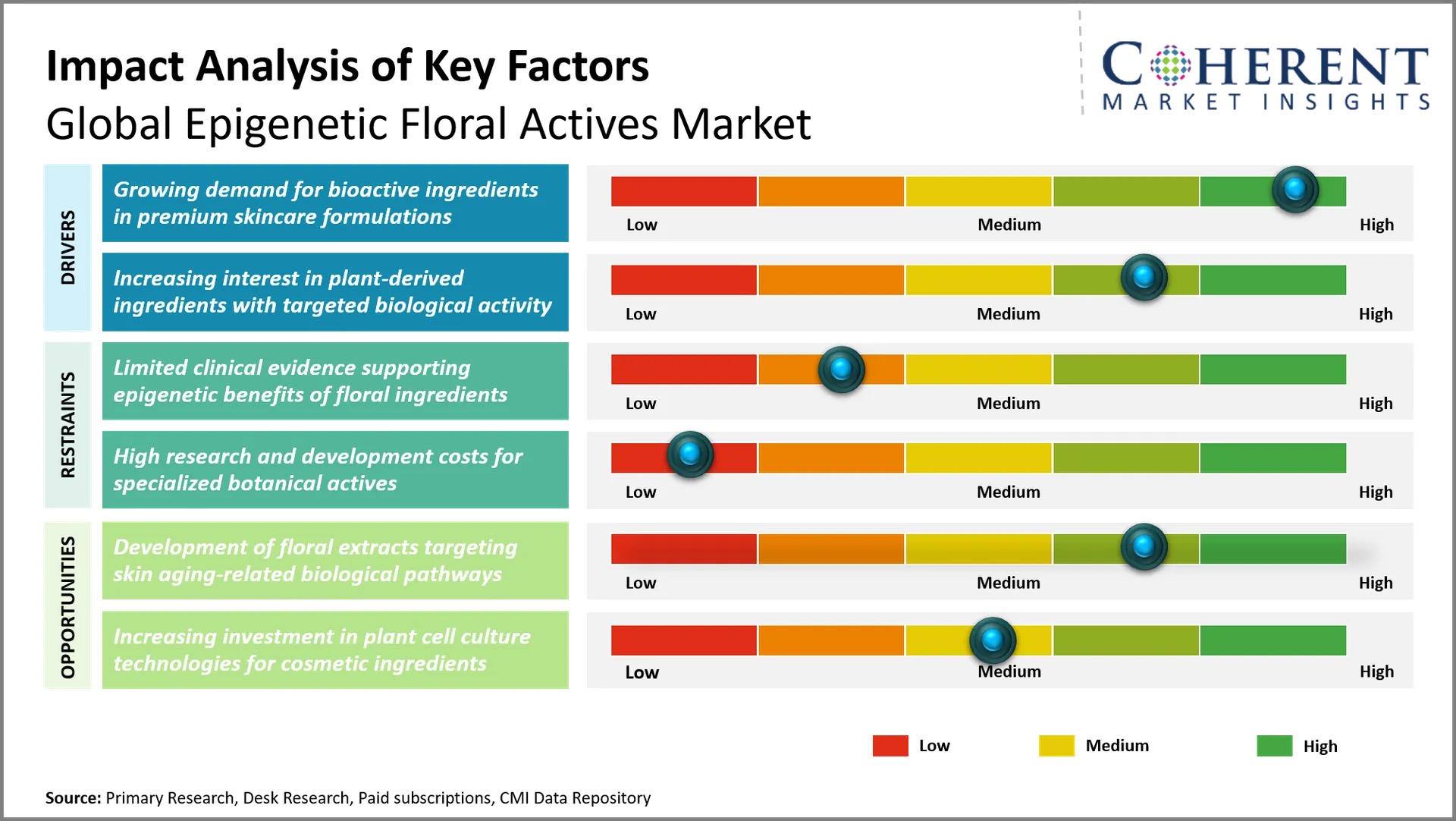
- Growing demand for bioactive ingredients in premium skincare formulations: Premium skincare manufacturers are increasingly using bioactive substances for unique and performance-oriented formulations. Consumers are more interested in products that offer targeted skin advantages and are scientifically proven. The actives obtained from flowers are rich in polyphenols, flavonoids and other molecules that have antioxidant qualities. These chemicals support formulations for oxidative stress, skin aging, hydration and environmental damage. Rose, jasmine, hibiscus and lavender extracts provide a variety of formulation choices. Cosmetic firms are diving deep into sophisticated botanical ingredients for luxury serums, creams and facial treatments. This change opens up commercial prospects for standardized botanical actives that have demonstrated biological activities.
- On March 19, 2025, Givaudan Active Beauty presented Evernityl, a marine active ingredient from the depths of the Brittany ocean. Evernityl is a beauty ingredient obtained from the macroalgae Laminaria hyperborea by a revolutionary upcycling technique that transforms fresh algae into a high-precision substance to fight skin aging and promote youthful skin.
- Increasing interest in plant-derived ingredients with targeted biological activity: Cosmetic makers are increasingly seeking out plant-derived ingredients that have specific biological functions. Floral extracts draw attention because of their phytochemical compositions that support diverse skin care applications. Polyphenols and flavonoids have antioxidant properties of interest for skin protection. Some plant-based ingredients may also offer potential anti-inflammatory and skin-soothing benefits. Researchers are researching their effects on cellular signaling, oxidative stress responses, and skin-barrier activities. Rose, chamomile, calendula and hibiscus are promising ingredient sources. This interest promotes investment in selective extraction and characterization of bioactive compounds. There is scientific evidence that floral elements can improve creativity in complex botanical skincare products.
- On April 28, 2026, Sabinsa announced Mangiophelin for presentation at the 2026 New York Society of Cosmetic Chemists Suppliers' Day. The ingredient is a Mangifera indica extract standardized to contain 10% polyphenols and 1% mangiferin. It is aimed at a number of evident indications of skin aging.
Emerging Trends
- Development of Epigenetic Skincare Ingredients Using Floral Polyphenols: Cosmetic makers are exploring flower polyphenols for their ability to affect cellular signaling, oxidative stress responses, and skin-aging pathways. Extracts of rose, hibiscus and jasmine are attractive study avenues.
- Impact: This trend drives investment in enhanced botanical extraction, molecular characterization and cellular efficacy testing. It also increases the demand for standardized floral elements with predictable biological action.
- Relevance to the market: Suppliers like Givaudan Active Beauty and Croda International are ramping up botanical ingredient innovation. Their expertise unlocks chances to generate scientifically described flower actives for premium anti-aging skincare.
- Increasing Adoption of Sustainable and Precision-Based Floral Extraction Technologies: Manufacturers are exploring the use of supercritical carbon dioxide extraction, green solvents and selective processing technologies. These approaches enhance the purity of ingredients and enable the environmentally responsible manufacturing of botanical ingredients.
- Impact: Improved extraction technologies can improve the concentration of bioactives, decrease undesirable residues and protect sensitive phytochemicals. They also allow a higher uniformity in the manufacturing of commercial floral extracts.
- Relevance to the market: Companies like as Givaudan, Symrise, and BASF are investing in sustainable ingredient development. Their botanical sourcing and extraction expertise position them to develop unique floral actives for luxury cosmetic formulations.
Regional Insights
Why is North America a Strong Market for Epigenetic Floral Actives?
North America is expected to account for a market share of 41.0% in 2026. North America is reaping the rewards of cutting edge cosmetic biotechnology, high-end skincare innovation and a rising interest in scientifically proven botanical ingredients. Regional businesses are showing more interest in plant-derived chemicals for antioxidant protection and skin aging applications. The U.S. regulatory regime was reinforced with the Modernization of Cosmetics Regulation Act, which raised the substantiation criteria for safety. This encourages suppliers to record ingredient performance and formulation safety. Companies that generate floral actives can benefit from partnerships with cosmetic research labs and dermatological companies. The region also offers opportunities for rose polyphenols, chamomile extracts, and other botanical ingredients targeting sensitive skin.
Why Does Asia Pacific Epigenetic Floral Actives Market Exhibit High Growth?
Asia Pacific is expected to register the fastest growth with a CAGR of 5.1% over the forecast period. The region is projected to account for 26.0% of the global epigenetic floral actives market in 2026 and benefits from strong floral traditions, advanced cosmetic manufacturing and growing investment in biotechnology-based skincare products. Rose petal extracts rich in anthocyanin are being studied by experts in South Korea for uses in skin aging. In a randomized clinical trial in 2026, NOVAROSE was examined in 100 individuals over 12 weeks. The study showed improvements in wrinkles, elasticity, hydration and skin barrier measures. Cherry blossom compounds are also being explored in Japanese cosmetic research for antioxidant and skin-aging purposes. These advancements lead to a higher geographical opportunity for scientifically described flower extracts. Growing plant-cell culture capabilities further support innovation in specialized botanical actives.
Global Epigenetic Floral Actives Market Outlook for Key Countries
Why is U.S. Emerging as a Major Hub in the Epigenetic Floral Actives Market?
The U.S. gains from demand for evidence-backed skincare ingredients and more safety documentation in cosmetics. Responsible persons must have sufficient safety substantiation under the Modernization of Cosmetics Regulation Act. This encourages ingredient suppliers to prepare full toxicological and compositional documentation. Botanical ingredient developers can consequently differentiate products through standardized extraction and reproducible performance testing. Research into polyphenol-rich extracts also creates opportunities for multifunctional formulations. For example, Bio-Botanica supplies chamomile, aloe vera, and other botanical extracts for facial serums. These ingredients provide established formulation pathways for introducing more specialized floral actives
Is China the Next Growth Engine for the Epigenetic Floral Actives Market?
China enjoys the advantage of abundant botanical ingredient supplies and robust local cosmetic manufacturing capabilities. The National Medical Products Administration is optimizing the evaluation and innovation process of ingredients. Its policy of December 2025 stimulates research into ingredients from particular Chinese plant resources. This opens up prospects for companies developing flower extracts with distinct biological characteristics. Domestic makers can consider traditional floral ingredients like peony, lotus and chrysanthemum. China’s regulatory focus on the safety examination and technical documentation of new cosmetic ingredients also drives investment. This is favorable for the commercialization of specialty floral actives in premium skincare formulations.
Germany Epigenetic Floral Actives Market Analysis and Trends
Germany has a strong natural cosmetics industry, botanical ingredient processing and scientifically documented skin care formulas. Domestic enterprises like Weleda, Börlind, Wala and Beiersdorf are pushing demand for distinct botanical ingredients. German customers are asking for more and more standardized extracts, checking for contaminants, transparency about sourcing and proof of efficacy. There are other established botanical ingredient wholesalers in the country such as Brenntag, Azelis and IMCD. Innovations represented 32.8% of turnover in Weleda’s DACH cosmetics business in 2025. This illustrates the importance of product innovation and differentiated formulas. These illnesses provide opportunity for clinically supported floral actives.
France Epigenetic Floral Actives Market Analysis and Trends
France has a long history of luxury skincare, fragrance and cosmetic ingredient research. Its fragrance-formulation expertise and botanical-sourcing promote interest in rose, neroli and other flower extracts. Floragenist, including Floragenist Rose and Floragenist Blossom, was launched by BASF in August 2026. The chemicals are a blend of epigenetic research and AquaGenesis extraction technology. Floragenist Rose enhanced skin brightness and decreased redness in the company's clinical study. It is an example of the advanced floral ingredient innovation for which France is famous. The country’s well-established cosmetic research ecosystem also enables collaborations between ingredient developers and luxury skincare firms.
South Korea Epigenetic Floral Actives Market Analysis and Trends
South Korea benefits from advanced cosmetic research, functional skincare development, and strong botanical biotechnology capabilities. Domestic companies increasingly investigate floral ingredients for measurable skin-health benefits. Novawells developed NOVAROSE, a rose petal extract ingredient receiving New Excellent Technology certification. Its development involved technology transferred from the Korea Food Research Institute. They assessed impacts on photoaging in a clinical study of 100 subjects in 2026. Clariant also has RedSnow, produced from red camellia flowers from Jeju Island. Its formulation is aimed at the oxidative stress caused by pollution and premature aging of the skin. Such breakthroughs further reinforce South Korea’s status as an innovator in specialized floral actives.
Global Epigenetic Floral Actives Market - Floral Species Comparison
Metric | Rose | Hibiscus | Lavender | Peony | Chamomile |
Botanical name | Rosa damascena / Rosa chinensis | Hibiscus rosa-sinensis / Hibiscus sabdariffa | Lavandula angustifolia | Paeonia officinalis / Paeonia lactiflora | Matricaria chamomilla |
Plant family | Rosaceae | Malvaceae | Lamiaceae | Paeoniaceae | Asteraceae |
Primary floral material | Petals | Petals and calyces | Flowers | Petals | Flower heads |
Major bioactive compounds | Gallic acid, quercetin, kaempferol, anthocyanins | Anthocyanins, quercetin derivatives, catechin, hibiscus acid | Rosmarinic acid, caffeic acid, flavonoids, luteolin | Paeoniflorin, gallic acid, paeonol, flavonoids | Apigenin, luteolin, bisabolol-related compounds |
Dominant polyphenol groups | Flavonoids, phenolic acids, anthocyanins | Anthocyanins, flavonols, phenolic acids | Phenolic acids and flavonoids | Phenolic acids and flavonoids | Flavonoids and phenolic acids |
How is Development of Floral Extracts Targeting Skin Aging-Related Biological Pathways Creating New Growth Opportunities in the Epigenetic Floral Actives Market?
The development of floral extracts addressing biological pathways associated to skin aging is offering prospects for scientifically distinct skincare products. Manufacturers are looking at the role of anthocyanins and polyphenols from rose in oxidative stress, collagen preservation, cellular senescence and skin barrier activities. In a study of 2025, the rose petal extract was used and human keratinocytes showed the expression of AMP-activated protein kinase and alterations in the expression of NRF2 and LAMP2A. In August 2026, BASF launched Floragenist Rose and Floragenist Blossom, combining epigenetic research with its AquaGenesis extraction technology. NOVAROSE, a standardized rose petal extract, was also investigated in a 2026 clinical trial of 100 individuals. Such breakthroughs are driving investment in targeted floral extracts, molecular testing and clinically proven components, leading to the development of premium anti-ageing formulations.
On November 14, 2025, Proya Cosmetics investigated the combination of dipeptide-4 and Lavandula angustifolia flower extract. The study investigated oxidative stress, glycation, autophagy and circadian mechanisms in human skin models.
Market Players, Key Development, and Competitive Intelligence
Key Developments
- On May 3, 2026, SEQENS announced the sale of its Botanical Actives and In Vitro Diagnostics activities located in Limoges, France, to Solabia, a global player specializing in high‑value natural ingredients for personal care, life sciences and diagnostics applications. This transaction is fully aligned with SEQENS’ strategic roadmap, which focuses on strengthening its core Pharmaceutical Solutions and selective Specialty Ingredients activities.
- On March 19, 2025, Lucas Meyer Cosmetics by Clariant announced the global launch of GlowCytocin, the first skin care ingredient that harnesses the benefits associated with the feeling of being in love. This breakthrough ingredient activates oxytocin receptors to deliver multiple scientifically proven skin benefits.
- On April 10, 2024, the Cosmetic Ingredients division at Symrise introduced Flowerconcentrole. The collection of high-quality, easy-to-formulate olfactive flower extracts works well with all product and skin types. Owing to Symrise’s Actimood technology, the products in this range can bring mood-enhancing properties to formulations. This helps brands deliver neurocosmetic benefits to consumers in turn.
Competitive Landscape
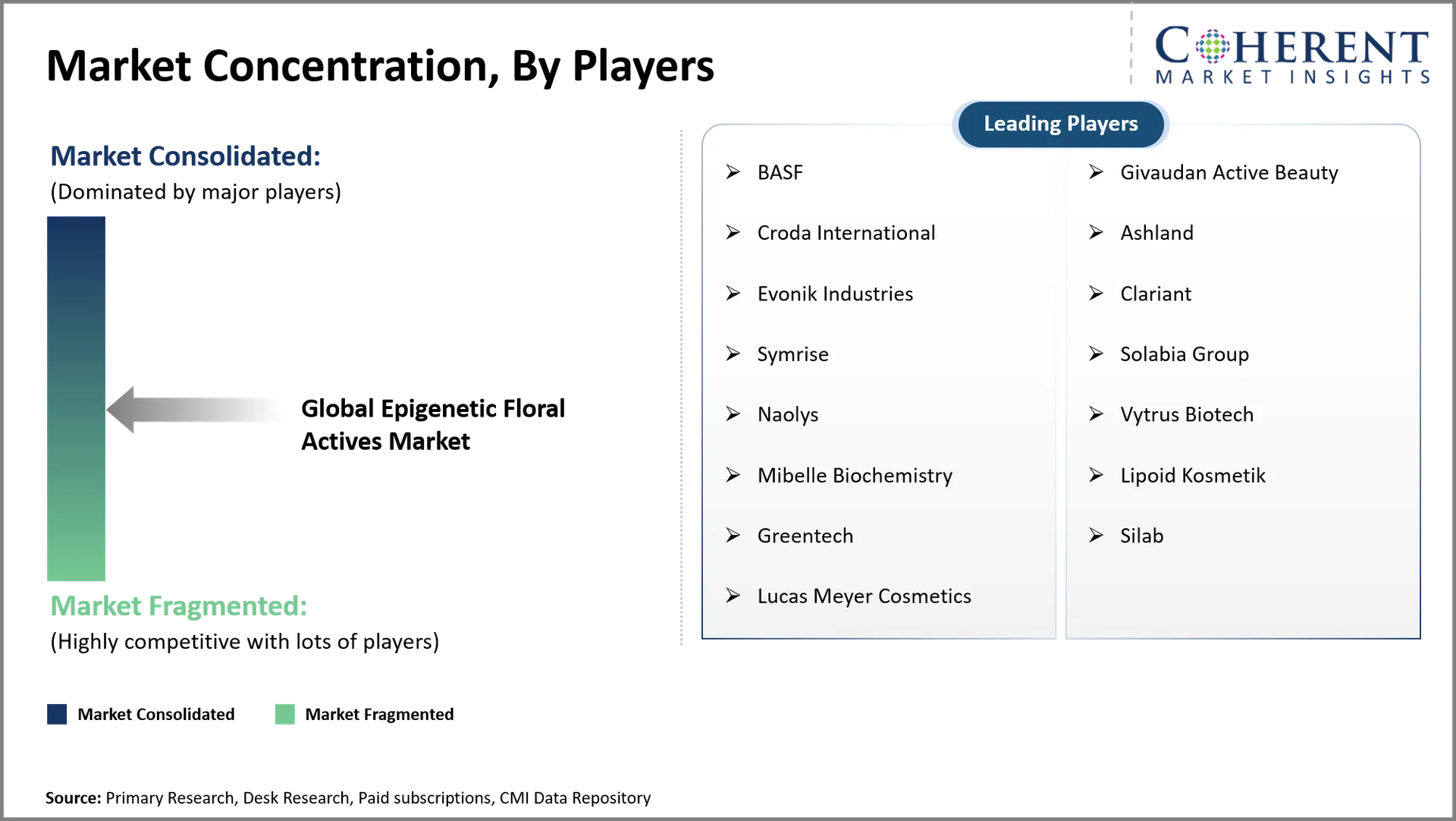
The Global Epigenetic Floral Actives Market features established cosmetic ingredient manufacturers and specialized botanical biotechnology companies. BASF SE holds a prominent position through its Floragenist portfolio, introduced in August 2026. Floragenist Rose is crafted using Moroccan Damask rose, while Floragenist Blossom utilizes bitter orange blossom. Both compounds use AquaGenesis extraction technique, which utilizes coconut water as a natural solvent. Givaudan Active Beauty specializes in high-performance cosmetic actives, green biotechnology and botanical fractionation. Its array of plant-based ingredients is for radiance, hydration and uses for well-aging. NOVAWELLS stands out because to NOVAROSE, a standardized rose petal extract with anthocyanins. Other key players include Croda International, Symrise and specialist botanical ingredient providers. Competitive strategies are increasingly focusing on unique extraction technology, verifiable floral sources, molecular characterization and specific skincare uses. Brenntag's expanded partnership with Givaudan Active Beauty in October 2026 demonstrates the importance of regional distribution networks.
Top Manufacturers and Notable Products in the Epigenetic Floral Actives Market
Manufacturer | Notable Product | Key features |
BASF SE | Floragenist Rose and Floragenist Blossom | Epigenetic-inspired floral actives, AquaGenesis extraction technology, enhanced flavonoid profiles, radiance improvement and skin-barrier resilience |
Croda International Plc | Phytessence French Rose EC and Phytofleur Hibiscus NP | Ultrasound-based Eco-sound™ extraction, moisturizing properties, skin protection, antioxidant potential and wrinkle-care applications |
Clariant AG | GlowCytocin | Oxytocin receptor activation, fibroblast proliferation, improved skin luminosity, wrinkle reduction and skin comfort |
Givaudan Active Beauty | DandErase | Green fractionation technology, botanical scalp care, dandruff management and restoration of scalp health |
Naolys | Firm Perfection (Hibiscus)² | Plant-cell biotechnology, structural firmness support, advanced botanical engineering and anti-aging skincare applications |
Market Report Scope
Global Epigenetic Floral Actives Market Report Coverage | |||
Report Coverage | Details | ||
Base Year | 2025 | Market Size in 2026: | USD 1.55 Bn |
Historical Data For: | 2020 To 2024 | Forecast Period: | 2026 To 2033 |
Forecast Period 2026 To 2033 CAGR: | 5.00% | 2033 Value Projection: | USD 2.80 Bn |
Geographies covered: |
| ||
Segments covered: |
| ||
Companies covered: | BASF, Givaudan Active Beauty, Croda International, Ashland, Evonik Industries, Clariant, Symrise, Solabia Group, Naolys, Vytrus Biotech, Mibelle Biochemistry, Lipoid Kosmetik, Greentech, Silab, Lucas Meyer Cosmetics | ||
Growth Drivers: |
| ||
Restraints & Challenges: |
| ||
Analyst Opinion (Expert Opinion)
- The future of the global epigenetic floral actives market will depend on combining botanical chemistry with targeted biological functionality. Ingredient manufacturers are likely to prioritize floral compounds with identifiable effects on oxidative stress, cellular signaling, and skin-barrier maintenance. Rose-derived actives will remain commercially attractive because their phytochemical diversity supports multiple premium skincare applications. However, manufacturers should move beyond conventional antioxidant positioning. Greater differentiation will come from ingredients connecting specific floral compounds with clearly defined skin functions. Proprietary extraction technologies and reproducible ingredient compositions will become important competitive advantages.
- The maximum opportunities will emerge in rose-derived polyphenols, anthocyanin-rich extracts, and epigenetically positioned floral complexes. Promising uses include anti-ageing serums, skin-repair lotions and products that deal with environmental skin stress. France offers an opportunity for the existing ecosystem of cosmetic ingredient innovation. There is substantial potential in sophisticated skincare formulation capabilities and botanical biotechnology in South Korea. The U.S. also represents another key opportunity for luxury skincare manufacturers seeking scientifically distinct ingredients. Rather than general botanical positioning, companies should look on ingredients with clear formulation compatibility and specific biological aims.
- Market participants must develop proprietary extraction procedures that preserve delicate floral ingredients and provide constant active concentrations. Companies should develop verifiable sourcing contracts with rose growing regions like Morocco, Bulgaria and Turkey. The commercial credibility will be enhanced by investment in molecular characterization, stability testing and uniform ingredient standards. During the product development phase, suppliers should work with producers of cosmetic formulations and dermatological laboratories. Existing distributor partnerships will provide users, the access to premium skincare manufacturers in overseas markets. Companies should also make a clear difference between cosmetic benefits and unproven medicinal or genetic alteration claims. These techniques might help the business to differentiate itself and build long-term relationships. needs and manufacturers are forced to create dedicated engine platforms for certain mission profiles rather than a one-size-fits-all propulsion design.
Speak to the analyst
Want personalized insights?
Take the findings above to one of our principal consultants, or have the report rebuilt around the segments, geographies and competitors you actually track.
Market Segmentation
- Source Insights (Revenue, USD Billion, 2021 - 2033)
- Rose-Derived Actives
- Jasmine-Derived Actives
- Orchid-Derived Actives
- Lavender-Derived Actives
- Saffron-Derived Actives
- Others
- Ingredient Type Insights (Revenue, USD Billion, 2021 - 2033)
- Floral Polyphenols
- Flavonoids
- Anthocyanins
- Terpenoids
- Phytohormones
- Others
- Extraction Technology Insights (Revenue, USD Billion, 2021 - 2033)
- Solvent Extraction
- Supercritical Fluid Extraction
- Enzymatic Extraction
- Plant Cell Culture
- Fermentation-Based Production
- Green Extraction Technologies
- Biological Function Insights (Revenue, USD Billion, 2021 - 2033)
- Skin Aging Regulation
- Cellular Protection
- Oxidative Stress Management
- Skin Barrier Support
- Inflammation Management
- Skin Regeneration Support
- Application Insights (Revenue, USD Billion, 2021 - 2033)
- Anti-Aging Skincare
- Serums
- Facial Creams
- Eye Care Products
- Skin Brightening Formulations
- Hair And Scalp Care
- End User Insights (Revenue, USD Billion, 2021 - 2033)
- Premium Skincare Manufacturers
- Mass-Market Cosmetic Manufacturers
- Cosmeceutical Manufacturers
- Professional Skincare Brands
- Dermocosmetic Manufacturers
- Regional Insights (Revenue, USD Billion, 2021 - 2033)
- North America
- U.S.
- Canada
- Latin America
- Brazil
- Argentina
- Mexico
- Rest of Latin America
- Europe
- Germany
- U.K.
- Spain
- France
- Italy
- Russia
- Rest of Europe
- Asia Pacific
- China
- India
- Japan
- Australia
- South Korea
- ASEAN
- Rest of Asia Pacific
- Middle East
- GCC Countries
- Israel
- Rest of Middle East
- Africa
- South Africa
- North Africa
- Central Africa
- North America
- Key Players Insights
- BASF
- Givaudan Active Beauty
- Croda International
- Ashland
- Evonik Industries
- Clariant
- Symrise
- Solabia Group
- Naolys
- Vytrus Biotech
- Mibelle Biochemistry
- Lipoid Kosmetik
- Greentech
- Silab
- Lucas Meyer Cosmetics
Sources
Primary Research Interviews
- Cosmetic Formulators & Product Developers
- Epigenetics Research Scientists
- Floral Extract Suppliers & Botanical Ingredient Manufacturers
- Skincare & Personal Care Brand Managers
Magazines
- Cosmetics & Toiletries Magazine
- Global Cosmetic Industry (GCI) Magazine
- HAPPI (Household and Personal Products Industry) Magazine
- in-cosmetics Magazine
Journals
- Journal of Cosmetic Dermatology
- International Journal of Cosmetic Science
- Epigenetics & Chromatin Journal
Associations
- Personal Care Products Council (PCPC)
- European Cosmetics Association (Cosmetics Europe)
- Society of Cosmetic Chemists (SCC)
- International Fragrance Association (IFRA)
Public Domain Sources
- European Medicines Agency (EMA)
- World Health Organization (WHO)
- U.S. Patent and Trademark Office (USPTO)
- U.S. Food and Drug Administration (FDA)
Proprietary Elements
- CMI Data Analytics Tool
- Proprietary CMI Existing Repository of information for last 10 years
Get access to 250+ pages report
Every segment, forecast, competitor profile and data table behind the analysis above — available for instant download.
- ESOMAR Member
- ISO 9001:2015 Certified
- D-U-N-S Registered
- GDPR & CCPA Compliant
Frequently Asked Questions
The global epigenetic floral actives market is expected to stand at USD 1.55 Bn in 2026 and is expected to reach USD 2.80 Bn by 2033.
The CAGR of the global epigenetic floral actives market is projected to be 5.0% from 2026 to 2033.
Growing demand for bioactive ingredients in premium skincare formulations and Increasing interest in plant-derived ingredients with targeted biological activity are the major factors driving the growth of the global epigenetic floral actives market.
Limited clinical evidence supporting epigenetic benefits of floral ingredients and High research and development costs for specialized botanical actives are the major factors hampering the growth of the global epigenetic floral actives market.
In terms of source, rose-derived actives segment is estimated to dominate the market revenue share in 2026.
Epigenetic floral actives are flower-derived bioactive ingredients investigated for their influence on biological pathways associated with skin health.
Rose extracts offer antioxidant compounds that support skin protection, hydration, soothing, and anti-aging formulations.