

Global GABA-Producing Probiotics Market Size and Forecast – 2026 To 2033
The global GABA-producing probiotics market is estimated to be valued at USD 8.4 Mn in 2026 and is projected to reach USD 87.7 Mn by 2033, registering a compound annual growth rate (CAGR) of 39.80% during the forecast period. Rising consumer interest in gut-brain health, stress management, sleep support and functional nutrition are anticipated to fuel market growth. The expanding research on GABA producing bacterial strains is also opening the door for manufacturers to create specialized dietary supplements and functional foods with measurable microbial activity.
In February 2026, the Quadram Institute Bioscience published a study in the Journal of Applied Microbiology that showed the production of GABA was increased when Lactiplantibacillus plantarum and Bifidobacterium adolescentis were combined in laboratory models mimicking the fermentation that happens in the intestine. The results support a potential development of next generation probiotic formulations but clinical benefits need further validation.
Key Takeaways of the Global GABA-Producing Probiotics Market
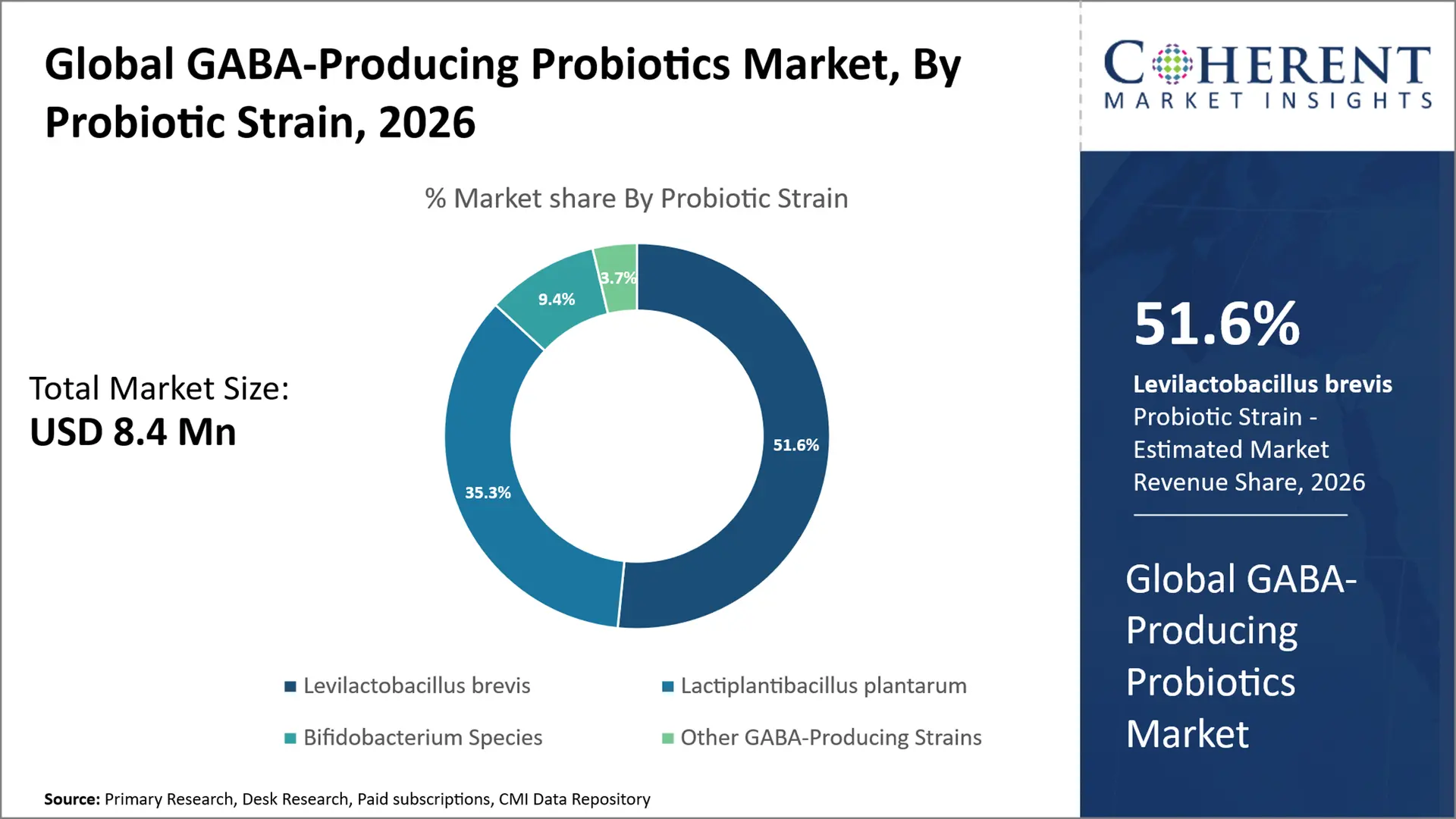
- Levilactobacillus brevis is forecast to grow at a projected CAGR of 38.2% through 2033, accounting for 51.6% of the global GABA-producing probiotics market in 2026. Its ability to produce GABA allows it to be positioned as a unique ingredient, differentiating it from traditional digestive probiotics. In October 2026, IFF launched HOWARU GutABAlite with L. brevis LBR-6108, after a human study associated intestinal GABA production with favorable markers of glucose response.
- The Freeze-Dried Probiotic Powder is projected to account for 68.6% of the global GABA-producing probiotics market revenue by 2026 and experience a CAGR of 38.3% through 2033. The benefits are the flexible formulation, standardized dosing and a simpler distribution compared to liquid cultures, subject to validated cell survival. In April 2026, research at the University of Bologna showed that it is possible to produce a freeze-dried nutraceutical prototype from a GABA-rich fermentation at pilot scale.
- Dietary Supplements to grow at an estimated CAGR of 39.1% in 2033 and capture 64.8% of the global GABA-producing probiotics market revenue in 2026. It includes targeted strain selection, controlled daily intake and evidence-based product differentiation. PharmExtracta announced in March 2025 clinical results for its GABA-producing formulation Gabapral containing Bifidobacterium adolescentis PRL2019 in children with irritable bowel syndrome.
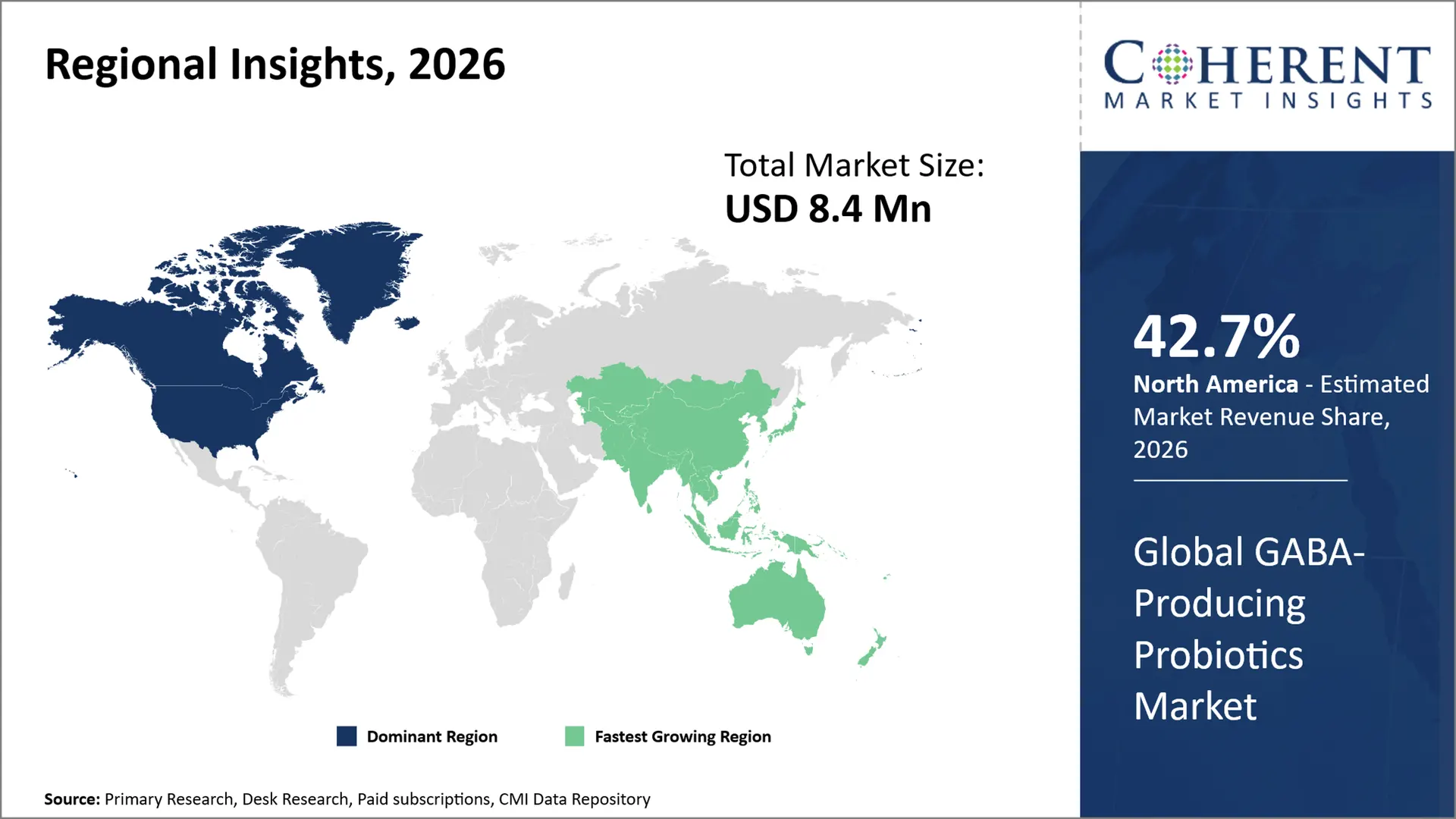
- North America is set to grow at a CAGR of 37.4% by 2033 and hold a 42.7% share of the GABA producing probiotics market revenue in 2026. Commercialization pipeline is bolstered by specialized microbiome developers and clinical-validation programs in the region. In April 2025, Verb Biotics, a Colorado company, reported a controlled trial in which its GABA-producing Lactiplantibacillus plantarum LP815 improved self-reported anxiety measures compared with placebo.
- Asia Pacific is estimated to register a CAGR of 44.6% during 2033, along with a global share of 26.6% in the GABA producing probiotics market in 2026. Regional developers are using fermentation expertise to create proprietary function-specific probiotic candidates. In December 2025, South Korean firm Ildong Bioscience reported animal research showing its GABA-producing IDCC 1201 strain was associated with longer sleep times and changes in sleep architecture.
Segmental Insights
Why Does Levilactobacillus brevis Dominate the Global GABA-Producing Probiotics Market?
Levilactobacillus brevis is projected to dominate the probiotic-strain segment, holding a 51.6% share of the global GABA-producing probiotics market. Producers of the ingredient can measure a functional property rather than a generic probiotic label, because the strains selected are capable of converting glutamate to GABA during controlled fermentation, so it has commercial relevance. Then buyers can compare strain identity, GABA yield, substrate requirements and process reproducibility. These specifications permit manufacturers targeting niche capsules or fermented foods to screen strains prior to production trials. In October 2025, researchers from the Bulgarian Academy of Sciences screened 31 strains of lactic acid bacteria and found that L. brevis NCTC 13768 was the most potent GABA producer, producing 3,830.7 mg/L under the laboratory conditions tested. The results show potential for strain selection, not demonstrated commercial performance or clinical benefit.
- Current Industry Events of 2026
- Market Size Estimation
- Regional Breakdown
- Competitive Landscape
- Customer Intelligence
- Segmental Analysis
- Pricing Analysis
- Key Market Drivers, Challenges & Future Trends
- Customized Insights Section
Why Does Freeze-Dried Probiotic Powder Represent the Largest Product Form in the Global GABA-Producing Probiotics Market?
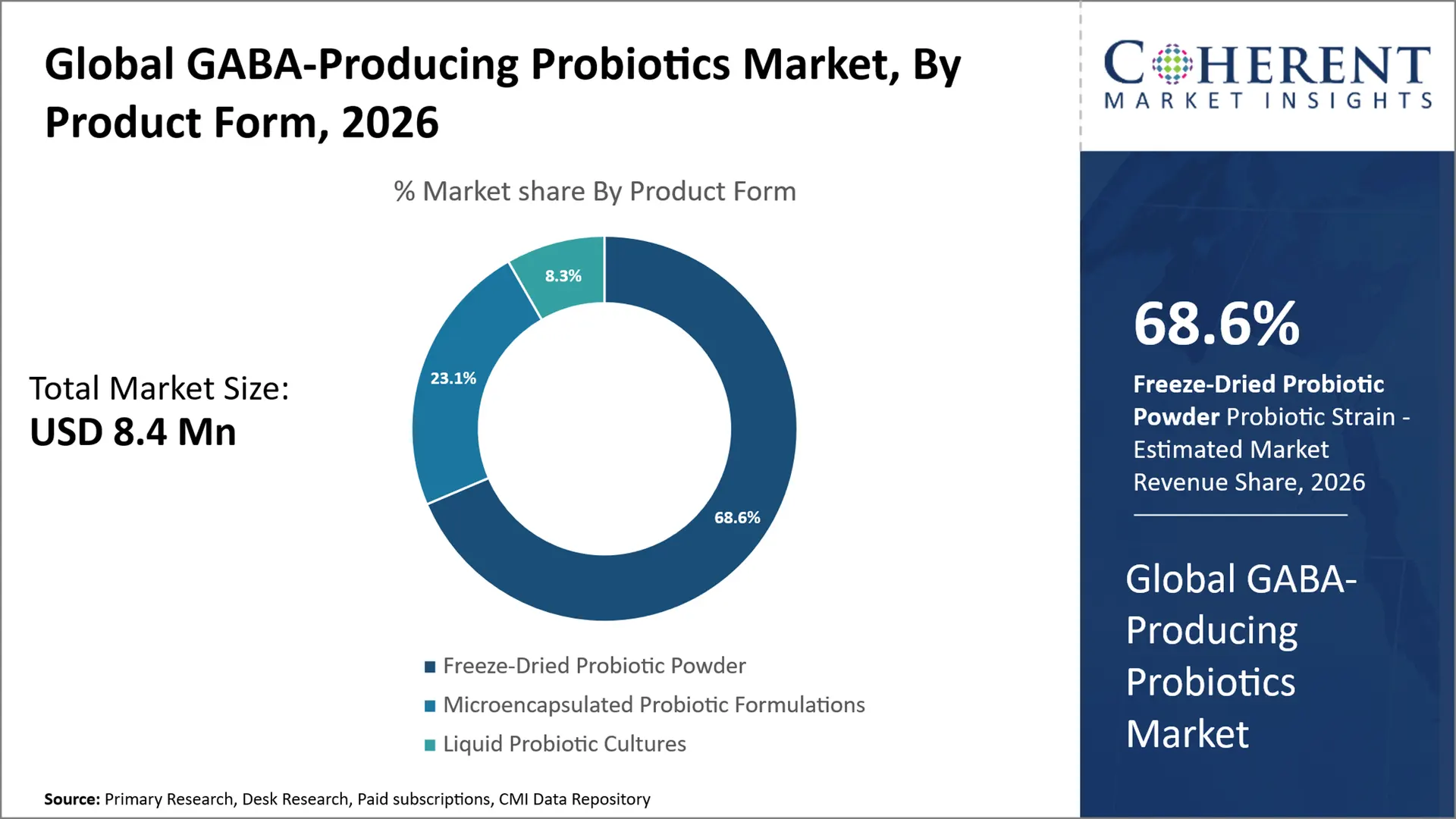
Freeze-Dried Probiotic Powder is expected to have the highest product-form share of 68.6% for global GABA-producing probiotics market in 2026. Powder formats can be transported, blended and filled into multiple finished products, without the need to maintain the handling conditions required for liquid fermentation cultures. But for GABA-producing strains, the value proposition is in protecting viable cells and preserving metabolic potential after drying and rehydration. Ingredient suppliers therefore need proper cryoprotectants, moisture specifications and storage-stability testing, rather than just relying on initial cell counts. In January 2024, researchers at Tokyo University of Marine Science and Technology reported that trehalose helped to maintain the viability of Lactiplantibacillus plantarum 002 after freeze-drying of GABA-enriched fermented Hidakakombu and maintained the GABA content at a high level. The experiment supports feasibility of formulation, but it does not establish commercial shelf life independently.
Why Do Dietary Supplements Dominate the Application Segment of the Global GABA-Producing Probiotics Market?
The Dietary Supplements segment is expected to account for 64.8% of the global GABA-producing probiotics market revenue in 2026, highlighting the commercial agility of strain defined products marketed through health and wellness channels. Suppliers can set viable-cell counts, select compatible strains and develop targeted formulas using capsules and sachets without having to ferment the final food. The main qualification challenge is to show that a culture can produce GABA under gut-like conditions and not just a factory medium. In February 2026, scientists at the UK’s Quadram Institute Bioscience and Oxford University discovered that specific strains of Lactiplantibacillus plantarum and Bifidobacterium adolescentis raised the concentration of GABA in laboratory fecal fermentations.
Current Events and their Impact
Current Event | Description and Its Impact |
U.S. FDA Finalizes New Dietary Ingredient Safety Guidance – October 2026 |
|
The European Food Safety Authority (EFSA) updated its Microbial Safety Assessment Framework in January 2026. |
|
Japan Strengthens Foods with Function Claims Requirements – September 2024 |
|
Global GABA-Producing Probiotics Market Dynamics
Key Market Drivers
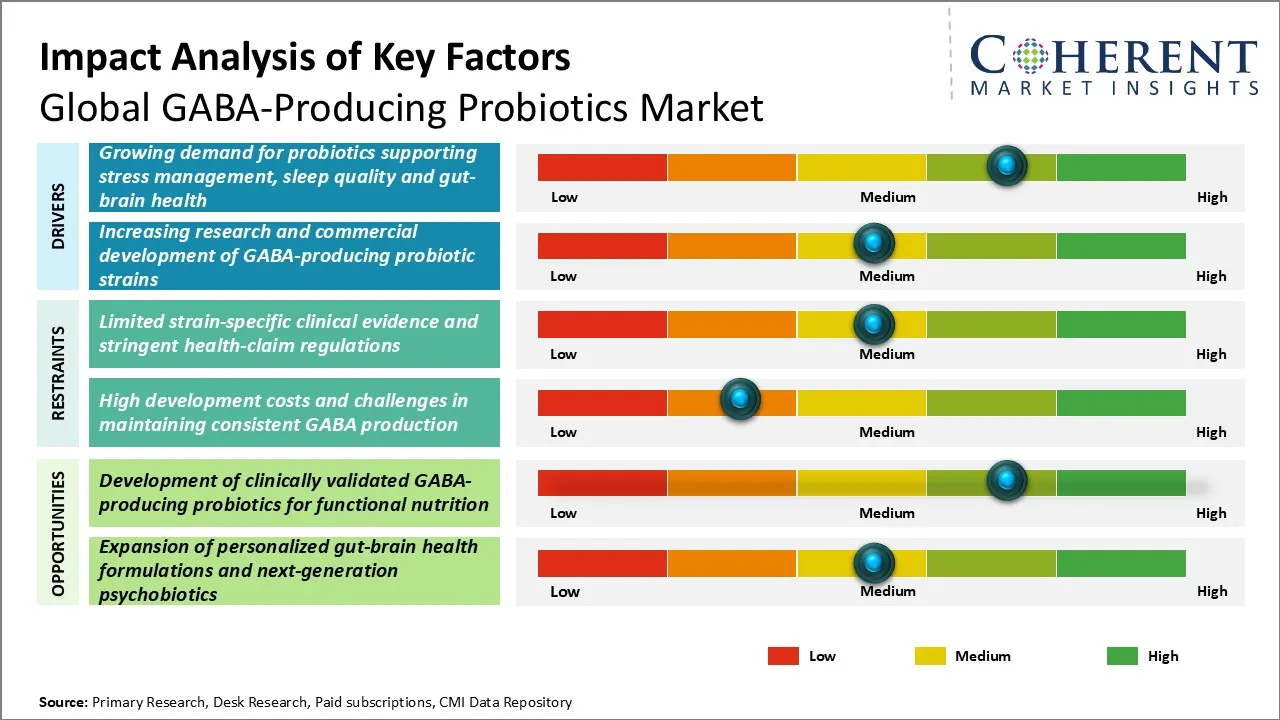
- Growing demand for probiotics supporting stress management, sleep quality and gut-brain health: Consumer interest in nutritional approaches to psychological wellness is prompting GABA-producing probiotic developers to differentiate products on the basis of microbiome-mediated functionality. If there is clinical evidence to support the intended claims, supplement brands and functional beverage manufacturers can target stress management and sleep-related wellness using strain-specific formulations. A study published in August 2025 in PubMed by researchers from Tecnológico de Monterrey. The aim of the study was to develop GABA-enriched raspberry-flavored fermented whey beverages using selected microbial cultures from kefir. The study found that the formulation was feasible, but did not show clinical benefits for stress or sleep.
- Increasing research and commercial development of GABA-producing probiotic strains: Developers of microbial glutamate decarboxylase activity are discovering probiotic strains with commercially useful characteristics for GABA production. Besides fermentation yield, gastrointestinal survival, substrate availability, functional stability and microbial safety are more and more influencing the choice of strain. Those characteristics impact the cost of development and the specifications for ingredients by manufacturers that supply specialized cultures. In August 2025, research from Keimyung University found Lactiplantibacillus plantarum KS2020 to be GABA-producing and acid- and bile-tolerant. The results emphasize the importance of fermentation substrates in the development of functional probiotic ingredients.
Emerging Market Trends
- Transition Toward Quantifiable GABA-Producing Functionality: GABA-producing probiotic manufacturers are shifting from standard viable cell counts to measurable GABA biosynthesis and strain-specific functional performance. Increasingly, standardized test methods are being used to verify microbial activity and product consistency.
Impact: The shift should improve ingredient quality and encourage investment in advanced strain characterization. Functional potency proven products can be priced at premium and have better product differentiation.
Relevance to Market: The trend is driving development of scientifically-differentiated probiotic ingredients for stress, mood and sleep support. It also incentivizes ingredient buyers to select validated GABA-producing strains over conventional probiotic cultures.
- Increasing Focus on Preservation of Functional Activity During Processing: Probiotic manufacturers are focusing more on the viability and GABA production capability of the microbes while they formulate, store and process their products. More frequently, advanced freeze drying, protective encapsulation and moisture resistant packaging are being used to maintain strain functionality.
Impact: Enhanced processing methods may lead to greater product stability, reduced viable-cell loss, and uniform functional performance. Manufacturers with specialized formulation capabilities, such as reliable ingredient quality and extended shelf life, can build competitive advantages.
Relevance to Market: This finding will increase the commercial value of the probiotics producing GABA for functional food and dietary supplement applications. It also promotes the development of microencapsulated formulations and stable probiotic powders for a broader spectrum of commercial applications.Top of Form
Regional Insights
Why Does North America Dominate the Global GABA-Producing Probiotics Market?
North America is expected to hold 42.7% of the global GABA-producing probiotics market in 2026. The region is fortunate to have a well-developed supply chain for specialty ingredients, technical services for supplement formulation, and food science laboratories capable of characterizing microbial metabolites. When the strain identity, viability and functional properties of GABA-producing cultures are sufficiently documented, suppliers can target differentiated nutrition applications. Research on fermentation substrates also provides practical ways to improve production efficiency. U.S. Department of Agriculture’s Agricultural Research Service scientists reported in December 2024 that experiments demonstrated that adding glutamate increased GABA accumulation during cucumber fermentation using native and starter-culture lactic acid bacteria. The results indicate there is a potential for the development of regional fermentation, not for commercial sales of probiotics.
Why Is Asia Pacific Emerging as the Fastest-Growing Region in the Global GABA-Producing Probiotics Market?
The Asia Pacific region is expected to represent 26.6% of the global GABA-producing probiotics market in 2026 and witness the fastest regional growth through 2033. The development potential is derived from the current fermented food manufacturing capabilities and the diversity of microbial strains for research into functional ingredients. Traditional fermentation expertise together with modern strain characterization and production optimization can allow regional producers to commercialize differentiated cultures. Besides, research institutes are studying GABA-producing and other functional microorganisms, which bring new opportunities for product development. Springer Nature in May 2025 evaluated Lactiplantibacillus plantarum SY1 from Shandong University and China Pharmaceutical University. The study showed GABA production under optimized fermentation conditions and antioxidant activity in experimental models. These findings are in line with the region's early stage pipeline for functional ingredient development.
Global GABA-Producing Probiotics Market Outlook for Key Countries
Why Is China a Key Market for the Global GABA-Producing Probiotics Market?
China’s significance in the global GABA-producing probiotics market is due to its capacity to develop specialized ingredients for functional nutrition applications and microbial fermentation research infrastructure. The isolation of efficient bacterial strains from traditional fermented foods and the determination of commercially important fermentation parameters are increasingly the focus of national research programs. This allows ingredient manufacturers to cut development costs by incorporating localized strain discovery and production optimization. A study by researchers from Northwest Minzu University, Zhejiang Gongshang University and Gansu Puluo Biotech published April 2026 investigated Lactiplantibacillus plantarum XBMU-SN-23 isolated from Lanzhou Jiangshui. The research optimized the fermentation conditions for GABA production, thus providing a potential basis for further industrial development. More safety tests and commercial validations are required.
Why Is Japan Important in the Global GABA-Producing Probiotics Market?
Japan is a strategically significant market for GABA-producing probiotics due to its well-established fermented-food industry. It provides the opportunity to develop specific nutrition products with microbial cultures producing GABA. The know-how of manufacturers in the development of functional ingredients, in the screening of microbes and in dairy fermentation may be used to identify strains suitable for specific applications. Commercial differentiation will be through demonstration of the intended biological functionality and compliance with the relevant food safety and labeling regulations in Japan. At the annual meeting of the Japan Society for Bioscience, Biotechnology and Agrochemistry in March 2026, Takanashi Milk Products presented research on Screening and Comparison of Powerful GABA-producing Probiotic Lactic Acid Bacteria. The presentation suggests ongoing industrial research into strain selection, although the development and launch of commercial products were not confirmed.
Why Does South Korea Support Growth in the Global GABA-Producing Probiotics Market?
The wide-ranging fermented-food research ecosystem in South Korea, especially the availability of traditional kimchi-derived lactic acid bacteria, provides a major boost to the country’s contribution to the GABA-producing probiotics market. These microbial resources offer the possibility of identifying strains with specialized metabolic properties, and of developing differentiated fermentation ingredients. Working with food biotechnology companies in an academic environment can help evaluate strains and develop processes for future commercialization. In September 2026, research by Chonnam National University and Yeungnam University identified Levilactobacillus brevis FBL-3 from godeulppaegi kimchi and explored the fermentation medium components that affect GABA production. The study highlights the potential of indigenous fermented-food microorganisms as sources of functional cultures, considering that they are subjected to further safety and application-specific evaluations.
Why Is Germany a Strategic Country in the Global GABA-Producing Probiotics Market?
Germany offers commercial opportunities with its established global market for GABA-producing probiotics and research capabilities in microbiome metabolism and nutritional science. Ingredient developers might consider partnering with academic institutions to study how dietary composition affects the production of microbial GABA, which could ultimately help to build more specifically designed probiotic products. Additionally, robust characterization is also required for market access as the country’s regulatory environment favors scientifically substantiated ingredient safety and health-related claims. In March 2026, a computational study from Kiel University was published that examined the effects of dietary patterns on the GABA-producing potential of Bifidobacterium adolescentis HD17T2H and other intestinal bacteria. The results highlighted the role of substrate availability in the development of nutritional formulations specifically targeted to the microbiome.
Why Is the U.S. a Key Market for the Global GABA-Producing Probiotics Market?
The United States is one of the world’s majors commercializers of GABA-producing probiotics, thanks to biotechnology developers who employ specialized fermentation technology and microbial engineering, as well as existing distribution channels for dietary supplements. Its innovation ecosystem facilitates the study of GABA-producing microbes with defined metabolic characteristics, allowing suppliers to differentiate strains based on proprietary biosynthesis capabilities. This approach requires the manufacturer to balance production performance, safety assessments and applicable regulatory requirements. As shown in a study from Emory University and its cooperating American institutions in June 2024, genetically engineered Lactococcus lactis could constitutively express GABA-producing genes to obtain enhanced production of GABA. This proof-of-concept shows the potential for the further development of engineered microbial platforms but does not constitute a commercial authorization or clinic.
Product Development and Commercialization Landscape in the Global GABA-Producing Probiotics Market
Market Focus Area | Current Market Position | Key Industry Requirements | Commercial Significance |
Strain-Based Product Differentiation | Growing interest toward certain bacterial strains producing GABA | Verified strain identity, safety documentation, and evidence of functionality. | Helps to develop proprietary products and position premium ingredients |
Dietary Supplement Formulation | The most obvious application is especially for wellness products that are specifically designed for specific | Proper dosage forms, stable microbial content and accurate labeling | Provides opportunities for specialty supplement brands and ingredient suppliers |
Functional Food and Beverage Integration | Developing applications in the area of fermented dairy, functional drinks and nutritional foods | Sensory quality, stability of the product, compatibility with food matrices | Expand the commercial opportunities beyond traditional probiotic supplements |
Positioning for Well-being in Relation to Stress, Mood and Sleep | A growing focus on differentiated psychobiotic products | Clinically substantiated claims and clinical evidence specific to the strain | Facilitates the placement of potential premium products and targeted wellness portfolios |
Companion Animal Nutrition | Opportunity in specialized probiotic ingredients early stage | Safety, palatability, and functional benefits specific to the species | Creates opportunities for premium pet supplement makers and veterinary nutrition suppliers |
Ingredient Supply and Commercial Partnerships | Direct relationships with manufacturers still mean something for specialized cultures. | Quality and consistency, technical documentation, traceability and reliable manufacturing capacity | Supports custom formulation partnerships and long-term B2B supply agreements |
How Is Companion Animal Behavioral Wellness Creating New Growth Opportunities in the Global GABA-Producing Probiotics Market?
GABA-producing probiotic suppliers looking for applications outside normal human nutrition have an underdeveloped commercial opportunity in companion animal behavioral wellness. Pet owners are looking more and more at nutritional support for day-to-day behavioral concerns, which provides an opportunity for microbiome-focused formulations for situational stress and emotional balance.
However, successful commercialization will require evidence that is species-specific, rather than extrapolating directly from probiotic research in humans. Ingredient creators may work with veterinary nutrition companies to test GABA-producing strains in dogs and cats focusing on gastrointestinal compatibility, safety, correct dosing and measurable behavioral endpoints.
Veterinary-recommended supplements, specialized pet nutrition brands and premium functional treats offer potential commercial opportunities. Suppliers of validated strains with desirable stability profiles could gain differentiated formulations and repeat ingredient contracts.
Involvement will involve investment into controlled animal studies, veterinary regulatory assessments, palatability testing and scalable production. Those who develop microbiomes and have partnerships with veterinary researchers might be especially well placed to get an early commercial edge.
Market Players, Key Development, and Competitive Intelligence
Key Developments
- In December 2025, Evonik Operations GmbH had European patent application EP 4667560 A1 published, covering a GABA-producing Levilactobacillus brevis strain and potential applications in food, feed, and other formulations. The application demonstrates continued investment in specialized microbial functionality and could support future ingredient licensing. Patent publication does not establish commercialization or authorization.
- In May 2025, Mediogen Co., Ltd announced the registration of a South Korean patent covering its proprietary Levilactobacillus brevis MG5552 strain, selected for GABA-producing capability. The development strengthens its intellectual property position and creates potential for differentiated functional food ingredients, without establishing clinical efficacy or regulatory approval for therapeutic indications.
- In July 2024, eGnome announced the development of genetically engineered probiotics using CRISPR-Cas9 technology to promote GABA secretion. The research-stage development is relevant to the global GABA-producing probiotics market because it demonstrates an alternative approach to modifying microbial metabolic functionality, although commercial authorization and product availability were not established.
Competitive Landscape
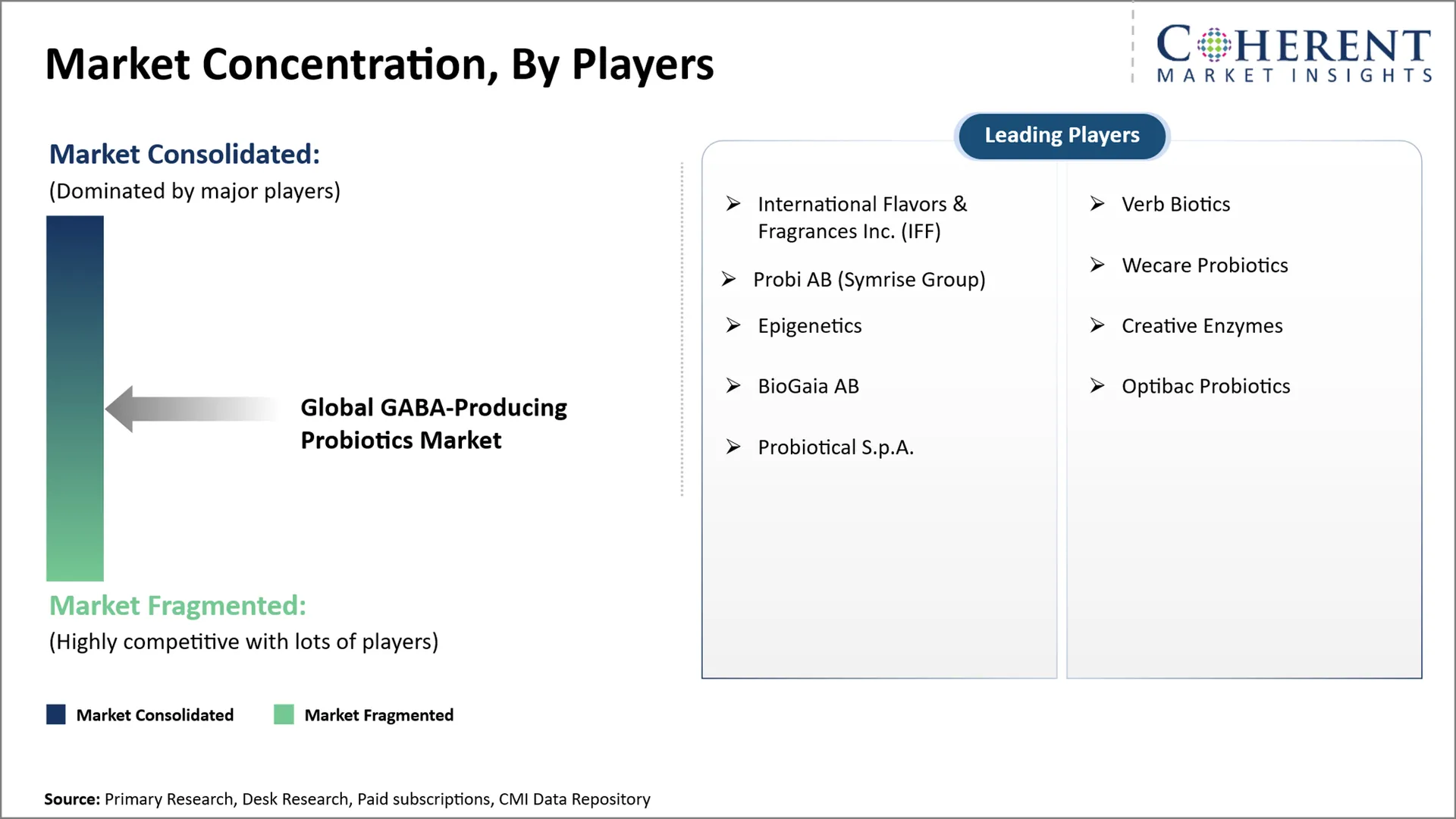
The global GABA-producing probiotics market is fragmented, with established probiotic ingredient manufacturers, specialist microbiome biotechnology companies, fermentation developers and contract manufacturers making up the market. The competition is based on: regulatory readiness, production consistency, proprietary strain capabilities and functional substantiation. Large ingredient suppliers can draw on their quality systems, international commercial relationships and manufacturing infrastructure. Regional specialists can compete with bespoke formulations and niche applications.
Key focus areas include
- Strain Intellectual Property Proprietary Microbial Collections Protected Applications The value of the license can be enhanced and direct substitution restricted.
- Production economics: Profitability of commercial scale fermentation is dependent upon batch consistency, media cost and fermentation productivity.
- Safety Documentation: Comprehensive strain characterization and traceable manufacturing records ensure supplier qualification.
- Application specific specifications: microbial concentrations, protective ingredients and dosage forms designed to improve formulation compatibility.
- Analytical Capabilities: Developed and validated methods of testing to quantify GABA and to establish consistent functional product specifications.
- Long term commercial partnerships with supplement manufacturers can improve visibility of demand and production planning.
- Regional Market Access: Localization of product documentation, labeling, and manufacturing standards supports international customer acquisition.
Market Report Scope
Global GABA-Producing Probiotics Market Report Coverage | |||
Report Coverage | Details | ||
Base Year | 2025 | Market Size in 2026: | USD 8.4 Mn |
Historical Data For: | 2020 To 2024 | Forecast Period: | 2026 To 2033 |
Forecast Period 2026 To 2033 CAGR: | 39.80% | 2033 Value Projection: | USD 87.7 Mn |
Geographies covered: |
| ||
Segments covered: |
| ||
Companies covered: |
| ||
Growth Drivers: |
| ||
Restraints & Challenges: |
| ||
Analyst Opinion (Expert Opinion)
- The global market for GABA-producing probiotics is expected to shift from the trading of single microbial ingredients to licensing and co-development agreements for specific applications. Those companies who can share the responsibility for development with formulation partners may be able to create more predictable commercial relationships. This could be a boon for suppliers that bundle proprietary strain assets with flexible contracting models, rather than just selling volumes of ingredients.
- Live GABA-producing cultures could face competition from cell-free microbial metabolites and postbiotic formulations in applications where the presence of living organisms presents a manufacturing hurdle. Greater processing flexibility may be achieved with non-living alternatives if comparable consumer benefits are demonstrated. Thus, live-culture developers will need to decide whether the benefit of continuously active microbes is meaningful compared to the delivery of preformed GABA.
- Market participants should focus on controlled human studies, defensible intellectual property and commercially realistic production capacity. Investments should be focused on repeatable proof across target consumer groups and compliant product positioning. Suppliers must manage high development expenditure, uncertain functional-claim acceptance, and manufacturing variability while avoiding premature investment in large-scale production before customer qualification and recurring procurement are established.
Speak to the analyst
Want personalized insights?
Take the findings above to one of our principal consultants, or have the report rebuilt around the segments, geographies and competitors you actually track.
Market Segmentation
- Probiotic Strain Insights (Revenue, USD Mn, 2021 - 2033)
- Levilactobacillus brevis
- Lactiplantibacillus plantarum
- Bifidobacterium Species
- Other GABA-Producing Strains
- Product Form Insights (Revenue, USD Mn, 2021 - 2033)
- Freeze-Dried Probiotic Powder
- Microencapsulated Probiotic Formulations
- Liquid Probiotic Cultures
- Application Insights (Revenue, USD Mn, 2021 - 2033)
- Dietary Supplements
- Functional Foods and Beverages
- Companion Animal Nutrition
- Function Insights (Revenue, USD Mn, 2021 - 2033)
- Stress and Mood Support
- Sleep Support
- Metabolic Health Support
- Other Wellness Applications
- Sales Channel Insights (Revenue, USD Mn, 2021 - 2033)
- Direct Manufacturer Sales
- Specialty Ingredient Distributors
- Contract Formulation Partners
- Regional Insights (Revenue, USD Mn, 2021 - 2033)
- North America
- U.S.
- Canada
- Latin America
- Brazil
- Argentina
- Mexico
- Rest of Latin America
- Europe
- Germany
- U.K.
- Spain
- France
- Italy
- Russia
- Rest of Europe
- Asia Pacific
- China
- India
- Japan
- Australia
- South Korea
- ASEAN
- Rest of Asia Pacific
- Middle East
- GCC Countries
- Israel
- Rest of Middle East
- Africa
- South Africa
- North Africa
- Central Africa
- North America
- Key Players Insights
- International Flavors & Fragrances Inc. (IFF)
- Verb Biotics
- Probi AB (Symrise Group)
- Wecare Probiotics
- Epigenetics
- Creative Enzymes
- BioGaia AB
- Optibac Probiotics
- Probiotical S.p.A.
Sources
Primary Research Interviews
- GABA-producing probiotic manufacturers, microbial strain developers, and specialty ingredient suppliers
- Nutraceutical formulators, functional food producers, and probiotic supplement manufacturers
Stakeholders
- Probiotic culture suppliers, fermentation technology providers, and contract manufacturers
- Dietary supplement brands, ingredient distributors, and microbiome research organizations
End-use Sectors
- Dietary supplements, functional foods and beverages, and companion animal nutrition
- Stress and mood support, sleep wellness, and metabolic health applications
Regulatory and Industry Bodies
- U.S. Food and Drug Administration (FDA)
- European Food Safety Authority (EFSA)
- European Commission (EC)
- Food Safety and Standards Authority of India (FSSAI)
Databases
- PubMed, ClinicalTrials.gov, and EFSA Qualified Presumption of Safety (QPS) database
- FDA GRAS Notice Inventory, European Patent Office (Espacenet), and scientific publication databases
Magazines and Journals
- Frontiers in Microbiology
- Journal of Functional Foods
- Applied Microbiology and Biotechnology
- Food Research International
Associations
- International Scientific Association for Probiotics and Prebiotics (ISAPP)
- International Probiotics Association (IPA)
- International Life Sciences Institute (ILSI)
Public Domain Sources
- Probiotic strain specifications, GABA-production studies, clinical trials, and fermentation research
- Company product portfolios, ingredient safety assessments, patents, and manufacturing announcements
Key Standards and Regulations
- U.S. FDA 21 CFR Part 111 – Dietary Supplement Current Good Manufacturing Practices
- U.S. FDA 21 CFR 101.93 – Dietary Supplement Structure/Function Claims
- EU Regulation (EC) No 1924/2006 – Nutrition and Health Claims
- EU Regulation (EU) 2015/2283 – Novel Foods
- EFSA Qualified Presumption of Safety (QPS) Assessment Framework
Proprietary Elements
- CMI Data Analytics Tool
- Proprietary research repository, supplemented by primary interviews, strain-level market assessment, fermentation capacity analysis, ingredient pricing, application demand estimates, and competitive intelligence.
Get access to 250+ pages report
Every segment, forecast, competitor profile and data table behind the analysis above — available for instant download.
- ESOMAR Member
- ISO 9001:2015 Certified
- D-U-N-S Registered
- GDPR & CCPA Compliant
Frequently Asked Questions
The CAGR of global GABA-producing probiotics market is projected to be 39.80% from 2026 to 2033.
The global GABA-producing probiotics market is estimated to be valued at USD 8.4 Mn in 2026 and is projected to reach USD 87.7 Mn by 2033.
The production of microbial GABA by GABA-producing probiotics to promote gut-brain communication, mental wellness, stress management, and sleep health is under investigation.
GABA-producing probiotics contain specific strains of bacteria that can produce gamma-aminobutyric acid (GABA), a neurotransmitter that helps regulate the nervous system. Typical probiotics are generally marketed for the benefit of the gut, unlike GABA-producing probiotics.
The key end users are dietary supplement manufacturers, functional food and beverage companies, nutraceutical brands, and contract formulation companies who are specialized in the development of wellness products.
Companies should consider the following before selecting suppliers: strain identification, evidence of documented GABA production, safety data, microbial viability, consistency of manufacture, regulatory compliance and formulation compatibility.
Growing demand for probiotics supporting stress management, sleep quality and gut-brain health and Increasing research and commercial development of GABA-producing probiotic strains are the major factors driving the growth of global GABA-producing probiotics market.