

Global and U.S. Veterinary Drugs Market Size and Forecast – 2026 To 2033
The global and U.S. veterinary drugs market is expected to grow from USD 24,905.8 Mn in 2026 to USD 48,197.5 Mn by 2033, registering a compound annual growth rate (CAGR) of 9.9% from 2026 to 2033. The market for global and U.S. veterinary drugs is poised for significant expansion, fueled by the growing livestock population and increasing focus on herd health and disease prevention.
According to the U.S. Department of Agriculture (USDA), the U.S. had 94.2 million cattle and calves on farms as of July 2026, including 13.2 million cattle on feed, up 2% from 2025. The large and growing livestock base underscores sustained demand for veterinary drugs for disease prevention, treatment, and herd health management.
Key Takeaways of the Global and U.S. Veterinary Drugs Market
- Antibiotics are projected to hold 18.0% of the global and U.S. veterinary drugs market share in 2026, making it dominant drug type segment, particularly in North America, supported by extensive livestock healthcare and established antimicrobial stewardship requirements. The U.S. Food and Drug Administration (FDA) even implemented GFI #263, requiring medically important antimicrobials that remain on the market to transition from OTC to prescription status and come under veterinary oversight.
- Generics are projected to hold 57.7% of the global and U.S. veterinary drugs market share in 2026, making it dominant type segment, with Europe representing a significant market due to its harmonized framework for authorization and distribution of veterinary medicines. Regulation (EU) 2019/6 specifically establishes a regulatory pathway for generic veterinary medicinal products, requiring the same active-substance composition and pharmaceutical form as the reference product and demonstration of bioequivalence. This framework supports the development and market availability of generic veterinary drugs across EU member states.
- Digestive system disease is projected to hold 24.3% of the global and U.S. veterinary drugs market share in 2026, making it dominant indication segment, with Europe witnessing substantial demand owing to its large food-producing animal population and regulatory emphasis on effective treatment of enteric diseases. The European Medicines Agency’s revised guideline on anticoccidial veterinary medicines became legally effective in February 2026 and specifies efficacy requirements for products targeting coccidiosis across poultry, ruminants, pigs, rabbits, dogs, and cats. The expanded species coverage supports continued development of therapies addressing gastrointestinal parasitic diseases.
- North America market maintains dominance with an expected share of 39.2% in 2026, bolstered by high pet ownership, established veterinary healthcare infrastructure, and strong regulatory support for animal drug development. The U.S. FDA released its MUMS Blueprint for Success 2026–2028, outlining measures to reduce financial and regulatory barriers and expand the availability of drugs for minor species and uncommon diseases in June 2026.
- Asia Pacific is expected to exhibit the fastest growth in the global and U.S. veterinary drugs market, registering an estimated CAGR of 11.1% during 2026–2033, driven by expanding livestock healthcare, disease-control programs, and improving access to veterinary medicines. For instance, India’s Department of Animal Husbandry & Dairying added Pashu Aushadhi to the Livestock Health and Disease Control Programme, allocating USD 7.85 million (INR 75 crore) to improve access to quality, affordable generic veterinary medicines.
Segmental Insights
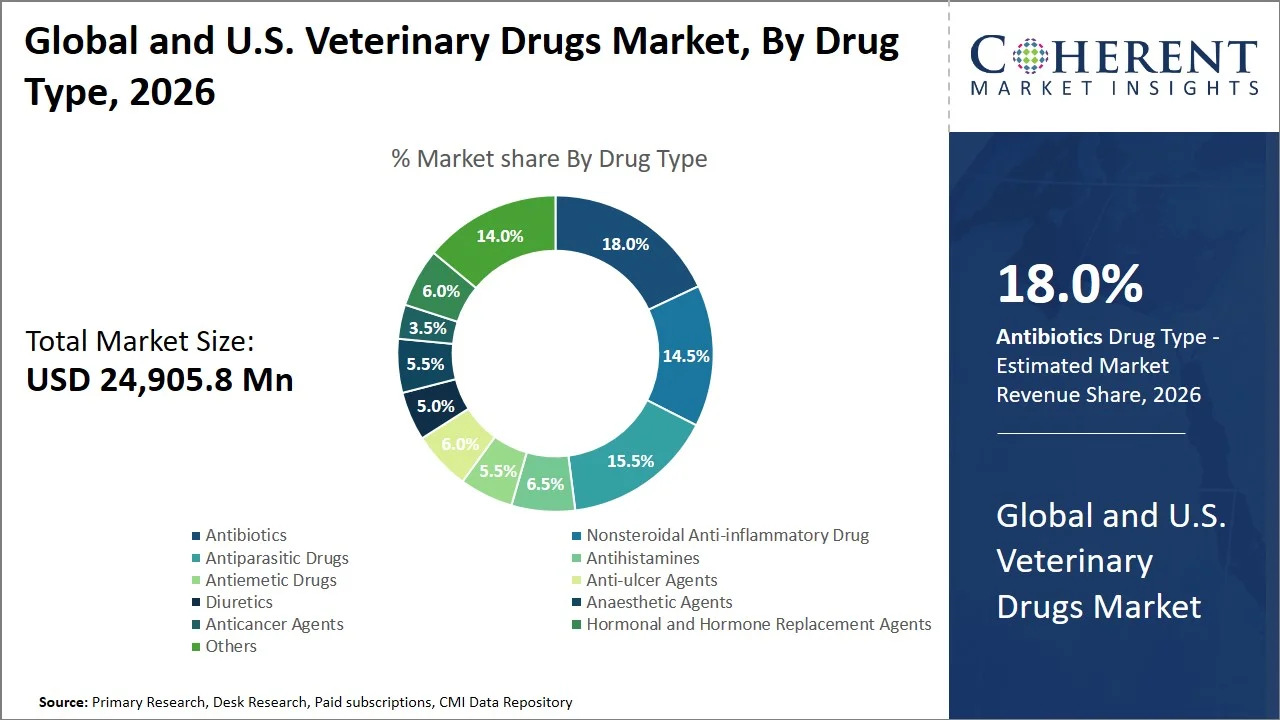
Why Do Antibiotics Dominate the Global and U.S. Veterinary Drugs Market?
Antibiotics are projected to hold the market share of 18.0% in 2026, due to the extensive use in the treatment of both livestock and companion animal bacterial diseases. Respiratory, enteric, and bacterial infections have continued to demonstrate firm demand, and will likely be subject to strict management via a focus on stewardship to promote judicious and targeted prescribing. For instance, according to the European Medicines Agency (EMA), penicillin, tetracyclines and macrolides together comprised 65.5% of antimicrobial medicines veterinary sales for food-producing animals in the EU during 2024.
- Current Industry Events of 2026
- Market Size Estimation
- Regional Breakdown
- Competitive Landscape
- Customer Intelligence
- Segmental Analysis
- Pricing Analysis
- Key Market Drivers, Challenges & Future Trends
- Customized Insights Section
Why Does Generics Represent the Largest Type Segment in the Global and U.S. Veterinary Drugs Market?
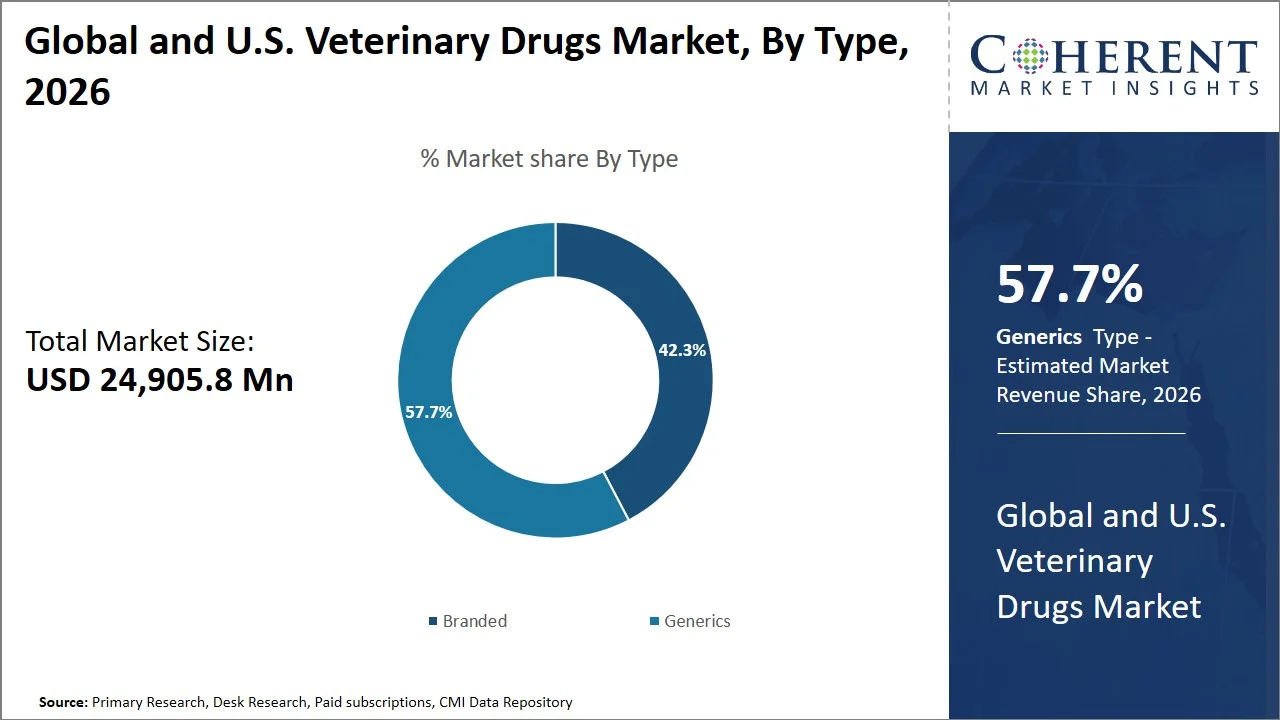
Generics are projected to hold a market share of 57.7% in 2026, because of their affordability, proven therapeutic equivalence and increased availability, making them appealing to veterinarians, livestock producers, and animal owners. Furthermore, the condensed approval process for generic veterinary products decreases R&D required when compared to branded products which, enables wider availability and selection for animals of all types. For instance, the Abbreviated New Animal Drug Applications (ANADA) pathway of the U.S. Food and Drug Administration (FDA) allows for a generic animal drug to be approved based upon the data on safety and efficacy developed for an approved original drug without being required to demonstrate bioequivalence and manufacturing quality.
Digestive System Disease Segment Dominates the Global and U.S. Veterinary Drugs Market
The digestive system disease segment is projected to hold a market share of 24.3% in 2026, attributed to the increasing incidences of gastrointestinal infections and parasitic conditions, as well as feed-based disorders in both livestock and companion animals. The demand for antiemetics, anti-ulcer agents, antiparasitic, and others gastro intestinal treatments are projected to rise due to rising emphasis on gut health, feeding efficiencies and preventative treatments. For instance, in May 2026, the U.S. Food and Drug Administration (FDA) approved the new CRYSTALYX IONO-LYX R800 (monensin Type C free-choice medicated feed) for the prevention and control of coccidiosis (caused by Eimeria bovis and Eimeria zuernii) in growing beef cattle.
Current Events and their Impact
Current Events | Description and its Impact |
U.S. FDA Launched Pilot to Strengthen Domestic Animal Drug Manufacturing (July 2026) |
|
European Commission Updated Quality Requirements for Parallel-Trade Veterinary Medicines (April 2026) |
|
India Expanded Veterinary Vaccine Testing Infrastructure (June 2026) |
|
Global and U.S. Veterinary Drugs Market Dynamics
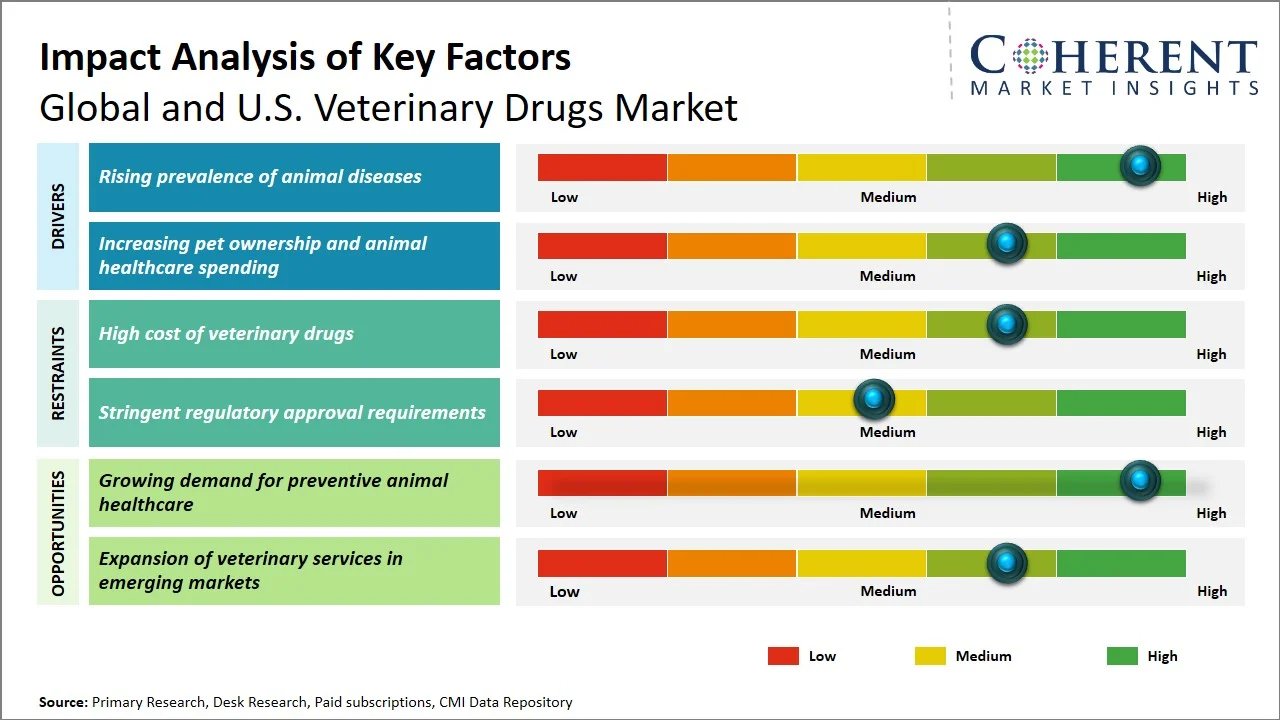
Market Drivers
Rising prevalence of animal diseases
The increasing prevalence of infectious and chronic animal diseases is driving demand for veterinary drugs for timely treatment and disease prevention. Rising disease outbreaks across livestock and companion animals are encouraging greater use of therapeutics and strengthening investments in animal health. For instance, the World Organisation for Animal Health (WOAH) reported more than 2,000 outbreaks of high-pathogenicity avian influenza across 64 countries and territories during 2025–2026, resulting in the loss or culling of over 140 million poultry. This growing disease burden is increasing the need for effective veterinary therapeutics and strengthening animal-health investments globally.
Increasing pet ownership and animal healthcare spending
Rising pet ownership and growing expenditure on veterinary care are strengthening demand for prescription medicines, pain-management therapies, and treatments for chronic and age-related conditions. Increasing pet humanization and greater focus on preventive wellness are also encouraging owners to allocate more spending toward animal healthcare. For instance, the American Pet Products Association (APPA) reported that 95 million U.S. households owned at least one pet in 2025, while veterinary care and product spending reached USD 41.0 billion and is projected to reach USD 42.4 billion in 2026.
Rising demand for animal-derived protein
Increasing consumption of meat, dairy, and eggs is encouraging livestock producers to strengthen herd health, disease prevention, and productivity, thereby supporting demand for veterinary drugs. For instance, the OECD-FAO Agricultural Outlook 2025–2034 projects global meat, dairy, and egg production to increase by 17% through 2034, while global inventories of cattle, sheep, pigs, and poultry are expected to expand by 7%.
Emerging Trends
Growing adoption of monoclonal antibody therapies
Veterinary drug development is increasingly shifting toward targeted biologics for chronic and complex companion-animal conditions, particularly dermatological and pain-related disorders. For instance, Elanco launched Befrena, an anti-IL-31 monoclonal antibody for canine allergic and atopic dermatitis, with a 6–8-week dosing interval.
Expansion of long-acting veterinary drug formulations
Pharmaceutical companies are increasingly developing extended-release injectables that reduce dosing frequency and improve treatment compliance in animals. These formulations are being explored across NSAIDs, antibiotics, reproductive hormones, and antiparasitic therapies, supporting more convenient veterinary treatment protocols.
Shift toward antimicrobial stewardship and alternative therapies
Growing antimicrobial-resistance concerns are accelerating regulatory and industry efforts to optimize antibiotic use and develop alternatives. For instance, the FDA finalized GFI #152 in August 2026, strengthening its framework for evaluating AMR risks associated with antimicrobial animal drugs.
Regional Insights
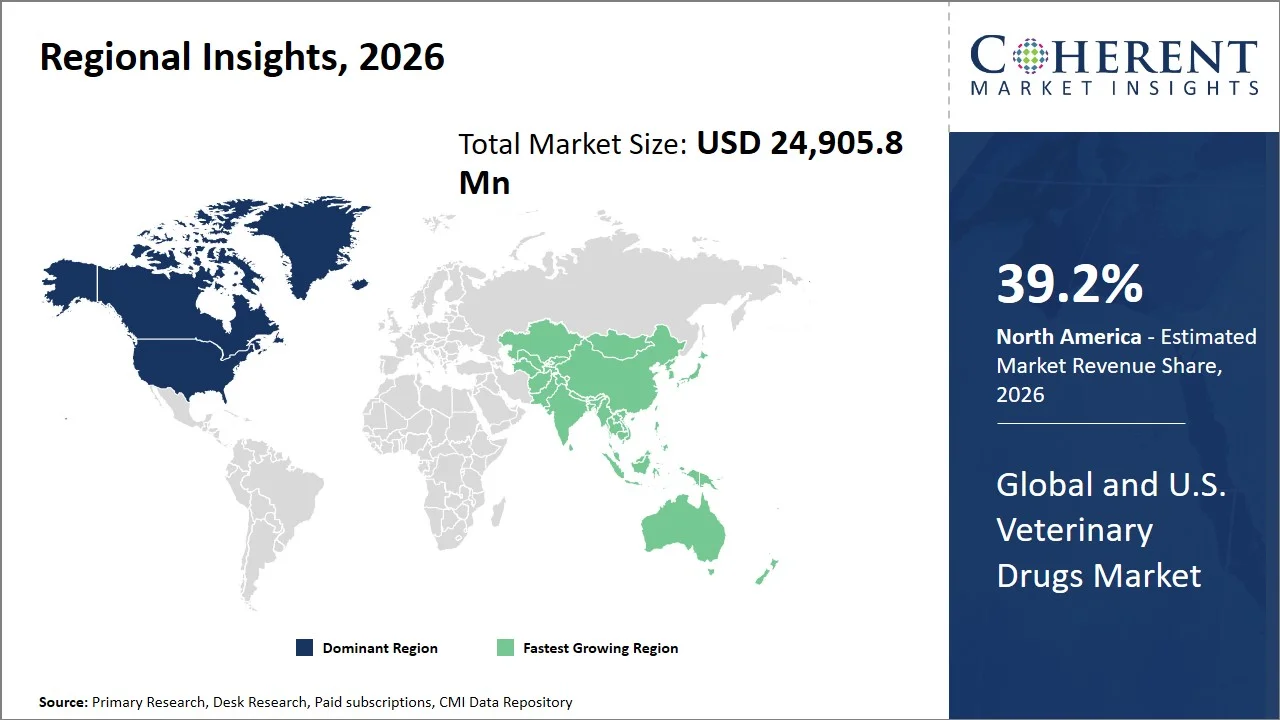
Why is North America a Strong Market for Veterinary Drugs?
North America leads the global and U.S. veterinary drugs market, accounting for an estimated 39.2% share in 2026, driven by the presence of well-established animal healthcare industry, strict guidelines for pharmaceuticals production, and a heavy investment on veterinary pharmaceutical research & development activities. The U.S., being the largest contributor to this region, benefits from government Initiatives regarding cattle and domestic animal health.
For instance, in April 2025, U.S. Department of Agriculture’s (USDA) Animal and Plant Health Inspection Service (APHIS) awarded over USD 15.3 million to various organizations for projects focused on preventing, detecting, and responding to exotic and emerging animal diseases and to diseases affecting animals of commercial value. Increased importance in livestock industry and soaring numbers of pets is also responsible for an increasing pace of adoption of sophisticated veterinary pharmaceuticals, along with the presence of strong marketing and established trading system within the region.
Why Does Asia Pacific Veterinary Drugs Market Exhibit High Growth?
Asia Pacific is expected to exhibit the fastest growth in the global and U.S. veterinary drugs market, registering an estimated CAGR of 11.1% during 2026–2033. The region is projected to account for approximately 18.7% of the global market in 2026, due to increased livestock sector, pet adoption rate, and increased consciousness for animal health and wellbeing. Urbanization along with growing disposable income in the region are likely to aid the demand for companion animal care products specifically in China and India. However, the government regulations to enhance food safety standards and reduce the occurrences of livestock diseases have driven the veterinary drugs market towards expansion.
For instance, in April 2026, the China’s Ministry of Agriculture and Rural Affairs launched a focused veterinary drug use enforcement campaign targeting the production, circulation, and use, together with protections on animal production and safety of animal products. Furthermore, robust manufacturing of veterinary drugs by domestic manufacturers and favorable trade practices for market participants further pave way to regional market growth.
Global and U.S. Veterinary Drugs Market Outlook for Key Countries
Why is the U.S. Leading Innovation and Adoption in the Veterinary Drugs Market?
The U.S. leads in the innovation of veterinary drugs via streamlined regulatory pathways introduced by the U.S. FDA that significantly decrease obstacles for bringing necessary therapies, especially for animals with important unmet needs, to market faster. These current approaches by the U.S. FDA include focusing on new product technologies, increased flexibility in regulatory pathways, and increased timely access to critically needed animal health therapeutics. Also, the U.S. FDA has expanded its MUMS program in 2026 to focus on encouraging innovation of medicines for minor animal species and diseases.
Is the U.K. a Favorable Market for Veterinary Drugs Market?
The U.K. represents an attractive environment for veterinary drugs based on its mature regulatory framework, substantial veterinary medicine market and significant demand generated from companion animal and food-producing animal groups. For instance, the UK Veterinary Medicines Directorate (VMD) in the year 2025-26 registered a 100% achievement of their national targets for veterinary medicine application and inspections, demonstrating effective performance of regulatory framework for the market participants.
Is China Emerging as a Key Growth Hub for the Veterinary Drugs Market?
China continues to drive growth, aided by a broadening of the veterinary drug manufacturing arena and increase in regulatory activities for both companion-animal and livestock applications. China is adding to its veterinary pharma sector with new-product registrations, increasingly consistent standards and a focus on new-product development. For instance, in January 2026, 16 veterinary drug preparations were approved by the Ministry of Agriculture and Rural Affairs of China as new veterinary drugs and additional products like diagnostic reagents and vaccines were registered.
Why Does Germany Top the European Veterinary Drugs Market?
Germany represents the largest market in Europe for veterinary drugs owing to its robust and highly organized, countrywide framework which encompasses aspects such as the authorization, monitoring and circulation control of products, as well as monitoring the use of antibiotics. Moreover, the country has its own national system to monitor the sales and use of veterinary antimicrobials to ensure the evidence-based management of animal health.
Is Veterinary Drugs Market Developing in India?
India is growing as a veterinary drugs market due to its huge livestock population, extensive disease control mechanisms and increasing activities for veterinary drugs and vaccine regulations. The government is also strengthening the domestic capability of domestic production of veterinary medicine and regulation which could promote the growth of the market. For instance, the Indian Animal Husbandry Infrastructure Development Fund (AHIDF) offers benefits to set up vaccine and drug manufacturing centers for veterinary animals, with a revised outlay of USD 3.05 billion (INR 29,110.25 crore) through FY2025–26.
Regional Livestock Population by Major Species, 2024
Region | Cattle & Buffaloes (Mn head) | Pigs (Mn head) | Sheep & Goats (Mn head) | Relevance to Veterinary Drugs |
Asia | ~550 Mn | ~770 Mn | ~1,100 Mn | Largest livestock base, supporting substantial demand for veterinary therapeutics |
Africa | ~400 Mn | ~50 Mn | ~900 Mn | Large and expanding livestock population creates significant animal-health needs |
Europe | ~120 Mn | ~130 Mn | ~170 Mn | Mature livestock healthcare and established veterinary pharmaceutical infrastructure |
Americas | ~600 Mn | ~220 Mn | ~330 Mn | Large commercial livestock production supports continued veterinary-drug demand |
Oceania | ~30 Mn | ~3 Mn | ~140 Mn | Strong livestock production, particularly cattle and sheep |
How is the growing demand for preventive animal healthcare creating new growth opportunities in the global and U.S. veterinary drugs market?
The transition towards preventive animals' healthcare, from reactive care, has opened new possibilities for vaccines, immunomodulators, parasiticides and additional preventative remedies. Disease pressure, intensification of livestock production and increased awareness on animal welfare are stimulating government, producers for strengthening vaccination strategies and disease prevention measures. For instance, in May 2026, the World Organisation for Animal Health (WOAH) introduced the PREVENT Forum. The five-year public and private initiative aimed to enhance the availability and use of good-quality veterinary vaccines and to stimulate their strategic use in animal health systems.
Market Players, Key Development, and Competitive Intelligence
Key Developments
- On August 26, 2026, Cronus Pharma LLC launched Robenacoxib Injection in the U.S., the first FDA-approved bioequivalent to ONSIOR (robenacoxib) Injection for veterinary use. The injectable NSAID is indicated for controlling postoperative pain and inflammation in dogs and cats. The launch expands access to a cost-effective veterinary pain-management option through U.S. veterinary distributors.
- In January 2026, Boehringer Ingelheim India partnered with Alivira Animal Health Limited to distribute and promote its companion-animal product portfolio across India. The partnership is expected to strengthen product access across urban and rural markets, supported by rising pet ownership and growing awareness of preventive animal care.
- In February 2025, MSD Animal Health entered into an agreement with Union Agener Animal Health to become the exclusive global distributor of LACTOTROPIN, a recombinant bovine somatotropin, across most international markets. The product is used in lactating dairy cows to increase milk production and improve production efficiency. The agreement expands MSD Animal Health’s dairy-cattle portfolio and strengthens its global distribution capabilities, with MSD Animal Health operating in more than 50 countries and its products available in around 150 markets
Competitive Landscape
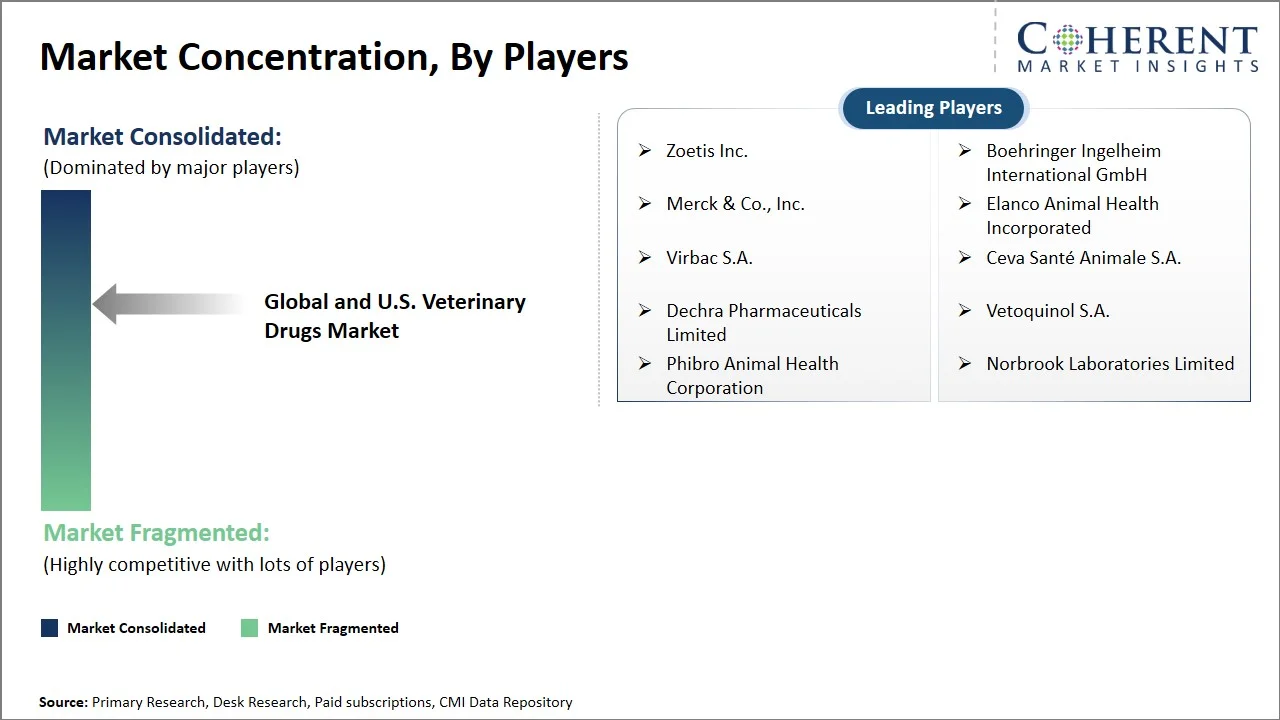
The global and U.S. veterinary drugs market is moderately competitive, with market participants focusing on pharmaceutical innovation, biologics, preventive therapies, manufacturing capabilities, and expansion across companion-animal and livestock health. Companies are increasingly investing in targeted therapies, long-acting formulations, broader therapeutic pipelines, and manufacturing capacity to address unmet animal-health needs. Key focus areas include:
- Development of novel veterinary drugs and biologics
- Expansion of preventive healthcare and disease-management portfolios
- Development of long-acting and targeted drug formulations
- Expansion into companion-animal and livestock therapeutic applications
- Investment in R&D and development of therapies for unmet animal-health needs
- Strengthening manufacturing capacity and supply-chain capabilities
- Expansion into emerging veterinary healthcare markets
- Strategic collaborations, licensing, and acquisitions to strengthen product pipelines
Market Report Scope
Global and U.S. Veterinary Drugs Market Report Coverage
| Report Coverage | Details | ||
|---|---|---|---|
| Base Year: | 2025 | Market Size in 2026: | USD 24,905.8 Mn |
| Historical Data for: | 2020 To 2024 | Forecast Period: | 2026 To 2033 |
| Forecast Period 2026 to 2033 CAGR: | 9.9% | 2033 Value Projection: | USD 48,197.5 Mn |
| Geographies covered: |
| ||
| Segments covered: |
| ||
| Companies covered: | Zoetis Inc., Boehringer Ingelheim International GmbH, Merck & Co., Inc., Elanco Animal Health Incorporated, Virbac S.A., Ceva Santé Animale S.A., Dechra Pharmaceuticals Limited, Vetoquinol S.A., Phibro Animal Health Corporation, Norbrook Laboratories Limited | ||
| Growth Drivers: |
| ||
| Restraints & Challenges: |
| ||
Analyst Opinion (Expert Opinion)
- In the coming years, global and U.S. veterinary drugs market is expected to move increasingly toward preventive, targeted, and convenient therapies, supported by rising pet healthcare spending, livestock disease-management needs, and tighter antimicrobial stewardship. Biologics, long-acting formulations, and species-specific therapies are likely to become increasingly important, while generic drugs will remain significant for cost-sensitive markets.
- The maximum opportunities are foreseen within generics for digestive system diseases in India. India combines a large livestock base, increasing demand for affordable veterinary medicines, and rapidly improving animal-health infrastructure, making cost-effective therapies for gastrointestinal and parasitic conditions particularly attractive for market expansion.
- In order to gain a competitive advantage market players should focus on localized portfolios, faster regulatory execution, and differentiated formulations rather than competing solely on product breadth. Building partnerships with local distributors and veterinary networks, investing in long-acting and targeted therapies, and strengthening manufacturing capabilities can help companies improve accessibility, pricing competitiveness, and market penetration.
Speak to the analyst
Want personalized insights?
Take the findings above to one of our principal consultants, or have the report rebuilt around the segments, geographies and competitors you actually track.
Market Segmentation
- Drug Type Insights (Revenue, USD Mn, 2021 - 2033)
- Antibiotics
- Nonsteroidal Anti-inflammatory Drug
- Antiparasitic Drugs
- Antihistamines
- Antiemetic Drugs
- Anti-ulcer Agents
- Diuretics
- Anaesthetic Agents
- Anticancer Agents
- Hormonal and Hormone Replacement Agents
- Others
- Type Insights (Revenue, USD Mn, 2021 - 2033)
- Branded
- Generics
- Indication Insights (Revenue, USD Mn, 2021 - 2033)
- Digestive System Disease
- Immunologic Disease
- Nervous System Disease
- Reproductive System Disease
- Respiratory System Disease
- Dermatological Disease
- Oncology
- Hormonal Disorder
- Cardiovascular Disease
- Others
- Animal Type Insights (Revenue, USD Mn, 2021 - 2033)
- Companion Animal
- Livestock
- Route of Administration Insights (Revenue, USD Mn, 2021 - 2033)
- Oral
- Parenteral
- Topical
- Dosage Form Insights (Revenue, USD Mn, 2021 - 2033)
- Tablets and Capsules
- Suspensions and Emulsions
- Powders and Pastes
- Gels, Creams and Ointments
- Sprays
- Others
- Distribution Channel Insights (Revenue, USD Mn, 2021 - 2033)
- Veterinary Hospitals
- Veterinary Clinics
- Retail Pharmacies
- Online Pharmacies
- Others
- Regional Insights (Revenue, USD Mn, 2021 - 2033)
- North America
- U.S.
- Canada
- Latin America
- Brazil
- Argentina
- Mexico
- Rest of Latin America
- Europe
- Germany
- U.K.
- Spain
- France
- Italy
- Russia
- Rest of Europe
- Asia Pacific
- China
- India
- Japan
- Australia
- South Korea
- ASEAN
- Rest of Asia Pacific
- Middle East
- GCC Countries
- Israel
- Rest of Middle East
- Africa
- South Africa
- North Africa
- Central Africa
- North America
Sources
Primary Research Interviews
- Veterinary pharmaceutical manufacturers and animal-health drug developers
- Veterinary drug distributors and specialized animal-health suppliers
- Veterinarians and veterinary hospital/clinic representatives
- Livestock producers and companion-animal healthcare providers
- Veterinary biologics and therapeutic product manufacturers
- Animal-health regulatory and compliance professionals
Stakeholders
- Veterinary pharmaceutical manufacturers
- Animal-health distributors and wholesalers
- Veterinary hospitals and clinics
- Livestock producers and animal-health service providers
- Companion-animal healthcare providers
- Veterinary biologics and vaccine manufacturers
- Animal-health research and development organizations
- End-use Sectors
- Veterinary hospitals and clinics
- Animal farms and livestock production facilities
- Animal shelters and rescue organizations
- Regulatory & Health Bodies
- U.S. Food and Drug Administration (FDA) – Center for Veterinary Medicine (CVM)
- U.S. Department of Agriculture (USDA) – Animal and Plant Health Inspection Service (APHIS)
- European Medicines Agency (EMA) – Veterinary Medicines
- World Organisation for Animal Health (WOAH)
- Veterinary International Conference on Harmonization (VICH)
- European Commission – Veterinary Medicines
- Health Canada – Veterinary Drugs Directorate
Databases
- AnimalDrugs@FDA
- USDA APHIS Veterinary Biologics Product Database
- EMA Veterinary Medicines Database
- FAOSTAT – Livestock Data
- WOAH-WAHIS Animal Disease Information System
- FDA National Antimicrobial Resistance Monitoring System (NARMS)
Journals
- Journal of Veterinary Pharmacology and Therapeutics
- Journal of Veterinary Medical Science
- Veterinary Record
- Veterinary Clinics of North America
- Research in Veterinary Science
- Frontiers in Veterinary Science
Associations
- HealthforAnimals
- American Veterinary Medical Association (AVMA)
- Animal Health Institute (AHI)
- Federation of Veterinarians of Europe (FVE)
- National Association of State Departments of Agriculture (NASDA)
Public Domain Sources
- U.S. FDA – Animal & Veterinary
- USDA APHIS – Veterinary Services
- USDA National Agricultural Statistics Service (NASS)
- European Medicines Agency (EMA)
- World Organisation for Animal Health (WOAH)
- Food and Agriculture Organization of the United Nations (FAO)
- Centers for Disease Control and Prevention (CDC) – One Health
Proprietary Elements
- CMI Data Analytics Tool
- Proprietary CMI Existing Repository of information for last 10 years.
Get access to 250+ pages report
Every segment, forecast, competitor profile and data table behind the analysis above — available for instant download.
- ESOMAR Member
- ISO 9001:2015 Certified
- D-U-N-S Registered
- GDPR & CCPA Compliant
Missing comfort of reading report in your local language? Find your preferred language:
Frequently Asked Questions
The global and U.S. veterinary drugs market is estimated to be valued at USD 24,905.8 Mn in 2026 and is expected to reach USD 48,197.5 Mn by 2033.
Antibiotics dominates due to their widespread use in treating and controlling bacterial infections across companion animals and livestock.
Veterinary drugs are pharmaceutical products used to prevent, diagnose, control, and treat diseases and health conditions in animals.
The CAGR of global and U.S. veterinary drugs market is projected to be 9.9% from 2026 to 2033.
Rising prevalence of animal diseases, and increasing pet ownership and animal healthcare spending are the major factors driving the growth of the global and U.S. veterinary drugs market.
High cost of veterinary drugs, and stringent regulatory approval requirements are the major factors hampering the growth of the global and U.S. veterinary drugs market.
In terms of route of administration, oral is estimated to dominate the market revenue share in 2026.