

Companion Animal Drugs Market Size and Share Analysis - 2026 to 2033
The companion animal drugs market was valued at USD 28.8 Bn in 2026 and is forecast to reach a value of USD 44.9 Bn by 2033 at a CAGR of 6.8% between 2026 and 2033.
Key Takeaways
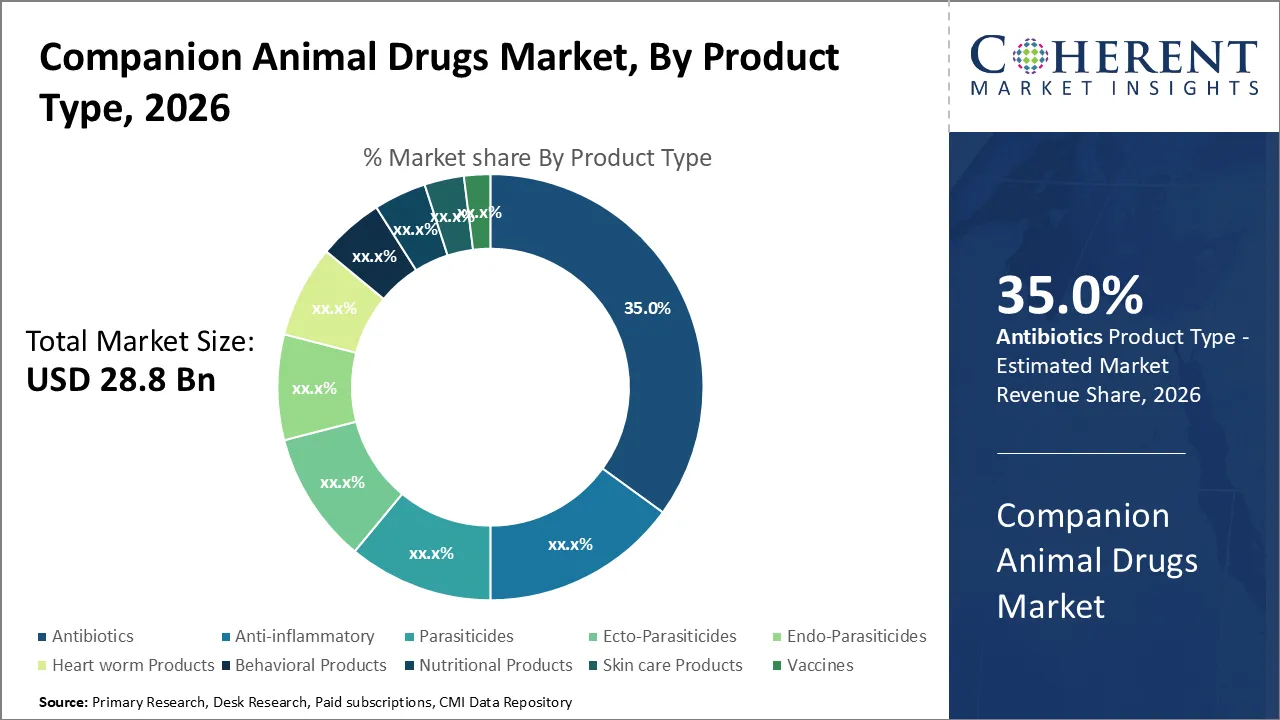
- Based on product type, the antibiotics segment is expected to hold 35% share of the market in 2026.
- Based on distribution channel, the veterinary hospitals segment is projected to account for 55% share of the market in 2026.
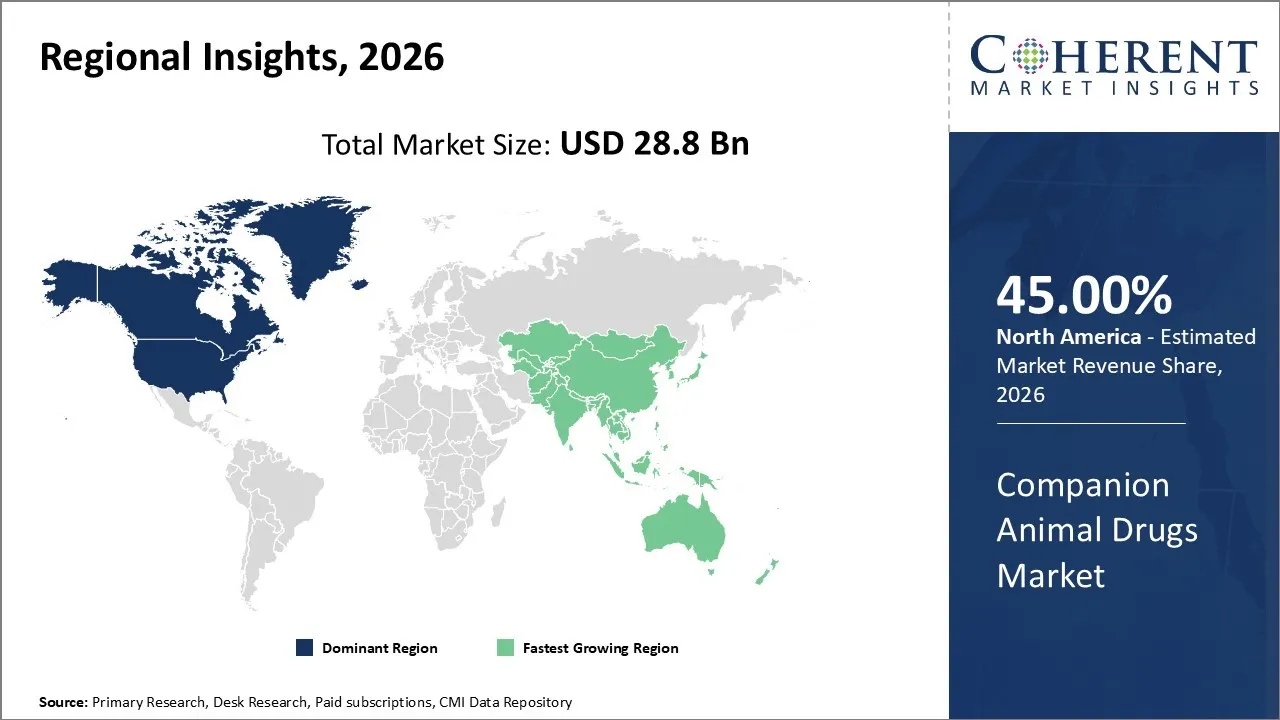
- Based on Region, North America is set to lead the companion animal drugs market with 45% share in 2026. While, Asia Pacific is anticipated to be the fastest growing region.
Market Overview
A companion animal primarily refers to cats and dogs, which are domesticated and normally maintained in or near the household of the owner or person caring for them. Pet or companion animals do not refer to a farm animal, or grazing animals such as cattle and sheep. This market includes various types of drugs like antibiotics, anti-inflammatories, parasiticides, vaccines, nutritional supplements, and other veterinary medications used to prevent, manage, or treat diseases and improve the overall health and well-being of companion animals.
Current Events and their Impacts on the Companion Animal Drugs Market
Current Event | Description and its Impact |
Expansion of FDA-Approved Animal Medicines |
|
Strategic Acquisitions and CDMO Expansion |
|
Segmental Insights
- Current Industry Events of 2026
- Market Size Estimation
- Regional Breakdown
- Competitive Landscape
- Customer Intelligence
- Segmental Analysis
- Pricing Analysis
- Key Market Drivers, Challenges & Future Trends
- Customized Insights Section
Companion Animal Drugs Market Insights, By Product Type: Antibiotics represent the largest share in the market
In terms of product type, the antibiotics segment is expected to lead the market with 35% share in 2026, owing to their critical and widespread use in treating bacterial infections in companion animals. The dominance of antibiotics can be attributed to the high occurrence of bacterial diseases such as skin infections, urinary tract infections, as well as respiratory tract infections in pets globally.
According to the World Organization for Animal Health (WOAH), bacterial infections remain one of the leading causes of morbidity as well as mortality among companion animals, necessitating extensive use of antibiotic treatments.
Companion Animal Drugs Market Insights, By Distribution Channel: Veterinary Hospitals dominate the market
In terms of distribution channel, the veterinary hospitals segment is expected to hold 55% share of the market in 2026. Owing to their comprehensive service offerings, advanced medical facilities, as well as wide-ranging expertise in handling complex health issues in companion animals. Veterinary hospitals have the equipment and people to take care of pets with tests, treatments, surgeries, scans, and expert help.
These capabilities enable them to handle severe and chronic conditions that require specialized drug administration along with monitoring, hence driving higher demand for companion animal pharmaceuticals within these settings.
Regional Insights
North America Companion Animal Drugs Market Analysis & Trends
North America is expected to dominate the Companion Animal Drugs market with 45% share in 2026, owing to several critical factors that emphasize the region’s advanced veterinary healthcare infrastructure, the high prevalence of companion animal ownership, and a strong focus on pet wellness and disease management. The widespread pet humanization trend in North America has led to surged willingness among pet owners to invest in advanced therapeutic alternatives, including specialized drugs as well as treatments aimed at chronic and acute conditions in companion animals.
For instance, in July 2025, Merck Animal Health, a part of Merck & Co. in the U.S., announced that the FDA approved BRAVECTO QUANTUM, a new yearly injection that protects dogs from fleas and ticks. It will be available in veterinary clinics and hospitals across the U.S. by August 2025.
Asia Pacific Companion Animal Drugs Market Analysis & Trends
Asia Pacific is expected to exhibit the fastest growth, due to multiple socio-economic and demographic factors unique to the region. Fast city growth, higher incomes, and more people wanting pets in countries like China, India, Japan, and South Korea are increasing the need for veterinary care and pet medicines.
For instance, there are 34 veterinary health product startups in China, such as Tianjin Ringpu Bio-Technology, Jinhe Biotechnology, Hunan Zhenghong Technology Development, Whgrnsw.com, and EAP. Out of these, 9 have received funding, and 4 of them got Series A or higher funding.
Companion Animal Drugs Market Outlook Country-Wise
The U.S. Companion Animal Drugs Market Trends
The U.S. contributes the highest share in the Companion Animal Drugs market in the region, owing to several interrelated factors rooted in its extensive veterinary healthcare infrastructure, advanced research ecosystem, and high pet ownership rates combined with rising pet health awareness. The U.S. is globally recognized for its robust pharmaceutical as well as biotechnology industries, which significantly propel innovation and availability of companion animal pharmaceuticals.
For instance, in October 2024, Better Choice Company (BTTR), a pet health company, expanded into veterinary medicine in 2025 after buying SRx Health. The new program, Better Pet Rx, focused on providing care and services for pets.
Japan Companion Animal Drugs Market Trends
Japan contributes the highest share in the Companion Animal Drugs market primarily due to its highly developed pet healthcare infrastructure and a culturally ingrained pet ownership trend that emphasizes advanced care and wellness for companion animals. Japan is renowned for its aging population, which in turn has driven increased pet adoption as a source of companionship among elderly citizens, resulting in greater demand for high-quality veterinary pharmaceuticals and treatments.
Market Report Scope
Companion Animal Drugs Market Report Coverage
| Report Coverage | Details | ||
|---|---|---|---|
| Base Year: | 2025 | Market Size in 2026: | USD 28.8 Bn |
| Historical Data for: | 2020 To 2024 | Forecast Period: | 2026 To 2033 |
| Forecast Period 2026 to 2033 CAGR: | 6.8% | 2033 Value Projection: | USD 44.9 Bn |
| Geographies covered: |
| ||
| Segments covered: |
| ||
| Companies covered: | Zoetis Inc., Merck & Co., Inc., Bayer AG, Eli Lily & Co., Sanofi (Merial), Ceva Santé Animal, Virbac Animal Health, and Boehringer Ingelheim GmbH | ||
| Growth Drivers: |
| ||
| Restraints & Challenges: |
| ||
Companion Animal Drugs Market Driver
Increasing pet ownership and humanization of pets
The increasing trend of pet ownership combined with the growing humanization of pets has been a significant driving force behind the expansion of the companion animal drugs market. Over the past few years, pets have inclined from being mere animals to treated family members, contributing majorly to their owners’ emotional and social well-being. This inclination has led to heightened demand for quality healthcare products, including pharmaceuticals specifically designed for companion animals.
Rising awareness about animal health and preventive care
The high awareness surrounding animal health as well as preventive care has become a major factor driving the expansion of the companion animal drugs market. In recent years, pet owners are increasingly recognizing the importance of maintaining the overall health of their companion animals, rather than merely treating illnesses as they arise. This shift is bolstered by greater access to information, changes in lifestyle, as well as a stronger emotional bond with pets, which has encouraged proactive measures such as routine vaccinations, early diagnosis, and preventive medication.
Companion Animal Drugs Market Opportunity
Expansion in emerging markets with growing pet adoption rates
The expansion into evolving markets with surging pet adoption rates represents a major opportunity in the Companion Animal Drugs Market, stimulated largely by shifting cultural perceptions and increasing disposable incomes. Emerging economies in regions such as Asia, Latin America, and parts of Africa have experienced a paradigm inclination where domestic animals are no longer seen merely as working animals but as companions and family members.
Analyst Opinion (Expert Opinion)
The companion animal drugs market shows robust momentum driven by the humanization of pets, where owners highly see their animals as family members deserving premium healthcare. Rising pet ownership rates, particularly among millennials as well as aging populations seeking companionship, significantly expand the addressable market for veterinary pharmaceuticals. The high prevalence of chronic diseases in pets, including diabetes, arthritis, and cancer, makes sustained demand for specialized therapeutic interventions.
However, the market has some big challenges. Making new pet drugs is expensive and getting approval can take many years. In some developing countries, there aren’t enough veterinary facilities, and many pet owners don’t want to pay a lot for non-essential treatments, making it hard to sell higher-priced products.
Big chances for growth come from new biotechnology and personalized medicine for pets. New ways to give medicine, like skin patches and long-lasting doses, make treatments easier and more effective. Digital tools, like online vet appointments and pet-wearable monitors, help drug companies support vets and pet owners in more ways.
North America leads the market because many people have pets, veterinary services are advanced, and consumers can spend more. The region also has strong rules and research support. Asia-Pacific is growing fastest, with more people earning higher incomes, moving to cities, and changing how they care for pets in countries like China, India, and Japan.
Speak to the analyst
Want personalized insights?
Take the findings above to one of our principal consultants, or have the report rebuilt around the segments, geographies and competitors you actually track.
Global Companion Animal Drugs Market: Key Developments
- In April 2026, Prange Pharma bought the MSD Animal Health factory in Aprilia, Italy. The factory is now called Aprilia Animal Health and will make animal health products for other companies in Europe.
- In September 2025, ZyVet Animal Health, part of Zydus Lifesciences in the USA, released two new FDA-approved generic medicines for pets in the United States.
Market Segmentation
- By Product Type
- Antibiotics
- Anti-inflammatory
- Parasiticides
- Ecto-Parasiticides
- Endo-Parasiticides
- Heart worm Products
- Behavioral Products
- Nutritional Products
- Skin care Products
- Vaccines
- By Distribution Channel
- Veterinary Hospitals
- Veterinary Clinics
- Pharmacies and Drug Stores
- By Region
- North America
- U.S.
- Canada
- Latin America
- Brazil
- Argentina
- Mexico
- Rest of Latin America
- Europe
- Germany
- U.K.
- Spain
- France
- Italy
- Russia
- Rest of Europe
- Asia Pacific
- China
- India
- Japan
- Australia
- South Korea
- ASEAN
- Rest of Asia Pacific
- Middle East & Africa
- GCC Countries
- Israel
- Rest of Middle East & Africa
- North America
- Key Players
- Zoetis Inc.
- Merck & Co., Inc.
- Bayer AG
- Eli Lily & Co.
- Sanofi (Merial)
- Ceva Sante Animal
- Virbac Animal Health
- Boehringer Ingelheim GmbH
Sources
Primary Research Interviews
- Veterinary pharmaceutical manufacturers and executives
- Veterinary practitioners and clinic owners
- Pet owners and animal caregivers
- Regulatory affairs specialists in animal health
- Others
Databases
- Animal Health Database (AHDB)
- Veterinary Medicine Database (VetMed)
- Pet Industry Market Research Database
- Global Animal Health Intelligence Database
- Others
Magazines
- Veterinary Practice News
- Pet Product News International
- Animal Health Express
- Veterinary Economics Magazine
- Others
Journals
- Journal of Veterinary Pharmacology and Therapeutics
- American Journal of Veterinary Research
- Veterinary Medicine International
- Others
Newspapers
- Veterinary Times
- Animal Pharm Intelligence
- Pet Business Magazine
- DVM360 News
- Others
Associations
- American Veterinary Medical Association (AVMA)
- World Small Animal Veterinary Association (WSAVA)
- Animal Health Institute (AHI)
- International Federation for Animal Health (IFAH)
- Others
Public Domain Sources
- FDA Center for Veterinary Medicine reports
- European Medicines Agency (EMA) veterinary publications
- World Health Organization animal health data
- National veterinary regulatory body publications
- Others
Proprietary Elements
- CMI Data Analytics Tool
- Proprietary CMI Existing Repository of Information for the Last 8 Years
Get access to 250+ pages report
Every segment, forecast, competitor profile and data table behind the analysis above — available for instant download.
- ESOMAR Member
- ISO 9001:2015 Certified
- D-U-N-S Registered
- GDPR & CCPA Compliant
Missing comfort of reading report in your local language? Find your preferred language:
Transform your Strategy with Exclusive Trending Reports
Frequently Asked Questions
The global companion animal drugs market size was valued at USD 28.8 Bn in 2026 and is expected to reach USD 44.9 Bn in 2033.
Major players operating in the market include Zoetis Inc., Merck & Co., Inc., Bayer AG, Eli Lily & Co., Sanofi (Merial), Ceva Sante Animal, Virbac Animal Health, and Boehringer Ingelheim GmbH
Among product type, the antibiotics segment estimated significant revenue in 2026.
Major factor driving the growth of Global Companion Animal Drugs market during the forecast period increasing prevalence of zoonotic diseases, increasing research & development, and adoption of expansion strategies from major companies.
The market is estimated to exhibit a CAGR of 6.8% till 2033.
Among region, North America is expected to witness significant growth over the forecast period.