

Cannabidiol Market Size and Trends Forecast: 2026 - 2033
The cannabidiol market is estimated to be valued at USD 11.04 Bn in 2026 and is expected to reach USD 32.54 Bn by 2033, exhibiting a compound annual growth rate (CAGR) of 16.7% from 2026 to 2033.
Key Takeaways of the Cannabidiol Market
- By source type, the hemp segment is expected to contribute the highest share of the cannabidiol market with 59.6% in 2026.
- In terms of product, the oil segment is estimated to contribute the highest market share owing to its easy administration and high bioavailability.
- In terms of application, the medical segment is estimated to contribute the highest market share owing to growing acceptance of cannabidiol-based therapies.
- North America is expected to be the largest market for mycoplasma testing during the forecast period, accounting for over 40.7% of the market share in 2026.
Market Overview
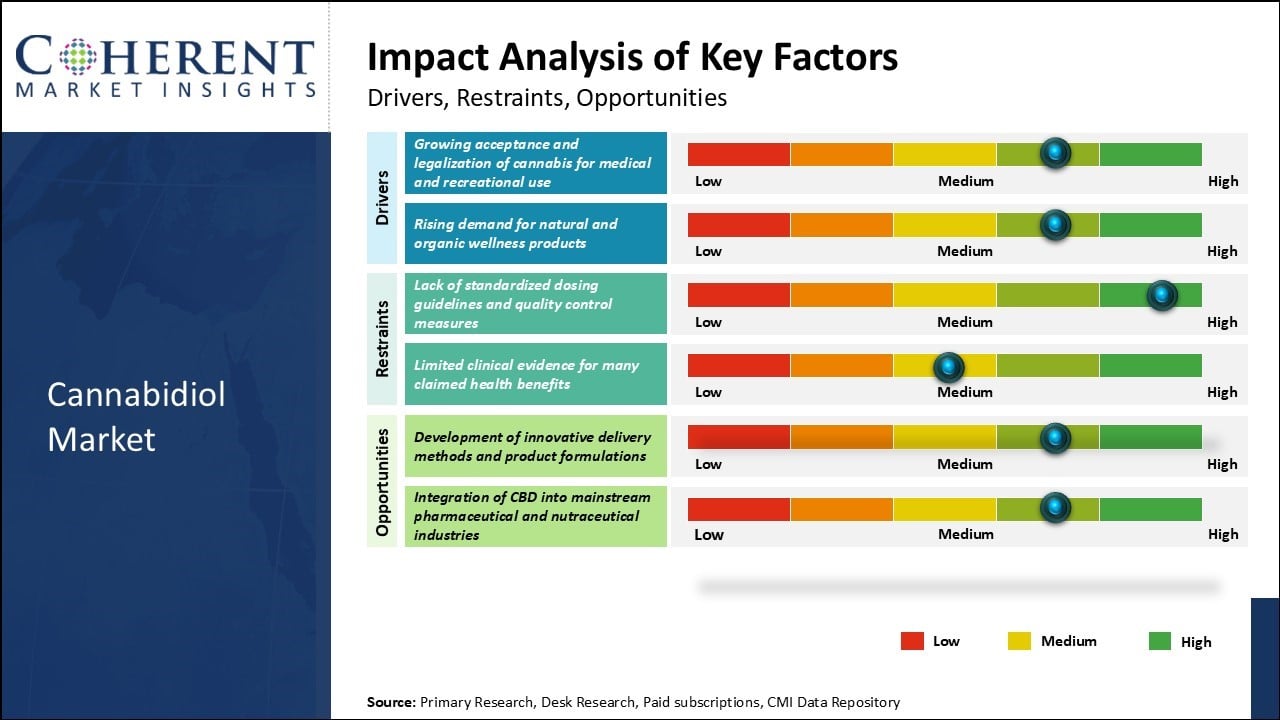
The cannabidiol market is expected to witness stable growth over the forecast period, owing to increased investments in research & development and legalization of medical cannabis across various countries. With growing health awareness and acceptance of medical benefits of cannabidiol in various health conditions, the market is expected to attract higher investments globally. Furthermore, adoption of cannabidiol as a potential alternative to opioid drugs can offer new growth avenues for market players in the near future.
However, variable legislation around use of cannabidiol products and lack of clinical evidence can hamper the market growth. Focus on development of innovative delivery formats and establishing standards through clinical research can provide new growth opportunities in the near future.
Market Concentration and Competitive Landscape
Current Events and their Impact on the Cannabidiol Market
Current Events | Description and its impact |
Regulatory and Legal Developments |
|
Economic Trends and Investment Flows |
|
- Current Industry Events of 2026
- Market Size Estimation
- Regional Breakdown
- Competitive Landscape
- Customer Intelligence
- Segmental Analysis
- Pricing Analysis
- Key Market Drivers, Challenges & Future Trends
- Customized Insights Section
Global CBD Trade Opportunities: Latin America’s Strategic Role
The global CBD market is expanding rapidly, driven by consumer demand for natural health, wellness, and beauty solutions. As regulations evolve across North America, Europe, Asia Pacific, and Latin America, international trade in CBD products is opening new frontiers.
Import Opportunities
- Growing global demand for CBD-based supplements, skincare, and functional foods creates entry points for international brands into emerging markets.
- Rising adoption of CBD for therapeutic use ranging from chronic pain to anxiety and epilepsy fuels cross-border demand for pharmaceutical-grade products.
- With the rise of e-commerce and health-focused retail chains, CBD brands can reach consumers globally without heavy reliance on traditional distribution.
Export Opportunities
- Latin America as a Supply Powerhouse: With its favorable climate and competitive cultivation costs, Colombia and Uruguay are positioned to export CBD oils, isolates, and distillates to North America, Europe, and beyond.
- Global Supply Partnerships: International companies are entering into joint ventures and sourcing agreements with Latin American producers to secure reliable, cost-effective CBD supply.
- Gateway to Global Markets: By leveraging Latin America’s production advantage, CBD companies can expand exports to fast-growing regions such as Europe and Asia Pacific.
Market Trends
- Growing Acceptance of Cannabis-Derived Products Globally
The cannabidiol market is experiencing significant expansion largely due to the growing acceptance and legalization of cannabis-derived products worldwide. This shifting regulatory landscape has played a crucial role in destigmatizing cannabis and its derivatives, paving the way for increased consumer interest and broader product innovation. Consumers are increasingly using CBD for a variety of health purposes such as stress relief, pain management, and sleep aid.
For instance, the 2022 National Survey on Drug Use and Health (NSDUH) by the Substance Abuse and Mental Health Services Administration (SAMHSA) reported a notable increase in the use of cannabis products, indicative of broader normalization.
Segmental Insights
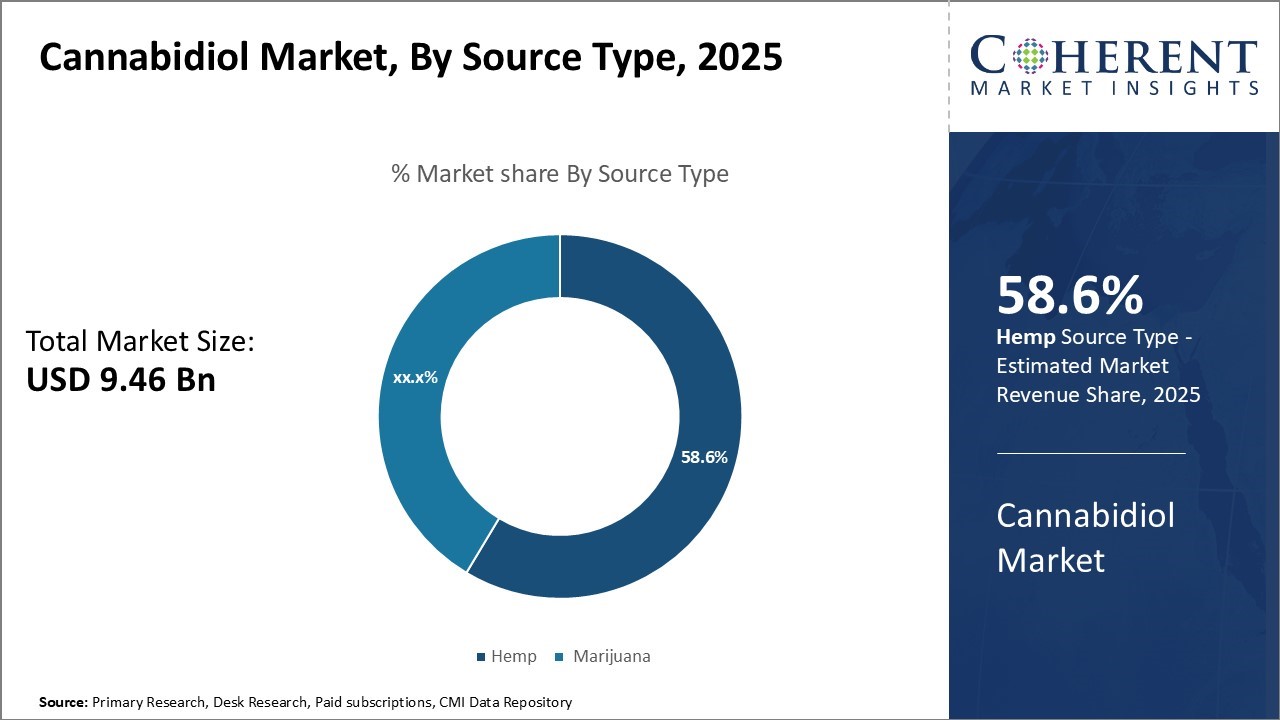
Cannabidiol Market Insights, By Source Type: Hemp as a Source of Cannabidiol (CBD) – Leads the Market Owing to its Versatility
In terms of source type, the hemp segment is estimated to contribute the highest market share of 59.6% in 2026, owing to its versatile applications across industries.
Hemp contains only trace amounts of THC but is highly rich in cannabidiol, making it legal for use in food & beverages, cosmetics, pharmaceuticals and other consumer products. This wide scope of legal use provides hemp a significant advantage over marijuana-derived cannabidiol. Hemp farmers can use established agricultural practices to grow the crop on a large commercial scale due to its low maintenance requirements.
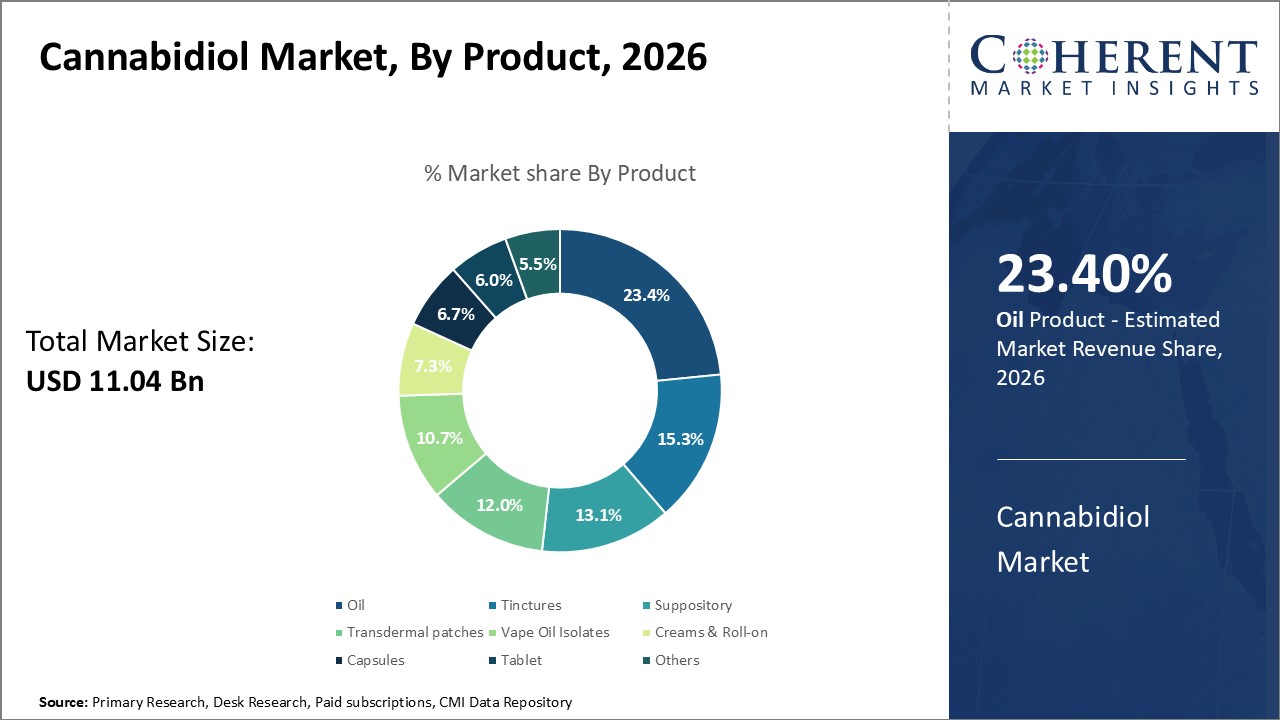
Cannabidiol Market Insights, By Product: Growing Awareness about CBD’s Therapeutic Potential has Significantly Driven Up Demand for Oil Segment
In terms of product, oil segment is estimated to contribute the highest market share owing to its easy administration and high bioavailability. Cannabidiol oil extract is valued for its therapeutic benefits in treating a variety of medical conditions like pain, anxiety, epilepsy and even cancer.
The oil concentrate derived from hemp or marijuana plants has high cannabidiol contents ranging between 2 and 31.5% that can treat symptoms effectively. Its application as an oral tincture makes cannabidiol oil highly convenient to use. Users administer drops of the oil under their tongue to gain almost immediate relief from symptoms. Moreover, its absorption through the oral mucous membrane and direct entry into blood circulation provides optimal bioavailability compared to other products.
Cannabidiol Market Insights, By Application: Expanding Medical Applications Drive Overall Growth
In terms of application, the medical segment is estimated to contribute the highest market share owing to the growing acceptance of cannabidiol-based therapies. While consumer use of cannabidiol for relaxation and wellness has increased significantly, its role in improving medical outcomes through clinical research validates therapeutic applications.
An increasing number of patients are turning to Cannabidiol to manage chronic conditions instead of synthetic pharmaceuticals due to cannabidiol's natural profile and lack of psychoactive effects. Research studies have demonstrated cannabidiol's potential against neurological disorders, reducing epileptic seizures and easing psychotic episodes in schizophrenics. It shows promise for relieving cancer treatment side effects and may work synergistically with conventional therapies.
Emerging Innovations in the Cannabidiol Market
- Enhanced Consumer Trust and Safety
- Advanced extraction, purification, and testing technologies ensure product consistency and safety, addressing historical concerns linked to variability and contamination. This has broadened acceptance of CBD products among more cautious consumer segments and healthcare professionals.
- Supercritical CO₂
- Supercritical CO₂ extraction is widely recognized for producing high-purity CBD extracts without residual solvents, maintaining the integrity of sensitive cannabinoids and terpenes. This method allows producers to fine-tune their extraction parameters—temperature and pressure—leading to more consistent and high-quality extracts. Advances in this technology have made the process more efficient and scalable, helping producers meet rising demand while retaining product quality.
Pricing Analysis for the Growth of the Cannabidiol Market
Price-Per-mg Benchmarking (Quick Reference) | Price Range (USD) |
Entry-level tincture/capsule | 0.02–0.05/mg |
Mainstream reputable brands | 0.03–0.10/mg |
Gummies/topicals | 0.06–0.25/mg (higher variability) |
Beverages/patches/specialty | 0.10–1.00+/mg |
Wholesale isolate | 0.0015–0.006/mg (per kg pricing) |
Regional Insights
North America Cannabidiol Market Analysis and Trends
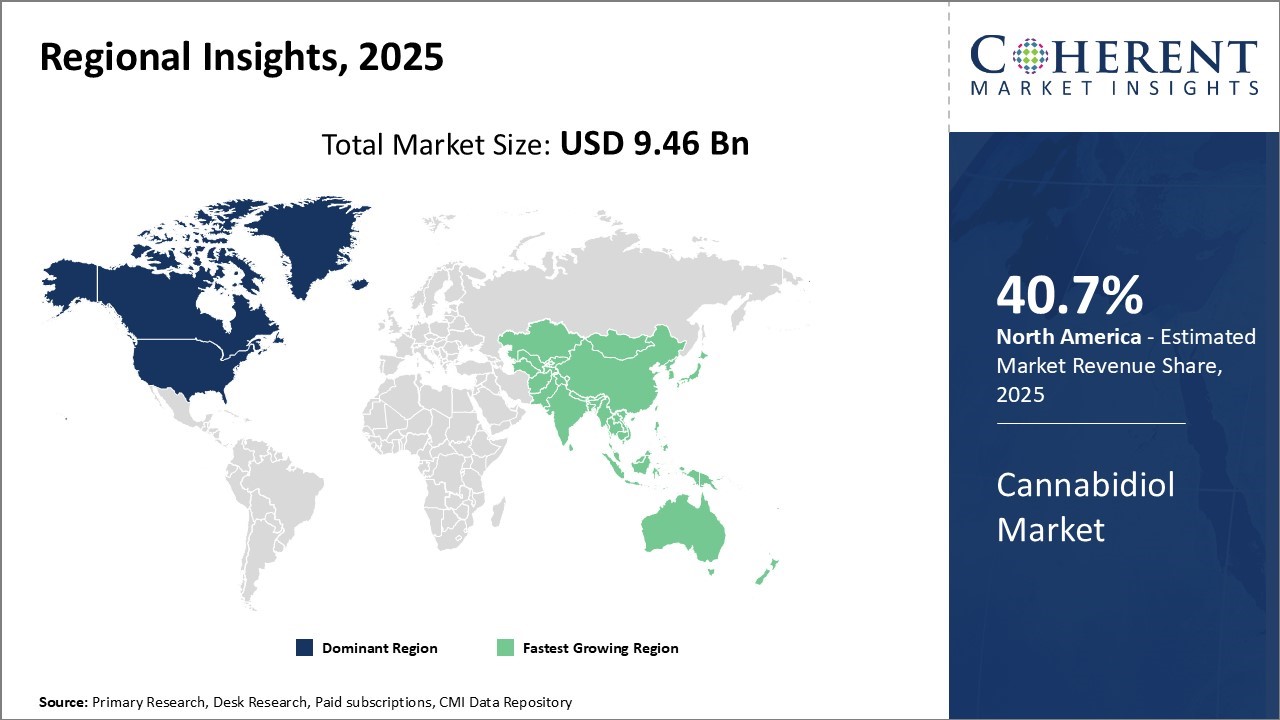
North America is estimated to hold a dominant position in the global cannabidiol market over the forecast period. North America is estimated to hold 40.7% of the market share in 2026. One of the leading subsegments in North America is the cannabidiol-based therapeutic products segment. This segment dominates due to the rapid adoption of CBD in the pharmaceutical and healthcare sectors, driven largely by increasing research validating the medicinal benefits of cannabidiol for conditions like epilepsy, chronic pain, anxiety, and inflammation.
For instance, according to the National Organization for the Reform of Marijuana Laws (NORML), an analysis published in February 2026 of data from Preventive Medicine Reports found that approximately 10.5 percent of Americans reported using CBD products in the past 30 days.
Asia Pacific Cannabidiol Market Analysis and Trends
Asia Pacific has emerged as the fastest growing regional market for cannabidiol. Governments and healthcare organizations across the region have increasingly recognized the therapeutic potential of cannabidiol, positioning it as a critical player in managing chronic pain, epilepsy, anxiety, and other neurological disorders. In addition to legislative support, countries like Japan and South Korea have seen a surge in clinical research collaborations between biotech firms and universities focusing on CBD’s neuroprotective and anti-inflammatory properties, which further legitimizes and drives demand within pharmaceutical channels.
For instance, Australia has taken pioneering steps in integrating CBD-based drugs into its pharmaceutical landscape, evidenced by the country’s regulatory approval of pharmaceutical-grade CBD products like Epidyolex for epilepsy treatment, which has catalyzed demand in its domestic market.
Latin America Cannabidiol Market Analysis and Trends
Latin America is fast emerging as one of the most dynamic regions for cannabidiol (CBD). With progressive regulation in countries like Brazil, Mexico, Colombia, Uruguay, and Argentina, CBD is moving from niche medical use into mainstream wellness. Consumers are increasingly embracing CBD as a natural alternative for managing pain, anxiety, sleep, and overall well-being.
Favorable climates and low cultivation costs make the region a strategic hub for CBD production, with countries such as Colombia and Uruguay positioned as future exporters to global markets. Growing consumer awareness and expanding retail channels, including pharmacies and e-commerce platforms, are accelerating adoption.
Cannabidiol Market Outlook for Key Countries
U.S. Cannabidiol Market Analysis and Trends
The U.S. is the largest cannabidiol market globally, owing to federal reforms like the Agricultural Improvement Act of 2018 that legalized hemp cultivation. This legislation enabled commercial production and interstate transport of hemp-derived products. State-level legalization and consumer demand for wellness solutions further boost the CBD ecosystem. The U.S. leads in product development, retail distribution, and industry innovation across the CBD space.
Canada Cannabidiol Market Analysis and Trends
Canada was among the first nations to legalize both medical and recreational cannabis under the Cannabis Act in 2018. This regulatory clarity created a structured, high-compliance market for CBD and cannabis derivatives. A robust licensing system enabled safe, traceable production and distribution of CBD products. Canada’s mature legal framework supports ongoing innovation and consumer protection in the industry.
China Cannabidiol Market Analysis and Trends
China dominates global hemp output, accounting for more than 70% of world production. This massive supply capacity positions China as a key global source of raw materials for CBD manufacturing. Low-cost production and established agricultural infrastructure make Chinese-sourced hemp highly competitive internationally. Countries across Europe and North America often rely on Chinese hemp inputs for their CBD supply chains.
Germany Cannabidiol Market Analysis and Trends
Germany has emerged as Europe’s most dynamic CBD and medicinal cannabis market. Extensive reforms—including liberalized prescription policies—have made medical cannabis widely accessible. Recent legislative changes have eliminated cannabis from narcotics controls, expanding patient access and import volumes. As a result, Germany plays a central role in driving European CBD adoption and regulatory evolution.
Pricing Analysis of the Cannabidiol Market
Drug Category | Price Range per Treatment Cycle/Month (USD) |
Chemotherapy | USD 300 – USD 1,800 |
Targeted Therapies | USD 3,500 – USD 13,000 |
Immunotherapy | USD 10,000 – USD 15,000 per dose |
Bone-Modifying Agents | USD 500 – USD 4,200 per dose |
Supportive Care | USD 20 – USD 3,000 |
Market Report Scope
Cannabidiol Market Report Coverage
| Report Coverage | Details | ||
|---|---|---|---|
| Base Year: | 2025 | Market Size in 2026: | USD 11.04 Bn |
| Historical Data for: | 2020 To 2024 | Forecast Period: | 2026 To 2033 |
| Forecast Period 2026 to 2033 CAGR: | 16.7% | 2033 Value Projection: | USD 32.54 Bn |
| Geographies covered: |
| ||
| Segments covered: |
| ||
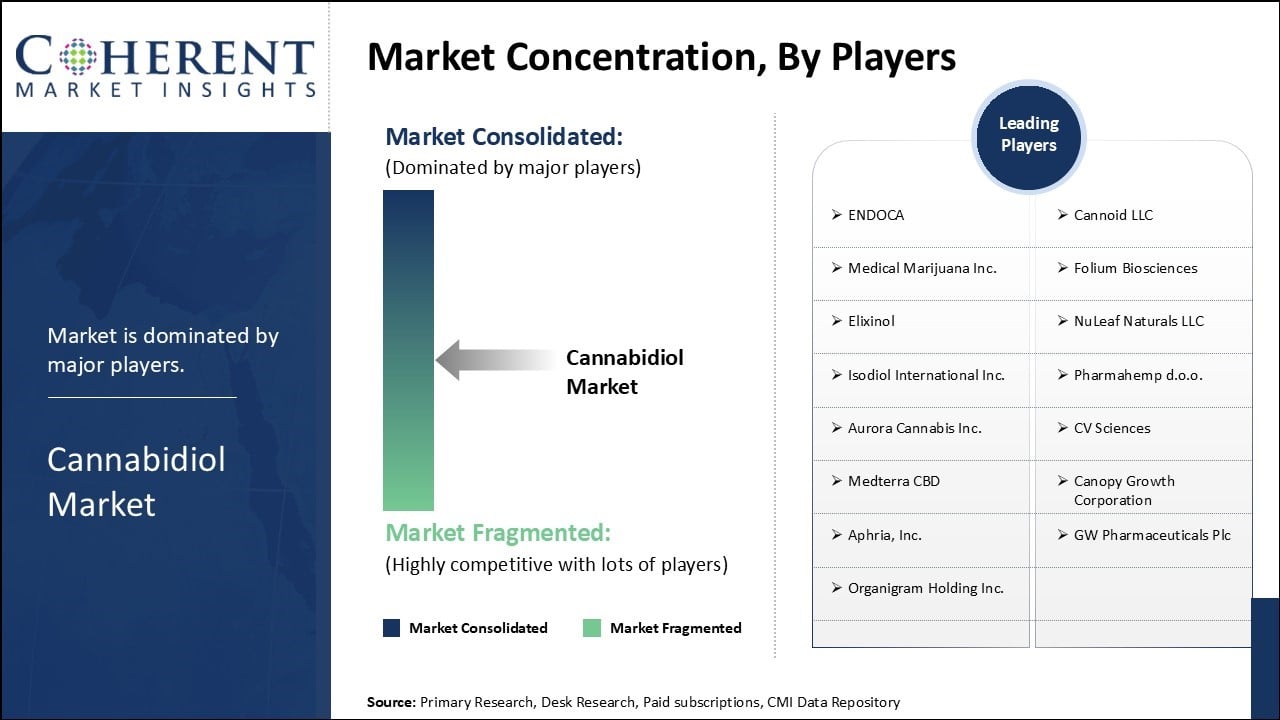
| Companies covered: | ENDOCA, Cannoid LLC, Medical Marijuana Inc., Folium Biosciences, Elixinol, NuLeaf Naturals LLC, Isodiol International Inc., Pharmahemp d.o.o., Aurora Cannabis Inc., CV Sciences, Medterra CBD, Canopy Growth Corporation, Aphria, Inc., GW Pharmaceuticals Plc, and Organigram Holding Inc. | ||
| Growth Drivers: |
| ||
| Restraints & Challenges: |
| ||
Cannabidiol Industry News
- In July 2025, Exhale Wellness introduced new THC gummies in 2025, including Delta-9, Sleep, and CBD hybrid options for flavor, balance, and targeted cannabinoid support.
- In May 2025, Health Canada moved towards a pathway for health products containing cannabidiol. This proposal outlined a new regulatory framework that allowed consumers access to CBD products without a prescription.
- In June 2025, Tennessee shifted hemp-derived cannabinoid oversight to ABC, opening new on-site sales rules for bars, restaurants & wholesalers.
- In August 2024, Jazz Pharmaceuticals plc announced top-line results from the Phase 3 open-label, single-arm trial in Japan evaluating the safety and efficacy of cannabidiol oral solution (marketed as Epidiolex/Epidyolex globally) as an adjunctive treatment for seizures associated with Lennox-Gastaut syndrome (LGS), Dravet syndrome (DS) or tuberous sclerosis complex (TSC).
Analyst View
- The cannabidiol market is experiencing unprecedented momentum driven by evolving regulatory frameworks and shifting consumer perceptions toward cannabis-derived therapeutics. Growing clinical evidence supporting CBD's efficacy in treating epilepsy, anxiety, and chronic pain conditions is accelerating mainstream medical adoption across healthcare systems globally.
- Consumer awareness regarding natural wellness alternatives is propelling demand for CBD-infused products spanning pharmaceuticals, nutraceuticals, cosmetics, and food beverages. The increasing legalization of hemp cultivation and CBD commercialization in numerous jurisdictions is creating favorable market conditions for industry expansion.
- However, regulatory ambiguity remains a significant restraint, with inconsistent quality standards and approval processes creating operational challenges for manufacturers. Limited clinical research data and varying dosage guidelines continue hampering physician confidence in prescribing CBD-based treatments.
- North America dominates the market landscape, benefiting from progressive legislation, robust healthcare infrastructure, and high consumer disposable income. The region's established distribution networks and manufacturing capabilities provide competitive advantages over emerging markets.
- Asia Pacific represents the fastest-growing regional market, driven by increasing healthcare expenditure, rising chronic disease prevalence, and growing acceptance of alternative medicine practices. Countries like Australia and South Korea are implementing supportive regulatory frameworks encouraging market development.
- The global CBD trade is set to accelerate, with Latin America at the crossroads of affordable production and surging worldwide demand. For forward-looking companies, the region represents both a gateway supply base and a growth market, solidifying its role in the next phase of global CBD expansion.
International Regulatory Comparison: Cannabidiol (CBD) Market
Country/Region | Market posture | Food/Supplements | Cosmetics/Topicals | Medical Use |
U.S. | Fragmented – federal vs. state patchwork; hemp CBD widely sold but FDA has no supplement pathway | Not permitted federally (FDA bars CBD in foods/dietary supplements); many states allow retail anyway | Permitted if <0.3% THC and no drug claims; rules vary by state | Yes, but only FDA-approved Epidiolex; other CBD not recognized as medicine |
European Union | Structured but restrictive – harmonized rules, Member State variations | Requires EU Novel Food authorization; pending applications create bottleneck | Permitted for certain ingredients under CosIng (Cosmetics Ingredients Database) if THC-free | Allowed under Member State medical cannabis frameworks; not harmonized EU-wide |
Canada | Strictly regulated – all CBD treated as cannabis | Only sold via licensed cannabis channel, not as natural health products (NHPs); consultation underway for future OTC path | Allowed as cannabis topicals via licensed retailers | Yes, via prescription or recreational channel; regulated under the Cannabis Act |
Market Segmentation
- Source Type Insights (Revenue, USD Bn, 2021 - 2033)
- Hemp
- Marijuana
- Product Insights (Revenue, USD Bn, 2021 - 2033)
- Oil
- Tinctures
- Suppository
- Transdermal patches
- Vape Oil
- Isolates
- Creams and Roll-on
- Capsules
- Tablet
- Others
- Application Insights (Revenue, USD Bn, 2021 - 2033)
- Medical
- Chronic Pain
- Mental Disorders
- Cancer
- Others
- Personal Use
- Pharmaceuticals
- Wellness
- Food & Beverages
- Personal Care & Cosmetics
- Nutraceuticals
- Others
- Distribution Channel Insights (Revenue, USD Bn, 2021 - 2033)
- Hospital Pharmacies
- Online Stores
- Retail Stores
- Regional Insights (Revenue, USD Bn, 2021 - 2033)
- North America
- U.S.
- Canada
- Latin America
- Brazil
- Argentina
- Mexico
- Rest of Latin America
- Europe
- Germany
- U.K.
- Spain
- France
- Italy
- Russia
- Rest of Europe
- Asia Pacific
- China
- India
- Japan
- Australia
- South Korea
- ASEAN
- Rest of Asia Pacific
- Middle East
- GCC Countries
- Israel
- Rest of Middle East
- Africa
- South Africa
- North Africa
- Central Africa
- Key Players Insights
- ENDOCA
- Cannoid LLC
- Medical Marijuana Inc.
- Folium Biosciences
- Elixinol
- NuLeaf Naturals LLC
- Isodiol International Inc.
- Pharmahemp d.o.o.
- Aurora Cannabis Inc.
- CV Sciences
- Medterra CBD
- Canopy Growth Corporation
- Aphria, Inc.
- GW Pharmaceuticals Plc
- Organigram Holding Inc.
Sources
Primary Research Interviews
- CBD manufacturers and processors
- Cannabis cultivators and hemp farmers
- Pharmaceutical companies developing CBD products
- Retail distributors and dispensary operators
- Others
Magazines
- Cannabis Business Times
- Hemp Industry Daily
- MJBizDaily Magazine
- Marijuana Business Magazine
- Others
Journals
- Journal of Cannabis Research
- Cannabis and Cannabinoid Research
- International Journal of Drug Policy
- Others
Newspapers
- The Wall Street Journal
- Financial Times
- Forbes
- Bloomberg News
- Others
Associations
- Hemp Industries Association (HIA)
- Cannabis Trade Federation
- National Hemp Association
- U.S. Hemp Roundtable
- Others
Public Domain Sources
- U.S. Food and Drug Administration (U.S. FDA) publications
- World Health Organization (WHO) reports
- Drug Enforcement Administration (DEA) data
- State cannabis regulatory agencies
- Others
Proprietary Elements
- CMI Data Analytics Tool – Cannabidiol Market
- CMI Existing Repository of Information for the Last 8 Years
*Definition: The cannabidiol market encompasses the production, distribution, as well as sale of CBD—a non‑psychoactive compound derived primarily from hemp—used across pharmaceutical, wellness, food and beverage, cosmetics, pet care industries, etc. This market is shaped by evolving global regulations, expanding health and therapeutic applications, and rising consumer demand for natural health solutions.
Get access to 250+ pages report
Every segment, forecast, competitor profile and data table behind the analysis above — available for instant download.
- ESOMAR Member
- ISO 9001:2015 Certified
- D-U-N-S Registered
- GDPR & CCPA Compliant
Missing comfort of reading report in your local language? Find your preferred language:
Transform your Strategy with Exclusive Trending Reports
Frequently Asked Questions
The cannabidiol Market is estimated to be valued at USD 11.04 Bn in 2026, and is expected to reach USD 32.54 Bn by 2033.
The CAGR of the cannabidiol market is projected to be 16.7% from 2026 to 2033.
Rising prevalence of mental disorders and neurological diseases and growing adoption of cannabidiol in cosmetic and personal care products are the major factors driving the growth of the global cannabidiol market.
Stringent regulatory guidelines for the usage of cannabidiol and high costs associated with research and development activities are the major factors hampering the growth of te global cannabidiol market.
In terms of source type, the hemp segment is estimated to dominate the market in 2026.
ENDOCA, Cannoid LLC, Medical Marijuana Inc., Folium Biosciences, Elixinol, NuLeaf Naturals LLC, Isodiol International Inc., Pharmahemp d.o.o., Aurora Cannabis Inc., CV Sciences, Medterra CBD, Canopy Growth Corporation, Aphria, Inc., GW Pharmaceuticals Plc, and Organigram Holding Inc. are the major players in the cannabidiol market.
North America is expected to lead the cannabidiol market in 2026.