

Aspergillosis Treatment Market Size and Share Analysis - 2026 To 2033
The global aspergillosis treatment market is estimated to be valued at USD 4.2 Bn in 2026 and is projected to grow at a CAGR of 5.0% during the forecast period (2026-2033), reaching USD 5.9 Bn by 2033. Rising prevalence of fungal infections and advancements in antifungal therapies with improved efficacy and safety profiles are major growth factors.
Key Takeaways from the Aspergillosis Treatment Market Report
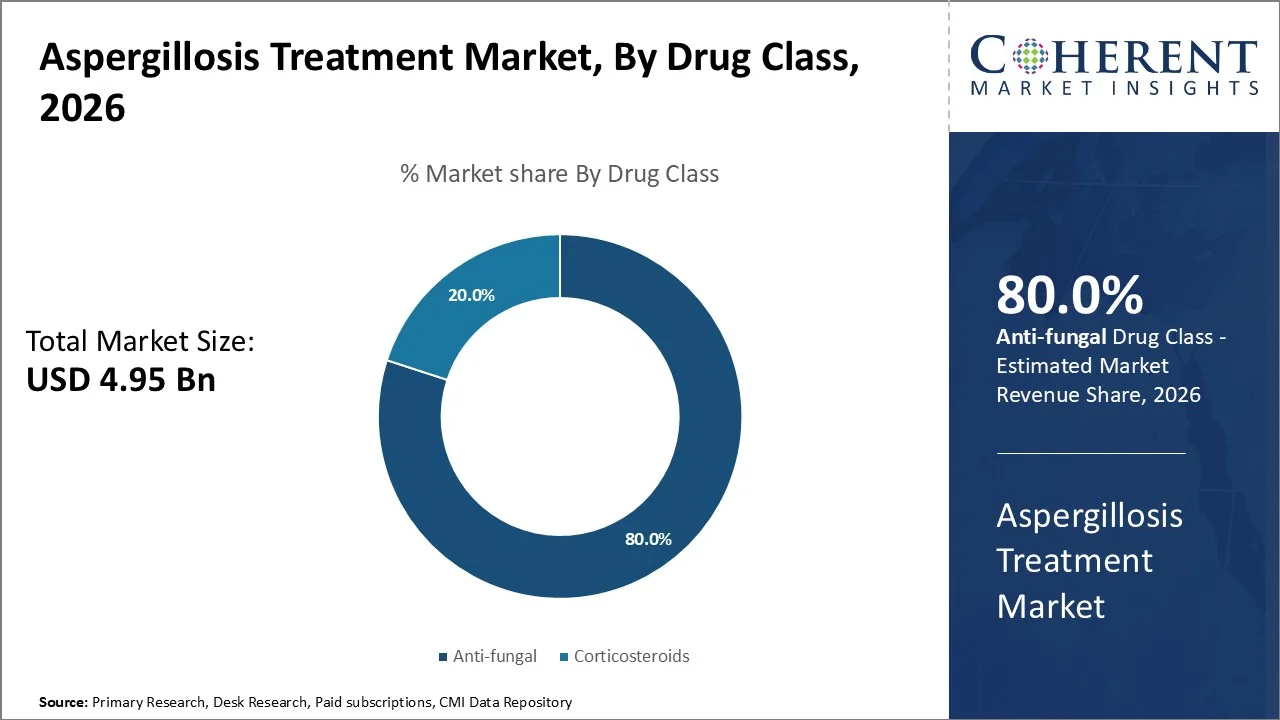
- Anti-fungal drugs will contribute the highest revenue share of approximately 80% in 2026, since anti-fungal drugs act as the main treatment of the disease. For instance, according to IDSA, voriconazole, an antifungal drug, is recommended as the initial treatment of the disease.
- Allergic bronchopulmonary aspergillosis is expected to lead the market with a 50% share in 2026 due to its high prevalence among asthma and cystic fibrosis patients. The CDC estimates that ABPA affects around 2.5% of adults with asthma, increasing the need for diagnosis and treatment.
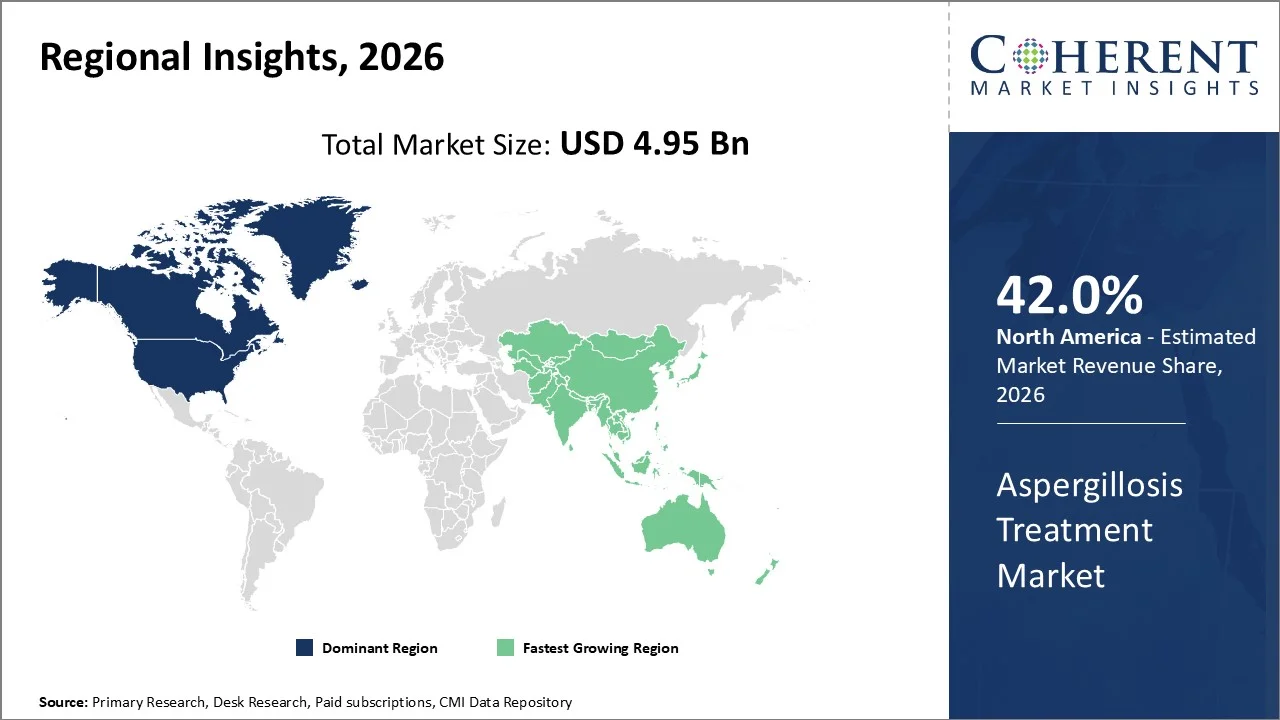
- Regionally, North America is projected to dominate the aspergillosis treatment industry with a 42% share in 2026 due to higher diagnosis rates and greater use of antifungal therapies. The CDC estimates that nearly 15,000 aspergillosis-associated hospitalizations occurred annually in the U.S., with estimated healthcare costs of USD 1.2 Bn, highlighting the significant disease burden and demand for antifungal treatment.
- Asia Pacific, holding a share of 22% in 2026, is poised to emerge as the fastest-growing market for aspergillosis treatments during the forecast period, thanks to a large patient population, improving healthcare access, and rising cases of fungal infections.
Aspergillosis Treatment Market Overview
The global aspergillosis treatment market is poised to exhibit steady growth during the forecast period. This is mostly due to increasing incidence of fungal infections, rising cases of immunocompromised patients, and growing adoption of antifungal therapies. In addition, advancements in diagnostic methods and development of novel antifungal drugs are expected to support market growth in the coming years.
Aspergillosis is a group of diseases caused by Aspergillus, a common fungus found in the environment. Most people inhale Aspergillus spores every day without becoming ill, but people with weakened immune systems, underlying lung diseases, or allergies are at a higher risk of developing aspergillosis. The major forms of the disease include invasive aspergillosis, allergic bronchopulmonary aspergillosis (ABPA), chronic pulmonary aspergillosis (CPA), and aspergilloma.
Increasing prevalence of aspergillosis is expected to fuel growth of aspergillosis treatment market during the forecast period. There is a spike in the cases of aspergillosis globally. For instance, approximately 3 million people worldwide are estimated to have chronic pulmonary aspergillosis (CPA). This, in turn, is propelling demand for aspergillosis drugs, especially anti-fungal formulations.
Aspergillosis is primarily treated with antifungal drugs, while corticosteroids are mainly used to treat allergic bronchopulmonary aspergillosis (ABPA) by reducing inflammation and relieving symptoms such as coughing and wheezing. Commonly prescribed corticosteroids include methylprednisolone, prednisolone, and prednisone.
Segmental Insights
Which Drug Class Dominates the Global Aspergillosis Treatment Market?
Anti-Fungal Drugs Lead with Nearly Four-Fifth Share in 2026
Based on drug class, anti-fungal drugs are projected to lead the aspergillosis treatment market, accounting for a revenue share of nearly 80% in 2026. This dominance can be attributed to attributed to their widespread use as the primary treatment option for aspergillosis infections, including invasive, chronic, and allergic forms of the disease. Increasing prevalence of fungal infections and continuous advancements in antifungal therapies are also boosting segment growth.
Antifungal drugs are being increasingly used for the treatment of aspergillosis due to their proven effectiveness in managing fungal infections, reducing disease progression, and improving patient outcomes. The availability of advanced antifungal therapies, including azole antifungals and echinocandins, has further supported their adoption in clinical settings.
- Current Industry Events of 2026
- Market Size Estimation
- Regional Breakdown
- Competitive Landscape
- Customer Intelligence
- Segmental Analysis
- Pricing Analysis
- Key Market Drivers, Challenges & Future Trends
- Customized Insights Section
Which Disease Type Accounts for the Largest Aspergillosis Treatment Market Share?
Allergic Bronchopulmonary Aspergillosis Accounts for Nearly Half of the Market Share
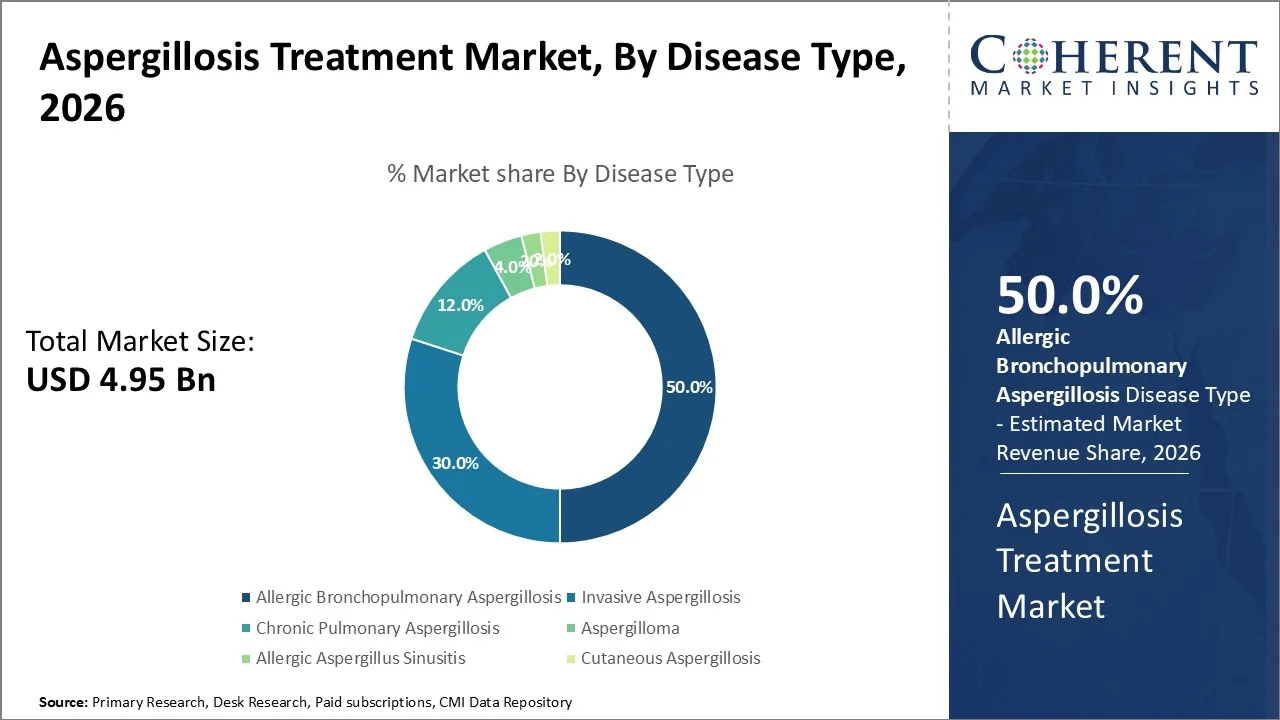
By disease type, allergic bronchopulmonary aspergillosis is set to account for the largest market share of 50% in 2026. This can be attributed to increasing prevalence of asthma and cystic fibrosis, which are major risk factors for developing allergic bronchopulmonary aspergillosis, along with growing awareness and improved diagnosis of fungal infections. Rising use of antifungal therapies and corticosteroids for managing this condition is also contributing to segment growth.
For instance, a systematic review and meta-analysis reported that ABPA affects approximately 11.3% of asthma patients, highlighting the significant patient population requiring diagnosis and treatment. This high disease burden is expected to drive demand for ABPA therapies and support segment growth during the forecast period.
Aspergillosis Treatment Market Growth Drivers
Rising Prevalence of Immunocompromised Patient Populations
The growing number of patients with cancer, organ transplants, HIV, and those receiving immunosuppressive therapies is increasing the risk of invasive aspergillosis. This, in turn, is driving demand for antifungal treatments.
Recent global burden estimates indicate that more than 2.1 million people develop invasive aspergillosis each year, with the highest incidence among patients with hematological malignancies, organ transplants, COPD, and those in intensive care units. As a result, the global aspergillosis treatment outlook appears promising.
Aspergillosis Treatment Market Opportunities
Growing Adoption of Early Diagnostic Technologies
Increasing use of molecular diagnostics, PCR-based testing, and fungal biomarker detection methods is enabling earlier diagnosis and timely treatment of aspergillosis. These technologies improve diagnostic accuracy, reduce treatment delays, and increase the number of patients receiving antifungal therapy. Thus, rising adoption of early diagnostic technologies is expected to create lucrative growth opportunities for the aspergillosis treatment market during the forecast period.
Aspergillosis Treatment Market Trends
Advancements in Antifungal Therapies
Continuous advancements in antifungal therapies are supporting growth of the aspergillosis treatment market. The development of newer antifungal drugs, including next-generation azoles, echinocandins, and novel formulations, is improving treatment outcomes and expanding treatment options.
For example, in July 2025, The Lancet Infectious Diseases published Phase 2b results showing that the investigational antifungal drug olorofim was effective in treating invasive fungal diseases, including invasive aspergillosis. The study also found that the drug had an acceptable safety profile in patients with limited or no treatment options.
Current Events and Their Impact on the Aspergillosis Treatment Market
Current Event | Description and its Impact |
WHO Highlights Antifungal Resistance Risks |
|
CDC Reports Growing Aspergillosis Risk in High-Risk Patients |
|
Regional Insights
North America to Retain its Dominance in Aspergillosis Treatment Industry
North America is expected to dominate the global aspergillosis treatment market, capturing a share of 42% share in 2026. This is attributable to high prevalence of chronic lung diseases, growing number of immunocompromised patients, strong access to advanced diagnostics, and widespread availability of antifungal therapies. Increasing awareness of fungal infections and well-established healthcare infrastructure also support market growth.
Rising burden of aspergillosis and other serious fungal infections is playing a key role in boosting North America aspergillosis treatment market. According to the U.S. CDC, nearly 15,000 aspergillosis-associated hospitalizations occurred in the United States in 2014, while fungal diseases now account for around 130,000 hospitalizations and 7,300 deaths annually in the U.S. This growing disease burden is increasing demand for timely diagnosis and effective antifungal treatment.
Asia Pacific to Become Central Hub for Aspergillosis Treatment Providers
Asia Pacific is projected to emerge as a central hub for aspergillosis drug manufacturers during the forecast period, holding a global market share of 22% in 2026. This is mostly due to rising burden of chronic respiratory diseases, increasing numbers of patients with weakened immune systems, improving healthcare infrastructure, and greater access to fungal disease diagnostics.
Increasing burden of tuberculosis is playing a key role in fueling demand for aspergillosis treatment in the region, as chronic pulmonary aspergillosis often develops after TB. According to the CDC, around 1.2 million people worldwide are estimated to have chronic pulmonary aspergillosis (CPA) after tuberculosis. Since Asia Pacific accounts for a large share of global TB cases, this creates a substantial need for antifungal therapies across the region.
Aspergillosis Treatment Market Outlook – Country-wise
U.S. Aspergillosis Treatment Market Trends
The United States is expected to remain a leading market for aspergillosis treatment during the forecast period. This is mainly due to high awareness of fungal infections, strong access to advanced diagnostic technologies, presence of leading pharmaceutical companies, and increasing use of novel antifungal therapies through clinical research and early product adoption.
China Aspergillosis Treatment Market Forecast
The aspergillosis treatment market in China is expected to grow rapidly during the assessment period. This can be attributed to expanding healthcare infrastructure, rising healthcare spending, improving access to fungal disease diagnosis in tertiary hospitals, and growing government efforts to strengthen infectious disease management and hospital laboratory capabilities.
Who are the Major Companies in the Aspergillosis Treatment Market?
Some of the major players in aspergillosis treatment market are Abbott Laboratories, AstraZeneca plc, Eli Lilly and Company, GlaxoSmithKline, Johnson & Johnson Services, Inc., Mylan Pharmaceuticals, Inc., Novartis AG, Pfizer, Inc., and Takeda Pharmaceutical Company Ltd.
Key Strategies Adopted by Industry Players
Leading manufacturers of aspergillosis treatment drugs are adopting various organic and inorganic strategies to boost their revenue as well as gain a competitive edge in the industry. These include new product launches and approvals, increasing investments in R&D, collaborations, partnerships, mergers and acquisitions, and distribution agreements.
- In June 2026, F2G and Shionogi announced positive topline Phase III results from the OASIS trial for investigational antifungal olorofim in invasive aspergillosis. The study showed that olorofim was as effective as the current standard treatment and was associated with fewer treatment-related adverse events.
- In September 2024, F2G raised US$100 million in a financing round supported by the AMR Action Fund, which includes investments from Pfizer and Johnson & Johnson. The funding will support the late-stage development of olorofim, an investigational antifungal treatment for invasive aspergillosis.
Market Report Scope
Aspergillosis Treatment Market Report Coverage
| Report Coverage | Details | ||
|---|---|---|---|
| Base Year: | 2025 | Market Size in 2026: | USD 4.2 Bn |
| Historical Data for: | 2020 To 2024 | Forecast Period: | 2026 To 2033 |
| Forecast Period 2026 to 2033 CAGR: | 5.0% | 2033 Value Projection: | USD 5.9 Bn |
| Geographies covered: |
| ||
| Segments covered: |
| ||
| Companies covered: | Abbott laboratories, AstraZeneca plc, Eli Lilly and Company, GlaxoSmithKline, Johnson & Johnson Services, Inc., Mylan Pharmaceuticals, Inc., Novartis AG, Pfizer, Inc., and Takeda Pharmaceutical Company Ltd. | ||
| Growth Drivers: |
| ||
| Restraints & Challenges: |
| ||
Analyst Opinion (Expert Opinion)
- Rising fungal infection risk is increasing aspergillosis treatment demand. The growing number of immunocompromised patients, including those undergoing cancer treatment, organ transplantation, or long-term steroid therapy, is increasing the risk of invasive aspergillosis and supporting demand for effective antifungal therapies.
- Aspergillosis continues to be one of the most serious diseases among those at risk. As reported by the World Health Organization (WHO), there are many people suffering from invasive infections caused by fungi and aspergillosis, which leads to their sickness and even death.
- Growing use of advanced diagnostics is improving early detection. Newer molecular and biomarker-based tests help identify Aspergillus infections faster, enabling timely antifungal treatment and improving patient outcomes, which supports market growth.
Speak to the analyst
Want personalized insights?
Take the findings above to one of our principal consultants, or have the report rebuilt around the segments, geographies and competitors you actually track.
Market Segmentation
- By Drug Class Insights ( Revenue, USD Bn, 2021 - 2033)
- Corticosteroids
- Anti-fungal
- By Disease Type Insights ( Revenue, USD Bn, 2021 - 2033)
- Invasive Aspergillosis
- Chronic Pulmonary Aspergillosis
- Allergic Bronchopulmonary Aspergillosis
- Allergic Aspergillus Sinusitis
- Aspergilloma
- Cutaneous Aspergillosis
- By Region Insights ( Revenue, USD Mn, 2021 - 2033)
- North America
- U.S.
- Canada
- Latin America
- Brazil
- Argentina
- Mexico
- Rest of Latin America
- Europe
- Germany
- U.K.
- Spain
- France
- Italy
- Russia
- Rest of Europe
- Asia Pacific
- China
- India
- Japan
- Australia
- South Korea
- ASEAN
- Rest of Asia Pacific
- Middle East
- GCC Countries
- Israel
- Rest of Middle East
- Africa
- South Africa
- North Africa
- Central Africa
- North America
Sources
Primary Research Interviews
- Key Opinion Leaders (KOLs), pulmonologists, infectious disease specialists, oncologists, hospital pharmacists, and healthcare professionals involved in aspergillosis diagnosis and treatment
- Executives from pharmaceutical and biotechnology companies involved in antifungal drug development and commercialization
Databases
- PubMed Database
- ClinicalTrials.gov
- World Health Organization (WHO) Global Health Observatory Database
- U.S. Food and Drug Administration (FDA) Drug Database
- European Medicines Agency (EMA) Database
- National Center for Biotechnology Information (NCBI) Database
Magazines
- Pharmaceutical Executive
- Drug Discovery & Development
- The Lancet Infectious Diseases News & Updates
- Medical News Today
Journals
- The Lancet Infectious Diseases
- Clinical Infectious Diseases
- Journal of Fungi
- Medical Mycology
- Antimicrobial Agents and Chemotherapy
- Emerging Infectious Diseases
Newspapers
- The New York Times Health Section
- The Guardian Health Section
- Reuters Health
- STAT News
Associations
- World Health Organization (WHO)
- European Confederation of Medical Mycology (ECMM)
- Infectious Diseases Society of America (IDSA)
- European Society of Clinical Microbiology and Infectious Diseases (ESCMID)
- Centers for Disease Control and Prevention (CDC)
- American Thoracic Society (ATS)
Public Domain Sources
- World Health Organization (WHO) reports and publications
- Centers for Disease Control and Prevention (CDC) aspergillosis resources
- U.S. Food and Drug Administration (FDA) drug approvals and safety communications
- European Medicines Agency (EMA) assessment reports
- National Institutes of Health (NIH) publications
- Clinical trial registries and published clinical study data
Proprietary Elements
- CMI Data Analytics Tool
- Proprietary CMI Existing Repository of information for last 10 years
Get access to 250+ pages report
Every segment, forecast, competitor profile and data table behind the analysis above — available for instant download.
- ESOMAR Member
- ISO 9001:2015 Certified
- D-U-N-S Registered
- GDPR & CCPA Compliant
Missing comfort of reading report in your local language? Find your preferred language:
Transform your Strategy with Exclusive Trending Reports
Frequently Asked Questions
The global market is estimated to be valued at USD 4.2 Bn in 2026.
The global Aspergillosis Treatment Market value is expected to reach USD 5.9 Bn by 2033.
The global market is poised to exhibit a CAGR of 5.0% from 2026 to 2033.
Major growth factors include rising prevalence of invasive fungal infections, increasing numbers of immunocompromised patients, growing incidence of chronic respiratory diseases, advancements in antifungal therapies, improved diagnostic technologies, and greater awareness of early diagnosis and treatment.
Anti-fungal drugs are expected to lead the market with a share of 80% in 2026.
Some major companies in the Aspergillosis Treatment Market include Abbott Laboratories, AstraZeneca plc, Eli Lilly and Company, GlaxoSmithKline, Johnson & Johnson Services, Inc., Mylan Pharmaceuticals, Inc., Novartis AG, Pfizer, Inc., and Takeda Pharmaceutical Company Ltd.
North America, with a 42% share in 2026, is set to lead the market during the forecast period.