

Testosterone Booster Market Size and Share Analysis: 2026 - 2033
The testosterone booster market was valued at USD 445.8 Mn in 2026 and is forecast to reach a value of USD 628.0 Mn by 2033 at a CAGR of 6% between 2026 and 2033.
Key Takeaways
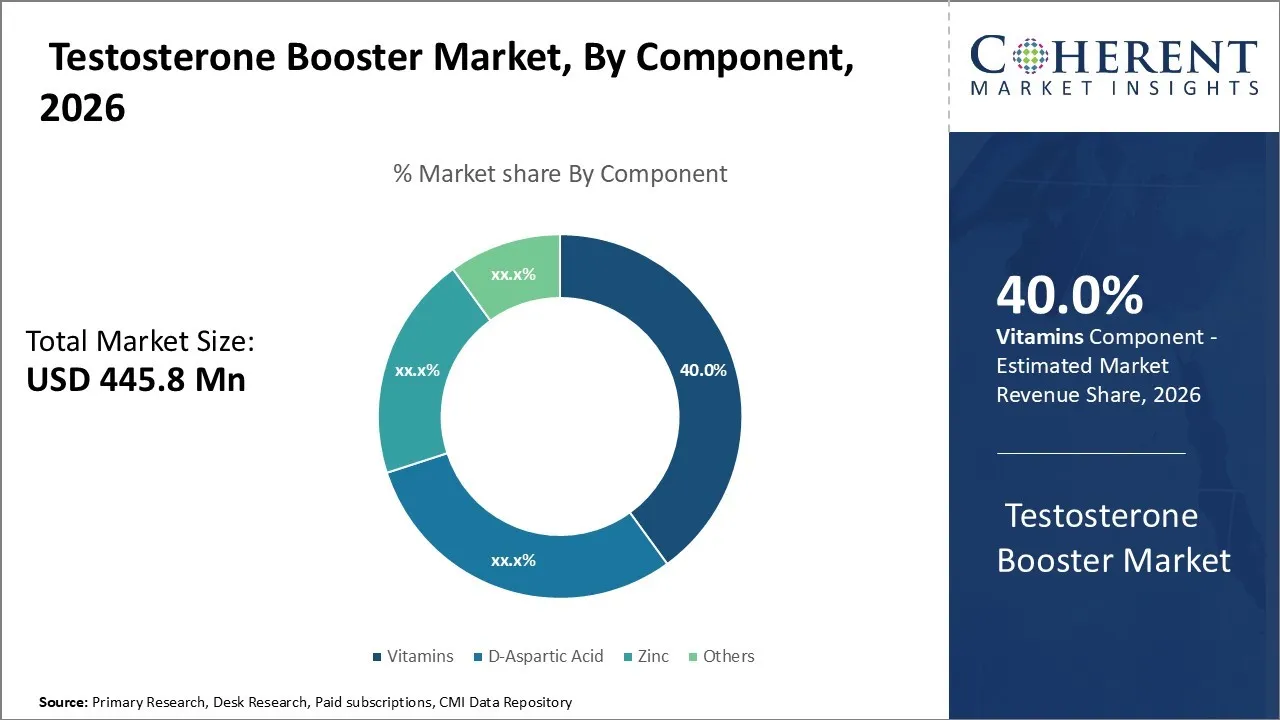
- Based on component, the vitamins segment is expected to hold 40% share of the market in 2026.
- Based on source, the Mucuna Pruriens segment is projected to account for 37.2% share of the market in 2026.
- Based on distribution channel, the pharmacies segment is projected to capture 72.8% share in 2026.
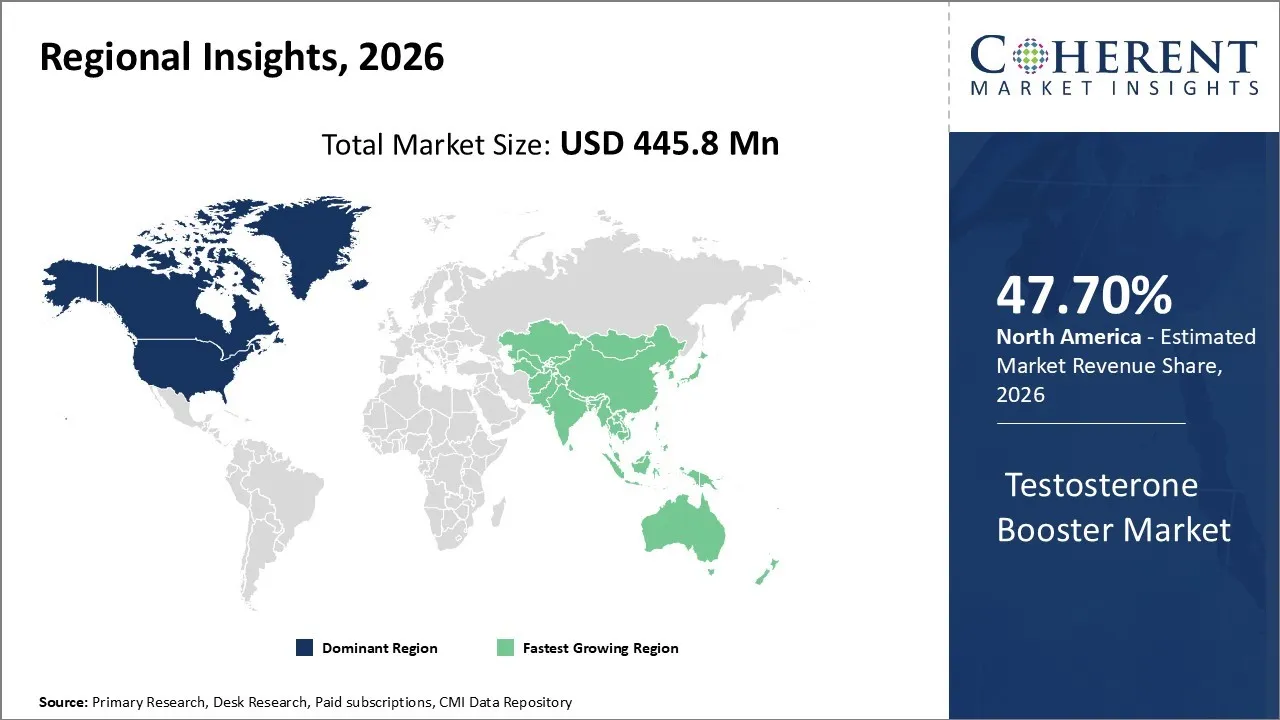
- Based on Region, North America is set to lead the testosterone booster market with 47.7% share in 2026. While, Asia Pacific is anticipated to have the fastest growing region.
Market Overview
Testosterone is a male sex hormone produced in the testicles. Normal male sexual development and function rely on testosterone hormone levels. During puberty (the teen years), testosterone aids boys in developing male characteristics such as body and facial hair, a deeper voice, and muscle strength. Testosterone boosters include medications and supplements designed to increase testosterone levels in the body. Testosterone boosters are used by many athletes worldwide to achieve a significant muscle mass increase within a short period of time.
Current Events and their Impacts on the Testosterone Booster Market
Current Event | Description and its Impact |
Increasing Awareness of Age-Related Testosterone Decline |
|
Growth of Natural and Plant-Based Supplements |
|
Segmental Insights
- Current Industry Events of 2026
- Market Size Estimation
- Regional Breakdown
- Competitive Landscape
- Customer Intelligence
- Segmental Analysis
- Pricing Analysis
- Key Market Drivers, Challenges & Future Trends
- Customized Insights Section
Testosterone Booster Market Insights, By Component - Vitamins represent the largest share
In terms of component, the vitamins segment is expected to lead the market with 40% share in 2026, primarily owing to their well-established role in supporting overall health, hormone production, as well as specifically testosterone synthesis. The major role of vitamins, particularly Vitamin D, in testosterone regulation is supported by several clinical studies as well as health organizations globally. Moreover, Vitamins B6 and B12 are also identify for their contribution to metabolic processes as well as hormone regulation, further cementing the segment’s dominance in the market. Vitamins are broadly accessible, usually incorporated in multivitamin supplements that provide a convenient and effective route for consumers to enhance testosterone levels naturally.
For instance, in December 2025, the U.S. National Institutes of Health (NIH) highlight Vitamin D's influence on testosterone levels, noting that men with sufficient Vitamin D levels tend to have higher testosterone compared to those with deficiencies.
Testosterone Booster Market Insights, By Source - Mucuna Pruriens dominate the market
In terms of source, the Mucuna Pruriens segment is expected to hold 37.2% share of the market in 2026. Due to its biological efficacy, historical use in traditional medicine, and growing consumer awareness as a natural testosterone enhancer. Known as the velvet bean, it has long been valued in Ayurvedic medicine for its ability to support neurotransmitter balance as well as hormonal health.
However, in December 2025, Malaysia’s NPRA banned the use of Mucuna Pruriens in natural products and health supplements because it contains levodopa, a substance regulated under the country’s Poisons Act, showing regional regulatory constraints that could be impacting market availability as well as strategy.
Testosterone Booster Market Insights, By Distribution Channel - Pharmacies leads the market
In terms of distribution channel, the pharmacies segment is projected to account for 72.8% share of the market in 2026. Pharmacies contribute the highest share in the market owing to multiple factors deeply rooted in consumer trust, regulatory compliance, as well as accessibility. Pharmacies have long been established as credible sources for medicinal as well as health-related products, including testosterone boosters, making them the preferred point of purchase for a major portion of consumers. This preference is reinforced by the presence of trained pharmacists who can provide professional guidance on the appropriate use of testosterone supplements, potential side effects, and compatibility with existing medications.
Regional Insights
North America Testosterone Booster Market Analysis & Trends
North America is expected to dominate the Testosterone Booster market with 47.70% share in 2026, driven by several critical factors including advanced healthcare infrastructure, evolving lifestyle trends, as well as demographic shifts. One major driver is the high prevalence of age-related testosterone deficiency as well as hypogonadism among the male population, particularly in the United States as well as Canada.
For instance, according to the Institute for Functional Medicine, as men age, testosterone levels naturally begin to decline, estimated at 1–3% per year after the age of 40. When testosterone production drops below particular levels, men may experience symptoms such as decreased sex drive, erectile dysfunction, fatigue, loss of energy, as well as lower muscle mass or bone density. These age-related changes contribute two a high occurrence of testosterone deficiency as well as hypogonadism among the male population.
Asia Pacific Testosterone Booster Market Analysis & Trends
The Asia-Pacific is expected to be the fastest-growing region for the testosterone booster market. This growth springs from multiple converging factors including a rapidly aging population, rising health consciousness, as well as expanding access to healthcare facilities. Countries such as India, China, and Southeast Asian nations exhibit a notable increase in middle-aged male populations who seek natural and medically approved solutions to combat hypogonadism and age-related testosterone decline.
Testosterone Booster Market Outlook Country-Wise
The U.S. Testosterone Booster Market Trends
The U.S. contributes the highest share in the Testosterone Booster market in the region, owing to a combination of demographic, healthcare infrastructure, and consumer behavior factors. The U.S. boasts one of the largest populations of middle-aged and aging males, a demographic that is most commonly targeted by testosterone booster products.
For instance, in September 2025, has created a safe and powerful testosterone booster for men over 40 and 50, helping them regain energy, strength, and vitality.
China Testosterone Booster Market Trends
China contributes the highest share in the Testosterone Booster market, owing to several critical regional factors. First and foremost, China’s rapidly aging population has led to an increased prevalence of conditions such as late-onset hypogonadism and other testosterone deficiency syndromes among middle-aged and elderly men. According to recent data from China’s National Bureau of Statistics, the proportion of people aged 60 and above is expected to cross 28% by 2040, making age-related hormonal decline a significant public health concern.
Market Report Scope
Testosterone Booster Market Report Coverage
| Report Coverage | Details | ||
|---|---|---|---|
| Base Year: | 2025 | Market Size in 2026: | USD 445.8 Mn |
| Historical Data for: | 2020 To 2024 | Forecast Period: | 2026 To 2033 |
| Forecast Period 2026 to 2033 CAGR: | 6% | 2033 Value Projection: | USD 628.0 Mn |
| Geographies covered: |
| ||
| Segments covered: |
| ||
| Companies covered: | TestoFuel., GNC Holdings, LLC, SMPNutra.com, Hybrid Nutraceutical, VH Nutrition LLC, Roar Ambition Ltd, Ultra Testo Rush, EVLUTION NUTRITION, Zoic Pharmaceuticals., Uniraylifesciences, BL Bio Lab LLC, and Nutritjet.com | ||
| Growth Drivers: |
| ||
| Restraints & Challenges: |
| ||
Testosterone Booster Market Driver
Rising prevalence of hypogonadism and testosterone deficiency
The rising prevalence of hypogonadism and testosterone deficiency significantly propels the demand for testosterone booster products globally. Hypogonadism, a clinical condition characterized by inadequate production of testosterone by the testes, has been highly diagnosed, specifically among aging males. As men age, testosterone levels naturally decline, which can lead to symptoms such as lowered muscle mass, fatigue, diminished libido, as well as mood fluctuations.
Increasing aging male population
The surging aging male population is a major driver of the growth in the testosterone booster market, primarily due to the natural decline in endogenous testosterone levels that men suffer as they age. Testosterone levels typically peak during early adulthood as well as begin to decrease gradually after the age of 30, with a more pronounced decline observed in men over 50. This hormonal reduction can result in various health issues such as decreased muscle mass, reduced libido, fatigue, mood disorders, as well as overall diminished quality of life.
Testosterone Booster Market Opportunity
Development of advanced, safer formulation products
The development of advanced, safer formulation products has become a major factor driving the expansion of the Testosterone Booster Market. Conventionally, testosterone boosters usually carried concerns around side effects, including cardiovascular risks, hormonal imbalances, as well as potential liver toxicity, which hindered broader consumer acceptance.
Analyst Opinion (Expert Opinion)
- The testosterone booster market is experiencing major momentum driven primarily by rising awareness about men's health as well as increasing incidences of testosterone deficiency among aging populations.
- Key drivers include a rising emphasis on physical fitness, enhanced libido, and overall vitality, which have spurred demand for natural and clinically formulated testosterone enhancement products. Additionally, the surge in gym culture as well as body-building activities has propelled younger demographics to explore testosterone boosters to improve muscle mass and performance.
- However, the market faces certain restraints such as concerns regarding product safety, potential side effects, as well as strict regulatory frameworks that differ by region. Misconceptions as well as lack of awareness about the natural decline of testosterone levels usually lead to skepticism, limiting adoption in specific segments. Despite these challenges, opportunities abound in expanding product portfolios with herbal and organic formulations, which are gaining traction among health-conscious consumers looking for safer alternatives.
- From a regional perspective, North America currently dominates the market with established healthcare infrastructure, widespread product availability, as well as high consumer expenditure on health supplements.
- Meanwhile, the Asia-Pacific region is emerging as the fastest-growing market, fueled by increasing urbanization, rising disposable incomes, as well as growing acceptance of wellness supplements in countries like India, China, and Japan. Market players focusing on regional customization as well as leveraging digital marketing are well-positioned to capitalize on these growth prospects. Overall, the Testosterone Booster Market is poised for sustained expansion, fueled by advancing consumer lifestyles and heightened health awareness globally.
Speak to the analyst
Want personalized insights?
Take the findings above to one of our principal consultants, or have the report rebuilt around the segments, geographies and competitors you actually track.
Global Testosterone Booster Market: Key Developments
- In June 2025, FORZIX is a plant-based testosterone booster that helps men increase energy, strength, and libido. It uses natural ingredients like Tribulus, Fenugreek, and Saw Palmetto to support hormone balance and sexual health. FORZIX meets the rising demand for natural men’s health supplements.
Market Segmentation
- By Component
- Vitamins
- D-Aspartic Acid
- Zinc
- Others
- By Source
- Mucuna Pruriens
- Ginseng
- Oyster Extract
- Fenugreek
- Others
- By Distribution Channel
- Pharmacies
- Hypermarkets & Supermarkets
- Online Channels
- Others
- By Region
- North America
- U.S.
- Canada
- Latin America
- Brazil
- Argentina
- Mexico
- Rest of Latin America
- Europe
- Germany
- U.K.
- Spain
- France
- Italy
- Russia
- Rest of Europe
- Asia Pacific
- China
- India
- Japan
- Australia
- South Korea
- ASEAN
- Rest of Asia Pacific
- Middle East & Africa
- GCC Countries
- Israel
- Rest of Middle East & Africa
- North America
- Key Players
- TestoFuel.
- GNC Holdings, LLC
- SMPNutra.com
- Hybrid Nutraceutical
- VH Nutrition LLC
- Roar Ambition Ltd
- Ultra Testo Rush
- EVLUTION NUTRITION
- Zoic Pharmaceuticals.
- Uniraylifesciences
- BL Bio Lab LLC
- Nutritjet.com
Sources
Primary Research Interviews
- Manufacturers & Suppliers of Testosterone Boosters
- Healthcare Professionals & Endocrinologists
- Distributors & Retailers in Nutraceuticals
- Market Experts & Industry Consultants
- Others
Databases
- Euromonitor International
- Others
Magazines
- Nutraceuticals World
- Natural Products Insider
- Men’s Health
- Others
Journals
- Journal of Clinical Endocrinology & Metabolism
- Andrology
- Journal of Strength and Conditioning Research
- Others
Newspapers
- The Wall Street Journal
- Financial Times
- The Economic Times
- The Guardian
- Others
Associations
- American Association of Clinical Endocrinologists (AACE)
- International Society of Sports Nutrition (ISSN)
- Council for Responsible Nutrition (CRN)
- Others
Public Domain Sources
- World Health Organization (WHO)
- U.S. Food and Drug Administration (FDA)
- Centers for Disease Control and Prevention (CDC)
- National Institutes of Health (NIH)
- Others
Proprietary Elements
- CMI Data Analytics Tool
- Proprietary CMI Existing Repository of Information for the Last 8 Years
Get access to 250+ pages report
Every segment, forecast, competitor profile and data table behind the analysis above — available for instant download.
- ESOMAR Member
- ISO 9001:2015 Certified
- D-U-N-S Registered
- GDPR & CCPA Compliant
Missing comfort of reading report in your local language? Find your preferred language:
Transform your Strategy with Exclusive Trending Reports
Frequently Asked Questions
The global testosterone booster market size was valued at USD 445.8 Mn in 2026 and is expected to reach USD 628.0 Mn in 2033.
Major players operating in the market include TestoFuel., GNC Holdings, LLC, SMPNutra.com, Hybrid Nutraceutical, VH Nutrition LLC, Roar Ambition Ltd, Ultra Testo Rush, EVLUTION NUTRITION, Zoic Pharmaceuticals., Uniraylifesciences, BL Bio Lab LLC, and Nutritjet.com
Among component, the vitamins segment estimated significant revenue in 2026.
Factors such as increasing prevalence of testosterone deficiency and increasing product launches of testosterone boosters, are expected to drive the market growth over the forecast period.
The market is estimated to exhibit a CAGR of 6% till 2033.