

Pain Management Therapeutics Market Size and Forecast – 2026 to 203 3
The Pain Management Therapeutics Market is anticipated to grow at a CAGR of 8.3% with USD 89.3 Bn in 2026 and is expected to reach USD 132.7 Bn in 2033. The rising prevalence of chronic pain disorders, a growing aging population, and increasing cases of arthritis and cancer drive the Pain Management Therapeutics Market. Approximately 50 million U.S. adults live with chronic pain, underscoring the need for more effective treatment options.
Key Takeaways
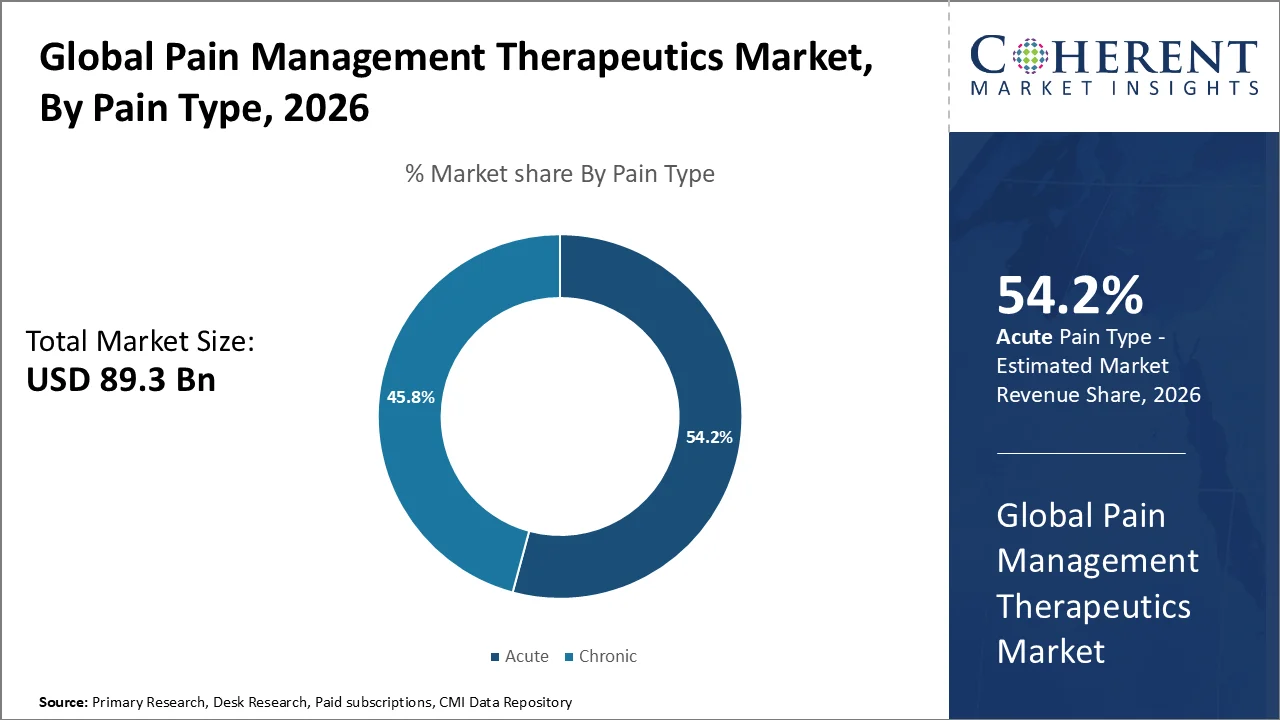
- Acute hold the largest market share of 54.2% in 2026 owing to its increasing surgical procedures.
- Anesthetics expected to hold largest market share of 35.8% in 2026 owing to its growing preference for opioid-sparing pain management. Anesthetics play a vital role in managing acute postoperative and localized chronic pain, supporting multimodal analgesia (MMA) strategies that reduce opioid use.
- Chronic Pain captures the largest market share of 32.2% in 2026 owing to the aging global population. Adults aged 65 years and older account for approximately 10.1% of the global population of 8.2 Bn.
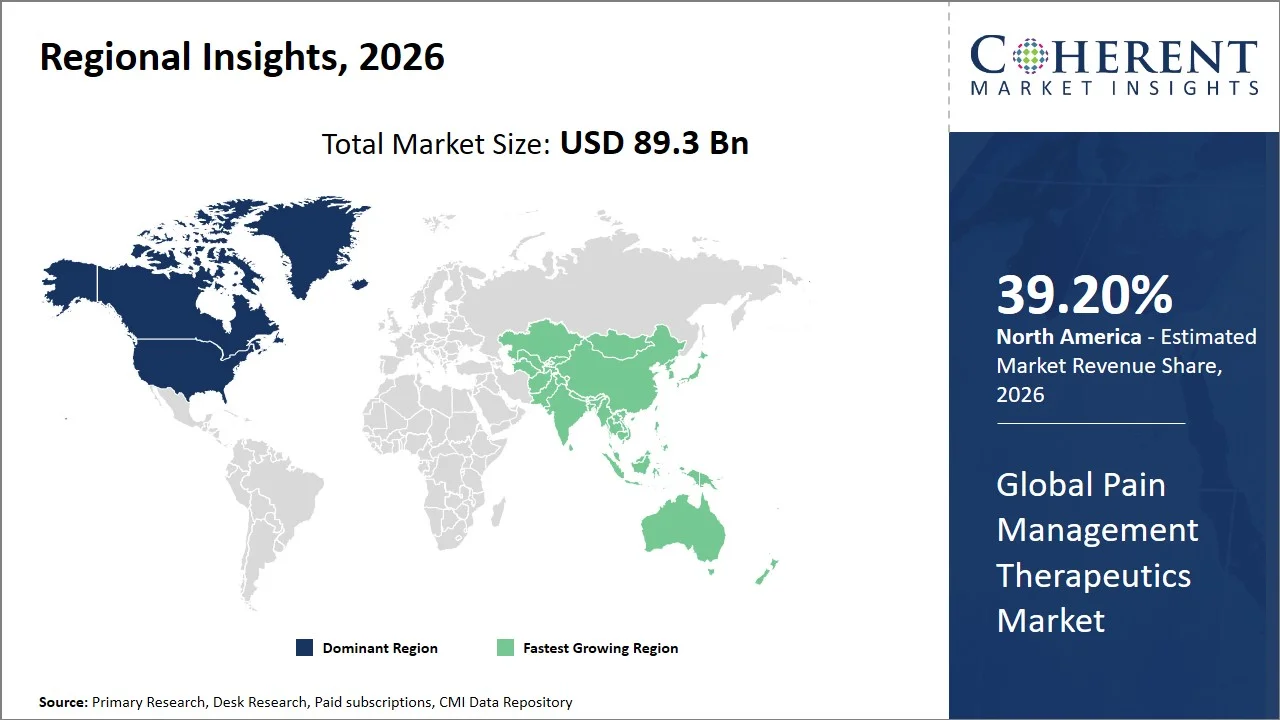
- North America is expected to acquire the dominant share of 39.2% in 2026 owing to the high volume of surgical procedures. Approximately 50 million major surgical procedures are performed annually in the United States, with nearly one in nine Americans undergoing at least one surgical or procedural intervention each year.
Current Events and Their Impact on the Pain Management Therapeutics Market
Current Event | Description and its Impact |
FDA approval of Journavx (suzetrigine), the first non-opioid NaV1.8 pain medicine (January 2025) |
|
U.S. DEA further reduces opioid manufacturing quotas for 2025 |
|
Segmental Insights
- Current Industry Events of 2026
- Market Size Estimation
- Regional Breakdown
- Competitive Landscape
- Customer Intelligence
- Segmental Analysis
- Pricing Analysis
- Key Market Drivers, Challenges & Future Trends
- Customized Insights Section
Why is Acute Acquiring the Largest Market Share?
Acute hold the largest market share of 54.2% in 2026. The growing number of surgical procedures, increasing trauma and accident-related injuries, and rising need for effective postoperative pain control drive the acute pain management therapeutics market. Healthcare providers increasingly implement multimodal pain management strategies to enhance patient outcomes while minimizing opioid use. Pharmaceutical companies continue to develop fast-acting and long-acting analgesic formulations, improving treatment effectiveness. Expanding emergency departments, ambulatory care services, and broader access to healthcare further fuel market growth. Additionally, ongoing research and development efforts continue to introduce safer, non-opioid pain therapies, strengthening the range of available treatment options. For instance, ixlayer has launched Informed Pain Care, a cloud-based direct-to-patient platform that helps patients access acute pain treatment. The platform enables patients to connect virtually with licensed clinicians, complete symptom-based intake, and undergo eligibility screening. When appropriate, clinicians can prescribe treatments, including non-opioid options, with pharmacy fulfillment support.
Anesthetics expected to hold largest market share
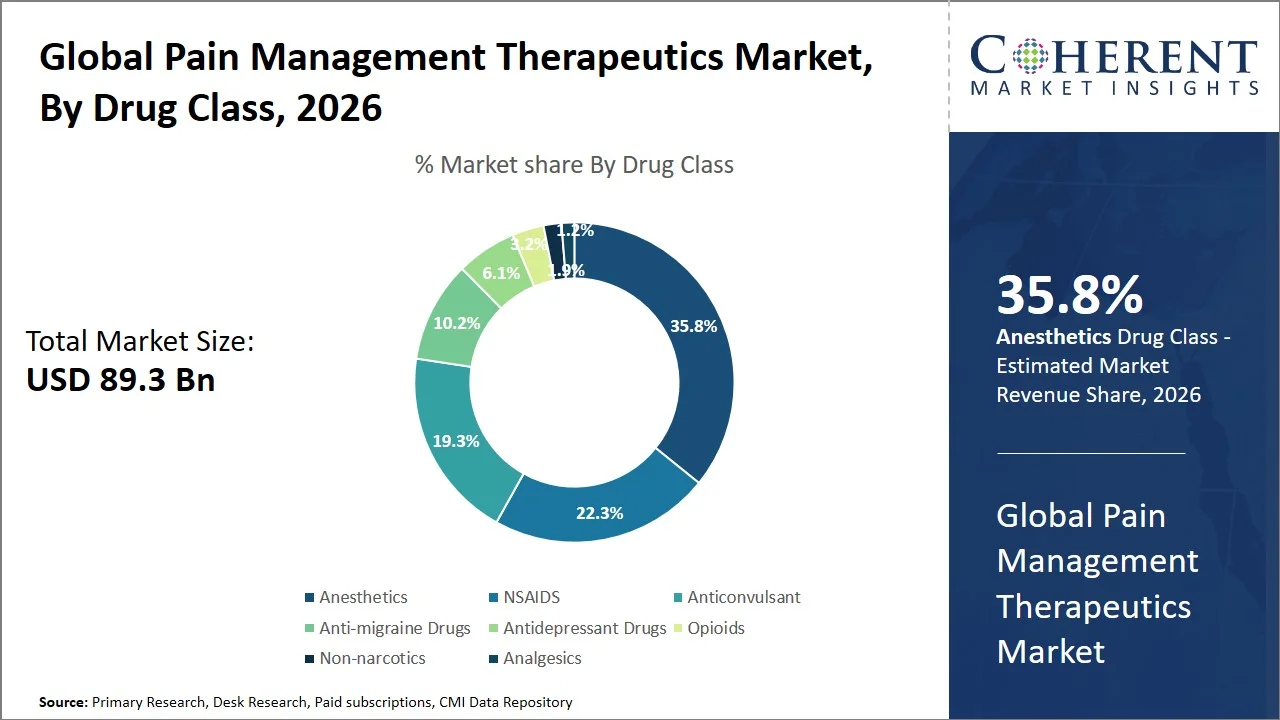
Anesthetics expected to hold largest market share of 35.8% in 2026 owing to its technological advancements in anesthetic formulations. The rising number of surgical procedures, increasing demand for effective perioperative pain control, and growing adoption of minimally invasive surgeries drive the anesthetics segment in the pain management therapeutics market. Healthcare providers increasingly use regional anesthesia and multimodal pain management strategies to improve patient outcomes and reduce opioid dependence. Pharmaceutical companies develop advanced long-acting anesthetic formulations and innovative drug delivery systems to enhance treatment effectiveness. Expanding healthcare infrastructure, rising trauma cases, and increasing investments in surgical and pain management services further accelerate market growth. For instance, PRF Technologies Ltd., a clinical-stage specialty pharmaceutical company, reported positive preclinical results for its lead candidate PRF-110 in a domestic pig study. The study directly compared PRF-110 with ZYNRELEF as a benchmark for post-operative pain management.
Which Indication segment dominates the market?
Chronic Pain captures the largest market share of 32.2% in 2026. The rising prevalence of conditions such as arthritis, neuropathic pain, and back pain, along with the growing burden of lifestyle-related disorders, drives the chronic pain segment in the pain management therapeutics market. An aging population and increasing cases of diabetes and cancer further contribute to long-term pain incidence. Diabetes affects over 589 million adults globally and is projected to reach 853 million by 2050. India accounts for more than 90 million adults with diabetes, with many cases remaining undiagnosed or untreated. Healthcare providers increasingly adopt multimodal and non-opioid treatment strategies to enhance safety and improve outcomes. Pharmaceutical companies advance novel analgesics and biologics, while expanding access to specialized pain clinics and improved diagnosis further support market growth.
Pain Management Therapeutics Market Trends
- Rising prevalence of chronic and acute pain conditions, including arthritis, neuropathic pain, postoperative pain, and cancer-related pain, increases demand for effective pain management therapies worldwide. Arthritis affects over 58 million adults in the United States and is a leading cause of disability.
- Advancements in drug delivery systems such as extended-release formulations, transdermal patches, and targeted delivery technologies improve treatment efficacy, duration of action, and patient compliance. Sparsha Pharma have launched a generic transdermal fentanyl patch for pain management in the U.S. market.
- Aging global population significantly increases the incidence of degenerative diseases and chronic pain conditions, with musculoskeletal disorders becoming more common among elderly individuals. According to global health estimates, chronic pain affects nearly 20–30% of the adult population, with higher prevalence in older age groups.
Regional Insights
North America dominates owing to strong adoption of non-opioid therapies
North America is expected to acquire the dominant share of 39.20% in 2026. The high prevalence of chronic pain conditions such as arthritis, back pain, neuropathic pain, and cancer-related pain drives the North America pain management therapeutics market. Healthcare providers actively adopt multimodal and non-opioid treatment approaches to address opioid-related concerns. Strong healthcare infrastructure, advanced pharmaceutical research, and rapid adoption of innovative therapies support market growth. Expanding use of interventional pain procedures and improved healthcare access also significantly contribute to market expansion. For instance, in October 2025, Glenmark Pharmaceuticals, USA has announced the launch of Ropivacaine Hydrochloride Injection USP in the United States for pain management. The product will be available in single-dose vials across multiple strengths, including 40 mg/20 mL (2 mg/mL), 150 mg/30 mL (5 mg/mL), and 200 mg/20 mL (10 mg/mL).
Asia Pacific Pain Management Therapeutics Market Trends
Rising cases of chronic diseases such as arthritis, cancer, and diabetes drive the Asia Pacific pain management therapeutics market, while an aging population increases demand for effective pain relief. Growing surgical procedures, improved access to healthcare, and expanding hospital infrastructure further support market growth. Greater awareness of pain management options, wide availability of over-the-counter analgesics, and advancements in non-opioid therapies also boost demand. In addition, pharmaceutical innovation and rapid urbanization continue to strengthen treatment adoption across the region. For instance, Flexiora Solutions Private Limited, a DPIIT-recognized healthcare and wellness startup, has launched Arthagone Knee Pain Relief Belt and Arthagone™ Back Pain Relief Belt. The non-invasive devices help individuals manage knee, joint, and lower back pain without relying on medicines, injections, or surgery.
United States Pain Management Therapeutics Market Trends
Rising cases of chronic pain conditions such as arthritis, neuropathic disorders, and cancer-related pain drive the United States pain management therapeutics market, while an aging population increases demand for long-term care solutions. Concerns over opioid misuse push healthcare providers and companies to adopt and develop non-opioid therapies, including biologics, topical treatments, and neuromodulation devices. Ongoing pharmaceutical innovation, improved healthcare access, expanding minimally invasive options, and supportive regulatory policies further strengthen market growth and clinical adoption. For instance, Ambros Therapeutics, Inc. has launched as a clinical-stage biotechnology company focused on advancing late-stage therapies for severe, underserved diseases, starting with neridronate for Complex Regional Pain Syndrome Type 1 (CRPS-1).
China Pain Management Therapeutics Market Trends
A rapidly aging population is driving demand for pain management therapeutics in China, while rising cases of chronic diseases such as cancer, arthritis, and neuropathic pain are increasing treatment needs. More surgical procedures are creating greater demand for effective post-operative pain control. Expanding healthcare infrastructure is improving access to hospitals and clinics. Increased awareness of pain management options, ongoing government healthcare reforms, and the development of non-opioid therapies and advanced pharmaceuticals are further supporting market growth across both urban and rural regions.
Who are the Major Companies in Pain Management Therapeutics Industry
Some of the major key players in Pain Management Therapeutics are AcelRx Pharmaceuticals, Inc. Averitas Pharma, Inc., AmerisourceBergen, Cardinal Health, McKesson Corporation, Johnson & Johnson, Teva Pharmaceuticals, Abbott Laboratories, Allergan, Inc., Covidien plc, Durect Corporation, Eli Lilly and Company, Endo Health Solutions, Inc., Forest Laboratories, Inc., GlaxoSmithKline plc, Hospira, Inc., Merck & Co., Inc., Mundipharma International Ltd., and Novartis International AG.
Key News
- In December 2025, Ambros Therapeutics announced to develop a treatment for a rare form of Complex Regional Pain Syndrome, a chronic pain condition. The company has already licensed neridronate from Abiogen Pharma S.p.A. as its lead drug candidate.
Market Report Scope
Pain Management Therapeutics Market Report Coverage
| Report Coverage | Details | ||
|---|---|---|---|
| Base Year: | 2025 | Market Size in 2026: | USD 89.3 Bn |
| Historical Data for: | 2020 To 2024 | Forecast Period: | 2026 To 2033 |
| Forecast Period 2026 to 2033 CAGR: | 8.3% | 2033 Value Projection: | USD 132.7 Bn |
| Geographies covered: |
| ||
| Segments covered: |
| ||
| Companies covered: | AcelRx Pharmaceuticals, Inc. Averitas Pharma, Inc., AmerisourceBergen, Cardinal Health, McKesson Corporation, Johnson & Johnson, Teva Pharmaceuticals, Abbott Laboratories, Allergan, Inc., Covidien plc, Durect Corporation, Eli Lilly and Company, Endo Health Solutions, Inc., Forest Laboratories, Inc., GlaxoSmithKline plc, Hospira, Inc., Merck & Co., Inc., Mundipharma International Ltd., and Novartis International AG. | ||
Analyst Opinion
- Pain management therapeutics demand is fundamentally driven by an unavoidable clinical burden rather than discretionary healthcare expansion. Globally, more than 1.5 billion people suffer from chronic pain, and studies indicate that up to 10% of adults are newly diagnosed with chronic pain conditions every year, underscoring a continuous influx of patients requiring long-term therapy rather than episodic care. Cancer-related pain alone affects nearly 55% of patients undergoing active treatment and rises to as high as 66% in advanced disease stages, reinforcing persistent reliance on multimodal analgesic regimens in oncology care pathways.
- Post-surgical pain remains one of the most consistent demand drivers, with over 310 million major surgical procedures performed globally each year, each requiring structured acute pain management protocols. In orthopedic surgeries such as total knee replacement, research shows that up to 20–30% of patients report persistent post-operative pain beyond three months, highlighting gaps in current treatment effectiveness and the need for improved therapeutics.
- Opioid-sparing and non-opioid therapies are also gaining momentum due to regulatory tightening and clinical necessity. For instance, clinical adoption of multimodal analgesia protocols in hospitals has been shown to reduce opioid consumption by up to 30–50% in perioperative settings, pushing demand toward NSAIDs, anticonvulsants, and novel biologics. This shift is not optional but structurally embedded in modern pain management practice, making innovation in safer, targeted therapeutics a critical market driver rather than a trend-led evolution.
Speak to the analyst
Want personalized insights?
Take the findings above to one of our principal consultants, or have the report rebuilt around the segments, geographies and competitors you actually track.
Market Segmentation
- By Pain Type (Revenue, USD Bn, 2021-2033)
- Chronic
- Acute
- By Drug Class (Revenue, USD Bn, 2021-2033)
- NSAIDS
- Anesthetics
- Anticonvulsant
- Anti-migraine Drugs
- Antidepressant Drugs
- Opioids
- Non-narcotics
- Analgesics
- By Indication (Revenue, USD Bn, 2021-2033)
- Arthritic Pain
- Neuropathic Pain
- Cancer Pain
- Chronic Pain
- Post-operative Pain
- Migraine
- Fibromyalgia
- Bone Fracture
- Muscle Sprain/Strain
- Acute Appendicitis
- Others
- By Region (Revenue, USD Bn, 2021-2033)
- North America
- U.S.
- Canada
- Latin America
- Brazil
- Mexico
- Argentina
- Rest of Latin America
- Europe
- Germany
- U.K.
- France
- Italy
- Spain
- Russia
- Rest of Europe
- Asia Pacific
- China
- India
- Japan
- Australia
- South Korea
- ASEAN
- Rest of Asia Pacific
- Middle East
- GCC
- Israel
- Rest of Middle East
- Africa
- South Africa
- Central Africa
- North Africa
- North America
- Key Players
- AcelRx Pharmaceuticals, Inc.
- Averitas Pharma, Inc.
- AmerisourceBergen
- Cardinal Health
- McKesson Corporation
- Johnson & Johnson
- Teva Pharmaceuticals
- Abbott Laboratories
- Allergan, Inc.
- Covidien plc
- Durect Corporation
- Eli Lilly and Company
- Endo Health Solutions, Inc.
- Forest Laboratories, Inc.
- GlaxoSmithKline plc
- Hospira, Inc.
- Merck & Co., Inc.
- Mundipharma International Ltd.
- Novartis International AG.
Sources
Primary Research interviews
- Interviews with pain management physicians, anesthesiologists, oncologists, orthopedic surgeons, and hospital procurement managers
- Discussions with clinical researchers involved in analgesic drug development and multimodal pain therapy protocols
- Inputs from healthcare administrators managing post-operative care pathways
Databases
- PubMed
- ClinicalTrials.gov
- World Health Organization (WHO) Global Health Observatory
- National Center for Biotechnology Information (NCBI)
- Global Burden of Disease (GBD) database
Magazines
- Nature Medicine News & Views
- Medscape
- Pharmaceutical Executive (scientific coverage sections)
- The Lancet Oncology Insights updates
- Scientific American (health section)
Journals’
- The Lancet
- Journal of Pain Research
- Pain (International Association for the Study of Pain journal)
- Anesthesiology
- British Journal of Anaesthesia
- JAMA Network Open
Newspapers
- The New York Times (health section)
- The Guardian (health and science reporting)
- The Washington Post (health desk coverage)
- Financial Times (global healthcare coverage)
- Reuters Health reporting
Associations
- International Association for the Study of Pain (IASP)
- American Pain Society (APS)
- World Health Organization (WHO)
- International Anesthesia Research Society (IARS)
- European Pain Federation (EFIC)
Public Domain sources
- Government health ministry publications and hospital statistics portals
- National cancer registries and surgical procedure datasets
- WHO reports and global health policy documents
- FDA and EMA public drug safety and approval databases
- Open-access academic publications and conference proceedings
Proprietary Elements
- CMI Data Analytics Tool, and Proprietary CMI Existing Repository of information for last 10 years
Get access to 250+ pages report
Every segment, forecast, competitor profile and data table behind the analysis above — available for instant download.
- ESOMAR Member
- ISO 9001:2015 Certified
- D-U-N-S Registered
- GDPR & CCPA Compliant
Missing comfort of reading report in your local language? Find your preferred language:
Transform your Strategy with Exclusive Trending Reports
Frequently Asked Questions
The Pain Management Therapeutics Market is anticipated to grow at a CAGR of 8.3% with USD 89.3 Billion share in 2026 and is expected to reach USD 132.7 Billion in 2033.
The acute segment is the leading component segment in the market.
Prescription drug abuse and pain advocacy groups losing power, influence, and funding are factors which are expected to hinder growth of the market.
Approval and launch of new therapeutics and increasing prevalence of arthritis are the factors fueling growth of the market.
Major players operating in the market include, AcelRx Pharmaceuticals, Inc. Averitas Pharma, Inc., AmerisourceBergen, Cardinal Health, McKesson Corporation, Johnson & Johnson, Teva Pharmaceuticals, Abbott Laboratories, Allergan, Inc., Covidien plc, Durect Corporation, Eli Lilly and Company, Endo Health Solutions, Inc., Forest Laboratories, Inc., GlaxoSmithKline plc, Hospira, Inc., Merck & Co., Inc., Mundipharma International Ltd., and Novartis International AG.
North America region is expected to hold dominant position in the market over the forecast period.