

Global GLP-1 Digital Care Market Size and Forecast – 2026 To 2033
The global GLP-1 digital care market is expected to grow from USD 1.08 Bn in 2026 to USD 3.05 Bn by 2033, registering a compound annual growth rate (CAGR) of 16.0% from 2026 to 2033. The global GLP-1 digital care market is expected to witness a rapid growth due to the increasing number of obese and type 2 diabetic patients. This will drive the demand for long term solutions to control metabolic diseases.
The World Health Organization (WHO), estimates 1 in 7 people (1.1 billion) in the world were living with obesity in 2024, underscoring the necessity of scalable, long-term solutions for obesity management.
Key Takeaways of the Global GLP-1 Digital Care Market
- Clinician-led virtual care is projected to hold 48.6% of the global GLP-1 digital care market share in 2026, making it dominant care model segment, across North America due to the historically high usage of telehealth services by the population, and the physician-led virtual care environment. For instance, the U.S. Health Resources and Services Administration reported that 95% of health centers receiving HRSA funding offered primary care services via telehealth in 2024.
- GLP-1 prescription and medication management is projected to hold 43.7% of the global GLP-1 digital care market share in 2026, making it dominant service type segment, across Europe as it is witnessing the rapid growth of digital health infrastructure and electronic health records adoption by the practitioners into medical workflow. For instance, the European Commission announced that in 2025, the EU-27 has a nearly 87% eHealth accessibility, connectivity of digital health information, and digital health systems readiness rate.
- Obesity and weight management is projected to hold 63.2% of the global GLP-1 digital care market share in 2026, making it dominant patient type segment, across Asia Pacific owing to its large population and increasing number of weight-related disorders. For instance, according to world health organization, overweight prevalence in adults was 32% in South-East Asia region in 2024, which increased the need for easily accessible, technology enabled weight management solutions.
- North America market maintains dominance with an expected share of 44.2% in 2026, bolstered by region’s well-established telehealth network, high utilization of virtual clinical visits, and high availability of GLP-1 treatment programs. For instance, as per the U.S. Centers for Medicare & Medicaid Services, telehealth represented nearly 25% of primary care in Medicare in 2024, highlighting the significance of the remote healthcare facilities.
- Asia Pacific is expected to exhibit the fastest growth in the global GLP-1 digital care market, registering an estimated CAGR of 19.6% during 2026–2033, due to the rising prevalence of metabolic diseases, expanding digital health ecosystem and increasing adoption of virtual healthcare in the region. For instance, India’s health platform eSanjeevani conducted over 500 million teleconsultations in September 2026, demonstrating the region’s capacity to deliver healthcare through high-capacity digital platforms.
Segmental Insights
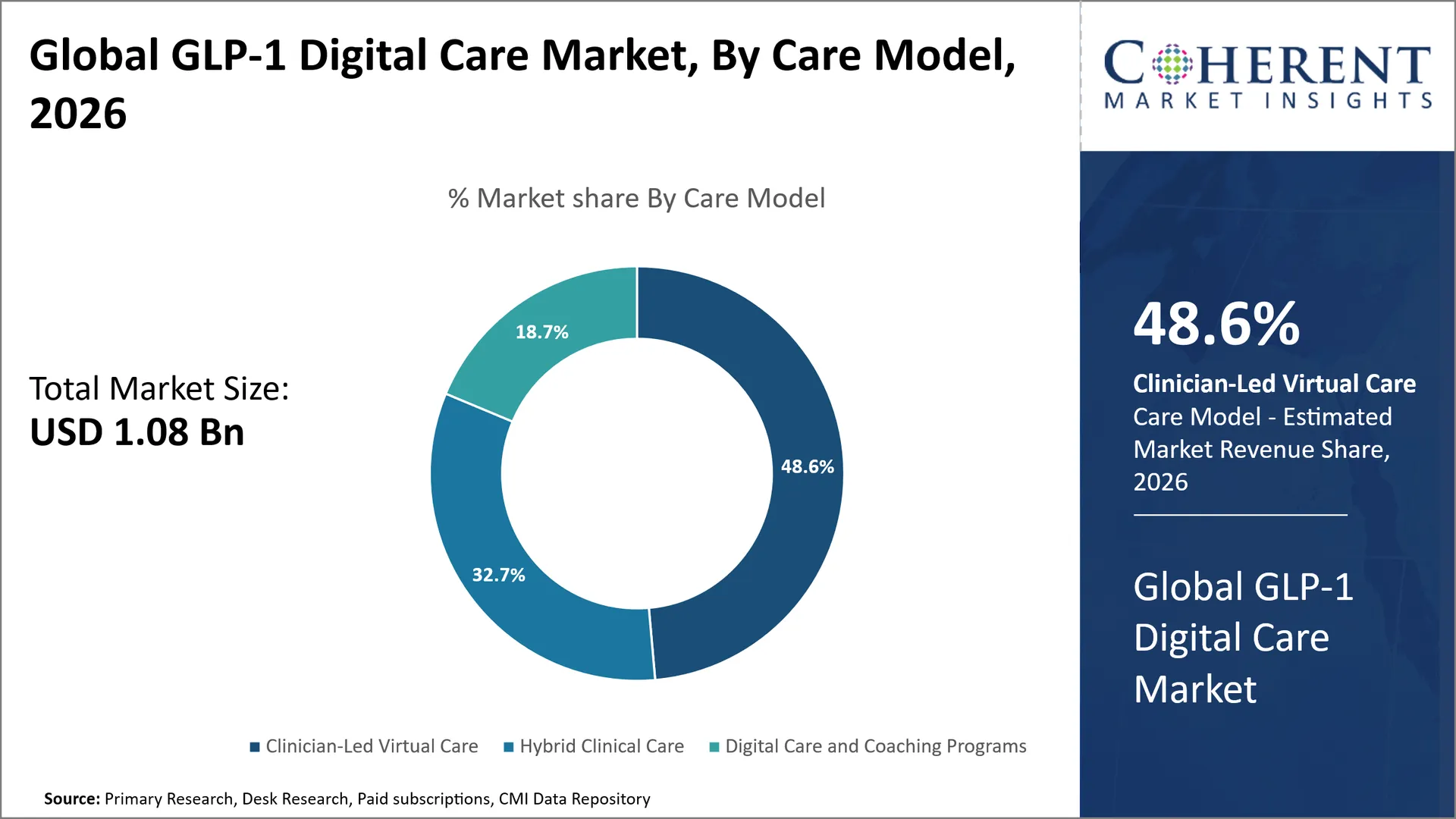
Why Do Clinician-Led Virtual Care Dominate the Global GLP-1 Digital Care Market?
Clinician-led virtual care is projected to hold the market share of 48.6% in 2026, as GLP-1 prescriptions require physician oversight, dose adjustments that need to be personalized, management of side effects, and active tracking of treatment progression. This type of model indicates a holistic approach to the patient and may improve outcomes. For instance, according to the U.S. Department of Health and Human Services, telehealth allows clinicians to perform remote patient visits, analyze health records, modify medication, and offer tailored plans for diabetes treatment, embracing a clinician-led digital care model.
- Current Industry Events of 2026
- Market Size Estimation
- Regional Breakdown
- Competitive Landscape
- Customer Intelligence
- Segmental Analysis
- Pricing Analysis
- Key Market Drivers, Challenges & Future Trends
- Customized Insights Section
Why Does GLP-1 Prescription and Medication Management Represent the Largest Service Type Segment in the GLP-1 Digital Care Market?
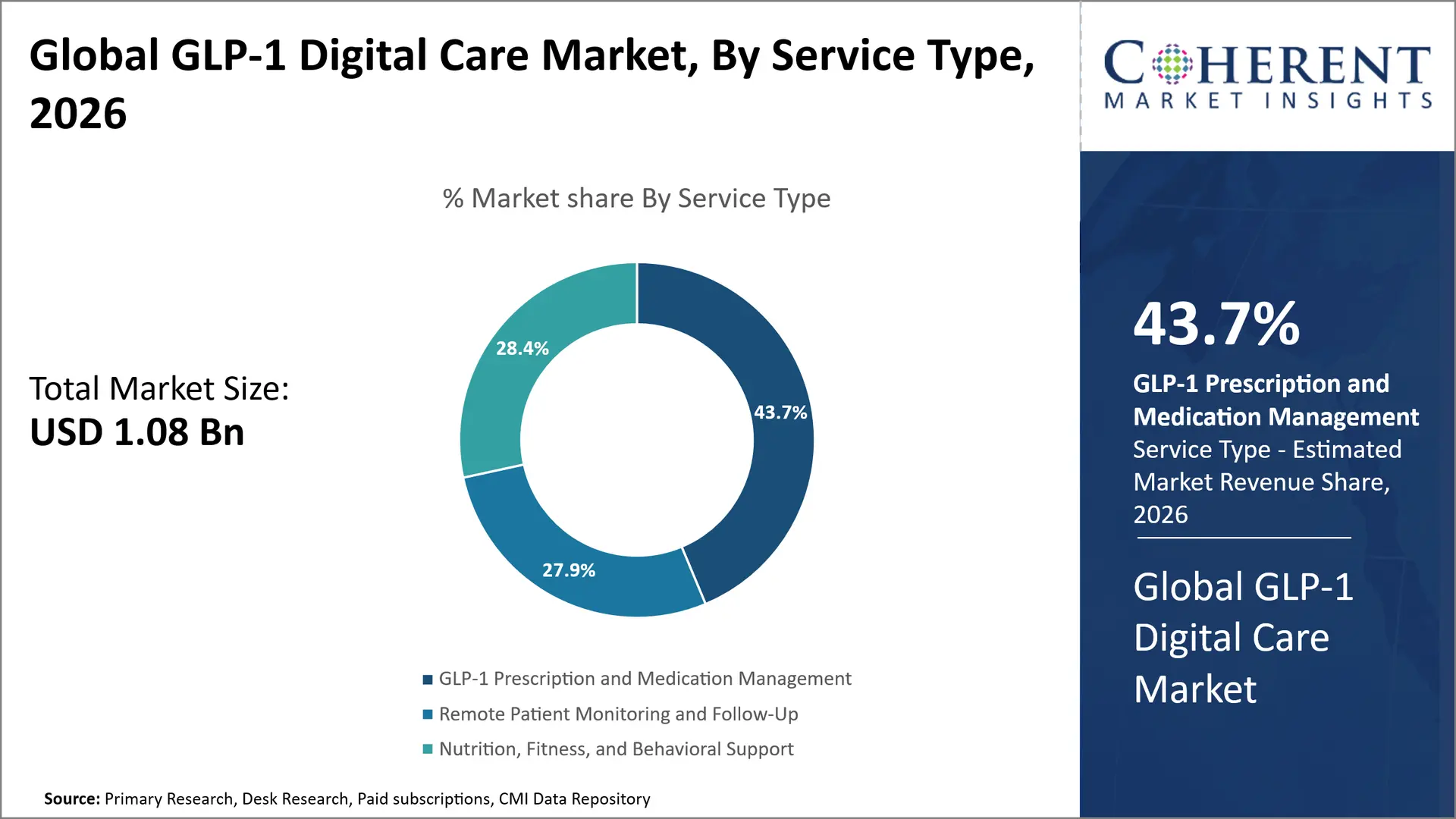
GLP-1 prescription and medication management is projected to hold a market share of 43.7% in 2026, due to the need for prescription, including complex dose titration, along with medication adherence and management of treatment-related side effects. For instance, in July 2026, India’s Ministry of Health and Family Welfare took a step forward and developed CGHS guidelines which mandated specialist-led GLP-1 prescriptions, month-wise follow-up for first three months, and later on followed up for treatment response and side-effects.
Obesity and Weight Management Segment Dominates the Global GLP-1 Digital Care Market
The obesity and weight management segment is projected to hold a market share of 63.2% in 2026, owing to the high incidence of obesity worldwide coupled with increasing preference of the patients for physician-guided obesity treatment and weight-loss therapies. For instance, according to the World Health Organization (WHO) in 2024, 45% of adults 18 years and over (2.6 billion) were overweight. Of these, 940 million were living with obesity (16% of all adults), underscoring the high requirement for affordable, long-term solutions to weight management.
Current Events and their Impact
Current Events | Description and its Impact |
WHO Emphasizes the Importance of Medically Supervised and Safe Use of GLP-1 Therapies (July 2026) |
|
U.S. FDA Advances Technology-Enabled Digital Health Monitoring for Chronic Disease Management (July 2026) |
|
GLP-1 Digital Care Market Dynamics
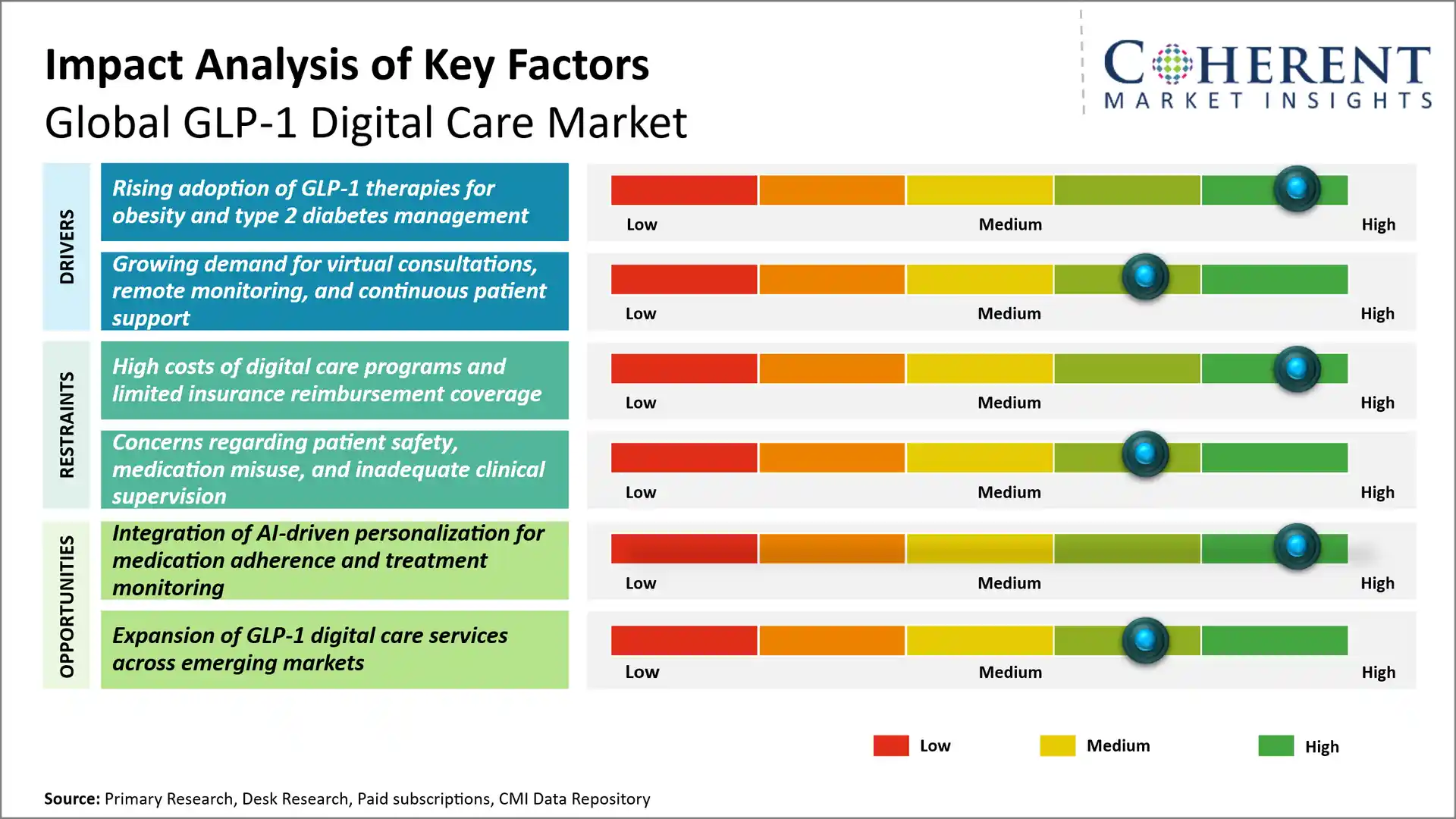
Market Drivers
- Rising adoption of GLP-1 therapies for obesity and type 2 diabetes management: The rising interest of GLP-1 medications for the indications of obesity and type 2 diabetes is propelling the market growth for digital prescription management, dose administration, adherence and continued clinical monitoring. For instance, according to U.S. Centers for Disease Control and Prevention, 26.5% of adults with diagnosed diabetes reported prescribed GLP-1 injectable medications in 2024, highlighting the increasing usage of these medications and digital care services.
- Growing demand for virtual consultations, remote monitoring, and continuous patient support: Patient demand for convenient, 24/7 access to care is driving adoption of digital platforms to deliver virtual care visits, remote monitoring and ongoing clinical care to patients on GLP-1 therapies. For instance, the American Medical Association indicated 20.3% of physician practices used remote patient monitoring in 2024, which demonstrates the growing role of remote monitoring in clinical care, and the need for digital care platforms to serve GLP-1 patients.
- Increasing smartphone penetration and adoption of digital health technologies: As the usage of smartphones and internet adoption continues to grow, the services can extend the scope of internet-enabled, mobile-based GLP-1 care platforms and support the delivery of virtual consultations, medication reminders, remote monitoring, and tailored lifestyle coaching to patients. For instance, the International Telecommunication Union (ITU) estimated that 6 billion people or 74% of the world’s population will be using internet by 2025, providing a stronger infrastructure of connectivity for digital healthcare.
Emerging Trends
- Integration of AI-Driven Personalized GLP-1 Care: Digital care platforms are adopting AI to tailor treatment of GLP-1 by using patient health data, medication adherence and response to treatment.
- Impact: Use of analytics through AI can help to detect as early as possible the non-adherence, side effects and variations in response to therapy thus enabling timely clinical intervention as well as patient involvement.
- Market Relevance: As artificial intelligence adoption continues to increase, demand for smart GLP-1 care platforms for personalized medication management is expected to rise. It will help differentiate providers through advanced treatment monitoring and increased patient retention.
- Expansion of Wearable-Based Remote Patient Monitoring: Digital care providers using GLP-1s are starting to leverage wearables and remote monitoring to gather data on weight, activity level, glucose and other metabolic data.
- Impact: Ongoing collection of data enables clinicians to monitor treatment progress and give more prompt, personal advice. By linking up with virtual consultations, it makes it easier to support the patient with treatment remotely from their home.
- Market Relevance: The increase in use of connected devices will help create opportunities for platform combining management of GLP-1 treatment and real-time health monitoring. This will enable improved hybrid care models and enhance long-term management of obesity and diabetes.
Regional Insights
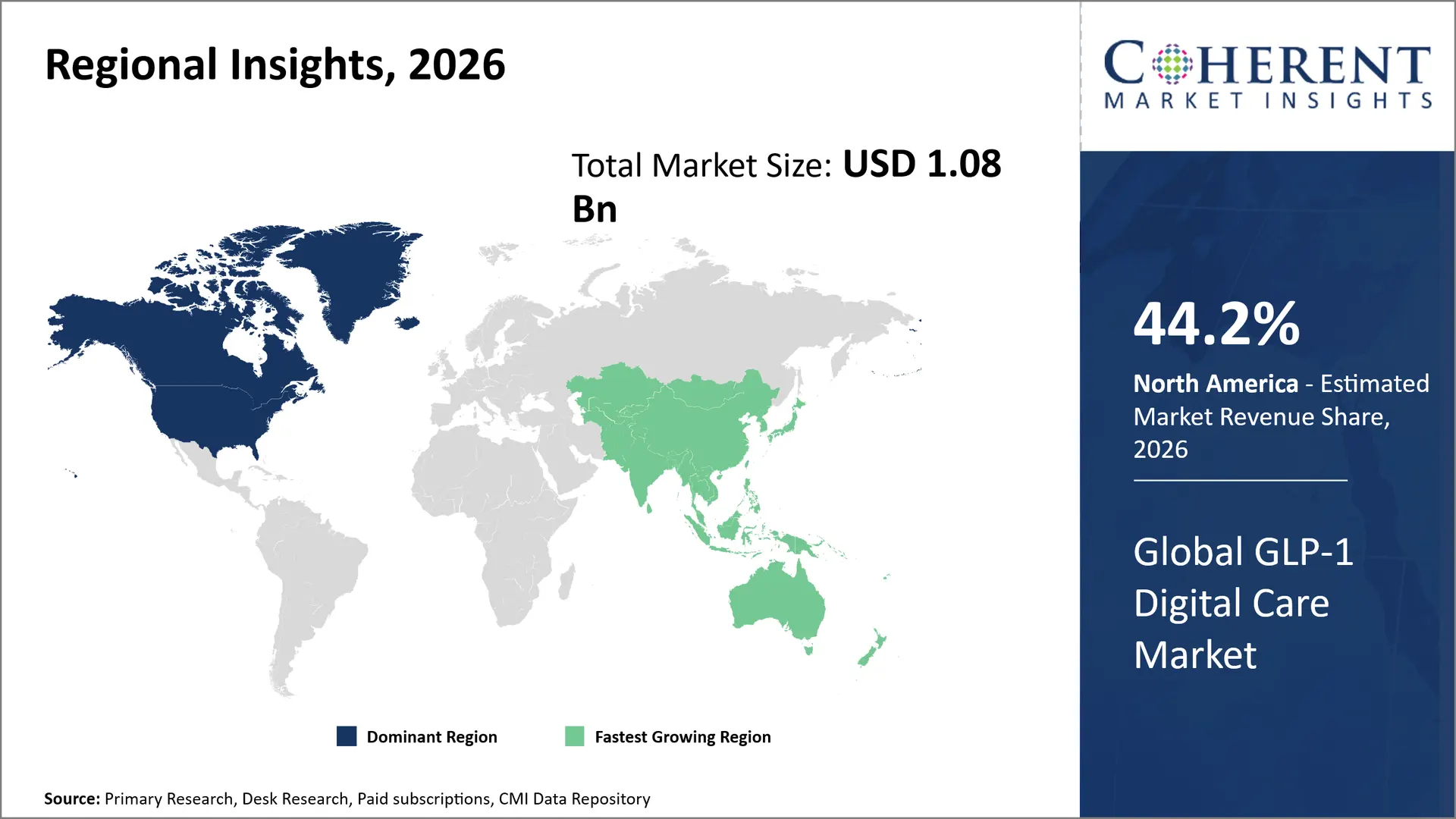
Why is North America a Strong Market for GLP-1 Digital Care?
North America leads the global GLP-1 digital care market, accounting for an estimated 44.2% share in 2026, due to modernization in healthcare infrastructure, increasing cases of obesity & diabetes, and existing digital health infrastructure. Rising federal programs aimed to increase telemedicine and digital therapeutics together with an indirect approach to remote patient monitoring and virtual care are encouraging the adoption of GLP-1 digital care solutions.
For instance, in July 2026, the U.S. Food and Drug Administration (FDA) announced the first enrollee into its Technology-Enabled Meaningful Patient Outcomes (TEMPO) Pilot, which will advance digital health devices for improving chronic disease management. The program includes remote monitoring and digitally-enabled GLP-1 care solutions that leverage AI insights and health data in real time to track patients’ nutritional state and metabolic state, respectively. Moreover, robust collaboration between healthcare providers & digital platforms and improved access to virtual consultations, medication management, and personalized treatment care further strengthens North America’s leading position in the market.
Why Does Asia Pacific GLP-1 Digital Care Market Exhibit High Growth?
Asia Pacific is expected to exhibit the fastest growth in the global GLP-1 digital care market, registering an estimated CAGR of 19.6% during 2026–2033. The region is projected to account for 20.8% of the global market in 2026, owing to the increasing number of diabetic and obese population, improvement in healthcare infrastructure and smart phone penetration. The government of countries such as China, India, and Japan have introduced healthcare digitization and chronic care improvement initiatives.
For instance, India's Ministry of Health and Family Welfare announced the launch of several digital health programs including Aarogya Setu 2.0, the Ayushman App and the e-Sushrut Clinic on 29 June 2026. The programs are aimed at supporting interoperable health records, digital access to healthcare and care transition. (Source: Press Information Bureau) Furthermore, the regional market is expected to benefit from technology-enabled solutions due to the improvement of healthcare IT capabilities across the market, and high adoption of care services such as telemedicine, remote patient monitoring, and personalized medical services.
Global GLP-1 Digital Care Market Outlook for Key Countries
Why is the U.S. Leading Innovation and Adoption in the GLP-1 Digital Care Market?
The U.S. leads the innovation and adoption in the GLP-1 digital care driven by its mature ecosystem, established base of virtual obesity-care delivery, and widespread access to GLP-1 programs. The convergence of physician-managed patient care, digital prescriptions, medication therapy management, remote monitoring, and one-on-one weight-loss coaching, helps to provide complete patient support. Moreover, country’s well-established digital ecosystem and partnerships between pharma and virtual-care providers further strengthens its leadership.
Is China a Favorable Market for GLP-1 Digital Care Market?
China offers a high potential growth market for GLP-1 digital care due to the high prevalence of patients with obesity and diabetes, the steady growth of an online healthcare landscape and the increasing adoption of GLP-1 drugs. The integration of online consultation, digitalized medication management and AI-enabled patient education offer huge opportunities for virtual obesity management and monitoring platforms. Regulatory landscape around online prescription, clinical oversight, and protection of health data will determine market availability.
Is Japan Emerging as a Key Growth Hub for the GLP-1 Digital Care Market?
As a leader in healthcare delivery, diabetes management and uptake of online medical visits, Japan presents an attractive opportunity for digital care enabled by its health system, digital adoption, and uptake of online medical visits. The introduction of clinician-driven GLP-1 therapy with digital medication adherence, remote monitoring and precision nutrition offers the potential for hybrid metabolic care solutions in Japan. In addition, the country's focus on drug appropriateness and patient safety is likely to drive demand for clinically oriented digital engagement platforms for ongoing obesity and T2D management.
Why Does Germany Top the European GLP-1 Digital Care Market?
Germany is the leading market for the European GLP-1 digital care market due to its successful model for digital healthcare reimbursement, existing ecosystem of pharmaceutical industry and greater consumption of virtual clinical care. Under the DiGA scheme, approved digital health applications can be prescribed and reimbursed under the statutory health insurance, providing more avenues for digital platforms targeted towards the treatment of obesity and metabolic disorders. The widespread utilization of e-prescription, e-pharmacy and telemedicine further complements the remote assistance and connected health models for GLP-1 distribution.
Is GLP-1 Digital Care Market Developing in UK?
The UK is an emerging market for GLP-1 Digital Care with an upward trend in private GLP-1 prescription use, an existing pool of leading online weight-management providers, and digital approaches becoming more integrated into the obesity-care pathway. With the growth of NHS digital weight-management services and digitally enabled prescribing, it is providing a pool of opportunities for virtual consultations, medication management, remote monitoring, and behavioral coaching. However, restricted access to the NHS and lacking clinical support and patient-data integration are key limitations in this area.
Digital Care Components Across the GLP-1 Treatment Journey
Treatment Stage | Key Digital Care Solutions | Primary Function |
Patient Assessment | Virtual Consultations, Digital Health Assessments | Evaluate patient eligibility and treatment requirements |
Treatment Initiation | Digital Onboarding, e-Prescriptions | Reinforce prescription management and therapy initiation |
Dose Management | Digital Reminders, Medication Tracking | Monitor dosage schedules and treatment adherence |
Ongoing Monitoring | Connected Devices, Wearables, Remote Patient Monitoring | Track weight, glucose levels, and treatment progress |
Lifestyle Management | AI-powered Nutrition, Fitness, and Behavioral Coaching | Reinforce sustainable weight and metabolic health management |
Clinical Follow-Up | Patient Dashboards, Telehealth, AI-Driven Analytics | Assess treatment response and enable timely clinical interventions |
How is the integration of AI-driven personalization for medication adherence and treatment monitoring creating new growth opportunities in the GLP-1 digital care market?
Personalization enabled by artificial intelligence is a major business opportunity to improve adherence to GLP-1 medication, monitor treatment and support personalized lifestyle interventions. AI-enabled platforms can tap into patient health and behavior data to identify personalized reminders, predict challenges in adherence and enable appropriate clinical interventions. For instance, in February 2026, the Ministry of Health and Family Welfare launched the Strategy for AI in Healthcare (SAHI) for the safe, responsible and evidence-based promotion of artificial intelligence, creating a viable environment for AI-enabled personalized healthcare. (Source: Press Information Bureau)
Market Players, Key Development, and Competitive Intelligence
Key Developments
- In July 2026, DarioHealth Corp. announced the launch of an integrated GLP-1 program, which combines its digital chronic care platform with provider-supported clinical services. The program enables medical assessment, GLP-1 prescribing when appropriate, continuous clinical monitoring, remote patient monitoring, nutrition and behavioral coaching. This highlights the wider adoption of integrated digital care models to GLP-1 therapy, which are set to drive the demand for combination medications and platforms that include continuous support.
- In May 2026, Twin Health rolls out Precision GLP-1 Stewardship Model – a provider-enabled combination of an AI-powered GLP-1 digital twin and medical director role to enable personalized weight management and metabolic health. The new precision GLP-1 medication stewardship model would leverage continuous glucose monitors, wearables and biometric signals to determine medication titrations for meaningful, sustainable weight loss. This landmark comes amid proliferating use of AI-driven GLP-1 digital health platform that focus on the treatment optimization, patient watch, and long-term metabolic health management.
Competitive Landscape
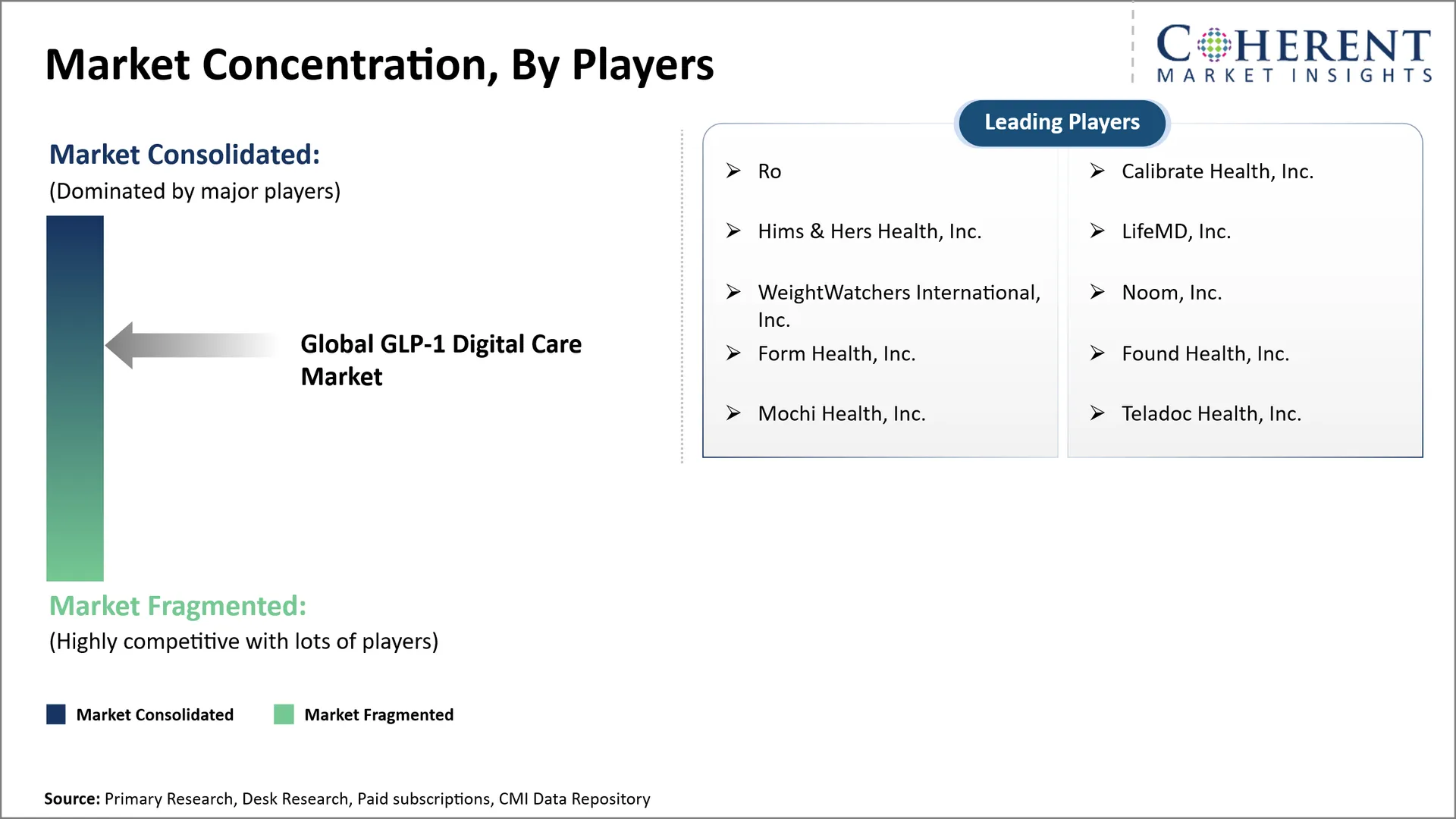
The global GLP-1 digital care market is characterized by competition between clinician-led virtual care, GLP-1 prescription and medication management, remote patient monitoring, customized nutrition, and behavioral coaching. The market players place a lot of value on the combination of clinical care and digital technology for providing better patient support, improving medication adherence and promoting long-term weight management. Competition depends on clinical expertise, platform accessibility, patient engagement, treatment tailoring, and partnerships with payers, employer, and clinician partners.
Key focus areas include
- Integrated digital platforms for prescribing GLP-1, medication management, and remote clinical assessment.
- Increase use of remote patient monitoring and use of digital solutions to log weight, glucose, treatment progress and medication adherence.
- Personalized nutrition, exercise, and behavioral coaching to achieve and maintain desired long term weight loss and optimized metabolism.
- Implementing the use of analytics based on artificial intelligence (AI) for assessing patients' risks, customizing patient treatment, and learning more about the factors that contribute to medication adherence issues.
- Modifications to partnerships with pharmaceutical companies, health plans, employers, and health care to bring the GLP-1 digital care programs to more people.
- Increased Patient engagement using mobile apps, connected devices, digital reminders and round the clock clinician support.
Market Report Scope
Global GLP-1 Digital Care Market Report Coverage | |||
Report Coverage | Details | ||
Base Year | 2025 | Market Size in 2026: | USD 1.08 Bn |
Historical Data For: | 2020 To 2024 | Forecast Period: | 2026 To 2033 |
Forecast Period 2026 To 2033 CAGR: | 16.0% | 2033 Value Projection: | USD 3.05 Bn |
Geographies covered: |
| ||
Segments covered: |
| ||
Companies covered: | Ro, Calibrate Health, Inc., Hims & Hers Health, Inc., LifeMD, Inc., WeightWatchers International, Inc., Noom, Inc., Form Health, Inc., Found Health, Inc., Mochi Health, Inc., Teladoc Health, Inc. | ||
Growth Drivers: |
| ||
Restraints & Challenges: |
| ||
Analyst Opinion (Expert Opinion)
- In the coming years, global GLP-1 digital care market will evolve from standalone medication-access platforms to rich, seamless technology-enabled, metabolic care ecosystems. In the near-term, market dynamics will be driven by greater access to combination therapies GLP-1 and other medications in addition to access enabled by individual patient benefit and uptake as well as digital support through remote patient monitoring, behavioral health management and continuous, personalized coaching. Hybrid models of care, providing a combination of in-clinic and in-home, virtual, comprehensive care will take hold.
- The greatest potential for revenue growth lies in obesity and weight management applications through clinician-enabled virtual care, as well as comprehensive medication management platforms. U.S. is the biggest opportunity driven by its matured telehealth landscape, high demand for GLP-1 weight-loss therapies and consumer openness towards subscription-based digital healthcare programs. India and China also hold long-term opportunity as the digital health system develops and accessible metabolic care service is in greater demand.
- In order to gain a competitive advantage market players should focus on integrated care platforms that bring together GLP-1 prescribing, medication management, remote monitoring and customized nutrition and behavioral coaching. Investments in artificial intelligence-based patient stratification, adherence monitoring and the early detection of treatment risks will help improve the quality of care and patient retention. Partnerships with health systems, payers, pharmaceutical companies and employers will help expand patient access, while other forms of differentiation will include pricing transparency, data security, strong clinical governance and clear proof of impact.
Speak to the analyst
Want personalized insights?
Take the findings above to one of our principal consultants, or have the report rebuilt around the segments, geographies and competitors you actually track.
Market Segmentation
- Care Model Insights (Revenue, USD Bn, 2021 - 2033)
- Clinician-Led Virtual Care
- Hybrid Clinical Care
- Digital Care and Coaching Programs
- Service Type Insights (Revenue, USD Bn, 2021 - 2033)
- GLP-1 Prescription and Medication Management
- Remote Patient Monitoring and Follow-Up
- Nutrition, Fitness, and Behavioral Support
- Patient Type Insights (Revenue, USD Bn, 2021 - 2033)
- Obesity and Weight Management
- Type 2 Diabetes
- Cardiometabolic Conditions
- Technology Insights (Revenue, USD Bn, 2021 - 2033)
- Software and Digital Platforms
- Connected Devices and Wearables
- Telehealth and Remote Monitoring Tools
- End User Insights (Revenue, USD Bn, 2021 - 2033)
- Individual Patient
- Healthcare Providers and Clinics
- Employers and Health Plans
- Others
- Regional Insights (Revenue, USD Bn, 2021 - 2033)
- North America
- U.S.
- Canada
- Latin America
- Brazil
- Argentina
- Mexico
- Rest of Latin America
- Europe
- Germany
- U.K.
- Spain
- France
- Italy
- Russia
- Rest of Europe
- Asia Pacific
- China
- India
- Japan
- Australia
- South Korea
- ASEAN
- Rest of Asia Pacific
- Middle East
- GCC Countries
- Israel
- Rest of Middle East
- Africa
- South Africa
- North Africa
- Central Africa
- North America
- Key Players Insights
- Ro
- Calibrate Health, Inc.
- Hims & Hers Health, Inc.
- LifeMD, Inc.
- WeightWatchers International, Inc.
- Noom, Inc.
- Form Health, Inc.
- Found Health, Inc.
- Mochi Health, Inc.
- Teladoc Health, Inc.
Sources
Primary Research Interviews
- Endocrinologists and Obesity Medicine Specialists
- GLP-1 Treatment Program Directors and Clinical Care Managers
- Digital Health Platform and Telehealth Specialists
- Remote Patient Monitoring and Metabolic Health Experts
Stakeholders
- GLP-1 Digital Care Platform Providers
- Pharmaceutical and Biotechnology Companies
- Telehealth and Virtual Healthcare Providers
- Remote Patient Monitoring and Wearable Device Providers
- End-use Sectors
- Individual Patients and Consumers
- Hospitals and Multispecialty Healthcare Systems
- Virtual Weight Management and Obesity Care Clinics
- Employers and Corporate Healthcare Programs
- Health Insurance Companies and Payers
- Regulatory & Health Bodies
- U.S. Food and Drug Administration (FDA)
- Centers for Medicare & Medicaid Services (CMS)
- European Medicines Agency (EMA)
- European Commission
- World Health Organization (WHO)
- Central Drugs Standard Control Organization (CDSCO), India
- National Medical Products Administration (NMPA), China
Databases
- ClinicalTrials.gov
- WHO International Clinical Trials Registry Platform (ICTRP)
- WHO Global Health Observatory (GHO)
- OECD Health Statistics
- International Diabetes Federation (IDF) Diabetes Atlas
Associations
- American Diabetes Association (ADA)
- The Obesity Society (TOS)
- Obesity Medicine Association (OMA)
- American Association of Clinical Endocrinology (AACE)
- European Association for the Study of Obesity (EASO)
- Digital Therapeutics Alliance (DTA)
Public Domain Sources
- U.S. Food and Drug Administration (FDA)
- Centers for Disease Control and Prevention (CDC)
- National Institutes of Health (NIH)
- World Health Organization (WHO)
- International Diabetes Federation (IDF)
- Ministry of Health and Family Welfare, India
- National Health Commission, China
Proprietary Elements
- CMI Data Analytics Tool
- Proprietary CMI Existing Repository of information for last 10 years.
Get access to 250+ pages report
Every segment, forecast, competitor profile and data table behind the analysis above — available for instant download.
- ESOMAR Member
- ISO 9001:2015 Certified
- D-U-N-S Registered
- GDPR & CCPA Compliant
Frequently Asked Questions
The global GLP-1 Digital Care market is estimated to be valued at USD 1.08 Bn in 2026 and is expected to reach USD 3.05 Bn by 2033.
Clinician-led virtual care dominates primarily due to the need for physician oversight for GLP-1 prescribing, dose titration, side effect management, and patient follow up.
GLP-1 digital care is the set of technology enabled services that support GLP-1 treatment via telehealth, medication management, remote monitoring, and personalized health coaching.
The CAGR of global GLP-1 digital care market is projected to be 16.0% from 2026 to 2033.
Rising adoption of GLP-1 therapies for obesity and type 2 diabetes management, and growing demand for virtual consultations, remote monitoring, and continuous patient support are the major factors driving the growth of the global GLP-1 digital care market.
High costs of digital care programs and limited insurance reimbursement coverage, and concerns regarding patient safety, medication misuse, and inadequate clinical supervision are the major factors hampering the growth of the global GLP-1 digital care market.
In terms of service type, GLP-1 prescription and medication management is estimated to dominate the market revenue share in 2026.