

Global Healthcare Decision Intelligence Market Size and Forecast – 2026 To 2033
The global healthcare decision intelligence market is expected to grow from USD 3,460.0 Mn in 2026 to USD 8,552.1 Mn by 2033, registering a compound annual growth rate (CAGR) of 13.8% from 2026 to 2033. The market for global healthcare decision intelligence is poised for significant expansion, fueled by the rising adoption of predictive AI across hospitals for clinical and operational decision-making.
According to the U.S. Office of the National Coordinator for Health Information Technology (ONC), 71% of the U.S. hospitals reported using predictive AI integrated into their electronic health records (EHR) in 2024, up from 66% in 2023. The increasing use of predictive AI for risk prediction, treatment recommendations, scheduling, and care management is strengthening demand for healthcare decision intelligence solutions.
Key Takeaways of the Global Healthcare Decision Intelligence Market
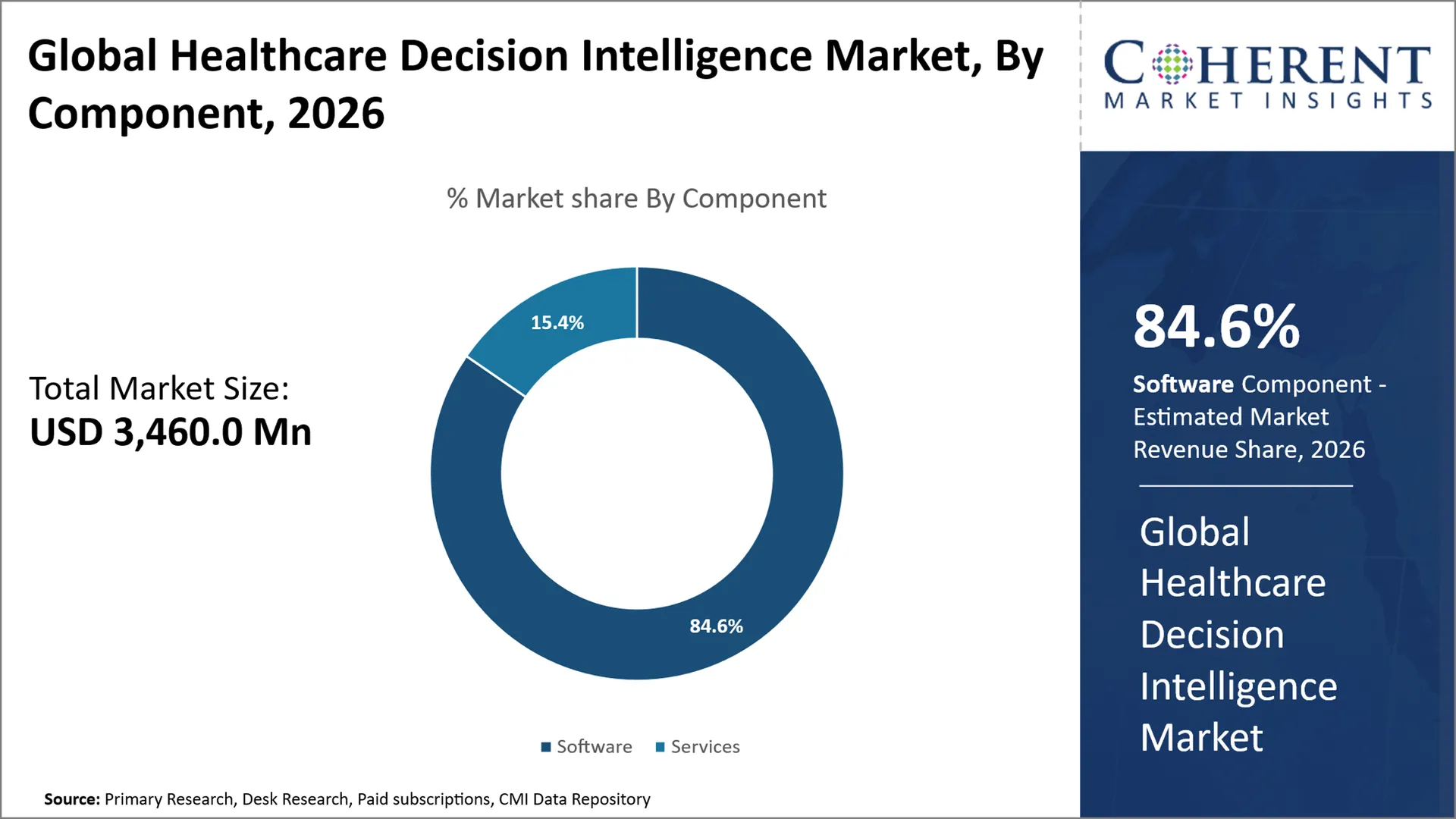
- Software is projected to hold 84.6% of the global healthcare decision intelligence market share in 2026, making it dominant component segment across Asia Pacific due to strengthening regulatory frameworks for the safe deployment of AI in clinical decision-making. For instance, in April 2026, Singapore’s Ministry of Health and Health Sciences Authority updated the Artificial Intelligence in Healthcare Guidelines (AIHGle 2.0), establishing responsibilities for developers, healthcare institutions, and professionals and introducing guidance on transparency, risk assessment, and AI deployment. These measures support the adoption of software-based AI solutions that augment clinical decision-making.
- Cloud-based is projected to hold 64.3% of the global healthcare decision intelligence market share in 2026, making it dominant deployment segment across Europe due to regulatory initiatives supporting access to interoperable health data for AI applications. For instance, the European Health Data Space (EHDS) framework provides a regulatory foundation for the secondary use of electronic health data to train, test, and evaluate AI-driven clinical decision-support systems, strengthening the data infrastructure required for scalable cloud-based decision intelligence.
- Clinical decision support is projected to hold 32.1% of the global healthcare decision intelligence market share in 2026, making it dominant application segment across Europe, specifically the UK due to increasing regulatory support for the safe deployment of AI-enabled clinical technologies. For instance, on September 10, 2026, the UK Medicines and Healthcare products Regulatory Agency (MHRA) published recommendations for a future AI-in-healthcare regulatory framework covering clinical practice, accountability, transparency, and system-wide assurance, while recommending clearer regulation of AI-enabled decision-support technologies.
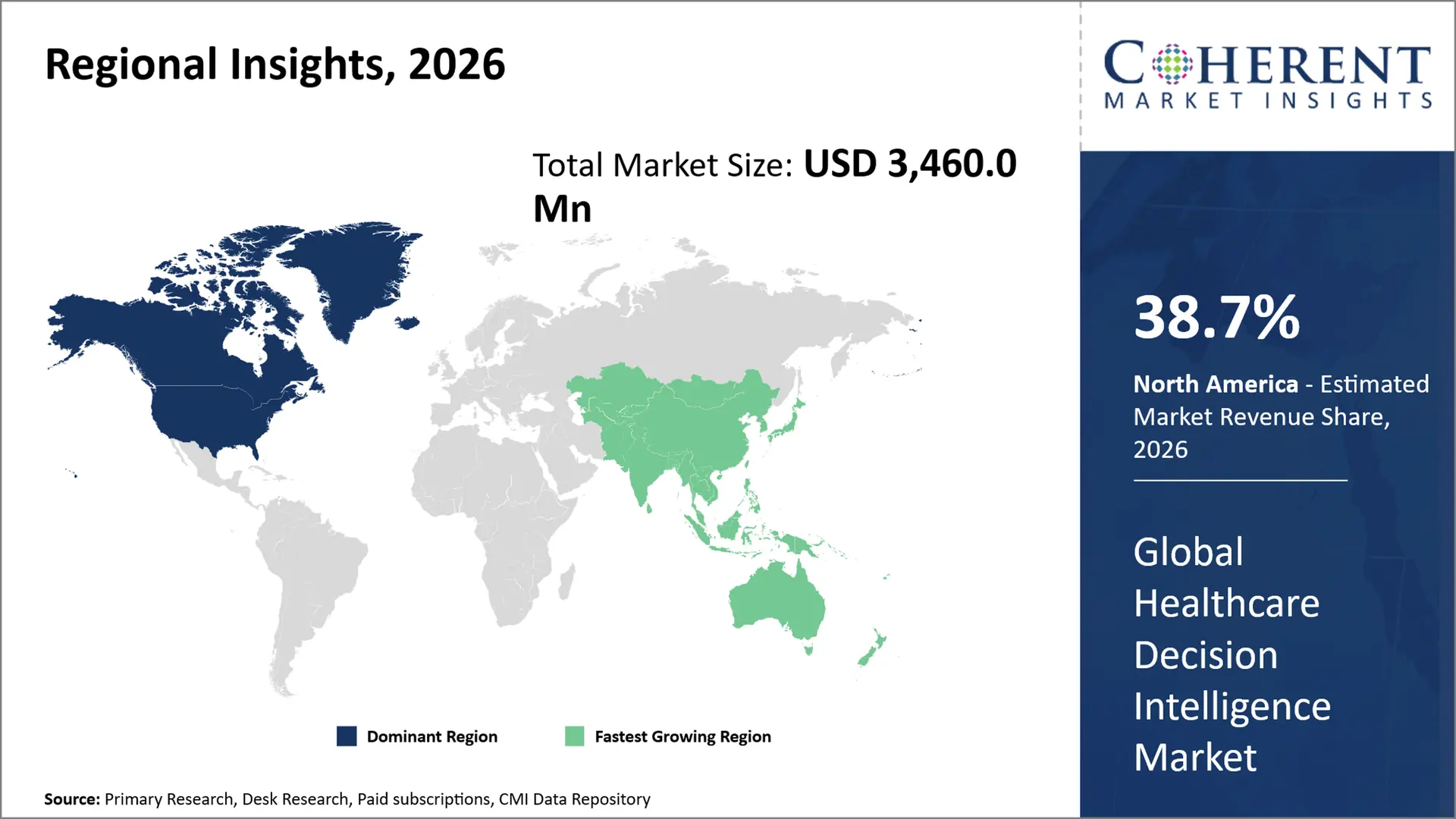
- North America market maintains dominance with an expected share of 38.7% in 2026, bolstered by its well-established health IT interoperability and regulatory infrastructure that facilitates the use of standardized data for AI-enabled decision-making. In July 2026, the U.S. Office of the National Coordinator for Health Information Technology (ONC) released USCDI Version 7, expanding standardized data elements to strengthen nationwide access, exchange, and use of electronic health information.
- Asia Pacific is expected to exhibit the fastest growth in the global healthcare decision intelligence market, registering an estimated CAGR of 18.8% during 2026–2033, driven by government-led AI strategies and the expansion of clinical decision-support infrastructure. For instance, in April 2026, India’s Ministry of Health and Family Welfare launched an ICMR-developed Clinical Decision-Support mobile application for Community Health Officers, providing structured clinical workflows, referral support, and informed decision-making at primary healthcare facilities.
Segmental Insights
Why Do Software Dominate the Global Healthcare Decision Intelligence Market?
Software is projected to hold the market share of 84.6% in 2026, due to its high capability to offer healthcare data integration, advanced analytics, and actionable clinical & operational recommendations. Additionally, regulatory actions for AI-enabled decisioning and healthcare data interoperability are one of the contributing factors for the segment. In April 2026, World Health Organization (WHO)/Europe reported that 74% of EU countries were using AI-assisted diagnostics, including applications that support clinical decision-making, demonstrating the increasing integration of software-based AI tools in healthcare systems.
- Current Industry Events of 2026
- Market Size Estimation
- Regional Breakdown
- Competitive Landscape
- Customer Intelligence
- Segmental Analysis
- Pricing Analysis
- Key Market Drivers, Challenges & Future Trends
- Customized Insights Section
Why Do Cloud-based Represent the Largest Deployment Segment in the Healthcare Decision Intelligence Market?
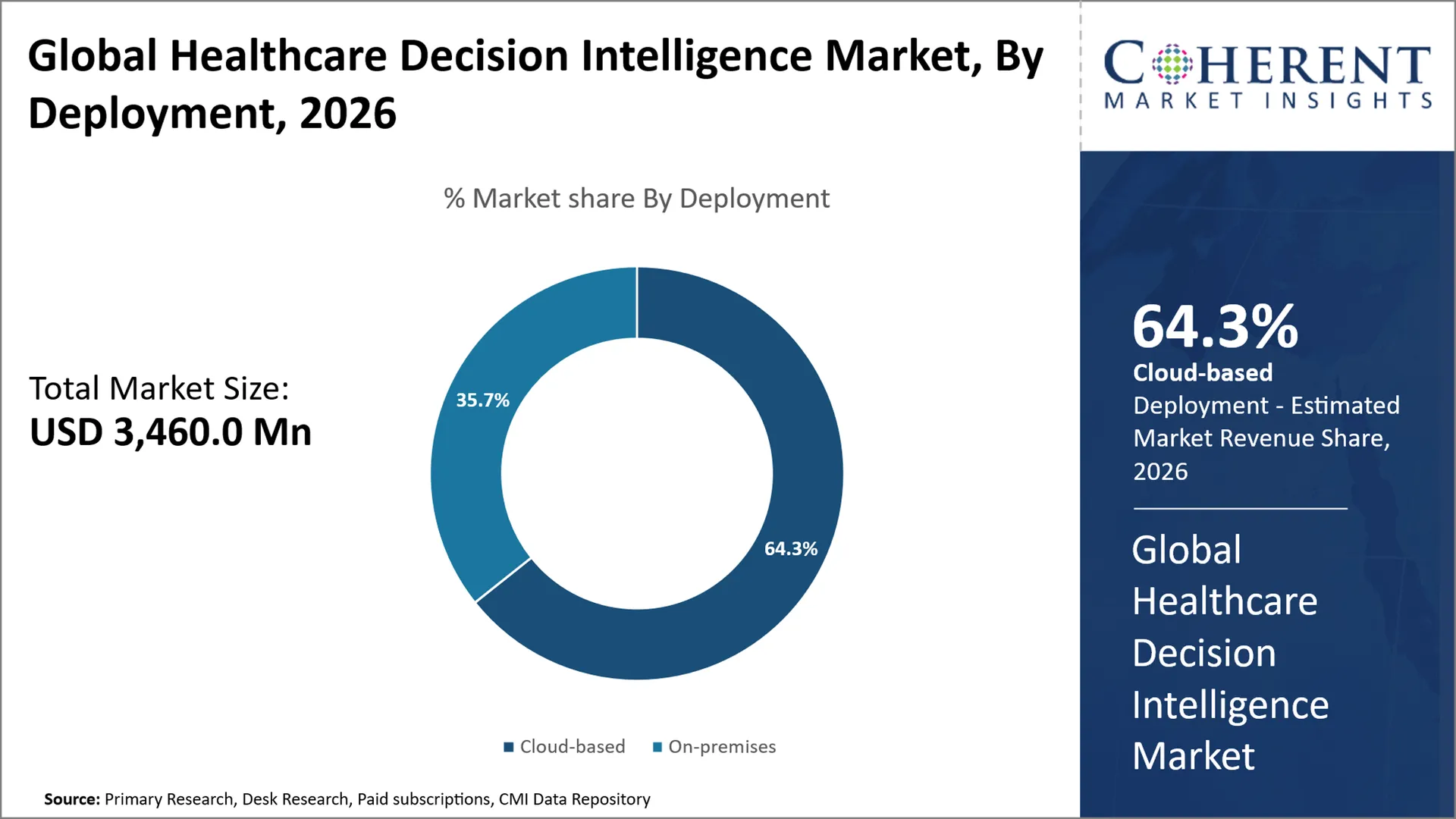
Cloud-based is projected to hold a market share of 64.3% in 2026, due to the ability of the solutions to be more scalable and provide centralized data access and enable secure data sharing among the healthcare organizations. For instance, in June 2026, the European Commission advanced with the European Health Data Space (EHDS), creating a common European digital infrastructure for the exchange and reuse of health data with the Health Data@EU platform. This enables interoperable data access across healthcare systems, providing the foundation for cloud decision intelligence applications.
Clinical Decision Support Segment Dominates the Global Healthcare Decision Intelligence Market
The clinical decision support segment is projected to hold a market share of 32.1% in 2026, as it can translate clinical and patient data into timely and personalized recommendations. The segment is also strengthened by regulatory efforts that seek to define safe and efficient healthcare structures for clinical decision-making via AI. For instance, in April 2026, Health Canada issued guidance on pre-market approval of medical devices using machine learning. The guidance covers clinical validation, risk management, transparency and post-market surveillance for clinical prediction and decision-making systems.
Current Events and their Impact
Current Events | Description and its Impact |
ONC Advances Interoperable Data Standards for Healthcare Decision Workflows (August 2026) |
|
WHO Outlines AI Use Across Evidence-Informed Health Policy Decisions (June 2026) |
|
U.S. FDA Clarifies Regulatory Framework for Clinical Decision Support Software (January 2026) |
|
Healthcare Decision Intelligence Market Dynamics
Market Drivers
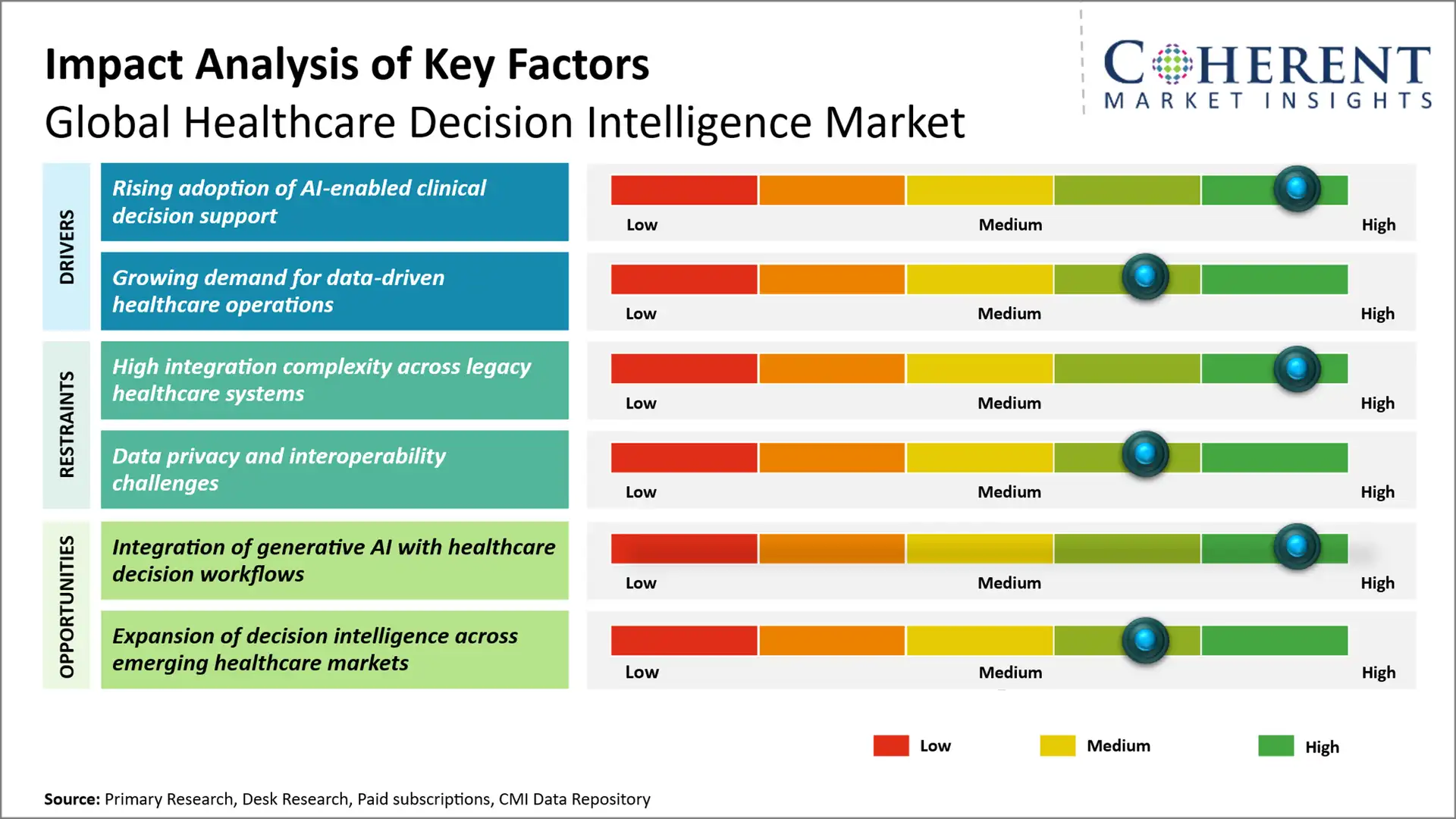
- Rising adoption of AI-enabled clinical decision support: AI-enabled clinical decision support is gaining adoption as healthcare providers seek to use patient-specific data, clinical evidence, and predictive analytics to support faster and more informed decisions. Integration of these tools into digital healthcare workflows is expanding their role across diagnosis, treatment planning, risk assessment, and care management. For instance, in January 2026, the U.S. FDA issued its final Clinical Decision Support Software guidance, clarifying the regulatory treatment of different CDS software functions and providing greater clarity for developers and healthcare stakeholders.
- Growing demand for data-driven healthcare operations: Healthcare organizations are increasingly using integrated clinical, financial, and operational data to improve resource allocation, patient flow, workforce planning, and administrative efficiency. Decision intelligence enables healthcare leaders to convert fragmented data into actionable insights and support faster operational decisions across care settings. For instance, on September 9, 2026, Cleveland Clinic partnered with Luminai to deploy AI automation across complex health-system operations, initially targeting referral processing and other workflows involving unstructured data and multiple manual hand-offs.
- Growing demand for data-driven healthcare operations: Healthcare organizations are increasingly using real-time operational and patient data to improve capacity planning, patient flow, staffing, resource utilization, and workflow efficiency. Decision intelligence enables healthcare leaders to identify emerging bottlenecks and translate operational signals into timely, actionable decisions. For instance, on September 15,2026, GE HealthCare launched CareIntellect for Operations, an AI-enabled platform that analyzes patient and operational data to forecast hospital capacity constraints up to 72 hours in advance and recommend actions for improving throughput and resource utilization.
Emerging Trends
- Generative AI-powered decision support: Generative AI is increasingly being integrated into healthcare decision platforms to synthesize EHRs, clinical literature, imaging, and patient data into contextual recommendations. This is shifting decision intelligence toward conversational and real-time clinical workflows.
- Real-time predictive and prescriptive analytics: Healthcare organizations are moving beyond retrospective analytics toward systems that continuously predict patient risks and recommend appropriate interventions. Integration of real-time clinical, operational, and patient-generated data is expanding proactive decision-making.
- Decision intelligence across payer and administrative workflows: Decision intelligence is expanding beyond clinical applications into prior authorization, claims processing, utilization management, revenue-cycle optimization, and resource allocation. AI-enabled automation is increasingly being used to support faster and more consistent administrative decisions.
Regional Insights
Why is North America a Strong Market for Healthcare Decision Intelligence?
North America leads the global healthcare decision intelligence market, accounting for an estimated 38.7% share in 2026, due to well-established healthcare information technology infrastructure, high integration of artificial intelligence, machine learning and analytics, and greater regulation and government support to digital health. Besides, high adoption rate of interconnected electronic health records (EHRs) and data-driven healthcare infrastructure drives the uptake of real-time clinical and operational decision making.
Moreover, the expansion of AI, automation and data management capabilities for health information exchange, interoperable systems and risk management by the government, further support region’s large adoption of the solutions. For instance, on September 21, 2026, the U.S. National Institutes of Health (NIH) announced the SCHARE Grand Challenge to build interoperable, AI-enabled health data ecosystems and analytics that produce actionable insights for chronic disease prevention, precision treatment and population health.
Why Does Asia Pacific Healthcare Decision Intelligence Market Exhibit High Growth?
Asia Pacific is expected to exhibit the fastest growth in the global healthcare decision intelligence market, registering an estimated CAGR of 18.8% during 2026–2033. The region is projected to account for 22.4% of the global market in 2026, attributed to the growing healthcare infrastructure, rise in digitalization and government initiatives in key economies such as China, India, Japan, and South Korea. Increasing adoption of digital healthcare systems due to rising investment in healthcare IT, smart hospital concept and need for affordable healthcare delivery is expected to boost adoption of AI-enabled decision intelligence solutions.
Moreover, digital health programs and government healthcare modernization initiatives are creating a strong digital healthcare foundation in the region. For instance, in May 2026, Singapore Ministry of Health committed USD 2.5 billion over five years for the RIE2030 national plan to advance translational and clinical research, such as artificial intelligence models trained on local clinical data to identify risks to a patient and to recommend suitable care pathways.
Global Healthcare Decision Intelligence Market Outlook for Key Countries
Why is the U.S. Leading Innovation and Adoption in the Healthcare Decision Intelligence Market?
The U.S. is expected to dominate the healthcare decision intelligence market, owing to the presence of significantly high EHR infrastructure and integration of AI-based predictive analytics in clinical workflows. The market is driven by the presence of a high volume of data-driven tools for risk stratification, treatment recommendations, care management, hospital management, and others. In addition, high level of interoperability among different healthcare information systems is expected to enable decision intelligence platforms to integrate clinical, operational, and claims data to make real-time decisions.
Is Japan a Favorable Market for Healthcare Decision Intelligence Market?
Japan is an ideal market for healthcare decision intelligence owing to the aging population, a well-developed healthcare infrastructure and the use of digital health technologies. Moreover, the growing use of artificial intelligence and data-driven healthcare can lead to better clinical decisions, care coordination and treatment of age-related and chronic illnesses.
Is China Emerging as a Key Growth Hub for the Healthcare Decision Intelligence Market?
China is gradually emerging as the newest growth driver for the healthcare decision intelligence market driven by the accelerating rate of healthcare digitization, the increasing deployment of AI and government-sponsored efforts to transform healthcare. Furthermore, the rising prevalence of AI in medical imaging, clinical decision support and hospital operations implies that there is scope for data-enabled decision intelligence throughout the healthcare system.
Why Does Germany Top the European Healthcare Decision Intelligence Market?
Germany leads the European healthcare decision intelligence market due to its well-developed infrastructure and progress in digital health, and this advantage will probably further improve as it increases the inclusion of electronic health information in the delivery of care. Additionally, country's health IT sector is well suited to support the integration of AI-based clinical decision support tools, patient stratification and prediction of health problems, data analytics-enhanced hospital management, and interoperable electronic systems.
Is Healthcare Decision Intelligence Market Developing in UK?
The UK healthcare decision intelligence market is driven by increasing adoption of AI, predictive analytics and digital health solutions for delivering care to NHS. The country’s focus on interoperable health data and intelligent clinical workflows through AI is expected to enable use cases in risk stratification, diagnosis, treatment decision & planning and resource management.
Healthcare AI Use Cases Relevant to Decision Intelligence, by Healthcare Sector
Healthcare Sector | Key Decision Intelligence Use Cases |
Hospitals & Health Systems | Clinical decision support; patient risk prediction; workflow and resource optimization |
Healthcare Payers | Claims decisioning; utilization management; risk stratification; prior authorization |
Pharmaceutical & Biotechnology Companies | Drug discovery; clinical-trial optimization; real-world evidence analysis |
Diagnostic & Clinical Laboratories | Diagnostic interpretation; predictive analytics; test utilization optimization |
Government & Public Health Organizations | Population health surveillance; disease-risk prediction; resource allocation |
How is the integration of generative AI with healthcare decision workflows creating new growth opportunities in the healthcare decision intelligence market?
In healthcare decision intelligence, generative AI may open new possibilities by enabling real time compilation of EHRs, clinical notes, imaging, and other complex data for healthcare providers. It will likely bring decision support to EHR applications and decision-making for diagnoses and treatment plans, and enable case-based risk prediction and evaluation. In addition, generative AI will likely extend decision intelligence applications for drug discovery, clinical research, and healthcare administration. For instance, in June 2026, a pragmatic clinical trial across 16 primary-care facilities in Kenya published by the Springer Nature Limited, evaluated the use of a large language model-enabled clinical decision-support system embedded within electronic medical records, demonstrating the potential for generative AI to be used in real-world clinical decision-making workflows.
Market Players, Key Development, and Competitive Landscape
Key Developments
- In August 2026, Definitive Healthcare, LLC launched an early adopter program for its new AI-powered healthcare intelligence platform. The platform combines claims, provider, consumer and expert data with conversational AI to generate actionable insights. It is designed to help organizations identify market opportunities, optimize sales territories, prioritize prospects and make faster, data-driven decisions.
- In July 2026, Lyric acquired Concert to expand its AI-powered Lyric42 Healthcare Decision Intelligence Platform. The acquisition adds Concert’s technology for translating clinical and administrative policies into machine-readable rules and real-time decisions. The combined capabilities are intended to support more transparent, evidence-based payment and clinical-policy decisions for health plans.
- In February 2026, HealthEdge Software, Inc. launched the GuidingCare Decision Intelligence Ecosystem, integrating Anterior, Latitude Health, and Case Health AI to support AI-driven utilization-management and prior-authorization decisions for health plans. The ecosystem uses secure APIs and human-in-the-loop validation to improve decision automation, transparency, and auditability.
- In January 2026, Arya Health announced an agreement to acquire HippoAI, an AI-powered clinical decision-support platform. The acquisition combines HippoAI’s clinician-trained AI and medical knowledge engine with Arya’s EMR, enabling real-time, evidence-based insights for diagnosis and treatment decisions while also supporting administrative and operational workflows.
Competitive Landscape
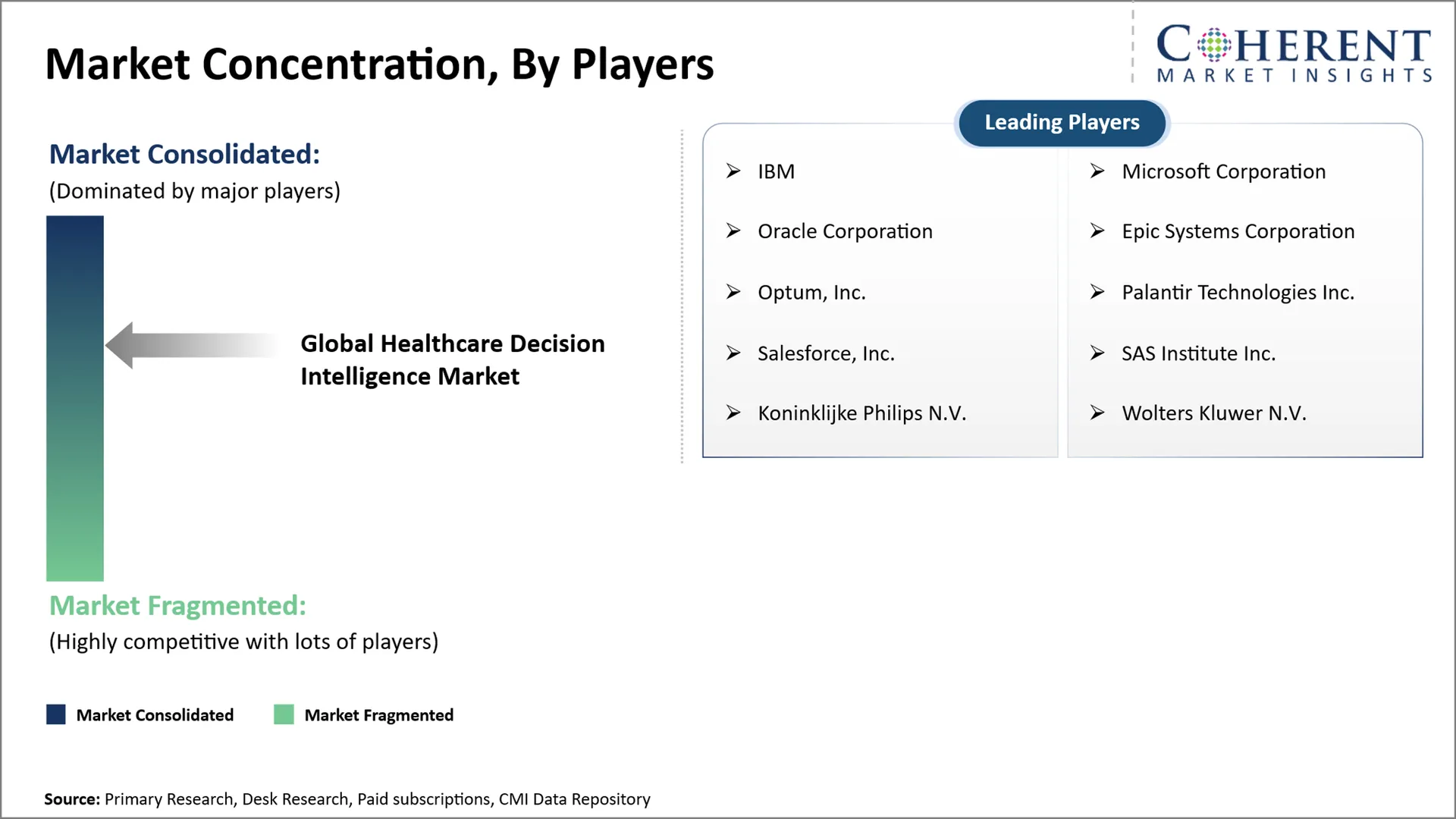
The global healthcare decision intelligence market is moderately competitive, with market dynamics shaped by advances in AI-powered decision support, predictive analytics, real-world evidence integration, and intelligent healthcare workflows. Market participants are increasingly focusing on converting complex clinical and operational data into actionable recommendations, improving decision accuracy, and expanding decision intelligence across healthcare stakeholders. Key focus areas include:
- Development of AI-powered clinical decision support and predictive analytics solutions
- Integration of real-world evidence, EHR, claims, and patient-generated data
- Expansion of decision intelligence across clinical, operational, financial, and population health applications
- Integration of generative AI and large language models into healthcare decision workflows
- Enhancement of explainability, interoperability, and real-time decision support capabilities
Market Report Scope
Healthcare Decision Intelligence Market Report Coverage | |||
Report Coverage | Details | ||
Base Year | 2025 | Market Size in 2026: | USD 3,460.0 Mn |
Historical Data For: | 2020 To 2024 | Forecast Period: | 2026 To 2033 |
Forecast Period 2026 To 2033 CAGR: | 13.8% | 2033 Value Projection: | USD 8,552.1 Mn |
Geographies covered: |
| ||
Segments covered: |
| ||
Companies covered: | IBM, Microsoft Corporation, Oracle Corporation, Epic Systems Corporation, Optum, Inc., Palantir Technologies Inc., Salesforce, Inc., SAS Institute Inc., Koninklijke Philips N.V., Wolters Kluwer N.V. | ||
Growth Drivers: |
| ||
Restraints & Challenges: |
| ||
Analyst Opinion (Expert Opinion)
- In the coming years, global healthcare decision intelligence market is expected to evolve from standalone analytics and clinical decision-support tools toward integrated, AI-driven decision ecosystems that combine clinical, operational, financial, and patient data. Generative AI, predictive modeling, and real-time data integration will increasingly enable healthcare organizations to move from retrospective analysis toward continuous, proactive decision-making across the care pathway.
- The maximum opportunities are foreseen within AI-powered clinical decision support for hospitals and health systems in the U.S, particularly solutions that integrate EHR data with real-time patient information to support diagnosis, risk stratification, treatment selection, and care-pathway optimization. This application-country combination offers a broad addressable use case while allowing providers to extend decision intelligence across multiple clinical workflows.
- In order to gain a competitive advantage, market players should prioritize workflow-integrated, explainable, and interoperable AI rather than standalone analytics products. Building modular platforms that can connect with existing EHR and claims infrastructure, provide transparent recommendations, maintain human oversight, and demonstrate measurable improvements in clinical and operational outcomes can help differentiate offerings and strengthen long-term customer adoption.
Speak to the analyst
Want personalized insights?
Take the findings above to one of our principal consultants, or have the report rebuilt around the segments, geographies and competitors you actually track.
Market Segmentation
- Component Insights (Revenue, USD Mn, 2021 - 2033)
- Software
- Services
- Deployment Insights (Revenue, USD Mn, 2021 - 2033)
- Cloud-based
- On-premises
- Application Insights (Revenue, USD Mn, 2021 - 2033)
- Clinical Decision Support
- Population Health Management
- Operational Decision Support
- Financial and Revenue Management
- Supply Chain and Resource Management
- Others
- End User Insights (Revenue, USD Mn, 2021 - 2033)
- Hospitals and Health Systems
- Pharmaceutical and Biotechnology Companies
- Payers and Insurance Providers
- Diagnostic and Research Laboratories
- Others
- Regional Insights (Revenue, USD Mn, 2021 - 2033)
- North America
- U.S.
- Canada
- Latin America
- Brazil
- Argentina
- Mexico
- Rest of Latin America
- Europe
- Germany
- U.K.
- Spain
- France
- Italy
- Russia
- Rest of Europe
- Asia Pacific
- China
- India
- Japan
- Australia
- South Korea
- ASEAN
- Rest of Asia Pacific
- Middle East
- GCC Countries
- Israel
- Rest of Middle East
- Africa
- South Africa
- North Africa
- Central Africa
- North America
- Key Players Insights
- IBM
- Microsoft Corporation
- Oracle Corporation
- Epic Systems Corporation
- Optum, Inc.
- Palantir Technologies Inc.
- Salesforce, Inc.
- SAS Institute Inc.
- Koninklijke Philips N.V.
- Wolters Kluwer N.V.
Sources
Primary Research Interviews
- Chief Medical Information Officers (CMIOs) and clinical informatics leaders implementing AI-enabled decision-support systems
- Hospital and health-system executives overseeing clinical, operational, and population-health analytics
- Payer medical directors and utilization-management leaders using AI for clinical and administrative decisions
- Healthcare AI, predictive analytics, and decision-intelligence platform providers
- Pharmaceutical and biotechnology executives involved in real-world evidence, clinical analytics, and AI-driven decision-making
Stakeholders
- Healthcare Decision Intelligence platform and AI analytics developers
- EHR, healthcare data interoperability, and health information exchange providers
- Hospitals, health systems, and integrated delivery networks
- Healthcare payers and insurance organizations
- Pharmaceutical and biotechnology companies
- Diagnostic laboratories and healthcare research organizations
- Government agencies, regulators, and healthcare technology standards organizations
- End-use Sectors
- Hospitals & Health Systems
- Healthcare Payers & Insurance Providers
- Pharmaceutical & Biotechnology Companies
- Diagnostic & Clinical Laboratories
- Research & Academic Institutions
- Government & Public Health Organizations
- Other Healthcare Organizations
- Regulatory & Health Bodies
- U.S. Food and Drug Administration (FDA) – artificial intelligence, clinical decision-support software, and medical-device technologies
- Centers for Medicare & Medicaid Services (CMS), U.S. – healthcare data, interoperability, quality measurement, and AI-enabled healthcare initiatives
- Office of the National Coordinator for Health Information Technology (ONC), U.S. – EHR interoperability, health IT standards, and algorithm transparency
- European Commission – artificial intelligence, digital health, health data, and healthcare technology regulation
- Medicines and Healthcare products Regulatory Agency (MHRA), UK – AI-enabled medical devices, software, and digital health technologies
- Pharmaceuticals and Medical Devices Agency (PMDA), Japan – AI-enabled medical devices and software-based healthcare technologies
Databases
- ClinicalTrials.gov
- WHO International Clinical Trials Registry Platform (ICTRP)
- Scopus
- Web of Science
- FDA Medical Device Databases
- CMS Medicare & Medicaid Data
- WHO Global Health Observatory (GHO)
Journals
- Journal of the American Medical Informatics Association (JAMIA)
- Journal of Biomedical Informatics
- npj Digital Medicine
- The Lancet Digital Health
- Journal of Medical Internet Research (JMIR)
- BMC Medical Informatics and Decision Making
Associations
- Healthcare Information and Management Systems Society (HIMSS)
- American Medical Informatics Association (AMIA)
- Health Level Seven International (HL7)
- College of Healthcare Information Management Executives (CHIME)
- American Health Information Management Association (AHIMA)
- American Medical Association (AMA)
Public Domain Sources
- U.S. Food and Drug Administration (FDA) – artificial intelligence, clinical decision-support software, and medical-device regulatory information
- Centers for Medicare & Medicaid Services (CMS) – healthcare data, interoperability, healthcare quality, and technology initiatives
- Office of the National Coordinator for Health Information Technology (ONC) – EHR interoperability, health IT standards, and health information technology
- National Institutes of Health (NIH) – artificial intelligence, biomedical informatics, clinical research, and healthcare data
- World Health Organization (WHO) – digital health, artificial intelligence, health data, and healthcare systems
- European Commission – artificial intelligence, digital health, health data, and healthcare technology information
- Organisation for Economic Co-operation and Development (OECD) – healthcare AI adoption, digital health, health data, and interoperability
Proprietary Elements
- CMI Data Analytics Tool, Proprietary CMI Existing Repository of information for last 10 years.
Get access to 250+ pages report
Every segment, forecast, competitor profile and data table behind the analysis above — available for instant download.
- ESOMAR Member
- ISO 9001:2015 Certified
- D-U-N-S Registered
- GDPR & CCPA Compliant
Frequently Asked Questions
The global healthcare decision intelligence market is estimated to be valued at USD 3,460.0 Mn in 2026 and is expected to reach USD 8,552.1 Mn by 2033.
Software dominates due to the growing adoption of AI-powered platforms for clinical decision support, predictive analytics, and healthcare workflow optimization.
Healthcare decision intelligence uses AI, analytics, and healthcare data to generate actionable insights that support faster, evidence-based clinical and operational decisions.
The CAGR of global healthcare decision intelligence market is projected to be 13.8% from 2026 to 2033.
Rising adoption of AI-enabled clinical decision support, and growing demand for data-driven healthcare operations are the major factors driving the growth of the global healthcare decision intelligence market.
High integration complexity across legacy healthcare systems, and data privacy and interoperability challenges are the major factors hampering the growth of the global healthcare decision intelligence market.
In terms of deployment, cloud-based is estimated to dominate the market revenue share in 2026.