

Global Heart Failure POC and LOC Devices Market Size and Forecast – 2026 To 2033
The global heart failure POC and LOC devices market is expected to grow from USD 185.7 Mn in 2026 to USD 498.4 Mn by 2033, registering a compound annual growth rate (CAGR) of 15.1% from 2026 to 2033. The market for global heart failure POC and LOC devices is poised for significant expansion, fueled by the rising burden of heart failure and the growing need for timely diagnosis and monitoring.
According to the American Heart Association (AHA), a June 2026 international consensus update estimates that more than 64 million adults globally currently have heart failure, with prevalence continuing to rise due to aging populations and increasing obesity, type 2 diabetes, and hypertension. This highlights the growing need for rapid, accessible, and reliable heart-failure diagnostic solutions, supporting demand for POC and LOC devices across healthcare settings.
Key Takeaways of the Global Heart Failure POC and LOC Devices Market
- Point-of-Care (POC) devices are projected to hold 63.6% of the global heart failure POC and LOC devices market share in 2026, making it dominant device type segment, across North America due to established decentralized cardiac-testing infrastructure and strong clinical adoption of rapid biomarker testing. The U.S. Centers for Medicare & Medicaid Services (CMS) revised its BNP Testing coverage policy effective February 2026, recognizing rapid BNP/NT-proBNP measurement as useful for establishing or excluding heart failure and assessing disease severity in patients with acute dyspnea, supporting demand for rapid cardiac diagnostic testing.
- Proteomic testing is projected to hold 50.7% of the global heart failure POC and LOC devices market share in 2026, making it dominant test type segment, across Europe due to established biomarker-led heart-failure diagnostic pathways. In September 2025, the U.K. National Institute for Health and Care Excellence (NICE) updated its heart-failure quality standard requiring NT-proBNP measurement for adults presenting with suspected heart failure in primary care and requiring commissioners to ensure testing availability.
- BNP/NT-proBNP are projected to hold 57.8% of the global heart failure POC and LOC devices market share in 2026, making it dominant biomarker segment, with Asia Pacific positioned for strong growth as natriuretic-peptide testing becomes increasingly embedded in heart-failure diagnosis and risk assessment. For instance, Japan’s 2025 JCS/JHFS Heart Failure Guideline gives a Class I, Level A recommendation for BNP or NT-proBNP measurement to support heart-failure diagnosis or exclusion and for risk stratification, while also supporting its use to guide referral and optimize treatment in selected patients.
- North America market maintains dominance with an expected share of 47.6% in 2026, bolstered by advanced cardiovascular research infrastructure and strong public-private investment in heart-failure diagnostics and precision medicine. For instance, the NIH’s National Heart, Lung, and Blood Institute (NHLBI) launched the Accelerating Medicines Partnership Heart Failure (AMP HF) in September 2022, bringing together the NHLBI, FDA, and private-sector partners to develop data-driven approaches using clinical data, imaging, multi-omics, and biomarkers to improve heart-failure diagnosis and treatment.
- Asia Pacific is expected to exhibit the fastest growth in the global heart failure POC and LOC devices market, registering an estimated CAGR of 18.7% during 2026–2033, driven by expanding cardiovascular disease prevention programs, strengthening early-diagnosis infrastructure, and increasing access to cardiac diagnostic services. For instance, in October 2023, China’s National Health Commission and 13 other government departments launched the Healthy China Action – Cardiovascular Disease Prevention and Control Action (2023–2030), targeting the establishment of a nationwide cardiovascular disease prevention and early-diagnosis system by 2030.
Segmental Insights
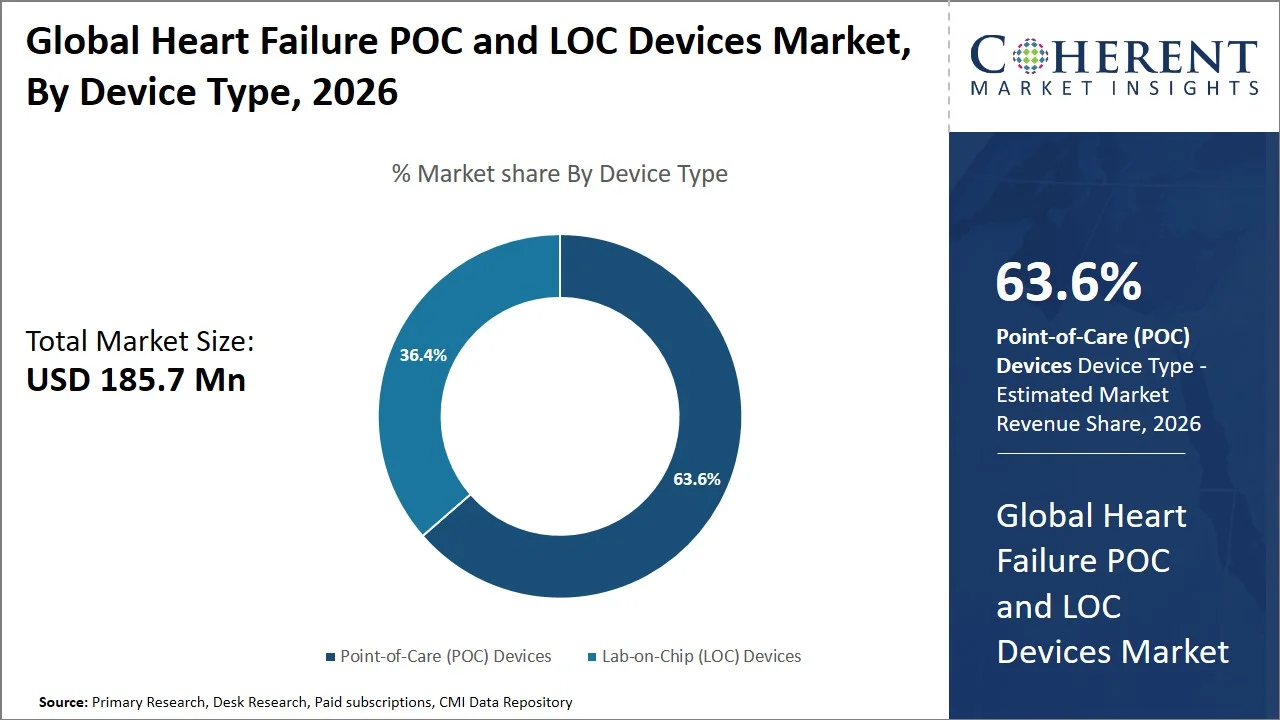
Why Do Point-of-Care (POC) Devices Dominate the Global Heart Failure POC and LOC Devices Market?
Point-of-Care (POC) devices are projected to hold the market share of 63.6% in 2026, owing to quick turnaround times, portability, and ability to provide cardiac biomarker results at the point of care. These can be used in emergency and decentralized and outpatient conditions, increasing the speed of clinical decisions and treatment, while decreasing reliance on central laboratories. For instance, the Abbott i-STAT BNP Cartridge allows rapid quantitative measurement of BNP on 17 L of whole blood or plasma and is intended as an aid in the diagnosis and assessment of congestive heart failure.
- Current Industry Events of 2026
- Market Size Estimation
- Regional Breakdown
- Competitive Landscape
- Customer Intelligence
- Segmental Analysis
- Pricing Analysis
- Key Market Drivers, Challenges & Future Trends
- Customized Insights Section
Why Does Proteomic Testing Represent the Largest Test Type Segment in the Heart Failure POC and LOC Devices Market?
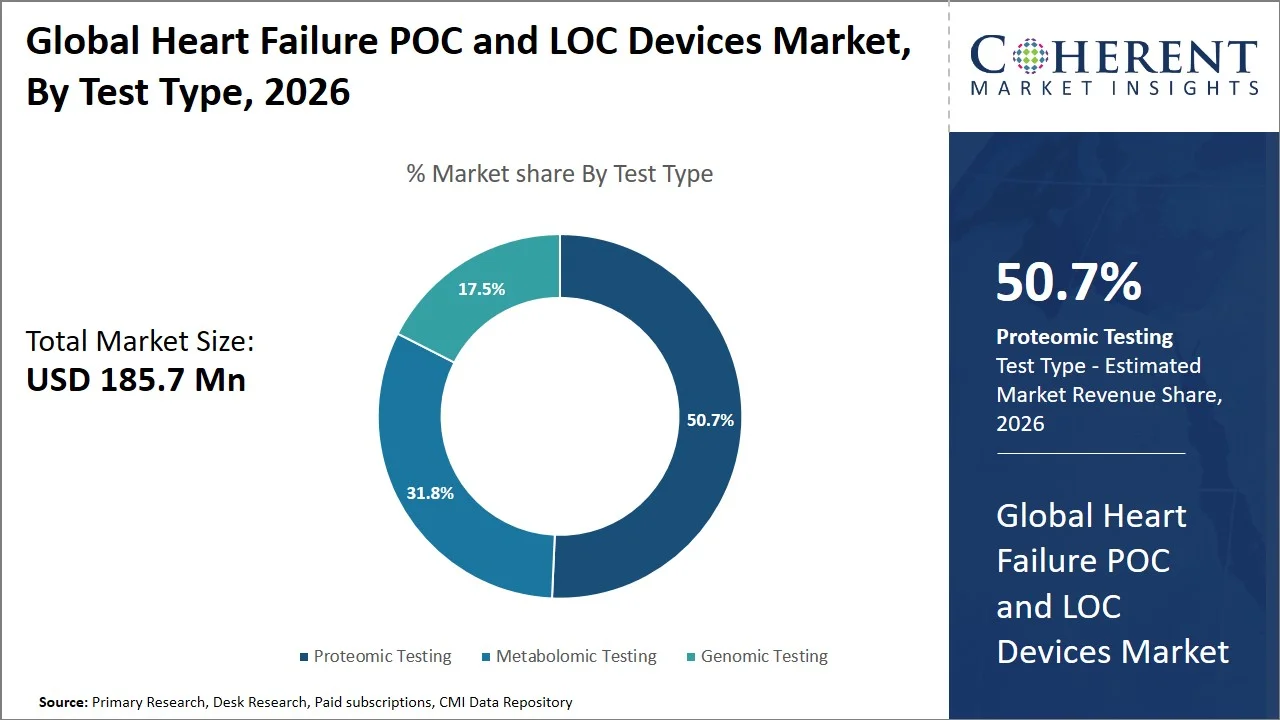
Proteomic testing is projected to hold a market share of 50.7% in 2026, owing to the clinical relevance of protein biomarkers including BNP and NT-proBNP for heart failure diagnosis and prediction. Also, their rapid measurability using minimal sample blood samples makes it feasible for inclusion in smaller sized POC devices with in vitro connectivity. For instance, the LumiraDx NT-proBNP test provides rapid and quantitative measurements of NT-proBNP in capillary/venous whole blood and plasma using active microfluidics, giving results at the point of care in approximately 12 minutes. (Source: F. Hoffmann-La Roche Ltd.)
BNP/NT-proBNP Segment Dominates the Global Heart Failure POC and LOC Devices Market
The BNP/NT-proBNP segment is projected to hold a market share of 57.8% in 2026, as these biomarkers are proven for ruling out, and risk stratum for heart failure. Its robustness and use in rapid whole blood testing format supported by standardized immunoassays ensures its adoption in different decentralized point care and laboratory settings. For instance, in June 2026, a study testing the Quidel Triage True NT-proBNP POC assay published by Oxford University Press, found a good correlation compared with a central laboratory assay and obtained quantitative results from whole blood with a turnaround time below 18 minutes without the need for centrifugation and central laboratory setup.
Current Events and their Impact
Current Events | Description and its Impact |
India Expanded National NCD Screening Infrastructure (August 2025) |
|
UK Expansion of NT-proBNP Point-of-Care Testing (June 2025) |
|
Malaysia Integrated Point-of-Care NT-proBNP Testing Protocol (February 2025) |
|
Heart Failure POC and LOC Devices Market Dynamics
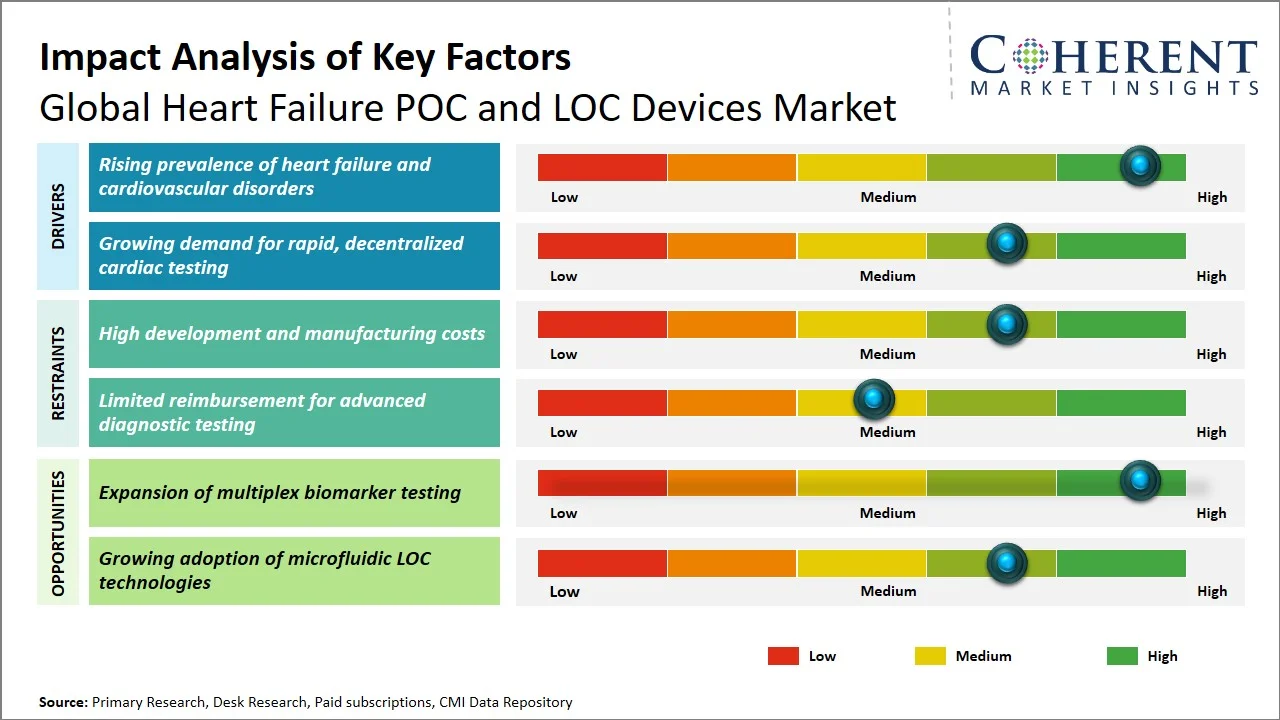
Market Drivers
Rising prevalence of heart failure and cardiovascular disorders
The increasing prevalence of heart failure and underlying cardiovascular risk factors is expanding the patient pool requiring early diagnosis, disease monitoring, and timely treatment, thereby supporting demand for rapid POC and LOC cardiac diagnostic technologies. The growing concentration of multiple risk factors among older adults further strengthens the need for accessible and decentralized testing, particularly for high-risk populations. For instance, the U.S. CDC’s September 2025 National Health and Nutrition Examination Survey found that 28.7% of U.S. adults had two or more cardiovascular disease risk factors during August 2021–August 2023, while the proportion increased to 32.7% among adults aged 60 years and older. This expanding cardiovascular risk burden supports greater demand for rapid cardiac biomarker testing and monitoring solutions.
Growing demand for rapid, decentralized cardiac testing
The shift toward decentralized healthcare is increasing demand for rapid cardiac testing that can deliver actionable results closer to patients and reduce dependence on centralized laboratories. POC testing is particularly valuable in primary care, community diagnostic centers, emergency settings, and virtual-care pathways where faster heart-failure assessment can accelerate specialist referral and treatment. For instance, in December 2023, NHS England issued guidance requiring GPs to have direct access to NT-proBNP blood testing for patients with suspected heart failure and set a target of one week from referral to testing, with results available within 48 hours. The guidance specifically promotes NT-proBNP as a triage tool for echocardiography to enable earlier diagnosis.
Increasing need for home-based heart failure monitoring
The growing need for post-discharge monitoring and early identification of heart-failure deterioration is creating opportunities for compact POC and LOC devices that can measure cardiac biomarkers outside conventional laboratory settings. Portable and potentially wearable platforms can support more frequent testing while reducing dependence on repeated hospital visits, particularly among high-risk patients. For instance, in 2025, the U.S. National Institutes of Health (NIH) funded an SBIR project to develop a continuous molecular monitor for heart failure capable of measuring NT-proBNP and potassium during the first 30–90 days after hospital discharge. The project specifically aims to enable decentralized and home-based monitoring of treatment response and adverse events.
Emerging Trends
Increasing adoption of multiplex biomarker testing
POC and LOC platforms are increasingly evolving from single-analyte testing toward multiplex detection of NT-proBNP, troponin, electrolytes, and other cardiac biomarkers from a single small-volume sample. This enables more comprehensive heart-failure assessment while reducing testing time and sample requirements.
Integration of microfluidics with miniaturized biosensors
Advances in microfluidic cartridges, electrochemical biosensors, and integrated semiconductor technologies are enabling compact platforms capable of laboratory-like analysis using finger-prick blood samples. These technologies are improving portability, turnaround time, and suitability for decentralized heart-failure testing.
Integration of POC testing with mobile and remote monitoring
NT-proBNP POC testing is increasingly being linked with mobile health and remote-care workflows, allowing results to support screening, diagnosis, and follow-up outside conventional hospital laboratories. This trend is particularly relevant for chronic heart-failure management and post-discharge monitoring.
Regional Insights
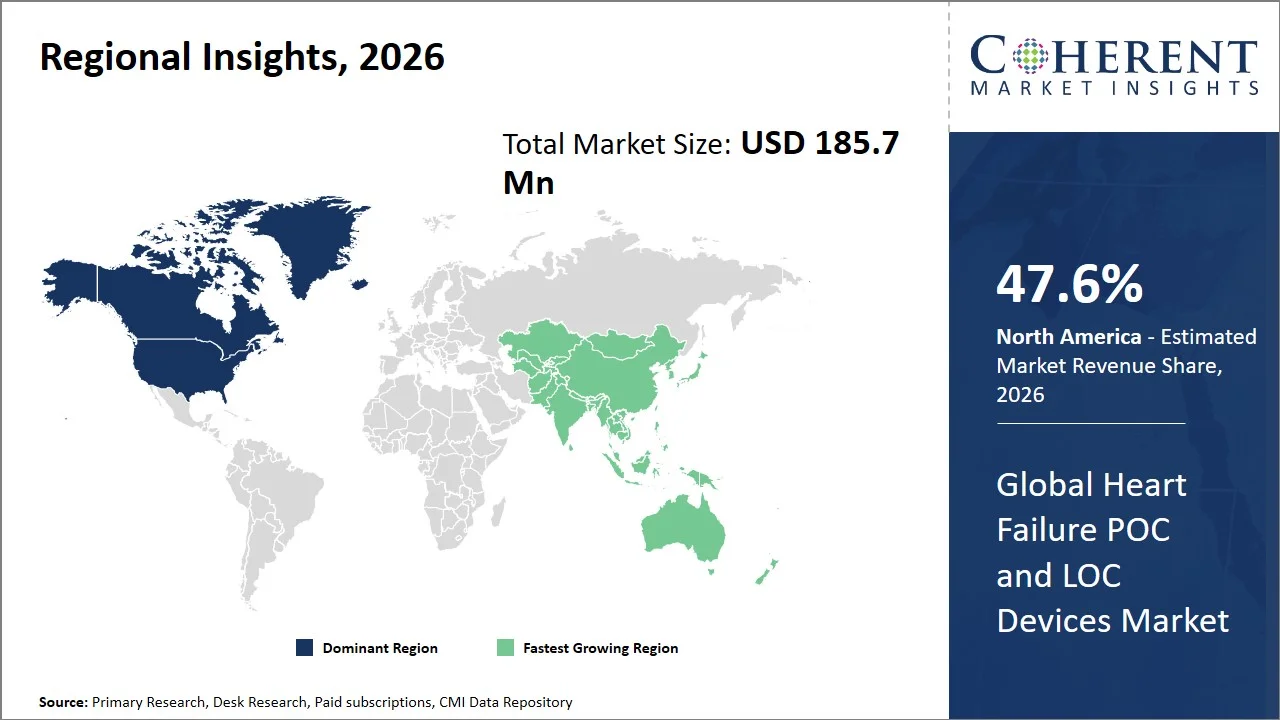
Why is North America a Strong Market for Heart Failure POC and LOC Devices?
North America leads the global heart failure POC and LOC devices market, accounting for an estimated 47.6% share in 2026, owing to its well-developed healthcare infrastructure and expertise in cardiovascular diagnostics and research along with considerable funding and emphasis on the innovation of medical technology devices. The region benefits from governmental initiatives such as the U.S FDA that aid in rapid development of medical devices and significant funding for the research & development in cardiovascular devices and instruments from National Institute of Health (NIH).
For instance, the NIH’s Accelerating Medicines Partnership Heart Failure (AMP HF) unites stakeholders in government, academia and the private sector toward identifying approaches to leverage clinical data, imaging, biomarkers and molecular profiling to improve the diagnosis and treatment of heart failure. Moreover, existing POC diagnostic capabilities and focus for rapid measurement of cardiac biomarkers drives market growth in North America.
Why Does Asia Pacific Heart Failure POC and LOC Devices Market Exhibit High Growth?
Asia Pacific is expected to exhibit the fastest growth in the global heart failure POC and LOC devices market, registering an estimated CAGR of 18.7% during 2026–2033. The region is projected to account for approximately 11.8% of the global market in 2026, owing to the surging burden of cardiovascular diseases, increasing healthcare facilities, the surging demand for readily accessible cardiac diagnosis tests, and widespread initiatives to enhance diagnostics in remote areas. For instance, in August 2025, China's National Health Commission reported that over 95% of counties piloting the country’s integrated county medical consortium had set up county-level medical laboratory resource sharing centers, and some cardiac diagnostic centers provided remote services down to the village-level to enhance the diagnostic capabilities in less-developed regions.
Countries such as China, India, and Japan are actively expanding their diagnostic centers in the urban and rural areas and are actively enhancing their healthcare infrastructure. Moreover, rising healthcare digitization and increasing emphasis on early heart-failure detection are fueling demand for highly portable, low-cost, POC and LOC technologies, particularly portable, easy-to-use and technologically advanced systems.
Global Heart Failure POC and LOC Devices Market Outlook for Key Countries
Why is the U.S. Leading Innovation and Adoption in the Heart Failure POC and LOC Devices Market?
The U.S. has been in the forefront of innovation and adoption in the heart failure POC and LOC devices market due to the extensive integration of fast cardiac biomarker tests in acute care and outpatient workflows, such as BNP and NT-proBNP immunoassay test. The market is shifting towards microfluidic and fingerstick ready point-of-care devices with higher throughput and multiplex analysis which requires less volume and provide faster turnaround time. The increased POC presence along with increased adoption of distributed testing across different locations within hospital, ER, physician office, and community care setting are the other major drivers for the market growth.
Is Japan a Favorable Market for Heart Failure POC and LOC Devices Market?
Japan is an attractive market for our BNP and NT-pro BNP tests due to the central role BNP and NT-pro BNP assays play in heart-failure diagnosis, risk assessment and therapeutic monitoring. Japan's 2025 JCS/JHFS Heart Failure Guideline assigns both the measurement of BNP and the measurement of NT-proBNP assays Class I, Level A recommendations for diagnosis and or ruling out heart failure and in risk stratification of such patients. The Japanese market in particular stands out as the guideline embraces the application of BNP/NT-pro BNP measurements in decentralized and rapid cardiac marker testing settings both in the emergency and outpatient settings and to the detection of early congestion for treatment management.
Is China Emerging as a Key Growth Hub for the Heart Failure POC and LOC Devices Market?
China represents an emerging rather than a developed opportunity driven by rising demand for cardiovascular screening, early diagnosis and dispersed diagnostic solutions. China's efforts to boost its BNP/NT-proBNP screening, quick cardiac assessment, and decentralized community healthcare services represent huge potential for POC and LOC products. In addition, the demand for portable testing for cardiac biomarkers drive the demand for quick healthcare services on mobile platforms due to the developing healthcare infrastructure in the country.
Why Does Germany Top the European Heart Failure POC and LOC Devices Market?
Germany boasts the highest market penetration in Europe, driven by the ubiquitous integration of natriuretic-peptide testing into acute heart failure diagnosis and a high density of cardiac diagnostic labs. Additionally, Germany has a high base for point-of-care testing and there is a strong push for natriuretic peptides tests into the rapid testing portfolio. Higher rate of use of natriuretic peptides tests in emergency departments further adds to the market expansion.
Is Heart Failure POC and LOC Devices Market Developing in South Korea?
South Korea represents a developing market, aided by existing clinical applications of BNP and NT-proBNP as the initial screening diagnostic markers to diagnose potential heart failure. The country's diagnostics infrastructure supports decentralized cardiac testing, while the Ministry of Food and Drug Safety (MFDS) maintains dedicated regulatory classification/ evaluation framework specifically dedicated to In vitro diagnostic products.
Heart Failure Age-Standardized Prevalence by Region
Region | Age-Standardized Prevalence (per 100,000) |
North America | 852.24 |
Europe | 632.94 |
Asia Pacific | 605.35 |
Latin America | 699.86 |
Middle East and Africa | 743.55 |
How is the expansion of multiplex biomarker testing creating new growth opportunities in the heart failure POC and LOC devices market?
The trend towards using multiplex biomarkers is opening new opportunities in the global heart-failure POC and LOC devices market. The measurement of multiple cardiac markers from a single patient specimen enables development of POC and LOC solutions to gain more comprehensive diagnostic information for the management of heart failure. Combining multiplex assays with microfluidics and miniaturized biosensors for use in emergency and out-of-hospital settings, requires minimal sample size and faster turnaround time. For instance, the QuidelOrtho’s TRIAGE Cardio3 Panel test, measures the CK-MB, next generation Troponin I, and BNP at the point-of-care, from plasma or whole blood with results produced within 20 minutes.
Market Players, Key Development, and Competitive Intelligence
Key Developments
- In January 2025, bioMerieux acquired SpinChip Diagnostics, gaining access to its microfluidic point-of-care immunoassay platform for rapid cardiac biomarker testing, including NT-proBNP and high-sensitivity troponin I. The acquisition strengthens bioMerieux’s cardiovascular diagnostics portfolio and supports the development of rapid, decentralized heart-failure testing solutions.
- In June 2024, Siemens Healthineers added the NT-proBNPII assay to its Atellica Solution and Atellica CI Analyzer platforms, enabling NT-proBNP testing with a 10-minute time-to-first-result. The expansion strengthens rapid cardiac biomarker testing capabilities and supports faster assessment of patients with suspected heart failure.
- In March 2024, bioMerieux invested USD 10.9 million (NOK 115 million) in SpinChip Diagnostics to accelerate development of its microfluidic point-of-care immunoassay platform, initially targeting high-sensitivity cardiac troponin I and additional cardiac biomarkers. The investment supports commercialization of compact, rapid cardiac testing technologies for decentralized diagnostic settings.
Competitive Landscape
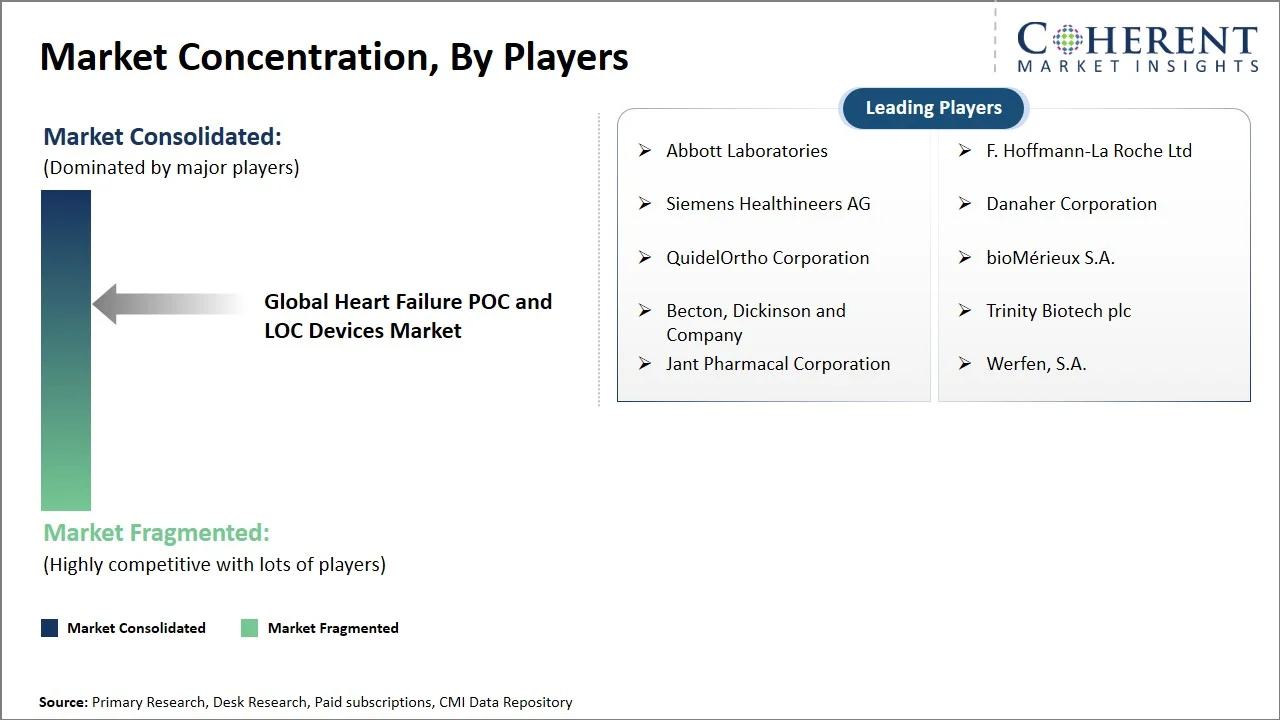
The global heart failure POC and LOC devices market moderately competitive, with competition centered on diagnostic speed, biomarker sensitivity, multiplex testing, device miniaturization, and ease of use across decentralized healthcare settings. Market participants are expected to focus on improving the clinical utility of rapid cardiac diagnostics while integrating microfluidics, biosensors, and digital connectivity into compact platforms. Key focus areas include:
- Development of rapid POC platforms for BNP, NT-proBNP, troponin, and other cardiac biomarkers
- Advancement of microfluidic and miniaturized LOC platforms for low-volume blood analysis
- Expansion of multiplex testing to enable simultaneous measurement of multiple heart-failure biomarkers
- Improvement of analytical sensitivity, specificity, and turnaround time for decentralized cardiac testing
- Expansion of diagnostic applications across emergency departments, primary-care clinics, outpatient facilities, and home-care settings
- Development of portable and minimally invasive testing formats requiring smaller blood samples and limited technical expertise
- Integration of wireless connectivity and digital data transmission to support remote interpretation and longitudinal monitoring
- Strengthening of clinical validation and workflow integration to facilitate broader adoption of POC and LOC technologies
Market Report Scope
Heart Failure POC and LOC Devices Market Report Coverage
| Report Coverage | Details | ||
|---|---|---|---|
| Base Year: | 2025 | Market Size in 2026: | USD 185.7 Mn |
| Historical Data for: | 2020 To 2024 | Forecast Period: | 2026 To 2033 |
| Forecast Period 2026 to 2033 CAGR: | 15.1% | 2033 Value Projection: | USD 498.4 Mn |
| Geographies covered: |
| ||
| Segments covered: |
| ||
| Companies covered: | Abbott Laboratories, F. Hoffmann-La Roche Ltd, Siemens Healthineers AG, Danaher Corporation, QuidelOrtho Corporation, bioMérieux S.A., Becton, Dickinson and Company, Trinity Biotech plc, Jant Pharmacal Corporation, Werfen, S.A. | ||
| Growth Drivers: |
| ||
| Restraints & Challenges: |
| ||
Analyst Opinion (Expert Opinion)
- In the coming years, global heart failure POC and LOC devices market will shift toward multiplex, highly sensitive, connected, and decentralized diagnostic platforms capable of measuring multiple biomarkers from small-volume samples. POC and LOC technologies are expected to move beyond hospital-based diagnosis toward primary care, community, and home-based monitoring, enabling more frequent assessment of disease progression and treatment response.
- The maximum opportunities are foreseen within point-of-care (POC) devices for acute heart-failure triage and longitudinal monitoring in the U.S. The combination of established cardiac diagnostic infrastructure, high demand for rapid biomarker assessment, and the need to reduce repeated hospital visits creates an attractive environment for compact platforms measuring BNP/NT-proBNP alongside troponin, renal markers, or electrolytes.
- In order to gain a competitive advantage market players should prioritize multiplex platforms with laboratory-comparable sensitivity, rapid turnaround, low sample requirements, and seamless digital connectivity rather than competing solely on device portability. Building platforms that can transition from hospital use to primary-care and home monitoring, while simplifying operation and demonstrating clear clinical and economic value, will provide a stronger competitive advantage.
Speak to the analyst
Want personalized insights?
Take the findings above to one of our principal consultants, or have the report rebuilt around the segments, geographies and competitors you actually track.
Market Segmentation
- Device Type Insights (Revenue, USD Mn, 2021 - 2033)
- Point-of-Care (POC) Devices
- Lab-on-Chip (LOC) Devices
- Test Type Insights (Revenue, USD Mn, 2021 - 2033)
- Proteomic Testing
- Metabolomic Testing
- Genomic Testing
- Biomarker Insights (Revenue, USD Mn, 2021 - 2033)
- BNP/NT-proBNP
- Troponin
- Multi-Biomarker Panels
- Others
- Technology Insights (Revenue, USD Mn, 2021 - 2033)
- Microfluidics
- Array-Based Systems
- Immunoassay-Based Systems
- Others
- Application Insights (Revenue, USD Mn, 2021 - 2033)
- Acute Heart Failure Diagnosis
- Chronic Heart Failure Monitoring
- Risk Stratification and Readmission Prevention
- Therapy Optimization
- Others
- End User Insights (Revenue, USD Mn, 2021 - 2033)
- Hospitals
- Specialty Cardiology Centers
- Primary Care and Urgent Care Centers
- Diagnostic Laboratories
- Homecare and Remote Patient Monitoring
- Others
- Regional Insights (Revenue, USD Mn, 2021 - 2033)
- North America
- U.S.
- Canada
- Latin America
- Brazil
- Argentina
- Mexico
- Rest of Latin America
- Europe
- Germany
- U.K.
- Spain
- France
- Italy
- Russia
- Rest of Europe
- Asia Pacific
- China
- India
- Japan
- Australia
- South Korea
- ASEAN
- Rest of Asia Pacific
- Middle East
- GCC Countries
- Israel
- Rest of Middle East
- Africa
- South Africa
- North Africa
- Central Africa
- North America
Sources
Primary Research Interviews
- Heart failure POC and LOC device specialists and cardiovascular diagnostics experts
- Cardiologists and heart-failure specialists involved in cardiac biomarker testing
- Clinical laboratory directors and point-of-care testing professionals
- Researchers developing microfluidic, biosensor, and lab-on-a-chip cardiac diagnostics
- Clinical investigators evaluating BNP, NT-proBNP, troponin, and multiplex cardiac biomarker testing
Stakeholders
- POC and LOC diagnostic device manufacturers
- Hospitals, emergency departments, and cardiac-care centers
- Clinical laboratories and decentralized testing facilities
- Primary-care and outpatient healthcare providers
- Research institutions developing cardiac biomarker diagnostics
- End-use Sectors
- Hospitals and Health Systems
- Emergency Departments and Urgent Care Centers
- Cardiology and Heart-Failure Clinics
- Clinical Laboratories
- Primary Care and Outpatient Clinics
- Diagnostic Centers
- Home Healthcare and Remote Patient Monitoring
- Academic and Research Institutions
- Regulatory & Health Bodies
- U.S. Food and Drug Administration (FDA) – Center for Devices and Radiological Health (CDRH)
- European Medicines Agency (EMA)
- Medicines and Healthcare products Regulatory Agency (MHRA), U.K.
- Pharmaceuticals and Medical Devices Agency (PMDA), Japan
- National Medical Products Administration (NMPA), China
Databases
- ClinicalTrials.gov – Heart-failure POC, LOC, biomarker, and diagnostic-device clinical trials
- European Union Clinical Trials Information System (CTIS) – Clinical trials involving cardiac diagnostics and biomarkers
- WHO International Clinical Trials Registry Platform (ICTRP) – Global cardiovascular and diagnostic clinical-trial records
- U.S. FDA Medical Device Databases – POC, IVD, BNP/NT-proBNP and cardiac diagnostic device records
Journals
- Clinical Chemistry
- Clinical Chemistry and Laboratory Medicine
- Point of Care: The Journal of Near-Patient Testing & Technology
- Biosensors and Bioelectronics
- Lab on a Chip
- ESC Heart Failure
- Journal of Cardiac Failure
Associations
- American Heart Association (AHA)
- Heart Failure Society of America (HFSA)
- European Society of Cardiology (ESC)
- International Federation of Clinical Chemistry and Laboratory Medicine (IFCC)
- American Association for Clinical Chemistry (AACC)
Public Domain Sources
- World Health Organization (WHO) – cardiovascular disease, diagnostics, and medical-device data
- U.S. National Institutes of Health (NIH) – Heart-failure diagnosis and cardiovascular research
- U.S. Food and Drug Administration (FDA) – Cardiac biomarker and IVD device regulatory information
- Centers for Disease Control and Prevention (CDC) – cardiovascular disease and risk-factor statistics
- Centers for Medicare & Medicaid Services (CMS) – Diagnostic testing, healthcare utilization, and reimbursement information
- National Heart, Lung, and Blood Institute (NHLBI) – Heart-failure and cardiovascular research
Proprietary Elements
- CMI Data Analytics Tool
- Proprietary CMI Existing Repository of information for last 10 years.
Get access to 250+ pages report
Every segment, forecast, competitor profile and data table behind the analysis above — available for instant download.
- ESOMAR Member
- ISO 9001:2015 Certified
- D-U-N-S Registered
- GDPR & CCPA Compliant
Missing comfort of reading report in your local language? Find your preferred language:
Frequently Asked Questions
The global heart failure POC and LOC devices market is estimated to be valued at USD 185.7 Mn in 2026 and is expected to reach USD 498.4 Mn by 2033.
Point-of-Care (POC) Devices dominates due to their rapid turnaround, portability, ease of use, and ability to support timely cardiac biomarker testing at the patient’s bedside or in decentralized care settings.
Heart failure POC devices enable rapid cardiac biomarker testing near the patient, while LOC devices integrate laboratory functions onto miniaturized platforms for fast, low-volume diagnostic analysis.
The CAGR of global heart failure POC and LOC devices market is projected to be 15.1% from 2026 to 2033.
Rising prevalence of heart failure and cardiovascular disorders, and growing demand for rapid, decentralized cardiac testing are the major factors driving the growth of the global heart failure POC and LOC devices market.
High development and manufacturing costs, and limited reimbursement for advanced diagnostic testing are the major factors hampering the growth of the global heart failure POC and LOC devices market.
In terms of test type, proteomic testing is estimated to dominate the market revenue share in 2026.