

Global Hollow Clay Bricks Market Size and Forecast – 2026-2033
The Global Hollow Clay Bricks Market is estimated to be valued at USD 6.30 Bn in 2026 and is expected to reach USD 9.13 Bn by 2033, exhibiting a compound annual growth rate (CAGR) of 5.5% from 2026 to 2033.
Key Takeaways of the Hollow Clay Bricks Market:
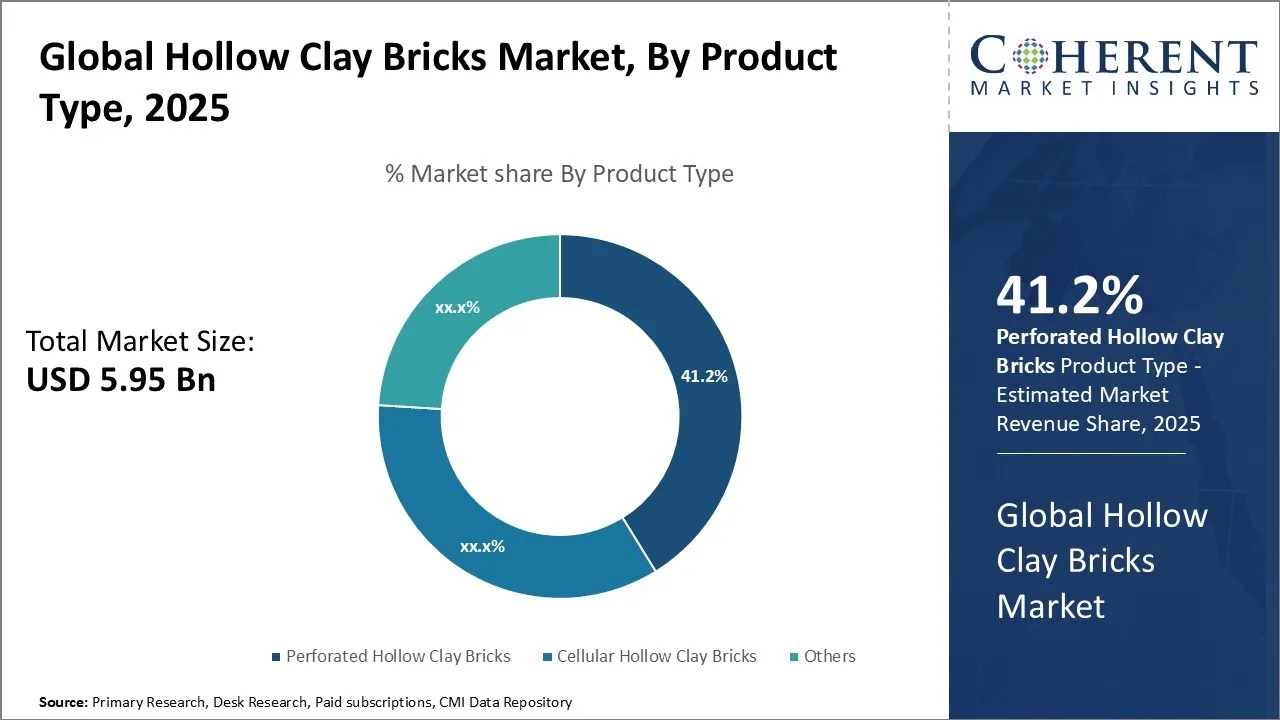
- The perforated hollow clay bricks segment is projected to account for 42.2 % of the market share in 2026.
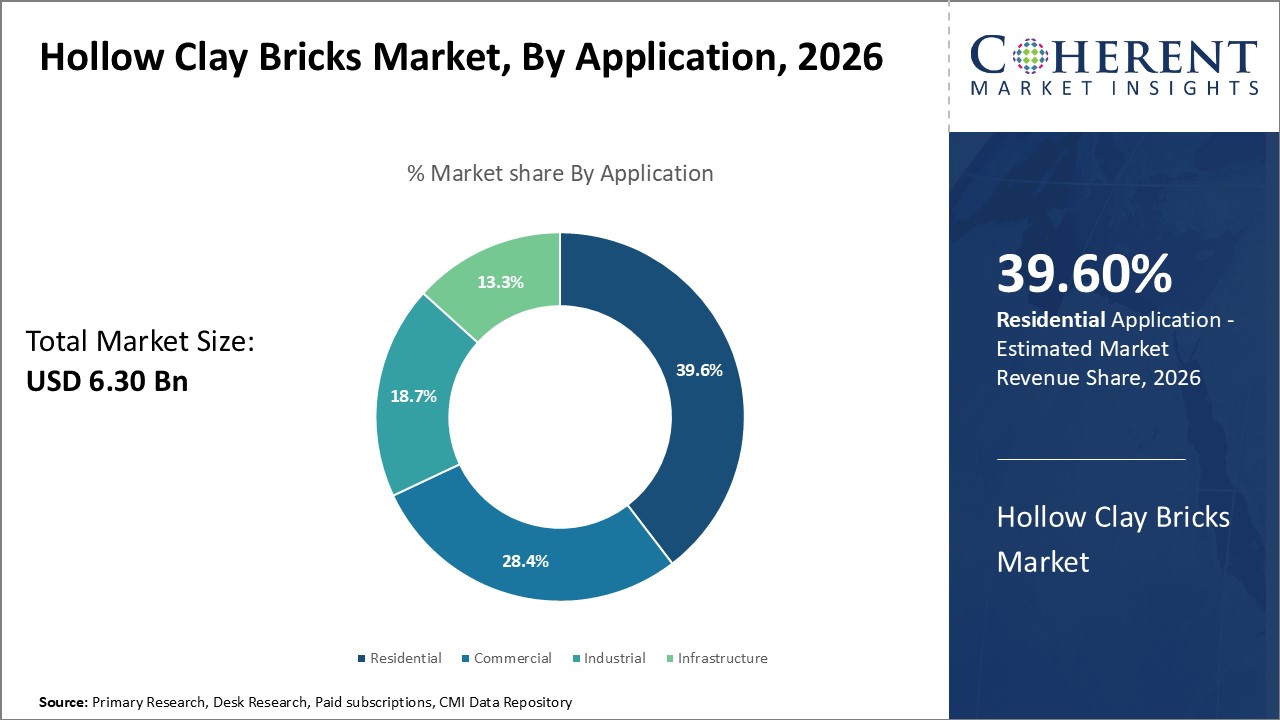
- The residential segment is expected to hold a 39.6 % market share in 2026.
- The direct sales segment is expected to capture 52.8 % of the market share in 2026.
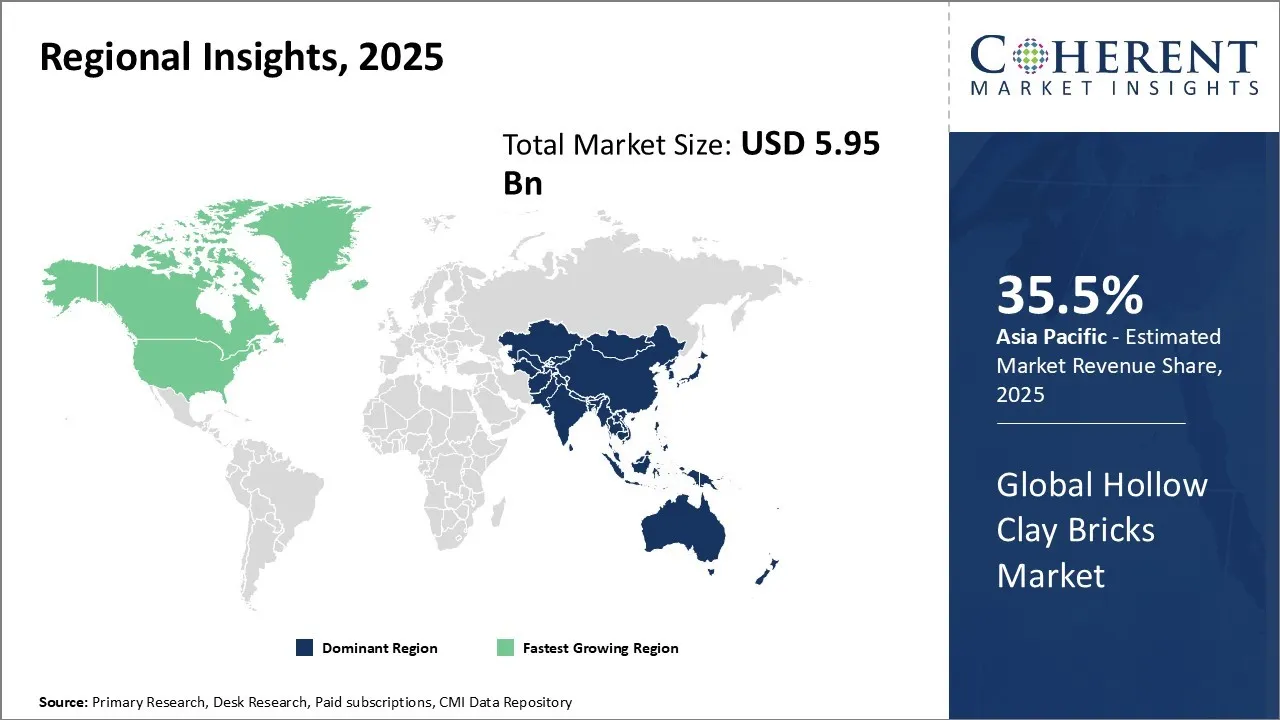
- Asia Pacific is set to lead the market with 35.5 % share in 2026 while North America, with 27.3 % share in 2026.
Market Overview:
The hollow clay bricks market growth is driven by the increasing demand for sustainable and energy-efficient building materials, as hollow clay bricks provide excellent insulation properties and reduce the overall carbon footprint of construction projects. The trend towards urbanization and the growing construction industry, particularly in developing countries, are expected to fuel the demand for hollow clay bricks. Moreover, the rising awareness about green building practices and the implementation of stringent building codes and regulations that prioritize energy efficiency are likely to further boost the adoption of hollow clay bricks in the coming years. Manufacturers are also focusing on product innovations, such as lightweight and high-strength bricks, to cater to the evolving needs of the construction industry.
Current Events and Its Impact
Current Events | Description and its impact |
Surge in Sustainable Construction Practices |
|
Expansion of E-commerce Sales Channels |
|
Segmental Insights
- Current Industry Events of 2026
- Market Size Estimation
- Regional Breakdown
- Competitive Landscape
- Customer Intelligence
- Segmental Analysis
- Pricing Analysis
- Key Market Drivers, Challenges & Future Trends
- Customized Insights Section
Hollow Clay Bricks Market Insights, By Product Type – Performance and Efficiency Propel Perforated Hollow Clay Bricks Segment Growth
Perforated hollow clay bricks segment is expected to contribute 42.2% share of the market in 2026, due to their superior properties and wide-ranging applications. These bricks are characterized by the presence of evenly distributed perforations throughout their body, which offer several advantages over traditional solid bricks. The perforations enhance the thermal insulation properties of the bricks, reducing heat transfer and maintaining a comfortable indoor temperature. This feature is particularly beneficial in regions with extreme climatic conditions, as it helps to minimize energy consumption for heating and cooling purposes. Moreover, the perforations also contribute to the lightweight nature of these bricks, making them easier to handle and transport, thus reducing construction time and labor costs.
Hollow Clay Bricks Market Insights, By Application – Urbanization and Lifestyle Shifts Fuel the Residential Segment Growth
The residential segment is expected to hold 39.6% share of the market in 2026, driven by several factors. One of the primary reasons behind its dominance is the increasing population and urbanization rates worldwide. As more people migrate to cities in search of better opportunities, the demand for residential properties surges. Moreover, the rising disposable incomes and changing lifestyle preferences have led to a greater emphasis on modern and technologically advanced residential solutions.
Hollow Clay Bricks Market Insights, By Distribution Channel – Direct Sales Channel Gains Traction Through Personalized Engagement and Long-Term Partnerships
Direct sales segment is expected to contribute 52.8% share of the market in 2026, due to their preferred choice for many manufacturers and customers in the market. This segment involves the direct interaction between the manufacturer and the end user, eliminating the need for intermediaries. One of the primary reasons for the dominance of direct sales is the ability to establish strong relationships with customers. Manufacturers can engage in personalized communication, understand specific requirements, and provide tailored solutions. For instance, a prominent hollow clay brick manufacturer in Europe, Wienerberger AG, has reported that their direct sales approach has allowed them to collaborate closely with architects and construction companies, resulting in long-term partnerships and recurring business.
Regional Insights
Asia Pacific Hollow Clay Bricks Market Analysis and Trends
The Asia Pacific region is expected to lead the market with a 35.5% share in 2026. The region's vast population, rapid urbanization, and increasing construction activities have driven the demand for building materials, including hollow clay bricks. The presence of key market players, such as Wienerberger AG and Boral Limited, has further solidified the region's position. Additionally, government initiatives promoting sustainable construction practices and the availability of raw materials have contributed to the market's growth in Asia Pacific.
North America Hollow Clay Bricks Market Analysis and Trends
North America is projected to be the fastest-growing region in the hollow clay bricks market capturing a 27.3% share in 2026. The region’s emphasis on energy-efficient building solutions, particularly in the U.S. and Canada, has driven the demand for hollow clay bricks due to their superior insulation and durability properties. Additionally, urban redevelopment projects, rising investments in green infrastructure, and the shift toward low-carbon building materials are further encouraging adoption across both residential and commercial construction segments.
Hollow Clay Bricks Market Outlook for Key Countries
China Hollow Clay Bricks Market Trends
China stands as the largest market for hollow clay bricks, propelled by rapid urbanization and substantial infrastructure investments. In 2023, the Chinese government announced a USD 200 billion initiative aimed at enhancing urban infrastructure, significantly increasing the demand for durable building materials like hollow clay bricks. This initiative underscores China's commitment to sustainable urban development, with hollow clay bricks playing a pivotal role due to their energy efficiency and structural benefits.
India Hollow Clay Bricks Market Trends
India hollow clay bricks market is expanding due to the rising need for affordable housing and urban development. The government’s "Housing for All" initiative aims to provide housing solutions, which is expected to increase the demand for hollow clay bricks by 15% in 2024. Additionally, the emphasis on sustainable construction practices is driving the adoption of these bricks in various projects
Germany Hollow Clay Bricks Market Trends
Germany's market for hollow clay bricks is supported by stringent energy efficiency regulations and a strong focus on sustainable construction. The German government has implemented initiatives to promote the use of environmentally friendly materials, leading to a 10% increase in the adoption of hollow clay bricks in residential projects in 2023. This trend is expected to continue as the country aims for carbon neutrality by 2045.
U.S. Hollow Clay Bricks Market Trends
The U.S. hollow clay bricks market is experiencing steady growth, driven by increasing demand for sustainable building materials. In 2023, the U.S. Green Building Council reported a rise in eco-friendly construction practices, further boosting the market for these bricks.
End User Feedback and Unmet Needs
The hollow clay bricks market, serving a diverse array of end users including construction firms, real estate developers, infrastructure agencies, and government bodies, continues to witness evolving expectations surrounding material performance, sustainability, and affordability. One of the most frequently highlighted advantages of hollow clay bricks is their superior thermal insulation. Builders engaged in green construction and energy-efficient housing projects have reported significant satisfaction with the material’s ability to reduce heat transfer, which helps maintain indoor temperature and lowers energy consumption.
For example, a mid-scale real estate firm in Southern Europe implementing passive house designs noted that hollow clay bricks helped reduce HVAC energy costs by up to 25% over conventional solid bricks. The lightweight nature of the bricks also contributed to faster project timelines and reduced structural load, enhancing their appeal in seismic-prone regions.
Feedback from a government infrastructure agency in Southeast Asia indicated challenges in using hollow clay bricks for public buildings, citing increased need for structural reinforcement and specialized masonry skills. Furthermore, inconsistency in product dimensions and surface finish was mentioned as a deterrent, leading to delays and additional labor for corrective measures during construction. End-users have expressed a growing demand for bricks with integrated features such as enhanced soundproofing or embedded sensors for structural monitoring, which current offerings largely lack.
Market Players, Key Development, and Competitive Intelligence:
Key Developments:
- In January 2023, Nepal initiated its first large-scale commercial manufacturing of hollow clay bricks at the Hosanna Brick Factory in Harisiddhi. This venture, launched in collaboration with the European Union and local authorities, signifies a significant step towards eco-friendly building practices in the region.
- In November 2024, Wienerberger AG unveiled Europe’s most sustainable brick production facility, marking a major milestone in eco-friendly construction. As part of its broader sustainability strategy, the company inaugurated its upgraded brick plant in Uttendorf, Austria, on November 28. This facility features the world’s largest industrial electric kiln, which operates using green electricity, including power generated from its own solar photovoltaic system. Through this initiative, Wienerberger is cutting brick production-related emissions by approximately 90% and lowering overall energy consumption by nearly one-third, setting a new industry benchmark for environmentally responsible manufacturing.
Top Strategies Followed by Global Hollow Clay Bricks Market Players
- Established players: These players in the hollow clay bricks market are actively investing in advanced manufacturing technologies to enhance product strength, durability, and thermal insulation efficiency.
- For instance, Wienerberger AG, a global leader in clay building materials, has continuously upgraded its manufacturing infrastructure with smart kiln technologies and energy-efficient production processes to reduce environmental impact while improving product quality.
- Mid-level players: Mid-level players in the global hollow clay bricks market primarily focus on cost-effective manufacturing to cater to price-sensitive customer segments, particularly in emerging economies.
- For example, companies such as Rak Ceramics and ABC Bricks (India) have gained notable traction by offering durable yet affordable hollow clay bricks that meet local construction norms without significantly inflating project costs. This pricing strategy enables these firms to capture substantial market share in residential and mid-scale commercial construction projects.
- Small-scale players in the hollow clay bricks market often differentiate themselves through niche specialization strategies tailored to local construction trends and customer-specific demands.
- For example, Brictec Manufacturing Co. (a smaller Chinese exporter) caters to boutique residential projects by offering textured, pigment-enhanced hollow bricks designed for both insulation and exterior design appeal. Southeast Asia and Latin America, where developers seek affordable materials that also support architectural design ambitions.
Market Report Scope
Hollow Clay Bricks Market Report Coverage
| Report Coverage | Details | ||
|---|---|---|---|
| Base Year: | 2025 | Market Size in 2026: | USD 6.30 Bn |
| Historical Data for: | 2020 To 2024 | Forecast Period: | 2026 To 2033 |
| Forecast Period 2026 to 2033 CAGR: | 5.5% | 2033 Value Projection: | USD 9.13 Bn |
| Geographies covered: |
| ||
| Segments covered: |
| ||
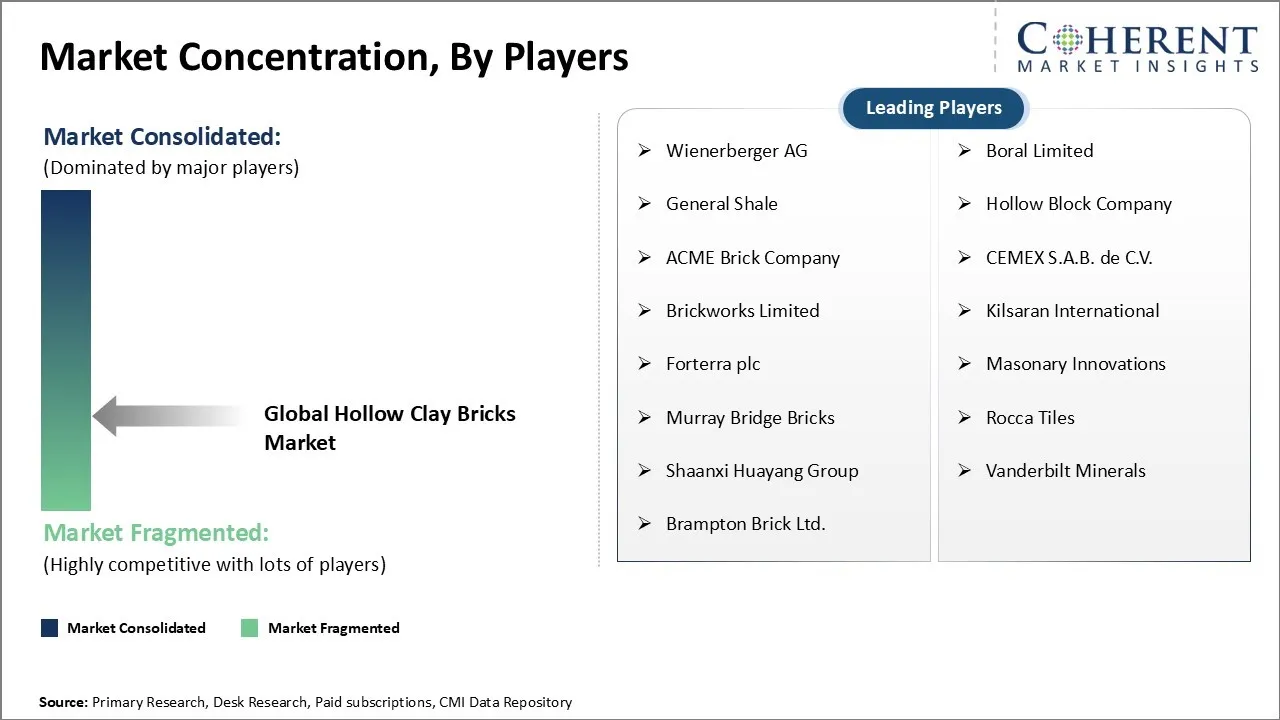
| Companies covered: | Wienerberger AG, Boral Limited, General Shale, Hollow Block Company, ACME Brick Company, CEMEX S.A.B. de C.V., Brickworks Limited, Kilsaran International, Forterra plc, Masonary Innovations, Murray Bridge Bricks, Rocca Tiles, Shaanxi Huayang Group, Vanderbilt Minerals, and Brampton Brick Ltd. | ||
| Growth Drivers: |
| ||
| Restraints & Challenges: |
| ||
Hollow Clay Bricks Market Dynamics
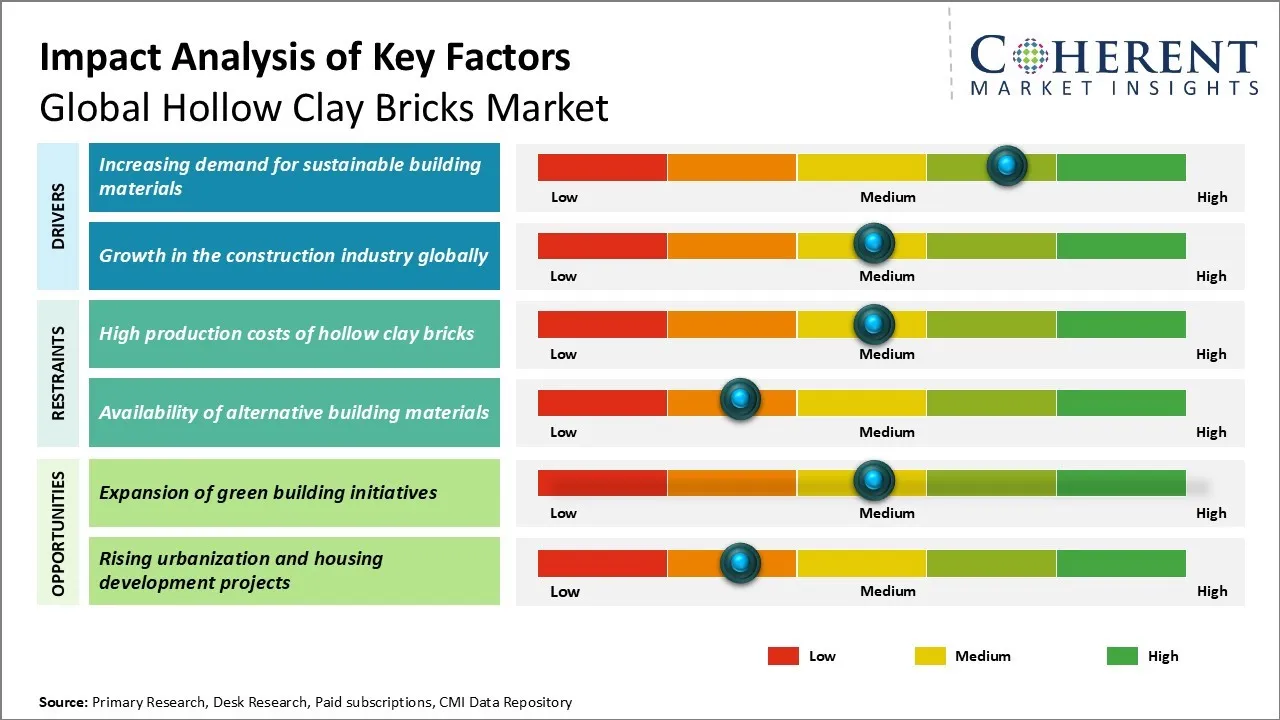
Hollow Clay Bricks Market Driver - Increasing demand for sustainable building materials
The increasing demand for sustainable building materials is a significant factor driving the growth of the Hollow Clay Bricks Market. As environmental concerns continue to rise, architects, developers, and consumers are actively seeking eco-friendly alternatives to traditional building materials. Hollow clay bricks, known for their thermal insulation properties, durability, and low environmental impact, have emerged as a popular choice in the construction industry.
For instance, according to the United Nations Environment Programme (UNEP), the building and construction sector accounts for nearly 40% of global energy-related CO2 emissions. This has led to a growing emphasis on green building practices and the adoption of sustainable materials like hollow clay bricks. The World Green Building Council reports that the number of green building projects has increased by 50% between 2020 and 2022, demonstrating the rising trend of sustainable construction.
Hollow Clay Bricks Market Opportunity - Expansion of Green Building Initiatives
The expansion of green building initiatives presents a significant opportunity for the Hollow Clay Bricks Market. As the world becomes increasingly aware of the environmental impact of construction and the need for sustainable practices, the demand for eco-friendly building materials is on the rise. Hollow clay bricks, known for their thermal insulation properties, durability, and low embodied energy, align perfectly with the goals of green building. According to the World Green Building Council, the construction sector accounts for 39% of global energy-related carbon emissions (WorldGBC, 2021). This statistic highlights the urgent need for sustainable construction materials and practices, driving the adoption of hollow clay bricks in green building projects.
Analyst Opinion (Expert Opinion):
- The global hollow clay bricks market is witnessing steady growth driven by increasing emphasis on sustainable and energy-efficient building materials. Governments across Europe and Asia are encouraging eco-friendly construction through green building codes and tax incentives, while technological advancements such as automated extrusion lines and modular brick systems are boosting production efficiency and design flexibility. Emerging opportunities lie in urban housing projects and infrastructure development in developing economies. However, the market faces challenges such as fluctuating raw material costs, regulatory differences across regions, and competition from concrete and fly ash-based alternatives.
- Industry developments include Wienerberger AG’s investment in smart manufacturing and Pipelife’s sustainable construction initiatives. Events like the World of Concrete Expo (Las Vegas, 2023) and BAU Munich (2023) have facilitated knowledge exchange and showcased energy-saving building technologies relevant to hollow bricks. Moreover, the EU Green Deal and India's Smart Cities Mission have included clay brick alternatives in policy discussions, supporting market adoption. These initiatives, along with pilot housing projects using hollow bricks in Southeast Asia and Europe, signal a favorable long-term outlook for the market.
Speak to the analyst
Want personalized insights?
Take the findings above to one of our principal consultants, or have the report rebuilt around the segments, geographies and competitors you actually track.
Market Segmentation
- Product Type Insights (Revenue, USD Bn, 2021 - 2033)
- Perforated Hollow Clay Bricks
- Cellular Hollow Clay Bricks
- Others
- Application Insights (Revenue, USD Bn, 2021 - 2033)
- Residential
- Commercial
- Industrial
- Infrastructure
- Distribution Channel Insights (Revenue, USD Bn, 2021 - 2033)
- Direct Sales
- Indirect Sales
- Regional Insights (Revenue, USD Bn, 2021 - 2033)
- North America
- U.S.
- Canada
- Latin America
- Brazil
- Argentina
- Mexico
- Rest of Latin America
- Europe
- Germany
- U.K.
- Spain
- France
- Italy
- Russia
- Rest of Europe
- Asia Pacific
- China
- India
- Japan
- Australia
- South Korea
- ASEAN
- Rest of Asia Pacific
- Middle East
- GCC Countries
- Israel
- Rest of Middle East
- Africa
- South Africa
- North Africa
- Central Africa
- North America
- Key Players Insights
- Wienerberger AG
- Boral Limited
- General Shale
- Hollow Block Company
- ACME Brick Company
- CEMEX S.A.B. de C.V.
- Brickworks Limited
- Kilsaran International
- Forterra plc
- Masonary Innovations
- Murray Bridge Bricks
- Rocca Tiles
- Shaanxi Huayang Group
- Vanderbilt Minerals
- Brampton Brick Ltd.
Sources:
Primary Research Interviews:
- Project Engineer – Sustainable Construction Materials Division
- Procurement Manager – Large-Scale Real Estate Developer (Middle East & North America)
- Sales Head – Clay Bricks Manufacturing Firm
- Technical Advisor – Building Materials Certification Authority
Stakeholders:
- Manufacturers (e.g., Wienerberger AG, The Beswick Group, Lignacite Ltd., Brickworks Limited, Acme Brick Company)
- Construction & Infrastructure Developers (e.g., Larsen & Toubro, Bechtel Corporation, Balfour Beatty)
- Architects & Urban Planners
- Green Building Consultants
- Regulatory & Certification Bodies (e.g., BIS, ASTM, LEED, BREEAM, IGBC)
Databases:
- UN Comtrade Database
- IBISWorld Industry Reports
Magazines:
- Construction Week
- Brick and Tile Industry International
- The Construction Specifier
- Building Design + Construction (BD+C)
- Housing Today
Journals:
- Journal of Building Engineering
- Construction and Building Materials (Elsevier)
- International Journal of Sustainable Built Environment
- Journal of Architectural Engineering
Newspapers
- The Guardian – Construction & Environment Section (U.K.)
- The Hindu Business Line – Real Estate Section (India)
- South China Morning Post – Infrastructure & Housing (China)
- The Wall Street Journal – Housing Market Trends (U.S.)
Associations:
- International Masonry Institute (IMI)
- Brick Industry Association (BIA – USA)
- European Ceramic Industry Association (Cerame-Unie)
- Confederation of Indian Industry – Construction Division
- Green Building Councils (IGBC, USGBC, WorldGBC)
Public Domain Sources
- World Bank – Infrastructure and Housing Statistics
- UN-Habitat – Sustainable Urban Development
- Ministry of Housing and Urban Affairs (India)
- European Commission – Construction Sector Reports
- U.S. Department of Housing and Urban Development (HUD)
Proprietary Elements:
- CMI Data Analytics Tool, Proprietary CMI Existing Repository of information for last 8 years
Get access to 250+ pages report
Every segment, forecast, competitor profile and data table behind the analysis above — available for instant download.
- ESOMAR Member
- ISO 9001:2015 Certified
- D-U-N-S Registered
- GDPR & CCPA Compliant
Missing comfort of reading report in your local language? Find your preferred language:
Transform your Strategy with Exclusive Trending Reports
Frequently Asked Questions
The global hollow clay bricks market is estimated to be valued at USD 5.95 Bn in 2025 and is expected to reach USD 8.55 Bn by 2032.
The CAGR of the global hollow clay bricks market is projected to be 5.3% from 2025 to 2032.
Increasing demand for sustainable building materials and growth in the construction industry globally are the major factors driving the growth of the global hollow clay bricks market.
High production costs of hollow clay bricks and availability of alternative building materials are the major factors hampering the growth of the global hollow clay bricks market.
In terms of product type, the perforated hollow clay bricks segment is estimated to dominate the market revenue share in 2025.
Wienerberger AG, Boral Limited, General Shale, Hollow Block Company, ACME Brick Company, CEMEX S.A.B. de C.V., Brickworks Limited, Kilsaran International, Forterra plc, Masonary Innovations, Murray Bridge Bricks, Rocca Tiles, Shaanxi Huayang Group, Vanderbilt Minerals, and Brampton Brick Ltd. are the major players.
Asia Pacific is expected to lead the global hollow clay bricks market in 2025.