

Global Hospital Acquired Infection Control Market Size and Forecast – 2026 To 2033
The global hospital acquired infection control market is expected to grow from USD 8.12 Bn in 2026 to USD 13.46 Bn by 2033, registering a compound annual growth rate (CAGR) of 7.5% from 2026 to 2033. The market for hospital acquired infection control is poised for significant expansion, fueled by the soaring burden of hospital-acquired infections (HAIs) globally.
According to the World Health Organization, hospital-acquired infections (HAIs) are among the most frequent adverse events associated with healthcare delivery. On average, around 1 in 10 patients are affected by hospital-acquired infections, increasing the need for effective infection prevention and control measures across healthcare facilities.
(Source: World Health Organization)
Key Takeaways of the Global Hospital Acquired Infection Control Market
- Consumables are projected to hold 47.2 % of the global hospital acquired infection control market share in 2026, making it the dominant product and service segment, across North America due to stringent infection prevention regulations and standardized infection control protocols. For instance, the U.S. Centers for Disease Control and Prevention (CDC) reports that 1 in 31 hospital patients has at least one healthcare-associated infection on any given day, driving the routine use of disinfectants, sterilization consumables, and personal protective equipment.
- Hospitals and ICUs are projected to hold 71.4 % of the global hospital acquired infection control market share in 2026, making it the dominant end user segment across Europe due to stringent healthcare-associated infection surveillance and patient safety regulations. For instance, the European Centre for Disease Prevention and Control (ECDC) estimates that approximately 4.3 million patients acquire a healthcare-associated infection annually in acute care hospitals across the European Union (EU) and European Economic Area (EEA).
- North America maintains its dominance with an expected share of 39.6 % in 2026, bolstered by stringent infection reporting requirements and increasing adoption of antimicrobial stewardship programs. For instance, the U.S. Department of Health and Human Services (HHS) has set national targets through the National Action Plan for Combating Antibiotic-Resistant Bacteria (CARB) to strengthen infection prevention and reduce healthcare-associated infections across hospitals.
- Asia Pacific is expected to exhibit the fastest growth with an estimated contribution of 23.8 % share in 2026, driven by government initiatives to strengthen Infection Prevention and Control (IPC) practices and expand healthcare infrastructure. For instance, India's Ministry of Health & Family Welfare released the National Guidelines for Infection Prevention and Control in Healthcare Facilities, promoting standardized infection prevention and control practices, surveillance, and antimicrobial stewardship across healthcare facilities.
- Growing Adoption of AI-Enabled Infection Surveillance Systems: Healthcare providers are increasingly deploying artificial intelligence (AI)-powered infection surveillance platforms to enable real-time monitoring, early outbreak detection, and automated reporting of hospital-acquired infections. These technologies enhance clinical decision-making, improve compliance with infection control protocols, and reduce the burden of manual surveillance, driving demand for advanced digital infection prevention solutions.
- Rising Deployment of Autonomous UV-C and Disinfection Robotics: The growing adoption of autonomous UV-C disinfection robots and no-touch sterilization technologies present a significant growth opportunity for the market. Hospitals are increasingly integrating robotic disinfection systems to improve environmental hygiene, minimize cross-contamination risks, and optimize operational efficiency, particularly in high-risk areas such as intensive care units, operating rooms, and isolation wards.
Segmental Insights
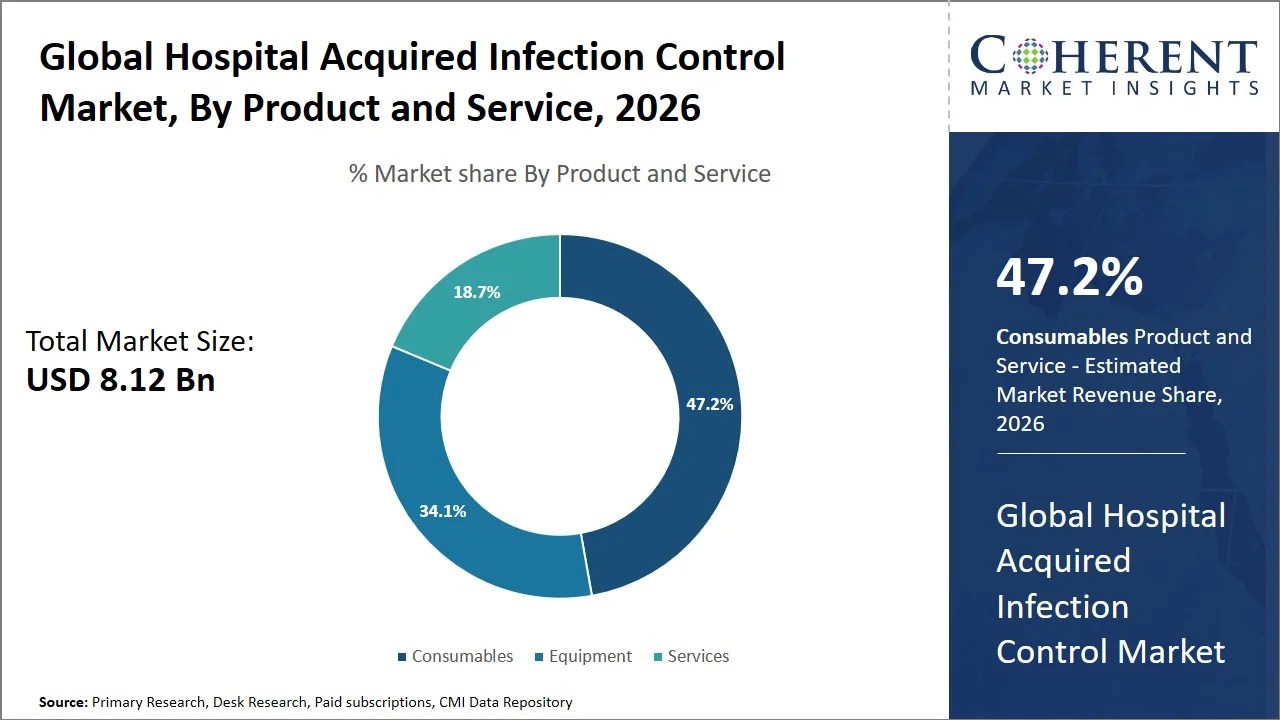
Why Do Consumables Dominate the Global Hospital Acquired Infection Control Market?
Consumables are projected to hold a market share of 47.2% in 2026, due to the consistent requirement for disposable gloves, masks, gown, disinfectant, sterilization wraps, and wipes by hospitals and surgical centers. They are generally replaced regularly to ensure a sterile and hygienic environment and to avoid cross-contamination. For instance, in July 2024, Ecolab Inc. unveiled Disinfectant 1 Wipe, the first EPA-registered, 100% plastic-free and rapidly biodegradable hospital disinfectant wipe that provides 1-minute, hospital-grade disinfection against over 40 pathogens in the health care environment. (Source: Ecolab Inc.)
- Current Industry Events of 2026
- Market Size Estimation
- Regional Breakdown
- Competitive Landscape
- Customer Intelligence
- Segmental Analysis
- Pricing Analysis
- Key Market Drivers, Challenges & Future Trends
- Customized Insights Section
Why Do Hospitals and ICUs Represent the Largest End User Segment in the Hospital Acquired Infection Control Market?
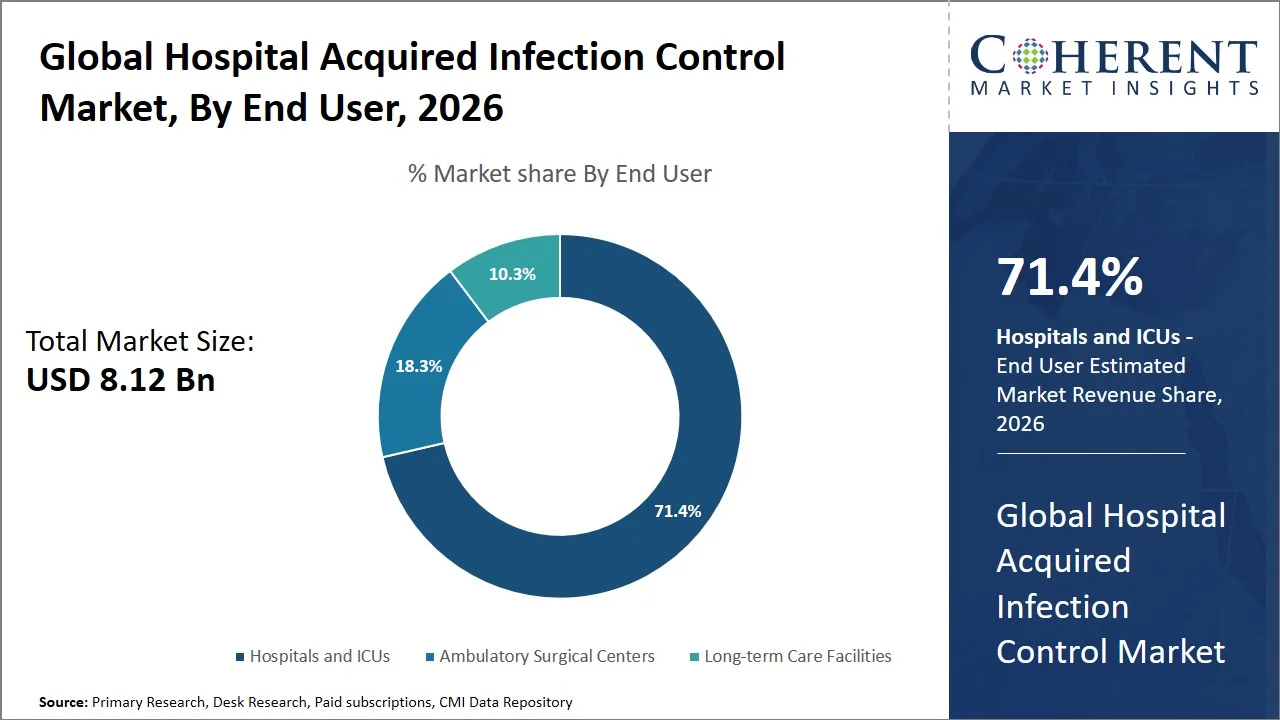
Hospitals and ICUs are projected to hold a market share of 71.4% in 2026, due to high infection rates associated with critically ill patients who require prolonged admission and are undergoing various invasive procedures and are receiving intense clinical treatment. Hence, the stringent protocols on advanced sterilization, environmental disinfection, infection surveillance, and hand hygiene are crucial to reduce hospital acquired infections in such setup and eventually improving the patient’s prognosis. For instance, in May 2026, Bactiguard and BD extended their global partnership to expand the global supply of Bactiguard-coated Foley catheters, aiming to reduce risk of catheter-associated urinary tract infections (CAUTIs) in hospitals and ICUs. (Source: Bactiguard AB)
Currents Events and their Impact
Current Events | Description and its Impact |
WHO Released Practical Guide for National Infection Prevention and Control (IPC) Action Plans (June 2025) |
|
Centers for Disease Control and Prevention (CDC) Updated Infection Prevention and Control Guidance Library (April 2025) |
|
Hospital Acquired Infection Control Market Dynamics
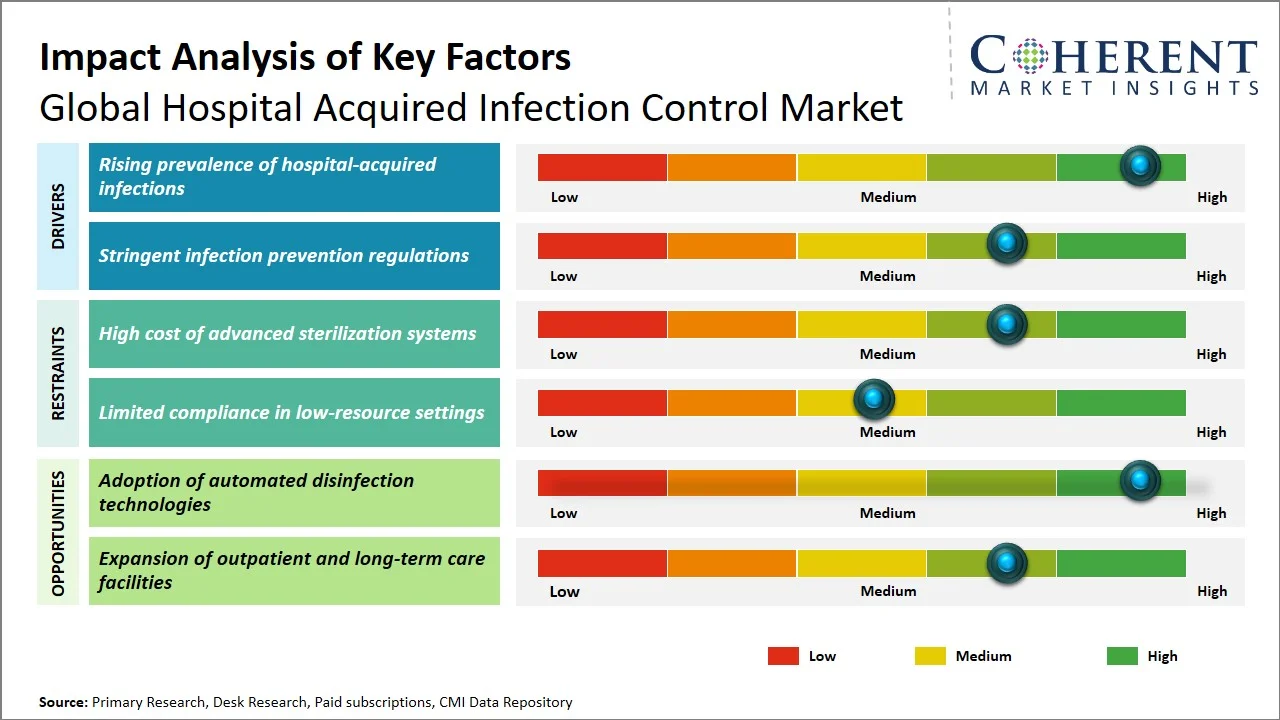
Market Drivers
- Rising prevalence of hospital-acquired infections: High prevalence of hospital acquired infections is increasing the need for innovative infection prevention & control solutions across healthcare facilities. There is a growing adoption of sterilization equipment, disinfectants, infection monitoring system and antimicrobial technologies due to rise in the number of surgical procedures and usage of invasive medical devices, along with increasing incidences of antimicrobial resistance. For instance, the U.S. Centers for Disease Control and Prevention reported that acute care hospitals recorded 7,355 colon surgical site infections (SSIs) across 3,052 hospitals in 2022, highlighting the continued need for robust infection control measures.
- Stringent infection prevention regulations: Stringent infection prevention regulations imposed by healthcare authorities are driving the adoption of advanced infection control solutions across hospitals and healthcare facilities. Regulatory agencies are increasingly mandating standardized sterilization practices, infection surveillance, hand hygiene compliance, and antimicrobial stewardship to reduce healthcare-associated infections and improve patient safety. For instance, in May 2024, the World Health Organization (WHO) launched the updated Infection Prevention and Control Global Action Plan and Monitoring Framework 2024–2030, providing countries with a structured roadmap to strengthen national IPC programs and healthcare facility compliance.
Emerging Trends
- Integration of Antimicrobial Surface Technologies: Healthcare facilities are increasingly adopting antimicrobial coatings on high-touch surfaces, medical devices, and hospital equipment to reduce microbial contamination and prevent pathogen transmission. These durable coatings provide continuous protection and complement conventional cleaning and disinfection protocols.
- Growing Adoption of Smart Hand Hygiene Compliance Systems: Hospitals are deploying IoT-enabled hand hygiene monitoring systems to automatically track healthcare workers' hand hygiene practices and improve compliance. These solutions provide real-time alerts, performance analytics, and digital reporting, helping healthcare facilities strengthen infection prevention programs and reduce healthcare-associated infections.
Regional Insights
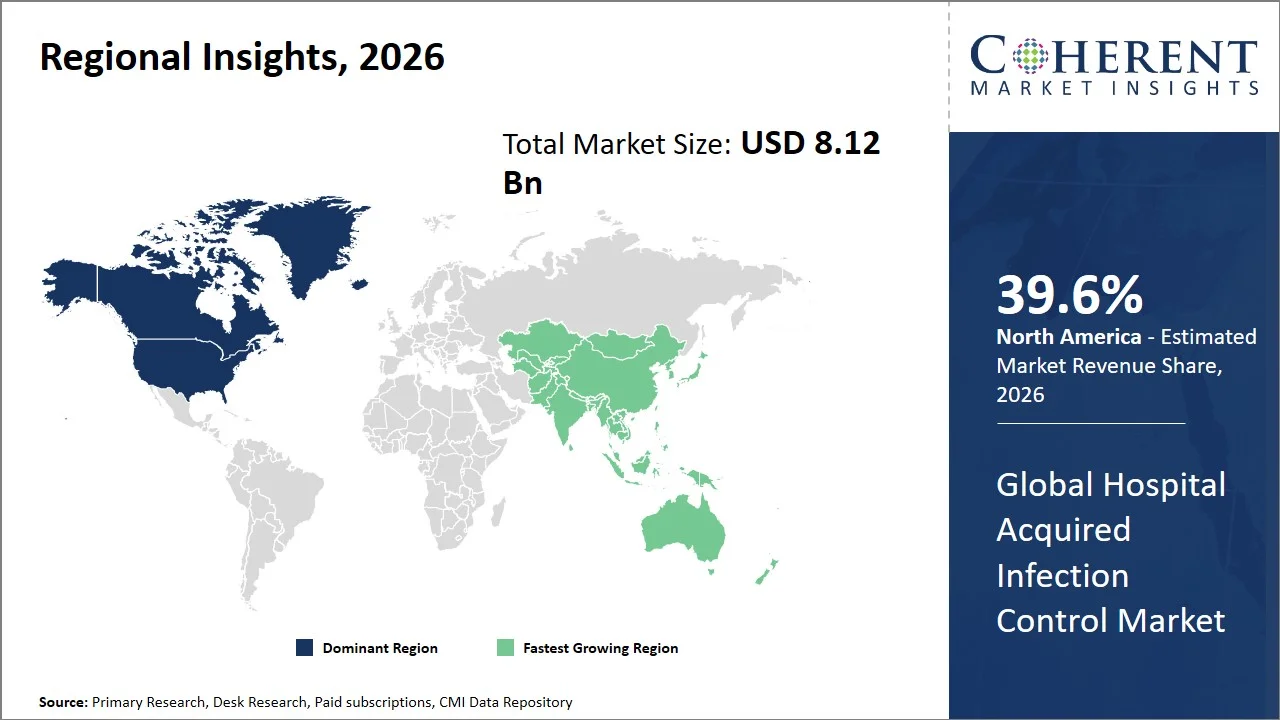
Why is North America a Strong Market for Hospital Acquired Infection Control?
North America leads the global hospital acquired infection control market, accounting for an estimated 39.6% share in 2026, owing to its robust healthcare framework, stringent regulations and high adoption of state-of-the-art infection control systems. Organizations such as Center for Disease Prevention and Control (CDC), and the U.S. Food and Drug Administration (FDA), set stringent guidelines and regulations that mandate usage of disinfection, sterilization and surveillance solutions in medical institutions.
For instance, the Joint Commission in the U.S. has published revised standards on Infection Control (IC) in effect July 1, 2024. The revised standards streamline the requirements of infection prevention while increasing the rigor regarding patient hygiene, isolation, and planning for high consequence infectious diseases, and will motivate providers to increase compliance and the adoption of advanced infection control systems. (Source: Administration for Strategic Preparedness and Response) Additionally, higher emphasis on patient safety coupled with consistent infection control standards further consolidate the region’s dominance in the market.
Why Does the Asia Pacific Hospital Acquired Infection Control Market Exhibit High Growth?
The Asia Pacific hospital acquired infection control market is expected to exhibit the fastest growth with an estimated contribution of 23.8% share to the global market in 2026, owing to a growing health care infrastructure, rising healthcare utilization and increasing infection prevention awareness among health care organizations. Various governments in Asia Pacific have enforced rigorous infection prevention guidelines, enhanced infection monitoring initiatives for the prevention of hospital acquired infection and have encouraged healthcare institutions to prevent patient harm.
For instance, in 2024, Singapore’s Ministry of Health (MOH) updated its National Cleaning Standards for Acute Healthcare Facilities and its Infection Prevention and Control Specifications for New Healthcare Buildings to further elevate infection prevention efforts across hospitals. The guidelines advocate consistent standards for environmental hygiene, healthcare facility design and infection control practices to accelerate adoption of advanced disinfection and sterilization solutions. (Source: Ministry of Health) As a result, there has been rapid adoption of newer sterilization and infection management techniques in Asia Pacific.
Global Hospital Acquired Infection Control Market Outlook for Key Countries
Why is the U.S. Leading Innovation and Adoption in the Hospital Acquired Infection Control Market?
The U.S. dominates the hospital acquired infection control market due to commercializing newer technologies-like AI powered infection surveillance, automated disinfection machines, and intelligent sterilization-infections that work effectively against numerous microbial strains. Moreover, many U.S.-based hospitals (such as Mayo Clinic, Cleveland Clinic, and Johns Hopkins Hospital) are moving toward deploying digital infection control products along with their clinical workflows and electronic health records to streamline workflows and enhance patient safety, fueled by the emergence of top medical device companies.
Is Japan a Favorable Market for the Hospital Acquired Infection Control Market?
Japan is one of the most promising markets for the hospital acquired infection control market driven by an aging population, higher rates of surgical procedures (supported by one of the world's highest hospital bed densities at 12.5 beds per 1,000 population) and increasing awareness about the importance of quality healthcare and patient safety in the country. Hospitals in Japan are progressively implementing automated sterilization systems, AI-powered surveillance and state-of-the-art disinfection technologies to minimize infections and cater to the labor shortage. Furthermore, the country's universal healthcare system and persistent investments in upgradation of existing hospital infrastructure ensures long-term potential for hospital acquired infection solutions.
Is China Emerging as a Key Growth Hub for the Hospital Acquired Infection Control Market?
China is positioned as a key growth hub in the global hospital acquired infection control market due to fast-expanding tertiary hospitals, growth in the patient numbers (10.13 billion medical consultations recorded in 2023), and modernization of the healthcare facilities. Hospitals are integrating automated sterilization equipment, new kinds of disinfectants, as well as digital surveillance systems, to improve the hospital acquired infection prevention. The trend is further supported by the growth of smart hospitals, and increasing integration of healthcare digital technologies.
Why Does Germany Top the European Hospital Acquired Infection Control Market?
Germany leads the European hospital acquired infection control market attributed to its highly developed hospital infrastructure, extensive use of automation, high-level disinfection, and widespread use of automated sterilization. The hospitals and healthcare institutions in the country pay close attention to standardization of the infection prevention procedures and routinely utilize the modern and high-tech technologies for sterilizations and environmental cleaning practices. Furthermore, Germany's significance as an innovative hub for medical device and infection control equipment ensures prompt availability and implementation of futuristic hospital acquired infection prevention techniques.
Is Hospital Acquired Infection Control Market Developing in India?
India is a high-potential market for hospital acquired infection control owing to the growth in multispecialty hospitals, expansion of inpatient facility, awareness toward infection prevention in the healthcare system. Increasing uptake of advanced sterilization equipment, high-level disinfectants, infection surveillance software, automated reprocessing equipment in hospitals will foster market growth. Healthcare modernization in India and faster adoption of digital health tools would also push growth for hospital acquired infection prevention and control solutions in the country.
Strategic Growth Areas in the Global Hospital Acquired Infection Control Market
Focus Area | Growth Driver | Future Opportunity |
AI-Based Infection Surveillance | Growing adoption of digital hospitals and real-time infection monitoring | Predictive outbreak detection and automated reporting |
Automated Disinfection Technologies | Rising demand for UV-C and robotic disinfection solutions | Increased deployment across ICUs, operating rooms, and isolation wards |
Smart Sterilization & Compliance
| Increasing focus on workflow automation and regulatory compliance | IoT-enabled sterilization and digital compliance management |
Sustainable Infection Prevention Solutions | Growing preference for eco-friendly and reusable infection control products | Development of low-residue disinfectants and green sterilization technologies |
How is the adoption of automated disinfection technologies creating new growth opportunities in the hospital acquired infection control market?
The increasing integration of automated disinfection systems such as UV-C robot, hydrogen peroxide vapor, and electrostatic sprayers offers lucrative growth opportunities to the global hospital acquired infection control market. These systems enhance the disinfection’s consistency, reduce human dependency, optimize workflow and efficiency and lowers the possibility of hospital infections. For instance, in September 2023, the U.S. Food and Drug Administration (FDA) approved De Novo classification for the Xenex’s LightStrike+ UV robot, enabling it to be the first U.S. FDA cleared UV light robot that can help to destroy pathogens on high-touch, non-porous surfaces in the healthcare settings. This approval is poised to accelerate the adoption of automated disinfection devices throughout healthcare settings.
Market Players, Key Development, and Competitive Intelligence
Key Developments
- In September 2025, Canadian health technology company, Lumenix announced that the McGill University Health Centre (MUHC) implemented its Artificially Intelligent Monitoring System (AIMS) at the Montreal General Hospital. The AI-powered platform utilized real-time ambient monitoring to improve hand hygiene compliance, helping reduce hospital-acquired infections (HAIs) and enhance patient safety through anonymous data-driven insights.
- In February 2025, Infex Therapeutics entered into an exclusive licensing agreement with Venus Remedies Ltd. for the clinical development, regulatory approval, and commercialization of MET-X in India. The partnership advanced MET-X, a first-in-class metallo-beta-lactamase (MBL) inhibitor, toward Phase I–III clinical trials for treating drug-resistant Gram-negative infections, including complicated urinary tract infections (cUTIs), a major category of hospital-acquired infections.
Competitive Landscape
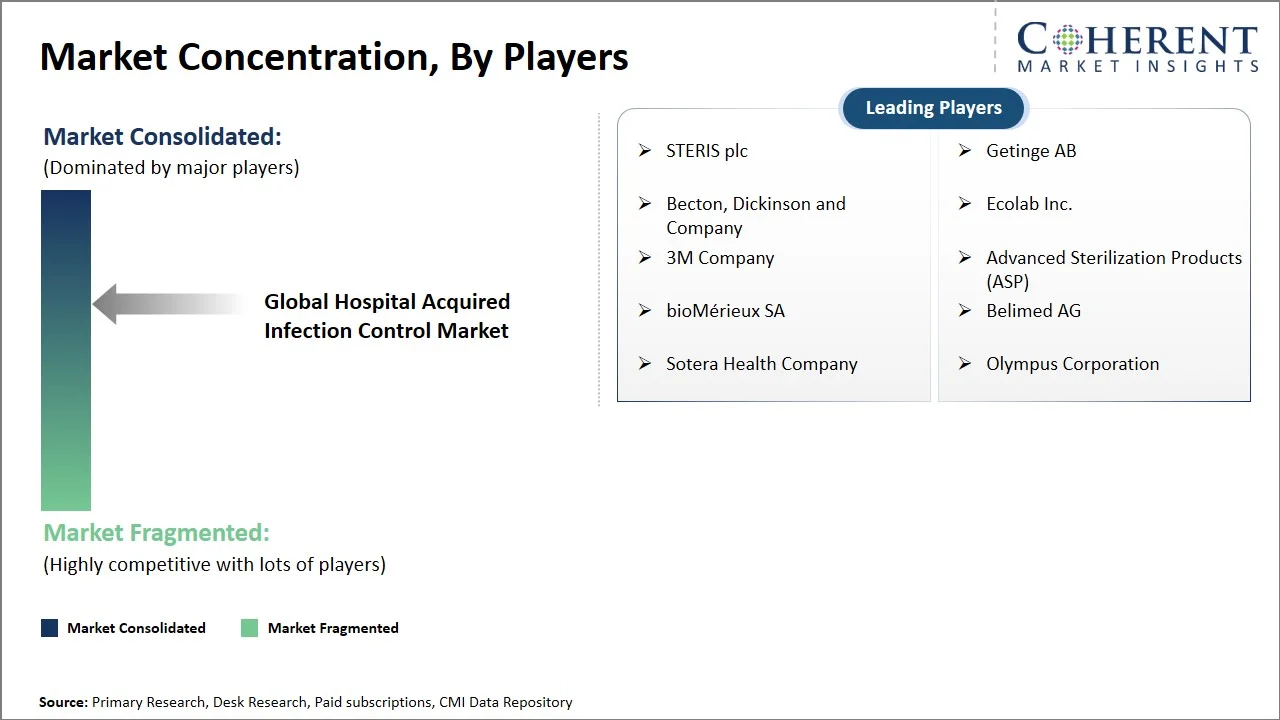
The global hospital acquired infection control market is moderately consolidated, with leading players competing through continuous product innovation, integrated infection prevention solutions, and strategic collaborations with healthcare providers. Companies are focusing on expanding their portfolios across sterilization equipment, disinfectants, infection surveillance systems, and personal protective equipment to address the growing burden of healthcare-associated infections. Key focus areas include:
- Development of AI-enabled infection surveillance and monitoring solutions
- Expansion of advanced sterilization, UV-C disinfection, and robotic cleaning technologies
- Strategic partnerships, acquisitions, and healthcare collaborations to strengthen global presence
- Investment in environmentally sustainable infection control products and low-residue disinfectants
- Expansion of end-to-end infection prevention portfolios, including sterilization, disinfection, and consumables
Market Report Scope
Hospital Acquired Infection Control Market Report Coverage
| Report Coverage | Details | ||
|---|---|---|---|
| Base Year: | 2025 | Market Size in 2026: | USD 8.12 Bn |
| Historical Data for: | 2020 To 2024 | Forecast Period: | 2026 To 2033 |
| Forecast Period 2026 to 2033 CAGR: | 7.5% | 2033 Value Projection: | USD 13.46 Bn |
| Geographies covered: |
| ||
| Segments covered: |
| ||
| Companies covered: | STERIS plc, Getinge AB, Becton, Dickinson and Company, Ecolab Inc., 3M Company, Advanced Sterilization Products (ASP), bioMérieux SA, Belimed AG, Sotera Health Company, and Olympus Corporation | ||
| Growth Drivers: |
| ||
| Restraints & Challenges: |
| ||
Analyst Opinion (Expert Opinion)
- The future outlook for the hospital acquired infection control market will be shaped by the transition from conventional infection prevention practices to technology-enabled, data-driven infection control ecosystems. Increasing adoption of AI-powered infection surveillance, automated disinfection systems, antimicrobial surface technologies, and real-time monitoring solutions will enable healthcare providers to improve patient safety while meeting stringent regulatory and quality standards.
- The maximum opportunities will probably exist within infection surveillance systems for hospitals and intensive care units (ICUs) across India and China. Rapid healthcare infrastructure expansion, increasing hospital admissions, rising awareness of infection prevention, and government initiatives to strengthen infection prevention and control (IPC) programs are expected to accelerate the adoption of advanced HAI control technologies in these countries.
- In order to obtain a competitive advantage, market participants should focus on developing integrated infection prevention portfolios that combine sterilization equipment, disinfectants, AI-enabled surveillance platforms, and digital compliance solutions. Strategic partnerships with hospitals, continuous investment in automated and sustainable disinfection technologies, and expansion into high-growth emerging markets will be critical to strengthening market position and achieving long-term growth.
Speak to the analyst
Want personalized insights?
Take the findings above to one of our principal consultants, or have the report rebuilt around the segments, geographies and competitors you actually track.
Market Segmentation
- Services Insights (Revenue, USD Bn, 2021 - 2033)
- Recruitment Services
- Managed Services
- Homecare Services
- Specialist Care Services
- Industry Verticals Insights (Revenue, USD Bn, 2021 - 2033)
- Pharmaceutical and Biotechnology
- Medical Devices
- Nursing/Healthcare
- Others
- Regional Insights (Revenue, USD Bn, 2021 - 2033)
- North America
- U.S.
- Canada
- Latin America
- Brazil
- Argentina
- Mexico
- Rest of Latin America
- Europe
- Germany
- U.K.
- Spain
- France
- Italy
- Russia
- Rest of Europe
- Asia Pacific
- China
- India
- Japan
- Australia
- South Korea
- ASEAN
- Rest of Asia Pacific
- Middle East
- GCC Countries
- Israel
- Rest of Middle East
- Africa
- South Africa
- North Africa
- Central Africa
- North America
- Key Players Insights
- STERIS plc
- Getinge AB
- Becton, Dickinson and Company
- Ecolab Inc.
- 3M Company
- Advanced Sterilization Products (ASP)
- bioMérieux SA
- Belimed AG
- Sotera Health Company
- Olympus Corporation
Sources
Primary Research Interviews
- Infection prevention and control (IPC) directors and hospital epidemiologists
- Hospital procurement and sterile processing department (SPD) managers
- Clinical microbiologists and infectious disease specialists
- Healthcare quality and patient safety officers
- Medical device and sterilization equipment manufacturers
- Infection surveillance software and healthcare IT solution providers
- Healthcare facility administrators and operations managers
Stakeholders
- Hospital and integrated healthcare systems
- Ambulatory surgical centers (ASCs)
- Long-term care facilities and nursing homes
- Infection prevention and control product manufacturers
- Sterilization and disinfection equipment suppliers
- Healthcare distributors and group purchasing organizations (GPOs)
- Government healthcare agencies and public health organizations
- End-use Sectors
- Hospitals and health systems
- Ambulatory surgical centers
- Long-term care facilities and nursing homes
- Diagnostic laboratories
- Specialty clinics
- Public healthcare institutions
- Regulatory & Health Bodies
- World Health Organization (WHO)
- U.S. Centers for Disease Control and Prevention (CDC)
- European Centre for Disease Prevention and Control (ECDC)
- U.S. Food and Drug Administration (FDA)
- U.S. Department of Health & Human Services (HHS)
- UK Health Security Agency (UKHSA)
- Ministry of Health & Family Welfare (India)
Databases
- WHO Global Health Observatory (GHO)
- CDC National Healthcare Safety Network (NHSN)
- European Centre for Disease Prevention and Control (ECDC) Surveillance Atlas
- OECD Health Statistics
- World Bank Open Data
- Eurostat
Magazines
- Infection Control Today
- Healthcare Purchasing News
- Medical Design & Outsourcing
- Healthcare Business Today
- Infection Prevention & Control (IPC) Magazine
Journals
- American Journal of Infection Control (AJIC)
- Infection Control & Hospital Epidemiology
- Journal of Hospital Infection
- Clinical Infectious Diseases
- The Lancet Infectious Diseases
Newspapers
- Financial Times
- The Wall Street Journal
- The New York Times
- The Guardian
Associations
- Association for Professionals in Infection Control and Epidemiology (APIC)
- Society for Healthcare Epidemiology of America (SHEA)
- International Federation of Infection Control (IFIC)
- American Hospital Association (AHA)
- Association of Surgical Technologists (AST)
Public Domain Sources
- World Health Organization (WHO)
- U.S. Centers for Disease Control and Prevention (CDC)
- European Centre for Disease Prevention and Control (ECDC)
- U.S. Food and Drug Administration (FDA)
- Organisation for Economic Co-operation and Development (OECD)
- World Bank
- Eurostat
- UK Health Security Agency (UKHSA)
Proprietary Elements
- CMI Data Analytics Tool, Proprietary CMI Existing Repository of information for last 10 years.
Get access to 250+ pages report
Every segment, forecast, competitor profile and data table behind the analysis above — available for instant download.
- ESOMAR Member
- ISO 9001:2015 Certified
- D-U-N-S Registered
- GDPR & CCPA Compliant
Missing comfort of reading report in your local language? Find your preferred language:
Transform your Strategy with Exclusive Trending Reports
Frequently Asked Questions
The global hospital acquired infection control market is estimated to be valued at USD 8.12 Bn in 2026 and is expected to reach USD 13.46 Bn by 2033.
Consumables dominate due to their routine and high-volume use in disinfection, sterilization, hand hygiene, wound care, and personal protective equipment across healthcare facilities.
Hospital acquired infection control refers to the strategies, products, and practices used to prevent, detect, and control infections acquired by patients during healthcare delivery.
The CAGR of the global hospital acquired infection control market is projected to be 7.5% from 2026 to 2033.
Sterilization eliminates microorganisms from medical devices and surgical instruments, minimizing the risk of cross-contamination and healthcare-associated infections.
Infection surveillance systems enable real-time monitoring, early outbreak detection, and data-driven interventions to reduce healthcare-associated infections.
Rising prevalence of hospital-acquired infections, and stringent infection prevention regulations are the major factors driving the growth of the global hospital acquired infection control market.