

Global Hospital-at-Home Platforms Market Size and Forecast – 2026 To 2033
The global hospital-at-home platforms market is expected to grow from USD 3.65 Bn in 2026 to USD 12.40 Bn by 2033, registering a compound annual growth rate (CAGR) of 19.1% from 2026 to 2033. The global market for hospital-at-home platforms are projected to witness significant growth during the forecast period attributed to the surge in demand for the hospital-level care delivery at the patient's home.
According to the U.S. Centers for Medicare & Medicaid Services (CMS), 358 hospital facilities from 134 health systems, in 37 states, have been granted approval through the U.S. agency's Acute Hospital Care at Home program as of October 2026, demonstrating an institutionalization of the model of care.
Key Takeaways of the Global Hospital-at-Home Platforms Market
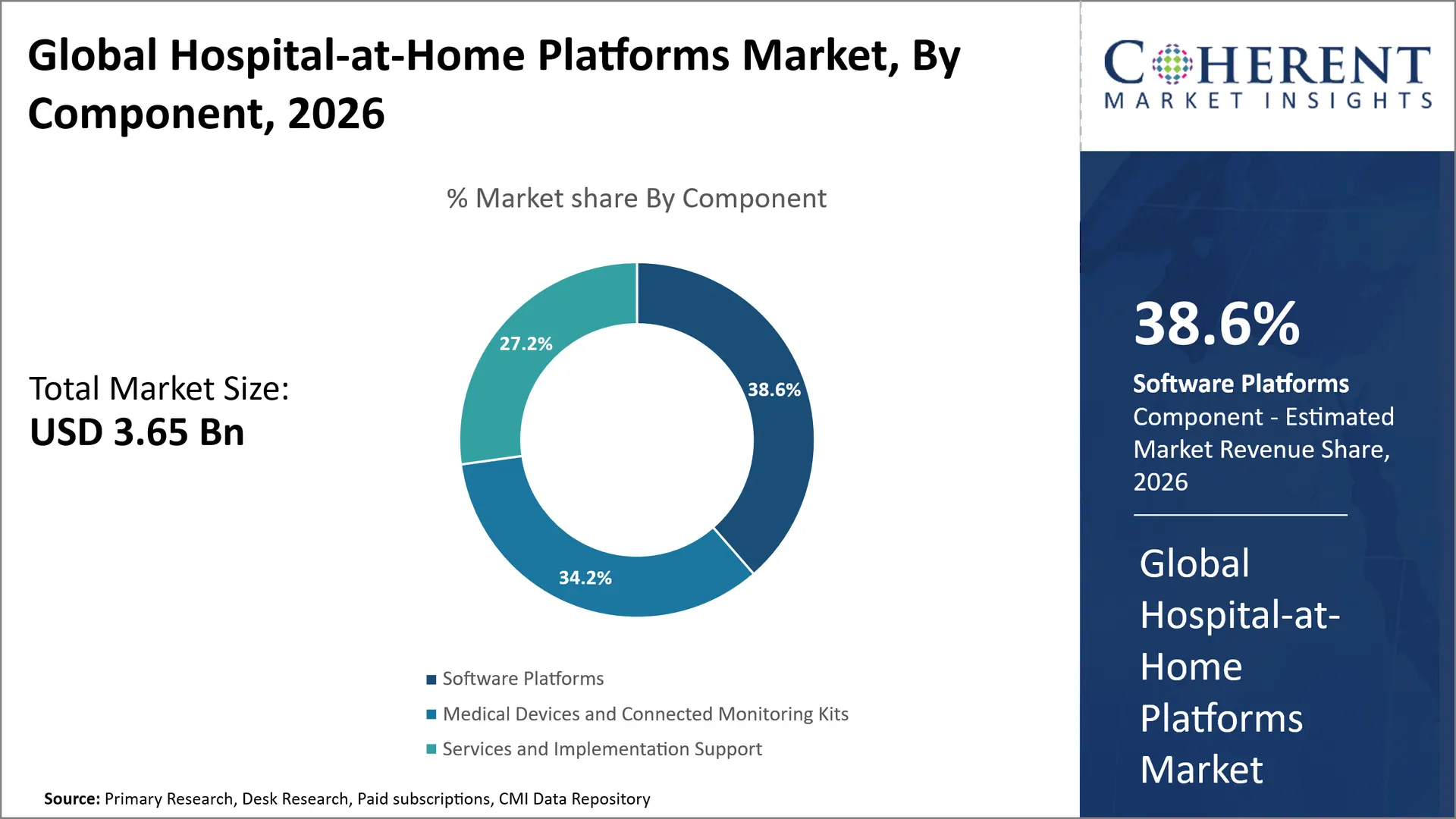
- Software Platforms are projected to hold 38.6% of the global hospital-at-home platforms market share in 2026, making it dominant component segment, across North America driven by the high penetration of hospital IT, high EHR adoption rates, and the digitalization of clinical workflows. For instance, according to the Office of the National Coordinator for Health Information Technology, as of 2024, over 99% of non-federal acute-care hospitals had implemented certified electronic health record technology, creating a foundation of digital maturity necessary for integrated hospital-at-home platforms.
- Acute hospital-at-home is projected to hold 52.8% of the global hospital-at-home platforms market share in 2026, making it dominant care model segment, across Europe owing to the developed hospital networks, the availability of an integrated healthcare delivery system, and the rise in remote-care investments. For instance, in May 2026, region Stockholm unveiled the hospital-at-home scheme, a region-wide program with remote patient monitoring and digitally connected care pathways, for patients with complex and chronic health conditions.
- Remote patient monitoring is projected to hold 43.7% of the global hospital-at-home platforms market share in 2026, making it dominant technology segment, across Asia Pacific supported by government initiatives in digital health and broadening of home-monitoring powers. For instance, in July 2026, the Singapore Ministry of Health Office for Healthcare Transformation announced that its Primary Tech-Enhanced Care (PTEC) program has scaled to all 28 polyclinics with a patient base of more than 15,000 people actively engaged in hypertension monitoring.
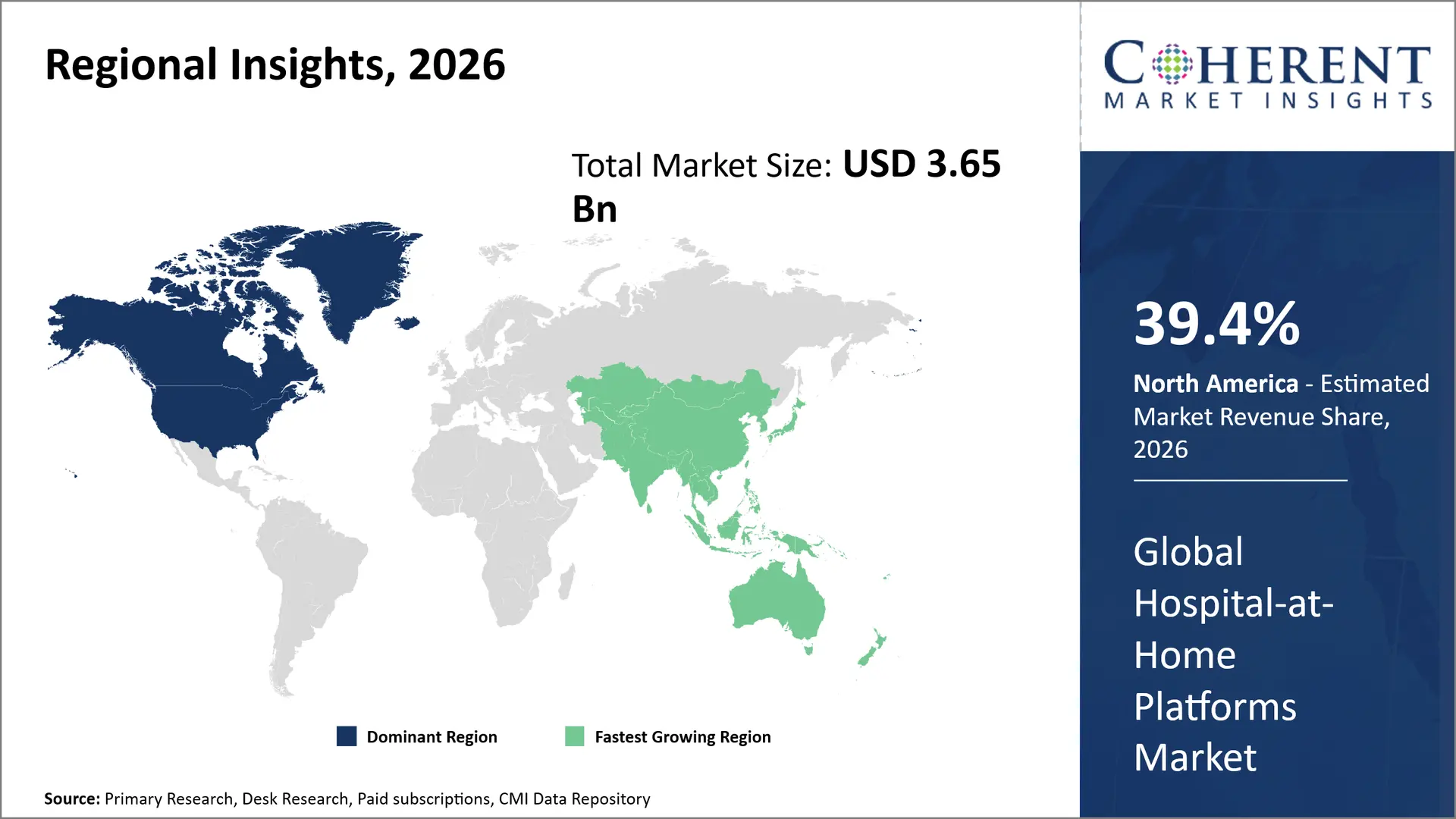
- North America market maintains dominance with an expected share of 39.4% in 2026, attributed to due to well-established virtual-care facilities, vast hospital networks, and mounting adoption of remote patient monitoring systems in acute care settings. For instance, Quebec's ministry of health and social services has been adopting home hospitalization in 13 healthcare centres, offering patients 24/7 virtual nurse support, connected medical-device monitoring, and hospital level care at home.
- Asia Pacific is expected to exhibit the fastest growth in the global hospital-at-home platforms market, registering an estimated CAGR of 16.2% during 2026–2033, owing to increasing healthcare demand, an aging population, hospital capacity constraints, and government initiatives for creating digitally enabled home-care models. For instance, Singapore's Mobile Inpatient Care @ Home (MIC@Home) program has been scaled up to a full-fledged program and adopted in everyday practice. The program combines hospital-level care, remote monitoring, telehealth services, and coordinated home visits for patients who are suitable for care at home.
Segmental Insights
Why Do Software Platforms Dominate the Global Hospital-at-Home Platforms Market?
Software platforms are projected to hold the market share of 38.6% in 2026, owing to its ability to unify a patient record, clinical process, remote monitoring, and a care team into a singular digital platform. In addition, the ability for a platform to interact with connected medical devices and EHRs through the cloud and provide timely and actionable insights indicates that health systems will be able to deliver home-based care more effectively. For instance, in June 2026, India’s Ministry of Health and Family Welfare launched the Unified Health Interface (UHI), a single digital health network that links healthcare providers and patient data across multiple systems to enable coordinated and integrated digital care. (Source: Press Information Bureau)
- Current Industry Events of 2026
- Market Size Estimation
- Regional Breakdown
- Competitive Landscape
- Customer Intelligence
- Segmental Analysis
- Pricing Analysis
- Key Market Drivers, Challenges & Future Trends
- Customized Insights Section
Why Do Acute Hospital-at-Home Represent the Largest Care Model Segment in the Hospital-at-Home Platforms Market?
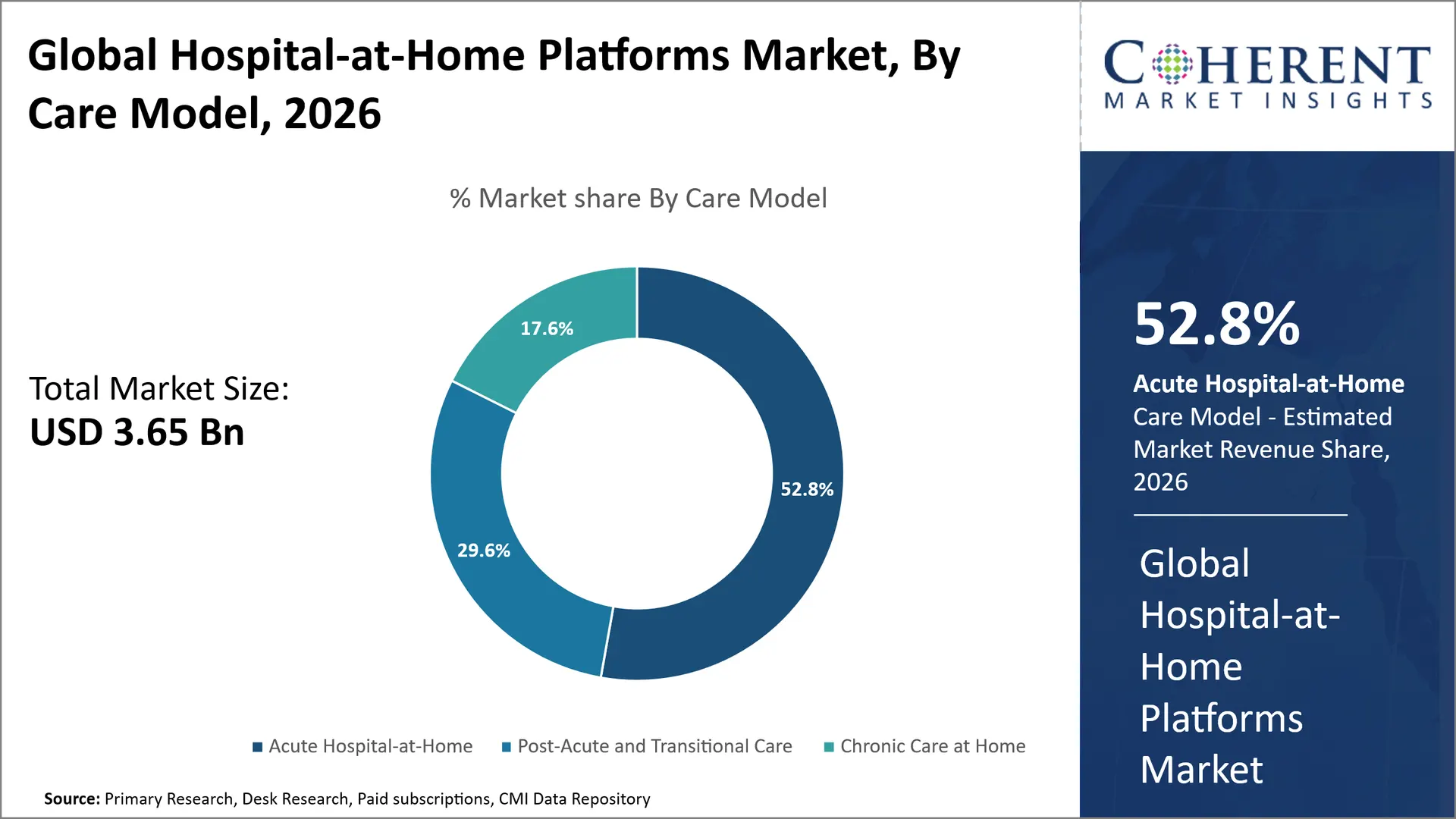
Acute hospital-at-home is projected to hold a market share of 52.8% in 2026, as it allows healthcare organizations to deliver inpatients care in the home and reduces bed capacity utilization, infection risk as well as overall cost of care while maintaining clinical oversight. Moreover, remote monitoring, home mobile medical units, and home diagnostics, which can lead to effective patients and new indications such as cellulitis, pneumonia, and deep vein thrombosis. For instance, in December 2025, the New South Wales Government declared an extension of its Hospital in the Home scheme in Southern New South Wales, with funding worth USD 22.0 million (AUD 31.4 million). Wearable devices will be implemented to enable real-time detection of the vital signs of the patients.
Remote Patient Monitoring Segment Dominates the Global Hospital-at-Home Platforms Market
The remote patient monitoring segment is projected to hold a market share of 43.7% in 2026, by enabling real time monitoring of the vital signs and early detection of deterioration of the patients, which in turn promote clinical intervention and avoid unnecessary hospital visits. For instance, in November 2025, the UK Department of Health and Social Care stated that the implementation of remote-monitoring and self-reporting tools had begun in NHS services in England. This will allow NHS patients to transmit blood pressure readings, oxygen levels, and symptoms to clinical specialists. Once rolling out in full, it is expected that this programme will reduce the number of appointments by about 500,000 a year.
Current Events and their Impact
Current Events | Description and its Impact |
Victoria Government to Roll Out Virtual Hospital Pilot to Enhance Community Care (August 2026) |
|
NHS England Launches Uniform Data Model for Virtual Wards (February 2026) |
|
Hospital-at-Home Platforms Market Dynamics
Market Drivers
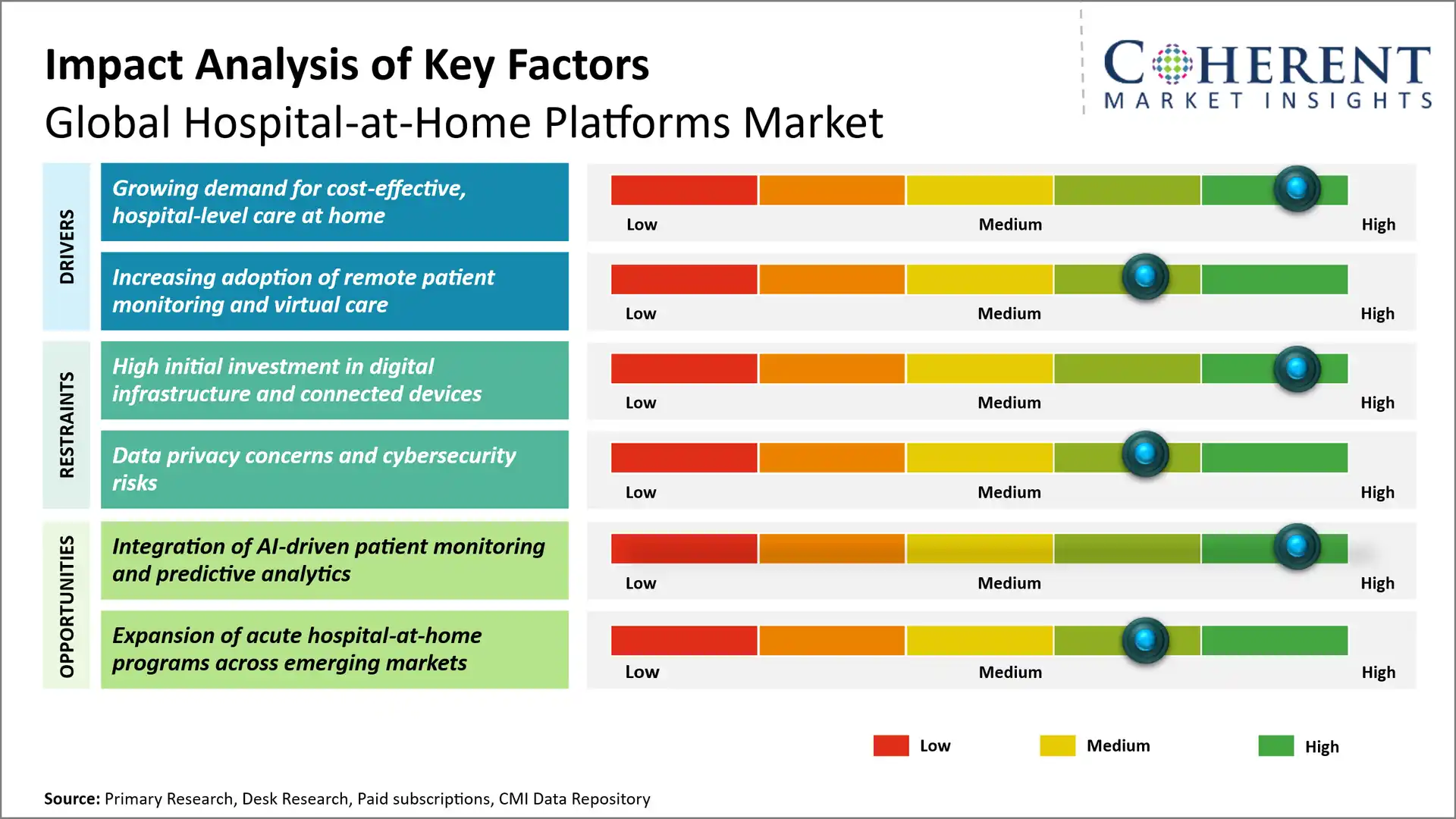
- Growing demand for cost-effective, hospital-level care at home: As the cost of inpatient care continues to rise while the level of care needs to remain consistent, health systems are taking this opportunity to shift their focus to home-based acute care delivery. For instance, in September 2024, a study led by the Centers for Medicare and Medicaid Services found that Medicare spending on post-discharge 30-day periods of care for patients treated at home was, on average, less than that of hospital inpatient care for more than half of the 25 most common diagnosis-related groups.
- Increasing adoption of remote patient monitoring and virtual care: Increased use of virtual consultations and ongoing remote monitoring of patients may encourage healthcare providers to move much of their clinical oversight out of the hospital. For instance, in October 2026 Australia’s New South Wales Agency for Clinical Innovation released updated remote monitoring guidance for providers to implement remote patient monitoring programs for patients with heart failure, type 2 diabetes, and chronic obstructive pulmonary disease.
- Growing pressure on hospital capacity and inpatient resources: The rising strain on hospital capacity and healthcare providers' ability to staff beds is now incentivizing hospital-at-home programmes to identify appropriate inpatient procedures that can be provided at home. For instance, OECD estimated in 2023 that occupancy rates for acute-care beds were above 85% for both Canada and Ireland, which highlights the capacity issue and highlights a need for newer delivery models. This will work in favor of hospital-at-home solutions which can facilitate the better utilization of inpatient services.
Emerging Trends
- Integration of AI-Driven Predictive Patient Monitoring: Hospital-at-Home platforms are increasingly implementing artificial intelligence and predictive analytics as part of their remote monitoring solutions for detecting early signs of deterioration.
- Impact: This enables the health care providers to have prompt clinical interventions, personalize the treatments and modifications for patients, and ensure safety of the patients. It also supports the health care service providers in streamlining the use of resources and reducing avoidable hospital readmission.
- Market Relevance: Increasing implementation of AI powered analytics is strengthening clinical functionality of hospital-at-home platforms. This is compelling providers to leverage intelligent monitoring to treat complex acute and chronic conditions in the home.
- Expansion of Virtual Wards and Integrated Care Coordination: Virtual ward models utilizing remote patient monitoring, teleconsultations, and integrated clinical teams in the home are gaining momentum in healthcare systems.
- Impact: These models allow hospitals to care for certain patients outside the inpatient setting, while maintaining clinical oversight. They also enable hospitals to reduce their number of occupied beds and improve discharge from hospital to home.
- Market Relevance: The growth of virtual wards creates a demand for comprehensive software solutions, associated devices, and centralized clinical oversight. This offers a pathway to technology companies to create scalable solutions for both post-acute and acute care.
Regional Insights
Why is North America a Strong Market for Hospital-at-Home Platforms?
North America leads the global hospital-at-home platforms market, accounting for an estimated 39.4% share in 2026, attributed to the presence of an advanced healthcare infrastructure, large number of digital health technologies, and strong implementation of remote patient monitoring. Furthermore, government policies supporting patient-centric care practices including reimbursement for hospital-at-home services foster demand for these services, ultimately boosting the regional market.
For instance, the Consolidated Appropriations Act, 2026, authorizes the Centers for Medicare & Medicaid Services to extend the Acute Hospital Care at Home initiative until September 30, 2030, allowing eligible hospitals to provide Medicare inpatient-level care at home through the waiver program. Moreover, collaborations among the hospitals, payers, and technology developers contribute towards North America's global market leadership.
Why Does Asia Pacific Hospital-at-Home Platforms Market Exhibit High Growth?
Asia Pacific is expected to exhibit the fastest growth in the global hospital-at-home platforms market, registering an estimated CAGR of 16.2% during 2026–2033. The region is projected to account for 23.1% of the global market in 2026, propelled by the rising healthcare spending, rising geriatric population, and the increasing adoption of economically attractive home-based care. Governments in the countries such as China, Japan, Australia, and India are increasingly investing in the deployment of digital health infrastructure, providing a viable environment for telehealth and remote care services, in addition to establishing digital health policies.
For instance, Australia’s National Digital Health Strategy involves an initiative to develop digital solutions for home-based care, including hospital-delivered care in the home, with implementation targeted through 2028, demonstrating government commitment towards expanding digitally enabled home-care services. (Source: Australian Digital Health Agency) Additionally, the rising smartphone adoption, access to healthcare, and the growing demand for containment of the hospital bed occupancy are the factors that are aiding in the adoption of these technology-enabled home-care models.
Global Hospital-at-Home Platforms Market Outlook for Key Countries
Why is the U.S. Leading Innovation and Adoption in the Hospital-at-Home Platforms Market?
The U.S. accounts for the largest share in hospital-at-home platforms market due to its strong digital healthcare ecosystem, large and mature hospital information technology infrastructure, and strong adoption of remote patient monitoring (RPM) technology Integration. Existing reimbursement models that incentivize hospitals to transition appropriate inpatient care to the home and collaborations between providers and tech companies to drive platform innovation will underpin the rapid growth of this market. The country's large healthcare delivery system will enable large-scale deployment of integrated virtual care, clinical coordination, and monitoring platforms.
Is Japan a Favorable Market for Hospital-at-Home Platforms Market?
Japan is an emerging market for hospital-at-home platforms driven by its rapidly aging population, an existing home-visit medical system, and the current adoption of telemedicine and remote patient monitoring. Governments' push towards further digitalization of healthcare and improved collaboration across hospitals, physicians, and home care providers are potential signals of a demand for integrated monitoring and care management platforms.
Is China Emerging as a Key Growth Hub for the Hospital-at-Home Platforms Market?
China is rapidly transforming into a new growth hub for hospital-at-home platforms market with growing home medical services industry, digital health infrastructure and demand for elderly and chronic disease patient care. Policy initiatives favoring family hospital beds and internet-connected nursing services can foster new growth potential for remote patient monitoring and telehealth services combined with care coordination platform. The high patient population and expanding use cases for technology-enabled home care also point to long-term market potential.
Why Does Germany Top the European Hospital-at-Home Platforms Market?
Germany is a key European market for hospital-at-home platforms, owing to universal statutory health insurance coverage, mature home care services and a solid digital health care landscape. The use of electronic patient records, telematics infrastructure and reimbursable digital health apps creates pathways between hospitals, doctors and home care providers. In addition, the highly structured healthcare system and growing adoption of telemonitoring and virtual care models provide a favorable setting for the expansion of hospital treatment at home.
Is Hospital-at-Home Platforms Market Developing in India?
Hospital-at-home platforms market in India is developing owing to increasing preference for telemedicine, digital health infrastructure expansion, and growing demand for in-home healthcare services. Government campaigns like Ayushman Bharat Digital Mission and eSanjeevani are facilitating digital connectivity among patients and healthcare experts. However, lack of reimbursement scheme and differential availability of advanced home-care services are some of the major barriers hindering the market growth.
Regional Deployment and Technology Adoption Landscape
Region | Key adoption areas | Major platform capabilities | Growth opportunities |
North America | Post-acute care, Acute hospital-at-home | Remote monitoring, virtual care command centers, EHR integration | Expansion of hospital networks and reimbursement-supported programmes |
Europe | Chronic disease management, Acute care | Connected medical devices, telehealth, digital care coordination | Expansion of virtual wards and cross-provider care integration |
Asia Pacific | Acute care, post-acute monitoring | Remote patient monitoring, Mobile health platforms, teleconsultation | Digital health infrastructure expansion and growing demand for home-based care |
Latin America | Chronic care, post-discharge monitoring | Telehealth, connected monitoring devices, cloud-based care platforms | Improved access to specialist care and digitally enabled home healthcare |
Middle East & Africa | Chronic disease monitoring, Acute care | Remote monitoring, virtual consultations, centralized care coordination | Healthcare digitization and investment in home-care infrastructure |
How is the integration of AI-driven patient monitoring and predictive analytics creating new growth opportunities in the hospital-at-home platforms market?
The market for hospital-at-home platforms presents lucrative prospects for growth owing to the use of patient monitoring and predictive analytics with artificial intelligence to enable the early detection of clinical deterioration and interventions. They support improved care coordination, reduce preventable hospital readmissions, and enable home-specific healthcare. For instance, India’s SAATHI-HF is piloting a holistic digital home-care programme in 10 tertiary care centres. The pilot plans to support early detection of worsening heart failure through wearable based monitoring, AI-based prediction of NT-proBNP spikes and tele-medicine, highlighting the growing possibilities of remote monitoring in hospital-at-home care through AI. (Source: Centre for Chronic Disease Control)
Market Players, Key Development, and Competitive Intelligence
Key Developments
- In October 2026, Mulk Technology partnered with OnClarity USA to roll out an AI-based digital healthcare platform targeted at India, which encompassed all elements such as hospital management, telehealth, patient activation, and AI-based workflows. In addition, it offered a preventive home-care program that was complemented with laboratory testing and close patient monitoring.
- In May 2026, Royal Philips unveiled a group of providers including Cuviva and Vingmed, as well as Philips for a contract awarded by Karolinska University Hospital in a tender process to create a hospital-at-home program in Region Stockholm. The target of the programme is to provide digitally connected care and remote patient monitoring for up to 15,000 patients per year to bring hospital-level care into the home.
Competitive Landscape
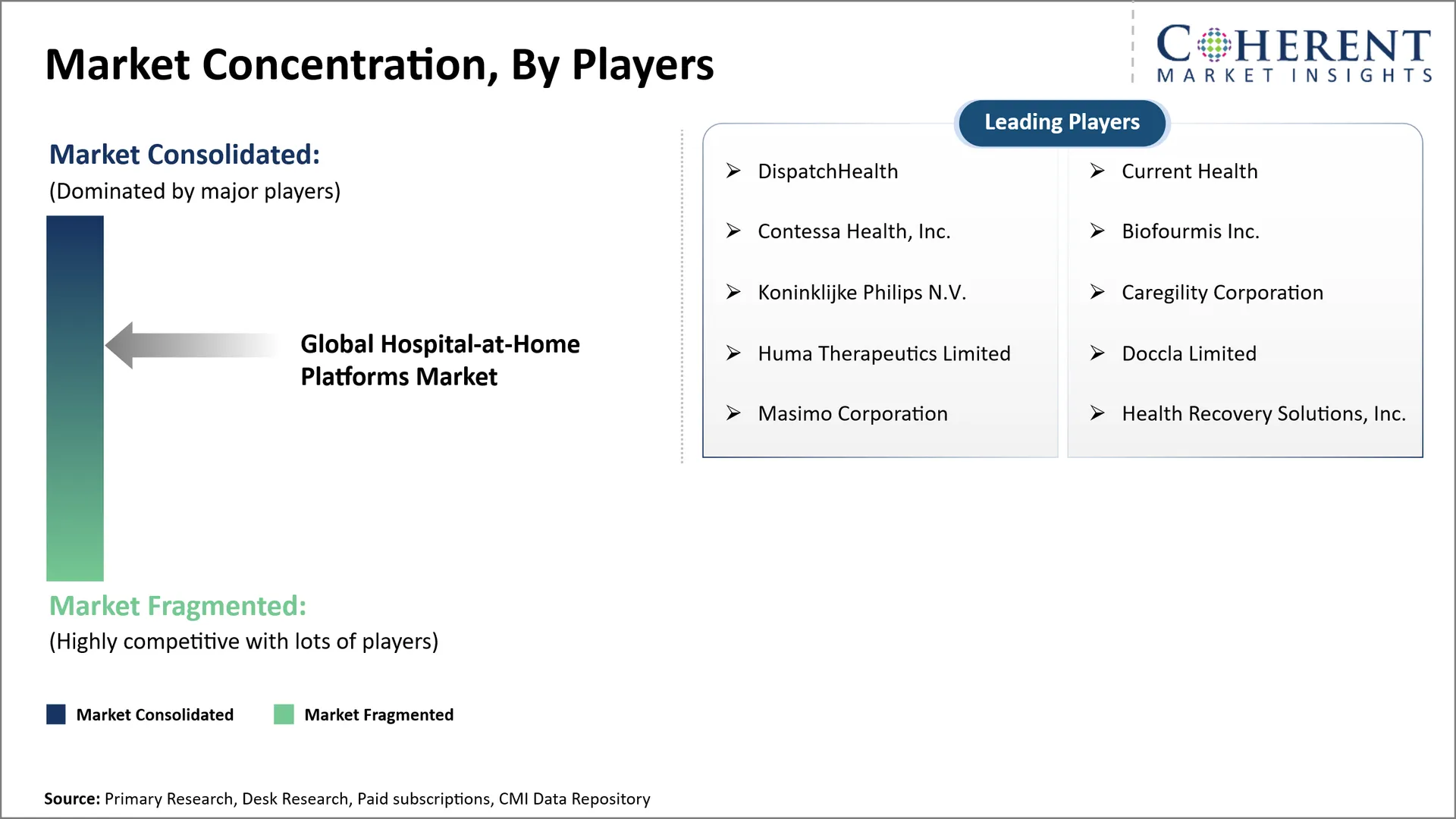
The global hospital-at-home platforms market is fragmented, with a moderate level of concentration based on technology. The market includes the healthcare technology vendors, remote patient monitoring vendors, digital health platform vendors, and home-care services vendors. Competition is mainly based on providing unified platforms that can connect patients, clinicians, medical devices, and hospital information systems for hospital-level care outside of traditional settings. Participants are focusing on increasing remote clinical supervision, strengthening care coordination, and expanding platform functionality across acute, post-acute, and chronic care.
Key focus areas include
- Integrated platforms for Hospital-at-Home services and care coordination
- Medical devices supporting continuous remote monitoring of patients
- Patient risk assessment and predictive analytics powered by AI
- Virtual clinical command center and telehealth functions
- Indissoluble strategical alliances created with hospitals and home health agencies
Market Report Scope
Global Hospital-at-Home Platforms Market Report Coverage | |||
Report Coverage | Details | ||
Base Year | 2025 | Market Size in 2026: | USD 3.65 Bn |
Historical Data For: | 2020 To 2024 | Forecast Period: | 2026 To 2033 |
Forecast Period 2026 To 2033 CAGR: | 19.1% | 2033 Value Projection: | USD 12.40 Bn |
Geographies covered: |
| ||
Segments covered: |
| ||
Companies covered: | Dispatch Health, Current Health, Contessa Health, Inc., Biofourmis Inc., Koninklijke Philips N.V., Caregility Corporation, Huma Therapeutics Limited, Doccla Limited, Masimo Corporation, and Health Recovery Solutions, Inc. | ||
Growth Drivers: |
| ||
Restraints & Challenges: |
| ||
Analyst Opinion (Expert Opinion)
- The hospital-at-home platforms market is expected to move from a complementary care approach to a core element of health delivery. Shrinking hospital capacity and a growing need for efficient treatment will drive clinicians to shift some inpatient services to the home setting. Over time, the market will shift towards integrated platforms that are based on remote patient monitoring, clinical insights with AI, telehealth and collaborative care.
- The greatest opportunities are in acute hospital-at-home applications, mostly in the areas of heart disease, lung disease, and post-surgical care, which will require remote monitoring and, in many cases, clinical intervention. The U.S. will be the largest opportunity for hospital-at-home due to the current hospital-at-home ecosystem and reimbursement structures. In the longer term, India and China will be opportunities via the accelerated growth of digital health infrastructure and patient base.
- In order to gain a competitive advantage market players should focus on interoperable platforms that connect medical devices, EHRs, telehealth, and clinical command centers. Investments in real-time patient deterioration alerts driven by AI, cyber security and user experience design, can be drivers of differentiation. Building strategic partnerships with hospital, health systems, health insurers, and home healthcare provider companies will help accelerate deployments, extend their capabilities, and scale commercialization.
Speak to the analyst
Want personalized insights?
Take the findings above to one of our principal consultants, or have the report rebuilt around the segments, geographies and competitors you actually track.
Market Segmentation
- Component Insights (Revenue, USD Bn, 2021 - 2033)
- Software Platforms
- Medical Devices and Connected Monitoring Kits
- Services and Implementation Support
- Care Model Insights (Revenue, USD Bn, 2021 - 2033)
- Acute Hospital-at-Home
- Post-Acute and Transitional Care
- Chronic Care at Home
- Technology Insights (Revenue, USD Bn, 2021 - 2033)
- Remote Patient Monitoring
- Care Coordination and Clinical Command Centers
- Telehealth and Virtual Consultations
- End User Insights (Revenue, USD Bn, 2021 - 2033)
- Hospitals and Health Systems
- Home Healthcare Providers
- Payers and Risk-Bearing Organizations
- Others
- Regional Insights (Revenue, USD Bn, 2021 - 2033)
- North America
- U.S.
- Canada
- Latin America
- Brazil
- Argentina
- Mexico
- Rest of Latin America
- Europe
- Germany
- U.K.
- Spain
- France
- Italy
- Russia
- Rest of Europe
- Asia Pacific
- China
- India
- Japan
- Australia
- South Korea
- ASEAN
- Rest of Asia Pacific
- Middle East
- GCC Countries
- Israel
- Rest of Middle East
- Africa
- South Africa
- North Africa
- Central Africa
- North America
- Key Players Insights
- Dispatch Health
- Current Health
- Contessa Health, Inc.
- Biofourmis Inc.
- Koninklijke Philips N.V.
- Caregility Corporation
- Huma Therapeutics Limited
- Doccla Limited
- Masimo Corporation
- Health Recovery Solutions, Inc.
Sources
Primary Research Interviews
- Hospital-at-home program directors and clinical administrators
- Remote patient monitoring and digital health technology specialists
- Healthcare IT and clinical informatics professionals
- Home healthcare physicians and nursing professionals
Stakeholders
- Hospital-at-home platform developers
- Remote patient monitoring device manufacturers
- Healthcare technology and software providers
- Hospitals, health systems, and home healthcare service providers
- End-use Sectors
- Hospitals and integrated health systems
- Home healthcare agencies
- Specialty clinics and ambulatory care providers
- Health insurance companies and value-based care organizations
- Regulatory & Health Bodies
- U.S. Food and Drug Administration (FDA)
- Centers for Medicare & Medicaid Services (CMS)
- National Health Service (NHS), England
- European Commission – Directorate-General for Health and Food Safety (DG SANTE)
Databases
- CMS Acute Hospital Care at Home Program Database
- AHRQ Healthcare Cost and Utilization Project (HCUP)
- NHS England Virtual Wards Data
- WHO Global Health Observatory
Associations
- American Hospital Association (AHA)
- Hospital at Home Users Group (HaHUG)
- Healthcare Information and Management Systems Society (HIMSS)
- National Association for Home Care & Hospice (NAHC)
Public Domain Sources
- Centers for Medicare & Medicaid Services (CMS)
- Agency for Healthcare Research and Quality (AHRQ)
- National Institutes of Health (NIH)
- NHS England
Proprietary Elements
- CMI Data Analytics Tool
- Proprietary CMI Existing Repository of information for last 10 years.
Get access to 250+ pages report
Every segment, forecast, competitor profile and data table behind the analysis above — available for instant download.
- ESOMAR Member
- ISO 9001:2015 Certified
- D-U-N-S Registered
- GDPR & CCPA Compliant
Frequently Asked Questions
The global hospital-at-home platforms market is estimated to be valued at USD 3.65 Bn in 2026 and is expected to reach USD 12.40 Bn by 2033.
Software platforms dominate as it is essential for care co-ordination, monitoring and connecting clinical data, and supporting remote care.
Hospital-at-home platforms are end-to-end solutions that enable hospitals to deliver and monitor hospital-level care in the homes of patients remotely via remote patient monitoring, telehealth, and integrated clinical services.
The CAGR of global hospital-at-home platforms market is projected to be 19.1% from 2026 to 2033.
Growing demand for cost-effective, hospital-level care at home, increasing adoption of remote patient monitoring and virtual care are the major factors driving the growth of the global hospital-at-home platforms market.
High initial investment in digital infrastructure and connected devices, and data privacy concerns and cybersecurity risks are the major factors hampering the growth of the global hospital-at-home platforms market.
In terms of technology, remote patient monitoring is estimated to dominate the market revenue share in 2026.