

Hospital-at-Home Services Market Size and Share Analysis- 2026 To 2033
The Hospital-at-Home Services Market size is anticipated to grow at a CAGR of 11.9%, with USD 20.48 Bn in 2026, and is expected to reach USD 44.99 Bn by 2033. The main drivers for the market are mainly the rising incidence of chronic diseases, growing elderly population, increasing demand for affordable home-based healthcare services, and increasing adoption of remote patient monitoring and telehealth technologies. The growing focus on reducing hospital readmissions, optimizing healthcare expenditure and improving patient outcomes further catalyzes the market growth. The U.S. Centers for Medicare & Medicaid Services (CMS) as of Oct. 19, 2026, said there are 358 approved hospital facilities within 134 healthcare systems in 37 states under its Acute Hospital Care at Home initiative, which includes the existing infrastructure to provide hospital-level services at home.
Key Takeaways of the Global Hospital-at-Home Services Market
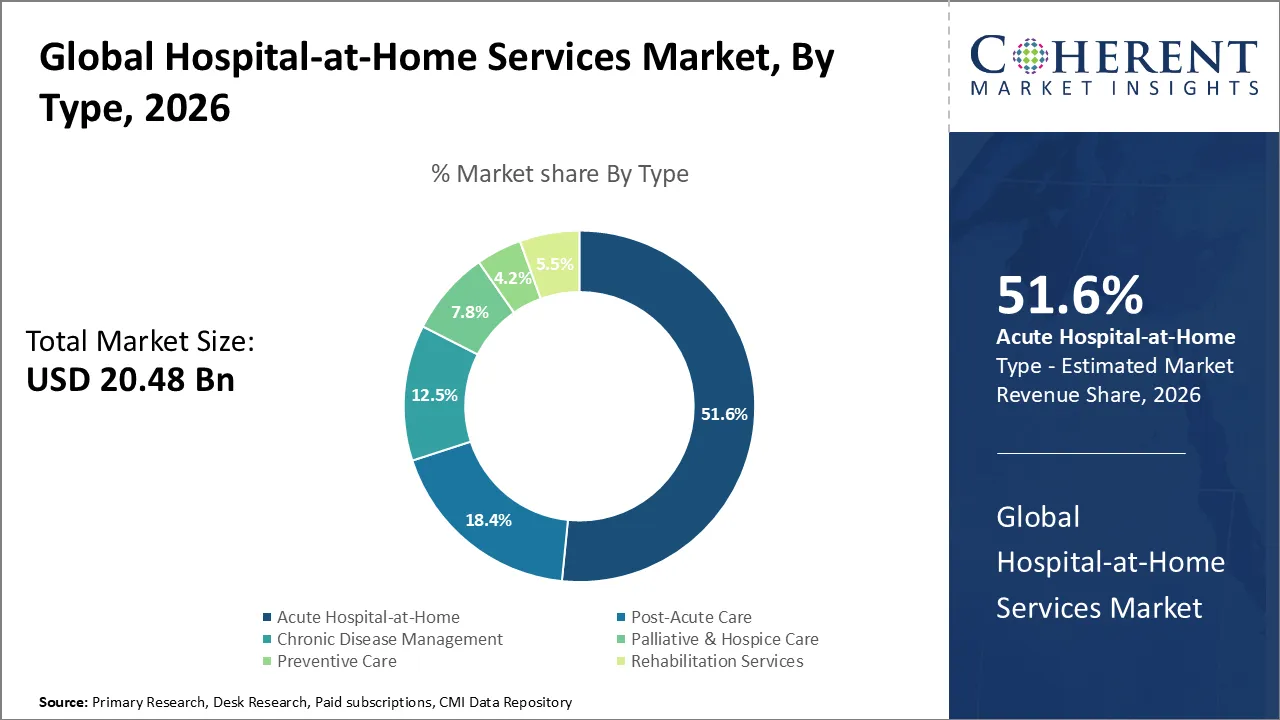
- The Acute Hospital-at-Home segment is expected to hold 51.6% of the global hospital-at-home services market share in 2026. The segment is witnessing growth due to increased adoption of hospital level clinical care in residential settings and increased demand for alternatives to traditional inpatient hospitalization. By March 2025, NHS England said virtual ward capacity in England had topped 10,000 beds, showing the growth of the infrastructure for hospital-level care outside of the traditional inpatient setting.
- The Elderly Care segment will be projected to hold 25.0% of the global hospital-at-home services market share in 2026. The segment growth is driven by the growing geriatric healthcare needs, age-related chronic conditions, and demand for customized home-based medical treatment. In March 2026, Singapore acknowledged its super-aged society status with 20.7% of its population aged 65 and above as of June 2025, according to the Ministry of Health, Singapore, indicating the growing demand for accessible healthcare services for the elderly.
- The Skilled Nursing segment is projected to hold a 27.0% share of the global hospital at home services market in 2026. Increasing demand for specialized nursing supervision, medication administration, clinical assessments and post-discharge care is aiding segment growth. The U.S. Bureau of Labor Statistics projects there will be about 180,800 openings each year for registered nurses between 2025 and 2035, according to its 2026 employment outlook. This suggests a continuing need for qualified nursing professionals in all healthcare settings, including home-based care.
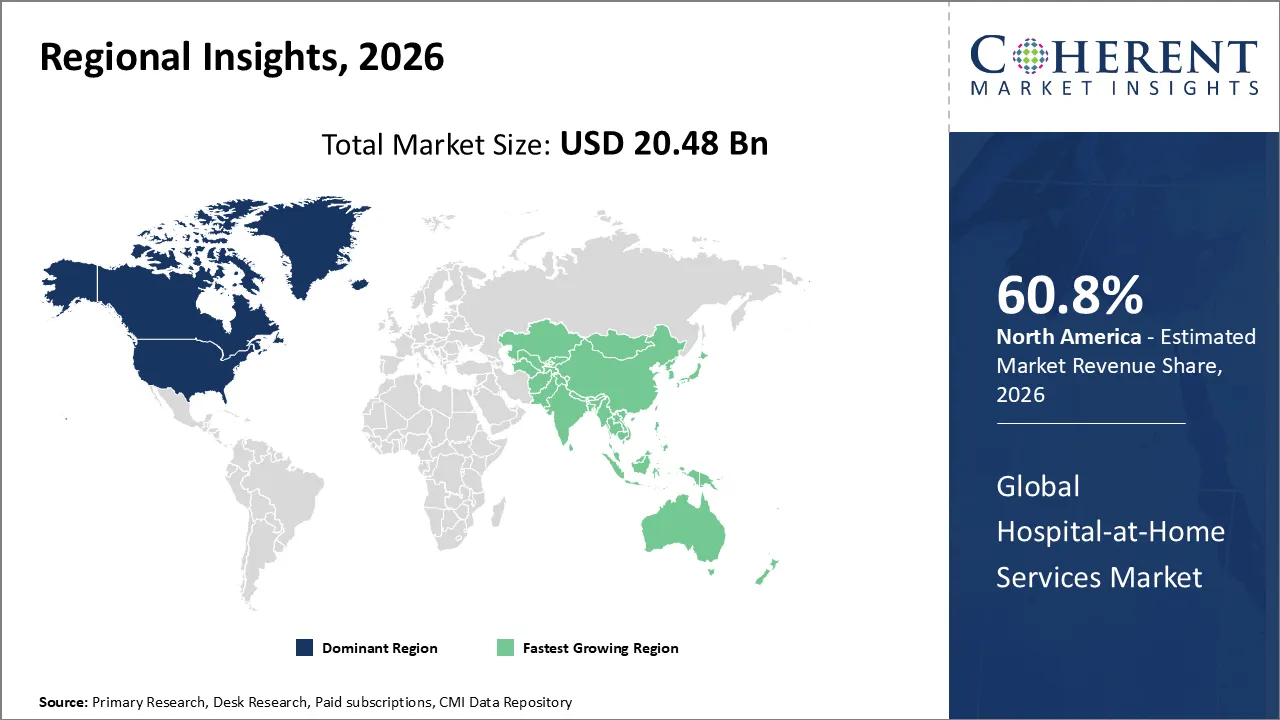
- North America is expected to account for the largest share of the global hospital-at-home services market by 2026, with a projected market share of 60.8%. Regional growth is being driven by established reimbursement structures, the growing incorporation of hospital-at-home programs into healthcare delivery systems and the expansion of remote clinical monitoring capabilities. On March 17, 2026, the U.S. Centers for Medicare & Medicaid Services (CMS) released the second public data set for its Acute Hospital Care at Home initiative, covering April 2023 through September 2025 and bringing total available program data to nearly five years to support further evaluation of home-based acute care.
- The Asia Pacific is projected to be the fastest growing regional market with an estimated growth of approximately 18.7%. Regional expansion is driven by demand for low-cost hospital alternatives, the proliferation of home-based clinical programs and increased investment in decentralized healthcare infrastructure. As of December 2024, the Mobile Inpatient Care at Home (MIC@Home) program in Singapore has about 185 operational beds, with an average patient stay of six days, showing the provision of hospital care in residential settings, according to Singapore’s Ministry of Health in January 2025.
Segmental Insights
Why Does Acute Hospital-at-Home Dominate the Global Hospital-at-Home Services Market?
The Acute Hospital-at-Home segment is expected to hold 51.6% share of the global hospital-at-home services market in 2026. The segment’s leadership position is driven by growing demand for hospital-level care outside of traditional healthcare settings, increased pressure on inpatient bed capacity, and rising adoption of home-based acute care programs. These services allow eligible patients to receive intravenous medications, diagnostic assessments, continuous clinical supervision and other hospital-level interventions in their homes. Wider adoption is also being helped by the integration with remote patient monitoring, telemedicine and mobile healthcare teams. Healthcare providers are increasingly implementing acute hospital-at-home services to enhance patient comfort, optimize hospital resources and reduce unnecessary hospitalizations.
According to arandomized clinical trial of 161 rural patients published in JAMA Network Open in December 2025 showed that patients receiving hospital-level care at home averaged 834 steps a day compared with 120 steps among patients receiving conventional hospital care, a sign of improved physical activity with home-based acute care.
- Current Industry Events of 2026
- Market Size Estimation
- Regional Breakdown
- Competitive Landscape
- Customer Intelligence
- Segmental Analysis
- Pricing Analysis
- Key Market Drivers, Challenges & Future Trends
- Customized Insights Section
Why Does Elderly Care Lead the Application Segment in the Global Hospital-at-Home Services Market?
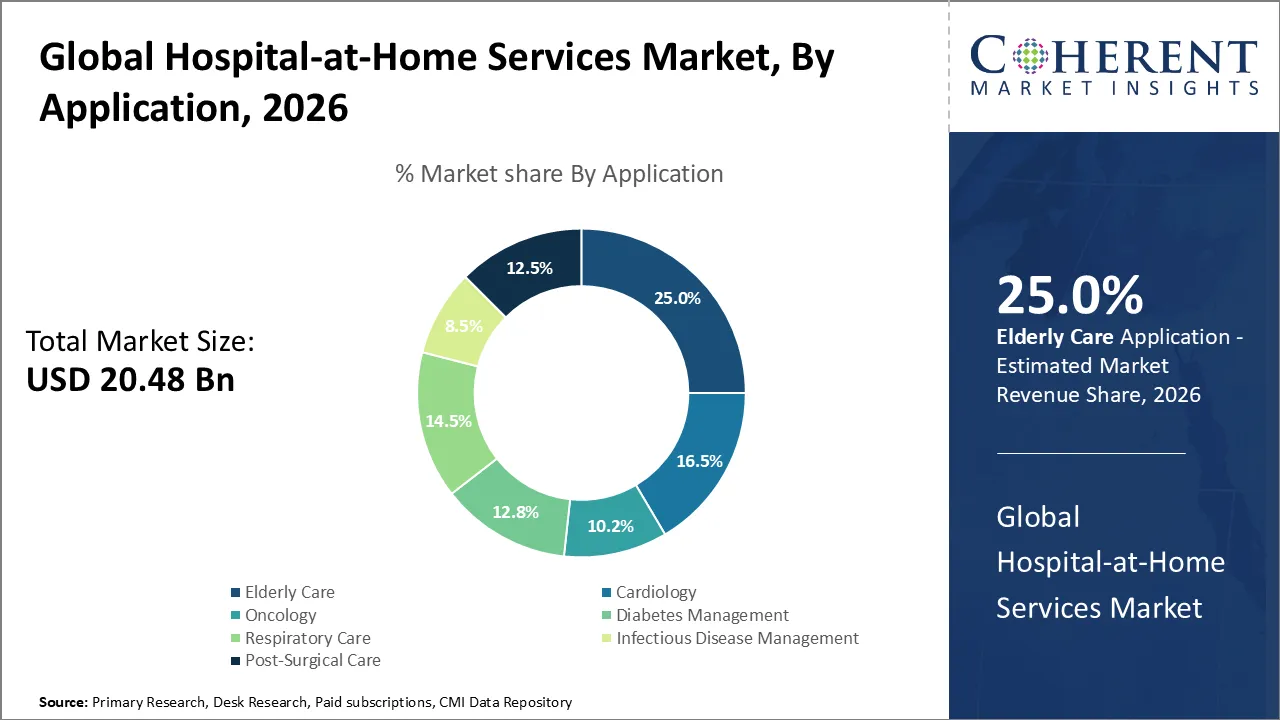
The Elderly Care segment is anticipated to hold 25.0% share of the global hospital-at-home services market in 2026. The increasing prevalence of age-associated medical disorders, rising healthcare needs of the geriatric population, and increasing preference for treatment in familiar residential settings are fueling the segment growth. Older patients frequently need coordinated medical care, drug management, rehabilitation and monitoring after acute illness or hospitalization. The hospital-at-home service meets these needs through multidisciplinary clinical teams and personalized treatment regimens. Moreover, healthcare systems are increasingly focusing on home-based treatment models to reduce unnecessary hospitalizations, ensure care continuity, and enhance access to healthcare for the aging population.
According to December 31, 2025, there were around 403,000 adults aged 65 years and over in England receiving long-term support, according to the UK Department of Health and Social Care, highlighting the significant healthcare and care-support needs of aging populations
Why Does Skilled Nursing Dominate the Service Segment in the Global Hospital-at-Home Services Market?
The Skilled Nursing segment is estimated to hold 27.0% share of the global hospital-at-home services market in 2026. Increasing demand for professional nursing supervision, administration of medication, wound management, intravenous therapy and clinical support after hospitalization is driving the growth of the segment. Skilled nursing professionals are critical to hospital-at-home programs, performing patient assessments, monitoring vital signs, detecting clinical deterioration, and working with physicians and multidisciplinary care teams to provide treatment. Increasing preference for home-based care for patients that require frequent clinical interventions further strengthen the demand for specialized nursing services. Remote monitoring technology and digital health records are also helping home-based nursing teams and hospital clinicians coordinate their care better.
According to the Center for Health Care Transformation and Innovation at the University of Pennsylvania says its Hospital at Home program, launched in April 2026, includes twice daily, in-person nursing visits, daily virtual physician consultations and continuous remote monitoring of vital signs. The program enrolled its 100th patient in five months, demonstrating the integration of skilled nursing into emerging hospital-at-home delivery models
Current Events and Their Impact on the Hospital-at-Home Services Market
Current Event | Description and its Impact |
U.S. Government Extends Acute Hospital Care at Home Waivers Through September 2030 (February 2026) |
|
Singapore Government Advances Nationwide Integration of Mobile Inpatient Care at Home (July 2026) |
|
Hospital-at-Home Services Market Dynamics
Market Drivers
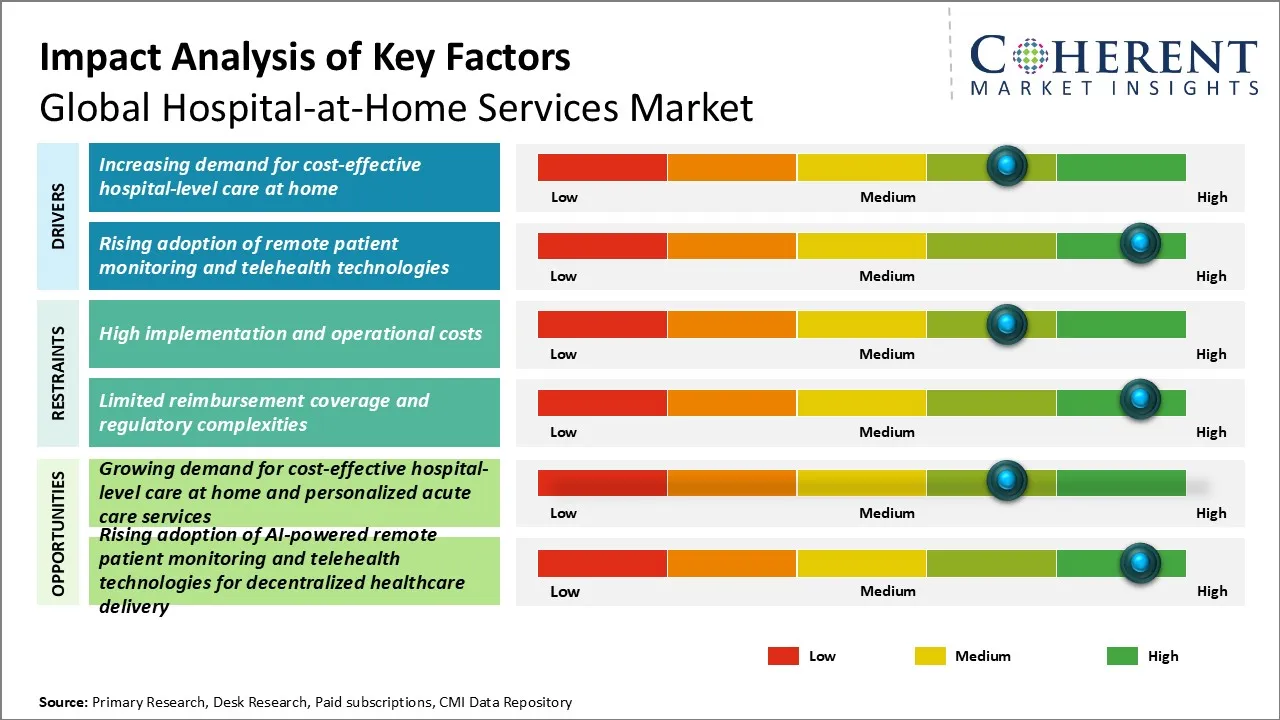
- Growing demand for cost-effective hospital-grade care at home: The global hospital-at-home services market is growing due to the mounting pressure to reduce healthcare expenditure and optimize inpatient hospital capacity. Traditional hospitalization is a heavy expenditure on hospital infrastructure, clinical staff, inpatient accommodation and facility operations. Hospital-at-home programs are an alternative that brings hospital-level medical care to eligible patients in their homes. The programs combine physician oversight, skilled nursing care, medication administration and clinical monitoring to allow acute care treatment without the need for long-term conventional hospitalization. Such models are being adopted increasingly by healthcare providers to enhance resource utilization, reduce preventable inpatient bed occupancy and ensure continuity of care. Moreover, the prospect of reducing treatment costs while achieving comparable clinical results is motivating healthcare systems to expand home-based acute care services.
- In a 2026 study in BMJ Open, researchers studied hospital-at-home services in Singapore involving 302 patients, half receiving hospital-at-home and half conventional inpatient care. The study found that hospital-at-home care had a lower median cost per day, estimated to save S$676 per day compared with conventional hospitalization. The program also saved 682 hospital bed-days, demonstrating its ability to improve the use of healthcare resources without significant differences in measured clinical outcomes.
- Growing need for customized acute care for the elderly: The growing demand for customized medical care for the aging population is propelling the expansion of the global hospital at home services market. Older patients often have multiple chronic conditions, functional limitations and increased susceptibility to complications associated with prolonged hospitalization. Hospital-at-home models allow eligible patients to receive coordinated clinical treatment in familiar residential environments, while retaining access to physicians, nursing professionals, rehabilitation services and diagnostic support. These services can help to reduce unnecessary hospital transfers, support functional independence, and improve continuity of care after acute medical episodes. Healthcare systems are becoming increasingly aware of the need for geriatric assessments, customized care plans and multidisciplinary clinical supervision of hospital at home services. There is potential for better recovery outcomes and fewer avoidable readmissions, which strengthens demand for these types of care models.
- A systematic review and meta-analysis published April 16, 2026, in Gerontology reviewed 11 randomized controlled trials involving 3,301 patients that compared hospital-at-home services to standard hospitalization in older adults. The findings showed significantly shorter hospital stays and lower total health care costs for hospital-at-home patients.
Hospital-at-Home Services Market Trends
- Growing adoption of remote patient monitoring and wearable medical devices is enhancing delivery of hospital level care in residential settings. A study published in September 2026 in JMIR Formative Research found that passive monitoring captured heart-rate data in 89.0% of four-hour monitoring periods for acutely ill hospital-at-home patients, showing the feasibility of connected monitoring technologies.
- The growing preference for telemedicine-based, virtual-first hospital-at-home services facilitates personalized treatment and remote clinical supervision. In May 2026, a study published in Telemedicine and e-Health involving 887 hospital-at-home patients in Spain reported an overall patient satisfaction rate of 96.5%, with the same percentage willing to choose the care model again.
- Artificial intelligence and predictive analytics are becoming more prevalent, and hospitals are automating patient eligibility checks and enhancing clinical coordination. Massachusetts General Hospital, Healthcare Transformation Lab, Hospital-at-Home Technology Roadmap, with examples of emerging use cases for predictive analytics, generative AI, and automated logistics management, July 2026.
Regional Insights
Why Does North America Dominate the Global Hospital-at-Home Services Market?
North America is estimated to dominate the global hospital-at-home services market with an indicative market share of 60.8% in 2026. The region benefits from existing healthcare infrastructure, rising adoption of home-based acute care programs and increasing investment in technology-enabled clinical services. In the U.S., regional development is shaped by hospital-based models of care delivery, Medicare reimbursement schemes, and partnerships between healthcare systems and home-based medical service providers. Canada is also expanding hospital-connected home care services to improve patient transitions, reduce preventable hospital use and increase access to individualized care. The combination of remote patient monitoring, telehealth consultations, and coordinated clinical teams is also driving growth in the regional market. To optimize hospital capacity and meet growing needs for accessible medical services, health care providers are increasingly focusing on decentralized care delivery.
According to Trillium Health Partners’ 2026–2027 Quality Improvement Plan, its THP@home program in Ontario, Canada, served 943 patients in the first half of fiscal 2025–2026, including 361 patients referred directly from emergency departments. The program also created the equivalent of 32 inpatient beds by providing care at home, highlighting the growing reliance on hospital-affiliated home care services in North America.
Why Does Asia Pacific Exhibit the Fastest Growth in the Global Hospital-at-Home Services Market?
Asia Pacific is anticipated to be the fastest growing regional market predicting a growth of about 18.7%. Growing demand for healthcare, pressure on hospital infrastructure and increasing adoption of home-based clinical treatment models support regional expansion. Countries such as Australia, Singapore, Japan, China and India are increasingly turning to alternatives to traditional inpatient care, including hospital-in-the-home programs, virtual clinical consultations and remote health monitoring. Australia has created hospital-in-the-home services as part of its public health system, while other countries are developing technology-enabled models to enhance access to care and clinical coordination. The growth of the regional market is expected to be strengthened by increasing investment in digital healthcare infrastructure, connected medical devices, and multidisciplinary home-based treatment teams.
According to the New South Wales Bureau of Health Information’s Healthcare Quarterly Report (January–March 2026) indicates that there were 9,727 acute overnight episodes of care involving Hospital in the Home (HITH) services during January–March 2026, compared with 8,700 episodes in the same period in 2025 – a year-on-year increase of 10.6%. This reflects the growing use of hospital-in-the-home services in the Australian public health care system
Global Hospital-at-Home Services Market Outlook for Key Countries
Why is the U.S. a Major Hub in the Hospital-at-Home Services Market?
The US hospital-at-home services market is being driven by the increasing acceptance of acute care delivery outside of traditional inpatient facilities, rising investment in remote clinical monitoring, and efforts to improve hospital capacity utilization. Medicare’s Acute Hospital Care at Home program has created an important reimbursement pathway for qualifying hospitals, enabling the delivery of the level of care provided to inpatients in patients’ homes. In increasing numbers, healthcare providers are integrating physician consultations, diagnostic tests, intravenous therapies, and coordinated nursing visits into their home-based care models. However, differences in state licensing requirements and operational regulations continue to affect program expansion.
An observational analysis of Medicare beneficiaries published in JAMA Network Open on May 5, 2026, found that hospital-at-home care was associated with an in-hospital mortality rate of 0.4%, compared with 3.6% among conventional inpatient admissions. It covered 4,174 hospital-at-home admissions and 11,697 conventional inpatient admissions and found evidence of good outcomes in selected patients, although the comparison was not indicative of causation.
Is China Emerging as a Growth Opportunity for the Hospital-at-Home Services Market?
China’s hospital-at-home services market is gaining from rising policy support for medical treatment at residential settings, increasing needs for long-term clinical supervision, and initiatives to improve access to community healthcare. Medical facilities are increasing home-based care for patients who need ongoing medical monitoring, rehabilitation and nursing care. The increased standardization of patient eligibility, clinical procedures and healthcare provider responsibilities is expected to stimulate expansion of services, especially for older adults and patients with mobility limitations.
In April 2026, the Chinese National Health Commission said that primary healthcare institutions across the country had established over 370,000 home hospital beds during 2025, and had issued nearly 190 million long-term prescriptions for patients with chronic diseases. The figures indicate the growing provision of home-based medical treatment and ongoing clinical support, enhancing the opportunities for hospital-at-home and related home healthcare services in China.
Germany Hospital-at-Home Services Market Analysis and Trends
The German hospital-at-home market is supported by the gradual expansion of hospital-equivalent psychiatric care, increasing demand for coordinated home-based clinical care, and efforts to improve access to specialized health services. Germany’s model of Stationsäquivalente Behandlung (StäB) allows eligible patients with severe psychiatric conditions to be treated at home by multidisciplinary clinical teams on a hospital-equivalent basis. The model includes physician oversight, nursing care, psychological support and routine patient assessments. Increased adoption of digitally coordinated treatment and partnerships between hospitals and communities are expected to strengthen the country’s home-based care infrastructure.
On July 22, 2026, University Hospital Carl Gustav Carus Dresden reported that 60 patients have been treated at home with hospital-equivalent psychiatric care through its StäB program, launched in late 2025. The program requires a minimum of 1 daily patient contact in person. Multidisciplinary teams provide service 7 days a week. This illustrates the increasing development of specialized hospital-equivalent care models in Germany.
U.K. Hospital-at-Home Services Market Analysis and Trends
The U.K. hospital-at-home services market is growing, due to the launch of NHS virtual wards, a rising demand for alternatives to traditional inpatient admission, and efforts to enhance care coordination between hospitals and community healthcare providers. Virtual wards allow eligible patients to be treated as if they were in hospital, with clinical treatment at home, remote monitoring, and direct clinical supervision from multidisciplinary teams. Healthcare organizations are increasingly implementing virtual wards in treatment pathways for respiratory conditions, frailty and other conditions requiring short-term intensive monitoring. Standardized data collection is also enhancing the evaluation of services, the planning of capacity and the monitoring of patient utilization across NHS providers.
According to the 2026 Virtual Ward reporting framework from NHS England includes monthly statistical reporting on virtual ward capacity, occupancy rates and available places per 100,000 population. Provider-level reporting is in place since April 2025. The national dataset has monthly observations since July 2023
Japan Hospital-at-Home Services Market Analysis and Trends
The Japanese hospital-at-home services market is growing due to rising elderly patient demand, existing home-visit medical services, and efforts to improve coordination between hospitals, community clinics, and home-based nursing providers. Japan promotes continuity of care through physician home visits, rehabilitation, pharmaceutical management, and supervised clinical care. More intensive home care is possible with electronic medical records, remote patient monitoring, and multidisciplinary treatment teams. Traditional in-home medical care and hospital-level acute care are different, so market segmentation is crucial.”
According to a the survey, published by the Japan Medical Association Research Institute on December 17, 2025, gathered responses from 1,403 clinics, including 1,183 facilities that were actively offering home medical care. Of these providers, 73.4% were registered as home-care support clinics. The survey also found that each facility treated an average of 23.6 home-care patients and made 58.3 home visits in March 2025, underscoring Japan’s highly developed capability in providing physician-supervised medical care in homes.
How is the Increasing Adoption of AI-Powered Remote Patient Monitoring Creating New Growth Opportunities in the Hospital-at-Home Services Market?
The global hospital-at-home services market is observing substantial growth opportunities by enabling the adoption of artificial intelligence-powered remote patient monitoring and connected healthcare technologies. Wearable medical devices, predictive analytics, virtual consultations and automated clinical monitoring systems are increasingly being used by medical providers to bring hospital-level treatment to patients’ homes. The technologies allow for ongoing monitoring of vital signs, identification of clinical deterioration at an early stage and timely medical interventions, without the need for traditional in-patient hospitalization. Hospitals are also using AI-based patient selection tools to identify patients who meet the criteria to receive home-based acute care programs, improving operational efficiency and the allocation of clinical resources.
For example, on August 6, 2026 Royal Philips announced collaborations with six technology companies, including Cuviva, LifeSignals and Respiree, to expand wearable and out-of-hospital monitoring capabilities. These developments show opportunities for providers to offer integrated remote monitoring, AI-powered clinical workflows and scalable hospital-at-home platforms.
Market Players, Key Development, and Competitive Intelligence
Key Developments
- On June 4, 2025, DispatchHealth announced the completion of its merger with Medically Home to create an integrated platform for complex medical care in patients’ homes. The combined organization will operate as DispatchHealth, combining clinical services, technology, logistics and hospital-level treatment capabilities.
- On May 18, 2026, Royal Philips announced a consortium of Philips, Cuviva and Vingmed was chosen to support Region Stockholm’s hospital-at-home initiative. The deal could last up to eight years and is aimed at helping bring hospital-level care at home to as many as 15,000 patients a year through remote monitoring.
Competitive Landscape
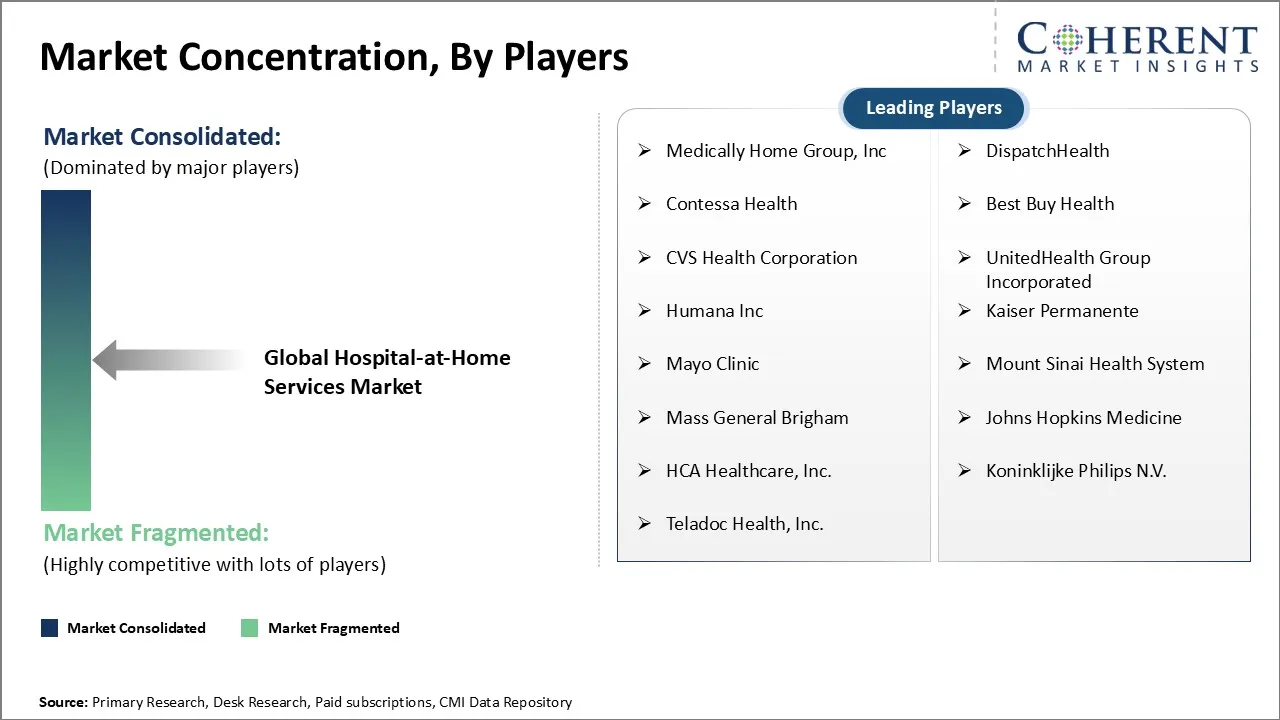
The global hospital-at-home services market is highly competitive, with key players focusing on remote patient monitoring, integrated clinical care, and technology-enabled home healthcare. DispatchHealth has strengthened its position through its merger with Medically Home, while Contessa Health, Kaiser Permanente, and Mayo Clinic are expanding hospital-at-home services through healthcare partnerships. Royal Philips and Teladoc Health support decentralized care through digital health and remote monitoring solutions. Key competitive factors include clinical outcomes, cost efficiency, reimbursement capabilities, technological innovation, and strategic partnerships.
Top Manufacturers and Notable Products/Solutions in the Hospital-at-Home Services Market
Company/Manufacturer | Notable Product/Brand | Key Features |
DispatchHealth (including Medically Home) | Advanced Care / Hospital Alternative Care at Home | Hospital-level acute care at home, mobile clinical teams, integrated medical logistics, technology-enabled care coordination, hospital waiver program support |
Mayo Clinic | Advanced Care at Home | 24/7 virtual clinical support, physician-led care, remote vital-sign monitoring, IV therapy, mobile diagnostic imaging, in-home nursing visits |
Kaiser Permanente | Advanced Medical Care at Home | Acute care for eligible patients, in-person and telehealth consultations, IV antibiotics, laboratory testing, diagnostics, 24/7 clinical support |
Mass General Brigham | Home Hospital | Inpatient-level treatment at home, 24/7 remote monitoring, daily clinician visits, telehealth consultations, medication administration, portable diagnostic services |
Mount Sinai Health System | Hospitalization at Home | Physician-supervised acute care, nursing visits, IV medications, laboratory services, oxygen therapy, 24/7 on-call medical support |
Royal Philips | Hospital-at-Home Remote Monitoring Solution (Region Stockholm) | Continuous vital-sign monitoring, ECG and oxygen saturation monitoring, digital clinical communication, video consultations, connected care pathways |
Market Report Scope
Hospital-at-Home Services Market Report Coverage
Report Coverage | Details | ||
Base Year: | 2025 | Market Size in 2026: | USD 20.48 Bn |
Historical Data for: | 2020 to 2024 | Forecast Period: | 2026 to 2033 |
CAGR: | 11.9% | 2033 Value Projection: | USD 44.99 Bn |
Geographies covered: |
| ||
Segments covered: |
| ||
Companies covered: | Medically Home Group, Inc., DispatchHealth, Contessa Health, Best Buy Health, CVS Health Corporation, UnitedHealth Group Incorporated, Humana Inc., Kaiser Permanente, Mayo Clinic, Mount Sinai Health System, Mass General Brigham, Johns Hopkins Medicine, HCA Healthcare, Inc., Koninklijke Philips N.V., Teladoc Health, Inc. | ||
Growth Drivers: |
| ||
Restraints & Challenges: |
| ||
Analyst Opinion (Expert Opinion)
- The future of the global hospital-at-home services market will be marked by the delivery of integrated hospital-level clinical care, as opposed to stand-alone home healthcare services. Healthcare providers will need to marry remote patient monitoring, physician-led virtual consultations, skilled nursing, and mobile diagnostic services to support acute care delivery in a residential setting. Patient selection, clinical escalation protocols and ongoing medical supervision will, however, remain critical to ensure patient safety. A study published in Internal and Emergency Medicine in November 2026 involving 10,167 hospital-at-home episodes found that around 5.0% required unplanned transfer to conventional inpatient care, demonstrating the need for structured clinical monitoring and timely escalation pathways.
- The biggest growth opportunities are likely to be scalable hospital-at-home networks, technology-enabled acute care programs and partnerships between hospitals and specialty home-based healthcare providers. Asia Pacific is expected to benefit from growing investment in decentralized healthcare delivery, whereas North America is set to benefit from established healthcare systems and hospital-at-home reimbursement arrangements. Providers should concentrate on integrated clinical staffing, physician referral networks, remote monitoring infrastructure and flexible treatment pathways to support sustainable service growth. Implementation Science Communications published a study in October 2026 that reported that over 36 months, a hospital-at-home program in Singapore treated 3,908 patients and grew its virtual bed capacity from 6–25 beds to 50–90 beds over three phases of development. Referring physicians also increased from 43 to 151, proving the benefit of clinical partnerships and organized capacity growth.
- Market players need to distinguish themselves more and more on measurable clinical outcomes, patient safety, caregiver support and cost-effective service delivery, rather than digital healthcare capabilities. Consistent treatment outcomes, solid patient monitoring, clear reimbursement models, and coordinated emergency escalation systems are what hospital-at-home providers must prove. There is also a need to emphasize more on caregiver assessment, home-based clinical logistics, and patient-centric treatment models to enhance the accessibility of services and long-term adoption. A July 2026 study of 125 caregivers of hospital-at-home patients published in the Journal of the American Geriatrics Society found that approximately 61.6% reported high caregiver burden in the first 48 hours of treatment. The findings point to the need for caregiver assistance and structured support mechanisms to be incorporated into the delivery of hospital-at-home services.
Speak to the analyst
Want personalized insights?
Take the findings above to one of our principal consultants, or have the report rebuilt around the segments, geographies and competitors you actually track.
Market Segmentation
- By Type (Revenue, USD Bn, 2021-2033)
- Acute Hospital-at-Home
- Post-Acute Care
- Chronic Disease Management
- Palliative & Hospice Care
- Preventive Care
- Rehabilitation Services
- By Application (Revenue, USD Bn, 2021-2033)
- Cardiology
- Oncology
- Diabetes Management
- Respiratory Care
- Infectious Disease Management
- Post-Surgical Care
- Elderly Care
- By Service (Revenue, USD Bn, 2021-2033)
- Skilled Nursing
- Physician Visits
- Telemedicine
- Remote Patient Monitoring
- Diagnostic Testing
- Medication Management
- Physical Therapy
- Occupational Therapy
- Home Infusion
- By Region (Revenue, USD Bn, 2021-2033)
- North America
- U.S.
- Canada
- Latin America
- Brazil
- Mexico
- Argentina
- Rest of Latin America
- Europe
- Germany
- U.K.
- France
- Italy
- Spain
- Russia
- Rest of Europe
- Asia Pacific
- China
- India
- Japan
- Australia
- South Korea
- ASEAN
- Rest of Asia Pacific
- Middle East
- GCC
- Israel
- Rest of Middle East
- Africa
- South Africa
- Central Africa
- North Africa
- North America
- Key Players
- Medically Home Group, Inc.
- DispatchHealth
- Contessa Health
- Best Buy Health
- CVS Health Corporation
- UnitedHealth Group Incorporated
- Humana Inc.
- Kaiser Permanente
- Mayo Clinic
- Mount Sinai Health System
- Mass General Brigham
- Johns Hopkins Medicine
- HCA Healthcare, Inc.
- Koninklijke Philips N.V.
- Teladoc Health, Inc
Sources
Primary Research Interviews
- Hospital-at-home program directors and clinical operations managers
- Hospital administrators and healthcare delivery executives
- Physicians specializing in acute care, internal medicine, and geriatrics
- Home healthcare and skilled nursing service providers
- Remote patient monitoring and telehealth technology developers
- Healthcare insurance and reimbursement specialists
- Hospital procurement managers and healthcare technology consultants
- Key opinion leaders (KOLs) in hospital-at-home and decentralized healthcare delivery
Databases
- World Health Organization (WHO) – Global Health Observatory
- World Bank – Health, Nutrition and Population Statistics
- Organisation for Economic Co-operation and Development (OECD) – Health Statistics
- U.S. Centers for Medicare & Medicaid Services (CMS)
- U.S. Centers for Disease Control and Prevention (CDC)
- U.S. Agency for Healthcare Research and Quality (AHRQ)
- Eurostat – Healthcare Statistics
- National Health Service (NHS) England – Virtual Wards Data
Magazines
- Healthcare IT News
- Modern Healthcare
- Healthcare Innovation
- Becker's Hospital Review
- Home Health Care News
- Healthcare Dive
Journals
- JAMA Network Open
- The Lancet Digital Health
- BMJ Open
- Journal of Medical Internet Research (JMIR)
- Journal of the American Geriatrics Society
- BMC Health Services Research
- Journal of Telemedicine and Telecare
- Health Affairs
Newspapers
- The New York Times
- The Guardian
- The Wall Street Journal
- Financial Times
- The Economic Times
- Reuters
Associations
- Hospital at Home Users Group
- American Academy of Home Care Medicine (AAHCM)
- American Hospital Association (AHA)
- National Alliance for Care at Home
- American Nurses Association (ANA)
- Healthcare Information and Management Systems Society (HIMSS)
- American Telemedicine Association (ATA)
- International Society for Telemedicine & eHealth (ISfTeH)
Public Domain Sources
- Company Annual Reports and Investor Presentations
- Government Healthcare Policies and Regulatory Publications
- U.S. CMS Acute Hospital Care at Home Program Reports
- NHS England Virtual Ward Program Reports and Healthcare Statistics
- WHO Healthcare Infrastructure and Chronic Disease Reports
- Hospital-at-Home Clinical Trials and Peer-Reviewed Research Publications
- University and Academic Medical Center Research Reports
- Publicly Available Hospital-at-Home Implementation and Clinical Outcome Studies
- Healthcare Reimbursement Guidelines and Medical Service Coverage Policies
- Hospital-at-Home Service Provider Announcements and Technology Partnership Reports
Proprietary Elements
- CMI Data Analytics Tool
- Proprietary CMI Existing Repository of Information for the Last 10 Years
Get access to 250+ pages report
Every segment, forecast, competitor profile and data table behind the analysis above — available for instant download.
- ESOMAR Member
- ISO 9001:2015 Certified
- D-U-N-S Registered
- GDPR & CCPA Compliant
Frequently Asked Questions
The global Hospital-at-Home Services Market is expected to reach USD 44.99 Bn by 2033, increasing from USD 20.48 Bn in 2026.
Major players operating in the global Hospital-at-Home Services Market include Medically Home Group, Inc., DispatchHealth, Contessa Health, Best Buy Health, CVS Health Corporation, UnitedHealth Group Incorporated, Humana Inc., Kaiser Permanente, Mayo Clinic, Mount Sinai Health System, Mass General Brigham, Johns Hopkins Medicine, HCA Healthcare, Inc., Koninklijke Philips N.V., and Teladoc Health, Inc.
High implementation and operational costs, limited reimbursement coverage, regulatory complexities, and challenges in maintaining consistent clinical supervision are the major factors hampering market growth.
Increasing demand for cost-effective hospital-level care at home, rising prevalence of chronic diseases, growing geriatric population, and wider adoption of remote patient monitoring and telehealth technologies are driving market growth.
The global Hospital-at-Home Services Market is anticipated to grow at a CAGR of 11.9% between 2026 and 2033.
North America is expected to dominate the global Hospital-at-Home Services Market, accounting for an indicative 60.8% market share in 2026, supported by established healthcare infrastructure and growing adoption of hospital-at-home programs.
Hospital-at-home services involve delivering hospital-level medical treatment to eligible patients in their homes instead of conventional inpatient facilities. These services include physician supervision, skilled nursing, diagnostic testing, medication administration, and remote clinical monitoring.