

Home Healthcare Market Size and Trends
Global home healthcare market is estimated to be valued at USD 473.10 Bn in 2026 and is expected to reach USD 848.31 Bn by 2033, exhibiting a compound annual growth rate (CAGR) of 8.7% from 2026 to 2033.
Key Takeaways of the Home Healthcare Market
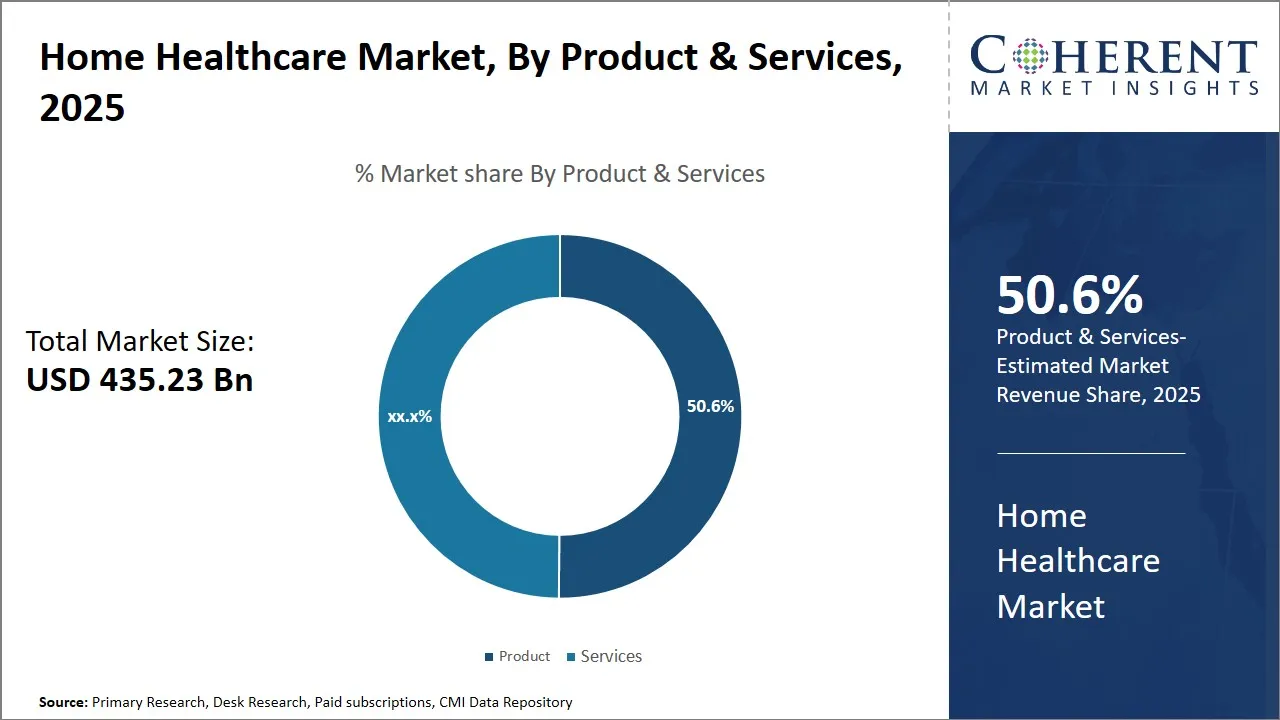
- Based on Product & Services, the product segment is expected holds the largest market share of 51.6% in 2026, owing to rising adoption of remote patient monitoring (RPM) devices.
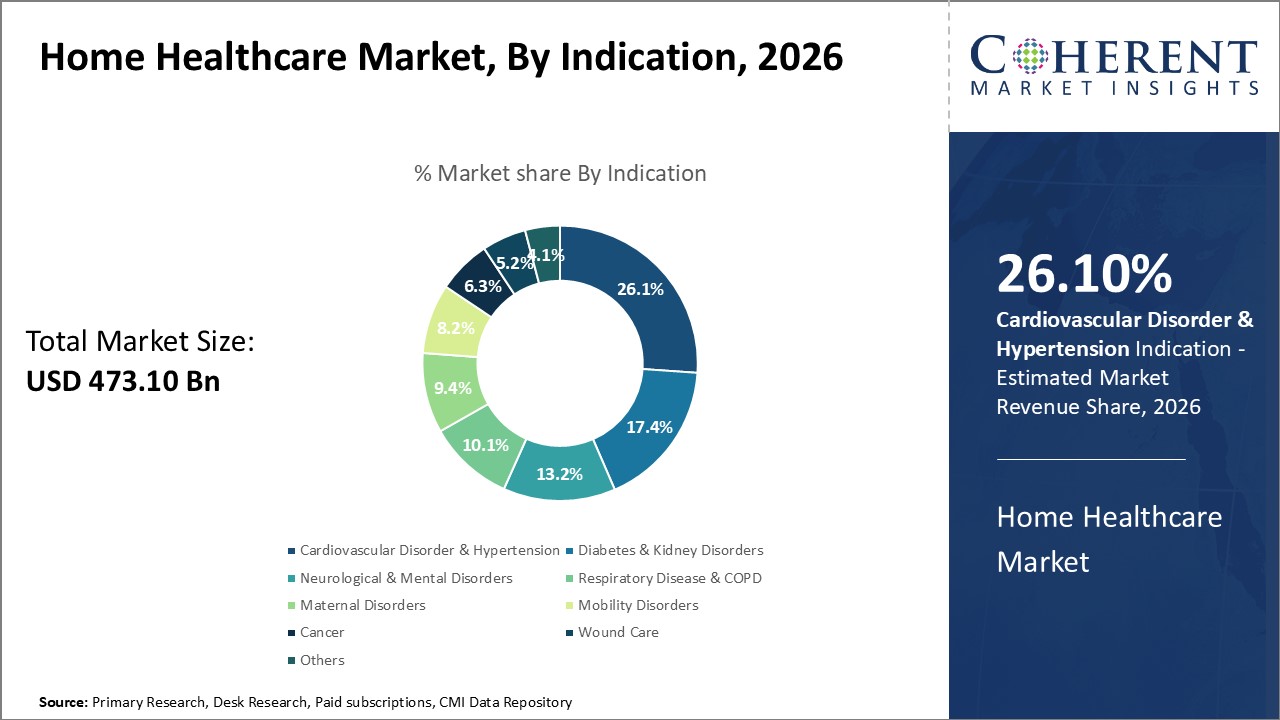
- Based on Indication, the cardiovascular disorder & hypertension segment is expected to dominate by 26.12% share to the global home healthcare market in 2026, due to rising prevalence of cardiovascular conditions worldwide.
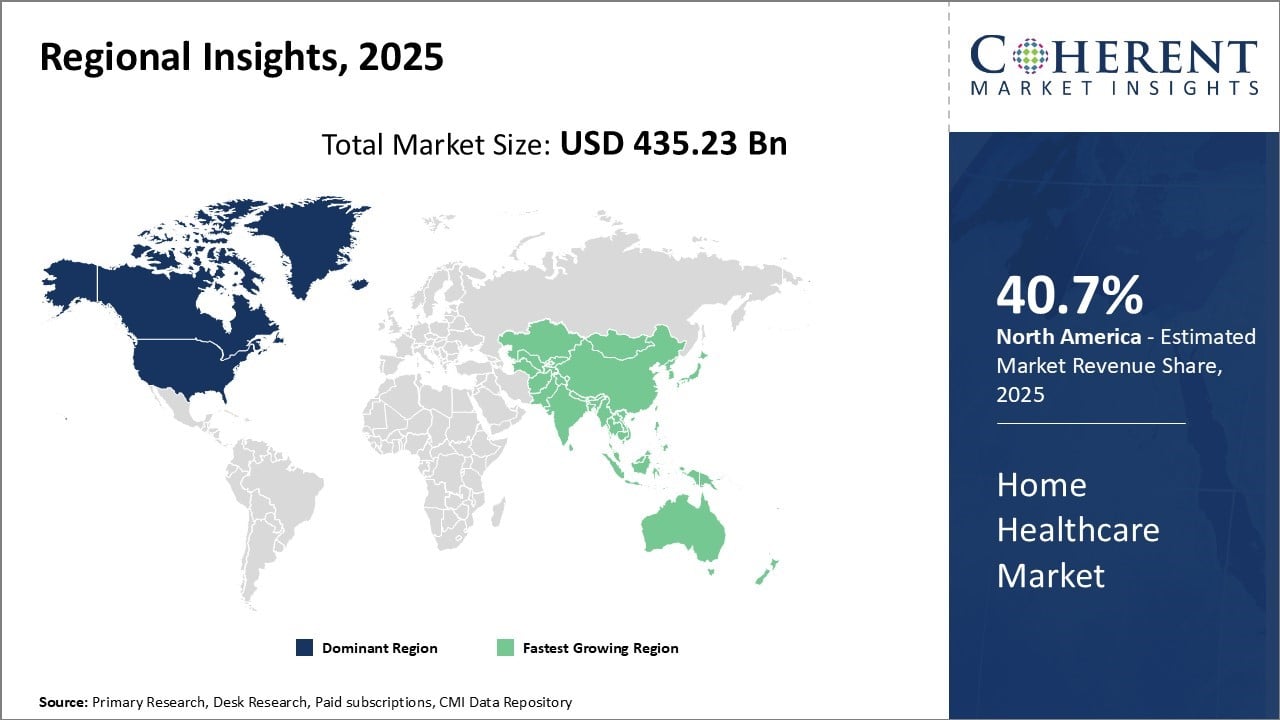
- Based on Region, North America is expected to lead the market, holding a share of 40.7% in 2026. While, Asia Pacific is anticipated to be fastest-growing region during the forecast period.
Market Overview
The home healthcare market is expected to witness positive growth over the forecast period due to increasing preference for home healthcare services owing to benefits such as comfort of home environment, lesser costs involved, and growing geriatric population globally. Additionally, the rising home healthcare market demand is supported by technological advancements in home care devices and the growing incidence of chronic illnesses, which have accelerated the adoption of diagnostic and point-of-care testing at home.
Current Events and its Impact in Home Healthcare Market
Current Event | Description and Its Impact |
Aging Population Demographics and Healthcare Policy Shifts |
|
Technological Innovation and Digital Health Integration |
|
Reimbursement Policy
Reimbursement policies for home healthcare play a critical role in promoting in-home treatment, especially for the elderly, chronically ill, or post-surgical patients. In the United States, Medicare reimburses home health services for eligible individuals who are homebound and require skilled nursing or therapy, while Medicaid offers coverage through state-specific programs and waivers. Private insurers also provide reimbursement, though often with strict pre-authorization requirements.
In Germany, a robust long-term care insurance system (Pflegeversicherung) offers reimbursement in the form of cash benefits or in-kind services, allowing patients to choose between professional caregivers and compensated family support.
The United Kingdom, through the NHS Continuing Healthcare program, provides full funding for patients whose needs are primarily health-related, while local authorities assess and fund other forms of home care based on individual needs.
In Canada, publicly funded provincial health plans cover a range of home care services, including nursing, rehabilitation, and palliative care, with some variability by province.
Similarly, Australia funds home healthcare through national programs like the Home Care Packages (HCP) and the Commonwealth Home Support Programme (CHSP), which support aging-in-place strategies.
- Current Industry Events of 2026
- Market Size Estimation
- Regional Breakdown
- Competitive Landscape
- Customer Intelligence
- Segmental Analysis
- Pricing Analysis
- Key Market Drivers, Challenges & Future Trends
- Customized Insights Section
Role of Artificial Intelligence (AI) in Home Healthcare Market
Artificial intelligence is playing an increasingly vital role in the home healthcare market by enhancing patient monitoring, predicting health risks, and improving care outcomes. A recent example is Elumina Health’s July 2025 launch of AI-driven risk triaging within its Basis EHR system. This new capability uses demographic and medical data to identify home healthcare patients at high risk of hospitalization, enabling clinicians to intervene earlier and reduce the likelihood of readmissions. Such advancements demonstrate how AI is transforming home healthcare by supporting more proactive, data-driven decision-making.
Segmental Insights
Home Healthcare Market Insights, By Product & Services
Rising Adoption of Remote Patient Monitoring Devices
In terms of product & services, product segment is estimated to contribute the highest market share of 51.6% in 2026, owing to rising adoption of remote patient monitoring (RPM) devices. RPM devices help monitor vital signs and provide real-time transmission of patient health data to healthcare providers without in-person visits. The home-based RPM solutions allow continuous monitoring of chronic conditions like diabetes, heart disease and respiratory disorders in the comfort of patient's home. This reduces burden on hospitals and healthcare systems by lowering readmission rates for such chronic patients. Growing elderly population who require long-term care prefer to age in their homes rather than moving to nursing facilities. RPM devices effectively enable independent living for elderly by providing 24/7 health oversight from caregivers. Their family members can also track parent's vital signs remotely using RPM solutions to stay updated on their health status from anywhere. Thus, increasing preference for independent living along with growing prevalence of chronic diseases can boost demand for diagnostic and monitoring home devices.
In July 2025, TeleMedCare, a U.S.-based telehealth provider, launched a pilot remote monitoring initiative for chronic patients in partnership with a major U.S. health insurer. The program, covering over 500,000 members across five states, targets 300 individuals with congestive heart failure, COPD, diabetes, and hypertension. It utilizes TeleMedCare’s flexible RPM technology tailored to insurer protocols, further propelling the home healthcare market share.
Home Healthcare Market Insights, By Indication
Increasing Prevalence of Cardiovascular Disorders
In terms of indication, cardiovascular disorders & hypertension segment is estimated to contribute the highest market share of 26.12% in 2026, due to rising prevalence of cardiovascular conditions worldwide. High blood pressure or hypertension is considered as one of the major risk factors for strokes and heart attacks. Growing global burden of obesity, unhealthy diets and lack of physical exercise boosts the cases of hypertension. Aging population of developed nations has also amplified the incidence rates of cardiovascular diseases. Growing awareness about benefits of early detection and effective management of cardiovascular risks at home setting boosts demand for related home healthcare services and devices. Various diagnostic devices, therapeutic equipment, medication dispensers and RPM solutions are helping cardiac patients to regularly track their vitals, adhere to treatment and rehab programs while staying at their home comfort. This helps to lower healthcare expenditure associated with hospital readmissions.
In July 2025, OMRON Healthcare and Tricog Health unveiled KeeboHealth, a new AI-powered platform aimed at tackling India’s escalating cardiac crisis. This connected health ecosystem integrates home ECG and blood pressure devices from OMRON with Tricog’s AI-driven analytics, enabling continuous remote monitoring and early detection of heart complications. The platform provides real-time alerts to medical teams, supports personalised care, and aligns with OMRON’s “Going for Zero” vision to eliminate cardiovascular events. Tricog aims to screen 100 million patients by 2030, potentially reducing India’s heart-related mortality by one-third.
Regional Insights
North America Home Healthcare Market Analysis & Trends
North America has established itself as the dominant region in the global home healthcare market with an estimated market share of 40.7% in 2026 due to advanced healthcare infrastructure and technological capabilities. Home healthcare services are highly developed here, with the region having a large number of key industry players operating across different segments. These players offer an extensive range of products and services on a wide scale, ensuring high accessibility and availability. There is also a supportive policy and regulatory framework promoting in-home care over institutionalization.
RPM is having an outsized impacts on 33 million North Americans were using connected care solutions as of the end of 2023, with RPM accounting for roughly 90% of that market share. Moreover, U.S. government initiatives such as those by the VA are facilitating procurement of RPM devices, demonstrating growing institutional backing.
These developments underscore how North American providers are integrating advanced technology and flexible care channels, ensuring high accessibility and reinforcing the region’s leadership in the home healthcare space.
Asia Pacific Home Healthcare Market Analysis & Trends
Asia Pacific has emerged as the fastest growing regional market. Rapid socio-economic development across countries like China, India and Japan has resulted in increasing healthcare spending power and demand. Growing burden of chronic diseases coupled with rising geriatric population boosts demand for home-based solutions that provide quality care in a more affordable manner. Home healthcare offers a suitable alternative given constraints in physical healthcare infrastructure and facilities in many emerging nations.
A key example comes from India, where Asia Healthcare Holdings (AHH) recently appointed a new CTO to scale its technology-driven single-specialty home care platforms, signaling intensified investment in tech-enabled in-home healthcare services. Meanwhile, Japan has initiated innovative telehealth pilots in condominium complexes, enabling residents to monitor vital signs via wearable devices and consult doctors online, a model designed to extend healthcare into everyday living spaces. Singapore-based initiatives like SmartPeep AI Elderly-Sitter Systems further showcase regional efforts to bridge caregiving gaps through connected care platforms.
These developments underscore a regional pivot toward hospital-at-home models, virtual doctor visits, and remote monitoring, all aimed at enabling personalized, accessible care outside traditional clinical settings. As the home healthcare market demand continues to rise in Asia Pacific, driven by aging populations and uneven facility distribution, both governments and private players are investing heavily in digital infrastructure and service frameworks that can deliver healthcare directly into patients' homes.
Home Healthcare Market Outlook Country-Wise
The U.S. Home Healthcare Market Trends
The United States is a major force in the home healthcare market, driven by its aging population (16% aged 65+) and rising chronic disease rates. Programs like Medicare Advantage and Medicaid waivers have expanded coverage for in-home services, encouraging a shift away from institutional care.
Innovative models such as “hospital-at-home” adopted by health systems like Mayo Clinic and Cleveland Clinic, allow patients to receive acute care at home, reducing readmissions and improving outcomes. This policy and technology-backed shift makes the U.S. a key leader in advancing home-based care delivery.
For instance, CommScope launched HomeSight™, a television‑based connected‑care platform designed for healthcare and home‑care markets. Leveraging smart cameras, edge compute, environmental sensors, and optional LTE, HomeSight supports remote patient monitoring, video consultations, and social engagement via the TV, removing barriers to digital adoption.
China Home Healthcare Market Trends
China is witnessing a sharp rise in home healthcare demand due to its rapidly aging population, over 290 million people aged 60+ by 2026 and high rates of chronic illness. Government initiatives like “Healthy China 2030” promote home-based eldercare to ease pressure on hospitals and improve long-term care access.
Technological adoption is accelerating this shift, with growing use of telehealth, remote monitoring, and assistive devices like fall sensors and care robots. Cities such as Shanghai and Beijing are piloting smart home care models, positioning China as a key driver of innovation in the global home healthcare space.
Germany Home Healthcare Market Trends
Germany is a leader in home healthcare, supported by its comprehensive long-term care insurance system (Pflegeversicherung). Over 4 million people receive in-home care, with services ranging from medical assistance to daily living support. The system offers flexibility care can be provided by professionals or family members with financial backing. Germany’s policy of prioritizing outpatient care over institutionalization, along with growing investments in telehealth and digital tools, strengthens its home care infrastructure and supports its aging population effectively.
Market Concentration and Competitive Landscape
Recent Developments
- In June 2025, Amazon India rolled out Amazon Diagnostics, an at-home lab testing service alongside its existing pharmacy and clinic offerings under the Amazon Medical brand. In collaboration with Orange Health Labs, customers in Bengaluru, Delhi NCR, Mumbai, Hyderabad, Gurgaon, and Noida can now book from a portfolio of over 800 tests, schedule sample pickups (within 60 minutes), and receive digital reports via the Amazon app across 450+ PIN codes.
- In May 2025, Apollo Home Healthcare introduced India's first 90‑minute Doctor‑on‑Call guarantee in Bangalore, ensuring a qualified physician arrives at patients' homes within 90 minutes of booking this weekday and weekend service. The initiative uses a tech‑enabled, zone‑based logistics system with strategically positioned doctors to meet urgent care needs from 7 AM to 11 PM.
- In April 2025, Reimagine Care launched a pilot at-home oncology program with MedStar Health in Baltimore and Washington, D.C., marking its expansion into Maryland. The collaboration integrates Reimagine’s 24/7/365 cancer‑care platform—including remote vital‑sign monitoring, AI-powered symptom triage, and instant access to oncology experts—into MedStar’s existing clinical model.
- In July 2024, Star Health and Allied Insurance launched a Home Health Care initiative covering 50 cities and towns in phase one, aiming to deliver 100% cashless medical care at customers’ homes. The service addresses infectious ailments like fever, UTI, gastritis, and gastroenteritis, including doctor visits, nursing, diagnostics, medications, and lab tests billed directly to the insurer.
- In June 2023, Amedisys, a provider of home healthcare services, merged with Optum, a diversified health services company. Amedisys offers personalized home health and hospice care, conducting over 11.2 million home visits annually.
Market Report Scope
Home Healthcare Market Report Coverage
| Report Coverage | Details | ||
|---|---|---|---|
| Base Year: | 2025 | Market Size in 2026: | USD 473.10 Bn |
| Historical Data for: | 2020 To 2024 | Forecast Period: | 2026 To 2033 |
| Forecast Period 2026 to 2033 CAGR: | 8.7% | 2033 Value Projection: | USD 848.31 Bn |
| Geographies covered: |
| ||
| Segments covered: |
| ||
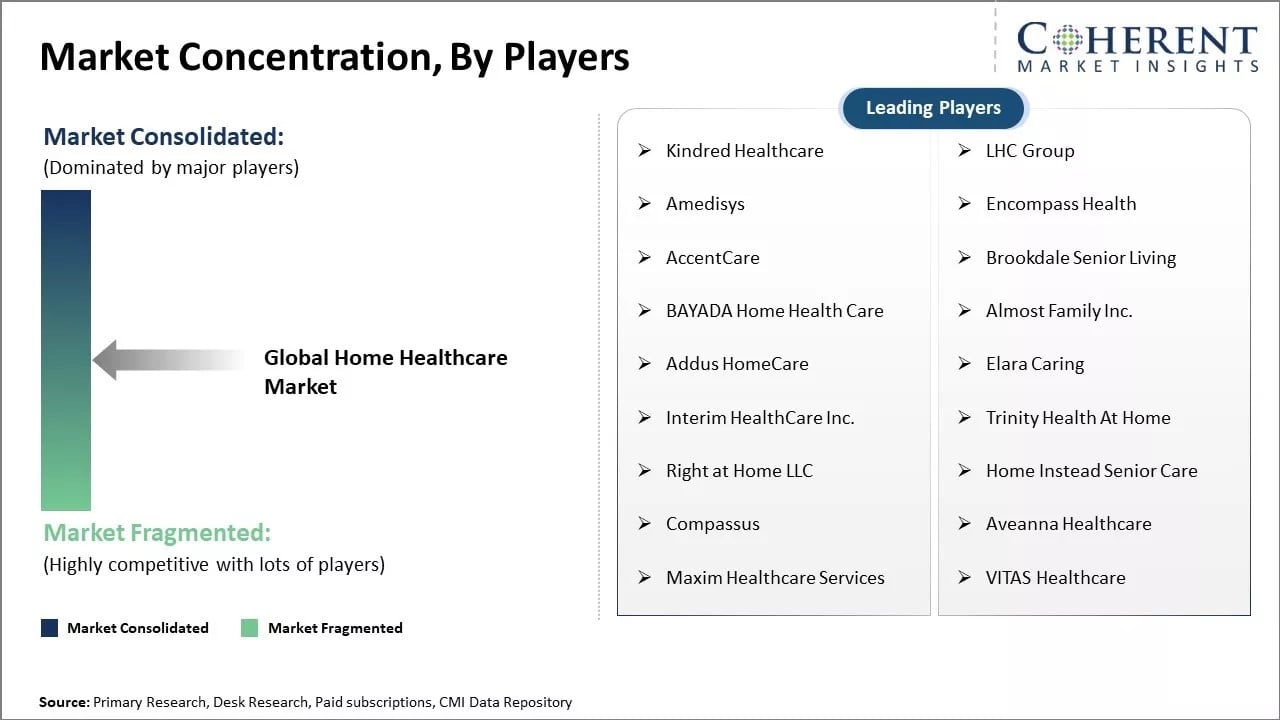
| Companies covered: | Kindred Healthcare, LHC Group, Amedisys, Encompass Health, AccentCare, Brookdale Senior Living, BAYADA Home Health Care, Almost Family Inc., Addus HomeCare, Elara Caring, Interim HealthCare Inc., Trinity Health At Home, Right at Home LLC, Home Instead Senior Care, Compassus, Aveanna Healthcare, Maxim Healthcare Services, VITAS Healthcare | ||
| Growth Drivers: |
| ||
| Restraints & Challenges: |
| ||
Home Healthcare Market Growth Drivers
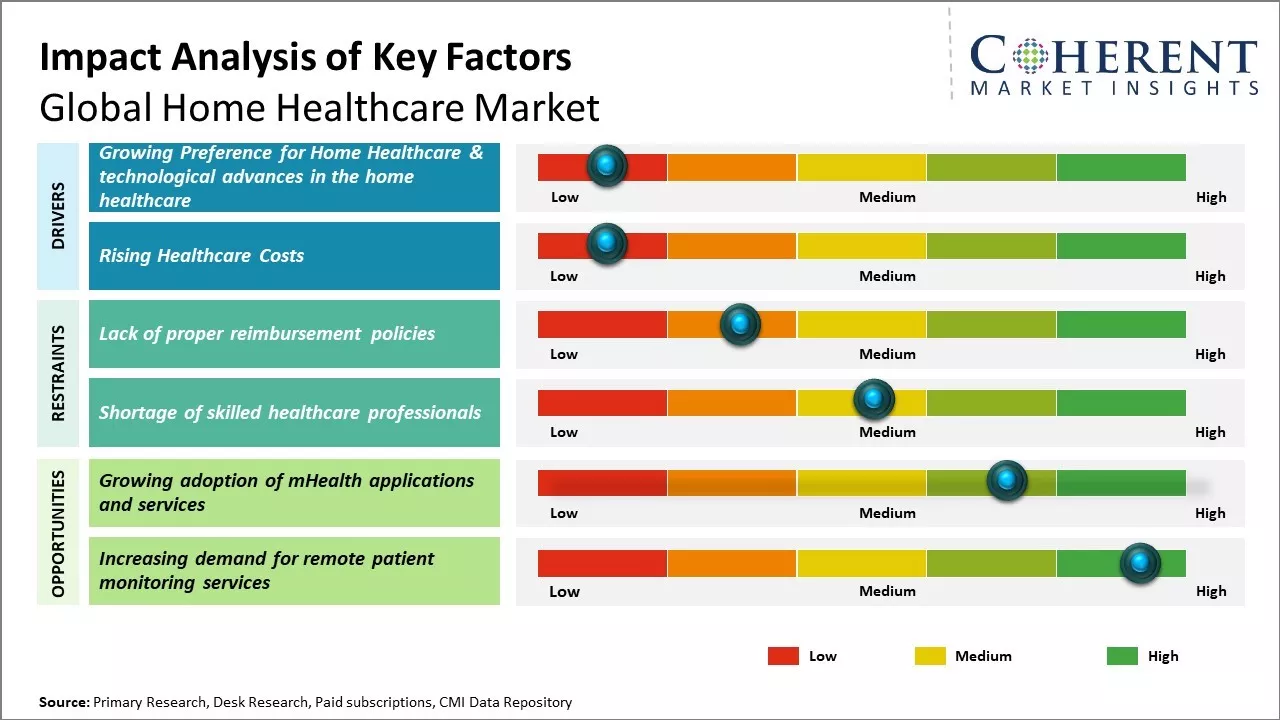
Growing preference for home healthcare & technological advancements in the home healthcare
Global home healthcare market is witnessing significant growth due to growing preference for home healthcare services among patients and their families. Receiving medical care at home allows patients to recover in the comfort of their home surroundings alongside family support. It avoids the hassles and risks of hospital visits while being more cost-effective. As patients seek alternatives to long hospital stays, home healthcare has emerged as a convenient and affordable option. Technological advancements also boost adoption of home healthcare services. Various digital health solutions have enabled remote patient monitoring, disease management and administration of complex treatments at home. This has improved health outcomes and quality of life for chronic disease patients. For example, devices connected to the internet allow caregivers to keep track of vital signs like blood pressure, glucose levels, and others from remote locations and ensure timely diagnosis of health deteriorations.
Video consultations have also reduced the need for in-person visits. Wearable biosensors embedded with artificial intelligence are aiding non-invasive home care by catching early signs of diseases. As a result, the quality of care and patient outcomes are improving, particularly for those with chronic illnesses. These factors are collectively contributing to the expansion of the home healthcare market share, as providers and policymakers recognize its role in creating more sustainable and patient-centric healthcare systems.
Rising Healthcare Costs
Rising healthcare costs are significantly boosting demand for home-based medical services, making them a more economical alternative to hospital or nursing home care. The home healthcare market price advantage lies in the ability to deliver similar levels of treatment at a fraction of the cost. Home care helps avoid expenses associated with hospital room charges, facility overhead, and logistical needs like patient transport, meals, and additional testing.
Furthermore, services such as diagnostics, nursing, physiotherapy, and medical equipment rental can be bundled under one provider, streamlining administration and reducing costs compared to fragmented care from multiple outlets. This integrated and coordinated model makes home healthcare not only affordable but also operationally efficient. Motivated by these savings, governments and insurance providers worldwide are increasingly supporting home healthcare through subsidies and reimbursement packages. As a result, home-based services are being adopted as a sustainable solution for delivering long-term and rehabilitative care, especially in aging populations and chronic disease management.
Home Healthcare Market Opportunities
Growing adoption of mHealth applications and services
Growing adoption of mobile health (mHealth) applications and services can offer opportunity for global home healthcare market growth. As more people integrate smart devices and wireless technologies into their daily lives, there has been increase in use of mHealth to remotely monitor health status, manage medical records, provide telehealth consultations, and administer care at home. mHealth solutions allow healthcare providers to better connect with patients outside of traditional clinical settings. It empowers patients to take a more proactive role in their health and wellness.
Real-time data collected through digital means can help providers intervene quicker if signs of health issues arise. Remote patient monitoring also alleviates the burden on overwhelmed healthcare systems by reducing unnecessary visits and hospital readmissions for many chronic conditions. As a result, the integration of mHealth into home care models is expected to be a key driver in the home healthcare market forecast, contributing to improved outcomes and long-term cost savings. In February 2024, the Union Ministers of State for Health and Family Welfare virtually introduced the Kilkari programme, a mobile health (m-health) initiative aimed at delivering localized content to beneficiaries in Gujarat and Maharashtra.
Analyst Opinion (Expert Opinion)
The home healthcare market value is undergoing a structural transformation, driven less by consumer preference and more by system-wide economic pressures and workforce realities. It is my firm belief that home healthcare is no longer a complementary option within the continuum of care, it is rapidly becoming a clinical necessity, particularly for managing high-acuity and chronic patient populations.
One of the strongest indicators of this shift is the rising percentage of hospital discharges directly to home with home health services. According to CMS data, between 2018 and 2023, discharges to home healthcare increased by nearly 13%, while skilled nursing facility utilization declined by 9%. This realignment is not anecdotal, it is a reflection of payer-driven mandates, hospital-at-home models, and a tightening of post-acute care budgets.
From a cost-efficiency perspective, the home health model proves undeniably superior. A study by the Annals of Internal Medicine showed that hospital-at-home programs result in 32% lower costs, 25% fewer readmissions, and better functional outcomes. Providers such as Mount Sinai Health System and Mayo Clinic have successfully scaled such models, reinforcing the clinical legitimacy of care delivered in home settings—even for conditions traditionally considered hospital-dependent, such as COPD exacerbations and early-stage sepsis.
Furthermore, the growing prevalence of smart monitoring and AI-enabled diagnostics is redefining what is medically feasible at home. Companies like Biofourmis and Current Health have developed wearable biosensors that enable remote patient monitoring of heart rate variability, oxygen saturation, and even fall detection, all integrated with predictive algorithms. The implications here are not just technological, but economic: such tools empower clinicians to triage and intervene early, reducing downstream hospitalization and associated costs.
However, I must emphasize a critical caveat: labor will be the market’s bottleneck. While demand accelerates, supply of qualified home health aides and visiting nurses remains inelastic. The U.S. Bureau of Labor Statistics estimates a 25% shortfall in home health workers by 2030 unless structural labor reforms are enacted. Without scalable workforce solutions whether through training, immigration policy adjustments, or autonomous tech the market will not fulfill its full potential.
To conclude, the home healthcare market is not merely expanding; it is being redefined. What we are observing is a fundamental redesign of care delivery infrastructure, anchored increasingly in the home. Stakeholders who still view home healthcare as an auxiliary service are misreading both the policy signals and the operational data. The future of complex care is not in brick-and-mortar institutions but in living rooms equipped with data, devices, and trained hands.
Speak to the analyst
Want personalized insights?
Take the findings above to one of our principal consultants, or have the report rebuilt around the segments, geographies and competitors you actually track.
Market Segmentation
- Product & Services Insights (Revenue, USD Bn, 2026 - 2033)
- Product
- Diagnostics and Monitoring Home Devices
- Therapeutics Home Healthcare Devices
- Mobility Assist Devices
- Medical Supplies
- Services
- Rehabilitation Services
- Telehealth and Telemedicine Services
- Infusion Therapy Services
- Respiratory Therapy Services
- Unskilled Home Healthcare Services
- Product
- Indication Insights (Revenue, USD Bn, 2026 - 2033)
- Cardiovascular Disorder & Hypertension
- Diabetes & Kidney Disorders
- Neurological & Mental Disorders
- Respiratory Disease & COPD
- Maternal Disorders
- Mobility Disorders
- Cancer
- Wound Care
- Others
- Regional Insights (Revenue, USD Bn, 2026 - 2033)
- North America
- U.S.
- Canada
- Latin America
- Brazil
- Argentina
- Mexico
- Rest of Latin America
- Europe
- Germany
- U.K.
- Spain
- France
- Italy
- Russia
- Rest of Europe
- Asia Pacific
- China
- India
- Japan
- Australia
- South Korea
- ASEAN
- Rest of Asia Pacific
- Middle East
- GCC Countries
- Israel
- Rest of Middle East
- Africa
- South Africa
- North Africa
- Central Africa
- North America
- Key Players Insights (Revenue, USD Bn, 2021 - 2033)
- Kindred Healthcare
- LHC Group
- Amedisys
- Encompass Health
- AccentCare
- Brookdale Senior Living
- BAYADA Home Health Care
- Almost Family Inc.
- Addus HomeCare
- Elara Caring
- Interim HealthCare Inc.
- Trinity Health At Home
- Right at Home LLC
- Home Instead Senior Care
- Compassus
- Aveanna Healthcare
- Maxim Healthcare Services
- VITAS Healthcare
Sources
Primary Research Interviews from the following stakeholders
Stakeholders
- Interviews with home healthcare service providers, remote patient monitoring (RPM) system integrators, device manufacturers, healthcare administrators, telehealth platform developers, caregivers, and home medical equipment (HME) suppliers across major global markets.
Databases
- World Health Organization (WHO) Global Health Expenditure Database
- UN Comtrade Database
- World Bank HealthStats
- Ministry of Health and Family Welfare (MoHFW), India
- Centers for Medicare & Medicaid Services (CMS), U.S.
- European Centre for Disease Prevention and Control (ECDC)
- Statistics Canada – Health Services
- National Health Commission of the People’s Republic of China
- Organisation for Economic Co-operation and Development (OECD) – Health Data
Magazines
- HomeCare Magazine
- Today's Geriatric Medicine
- Medical Device and Diagnostic Industry (MD+DI)
- HealthTech Magazine
- Telehealth and Medicine Today
- Healthcare Innovation
- Medical Product Outsourcing
- Medgadget
Journals
- Journal of Telemedicine and Telecare
- Home Health Care Management & Practice
- International Journal of Medical Informatics
- Journal of Geriatric Physical Therapy
- Journal of Medical Systems
- BMC Health Services Research
- IEEE Journal of Biomedical and Health Informatics
Newspapers
- The Wall Street Journal – Healthcare Section
- The Economic Times – Health & Wellness
- The Hindu – Health Reports
- Financial Times – Healthcare Sector Insights
- The New York Times – Health Tech
- Nikkei Asia – Medical Device Industry Coverage
- South China Morning Post – Health & Innovation
Associations
- National Association for Home Care & Hospice (NAHC)
- American Telemedicine Association (ATA)
- Asian Home Healthcare Federation
- European Federation for Home and Long-Term Care
- International Society for Telemedicine and eHealth (ISfTeH)
- Medical Technology Association of India (MTaI)
- Indian Association of Home Health Care Providers (IAHHP)
- Global Coalition on Aging – Health & Home Care Division
Public Domain Sources
- Ministry of Health and Family Welfare (India)
- U.S. Department of Health and Human Services (HHS)
- NITI Aayog – Health Innovation Reports
- European Commission – eHealth and Digital Health Reports
- National Health Authority (India) – Ayushman Bharat & ABDM
- National Institute on Aging (U.S.)
- India Investment Grid – Healthcare Sector
- Reserve Bank of India (RBI) – Health Sector Lending Reports
Proprietary Elements
- CMI Data Analytics Tool, and Proprietary CMI Existing Repository of information for last 8 years
*Definition: Global home healthcare market provides medical equipment and services to patients at home. It involves the delivery of healthcare services in the convenience of patients' own residence. This market involves services like infusion therapy, respiratory therapy, unskilled home healthcare, rehabilitation services, telehealth and telemedicine, and others. The devices include blood sugar monitors, mobility assisting devices, pregnancy testing kits, blood pressure monitors, and more. It helps reduce healthcare costs while improving patients' quality of life by allowing them to receive medical care comfortably at home.
Get access to 250+ pages report
Every segment, forecast, competitor profile and data table behind the analysis above — available for instant download.
- ESOMAR Member
- ISO 9001:2015 Certified
- D-U-N-S Registered
- GDPR & CCPA Compliant
Missing comfort of reading report in your local language? Find your preferred language:
Transform your Strategy with Exclusive Trending Reports
Frequently Asked Questions
The Home Healthcare Market is estimated to be valued at USD 473.10 Bn in 2026, and is expected to reach USD 848.31 Bn by 2033.
The CAGR of the Home Healthcare Market is projected to be 8.7% from 2026 to 2033.
Growing preference for home healthcare & technological advances in the home healthcare and rising healthcare costs are the major factors driving the growth of global home healthcare market.
Lack of proper reimbursement policies and shortage of skilled healthcare professionals are the major factors hampering the growth of global home healthcare market.
In terms of product & services, product segment is estimated to dominate the market in 2026.
Kindred Healthcare, LHC Group, Amedisys, Encompass Health, AccentCare, Brookdale Senior Living, BAYADA Home Health Care, Almost Family Inc., Addus HomeCare, Elara Caring, Interim HealthCare Inc., Trinity Health At Home, Right at Home LLC, Home Instead Senior Care, Compassus, Aveanna Healthcare, Maxim Healthcare Services, VITAS Healthcare are the major players.
North America is expected to lead the global home healthcare market.