

Global Human-Based Preclinical Model Validation Services Market Size and Forecast – 2026 To 2033
The global human-based preclinical model validation services market is expected to grow from USD 1.36 Bn in 2026 to USD 2.97 Bn by 2033, registering a compound annual growth rate (CAGR) of 11.8% from 2026 to 2033. The global human-based preclinical model validation services market is expected to grow at a faster rate due to increased regulatory approval of human relevant testing techniques.
In April 2026, the U.S. Food and Drug Administration (FDA) unveiled its updated guidance on reducing animal studies. The draft guidance (published in March 2026), on validation of New Approach Methodologies included guidance on validation of human-based models for drug development. This is expected to increase the demand for validation services for specialized models.
Key Takeaways of the Global Human-Based Preclinical Model Validation Services Market
- Model validation and verification are projected to hold 34.8% of the global human-based preclinical model validation services market share in 2026, making it dominant service type segment, across North America owing to its broad application of significant biopharmaceutical research and development expenditure along with the preclinical research foundation. For instance, the U.S. National Institutes of Health (NIH) supports biomedical research projects through funding programs based on the advancements of disease modeling and experimentation validation strategies.
- Human cell-based models are projected to hold 26.8% of the global human-based preclinical model validation services market share in 2026, making it dominant model type segment, across Europe driven by the high investments in human-relevant research tools and high-end cellular biology. For instance, Horizon Europe, the European Union research and innovation program fund collaborative research in biotechnology, cellular systems, and new biomedical technologies.
- Oncology is projected to hold 30.6% of the global human-based preclinical model validation services market share in 2026, making it dominant therapeutic area segment, across Asia Pacific primarily attributed to emerging capabilities of cancer research and demand for human relevant models to evaluate drug responses. For instance, The National Natural Science Foundation of China endows a support for cancer research projects to understand the biological behavior of the cancer and to present the experimental approaches in the discovery of oncological drugs.
- North America market maintains dominance with an expected share of 38.7% in 2026, due to established preclinical research infrastructure and biopharmaceutical R&D investment. For instance, the U.S. National Institutes of Health (NIH) offers funding for biomedical research by a Tissue Chip for Drug Screening program that encourages the development of human relevant models for drug safety and efficacy testing.
- Asia Pacific is expected to exhibit the fastest growth in the global human-based preclinical model validation services market, registering an estimated CAGR of 24.1% during 2026–2033, owing to an increasing biotechnology research and development, expanding CRO strength, and rising demand for advanced cellular models in the region. For instance, India's department of biotechnology (DBT) supports biotechnology research and infrastructure, with targeted national programmes supporting biomedical research and strengthening preclinical research capabilities.
Segmental Insights
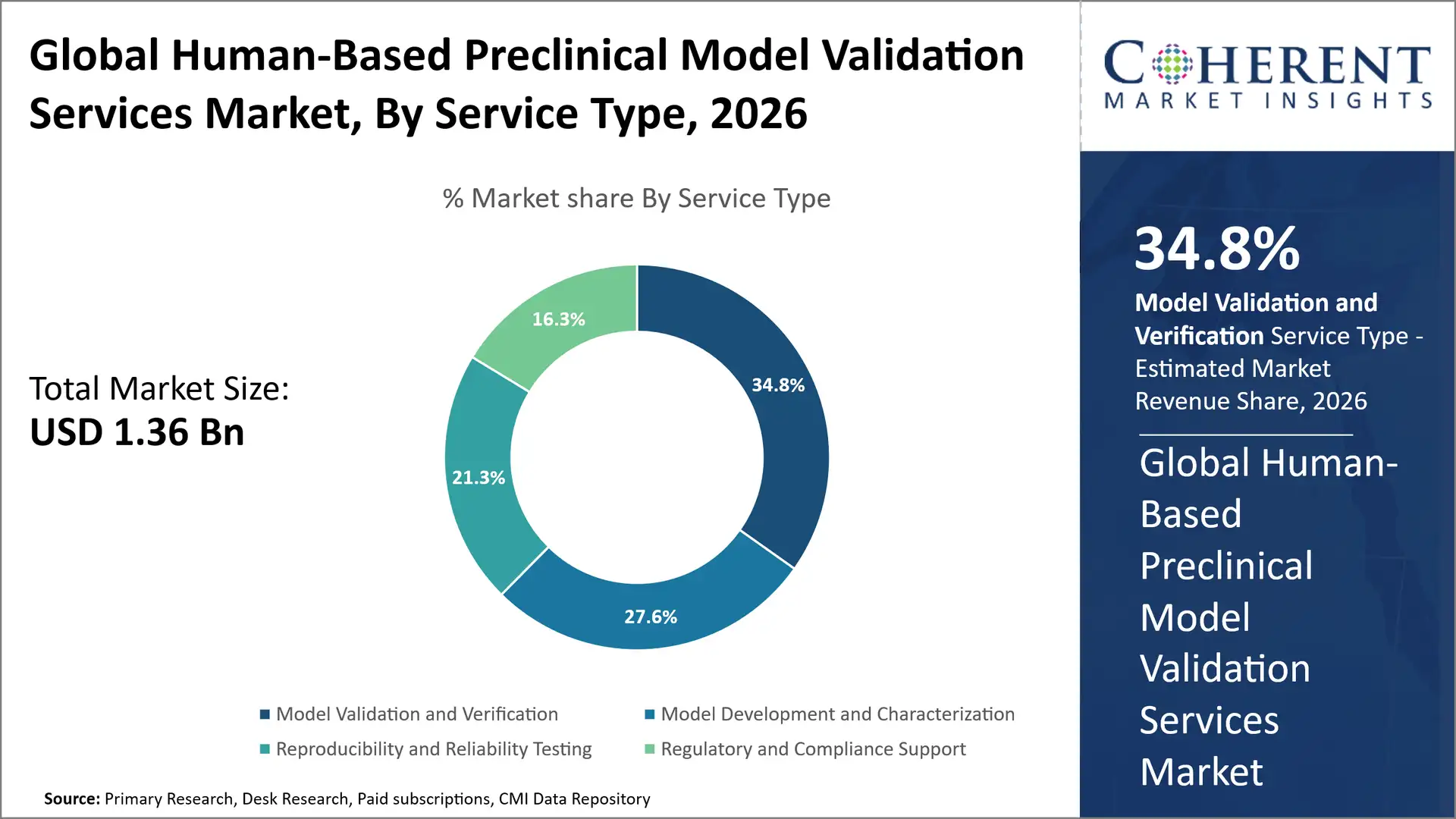
Why Do Model Validation and Verification Dominate the Global Human-Based Preclinical Model Validation Services Market?
Model validation and verification is projected to hold the market share of 34.8% in 2026, attributed to the need to verify the relevance, reproducibility and predictability of human-based preclinical models before their utilization in the drug development process. Moreover, the increasing use of advanced models, such as patient-derived models, points to an increasing need for independent performance testing and validation. For instance, the Organisation for Economic Co-operation and Development (OECD)'s Good In Vitro Method Practices guidance help ensure quality and enable dependable application of in vitro methods by underlining the importance of validated tests.
- Current Industry Events of 2026
- Market Size Estimation
- Regional Breakdown
- Competitive Landscape
- Customer Intelligence
- Segmental Analysis
- Pricing Analysis
- Key Market Drivers, Challenges & Future Trends
- Customized Insights Section
Why Does Human Cell-Based Models Represent the Largest Model Type Segment in the Human-Based Preclinical Model Validation Services Market?
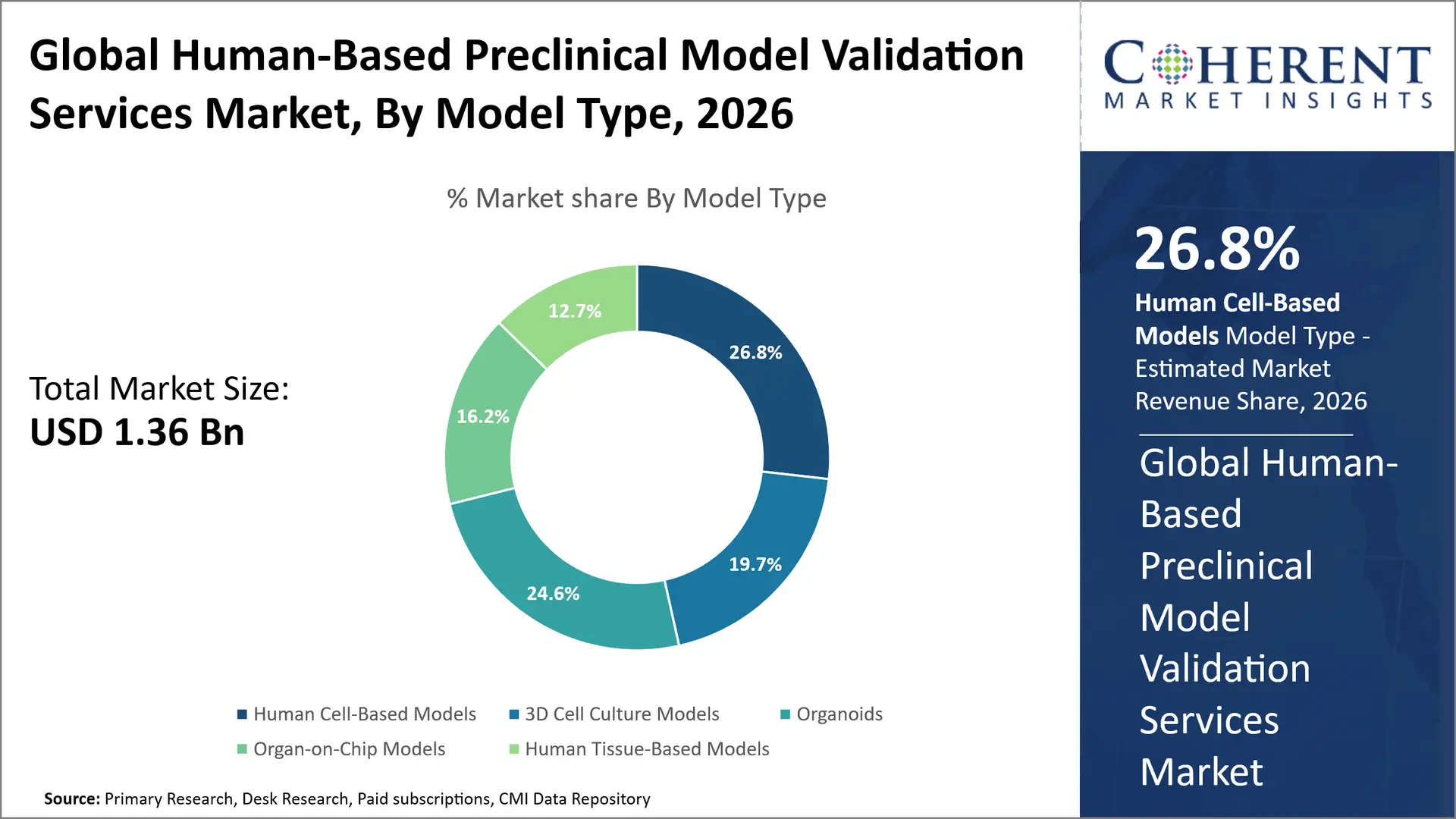
Human cell-based models are projected to hold a market share of 26.8% in 2026, due to their ability to emulate human specific cellular responses, for disease modelling, and increased efficacy/safety of drug evaluation. With the development of induced pluripotent stem cell (iPSC) techniques, there is the potential to enable investigators to study patient disease traits and cellular heterogeneity which will potentially allow for more robust personalized medicine and compound screening applications. For instance, the U.S. National Institute of Standards and Technology (NIST) produces reference materials and measurement science techniques that facilitate the characterization and comparability of biological systems, highlighting the importance of proper evaluation of cellular models.
Oncology Segment Dominates the Global Human-Based Preclinical Model Validation Services Market
The oncology segment is projected to hold a market share of 30.6% in 2026, due to the complexity of tumor biology, the rising need for targeted and immuno-oncology therapeutics and the demand for models reflective of the heterogeneity of tumors and tumor responses. In addition, patient-derived tumor organoids and other human models open the possibility to determine therapeutic sensibility and resistance which will translate demand for validation of their biological fidelity and reproducibility. For instance, the U.S. National Cancer Institute’s Patient-Derived Models Repository provides researchers with tumor-derived models to support cancer research and preclinical drug evaluation.
Current Events and their Impact
Current Events | Description and its Impact |
India highlights government support for non-animal testing methodologies (August 2026) |
|
European Commission approves scheme to end animal testing in chemical safety assessments (June 2026) |
|
Human-Based Preclinical Model Validation Services Market Dynamics
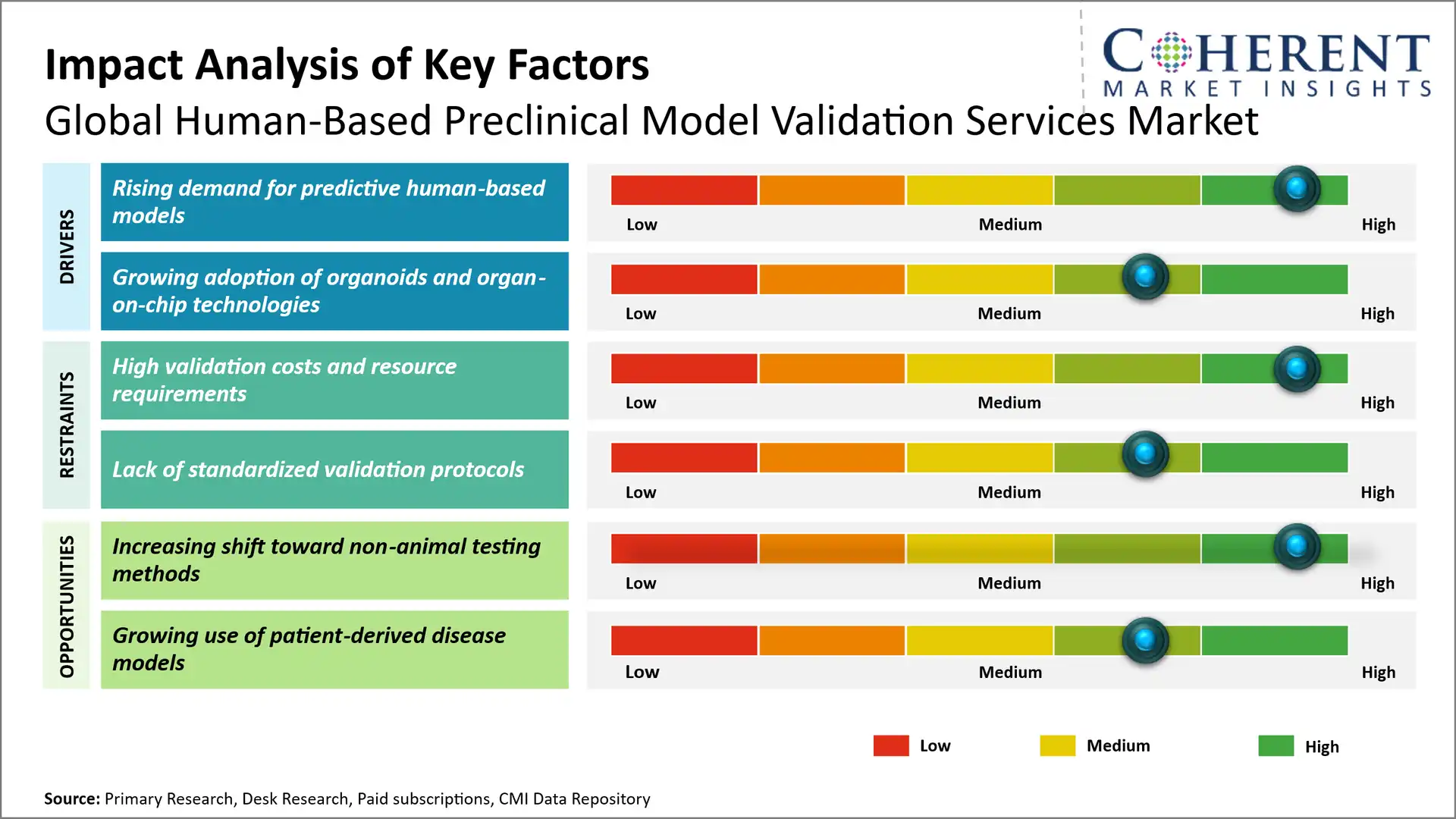
Market Drivers
- Rising demand for predictive human-based models: Manufacturers are increasingly turning to human cellular models to provide more specific data on disease response and to improve the predictive nature of preclinical testing of drug candidates. For instance, the U.S. National Center for Advancing Translational Sciences (NCATS) promotes tissue chip technologies that can replicate the function of human tissues in disease and drug response testing, which is likely to increase the need for characterization and validation of the models.
- Growing adoption of organoids and organ-on-chip technologies: The rise in use of organoids and organ-on-chip approaches has created a need for validation services to assess model performance, reproducibility, and drug testing capability. As models become more complex, there will be a need for standardized characterization and reproducibility testing before they are incorporated into preclinical workflows. For instance, in August 2026, UK government announced USD 26.65 million (£20 million) funding for a pre-clinical translational models hub to create human tissue organoids to test drugs and support the wider use of advanced human-based models.
- Increasing investment in translational research: Growing investment for translational research will speed up progress of preclinical models that are relevant to humans for drug discovery and disease research. For instance, the Agency for Medical Research and Development (AMED) in Japan provides grants of up to USD 95,000 (JPY 15 million) per project annually for research utilizing iPSC-derived cells and organoids for drug discovery, to address the growing demand for model characterization and validation services.
Emerging Trends
- Incorporating Machine Learning & AI into Model Validation: AI and machine learning are increasingly being integrated into human-based validation of the model to facilitate image analysis, monitor biological response and assess model performance.
- Impact: The technologies enable increased analytical reproducibility, faster data analysis, and the ability to enable rapid pinpointing of reproducibility problems. They also enable high-throughput testing of complex biological models.
- Market Relevance: The need for validation services combined with AI enabled biological testing and automation of results analysis is expected to increase. Service providers with the ability to deliver validation and predictive analytics services may have an edge.
- Organoid and Organ-on-Chip Models Standardization: The industry is moving toward developing standardized protocols and performance indicators for organoids and organ-on-chip systems to bring greater consistency to their use in pre-clinical work.
- Impact: This results in less variability between labs, and more meaningful comparison between experiments. Standardized procedures help improve confidence in the use of human-relevant models to test drug safety and efficacy.
- Market Relevance: This trend may create markets for services to characterize models, reproduce results, and cross-validate models. The laboratories that show top model quality and quality-control practices will take the lead.
Regional Insights
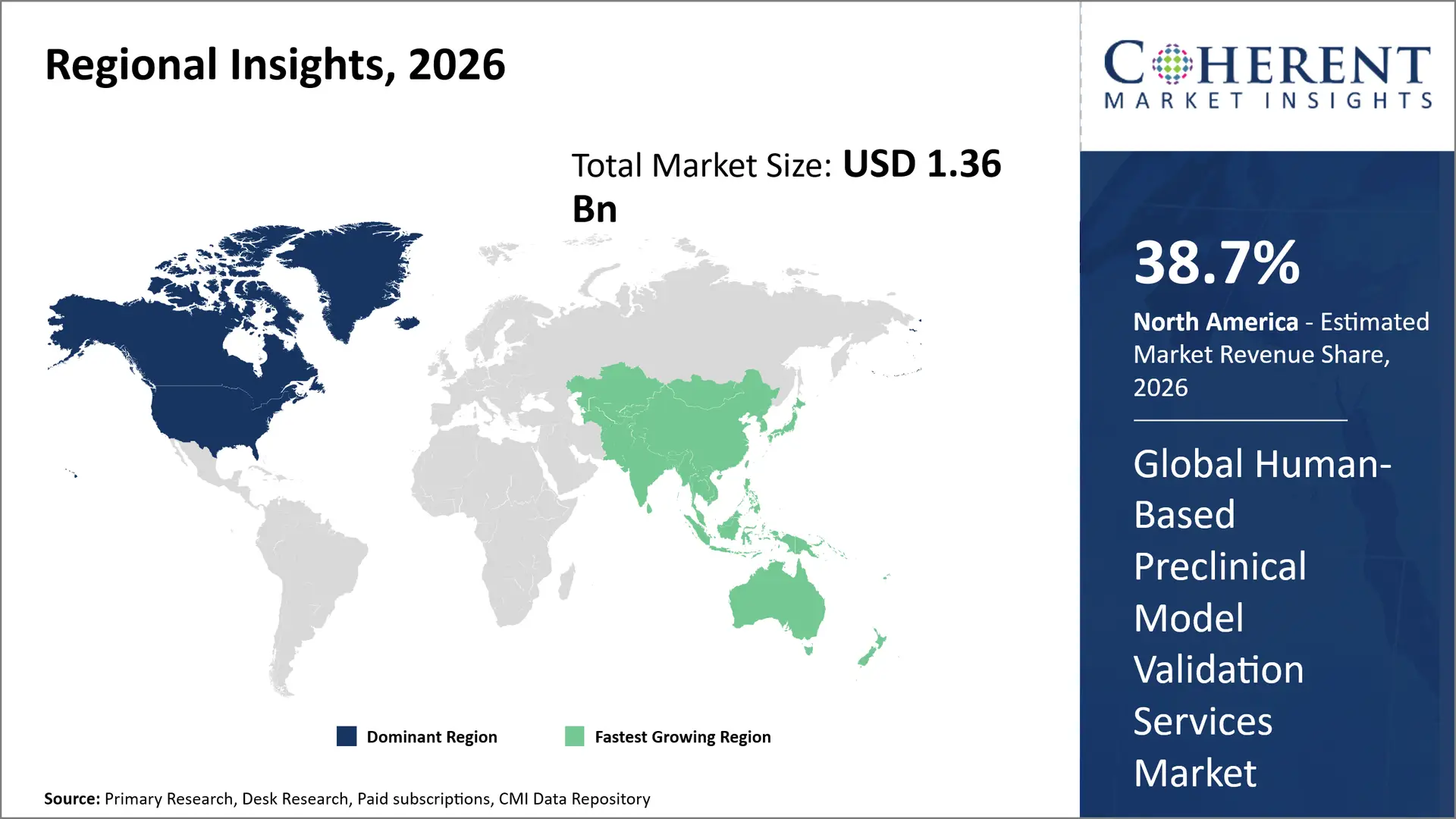
Why is North America a Strong Market for Human-Based Preclinical Model Validation Services?
North America leads the global human-based preclinical model validation services market, accounting for an estimated 38.7% share in 2026, due to the presence of established biomedical research infrastructure, high investment in pharmaceutical research and development and a vibrant biotechnology industry. Additionally, government initiatives, like FDA policies and investments towards translational research, can be indicative of the promotion towards adopting and improving human-based preclinical models in the region.
For instance, in March 2026, the U.S. National Institutes of Health (NIH) announced USD 150 million+ funding through their Complement-ARIE program. The program will focus on developing, validating, and standardizing human-relevant research tools to facilitate human-centric preclinical models. Moreover, a collaborative network among research institutes, pharmaceutical companies, and contract research organizations (CROs) is expected to promote innovation in model validation as well as improve the predictive accuracy of preclinical testing.
Why Does Asia Pacific Human-Based Preclinical Model Validation Services Market Exhibit High Growth?
Asia Pacific is expected to exhibit the fastest growth in the global human-based preclinical model validation services market, registering an estimated CAGR of 13.4% during 2026–2033. The region is projected to account for 24.1% of the global market in 2026, owing to the growing pharmaceutical and biotechnology industry, a rise in clinical trial procedures, and government incentives to improve healthcare innovation. Countries such as China, Japan, South Korea, and India are strengthening their preclinical research infrastructure and encouraging collaboration with global partners to accelerate drug development.
For instance, the Government of India reported that the Indian Council of Medical Research (ICMR) had funded 109 research studies in 71 Indian research institutions and laboratories related to non-animal testing approaches including use of organ-on-chip platform technology and 3D tissue models, while strengthening preclinical models relevant for human health. (Source: Press Information Bureau) Moreover, growing adoption of advanced human-relevant models and rising adoption of personalized medicine & biopharmaceuticals are likely to offer opportunities for different validation services in the region.
Global Human-Based Preclinical Model Validation Services Market Outlook for Key Countries
Why is the U.S. Leading Innovation and Adoption in the Human-Based Preclinical Model Validation Services Market?
The U.S. has a strong ecosystem of pharmaceutical research and development, biotechnology innovation, and specialized preclinical research services, making it a global leader. Its extensive advanced capabilities in area such as organoid and Organ-on-a-Chip development or iPSC-based models have created demand for more specialized validation and reproducibility testing. These technologies are incorporated into the drug discovery and safety testing process in collaboration with model developers, research centers, and pharma.
Is Japan a Favorable Market for Human-Based Preclinical Model Validation Services Market?
The technology capability and existing infrastructure enable Japan to have a lucrative market for human-based preclinical model validation services, due to its expertise in the fields of induced pluripotent stem cells (iPSC), regenerative medicine and advanced cellular research. The Pharmaceuticals and Medical Devices Agency (PMDA) are actively taking steps to promote the regulatory science for New Approach Methodologies (NAMs) such as organoids and micro physiological systems.
Is China Emerging as a Key Growth Hub for the Human-Based Preclinical Model Validation Services Market?
China is emerging as a major hub for growth in the human-based preclinical model validation services market attributed to the growing biotechnology research and development activity, growing investment in drug discovery and increasing adoption of advanced cellular models. Growing pharmaceutical research and development ecosystem in the country and contract research organization would create opportunities for organoid characterization, reproducibility and validation of human relevant models.
Why Does Germany Top the European Human-Based Preclinical Model Validation Services Market?
Germany's role in the European human-based preclinical model validation services market is strengthened by its mature manufacturing industry, expertise in biomedical engineering and the micro physiological systems. The extensive network of applied research organizations and technology vendors in Germany enables the development of novel sophisticated in-vitro platforms and their integration into drug development. These capabilities generate favorable environments for the demand for performance benchmarking, model qualification and cross-platform validation services.
Is Human-Based Preclinical Model Validation Services Market Developing in UK?
UK human-based preclinical model validation services market continues to grow, driven by government funding for human relevance-focused preclinical research and reduced reliance on animal testing. Growth areas for innovative human simulation include organoid, organ-on-chip and more complex tissue models which will require validation, reproducibility and translation to regulators. To broaden adoption, more validation, standardized protocols, industry-academic engagement and evidence of performance across laboratories will be needed.
Government Initiatives Supporting Human-Based Preclinical Model Validation
Government organization / initiative | Specific data point or activity | Relevance to the market |
U.S. NIH — Complement-ARIE | Announced more than USD 150 million in funding in March 2026 to develop, validate, and standardize human-relevant research methods. | Directly supports demand for validation and standardization services. |
U.S. NIH — Office of Research Innovation, Validation and Application (ORIVA) | Established in June 2026 to coordinate the development, validation, and scaling of human-based research technologies. | Strengthens the research and validation ecosystem for human-based models. |
U.S. NIH — Standardized Organoid Modeling Center | Supports development of standardized organoid models to improve reproducibility and reduce reliance on animal models. | Supports organoid characterization and reproducibility testing. |
U.S. FDA — New Approach Methodologies (NAMs) | Develop human-relevant approaches, such as organ-on-chip, cell-based methods, and computational techniques, for nonclinical evaluation. | Supports the need to assess model suitability and predictive performance. |
Government of India — ICMR non-animal testing research | Supported 109 research projects across 71 institutes and laboratories involving approaches such as organ-on-chip, 3D tissue models, and computational methods. | Indicates growing research capacity and potential demand for specialized validation services in India. |
U.S. NIH / NCATS — Tissue Chip Program | Supports human tissue-chip and micro physiological systems research for evaluating disease mechanisms and drug responses. | Supports performance assessment of organ-on-chip and micro physiological models. |
U.S. NIH — Human-based research funding policy | Since July 2025, relevant new funding opportunities have been required to support human-focused approaches alongside animal-model research. | Encourages researchers to consider human-based alternatives and strengthens demand for well-characterized models. |
How is the increasing shift toward non-animal testing methods creating new growth opportunities in the human-based preclinical model validation services market?
The global human-based preclinical model validation services market is expanding at a rapid pace attributed to the growing use of non-animal testing tools by pharmaceutical companies to enhance the human relevance of safety and efficacy screenings. The growing acceptance of New Approach Methodologies (NAMs) in the regulatory sphere drives the demand for validation services in model development, validation and prediction. For instance, in September 2025, Early Consideration document was issued by Japan’s Pharmaceuticals and Medical Devices Agency (PMDA). It describes how New Approach Methodologies (NAMs) are intended to be used in quasi-drug submissions, raising opportunities for providers offering human-relevant model validation and safety testing services.
Market Players, Key Development, and Competitive Intelligence
Key Developments
- In September 2026, Revvity, Inc. announced it has entered into a definitive agreement to acquire Human Cell Design (HCD), a biotech company in France, that develops human cell models to accelerate research in metabolic diseases. With the addition of human pancreatic beta cell models to human cell models already used in research, Revvity will expand research applications to include drug discovery, screening, and preclinical studies. The transaction is expected to close during Q4 2026, subject to closing conditions.
- In September 2026, U.S. Department of Health and Human Services announced multiple initiatives to increase the use of human-based research methodologies and reduce unwarranted animal testing. The actions include investments in biomedical research infrastructure, standardized human organoid models and technologies to create, validate and scale alternative testing methodologies. These are expected to accelerate the adoption of human-relevant preclinical models and increase demand for validation services.
Competitive Landscape
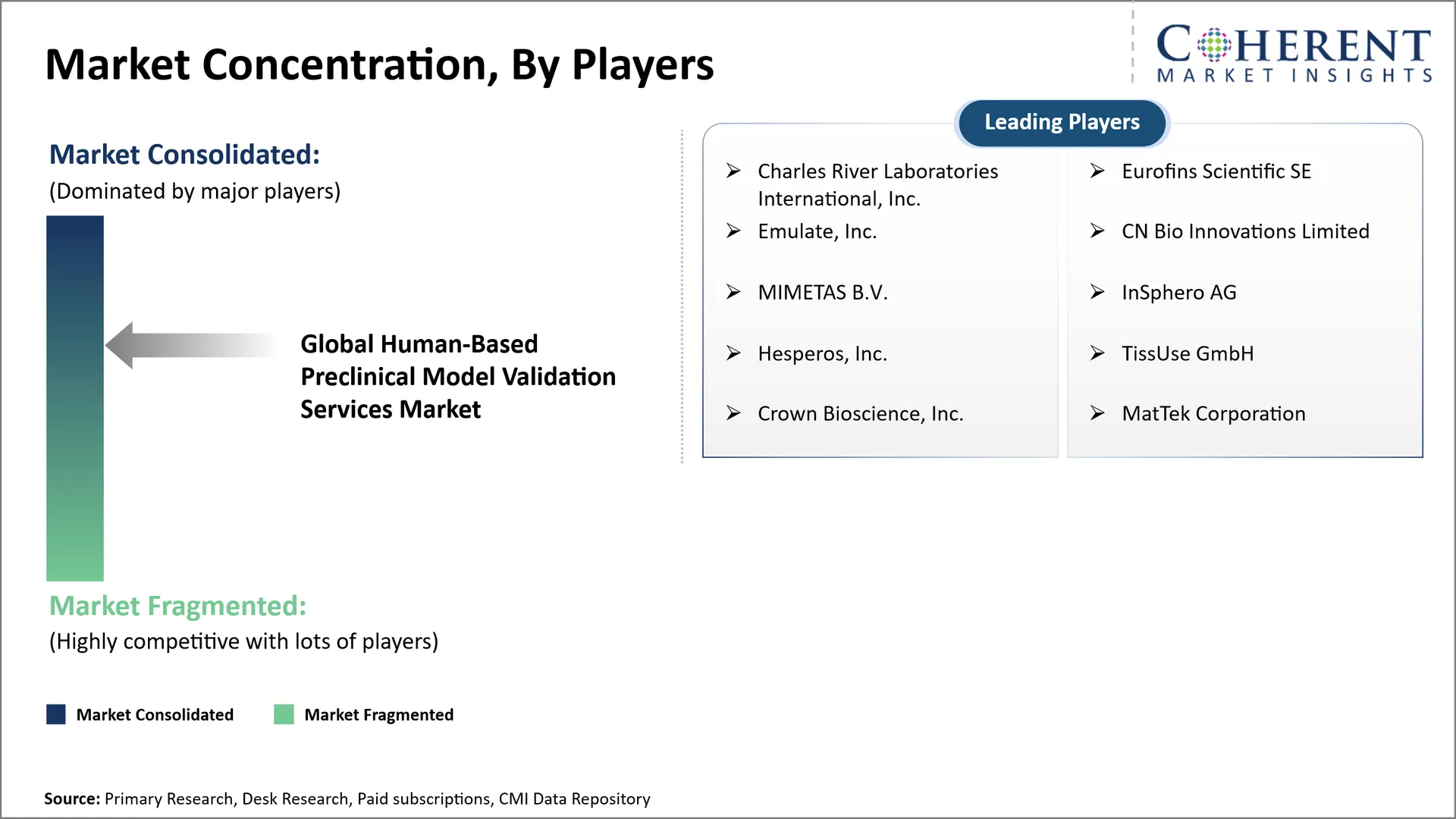
The global human-based preclinical model validation services market is profoundly evolving as the service providers are focusing on improving the predictive power, reproducibility, and translational utility of human based biological model approaches. The major organizations are expanding their expertise in the field of human cell-based models, organs-on-chips, advanced in-vitro testing techniques, and organoids for evaluating drug safety, toxicity, and efficacy. Key focus areas include:
- Validation protocols standardization
- Integration of advanced technologies
- Expansion of human-relevant model platforms
- Converging regulation and translational impact
Market Report Scope
Global Human-Based Preclinical Model Validation Services Market Report Coverage | |||
Report Coverage | Details | ||
Base Year | 2025 | Market Size in 2026: | USD 1.36 Bn |
Historical Data For: | 2020 To 2024 | Forecast Period: | 2026 To 2033 |
Forecast Period 2026 To 2033 CAGR: | 11.8% | 2033 Value Projection: | USD 2.97 Bn |
Geographies covered: |
| ||
Segments covered: |
| ||
Companies covered: | Charles River Laboratories International, Inc., Eurofins Scientific SE, Emulate, Inc., CN Bio Innovations Limited, MIMETAS B.V., InSphero AG, Hesperos, Inc., TissUse GmbH, Crown Bioscience, Inc., MatTek Corporation | ||
Growth Drivers: |
| ||
Restraints & Challenges: |
| ||
Analyst Opinion (Expert Opinion)
- In the coming years, global human-based preclinical model validation services market is expected to move towards a more standardized and data-driven validation of models used to capture human biology, including organoids, organ-on-chip and iPSC-derived models. Machine learning-supported analysis and automated reproducibility testing will accelerate reliable preclinical decisions. The need is forecast to increase as pharma look to improve translational fidelity and reduce late-stage development failures.
- The greatest avenue of opportunity exists in organoid and organ-on-chip models for drug discovery and toxicity studies in the U.S. These models could eventually help replace existing preclinical models that struggle to mirror particular responses in humans. The companies in the pharma and biotech industry serve providers that can demonstrate validation, performance benchmarking and disease-specific tests well.
- The market players should establish robust workflows validated for model reproducibility, predictive accuracy and integration into existing drug development workflows. Workflow automation through standardized data collection (lab automation) and data analysis (AI, quantification, reporting) could help establish differentiation and efficiency improvements of the services. Collaborations with pharmaceutical companies, biotech tool developers and research institutions could further advance adoption of the services and build robust long term customer relationships.
Speak to the analyst
Want personalized insights?
Take the findings above to one of our principal consultants, or have the report rebuilt around the segments, geographies and competitors you actually track.
Market Segmentation
- Service Type Insights (Revenue, USD Bn, 2021 - 2033)
- Model Validation and Verification
- Model Development and Characterization
- Reproducibility and Reliability Testing
- Regulatory and Compliance Support
- Model Type Insights (Revenue, USD Bn, 2021 - 2033)
- Human Cell-Based Models
- 3D Cell Culture Models
- Organoids
- Organ-on-Chip Models
- Human Tissue-Based Models
- Therapeutic Area Insights (Revenue, USD Bn, 2021 - 2033)
- Oncology
- Neurological Disorders
- Cardiovascular Diseases
- Infectious Diseases
- Others
- Application Insights (Revenue, USD Bn, 2021 - 2033)
- Drug Discovery and Development
- Toxicity and Safety Assessment
- Disease Modeling
- Precision Medicine and Personalized Therapeutics
- Others
- End User Insights (Revenue, USD Bn, 2021 - 2033)
- Pharmaceutical and Biotechnology Companies
- Contract Research Organizations (CROs)
- Academic and Research Institutions
- Medical Device and Diagnostics Companies
- Others
- Regional Insights (Revenue, USD Bn, 2021 - 2033)
- North America
- U.S.
- Canada
- Latin America
- Brazil
- Argentina
- Mexico
- Rest of Latin America
- Europe
- Germany
- U.K.
- Spain
- France
- Italy
- Russia
- Rest of Europe
- Asia Pacific
- China
- India
- Japan
- Australia
- South Korea
- ASEAN
- Rest of Asia Pacific
- Middle East
- GCC Countries
- Israel
- Rest of Middle East
- Africa
- South Africa
- North Africa
- Central Africa
- North America
Sources
Primary Research Interviews
- Preclinical model validation and toxicology specialists
- Organoid and organ-on-chip technology developers
- Pharmaceutical R&D and drug safety researchers
- Regulatory affairs and nonclinical validation experts
Stakeholders
- Pharmaceutical and biotechnology companies
- Contract Research Organizations (CROs)
- Human-based model developers and testing service providers
- Academic and biomedical research institutions
- End-use Sectors
- Drug Discovery and Development
- Toxicity and Safety Assessment
- Disease Modeling and Precision Medicine
- Medical Device and Biotechnology Research
- Regulatory & Health Bodies
- U.S. Food and Drug Administration (FDA)
- European Medicines Agency (EMA)
- National Center for Advancing Translational Sciences (NCATS)
- Organisation for Economic Co-operation and Development (OECD)
Databases
- FDA New Approach Methodologies (NAMs) Database
- NIH RePORTER
- NIH Tissue Chip Database and Resources
Associations
- International Society for Stem Cell Research (ISSCR)
- Society of Toxicology (SOT)
- National Centre for the Replacement, Refinement and Reduction of Animals in Research (NC3Rs)
- International Consortium for Innovation and Quality in Pharmaceutical Development (IQ Consortium)
Public Domain Sources
- National Institutes of Health (NIH)
- National Cancer Institute (NCI)
- U.S. Food and Drug Administration (FDA)
- National Center for Advancing Translational Sciences (NCATS)
Proprietary Elements
- CMI Data Analytics Tool
- Proprietary CMI Existing Repository of information for last 10 years.
Get access to 250+ pages report
Every segment, forecast, competitor profile and data table behind the analysis above — available for instant download.
- ESOMAR Member
- ISO 9001:2015 Certified
- D-U-N-S Registered
- GDPR & CCPA Compliant
Frequently Asked Questions
The global human-based preclinical model validation services market is estimated to be valued at USD 1.36 Bn in 2026 and is expected to reach USD 2.97 Bn by 2033.
Model validation and verification dominate due to the need for validation of human preclinical models for accuracy, reproducibility and predictive response.
Human-based preclinical model validation services assess the reliability and predictability of human-relevant biological models for drug discovery, safety and efficacy testing.
The CAGR of global human-based preclinical model validation services market is projected to be 11.8% from 2026 to 2033.
Rising demand for predictive human-based models, and growing adoption of organoids and organ-on-chip technologies are the major factors driving the growth of the global human-based preclinical model validation services market.
High validation costs and resource requirements, and lack of standardized validation protocols are the major factors hampering the growth of the global human-based preclinical model validation services market.
In terms of model type, human cell-based models are estimated to dominate the market revenue share in 2026.