

Global In Vivo Gene Editing Market Size and Forecast – 2026 to 2033
The global in vivo gene editing market is estimated to be valued at USD 6.89 Bn in 2026 and is projected to reach USD 24.51 Bn by 2033, with a staggering CAGR of 19.9%. The momentum in this sector is propelled by the increasing activity of therapeutic developers in developing novel precision medicines, as it involves alteration of disease-associated DNA directly within the human body. Particularly, innovations in CRISPR-Cas systems, base editing, targeted delivery carriers, and tissue-specific genome modification are supporting substantial growth in this sector.
On the other hand, the commercial outlook is more inclined towards the progress of investigational therapeutic candidates, delivery technology licensing, preclinical development services, and eventual regulatory approvals. For instance, in September 2026, Typewriter Therapeutics secured a USD 56 million Series A financing round, led by AN Venture Partners and RA Capital Management. This was intended to support the company in developing an RNA-based, nonviral gene-insertion platform using lipid nanoparticle delivery, with applications including in vivo CAR-T therapies and genetic liver diseases.
Key Takeaways of the Global In Vivo Gene Editing Market
- By editing technology, CRISPR-Cas systems are estimated to lead the global in vivo gene editing market with a 51.6% share in 2026, owing to its established research tools, growing clinical development experience, and the versatility of programmable gene-targeting approaches. In this regard, a 2026 scientific review indexed in the National Library of Medicine (NLM) identified 136 active CRISPR-based clinical trials worldwide as of December 2025 and 36 trials of them involved in vivo delivery, accounting for over 26% of the active CRISPR trial pipeline.
- By delivery method, lipid nanoparticles (LNPs) are projected to account for 49.8% of the market in 2026, which is attributed to their critical role in nonviral delivery of gene-editing components, particularly to hepatocytes. As evidence, the 2025 NLM findings extensively found 20 out of 36 in vivo CRISPR applications to be lipid nanoparticles (LNPs), establishing it as a predominant delivery method in this field.
- By therapeutic application, the sub-segment of genetic and rare diseases is expected to contribute the largest share of 43.7% in 2026, fueled by approximately 95% of these conditions lacking an FDA-approved therapeutic treatment, despite of 80% having an identified genetic origin, according to the U.S. National Institutes of Health (NIH).
- North America is poised to retain the largest regional market share at 42.8% in 2026, which is maintained through the concentration of clinical-stage biotechnology companies, specialized investors, and advanced genome-editing research capabilities. This can be testified by the lucrative funding opportunities presented by NIH-backed PAR-25-326 Ultra-Rare Gene-based Therapy (URGenT) Network Resource Access, as stated by the last update in March 2025.
- Asia Pacific is expected to register the fastest regional expansion through 2033, which is attributed to recent advances in domestic genome-editing platforms, investigational programs, and regional clinical research infrastructure. Such activities and desperate efforts can be exemplified by the launch of the Solutions for Manufacturing Advanced Regenerative Therapies Cooperative Research Centre (SMART CRC) by the Australian government in October 2025, backed by a AU$238 million in coordinated investment.
Segmental Insights
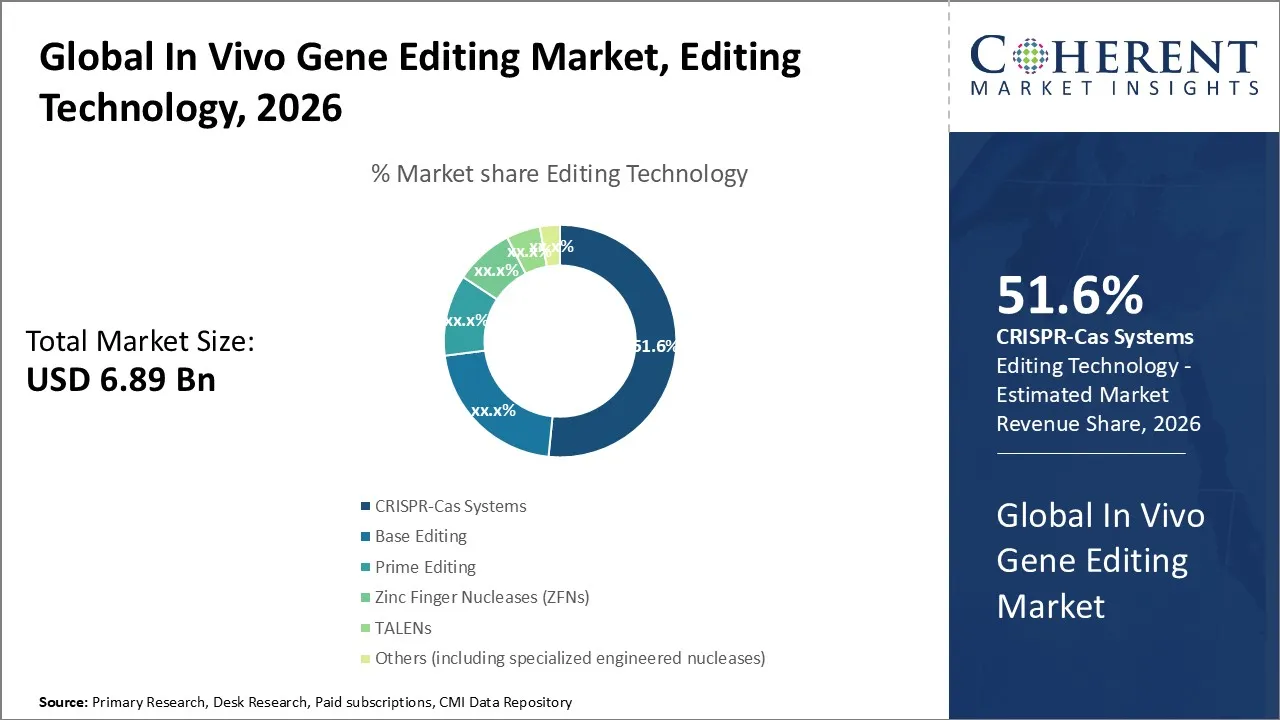
Why Do CRISPR-Cas Systems Account for the Largest Share of the In Vivo Gene Editing Market?
On the basis of editing technology, CRISPR-Cas systems are predicted to account for the largest market share of 51.6% in 2026. The leading position is closely associated with their ability to program sequence-specific DNA modification, adaptable guide-RNA design, and an expanding body of evidence from preclinical and clinical investigations. Presenting supportive testimony, an investigational in vivo CRISPR-Cas9 therapy showed 92% reduction in circulating transthyretin protein after 24 months of initiating a Phase I clinical study among 36 patients with hereditary transthyretin amyloidosis and polyneuropathy, demonstrating durable gene-silencing activity following sequence-specific CRISPR-Cas9 modification.
Corporate development is also broadening the commercial potential of CRISPR platforms. For instance, in May 2025, Synthego expanded its CRISPR solutions portfolio by launching GMP-grade SpCas9 nuclease that is designed to support clinical-stage gene-editing development. The product can be combined with GMP-grade single-guide RNAs, providing integrated components for therapeutic research and manufacturing, reinforcing the sub-segment’s leadership within the broader gene editing industry.
- Current Industry Events of 2026
- Market Size Estimation
- Regional Breakdown
- Competitive Landscape
- Customer Intelligence
- Segmental Analysis
- Pricing Analysis
- Key Market Drivers, Challenges & Future Trends
- Customized Insights Section
How are Lipid Nanoparticles Becoming the Preferred Delivery Platform for In Vivo Gene Editing?
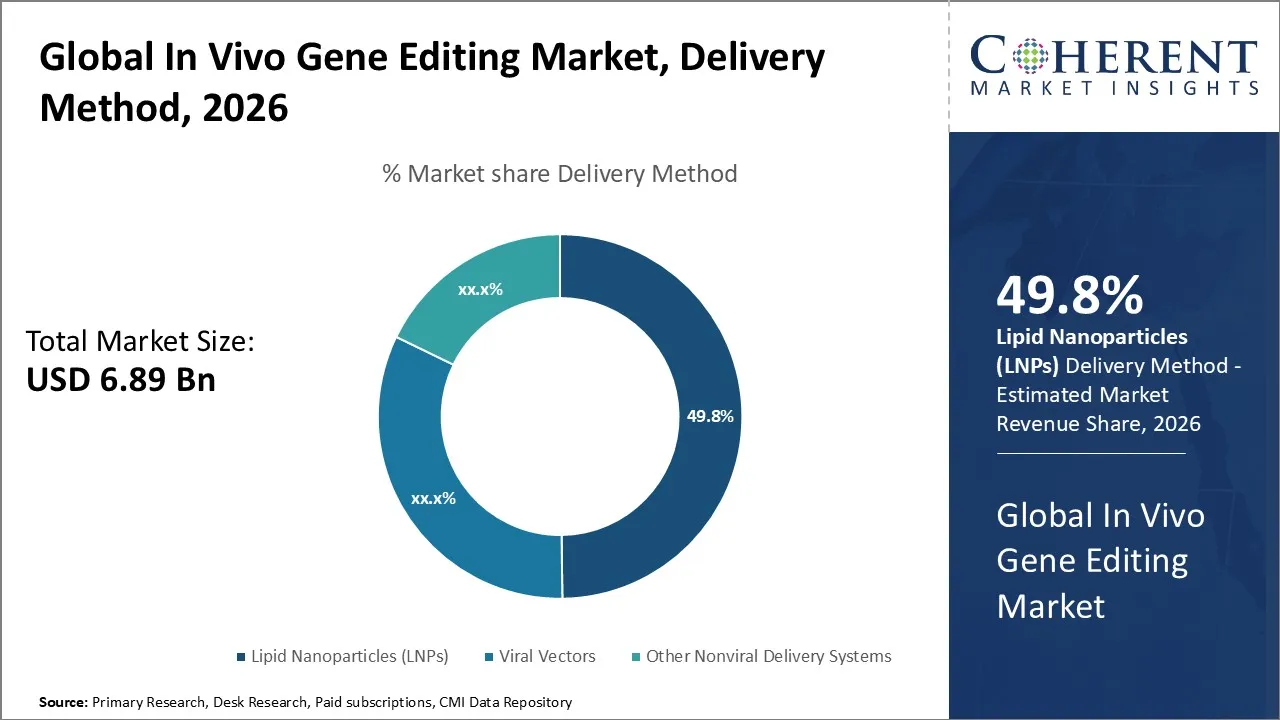
In terms of delivery method, lipid nanoparticles (LPNs) are anticipated to capture the highest modeled market share of 49.8% in 2026. Their dominance in this sector is consolidated by their capacity to encapsulate and transport messenger RNA, guide RNA, and other editing components while avoiding some of the constraints associated with viral delivery systems.
Furthermore, commercial pipeline strategies demonstrate sustained growth of delivery specialization and widespread adoption. For instance, in October 2024, Editas Medicine and Genevant Sciences signed a collaboration and nonexclusive worldwide licensing agreement to develop in vivo gene-editing medicines combining Editas' CRISPR-Cas12a platform with Genevant's proprietary lipid nanoparticle technology. This partnership made Genevant eligible to receive up to US$238 million in upfront and contingent milestone payments, alongside royalties on future product sales.
Why Are Genetic and Rare Diseases the Primary Therapeutic Focus of In Vivo Gene Editing?
By therapeutic application, the genetic and rare diseases segment is projected to hold the largest modeled share of 43.7% in 2026. Its proprietorship is closely anchored to the molecular characteristics of inherited conditions, where In vivo editing can be potential approaches to permanently disrupt, repair, or compensate for disease-associated genetic sequences without relying on the collection and laboratory manipulation of a patient's cells. Besides, the scale of unmet clinical need in this category is substantial, with the World Health Organization (WHO) reporting that more than 300 million people worldwide were living with one of over 7,000 identified rare diseases in May 2025.
This burden justifies the clinical progress in developing new gene-modifying therapeutic technologies to treat inherited metabolic diseases. Indicating how advances in targeted genetic correction could support the segment’s positioning, in October 2026, Beam Therapeutics released initial Phase I/II data for its investigational in vivo base-editing therapy, BEAM-301, targeting patients with glycogen storage disease type Ia (GSDIa). The study achieved 15 hours of controlled fasting in the 40 mg cohort without requiring starch supplementation following treatment.
Current Events and Their Impact on the In Vivo Gene Editing Market
Current Event | Description and its Impact |
FDA Genome-Editing Safety Guidance (April 2026) |
|
European Medicines Agency (EMA) Gene-Editing Workplan (January 2026) |
|
In Vivo Gene Editing Market Dynamics
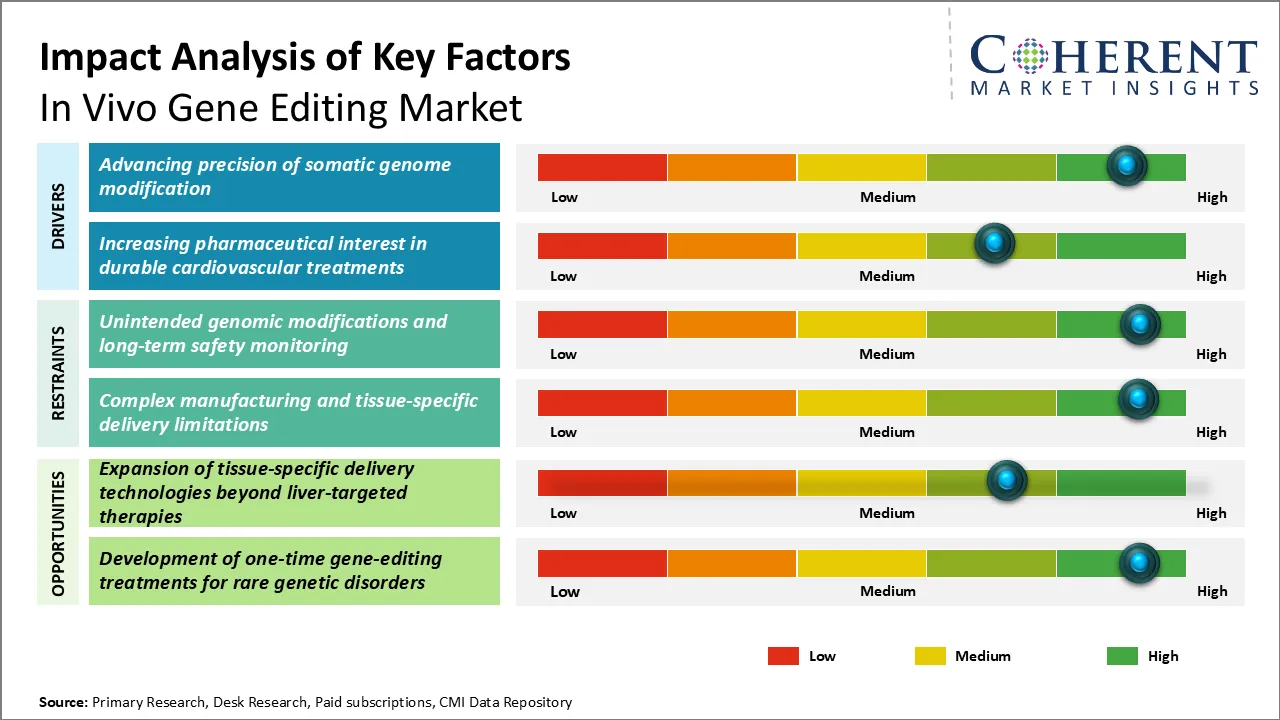
Market Drivers
- Efforts to Enhance Precision of Somatic Genome Modification: Development of improved editing enzymes and guide-RNA architectures is strengthening the feasibility of precise therapeutic genome modification technologies. Thus, researchers are seeking next-generation editing machinery to increase on-target activity while reducing unwanted sequence alterations, large genomic rearrangements, and other safety risks for treatments intended to provide durable effects.
- This diversity of clinical editing technologies is reflected in the 2025 study published by researchers at the Massachusetts Institute of Technology, identifying the potential of an engineered prime-editing platform, vPE, in achieving up to 60-fold fewer unintended insertion and deletion errors, while maintaining an edit-to-indel ratio as high as 543:1, compared with earlier prime editors.
- Increasing Pharmaceutical Interest in Durable Cardiovascular Treatments: As the high-risk population of heart-afflicted conditions continue to grow, targeting proteins involved in cholesterol metabolism become more important for the development of effective in vivo editing treatments that can provide long-term efficacy, safety, and clinical value. This prospect of sustained lipid reduction following a limited treatment course have the potential to attract greater pharmaceutical investment in therapeutic candidates suitable for larger patient populations, expanding the commercial scope beyond small rare-disease populations.
- For instance, a clinical study of VERVE-102 published in the New England Journal of Medicine in May 2026 evaluated the administration of VERVE-102 among 35 adults with heterozygous familial hypercholesterolemia or premature coronary artery disease. Up to 62% and 88% dose-dependent reductions in low-density lipoprotein (LDL) and proprotein convertase subtilisin–kexin type 9 (PCSK9) cholesterol levels were recorded at the highest studied dose of 1.0-mg-per-kilogram throughout a follow-up of at least 1 year in 15 participants, compared to 9% and 51% at the 0.3-mg-per-kilogram dose.
Emerging Trends
- In Vivo Editing Research is Exploring Gene Correction as an Alternative to Gene Disruption: Base editors and newer genome modification platforms are expanding their range for conditions in which restoration of normal protein function is preferable, instead of solely disabling gene expression. Exemplifying participation in this shift, in June 2026, Boundless Bio and Serapha Bio signed an all-stock merger agreement against USD 230 million in private investment commitments to advance an investigational in vivo base-editing treatment, SERP-01, for alpha-1 antitrypsin deficiency (AATD). The therapy is designed to correct the E342K mutation in the SERPINA1 gene, restoring the production of functional M-AAT protein while reducing the accumulation of harmful Z-AAT protein.
- Development of Nonviral Genome-Editing Approaches for Infectious Diseases: Developers are investigating whether direct editing of persistent viral genetic material can address infections that are difficult to eradicate using conventional medicines. For instance, in November 5, 2026, Precision BioSciences reported updated Phase I data for PBGENE-HBV, including evidence of reduced hepatitis B covalently closed circular DNA and undetectable pregenomic RNA in evaluable patients at its selected development dose. The company reported plans to advance into Phase II clinical assessment.
- Expansion of Delivery Systems into Extrahepatic Tissues: This addresses a major area of innovation involves delivering editing machinery to organs beyond the liver, including the central nervous system, eyes, lungs, and muscle expanding the therapeutic range of in vivo gene editing. Exemplifying these strategic events, in September 2026, Exegenesis Bio and Modalis Therapeutics engaged in a research collaboration and licensing agreement to advance an investigational epigenome-editing treatment, MDL-201, for Duchenne muscular dystrophy using EMC181 Muscle-Tropic AAV Capsid.
Regional Insights
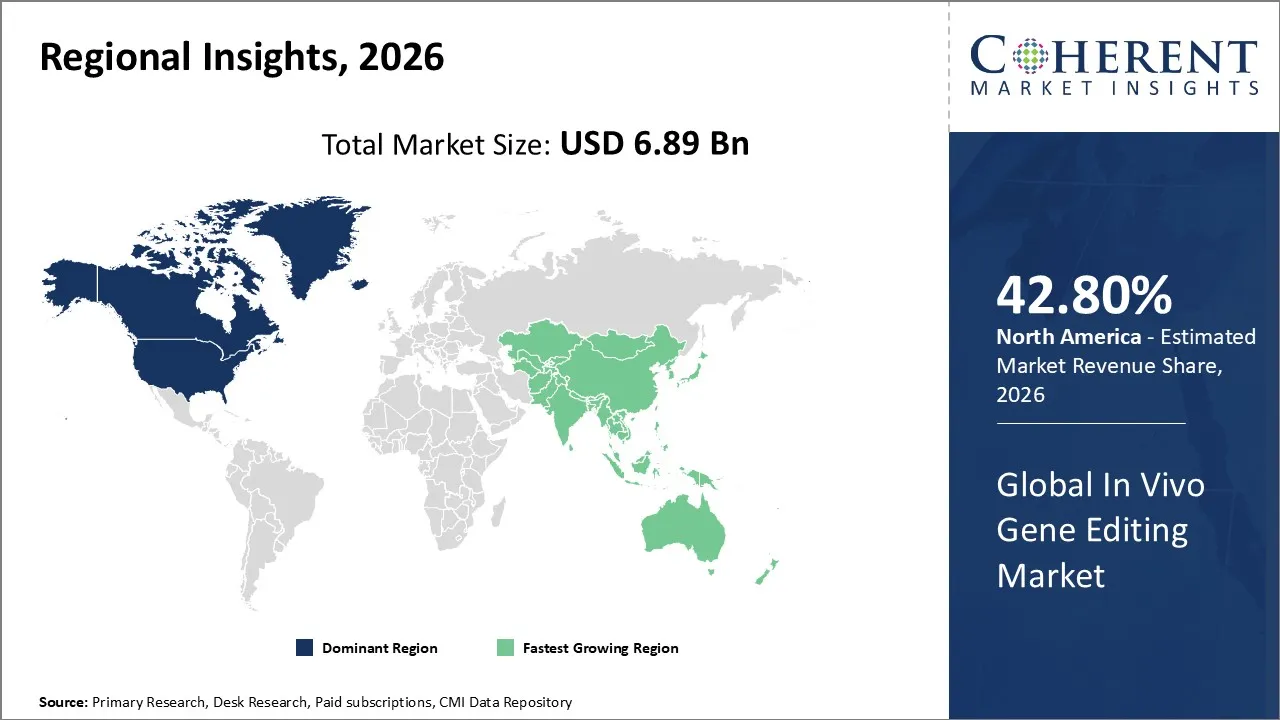
North America to Dominate the Global In Vivo Gene Editing Market with a 42.8% Share in 2026
North America is flaunting its established ecosystem of biotechnology companies, venture capital financing, translational research institutions, and advanced therapeutic manufacturing organizations as a competitive regional advantage. Such a favorable atmosphere is particularly evident in the progression of in vivo genome-editing candidates from experimental development into registrational clinical trials and regulatory review.
This can be testified by a recent corporate development, where in November 2026, Metagenomi Therapeutics received FDA clearance of investigational new drug application for its in vivo genome-editing candidate, MGX-001, for the treatment of hemophilia A. The company further shared plans to initiate its first-in-human study in 2027.
This development also highlights continued federal investment in differentiated editing systems targeting inherited bleeding disorders. For instance, in September 2026, the National Heart, Lung, and Blood Institute (NHLBI) awarded over USD 1 million to HydroGene Therapeutics for a project developing nonviral hydrodynamic gene therapy for hemophilia B. Moreover, it indicates the dependence of the region's leadership on late-stage therapeutic validation, clinical safety outcomes, and the increasing ability of developers in establishing scalable manufacturing arrangements.
Asia Pacific In Vivo Gene Editing Market is Expected to Register the Fastest Growth Through 2033
APAC’s accelerated growth in the global in vivo gene editing market is attributable to emerging therapeutic discovery programs, expanding domestic biotechnology capabilities, and increasing interest in precision genetic medicines across China, Japan, South Korea, and Australia. These countries are contributing to the region’s augmentation by introducing different combinations of genome-editing research, next-generation technologies, and clinical trials.
Evidencing the same, 2026 bibliometric study published in Frontiers in Medicine examined 1,571 scientific publications on gene-editing therapies for human genetic diseases published between 2005 and 2025, where China, Japan, India, South Korea, and Australia collectively accounted for approximately 26.86% of the analyzed global research output.
Country | Publications | Share of global publications |
China | 253 | 16.10% |
Japan | 65 | 4.14% |
India | 49 | 3.12% |
South Korea | 37 | 2.36% |
Australia | 18 | 1.15% |
Combined | 422 | 26.86% |
Exemplifying such progressive activities to advance locally administered treatments, in July 2026, GenEditBio received investigational new drug clearance from China's National Medical Products Administration (NMPA) for its CRISPR-based investigational treatment, GEB-101, for TGFBI-related corneal dystrophies. The product uses a protein delivery vehicle designed to deliver genome-editing ribonucleoproteins directly into corneal tissue, signaling the extension of APAC's capabilities beyond low-cost clinical research to the development of proprietary editing and delivery technologies.
Global In Vivo Gene Editing Market Outlook for Key Countries:
U.S. Advancing Toward Regulatory Evaluation of First-Generation In Vivo Gene Editing Therapies
The United States represents both regional and global center for advanced genome-editing drug development, which is backed by continued biotechnology innovation, clinical research networks, and specialized regulatory expertise. This positioning is marked by the NLM-registered precision translation (2019–2025) phase of gene-editing evolution, with the country contributing to more than 31% worldwide publication output. The leadership also followed till a broader pattern of institutional dominance, as 12 of the top 15 most prolific organizations were American.
According to this trajectory, local pharmaceutical developers are now progressing beyond initial demonstration of biological activity toward controlled trials designed to assess whether a single administration can produce clinically meaningful and sustained therapeutic effects. For instance, in November 2026, Intellia confirmed commercial-readiness preparations for lonvo-z ahead of its anticipated March 2027 regulatory decision, evaluating its efficacy in treating hereditary angioedema (HAE).
China Building Clinical Momentum in Base Editing and Tissue-Targeted Therapeutics
China's in vivo gene editing market is augmenting through locally generated intellectual property, experimental genomic platforms, and early human studies. Testifying to the same, an important clinical finding was reported in March 2026, when YolTech Therapeutics published 24-week Phase I data for its experimental PCSK9-targeting base-editing treatment, YOLT-101. The company reported that six participants received a single infusion across three dose levels, with LDL cholesterol reductions exceeding 50% at Week 24 in the study.
Clinical research originating from China further provides a measurable proof point of the country being a regional leader in this sector. As evidence, a 2026 study, funded by the program grant from the Huadong Medicine Joint Fund of Zhejiang Provincial Natural Science Foundation of China, recorded 96% median serum transthyretin reductions at the highest evaluated dose of an investigational LNP-delivered CRISPR therapy, YOLT-201, among patients with transthyretin amyloid cardiomyopathy.
Japan Developing Proprietary Genome-Editing Platforms for Future In Vivo Applications
Japan's market opportunities are primarily anchored to its excellence in academic biotechnology research, specialized genome-editing intellectual property, and public research funding. One of such notable investment occurred in June 2025, when the Japan Agency for Medical Research and Development (AMED) sanctioned a grant of up to USD 14 million for Osaka-based C4U Corporation, as part of its 'Strengthening Program for Pharmaceutical Startup Ecosystem'.
The investment was made to enable financial assistance to the development of a hematopoietic stem cell transplantation therapy, using CRISPRCas3 genome editing technology, for primary immunodeficiency. This is encouraging Japanese developers to investigate alternatives to conventional Cas9-based approaches, including CRISPR-Cas3, which has different molecular characteristics and potential therapeutic applications.
For instance, in January 2026, C4U, in collaboration with a research team at the University of Tokyo (IMSUT), established a new method for the in vivo application of CRISPR-Cas3 technology. Further, in the same month, the company signed a license agreement with Euglena Co., Ltd. regarding patents related to CRISPR-Cas3 technology.
Australia Emerging as an Important Early Clinical Development Location
Australia is progressively gaining relevance in the global in vivo gene editing market through its state-of-the-art clinical research infrastructure and exceptional capacity to host early-stage human studies of experimental genetic medicines. For instance, in October 8, 2026, Editas received Human Research Ethics Committee approval and completed the Clinical Trial Notification process for its Phase I/II Strive trial of EDIT-401 from Australia's Therapeutic Goods Administration.
The country’s role in the regional performance is particularly important for dedicated local biotechnology developers seeking initial safety, tolerability, and pharmacodynamic information before expanding international trials. A use case of the same comes from Editas Medicine's November 2026 update, which reported that EDIT-401 demonstrated at least 90% LDL cholesterol reduction maintained over ten months in a nonhuman primate study. These preclinical findings therefore supported the company's preparations for clinical evaluation of the therapy.
France Strengthening Its Position Through Advanced Editing-Platform Development
France's presence in the in vivo gene editing market is shaped by its lucrative pharmaceutical research capabilities and a biotechnology industry. With deepened experience in gene editing and advanced therapeutic development, the country is mapping several long-term opportunities, including development of specialized editing technologies and investigational treatments for metabolic disorders. Testifying to such an R&D network, in 2025 alone, the nation held almost 2.8 thousand active biotechnology firms, backed by 2.3 billion euros secured through private healthtech financing.
A significant benchmark is Cellectis' plan to advance two in vivo clinical programs, .HEAL-101 and .HEAL-201, with preliminary Phase I clinical results targeted for the second half of 2027 and first half of 2028, respectively. The company also outlined a restructuring intended to extend its financial runway into the second half of 2028. Subsequently, the nation's future competitiveness will be influenced by the effectiveness of this transition and the capacity to retain expertise in differentiated genome-modification technologies.
How Could AI-assisted/Next-Generation Tissue Targeting Create New Opportunities in the In Vivo Gene Editing Market?
Technological advances in tissue-targeted genome editing could create significant opportunities, as it allows therapeutic interventions in organs that remain difficult to reach using conventional systemic delivery. Similar emerging approaches are being induced by the use of AI in optimizing delivery of programmable editors to blood-forming stem cells, ocular tissue, muscle, and other specialized cellular populations, expanding the potential treatment range while reducing exposure of unrelated organs.
Exemplifying the same, 2026 NLM study demonstrated the use of machine learning (ML) and Bayesian optimization to develop lipid nanoparticles specifically targeting hematopoietic stem cells. The optimized formulations achieved up to 40% on-target TP53 gene-editing efficiency in human cord-blood CD34-positive cells, while maintaining cell viability. These developments could therefore become an important commercial differentiator for specialized formulation providers, manufacturing contractors, and drug-delivery technology suppliers participating in the wider gene therapy industry.
Market Players, Key Developments, and Competitive Intelligence
Key Developments
- In November 2026, Metagenomi received FDA clearance for Investigational New Drug (IND) application of its one-time in vivo CRISPR-based therapy, MGX-001, which is designed to treat Hemophilia A. The therapeutic uses an adeno-associated virus (AAV) vector to integrate a promoterless factor VIII gene into the albumin gene.
- In September 2026, Integrated DNA Technologies (IDT), in partnership with Aldevron, launched research-grade Cas9 messenger RNA solutions in conventional and high-fidelity SpyFi formats. The jointly developed products combine IDT's CRISPR enzyme-engineering capabilities with Aldevron's mRNA manufacturing infrastructure.
- in May 2026, YolTech closed USD 70 million in a Series C financing to support its clinical-stage in vivo gene-editing pipeline and accelerate international development and commercial readiness. The company’s proprietary editing platform and nonviral lipid nanoparticle delivery technology are being developed for genetic, metabolic, cardiovascular, and autoimmune diseases.
Competitive Landscape
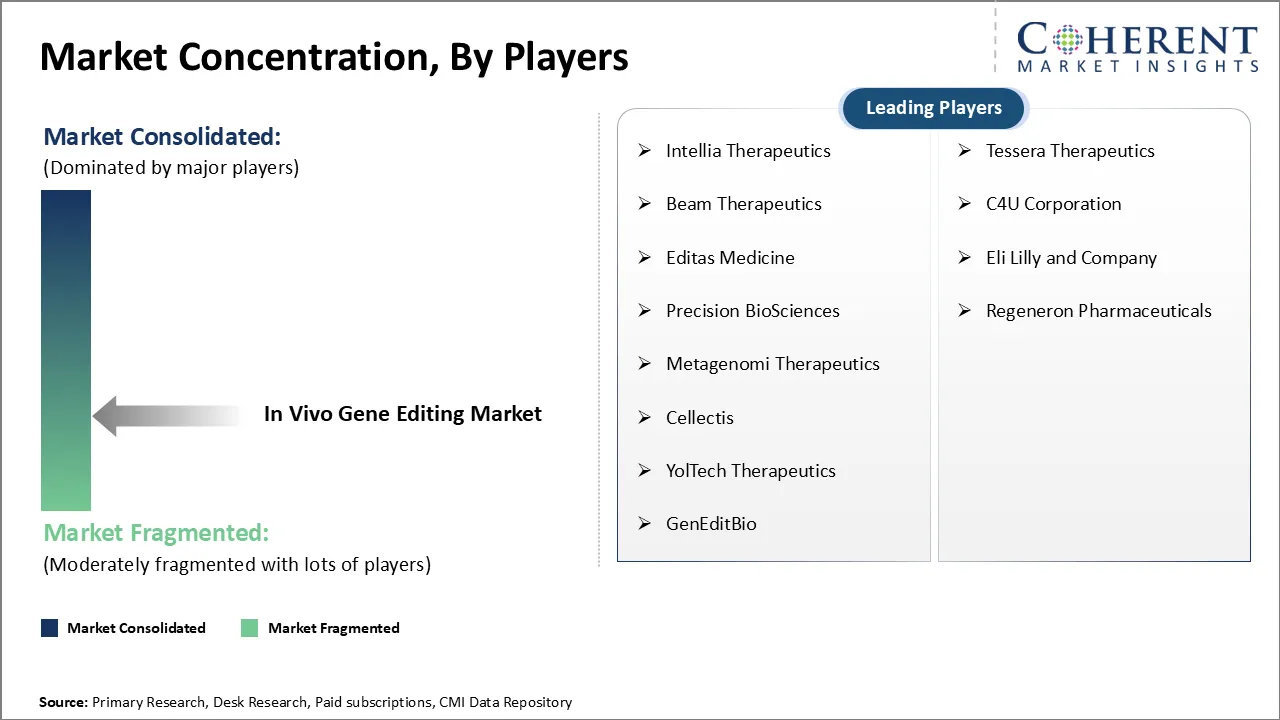
The global in vivo gene editing market features a fragmented landscape comprising clinical-stage biotechnology companies, genome-editing technology specialists, pharmaceutical partners, and research-focused platform developers. Competition in this sector is therefore is influenced by editing precision, tissue-targeting capabilities, therapeutic durability, safety evidence, and manufacturing scalability.
As a result, clinical-stage companies are concentrating resources on advancing selected lead candidates through human testing, while earlier-stage developers are investing in editing systems and delivery technologies that could support multiple future therapeutic products. For instance, in July 2026, Scribe Therapeutics completed its upsized initial public offering and a concurrent private placement with Sanofi, generating approximately USD 155.5 million in aggregate gross proceeds to advance its engineered in vivo CRISPR technologies, including its cardiometabolic therapeutic pipeline targeting PCSK9, LPA, and APOC3.
Whereas, large pharmaceutical companies participate through acquisition, licensing, co-development arrangements, and access to emerging editing platforms. Exemplifying these events, in October 2026, Lonza and Asimov signed a strategic collaboration to develop scalable manufacturing processes for lentiviral vectors used in emerging in vivo genetic medicines. The partnership integrates Asimov's genetically engineered producer-cell technologies with Lonza's process development, analytical testing, GMP manufacturing, and scale-up expertise.
Leading Manufacturers and Notable Products in the In Vivo Gene Editing Market
Company | Notable In Vivo Programs / Platforms | Strategic Relevance |
Intellia Therapeutics | Lonvo-z; Nex-z | Systemically administered CRISPR therapies targeting hereditary angioedema and transthyretin amyloidosis |
Beam Therapeutics | BEAM-301; BEAM-302; BEAM-304 | Liver-directed base-editing approaches for inherited metabolic and genetic conditions |
Editas Medicine | EDIT-401; targeted LNP platform | Genome-editing strategy focused on LDL receptor expression and expansion of delivery to other tissues |
Precision BioSciences | PBGENE-HBV; PBGENE-DMD; ARCUS | Proprietary nuclease platform targeting chronic hepatitis B and Duchenne muscular dystrophy |
Metagenomi Therapeutics | MGX-001 | Investigational in vivo genome editing aimed at restoring functional coagulation-factor activity in hemophilia A |
Cellectis | .HEAL-101; .HEAL-201 | Developing in vivo gene-editing treatments for severe dyslipidemias |
YolTech Therapeutics | YOLT-101; YOLT-202; YOLT-201 | Investigational gene-editing programs in cardiovascular and inherited protein-related disorders |
GenEditBio | GEB-101; protein delivery vehicle platform | Targeted in vivo genome editing for genetically mediated corneal diseases |
Tessera Therapeutics | TSRA-196; TSRA-808; Gene Writing platform | In vivo genome modification and targeted nonviral delivery development |
C4U Corporation | CRISPR-Cas3 platform | Research-stage development of differentiated gene-editing technologies |
Eli Lilly and Company | VERVE-102 through Verve Therapeutics | Pharmaceutical development of PCSK9-targeted in vivo base editing |
Regeneron Pharmaceuticals | Partnership with Tessera Therapeutics | Joint development of gene-writing approaches for inherited diseases |
Market Report Scope
Global In Vivo Gene Editing Market Report Coverage | |||
Report Coverage | Details | ||
Base Year | 2025 | Market Size in 2026: | USD 6.89 Bn |
Historical Data For: | 2020 To 2024 | Forecast Period: | 2026 To 2033 |
Forecast Period 2026 To 2033 CAGR: | 19.9% | 2033 Value Projection: | USD 24.51 Bn |
Geographies covered: |
| ||
Segments covered: |
| ||
Companies covered: | Intellia Therapeutics, Beam Therapeutics, Editas Medicine, Precision BioSciences, Metagenomi Therapeutics, Cellectis, YolTech Therapeutics, GenEditBio, Tessera Therapeutics, C4U Corporation, Eli Lilly and Company, Regeneron Pharmaceuticals | ||
Growth Drivers: |
| ||
Restraints & Challenges: |
| ||
Key Takeaways from Analyst
- The global in vivo gene editing market is approaching an important transition from technology validation toward clinical and regulatory assessment. Developers that demonstrate reproducible target modification, favorable safety profiles, and durable therapeutic benefits may become increasingly attractive to pharmaceutical partners and investors.
- In April 2026, Dyno Therapeutics announced that Astellas Pharma exercised its option to license an AI-engineered adeno-associated virus capsid specifically designed for delivery to skeletal muscle. Under the agreement, Dyno will receive a US$15 million licensing payment, with eligibility for additional development, regulatory, and commercialization milestone payments and royalties.
- Delivery technology is expected to remain one of the most influential competitive factors. Platforms capable of reaching difficult-to-access tissues may create therapeutic opportunities beyond established liver-directed indications and support new technology-licensing arrangements
- In March 2026, Forge Biologics signed a manufacturing agreement with the Progeria Research Foundation to advance an investigational in vivo base-editing therapy, SamPro-2, for Hutchinson-Gilford progeria syndrome.
- Commercial success will depend on more than molecular editing efficiency. Developers will need to demonstrate clinical superiority or meaningful treatment advantages, manage long-term safety requirements, establish reliable manufacturing processes, and provide credible evidence supporting future reimbursement.
- In May 2026, Epicrispr Biotechnologies expanded its manufacturing partnership with Forge Biologics to support commercialization of an investigational in vivo epigenetic gene-modulation therapy, EPI-321, for facioscapulohumeral muscular dystrophy.
Market Segmentation
- Editing Technology Insights (Revenue, USD Bn, 2021 - 2033)
- CRISPR-Cas Systems
- Base Editing
- Prime Editing
- Zinc Finger Nucleases (ZFNs)
- TALENs
- Others (including specialized engineered nucleases)
- Delivery Method Insights (Revenue, USD Bn, 2021 - 2033)
- Lipid Nanoparticles (LNPs)
- Viral Vectors
- Other Nonviral Delivery Systems
- Therapeutic Application Insights (Revenue, USD Bn, 2021 - 2033)
- Genetic and Rare Diseases
- Cardiovascular and Metabolic Disorders
- Infectious Diseases
- Oncology
- Others
- Target Tissue Insights (Revenue, USD Bn, 2021 - 2033)
- Liver
- Hematopoietic Stem Cells and Blood-Forming Tissues
- Eye
- Muscle
- Central Nervous System
- Others
- End User Insights (Revenue, USD Bn, 2021 - 2033)
- Pharmaceutical and Biotechnology Companies
- Academic and Research Institutes
- Contract Research and Development Organizations
- Hospitals and Clinical Research Centers
- Others
- Regional Insights (Revenue, USD Bn, 2021 - 2033)
- North America
- U.S.
- Canada
- Latin America
- Brazil
- Argentina
- Mexico
- Rest of Latin America
- Europe
- Germany
- U.K.
- Spain
- France
- Italy
- Russia
- Rest of Europe
- Asia Pacific
- China
- India
- Japan
- Australia
- South Korea
- ASEAN
- Rest of Asia Pacific
- Middle East
- GCC Countries
- Israel
- Rest of Middle East
- Africa
- South Africa
- North Africa
- Central Africa
- North America
- Key Players Insights
- Intellia Therapeutics
- Beam Therapeutics
- Editas Medicine
- Precision BioSciencesa
- Metagenomi Therapeutics
- Cellectis
- YolTech Therapeutics
- GenEditBio
- Tessera Therapeutics
- C4U Corporation
- Eli Lilly and Company
- Regeneron Pharmaceuticals
Sources
Primary Research Interviews
- In vivo gene editing therapy developers and biotechnology companies
- CRISPR-Cas, base editing, and prime editing technology specialists
- Pharmaceutical research and development (R&D) executives
- Gene-editing clinical trial investigators and genetic medicine specialists
- Lipid nanoparticle (LNP) and viral vector delivery technology developers
- Contract development and manufacturing organization (CDMO) professionals
- Genome-editing safety, off-target analysis, and molecular diagnostics experts
- Regulatory affairs and advanced therapeutic product specialists
- Gene-editing technology licensing and pharmaceutical business development executives
Stakeholders
- Global pharmaceutical and biotechnology companies
- In vivo genome-editing platform developers
- Genetic medicine research institutions and universities
- Lipid nanoparticle and viral vector manufacturers
- Contract research organizations (CROs)
- Contract development and manufacturing organizations (CDMOs)
- Hospitals and specialized genetic disease treatment centers
- Genome-editing investors and technology licensing partners
Therapeutic Areas
- Hereditary transthyretin amyloidosis and hereditary angioedema
- Genetic and rare metabolic disorders
- Cardiovascular diseases and inherited lipid disorders
- Alpha-1 antitrypsin deficiency
- Hemophilia and inherited bleeding disorders
- Duchenne muscular dystrophy and neuromuscular diseases
- Chronic hepatitis B and other persistent viral infections
- Genetic ophthalmic disorders and corneal dystrophies
- In vivo engineered immune-cell therapies for oncology
- Hematopoietic stem cell-related genetic disorders
Regulatory and Government Bodies
- U.S. Food and Drug Administration (FDA)
- U.S. National Institutes of Health (NIH)
- National Heart, Lung, and Blood Institute (NHLBI), U.S.
- European Medicines Agency (EMA)
- U.K. Medicines and Healthcare products Regulatory Agency (MHRA)
- National Medical Products Administration (NMPA), China
- Japan Agency for Medical Research and Development (AMED)
- Pharmaceuticals and Medical Devices Agency (PMDA), Japan
- Therapeutic Goods Administration (TGA), Australia
- Central Drugs Standard Control Organisation (CDSCO), India
Databases
- ClinicalTrials.gov
- World Health Organization International Clinical Trials Registry Platform (WHO ICTRP)
- PubMed and PubMed Central – National Library of Medicine
- European Union Clinical Trials Information System (CTIS)
- FDA Drugs@FDA and Biologics License Application databases
- National Institutes of Health RePORTER
- World Intellectual Property Organization (WIPO) PATENTSCOPE
- European Patent Office (EPO) Espacenet
- Chinese Clinical Trial Registry (ChiCTR)
- Australian New Zealand Clinical Trials Registry (ANZCTR)
Magazines and Industry Publications
- Genetic Engineering & Biotechnology News (GEN)
- CRISPR Medicine News
- BioPharma Dive
- Fierce Biotech
- Pharmaceutical Technology
- BioWorld
- Clinical Trials Arena
- Drug Discovery & Development
- The Medicine Maker
Journals
- Nature Biotechnology
- Nature Medicine
- Nature Genetics
- New England Journal of Medicine
- Molecular Therapy
- The CRISPR Journal
- Human Gene Therapy
- Science Translational Medicine
- Cell
- Frontiers in Medicine
- Nucleic Acids Research
- Nature Communications
- Molecular Therapy – Nucleic Acids
Associations
- American Society of Gene & Cell Therapy (ASGCT)
- European Society of Gene and Cell Therapy (ESGCT)
- International Society for Cell & Gene Therapy (ISCT)
- Alliance for Regenerative Medicine (ARM)
- Biotechnology Innovation Organization (BIO)
- Human Genome Organisation (HUGO)
- International Society for Stem Cell Research (ISSCR)
- American Society of Human Genetics (ASHG)
- European Society of Human Genetics (ESHG)
- Japan Society of Gene and Cell Therapy (JSGCT)
Public Domain Sources
- Official corporate announcements on in vivo gene-editing therapies and clinical pipeline developments
- Company annual reports, financial disclosures, and investor presentations
- CRISPR-Cas, base-editing, prime-editing, and engineered nuclease research publications
- Published Phase I, Phase II, and Phase III clinical trial results
- Government genome-editing research grants, investments, and funding announcements
- FDA, EMA, NMPA, PMDA, and TGA regulatory guidance and clinical trial authorizations
- Corporate gene-editing acquisitions, licensing agreements, financing rounds, and strategic collaborations
- Lipid nanoparticle, viral vector, and tissue-specific delivery technology research
- Genome-editing off-target safety assessments and long-term clinical follow-up publications
- Publicly available genome-editing patents and intellectual property licensing disclosures
- In vivo gene-editing manufacturing, process development, and quality-control publications
Proprietary Elements
- CMI Data Analytics Tool
- Proprietary CMI Existing Repository of Information for the Last 10 Years
Get access to 250+ pages report
Every segment, forecast, competitor profile and data table behind the analysis above — available for instant download.
- ESOMAR Member
- ISO 9001:2015 Certified
- D-U-N-S Registered
- GDPR & CCPA Compliant
Frequently Asked Questions
The global in vivo gene editing market is projected to register an indicative CAGR of approximately 19.9% from 2026 to 2033.
Technological advancements in targeted genome modification, progress in clinical-stage genetic medicines, and increasing pharmaceutical investment in differentiated editing platforms are the major growth drivers.
Unintended genomic modifications, complex tissue-specific delivery requirements, high development expenditure, and long-term clinical safety considerations are major challenges.
CRISPR-Cas systems are estimated to lead the market with a preliminary modeled share of 51.6% in 2026.
Intellia Therapeutics, Beam Therapeutics, Editas Medicine, Precision BioSciences, Metagenomi Therapeutics, Cellectis, YolTech Therapeutics, GenEditBio, Tessera Therapeutics, and other specialized genetic medicine developers are notable participants.
North America is expected to lead the global in vivo gene editing market, with an indicative modeled market share of 42.8% in 2026.