

Global Luxury Skincare Market Size and Forecast – 2026 To 2033
The Global Luxury Skincare Market is estimated to be valued at USD 24.65 Bn in 2026 and is expected to reach USD 39.84 Bn by 2033, growing at a compound annual growth rate (CAGR) of 7.10% from 2026 to 2033. The market expansion is supported by rising consumer preference for premium skincare solutions, demand for scientifically backed formulations, and growing adoption of personalized beauty experiences targeting concerns such as anti aging, hydration, and skin health.
In January 2025, L’Oréal Groupe introduced Cell BioPrint at CES 2025, an AI-enabled skincare diagnostic technology developed with NanoEntek that uses advanced skin analysis to deliver personalized recommendations, highlighting the industry’s shift toward data-driven and customized luxury skincare solutions.
Key Takeaways of the Global Luxury Skincare Market
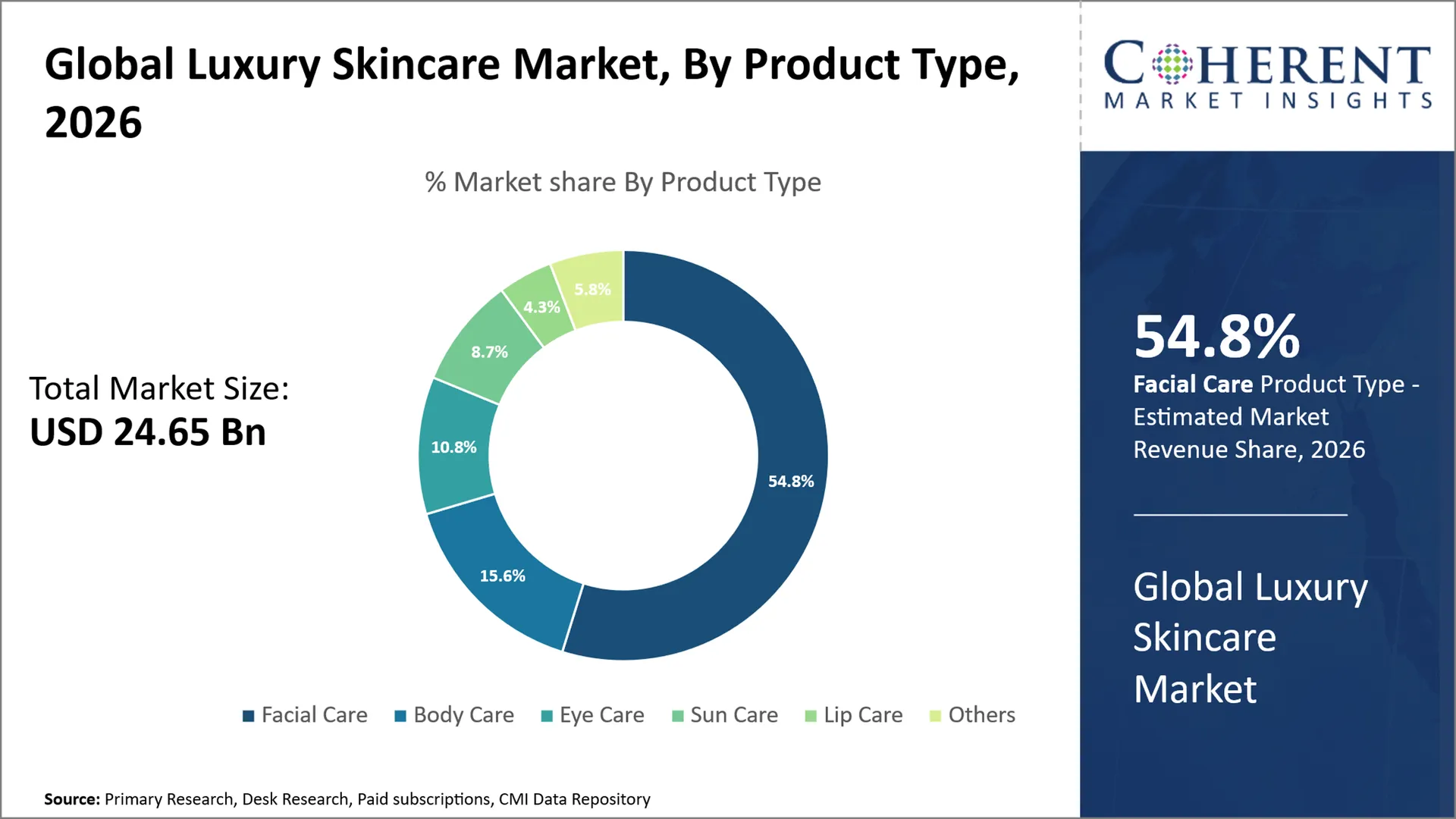
- Facial Care is expected to register an estimated CAGR of 7.5% and capture 54.8% of the global luxury skincare market in 2026, supported by premium anti-aging solutions, personalized routines, and science-backed formulations. In January 2025, L’Oréal Groupe unveiled Cell BioPrint, a personalized skin analysis technology using proteomics to improve consumer understanding and customized skincare recommendations.
- Creams and Moisturizers are expected to achieve an estimated CAGR of 6.9% and account for 30.8% of the global luxury skincare market in 2026, reflecting strong adoption of hydration-focused premium formulations and multifunctional products. In February 2025, Beiersdorf expanded its NIVEA Soft range with an SPF-enhanced variant, combining moisturization and daily protection through an upgraded cream format.
- Normal Skin is projected to record an estimated CAGR of 6.6% and represent 35.8% of the global luxury skincare market in 2026, as brands continue developing broadly suitable formulations with advanced efficacy and premium experiences. In May 2025, The Estée Lauder Companies presented dermatological research from its brands including Clinique and La Mer, supporting science-led product development for diverse skincare needs.
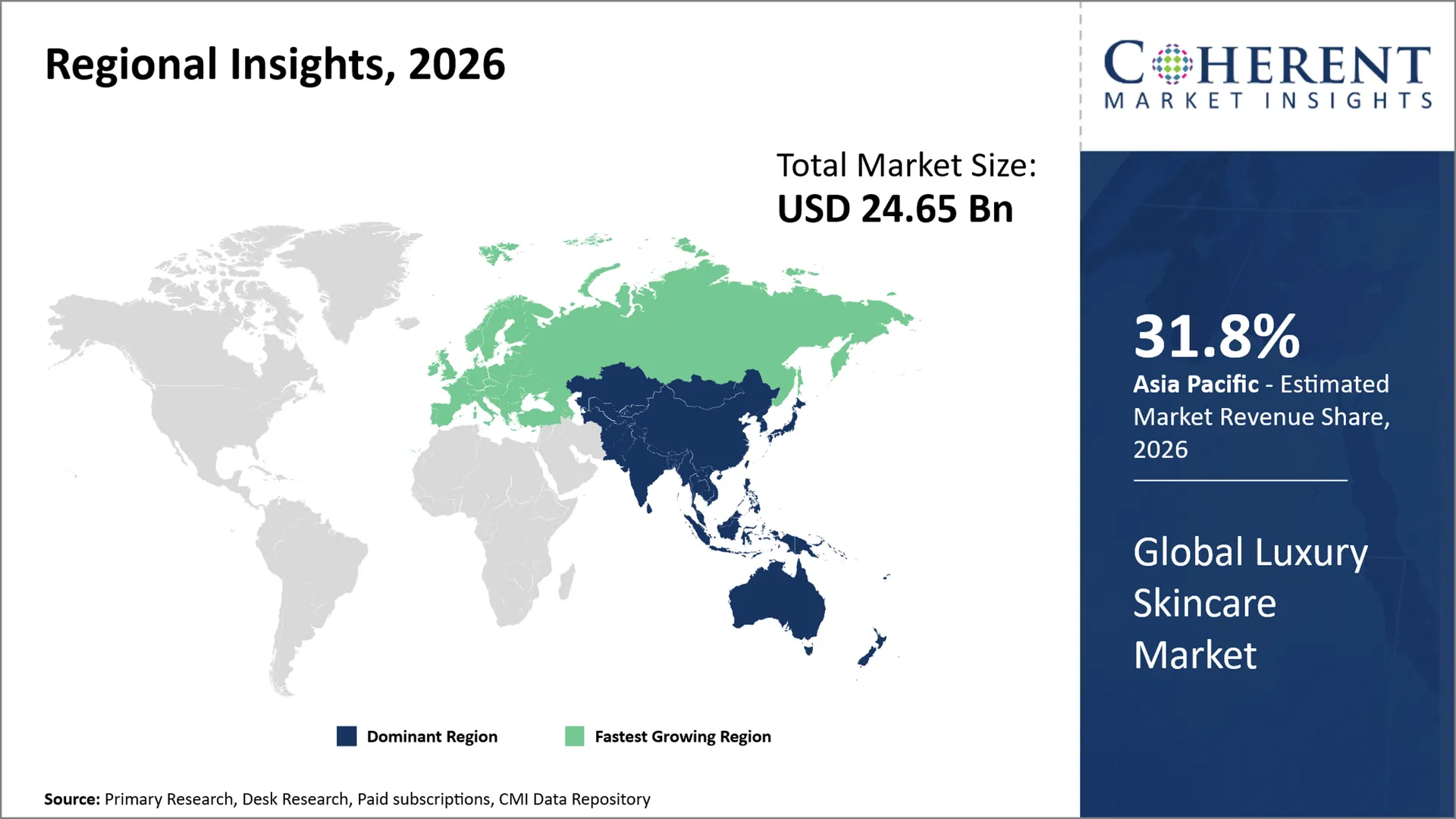
- Asia Pacific is anticipated to register an estimated CAGR of 7.8% and hold 31.8% of the global luxury skincare market in 2026, supported by premium beauty adoption, established luxury brands, and expanding consumer bases across China, Japan, South Korea, and Southeast Asia. In 2025, Shiseido reported growth initiatives in Asia Pacific through new launches from brands including Clé de Peau Beauté and SHISEIDO.
- North America is expected to achieve an estimated CAGR of 8.0% and contribute 27.8% of the global luxury skincare market in 2026, supported by prestige beauty retail expansion, digital accessibility, and premium consumer engagement. In September 2025, Sephora partnered with Uber to expand on-demand access to prestige beauty products, including skincare, across the U.S. and Canada.
Segmental Insights
Why Does Facial Care Dominate the Global Luxury Skincare Market?
Facial Care is expected to account for 54.8% of the global luxury skincare market in 2026, supported by its position as the primary category for premium anti-aging, hydration, brightening, and skin-renewal routines. Luxury consumers increasingly prioritize targeted facial solutions with advanced active ingredients, clinically evaluated benefits, and personalized regimens. Brands continue expanding facial portfolios through serums, creams, masks, and treatment products designed for specific concerns such as wrinkles, pigmentation, and uneven texture. The segment benefits from strong dermatologist influence, premium retail placement, and innovation in biotechnology-derived ingredients. High-value facial products also generate repeat purchases due to daily usage patterns and multi-step skincare routines. In March 2025, Amorepacific Corporation introduced its new AI-powered skin diagnostic technology to enhance personalized facial skincare recommendations and product matching.
- Current Industry Events of 2026
- Market Size Estimation
- Regional Breakdown
- Competitive Landscape
- Customer Intelligence
- Segmental Analysis
- Pricing Analysis
- Key Market Drivers, Challenges & Future Trends
- Customized Insights Section
Why Do Creams and Moisturizers Represent the Largest Product Format in the Global Luxury Skincare Market?
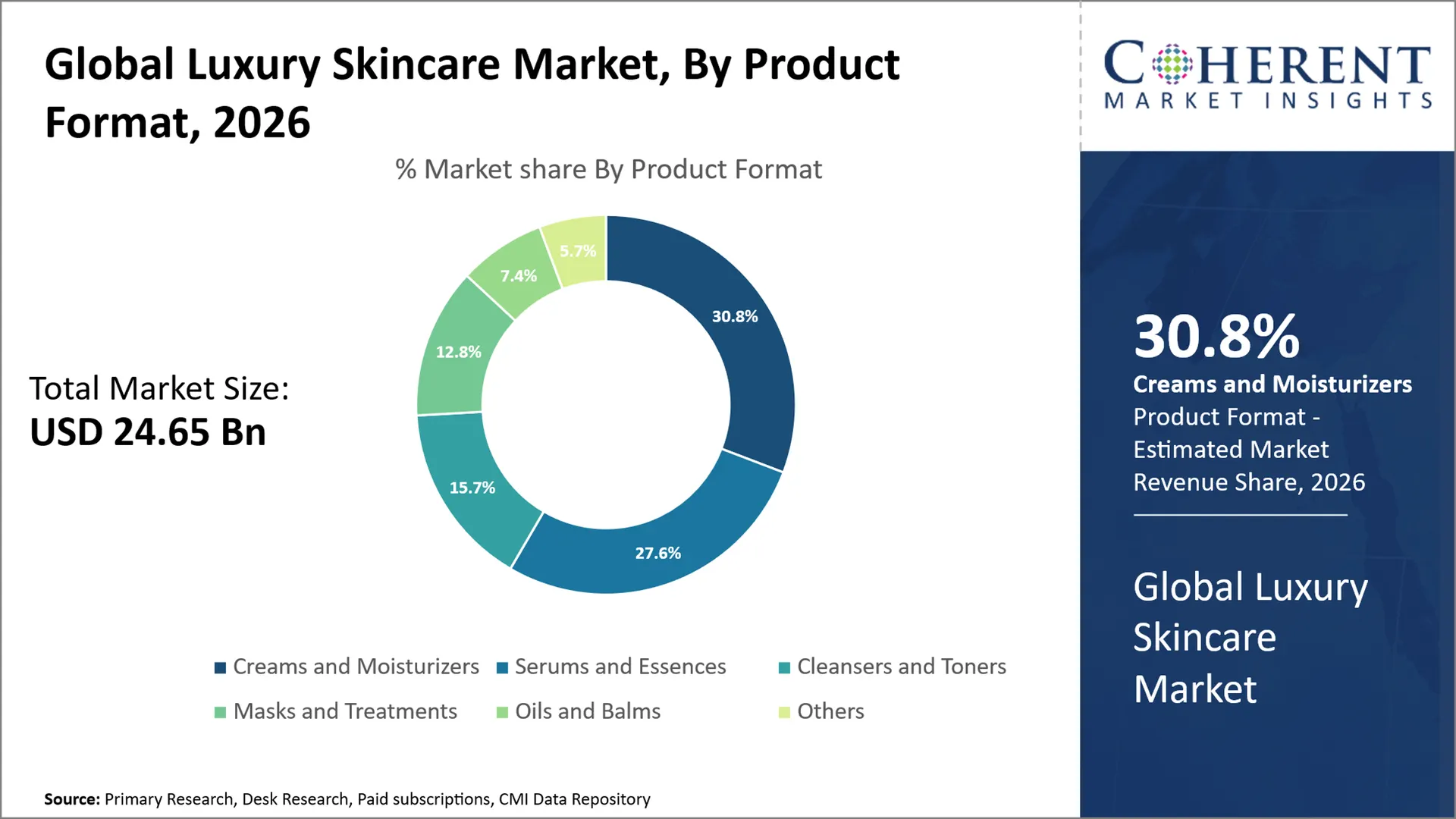
Creams and Moisturizers are projected to hold 30.8% of the global luxury skincare market in 2026, representing the leading product format due to their essential role in daily skincare maintenance, barrier protection, and long-term skin health. Premium consumers often select luxury moisturizers as foundational products because they combine hydration benefits with advanced ingredients such as peptides, botanical extracts, ceramides, and active compounds. Manufacturers benefit from established formulation expertise, premium packaging capabilities, and strong positioning across department stores, specialty beauty retailers, and direct-to-consumer channels. The format also provides opportunities for luxury brands to introduce specialized variants targeting aging, sensitive skin, and environmental stress. In February 2025, Kao Corporation announced new research initiatives focused on improving skin barrier science and developing next-generation skincare formulations.
Why Does Normal Skin Dominate the Skin Type Category of the Global Luxury Skincare Market?
Normal Skin is expected to represent 35.8% of the global luxury skincare market in 2026, leading the skin type category due to its broad consumer applicability and compatibility with a wide range of premium skincare formulations. Luxury skincare brands frequently design core product lines around balanced skin needs, enabling wider customer adoption compared with highly specialized solutions addressing specific concerns. This segment benefits from consumers seeking preventive skincare routines, maintenance-focused products, and premium daily-use formulations rather than corrective treatments alone. Manufacturers can achieve broader market penetration through versatile product portfolios suitable for different age groups and lifestyle preferences. In January 2025, according to the VOGUE Business, LVMH Beauty’s Dior Beauty highlighted its continued investment in longevity-focused skincare research through the expansion of its scientific approach to understanding skin aging mechanisms. The initiative supports luxury skincare innovation by strengthening research-led product development, particularly in advanced anti-aging formulations and science-backed premium skincare experiences.
Current Events and their Impact
Current Event | Description and Its Impact |
March 2025 – European Union Regulation on Cosmetic Ingredient Compliance Updates |
|
January 2025 – U.S. FDA Modernization Activities Under Cosmetic Regulation Framework |
|
February 2025 – China Cosmetic Regulatory Compliance Implementation Measures |
|
Global Luxury Skincare Market Dynamics
Key Market Drivers
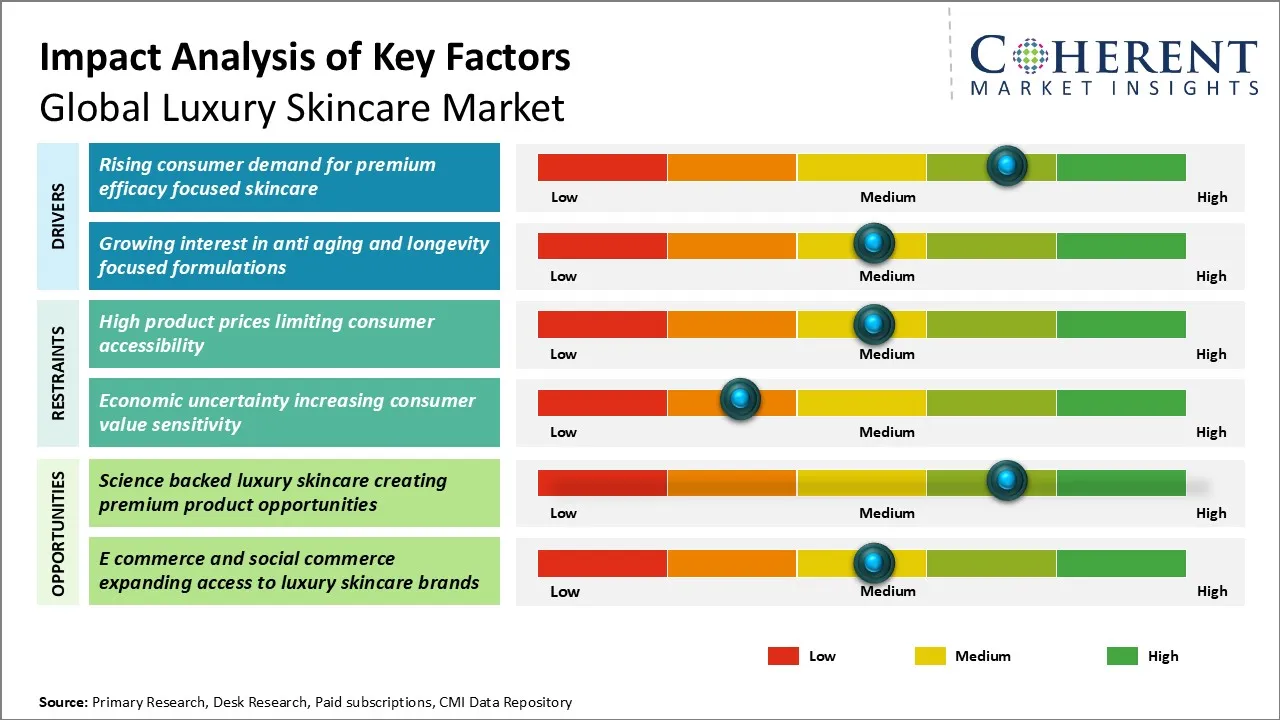
- Rising Consumer Demand for Premium Efficacy-Focused Skincare: Premium efficacy-focused skincare is strengthening demand for luxury skincare products as consumers increasingly evaluate purchases based on measurable results, ingredient performance, and scientifically supported benefits rather than brand prestige alone. Luxury skincare manufacturers are responding through advanced formulations incorporating peptides, biotechnology-derived ingredients, and dermatological research. This shift benefits premium brands, ingredient suppliers, research organizations, and specialty retailers by enabling higher-value product positioning and stronger consumer retention. In June 2025, L’Oréal Groupe announced an agreement to acquire a majority stake in Medik8, a British premium skincare brand specializing in science-backed formulations and clinically positioned skincare solutions. The acquisition strengthens L’Oréal’s Luxe portfolio by expanding its presence in premium dermatological skincare and supporting the development of high-efficacy products focused on advanced skin concerns.
- Growing Interest in Anti-Aging and Longevity-Focused Formulations: Anti-aging and longevity-focused formulations are becoming a central purchasing consideration within luxury skincare as consumers shift toward preventive skin health, long-term maintenance, and age-supportive solutions. Brands are investing in products targeting collagen preservation, cellular resilience, skin regeneration, and advanced barrier protection. This trend creates opportunities for luxury skincare companies, biotechnology ingredient developers, and research-driven brands to differentiate through scientific credibility and premium positioning. In March 2025, Beiersdorf AG announced continued expansion of its skin aging research capabilities through its innovation ecosystem, supporting development of advanced skincare solutions focused on healthy aging.
Emerging Market Trends
- Personalized Luxury Skincare Through Data-Based Consumer Experiences: Personalized skincare is reshaping luxury beauty by moving beyond traditional product categories toward customized routines based on individual skin characteristics, lifestyle factors, and consumer preferences. Brands are increasingly integrating diagnostic tools, digital consultations, and recommendation platforms to improve product selection and strengthen customer engagement. This shift may benefit companies capable of combining skincare expertise with data capabilities, while traditional mass-premium approaches may face pressure as consumers expect more individualized solutions. Over the forecast period, personalization is likely to influence product development, retail experiences, and customer relationship strategies across luxury skincare channels.
- Biotechnology and Sustainable Ingredient Innovation in Premium Skincare: Luxury skincare development is increasingly incorporating biotechnology-based ingredients and sustainable formulation approaches to address consumer expectations around efficacy, transparency, and responsible sourcing. Companies are exploring advanced extraction methods, laboratory-created active ingredients, and environmentally conscious production processes to create differentiated premium products. This evolution may create opportunities for ingredient specialists, formulation innovators, and vertically integrated beauty companies while increasing pressure on suppliers to demonstrate traceability and environmental responsibility. Over the coming years, competitive differentiation is expected to depend increasingly on scientific credibility combined with sustainability performance.
Regional Insights
Why Does Asia Pacific Dominate the Global Luxury Skincare Market?
Asia Pacific is expected to dominate the global luxury skincare market with a 31.8% share in 2026, supported by strong premium beauty consumption, established skincare cultures in markets such as Japan, South Korea, and China, and increasing preference for high-performance formulations. The region benefits from advanced cosmetic manufacturing capabilities, strong domestic luxury brands, expanding premium retail networks, and rapid adoption of personalized skincare solutions. South Korea’s influence through K-beauty innovation, ingredient-focused products, and digital beauty commerce has further strengthened regional competitiveness. China continues to represent a major consumption hub due to growing affluent consumers and demand for international luxury brands. In March 2025, Shiseido announced the opening of its new innovation center in Shanghai to strengthen research capabilities and develop skincare solutions aligned with Asian consumer needs.
Why Is North America Emerging as the Fastest-Growing Region in the Global Luxury Skincare Market?
North America is projected to account for 27.8% of the global luxury skincare market in 2026 and demonstrate the fastest regional growth, supported by strong premium beauty expenditure, advanced retail infrastructure, demand for clinically positioned formulations, and rapid adoption of personalized skincare experiences. The region benefits from a mature ecosystem of prestige beauty retailers, dermatology-focused brands, and digital commerce platforms that enable wider access to premium products. Consumers increasingly seek ingredient transparency, targeted solutions, and high-performance skincare routines. In September 2025, Sephora partnered with Uber to introduce on-demand delivery of prestige beauty products, including skincare, across the U.S. and Canada, strengthening convenience-driven access to luxury beauty offerings.
Global Luxury Skincare Market Outlook for Key Countries
Why Is the U.S. a Key Market for the Global Luxury Skincare Market?
The U.S. remains a significant market for luxury skincare due to high consumer expenditure on prestige beauty products, strong presence of global beauty companies, and widespread adoption of premium dermatological skincare solutions. The country has a mature beauty retail ecosystem comprising specialty stores, department stores, brand-owned outlets, and digital platforms, enabling broad access to luxury skincare offerings. Consumer preferences are shifting toward science-backed ingredients, personalized routines, anti-aging products, and multifunctional formulations. The U.S. also serves as a major innovation hub, with brands investing in clinical research and technology-enabled beauty experiences. In April 2025, Coty Inc. announced continued expansion of its prestige beauty portfolio in North America through investments in premium brand development and digital capabilities.
Why Is China Important in the Global Luxury Skincare Market?
China plays a critical role in the global luxury skincare market due to its large affluent consumer base, strong e-commerce ecosystem, and increasing preference for premium international and domestic skincare brands. Luxury skincare consumption is supported by younger consumers seeking advanced formulations, anti-aging benefits, and ingredient-driven products. The country’s manufacturing ecosystem also provides extensive capabilities in cosmetic formulation, packaging innovation, and supply chain integration. Chinese consumers increasingly engage with beauty brands through digital platforms, livestream commerce, and personalized recommendation tools. In February 2025, LVMH highlighted continued investment in China’s luxury market ecosystem, including strengthening consumer engagement strategies across its beauty portfolio.
Why Is South Korea a Strategic Country in the Global Luxury Skincare Market?
South Korea holds strategic importance in luxury skincare due to its globally recognized beauty innovation ecosystem, advanced cosmetic research capabilities, and strong influence on international skincare trends. The country has developed expertise in ingredient innovation, functional cosmetics, and rapid product development cycles, enabling brands to introduce differentiated premium skincare solutions. South Korea’s regulatory framework for functional cosmetics has supported innovation in products targeting whitening, anti-aging, and skin protection applications. The country also benefits from strong exports of premium beauty products across Asia, North America, and Europe. In June 2025, Korea Trade-Investment Promotion Agency reported continued expansion opportunities for Korean beauty exports as global demand increased for K-beauty products and advanced cosmetic formulations.
Why Is France a Key Market for the Global Luxury Skincare Market?
France represents a significant luxury skincare market due to its heritage in premium cosmetics, concentration of global beauty headquarters, and strong reputation for dermatological expertise and luxury positioning. French skincare brands benefit from extensive research capabilities, sophisticated formulation standards, and consumer trust associated with pharmacy-based and prestige beauty channels. The country also serves as a global center for luxury beauty innovation, with strong exports across Europe, Asia Pacific, and North America. Demand is supported by consumers seeking high-quality formulations, sustainable ingredients, and scientifically supported skincare benefits. In September 2025, Clarins announced investments in sustainable beauty initiatives and product innovation to strengthen its premium skincare portfolio.
Why Is Italy an Important Growth Market for the Global Luxury Skincare Market?
Italy contributes to the luxury skincare market through its strong luxury manufacturing heritage, premium beauty craftsmanship, and integration with the broader European cosmetics industry. Italian consumers demonstrate high acceptance of premium personal care products, while Italian cosmetic manufacturers support innovation in formulation, packaging design, and private-label luxury skincare production. The country’s connection with fashion, luxury retail, and wellness markets further enhances opportunities for premium skincare brands. Italian companies increasingly focus on natural ingredients, sustainable packaging, and high-value formulations aligned with changing consumer preferences. In October 2025, Cosmetic Valley highlighted European cosmetics innovation collaborations involving Italian beauty companies focused on sustainable and advanced cosmetic development.
Consumer Preference and Product Evolution Landscape
Product Evolution Area | Description | Commercial Impact | Key Beneficiaries |
AI-Based Skin Diagnostics | Digital tools analyze consumer skin conditions and recommend personalized skincare routines. | Improves customer engagement and supports premium product conversion. | Luxury brands, beauty retailers, digital skincare platforms |
Biotechnology-Derived Ingredients | Advanced ingredients developed through biotechnology improve formulation performance and sustainability. | Enables premium differentiation and higher-value product positioning. | Ingredient suppliers, R&D-focused skincare companies |
Microbiome-Focused Skincare | Products designed to support skin microbiome balance are expanding within premium skincare portfolios. | Creates opportunities for science-backed product categories. | Dermatology brands, research-driven manufacturers |
Advanced Delivery Systems | Encapsulation and targeted delivery technologies improve ingredient stability and effectiveness. | Supports premium claims and product performance differentiation. | Formulation specialists, luxury skincare manufacturers |
Sustainable Packaging Solutions | Refillable systems and environmentally responsible materials are becoming important purchase factors. | Enhances brand reputation and supports sustainability positioning. | Premium brands, packaging innovators |
Digital Beauty Commerce Integration | Virtual consultations, online diagnostics, and personalized e-commerce journeys are transforming retail. | Expands consumer access and strengthens direct customer relationships. | Brand-owned stores, online beauty platforms |
How Are Personalized Skin Health Solutions Creating New Growth Opportunities in the Global Luxury Skincare Market?
Personalized skin health solutions represent a high-potential opportunity for luxury skincare companies as consumers increasingly seek products aligned with their individual skin conditions, lifestyles, and long-term beauty objectives. The opportunity extends beyond customized formulations toward integrated experiences combining diagnostics, digital consultations, ingredient recommendations, and premium after-sales engagement. Luxury brands, specialty retailers, and technology providers can capture this opportunity by developing connected skincare ecosystems rather than relying only on standalone product sales. Companies with strong research capabilities, consumer data management, and flexible formulation platforms are better positioned to participate. However, successful commercialization requires investment in diagnostic accuracy, privacy-compliant consumer data systems, trained beauty consultants, and scalable personalization models. This opportunity is expected to favor companies that combine scientific credibility with customer experience innovation while maintaining premium brand positioning.
Market Players, Key Development, and Competitive Intelligence
Key Developments
- In June 2025, Estée Lauder Companies expanded its innovation capabilities through continued investment in advanced beauty research initiatives. This development supports the global luxury skincare market by strengthening formulation capabilities, scientific research, and premium product differentiation across its skincare portfolio.
- In April 2025, Kao Corporation strengthened its skincare research activities through continued development of advanced skin science technologies. This initiative supports the luxury skincare market by improving understanding of skin biology and enabling the creation of differentiated products targeting evolving consumer expectations.
Competitive Landscape
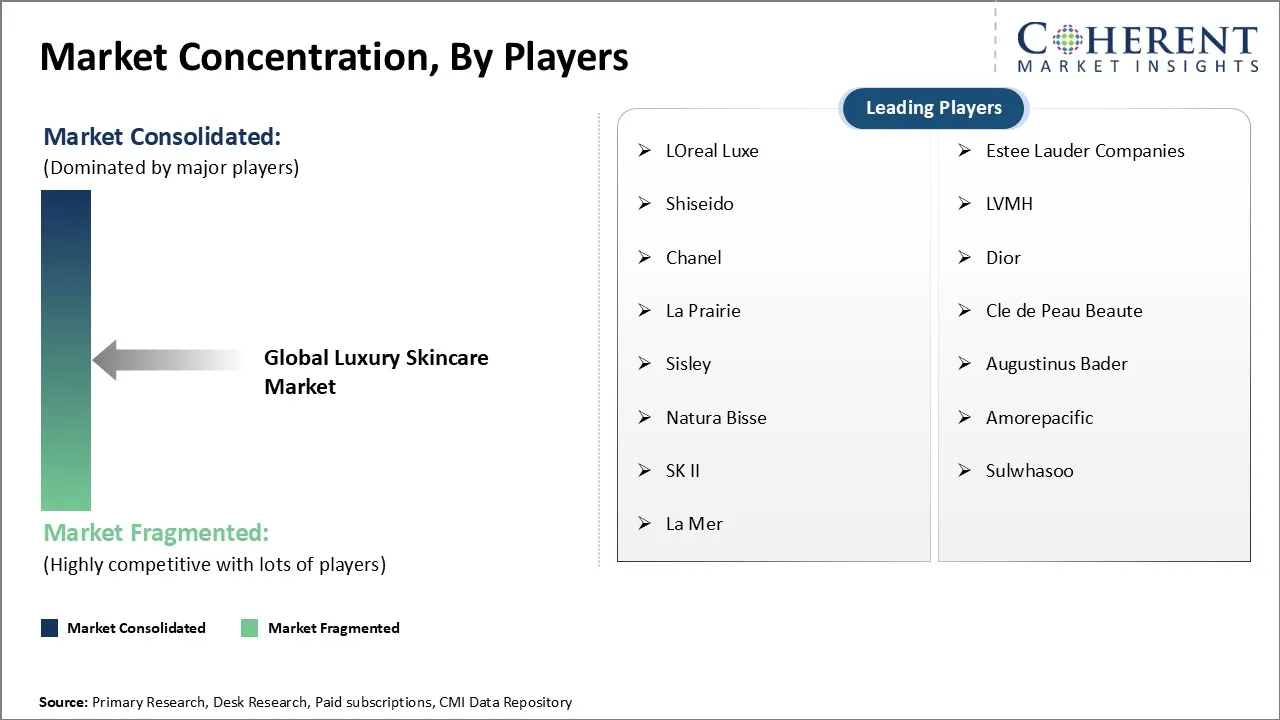
The global luxury skincare market is moderately consolidated, with competition concentrated among multinational beauty groups, premium skincare specialists, dermatology-focused brands, and emerging science-driven companies. Competitive positioning depends on formulation quality, ingredient innovation, brand heritage, consumer trust, retail presence, digital engagement, and the ability to deliver personalized premium experiences. Regional specialists continue to influence niche categories through localized formulations and consumer insights.
Key focus areas include
- Product efficacy and scientifically supported formulation performance
- Premium brand positioning and consumer loyalty
- Research and development capabilities for advanced ingredients
- Omnichannel distribution across luxury retail and digital platforms
- Personalized skincare solutions and diagnostic capabilities
- Sustainable packaging and responsible ingredient sourcing
- Supply-chain reliability and manufacturing flexibility
- Customer experience across online and offline beauty ecosystems
Global Luxury Skincare Market Report Scope
Global Luxury Skincare Market | |||
Report Coverage | Details | ||
Base Year | 2025 | Market Size in 2026: | USD 24.65 Bn |
Historical Data For: | 2020 To 2024 | Forecast Period: | 2026 To 2033 |
Forecast Period 2026 To 2033 CAGR: | 7.10% | 2033 Value Projection: | USD 39.84 Bn |
Geographies covered: |
| ||
Segments covered: |
| ||
Companies covered: | LOreal Luxe, Estee Lauder Companies, Shiseido, LVMH, Chanel, Dior, La Prairie, Cle de Peau Beaute, Sisley, Augustinus Bader, Natura Bisse, Amorepacific, SK II, Sulwhasoo, La Mer | ||
Growth Drivers: |
| ||
Restraints & Challenges: |
| ||
Analyst Opinion (Expert Opinion)
- The global luxury skincare market is likely to transition from traditional brand-led competition toward experience-driven ecosystems where scientific credibility, personalization, and consumer engagement determine long-term differentiation. Companies that integrate research capabilities with customer insights may create stronger competitive positions than those relying primarily on heritage or product availability.
- The most transformative shift will be the integration of digital intelligence with skincare expertise. Diagnostic technologies, connected beauty platforms, and personalized recommendations could reshape how consumers discover and purchase luxury skincare. Brands unable to adapt toward individualized experiences may face increasing difficulty maintaining premium relevance.
- Market participants should prioritize investment in formulation science, consumer analytics, sustainable operations, and flexible manufacturing capabilities. Companies should carefully balance premium innovation with pricing expectations, as excessive product complexity may limit accessibility. Strategic partnerships with technology providers, ingredient specialists, and retail platforms can strengthen market resilience while reducing innovation risks.
Speak to the analyst
Want personalized insights?
Take the findings above to one of our principal consultants, or have the report rebuilt around the segments, geographies and competitors you actually track.
Market Segmentation
- Product Type Insights (Revenue, USD Bn, 2021 - 2033)
- Facial Care
- Body Care
- Eye Care
- Sun Care
- Lip Care
- Others
- Product Format Insights (Revenue, USD Bn, 2021 - 2033)
- Creams and Moisturizers
- Serums and Essences
- Cleansers and Toners
- Masks and Treatments
- Oils and Balms
- Others
- Skin Type Insights (Revenue, USD Bn, 2021 - 2033)
- Normal Skin
- Dry Skin
- Combination Skin
- Oily Skin
- Sensitive Skin
- Distribution Channel Insights (Revenue, USD Bn, 2021 - 2033)
- Department Stores and Specialty Beauty Stores
- Brand Owned Stores
- Online Retail
- Travel Retail
- Other Channels
- Regional Insights (Revenue, USD Bn, 2021 - 2033)
- North America
- U.S.
- Canada
- Latin America
- Brazil
- Argentina
- Mexico
- Rest of Latin America
- Europe
- Germany
- U.K.
- Spain
- France
- Italy
- Russia
- Rest of Europe
- Asia Pacific
- China
- India
- Japan
- Australia
- South Korea
- ASEAN
- Rest of Asia Pacific
- Middle East
- GCC Countries
- Israel
- Rest of Middle East
- Africa
- South Africa
- North Africa
- Central Africa
- North America
Sources
Primary Research Interviews
- Luxury skincare brands, dermatologists, cosmetic scientists, formulation experts, and R&D professionals
- Skincare manufacturers, ingredient suppliers, contract manufacturers, and product development specialists
- Beauty retailers, distributors, e-commerce platforms, brand managers, and consumer insights professionals
- Premium skincare consumers, beauty influencers, and professional skincare consultants
Stakeholders
- Luxury skincare brands and premium beauty companies
- Cosmetic ingredient manufacturers, biotechnology companies, and formulation suppliers
- Dermatology clinics, aesthetic centers, and professional skincare providers
- Specialty beauty retailers, department stores, e-commerce platforms, and luxury retail chains
- Packaging suppliers, contract manufacturers, and private-label skincare producers
End-use Categories
- Anti-aging and longevity skincare
- Facial care and treatment products
- Premium moisturizers and hydration products
- Serums, essences, and targeted skincare solutions
- Luxury sun care and specialized skincare formulations
Regulatory and Industry Bodies
- U.S. Food and Drug Administration (FDA)
- European Commission Cosmetics Regulation
- International Organization for Standardization (ISO)
- Personal Care Products Council (PCPC)
- Cosmetic Ingredient Review (CIR)
- National cosmetic regulatory authorities
Databases
- Company annual reports and investor presentations
- Luxury beauty brand product portfolio databases
- Cosmetic ingredient and formulation databases
- Beauty retail and e-commerce product databases
- Consumer beauty and skincare preference databases
- Cosmetic trade flow and industry statistics databases
Magazines and Journals
- Cosmetics & Toiletries
- Happi
- Global Cosmetic Industry
- CosmeticsDesign
- Journal of Cosmetic Dermatology
- International Journal of Cosmetic Science
Associations
- Personal Care Products Council (PCPC)
- Cosmetics Europe
- International Federation of Societies of Cosmetic Chemists (IFSCC)
- Society of Cosmetic Chemists (SCC)
- Regional beauty and personal care industry associations
Public Domain Sources
- Cosmetic ingredient safety updates
- Beauty and skincare consumer trend studies
- Premium beauty retail developments
- Cosmetic innovation and formulation advancements
- Regulatory and compliance updates
- Luxury beauty industry reports and trade publications
Key Standards and Regulations
- Cosmetic product safety and ingredient compliance requirements
- Skincare product testing and quality assurance standards
- Cosmetic labeling and claims regulations
- Sustainable ingredient sourcing requirements
- Packaging sustainability and environmental compliance standards
- Import-export regulations for cosmetic products
Proprietary Elements
- CMI Data Analytics Tool
- proprietary CMI repository containing 10+ years of luxury beauty, skincare products, consumer behavior, cosmetic ingredients, retail channels, and personal care market intelligence.
Get access to 250+ pages report
Every segment, forecast, competitor profile and data table behind the analysis above — available for instant download.
- ESOMAR Member
- ISO 9001:2015 Certified
- D-U-N-S Registered
- GDPR & CCPA Compliant
Frequently Asked Questions
The CAGR of global luxury skincare market is projected to be 7.10% from 2026 to 2033.
The global luxury skincare market is estimated to be valued at USD 24.65 Bn in 2026 and is expected to reach USD 39.84 Bn by 2033.
The growth of the global luxury skincare market is primarily driven by rising consumer preference for premium efficacy-focused skincare solutions and increasing interest in anti-aging and longevity-focused formulations that offer advanced skin health benefits.
High product prices limiting consumer accessibility and Economic uncertainty increasing consumer value sensitivity are the major factors hampering the growth of global luxury skincare market.
In terms of product type, facial care is estimated to dominate the market revenue share in 2026.
LOreal Luxe, Estee Lauder Companies, Shiseido, LVMH, Chanel, Dior, La Prairie, Cle de Peau Beaute, Sisley, Augustinus Bader, Natura Bisse, Amorepacific, SK II, Sulwhasoo, La Mer are the major players.
Asia Pacific is expected to lead the global luxury skincare market in 2026.